Results by title
147 books match the query 'Urban & Land Use Planning' and 19 start with t
The Appearances of Memory
Mnemonic Practices of Architecture and Urban Form in IndonesiaAbidin Kusno
Duke University Press, 2010
Addressing developments in Indonesia since the fall of President Suharto’s regime in 1998, Kusno delves into such topics as the domestication of traumatic violence and the restoration of order in the urban space, the intense interest in urban history in contemporary Indonesia, and the implications of “superblocks,” large urban complexes consisting of residences, offices, shops, and entertainment venues. Moving farther back in time, he examines how Indonesian architects reinvented colonial architectural styles to challenge the political culture of the state, how colonial structures such as railway and commercial buildings created a new, politically charged cognitive map of cities in Java in the early twentieth century, and how the Dutch, in attempting to quell dissent, imposed a distinctive urban visual order in the 1930s. Finally, the present and the past meet in his long-term considerations of how Java has responded to the global flow of Islamic architecture, and how the meanings of Indonesian gatehouses have changed and persisted over time. The Appearances of Memory is a pioneering look at the roles of architecture and urban development in Indonesia’s ongoing efforts to move forward.
The City Creative
The Rise of Urban Placemaking in Contemporary AmericaMichael H. Carriere and David Schalliol
University of Chicago Press, 2021
Spanning the 1950s to the post-recession 2010s, The City Creative highlights the roles of such prominent individuals and organizations as Jane Jacobs, Christopher Alexander, Richard Sennett, Project for Public Spaces, and the National Endowment for the Arts in the development of urban placemaking, both in the abstract and on the ground. But that’s only half the story. Bringing the narrative to the present, Michael H. Carriere and David Schalliol also detail placemaking interventions at more than 200 sites in more than 40 cities, combining archival research, interviews, participant observation, and Schalliol’s powerful documentary photography. Carriere and Schalliol find that while these formal and informal placemaking interventions can bridge local community development and regional economic plans, more often than not, they push the boundaries of mainstream placemaking. Rather than simply stressing sociability or market-driven economic development, these initiatives offer an alternative model of community-led progress with the potential to redistribute valuable resources while producing tangible and intangible benefits for their communities. The City Creative provides a kaleidoscopic overview of how these initiatives grow, and sometimes collapse, illustrating the centrality of placemaking in the evolution of the American city and how it can be reoriented to meet demands for a more equitable future.
The Creative Destruction of Manhattan, 1900-1940
Max Page
University of Chicago Press, 1999
"It'll be a great place if they ever finish it," O. Henry wrote about New York City. This laconic remark captures the relentlessly transitory character of New York, and it points toward Max Page's synthetic perspective. Against the prevailing motif of a naturally expanding metropolis, Page argues that the early-twentieth-century city was dominated by the politics of destruction and rebuilding that became the hallmark of modern urbanism.
The oxymoron "creative destruction" suggests the tensions that are at the heart of urban life: between stability and change, between particular places and undifferentiated spaces, between market forces and planning controls, and between the "natural" and "unnatural" in city growth. Page investigates these cultural counterweights through case studies of Manhattan's development, with depictions ranging from private real estate development along Fifth Avenue to Jacob Riis's slum clearance efforts on the Lower East Side, from the elimination of street trees to the efforts to save City Hall from demolition.
In these examples some New Yorkers celebrate planning by destruction or marvel at the domestication of the natural environment, while others decry the devastation of their homes and lament the passing of the city's architectural heritage. A central question in each case is the role of the past in the shaping of collective memory—which buildings are preserved? which trees are cut down? which fragments are enshrined in museums? Contrary to the popular sense of New York as an ahistorical city, the past—as recalled by powerful citizens—was, in fact, at the heart of defining how the city would be built.
Beautifully illustrated and written in clear, engaging prose, The Creative Destruction of Manhattan offers a new way of viewing the development of the American city.
"An excellent, multifaceted analysis of the process of urban development-not the inevitability of development but the choices individuals, organizations, and developers made that transformed Manhattan. The politics of place was, Max Page convincingly argues, an ongoing battle to define and thereby control the evolving shape of the city."—David Schuyler, author of Apostle of Taste: Andrew Jackson Downing 1815-1852
"Max Page transcends the usual dichotomy between those who glorify destruction for the sake of change and those who would avoid both at all cost. The sizeable borderland between architecture and preservation reveals new dimensions about science and history, innovation and memory, the cities that have been, and those yet to come."—Gwendolyn Wright, author of The Politics of Design in French Colonial Urbanism
"A sober, humane explanation of how and why New York City became a place of continuous rebuilding. . . . For real or armchair New Yorkers, the whole package is a treat."—Kirkus Reviews
The Design of Protest
Choreographing Political Demonstrations in Public SpaceBy Tali Hatuka
University of Texas Press, 2018
Public protests are a vital tool for asserting grievances and creating temporary, yet tangible, communities as the world becomes more democratic and urban in the twenty-first century. While the political and social aspects of protest have been extensively studied, little attention has been paid to the physical spaces in which protests happen. Yet place is a crucial aspect of protests, influencing the dynamics and engagement patterns among participants. In The Design of Protest, Tali Hatuka offers the first extensive discussion of the act of protest as a design: that is, a planned event in a space whose physical geometry and symbolic meaning are used and appropriated by its organizers, who aim to challenge socio-spatial distance between political institutions and the people they should serve.
Presenting case studies from around the world, including Tiananmen Square in Beijing; the National Mall in Washington, DC; Rabin Square in Tel Aviv; and the Plaza de Mayo in Buenos Aires, Hatuka identifies three major dimensions of public protests: the process of planning the protest in a particular place; the choice of spatial choreography of the event, including the value and meaning of specific tactics; and the challenges of performing contemporary protests in public space in a fragmented, complex, and conflicted world. Numerous photographs, detailed diagrams, and plans complement the case studies, which draw upon interviews with city officials, urban planners, and protesters themselves.
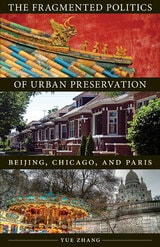
The Fragmented Politics of Urban Preservation
Beijing, Chicago, and ParisYue Zhang
University of Minnesota Press, 2013
While urban preservation is almost as old as cities themselves, it has become increasingly controversial in modern cities. In this book, Yue Zhang presents a cross-national comparative analysis of the politics of urban preservation. Based on comprehensive archival research and more than two hundred in-depth interviews in Beijing, Chicago, and Paris, Zhang finds that urban preservation provides a tool for diverse political and social actors to frame their propositions and advance their favored courses of action.
In cities from West to East, divergent political and economic interests have caused urban preservation to become contested. Exploring three of the world’s great cities, Zhang deftly navigates readers through each case study, illustrating the complexities of the politics of urban preservation in each city. In Beijing, urban preservation was integral to promoting economic growth and enhancing the city’s image during the lead-up to the 2008 Olympics; in Chicago, it is used to increase property values and revitalize neighborhoods; and in Paris, it offers a channel for national and municipal governments to compete for control over urban space.
Although urban preservation serves various purposes in these cities, Zhang explains how different types of political fragmentation have affected the implementation of preservation initiatives in predictable ways, thus generating distinct patterns of urban preservation. A comparative urban politics study of unusual breadth, The Fragmented Politics of Urban Preservation gives us insight into the complex policy process of urban preservation through which political institutions are intertwined with interests and inclinations, fundamentally shaping the direction of urban development, the physical forms of cities, and the lives of citizens.
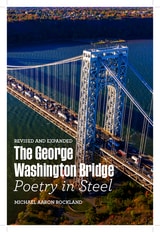
The George Washington Bridge
Poetry in SteelMichael Aaron Rockland
Rutgers University Press, 2020
Since opening in 1931, the George Washington Bridge, linking New York and New Jersey, has become the busiest bridge in the world, with 103 million vehicles crossing it in 2016. Many people also consider it the most beautiful bridge in the world, yet remarkably little has been written about this majestic structure.
Intimate and engaging, this revised and expanded edition of Michael Rockland's rich narrative presents perspectives on the GWB, as it is often called, that span history, architecture, engineering, transportation, design, the arts, politics, and even post-9/11 mentalities. This new edition brings new insight since its initial publication in 2008, including a new chapter on the infamous “Bridgegate” Chris Christie-era scandal of 2013, when members of the governor's administration shut down access to the bridge, causing a major traffic jam and scandal and subsequently helping undermine Christie’s candidacy for the US presidency.
Stunning photos, from when the bridge was built in the late 1920s through the present, are a powerful complement to the bridge's history. Rockland covers the competition between the GWB and the Brooklyn Bridge that parallels the rivalry between New Jersey and New York City. Readers will learn about the Swiss immigrant Othmar Ammann, an unsung hero who designed and built the GWB, and how a lack of funding during the Depression dictated the iconic, uncovered steel beams of its towers, which we admire today. There are chapters discussing accidents on the bridge, such as an airplane crash landing in the westbound lanes and the sad story of suicides off its span; the appearance of the bridge in media and the arts; and Rockland's personal adventures on the bridge, including scaling its massive towers on a cable.
Movies, television shows, songs, novels, countless images, and even PlayStation 2 games have aided the GWB in becoming a part of the global popular culture. This tribute will captivate residents living in the shadow of the GWB, the millions who walk, jog, bike, skate, or drive across it, as well as tourists and those who will visit it someday.
.
The Greenlining of Staten Island
Environmental Preservation and Racial Segregation, 1945–1995Patrick D. Nugent
University of Chicago Press, 2026
Illuminates how borough residents, urban planners, and politicians used environmental policy to cement a racially restrictive landscape.
Though it was once home to the world’s largest landfill, today Staten Island boasts thousands of acres of parklands, dozens of public-private conservation arrangements, and four ecological zoning districts. In this book, Patrick D. Nugent details the political forces that gave rise to this wealth of greenery in a famously dense city. He demonstrates how postwar economic and political trajectories intersected in the 1960s with the rising consciousness of environmentalism to create a distinctive laboratory in Staten Island, where white communities and politicians heeded the rising call for the preservation of green space—but often as a tool to maintain racial segregation. Ecological zoning, public-private park management, conservation easement, environmental litigation, and other strategies created a lush, discriminatory landscape. Nugent refers to these policies as greenlining.
The Greenlining of Staten Island shows that the political and environmental history of Staten Island is key to understanding how environmentalism has been used to reinforce racial discrimination, not just in New York City, but nationwide. By the mid-1970s, conservationists had embraced urban planning that preserved low-density housing districts and bolstered the sprawling and segregated landscape that took shape in metropolitan America over the coming decades. In exploring the gap between the modern environmental movement’s ambitious goals and its tangible outcomes, Nugent excavates important lessons for contemporary city dwellers debating zoning reform and planning for climate change’s impending effects.
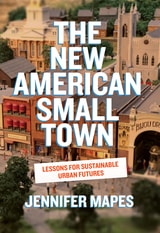
The New American Small Town
Lessons for Sustainable Urban FuturesJennifer Mapes
West Virginia University Press, 2025
2026 Winner of John Brinckerhoff Jackson Prize awarded by the Association of American Geographers (AAG)
What makes a sustainable city? When planners and politicians talk about making cities more sustainable, they often describe changes to large urban centers like New York City or Los Angeles. Yet when they suggest solutions for sustainable living, they talk about walkable neighborhoods, traditional architecture, and diverse land uses; they talk about small towns. Planners and developers are now working to introduce a “small-town feel” into our large cities and suburbs in hopes that it will provide a sense of community and reduce the use of automobiles.
So, what of small towns themselves? We don’t talk about these places as much. They are often assumed to be utopias of the past or crumbling ghost towns of the present day rather than places with potential for sustainable living. This book critically examines narratives of American small towns, contrasting them with lived experiences in these places, and considers both the myth and reality in the context of current urban challenges. Interweaving stories from and about U.S. small towns, it offers lessons in sustainable urbanism that can be applied both in the towns themselves and to the larger cities and suburbs where most Americans now live.
The New Suburban History
Edited by Kevin M. Kruse and Thomas J. Sugrue
University of Chicago Press, 2006
Kruse and Sugrue here collect ten essays—augmented by their provocative introduction—that challenge our understanding of suburbia. Drawing from original research on suburbs across the country, the contributors recast important political and social issues in the context of suburbanization. Their essays reveal the role suburbs have played in the transformation of American liberalism and conservatism; the contentious politics of race, class, and ethnicity; and debates about the environment, land use, and taxation. The contributors move the history of African Americans, Latinos, Asians, and blue-collar workers from the margins to the mainstream of suburban history.
From this broad perspective, these innovative historians explore the way suburbs affect—and are affected by—central cities, competing suburbs, and entire regions. The results, they show, are far-reaching: the emergence of a suburban America has reshaped national politics, fostered new social movements, and remade the American landscape. The New Suburban History offers nothing less than a new American history—one that claims the nation cannot be fully understood without a history of American suburbs at its very center.

The Physical and the Digital City
Invisible Forces, Data and ManifestationsEdited by Silvio Carta
Intellect Books, 2024
The Physical and the Digital City is a unique collection of projects wherein researchers and designers show how the theories of technology that underpin digital urban assemblages are applied in practical and spatial terms. The authors are experts in their respective fields who pursue cutting-edge solutions for city-making and consider the theoretical premise critically.
The book is designed to be a self-contained and interdisciplinary reference text to introduce students, designers, and scholars to the idea of urban application and its relation to the physical and the digital. Accessible to both urban planners and cultural theorists, the book will clarify the role of digital technologies within the city, along with its possible implications for people and communities. While the work is oriented to the academic and professional communities interested in architectural, urban, and digital design from different angles, it will appeal to anyone interested in how metropolises embrace digital technologies for more operational efficiency.
The Placemakers of Hong Kong
Roger Nissim
Hong Kong University Press, 2025
The Placemakers of Hong Kong pays homage to what local development companies, charitable organizations, as well as the government have been able to achieve in contributing to the enhancement of Hong Kong’s evolving urban and rural landscape. Far from being solely profit-driven, developers and urban planners have been vital to the community by creating and designing urban spaces for the public, increasing walkability, and embracing sustainable design—a process called ‘placemaking.’ The book also recognizes that the subsequent placekeeping activities necessary to keep each project site relevant and up-to-date are just as important.
Featuring five case studies from the past and one that examines the ambitious and far-reaching plans for the Northern Metropolis, this book tells the story of Hong Kong’s miraculous urban development over the past few decades.
The Plan of Chicago
Daniel Burnham and the Remaking of the American CityCarl Smith
University of Chicago Press, 2006
Arguably the most influential document in the history of urban planning, Daniel Burnham’s 1909 Plan of Chicago, coauthored by Edward Bennett and produced in collaboration with the Commercial Club of Chicago, proposed many of the city’s most distinctive features, including its lakefront parks and roadways, the Magnificent Mile, and Navy Pier. Carl Smith’s fascinating history reveals the Plan’s central role in shaping the ways people envision the cityscape and urban life itself.
Smith’s concise and accessible narrative begins with a survey of Chicago’s stunning rise from a tiny frontier settlement to the nation’s second-largest city. He then offers an illuminating exploration of the Plan’s creation and reveals how it embodies the renowned architect’s belief that cities can and must be remade for the better. The Plan defined the City Beautiful movement and was the first comprehensive attempt to reimagine a major American city. Smith points out the ways the Plan continues to influence debates, even a century after its publication, about how to create a vibrant and habitable urban environment.
Richly illustrated and incisively written, his insightful book will be indispensable to our understanding of Chicago, Daniel Burnham, and the emergence of the modern city.
The Politics of Design in French Colonial Urbanism
Gwendolyn Wright
University of Chicago Press, 1991
Gwendolyn Wright focuses on three French colonies—Indochina, Morocco, and Madagascar—that were the most discussed, most often photographed, and most admired showpieces of the French empire in the early twentieth century. She explores how urban policy and design fit into the French colonial policy of "association," a strategy that accepted, even encouraged, cultural differences while it promoted modern urban improvements that would foster economic development for Western investors. Wright shows how these colonial cities evolved, tracing the distinctive nature of each locale under French imperialism. She also relates these cities to the larger category of French architecture and urbanism, showing how consistently the French tried to resolve certain stylistic and policy problems they faced at home and abroad.
With the advice of architects and sociologists, art historians and geographers, colonial administrators sought to exert greater control over such matters as family life and working conditions, industrial growth and cultural memory. The issues Wright confronts—the potent implications of traditional norms, cultural continuity, modernization, and radical urban experiments—still challenge us today.
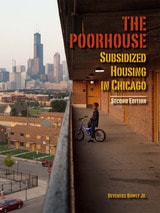
The Poorhouse
Subsidized Housing in ChicagoDevereux Bowly Jr.
Southern Illinois University Press, 2012
Chicago seems an ideal environment for public housing because of the city’s relatively young age among major cities and well-deserved reputation for technology, innovation, and architecture. Yet The Poorhouse: Subsidized Housing in Chicago shows that the city’s experience on the whole has been a negative one, raising serious questions about the nature of subsidized housing and whether we should have it and, if so, in what form.
Bowly, a native of the city, provides a detailed examination of subsidized housing in the nation’s third-largest city. Now in its second edition, The Poorhouse looks at the history of public housing and subsidized housing in Chicago from 1895 to the present day. Five new chapters that cover the decline and federal takeover of the Chicago Housing Authority, and its more recent “transformation,” which involved the demolition of the CHA family high-rise buildings and in some cases their replacement with low-risemixed income housing on the same sites. Fifty new photos supplement this edition.
Certificate of Excellence from the Illinois State Historical Society, 2013
The Singular Objects of Architecture
Jean Baudrillard
University of Minnesota Press, 2005
Among the topics the two speakers take up are the city of tomorrow and the ideal of transparency, the gentrification of New York City and Frank Gehry’s surprising Guggenheim Museum in Bilbao. As Nouvel prompts Baudrillard to reflect on some of his signature concepts (the virtual, transparency, fatal strategies, oblivion, and seduction, among others), the confrontation between such philosophical concerns and the specificity of architecture gives rise to novel and striking formulations—and a new way of establishing and understanding the connections between the practitioner and the philosopher, the object and the idea.
This wide-ranging conversation builds a bridge between the fields of architecture and philosophy. At the same time it offers readers an intimate view of the meeting of objects and ideas in which the imagined, constructed, and inhabited environment is endlessly changing, forever evolving.
Jean Baudrillard is one of the most influential thinkers of his generation and author of The Vital Illusion (2001).
Jean Nouvel has designed buildings throughout the world, including the new Guthrie Theater in Minneapolis, and is a recipient of France’s Grand Prix d’Architecture.
Robert Bononno, a translator and teacher, lives in New York City.
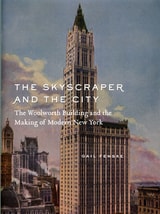
The Skyscraper and the City
The Woolworth Building and the Making of Modern New YorkGail Fenske
University of Chicago Press, 2008
Fenske shows here that the building’s multiplicity of meanings reflected the cultural contradictions that defined New York City’s modernity. For Frank Woolworth—founder of the famous five-and-dime store chain—the building served as a towering trademark, for advocates of the City Beautiful movement it suggested a majestic hotel de ville, for technological enthusiasts it represented the boldest of experiments in vertical construction, and for tenants it provided an evocative setting for high-style consumption. Tourists, meanwhile, experienced a spectacular sightseeing destination and avant-garde artists discovered a twentieth-century future. In emphasizing this faceted significance, Fenske illuminates the process of conceiving, financing, and constructing skyscrapers as well as the mass phenomena of consumerism, marketing, news media, and urban spectatorship that surround them.
As the representative example of the skyscraper as a “cathedral of commerce,” the Woolworth Building remains a commanding presence in the skyline of lower Manhattan, and the generously illustrated Skyscraper and the City is a worthy testament to its importance in American culture.
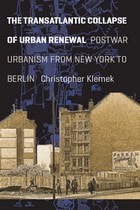
The Transatlantic Collapse of Urban Renewal
Postwar Urbanism from New York to BerlinChristopher Klemek
University of Chicago Press, 2011
The Transatlantic Collapse of Urban Renewal examines how postwar thinkers from both sides of the Atlantic considered urban landscapes radically changed by the political and physical realities of sprawl, urban decay, and urban renewal. With a sweep that encompasses New York, London, Berlin, Philadelphia, and Toronto, among others, Christopher Klemek traces changing responses to the challenging issues that most affected the lives of the world’s cities.
In the postwar decades, the principles of modernist planning came to be challenged—in the grassroots revolts against the building of freeways through urban neighborhoods, for instance, or by academic critiques of slum clearance policy agendas—and then began to collapse entirely. Over the 1960s, several alternative views of city life emerged among neighborhood activists, New Left social scientists, and neoconservative critics. Ultimately, while a pessimistic view of urban crisis may have won out in the United States and Great Britain, Klemek demonstrates that other countries more successfully harmonized urban renewal and its alternatives. Thismuch anticipated book provides one of the first truly international perspectives on issues central to historians and planners alike, making it essential reading for anyone engaged with either field.
The Urban Apparatus
Mediapolitics and the CityReinhold Martin
University of Minnesota Press, 2017
Urbanization is a system of power and knowledge, and today’s city functions through the expansive material infrastructures of the urban order. In The Urban Apparatus, Reinhold Martin analyzes urbanization and the contemporary city in aesthetic, socioeconomic, and mediapolitical terms. He argues that understanding the city as infrastructure reveals urbanization to be a way of imparting functional, aesthetic, and cognitive order to a contradictory, doubly bound neoliberal regime.
Blending critical philosophy, political theory, and media theory, The Urban Apparatus explores how the aesthetics of cities and their political economies overlap. In a series of ten essays, with a detailed theoretical introduction, Martin explores questions related to urban life, drawn from a wide range of global topics—from the fiscal crisis in Detroit to speculative development in Mumbai to the landscape of Mars, from discussions of race and the environment to housing and economic inequality. Each essay proposes a particular “mediator” (or a material complex) that is shaped by imaginative practices, each answering the question “What is a city, today?”
The Urban Apparatus serves as an “urban” bookend to the architectural questions explored by Martin in his earlier book Utopia’s Ghost, and ultimately offers readers a way to think politically about urbanization.
Tourism and the Metropolis
Exploring Conceptual and Geographical FrontiersEdited by Maria Gravari-Barbas, Sébastien Jacquot, Maja Jovic, and Johannes Novy
University of Westminster Press, 2026
What forms does tourism take in today’s metropolises and metropolitan regions? How do these forms differ from tourism in other urban contexts? Are these differences significant enough to warrant the classification of ‘metropolitan tourism’ as a distinct type of urban tourism? What are their implications for policy and planning processes? How do policy and planning processes in different metropolises and metropolitan regions differ from each other, and what can they learn from each other? And finally, how could tourism in metropolises and metropolitan regions be made more sustainable, resilient, and inclusive?
Given the importance widely attributed to major metropolises and metropolitan regions as contemporary engines of economic development, innovation, and change, the widespread portrayal of tourism as a leading economic and social force of the 21st century, and the fact that the world's large metropolitan areas are key recipients of tourism flows, it is surprising how little systematic attention is paid to tourism in metropolitan contexts. This book aims to fill these gaps.