Results by title
71 books match the query 'Voice' and 25 start with t
The African American Newspaper
Voice of FreedomPatrick S. Washburn
Northwestern University Press, 2006
In March of 1827 the nation's first black newspaper appeared in New York City—to counter attacks on blacks by the city's other papers. From this signal event, The African American Newspaper traces the evolution of the black newspaper—and its ultimate decline--for more than 160 years until the end of the twentieth century.
The book chronicles the growth of the black press into a powerful and effective national voice for African Americans during the period from 1910 to 1950--a period that proved critical to the formation and gathering strength of the civil rights movement that emerged so forcefully in the following decades. In particular, author Patrick S. Washburn explores how the Pittsburgh Courier and the Chicago Defender led the way as the two most influential black newspapers in U.S. history, effectively setting the stage for the civil rights movement's successes. Washburn also examines the numerous reasons for the enormous decline of black newspapers in influence and circulation in the decades immediately following World War II. His book documents as never before how the press's singular accomplishments provide a unique record of all areas of black history and a significant and shaping affect on the black experience in America.
The Art of Accompanying and Coaching
Kurt Adler
University of Minnesota Press, 1965
The Art of Accompanying and Coaching was first published in 1965. Minnesota Archive Editions uses digital technology to make long-unavailable books once again accessible, and are published unaltered from the original University of Minnesota Press editions.
Kurt Adler, former conductor and chorus master of the Metropolitan Opera, provides a comprehensive guide to musical accompanying and coaching, based in his extensive experience, which will be helpful, if not indispensable, to music teachers, students, coaches, accompanists, orchestral and choral conductors, and performing vocal and instrumental artists.
The first part of the book gives the historical and technical background of the subject and explains in detail the mechanics of string instruments, piano, celeste, organ, harmonium, and voice. The next section offers a thorough guide to the singing diction of five languages— Italian, Latin, French, German, and English. The author continues with a discussion of the elements of musical style, describing, with the use of ample musical illustrations, tempo, rhythm, dynamics, phrasing and articulation, and ornamentation. This section closes with an analysis of the German lied style and the French art song style.
Mr. Adler goes on to synthesize the various elements of accompanying and coaching. He stresses the importance of psychological and spiritual rapport between accompanists and artist and shows ways of achieving this. He explains the differences and similarities among opera, oratorio, and song coaching. In a section on program arranging, he offers advice about planning concerts of various kinds, citing examples of programs given by outstanding artists. He writes about particular aspects of accompanying — self accompanying, the difference between piano accompanying and soloistic piano playing, and accompanying for singers, instrumentalists, and dancers. In conclusion, he describes the qualities of an ideal accompanist and the rewards derived from excellence in performance.
University and college music departments, schools of music, choral groups, voice teachers, singers, pianists, and other musicians will find the book of inestimable value, either as a text or as a reference work. It will be especially helpful to pianists who aspire to become accompanists.

The Computer's Voice
From Star Trek to SiriLiz W. Faber
University of Minnesota Press, 2020
A deconstruction of gender through the voices of Siri, HAL 9000, and other computers that talk
Although computer-based personal assistants like Siri are increasingly ubiquitous, few users stop to ask what it means that some assistants are gendered female, others male. Why is Star Trek’s computer coded as female, while HAL 9000 in 2001: A Space Odyssey is heard as male? By examining how gender is built into these devices, author Liz W. Faber explores contentious questions around gender: its fundamental constructedness, the rigidity of the gender binary, and culturally situated attitudes on male and female embodiment.
Faber begins by considering talking spaceships like those in Star Trek, the film Dark Star, and the TV series Quark, revealing the ideologies that underlie space-age progress. She then moves on to an intrepid decade-by-decade investigation of computer voices, tracing the evolution from the masculine voices of the ’70s and ’80s to the feminine ones of the ’90s and ’00s. Faber ends her account in the present, with incisive looks at the film Her and Siri herself.
Going beyond current scholarship on robots and AI to focus on voice-interactive computers, The Computer’s Voice breaks new ground in questions surrounding media, technology, and gender. It makes important contributions to conversations around the gender gap and the increasing acceptance of transgender people.
The Courtesan's Memory, Voice, and Late Ming Drama
Peng Xu
University of Michigan Press, 2025
This study profoundly remaps the textbook narratives of gender bias, challenges modern prejudices prevalent in the literary history of Chinese drama, and reveals how theatrical conditions and writing styles shifted to accommodate courtesan performances. Utilizing a wide range of sources such as scripts, city guides, biographies, diaries, letters, wood-block illustrations, and paintings, this study distinguishes itself from earlier studies of Chinese courtesans by not thematizing courtesans for their allegorical values, but rather pinpointing their agency in shaping the features of Chinese theater and recognizing courtesans as a source of creativity and development in the medium. Xu’s focus on courtesan performance culture allows for fresh readings of canonical Chinese plays, opening up new ways of understanding the history of Chinese drama written by women, thus deviating from standard historiography based solely on the writings of men.
The Diva's Mouth
Body, Voice, and Prima Donna PoliticsLeonardi, Susan J.
Rutgers University Press, 1996
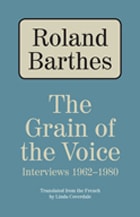
The Grain of the Voice
Interviews 1962-1980Roland Barthes
Northwestern University Press, 2009
This book brings together the great majority of Barthes’s interviews that originally appeared in French in Le Figaro Littéraire, Cahiers du Cinéma, France-Observateur, L'Express, and elsewhere. Barthes replied to questions—on the cinema, on his own works, on fashion, writing, and criticism—in his unique voice; here we have Barthes in conversation, speaking directly, with all his individuality. These interviews provide an insight into the rich, probing intelligence of one of the great and influential minds of our time.
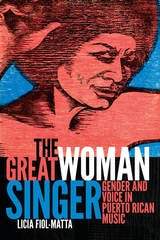
The Great Woman Singer
Gender and Voice in Puerto Rican MusicLicia Fiol-Matta
Duke University Press, 2017
The Madrigals of Michelangelo Rossi
Michelangelo Rossi
University of Chicago Press, 2002
In his extensive introduction, Mann considers in detail the biographical, cultural, and stylistic milieu in which the madrigals were written. The scholarly edition of the music, based on a thorough examination of all the known sources, includes a complete critical commentary.
Mann's work on Rossi's madrigals has already helped revive interest in them. In 1998 a CD recording of Book I appeared on the Virgin label, performed by Il Complesso Barocco under the direction of Alan Curtis, and based on this critical edition.
The Motet Books of Andrea Antico
Edited by Martin Picker
University of Chicago Press, 1987
Andrea Antico was one of the earliest and most important music publishers. Starting in Rome in 1510 and continuing in Venice, Antico produced elegant books of polyphonic music, cut with incredible skill on wood blocks. The repertory he published is central to understanding sixteenth-century music. It includes, for example, many pieces sung regularly in the Sistine Chapel. Since the best-represented composer in Antico's volumes if Jean Mouton, chapel master to the French king, these motet books provide insights into the character of music both at the Vatican and at the French court at the height of the Renaissance.
Martin Picker provides an exemplary edition of the four volumes of motets published by Antico in the early 1520s. His edition includes, in modern notation, all of the contents of these volumes not previously published in the Medici Codex (Monuments of Renaissance Music, Volumes III-V). Picker prefaces his edition with a history of Antico's publishing career and a discussion of each piece and its sources. The list of concordant sources and the discussions of important variants will be of enormous value to Renaissance scholars.
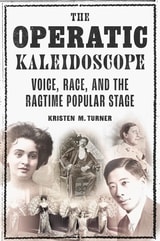
The Operatic Kaleidoscope
Voice, Race, and the Ragtime Popular StageKristen M. Turner
University of Illinois Press, 2026
Turner examines performances ranging from Florenz Ziegfeld’s early Follies to Black vaudeville shows to musical comedies, including everything from celebrity vehicles to obscure productions and overlooked artists. She reveals how opera’s popularity in mass culture illuminates the effects of exclusionary immigration policies, pervasive racial and ethnic inequalities, debates over women’s suffrage, and the imposition of legalized segregation. Performers and creators from many communities—white immigrants, Jewish, Black, and Asian American—strategically deployed operatic allusions and the genre’s characteristic vocal timbre to assert their respectability, challenge stereotypes, and navigate oppressive social structures.
Nuanced and expansive, The Operatic Kaleidoscope explores opera’s role when popular culture grappled with questions of race and citizenship.
The Voice and Its Doubles
Media and Music in Northern AustraliaDaniel Fisher
Duke University Press, 2016
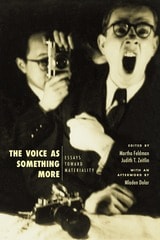
The Voice as Something More
Essays toward MaterialityEdited by Martha Feldman and Judith T. Zeitlin
University of Chicago Press, 2019
Using Mladen Dolar’s influential A Voice and Nothing More as a reference point, The Voice as Something More reorients Dolar’s psychoanalytic analysis around the material dimensions of voices—their physicality and timbre, the fleshiness of their mechanisms, the veils that hide them, and the devices that enhance and distort them. Throughout, the essays put the body back in voice. Ending with a new essay by Dolar that offers reflections on these vocal aesthetics and paradoxes, this authoritative, multidisciplinary collection, ranging from Europe and the Americas to East Asia, from classics and music to film and literature, will serve as an essential entry point for scholars and students who are thinking toward materiality.
The Voice in the Drum
Music, Language, and Emotion in Islamicate South AsiaRichard K. Wolf
University of Illinois Press, 2014

The Voice in the Garden
Andrei Bolotov and the Anxieties of Russian Pastoral 1738-1833Thomas Newlin
Northwestern University Press, 2001
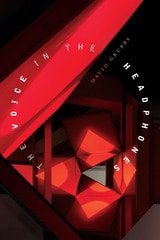
The Voice in the Headphones
David Grubbs
Duke University Press, 2020
The Voice in the Headphones is an experiment in music writing in the form of a long poem centered on the culture of the recording studio. It describes in intricate, prismatic detail one marathon day in a recording studio during which an unnamed musician struggles to complete a film soundtrack. The book extends the form of Grubbs's previous volume Now that the audience is assembled, sharing its goal of musicalizing the language of writing about music. Mulling the insight that “studio is the absence of pushback”—now that no audience is assembled—The Voice in the Headphones details one musician's strategies for applying the requisite pressure to the proceedings, for making it count. The Voice in the Headphones is both a literary work and a meditation on sound recording, delivered at a moment in which the commercial recording studio shades into oblivion. It draws upon Grubbs's own history of several decades as a recording artist, and its location could be described as every studio in which he has set foot.

The Voice of That Singing
Juliet Rodeman
Tupelo Press, 2017

The Voice of Toil
Nineteenth-Century British Writings about WorkDavid J. Bradshaw
Ohio University Press, 1999
One of the most recurrent and controversial subjects of nineteenth–century discourse was work. Many thinkers associated work with honest pursuit of doing good, not the curse accompanying exile from Eden but rather “a great gift of God.” Sincerely undertaken work comprised a mission entailing a commitment to serve others and promote a better future for all.
Satisfaction with what work could do for individuals had its counterbalance in the anger and dismay expressed at the conditions of those whom Robert Owen, in 1817, first called the “working class.” What working–class people confronted both at the labor site and at their lodgings was construed as oppressive, and the misery of their lives became the subject of sentimental poetry, government report, popular fiction, and journalistic expose. Perhaps as heated as the discussion about conditions of lower–class workers was the conversation about separate spheres of work for men and women. This conversation, too, found its way into the literature and public discourse of the day.
In The Voice of Toil, the editors have collected the central writings from a pivotal place and time, including poems, stories, essays, and a play that reflect four prominent ways in which the subject of work was addressed: Work as Mission, Work as Opportunity, Work as Oppression, and (Separate) Spheres of Work. The resulting anthology offers a provocative text for students of nineteenth-century British literature and history and a valuable resource for scholars.
The text includes readings from John Wesley, William Blake, Elizabeth Gaskell, William Wordsworth, Charles Dickens, Florence Nightingale, William Morris, Joanna Baillie, Friedrich Engels, Matthew Arnold, Angela Burdett–Coutts, John Stuart Mill, Elizabeth Barrett Browning, Bernard Shaw and many others.
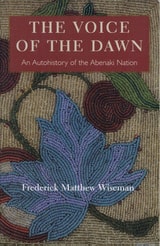
The Voice of the Dawn
An Autohistory of the Abenaki NationFrederick Matthew Wiseman
University Press of New England, 2001
The Voice of the Masters
Writing and Authority in Modern Latin American LiteratureBy Roberto González Echevarría
University of Texas Press, 1985
By one of the most original and learned critical voices in Hispanic studies— a timely and ambitious study of authority as theme and authority as authorial strategy in modern Latin American literature.
An ideology is implicit in modern Latin American literature, argues Roberto González Echevarría, through which both the literature itself and criticism of it define what Latin American literature is and how it ought to be read. In the works themselves this ideology is constantly subjected to a radical critique, and that critique renders the ideology productive and in a sense is what constitutes the work. In literary criticism, however, too frequently the ideology merely serves as support for an authoritative discourse that seriously misrepresents Latin American literature.
In The Voice of the Masters, González Echevarría attempts to uncover the workings of modern Latin American literature by creating a dialogue of texts, a dynamic whole whose parts are seven illuminating essays on seminal texts in the tradition. As he says, "To have written a sustained, expository book ... would have led me to make the same kind of critical error that I attribute to most criticism of Latin American literature.... I would have naively assumed an authoritative voice while attempting a critique of precisely that critical gesture."
Instead, major works by Barnet, Cabrera Infante, Carpentier, Cortázar, Fuentes, Gallegos, García Márquez, Roa Bastos, and Rodó are the object of a set of independent deconstructive (and reconstructive) readings. Writing in the tradition of Derrida and de Man, González Echevarría brings to these readings both the penetrative brilliance of the French master and a profound understanding of historical and cultural context. His insightful annotation of Cabrera Infante's "Meta-End," the full text of which is presented at the close of the study, clearly demonstrates these qualities and exemplifies his particular approach to the text.
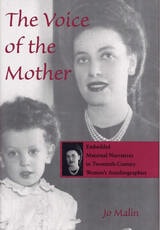
The Voice of the Mother
Embedded Maternal Narratives in Twentieth-Century Women's AutobiographiesJo Malin
Southern Illinois University Press, 2000
Every woman autobiographer is a daughter who writes and establishes her identity through her autobiographical narrative. In The Voice of the Mother, Jo Malin argues that many twentieth-century autobiographies by women contain an intertext, an embedded narrative, which is a biography of the writer/daughter’s mother.
Analyzing this narrative practice, Malin examines ten texts by women who seem particularly compelled to tell their mothers’ stories: Virginia Woolf, Sara Suleri, Kim Chernin, Drusilla Modjeska, Joan Nestle, Carolyn Steedman, Dorothy Allison, Adrienne Rich, Cherríe Moraga, and Audre Lorde. Each author is, in fact, able to write her own autobiography only by using a narrative form that contains her mother’s story at its core. These texts raise interesting questions about autobiography as a genre and about a feminist writing practice that resists and subverts the dominant literary tradition.
Malin theorizes a hybrid form of autobiographical narrative containing an embedded narrative of the mother. The textual relationship between the two narratives is unique among texts in the auto/biographical canon. This alternative narrative practice—in which the daughter attempts to talk both to her mother and about her—is equally an autobiography and a biography rather than one or the other. The technique is marked by a breakdown of subject/object categories as well as auto/biographical dichotomies of genre. Each text contains a “self” that is more plural than singular, yet neither.
In addition to being a theoretical and textual analysis, Malin’s book is also a mother-daughter autobiography and biography itself. She shares her own story and her mother’s story as a way to connect directly with readers and as a way to bridge the gap between theory and practice.
The Voice of the Night
Complete Poetry and Prose of Chairil AnwarChairil Anwar
Ohio University Press, 1993
Chairil Anway (1922–1949) was the primary architect of the Indonesian literary revolution in both poetry and prose. In a few intense years he forged almost ingle-handedly a vital, mature literary language in Bahasa Indonesia, a language which formally came to exist in 1928. Anway led the way for the many Indonesian writers who have emerged during the past fifty years.
This volume contains all that has survived of Anwar’s writing. It not longer need the sort of introduction it did soem thirty years ago when Burton Raffel first published English translations of Anwar’s work. Raffel now presents the complete poems and the small amount of surviving prose in new translations with new interpretations.

The Voice of the River
A NovelMelanie Rae Thon
University of Alabama Press, 2011
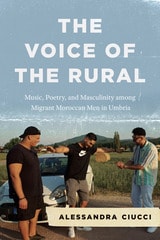
The Voice of the Rural
Music, Poetry, and Masculinity among Migrant Moroccan Men in UmbriaAlessandra Ciucci
University of Chicago Press, 2022
Umbria is known to most Americans for its picturesque rolling hills and medieval villages, but to the many migrant Moroccan men who travel there, Umbria is better known for the tobacco fields, construction sites, small industries, and the outdoor weekly markets where they work. Marginalized and far from their homes, these men turn to Moroccan traditions of music and poetry that evoke the countryside they have left— l-‘arubiya, or the rural. In this book, Alessandra Ciucci takes us inside the lives of Moroccan workers, unpacking the way they share a particular musical style of the rural to create a sense of home and belonging in a foreign and inhospitable nation. Along the way, she uncovers how this culture of belonging is not just the product of the struggles of migration, but also tied to the reclamation of a noble and virtuous masculine identity that is inaccessible to Moroccan migrants in Italy.
The Voice of the Rural allows us to understand the contemporary experiences of migrant Moroccan men by examining their imagined relationship to the rural through sound, shedding new light on the urgent issues of migration and belonging.
Theatre Symposium, Vol. 3
Voice of the DramaturgPaul Castagno
University of Alabama Press, 1995
Exploring the many voices of the dramaturg—and the evolving artistry of shaping theatre from within.
As both a verb and a noun, the word voice has many meanings and functions on multiple levels, a phenomenon that is remarkably analogous to the practice of dramaturgy. Thus, the topic title Voice of the Dramaturg allows for the requisite flexibility and provides a unifying theme for the third volume of Theatre Symposium. This volume of the proceedings from the June 1994 joint meeting of the Southeastern Theatre Conference and the Literary Managers and Dramaturgs in Atlanta, Georgia, addresses the question, What is Dramaturgy? Part I includes the contributions of the six symposium participants and concludes with the roundtable discussion by panelists. Part II is composed of refereed papers. These papers range from the highly theoretical to the practical and pedagogical. They reflect the diversity of what dramaturgy means in contemporary theatre.
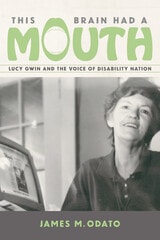
This Brain Had a Mouth
Lucy Gwin and the Voice of Disability NationJames M. Odato
University of Massachusetts Press, 2021
In this engrossing biography, James M. Odato provides an intimate portrait of Gwin, detailing how she forged her own path into activism. After an automobile accident left her with a brain injury, Gwin became a tireless advocate for the equal rights of people she termed "dislabled." More than just a publisher, she fought against corruption in the rehabilitation industry, organized for the group Not Dead Yet, and much more. With Gwin's story at the center, Odato introduces readers to other key disability rights activists and organizations, and supplies context on current contentious topics such as physician-assisted suicide. Gwin's impact on disability rights was monumental, and it is time her story is widely known.