Results by title
122 books match the query 'Voices' and 15 start with t
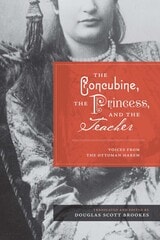
The Concubine, the Princess, and the Teacher
Voices from the Ottoman HaremTranslated and edited by Douglas Scott Brookes
University of Texas Press, 2008
In the Western imagination, the Middle Eastern harem was a place of sex, debauchery, slavery, miscegenation, power, riches, and sheer abandon. But for the women and children who actually inhabited this realm of the imperial palace, the reality was vastly different. In this collection of translated memoirs, three women who lived in the Ottoman imperial harem in Istanbul between 1876 and 1924 offer a fascinating glimpse "behind the veil" into the lives of Muslim palace women of the late nineteenth and early twentieth centuries.
The memoirists are Filizten, concubine to Sultan Murad V; Princess Ayse, daughter of Sultan Abdulhamid II; and Safiye, a schoolteacher who instructed the grandchildren and harem ladies of Sultan Mehmed V. Their recollections of the Ottoman harem reveal the rigid protocol and hierarchy that governed the lives of the imperial family and concubines, as well as the hundreds of slave women and black eunuchs in service to them. The memoirists show that, far from being a place of debauchery, the harem was a family home in which polite and refined behavior prevailed. Douglas Brookes explains the social structure of the nineteenth-century Ottoman palace harem in his introduction.
These three memoirs, written across a half century and by women of differing social classes, offer a fuller and richer portrait of the Ottoman imperial harem than has ever before been available in English.
The Feminist Memoir Project
Voices from Women's LiberationDuPlessis, Rachel B
Rutgers University Press, 2007
What made these particular women rebel? And what experiences, ideas, feelings, and beliefs shaped their activism? How did they maintain the will and energy to keep such a struggle going for so long, and continuing still?
Memoirs and responses by Kate Millett, Vivian Gornick, Michele Wallace, Alix Kates Shulman, Joan Nestle, Jo Freeman, Yvonne Rainer, Barbara Smith, Ellen Willis, Eve Ensler, Shirley Geok-lin Lim, Roxanne Dunbar, Naomi Weisstein, Alice Wolfson and many more embody the excitement that fueled the movement and the conflicts that threatened it from within. Their stories trace the ways the world has changed.
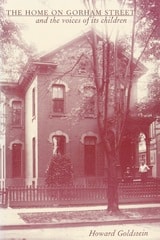
The Home on Gorham Street and the Voices of Its Children
Howard Goldstein
University of Alabama Press, 1996
Giving voice to childhood, memory, and resilience within a shared home.
The Home on Gorham Street looks back to an earlier era of care for orphaned and dependent children of Eastern European Jewish immigrants. Within this social history and ethnography, the voices of elders once wards of the home in the 1930s and 1940s tell us in sometimes poetic, often comic, usually ironic, and always poignant words what it was really like to grow up in an orphanage. Emerging from this penetrating adventure are principles for the future of effective group care in meeting the needs of the rapidly growing number of abused, forsaken, and orphaned children.
Goldstein's ethnography demonstrates amply that children who spend years in an institution can go on to lead productive lives under certain conditions. Such conditions may never have been met in any other children's institution. That they did exist one time, however, is cause not only to rejoice but also to understand that recreating these conditions is difficult and possibly impossible.
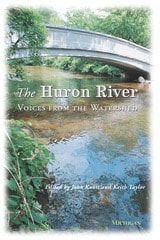
The Huron River
Voices from the WatershedJohn Knott and Keith Taylor, Editors
University of Michigan Press, 2000
"The Huron River . . . was called 'Cos-scut-e-nong Sebee'. . . . [It] is a beautiful, transparent stream, passing alternatively through rich bottoms, openings, plains, and sloping woodlands, covered with heavy timber."
---History of Washtenaw County, Michigan, 1881
The Huron River---stretching 130 miles through three counties---has inspired numerous writers throughout the nineteenth and twentieth centuries. Contained here is a collection of new poems, essays, and stories, accompanied by maps, photographs, and illustrations that celebrate the Huron River. Over twenty locally and nationally known literary figures, including Alice Fulton and Charles Baxter, have contributed to this volume. In addition, the work of biologists, naturalists, and even an arche-ologist have been included to give a richer sense of the physical and cultural environment.
Each of these writers reminds us that our lives are more intertwined with the river and its watershed than we might think. The Huron River opens with these words: "Watersheds are the oldest and most durable markers of place. . . . These boundaries affect our lives by defining our natural environment, not only its topography but its soils, its plant and animal life, and to some extent its weather. The water that sustains most of us is the water that flows through our local watershed."
And the river's strength is wondrous unto itself. "The water will always be there, and it will always find its way down," writer Gary Snyder tells us. The river is sometimes visible, sometimes not; yet it "is alive and well under the city streets, running in giant culverts."
John Knott is Professor of English, University of Michigan. After working as a bookseller for twenty years, Keith Taylor now teaches writing part-time for the University of Michigan and works as a freelance writer.
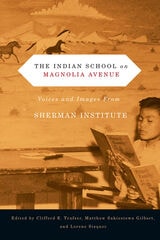
The Indian School on Magnolia Avenue
Voices and Images from Sherman InstituteEdited by Clifford E. Trafzer, Matthew Sakiestewa, and Lorene Sisquoc
Oregon State University Press, 2012
In 1902, the federal government opened Sherman Institute in Riverside, California, to transform American Indian students into productive farmers, carpenters, homemakers, nurses, cooks, and seamstresses. Indian students helped build the school and worked daily at Sherman; teachers provided vocational education and placed them in employment through the Outing Program.
Contributors to The Indian School on Magnolia Avenue have drawn on documents held at the Sherman Indian Museum to explore topics such as the building of Sherman, the school’s Mission architecture, the nursing program, the Special Five-Year Navajo Program, the Sherman cemetery, and a photo essay depicting life at the school.
Despite the fact that Indian boarding schools—with their agenda of cultural genocide— prevented students from speaking their languages, singing their songs, and practicing their religions, most students learned to read, write, and speak English, and most survived to benefit themselves and contribute to the well-being of Indian people.
Scholars and general readers in the fields of Native American studies, history, education, public policy, and historical photography will find
The Indian School on Magnolia Avenue an indispensable volume.
The Justice We Demand
Voices from the Indigenous Anti-Rape RevolutionSarah Deer
University of Minnesota Press, 2027
Sharing stories by Indigenous survivors of sexual violence to reconceptualize justice beyond punishment and remediation
The Justice We Demand asks a profound and urgent question: What does justice truly mean for rape survivors? To address sexual violence, two dominant frameworks of justice persist: carceral justice, which centers punishing perpetrators through the criminal legal system, and restorative justice, which emphasizes repairing interpersonal relationships to resolve tensions between perpetrator and victim. Indigenous survivors and their communities, however, do not view justice as a neat binary between carceralism or restoration. Instead, they navigate complex legal and social systems across federal, state, local, and tribal jurisdictions, and they imagine justice in the form of ceremony, apology, banishment, and more, remedies that often fall outside the formal, colonialist legal system.
Centering the importance of storytelling in addressing trauma, Sarah Deer and Melinda Chen listen to the stories of fifty-one Indigenous women and Two-Spirit survivors of sexual violence to understand their versions of justice. Through their felt experiences, Indigenous survivors challenge conventional criminal justice paradigms that persist in Tribal Nations and settler colonial states, cultivating sovereign approaches to punishment and healing.
With actionable insight and resounding truth, The Justice We Demand urges us to reconsider what justice means and envisions a constellation of remedies led by each survivor’s needs, rooted in their own terms, bodies, and land.
Retail e-book files for this title are screen-reader friendly with images accompanied by short alt text and/or extended descriptions.
The Other Side of Silence
Voices from the Partition of IndiaUrvashi Butalia
Duke University Press, 2000
Through interviews conducted over a ten-year period and an examination of diaries, letters, memoirs, and parliamentary documents, Butalia asks how people on the margins of history—children, women, ordinary people, the lower castes, the untouchables—have been affected by this upheaval. To understand how and why certain events become shrouded in silence, she traces facets of her own poignant and partition-scarred family history before investigating the stories of other people and their experiences of the effects of this violent disruption. Those whom she interviews reveal that, at least in private, the voices of partition have not been stilled and the bitterness remains. Throughout, Butalia reflects on difficult questions: what did community, caste, and gender have to do with the violence that accompanied partition? What was partition meant to achieve and what did it actually achieve? How, through unspeakable horrors, did the survivors go on? Believing that only by remembering and telling their stories can those affected begin the process of healing and forgetting, Butalia presents a sensitive and moving account of her quest to hear the painful truth behind the silence.

The Poetry of Capital
Voices from Twenty-First-Century AmericaEdited by Benjamin S. Grossberg and Clare Rossini
University of Wisconsin Press, 2021
Editors Benjamin S. Grossberg and Clare Rossini selected poems to reflect broad themes of labor, history and economic forces, social equity, and the environment. In addition, they asked each poet to provide a brief prose comment to introduce their work. Some give broad statements on the nature of wealth in America today; others are intimate, offering insight into how life experiences inform their writing; still others reflect on the art of poetry itself and its unique power to speak to economic pressures of the moment.
Contributors include Mary Jo Bang, Xochiquetzal Candelaria, Alan Chazaro, Mark Doty, Denise Duhamel, Tony Hoagland, Yusef Komunyakaa, Dorianne Laux, Kimiko Hahn, Sharon Olds, George Perreault, Robert Pinsky, Minnie Bruce Pratt, Afaa Michael Weaver, David Wojahn, and others.

The Puerto Rican Movement
Voices from the DiasporaAndres Torres
Temple University Press, 1998
To combat these two problems, and drawing n a tradition of patriotism and social responsibility, a number of organizations grew up, including the Young Lords Party (YLP), which later evolved into the Puerto Rican Revolutionary Workers Organization; the Pro Independence Movement (MPI), which evolved into the U.S> branch of the Puerto Rican Socialist Party; El Comite; the Puerto Rican Student Union (PRSU); the Movement for National Liberation (MLN); and the Armed Forces of National Liberation (FALN). THe Puerto Rican Movement looks at all these groups as specific organizations of real people in such places as Boston, Chicago, Hartford, New York, and Philadelphia.
The contributors, almost all of whom were involved with the organizations they describe, provide detailed descriptions and historical analyses of the Puerto Rican Left. Interviews with such key figures as Elizam Escobar, Piri Thomas, and Luis Fuentes, as well as accounts by people active in the gay/lesbian, African American, and white Left movements add a vivid picture of why and how people became radicalized and how their ideals intersected with their group's own dynamics.
These critical assessments highlight each organization's accomplishments and failures and illuminate how different sets of people, in different circumstances, respond to social problems -- in this case, the "national question" and the issues of social justice and movement politics.
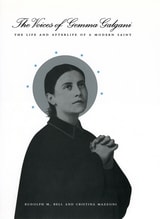
The Voices of Gemma Galgani
The Life and Afterlife of a Modern SaintRudolph M. Bell and Cristina Mazzoni
University of Chicago Press, 2002
Gemma Galgani was the first person who lived in the twentieth century to become a saint. Born in Lucca to a pharmacist and his wife, Gemma died of tuberculosis at the young age of twenty-five after a life of intense personal spirituality. Jesus caressed her as lovers do; the Virgin Mary was her affectionate Mom; Brother Gabriel playfully teased her about whether she preferred his visits to those of Jesus; and she even received all of Christ's wounds in her hands, feet, and side. At the same time, she was mocked by her family and labeled a hysteric by doctors and the local bishop. Her trials and the intimate details of her supernatural encounters—the voices of Gemma Galgani—are revealed here in this marvelous book by Rudolph M. Bell and Cristina Mazzoni.
Bell and Mazzoni have chosen and translated the most important of Gemma's words: her autobiographical account of her childhood, her diary, and key selections from her "ecstasies" and letters. Gemma emerges as a very modern saint indeed: confident, grandiose, manipulative, childish, admired, and with this book, no longer forgotten. Following Gemma's own voice, Bell carefully contextualizes her life and passion and explores her afterlife, specifically the complicated process of her canonization. Mazzoni closes the book with a "Saint's Alphabet" that finds, through Gemma's voice, spiritual meaning for women in the twenty-first century.
Far more than the reinvigoration of a neglected historical figure, The Voices of Gemma Galgani is a portrait of a complex girl-woman caught between the medieval and the modern and a potent reminder of spirituality in a supposedly secular age.
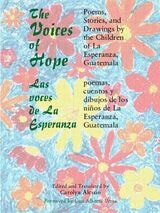
The Voices of Hope
Poems, Stories, and Drawings by the Children of La Esperanza, GuatemalaEdited and Translated by Carolyn Alessio. Foreword by Luis Alberto Urrea
Southern Illinois University Press, 2003
Collected and translated by Carolyn Alessio, this bilingual anthology of poems, stories, memories, and philosophies was written and illustrated by the children of La Esperanza, Guatemala. Drawing upon the fortitude of their mothers, who began hand-sewing crafts to sell in the United States in order to survive the hardships of this war-torn impoverished country, Alessio’s students, aged four to sixteen, reveal amazing survival skills, fertile imaginations, and dreams of attaining better lives. The resulting work is a collection of poems and drawings that are terse, funny, sometimes sad, but always humanly, gloriously alive.
As Alessio explains, “At first, I thought I might be imagining the echoes of magical realism, but as I continued to read the students’ writing and study their drawings, I found similar themes. Witches killed children who didn’t respect the spirits; women abused by their husbands sought refuge in trees with magical doors. People who didn’t have money or jobs lived on the road and in forests, where they alternately fought and partied with the animals.”
The volume features a foreword from Luis Alberto Urrea,author of Across the Wire: Life and Hard Times on the Mexican Border and By the Lake of Sleeping Children: The Secret Life of the Mexican Border.
The Voices of Need
From Petition to Patient in Early Massachusetts, 1730–1820Angela M. Keysor
University of Massachusetts Press, 2027
Revealing how people in need advocated for and negotiated their own care until the development of standardized medicine
The Voices of Need uncovers how men and women in Charlestown, Massachusetts, who turned to municipal authorities for aid, actively shaped how their need was understood and addressed. Through a close examination of Charlestown’s care networks, Angela Keysor shows how town selectmen relied on sufferers themselves to articulate what would relieve their distress, while local women—paid by town authorities—provided hands-on care in homes and neighborhoods. These networks flourished in the early and mid-eighteenth century, but their flexibility and responsiveness were increasingly strained by crisis and change. A devastating smallpox epidemic in 1763, followed by racialized debates over belonging after the legal end of enslavement in Massachusetts in 1783, exposed the limits of community-based care.
After the American Revolution, rising numbers of aid requests prompted town officials to reorganize care through a contract system in which paid caregivers attended to multiple dependents at once. As care became centralized and standardized, the space for individuals to define their own needs—and to influence how those needs were met—steadily narrowed. By 1819, with the founding of Massachusetts General Hospital, sufferers were fully redefined as patients, expected to submit to professional authority rather than participate in decisions about their own care.
Tracing this transition from negotiated assistance to institutional medicine, The Voices of Need illuminates a largely forgotten history of agency among the poor and infirm. In doing so, Keysor challenges conventional narratives of early American health care and shows how the rise of standardized medicine fundamentally reshaped the meaning of need, care, and authority.
This Fine Place So Far from Home
Voices of Academics from the Working Classedited by C. L. Barney Dews and Carolyn Leste Law
Temple University Press, 1995
These autobiographical and analytical essays by a diverse group of professors and graduate students from working-class families reveal an academic world in which "blue-collar work is invisible." Describing conflict and frustration, the contributors expose a divisive middle-class bias in the university setting. Many talk openly about how little they understood about the hierarchy and processes of higher education, while others explore how their experiences now affect their relationships with their own students. They all have in common the anguish of choosing to hide their working-class background, to keep the language of home out of the classroom and the ideas of school away from home. These startlingly personal stories highlight the fissure between a working-class upbringing and the more privileged values of the institution.
Trans/Portraits
Voices from Transgender CommunitiesJackson Wright Shultz
Dartmouth College Press, 2015
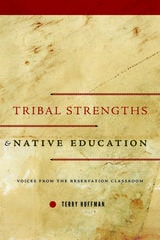
Tribal Strengths and Native Education
Voices from the Reservation ClassroomTerry Huffman
University of Massachusetts Press, 2018
In 1889, Sitting Bull addressed the formal, Western-style education of his people. “When you find something good in the white man's road, pick it up,” he intoned. “When you find something that is bad . . . leave it alone. We shall master his machinery, and his inventions, his skills, his medicine, his planning, but we will retain our beauty and still be Indians.”
Sitting Bull's vision—that cultural survival and personal perseverance derive from tribal resilience—lies at the heart of Tribal Strengths and Native Education. Basing his account on the insights of six veteran American Indian educators who serve in three reservation schools on the Northern Plains, Terry Huffman explores how Native educators perceive pedagogical strengths rooted in their tribal heritage and personal ethnicity. He recounts their views on the issues facing students and shows how tribal identity can be a source of resilience in academic and personal success. Throughout, Huffman and the educators emphasize the importance of anchoring the formal education of Indian children in Native values and worldviews—in “tribal strengths.”