65 books match the query 'Water-supply' and 8 start with t
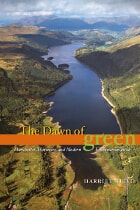
cover of The Dawn of Green: Manchester, Thirlmere, and Modern Environmentalism

The Dawn of Green

Manchester, Thirlmere, and Modern Environmentalism

Harriet Ritvo

University of Chicago Press, 2009
Located in the heart of England’s Lake District, the placid waters of Thirlmere seem to be the embodiment of pastoral beauty. But under their calm surface lurks the legacy of a nineteenth-century conflict that pitted industrial progress against natural conservation—and helped launch the environmental movement as we know it. Purchased by the city of Manchester in the 1870s, Thirlmere was dammed and converted into a reservoir, its water piped one hundred miles south to the burgeoning industrial city and its workforce. This feat of civil engineering—and of natural resource diversion—inspired one of the first environmental struggles of modern times. The Dawn of Green re-creates the battle for Thirlmere and the clashes between conservationists who wished to preserve the lake and developers eager to supply the needs of a growing urban population. Bringing to vivid life the colorful and strong-minded characters who populated both sides of the debate, noted historian Harriet Ritvo revisits notions of the natural promulgated by romantic poets, recreationists, resource managers, and industrial developers to establish Thirlmere as the template for subsequent—and continuing—environmental struggles.
[more]
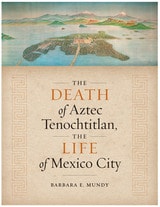
cover of The Death of Aztec Tenochtitlan, the Life of Mexico City

The Death of Aztec Tenochtitlan, the Life of Mexico City

By Barbara E. Mundy

University of Texas Press, 2015

Winner, Book Prize in Latin American Studies, Colonial Section of Latin American Studies Association (LASA), 2016
ALAA Book Award, Association for Latin American Art/Arvey Foundation, 2016

The capital of the Aztec empire, Tenochtitlan, was, in its era, one of the largest cities in the world. Built on an island in the middle of a shallow lake, its population numbered perhaps 150,000, with another 350,000 people in the urban network clustered around the lake shores. In 1521, at the height of Tenochtitlan’s power, which extended over much of Central Mexico, Hernando Cortés and his followers conquered the city. Cortés boasted to King Charles V of Spain that Tenochtitlan was “destroyed and razed to the ground.” But was it?

Drawing on period representations of the city in sculptures, texts, and maps, The Death of Aztec Tenochtitlan, the Life of Mexico City builds a convincing case that this global capital remained, through the sixteenth century, very much an Amerindian city. Barbara E. Mundy foregrounds the role the city’s indigenous peoples, the Nahua, played in shaping Mexico City through the construction of permanent architecture and engagement in ceremonial actions. She demonstrates that the Aztec ruling elites, who retained power even after the conquest, were instrumental in building and then rebuilding the city. Mundy shows how the Nahua entered into mutually advantageous alliances with the Franciscans to maintain the city's sacred nodes. She also focuses on the practical and symbolic role of the city’s extraordinary waterworks—the product of a massive ecological manipulation begun in the fifteenth century—to reveal how the Nahua struggled to maintain control of water resources in early Mexico City.
[more]
cover of The Last Drop: The Politics of Water

The Last Drop

The Politics of Water

Mike Gonzalez and Marianella Yanes

Pluto Press, 2015

The one indispensable resource, water is increasingly controlled and even owned by private capital. By 2012, water was a trillion-dollar industry—and as population growth, industrial production, and ecological change make scarcity ever-more common, water may well become the source of military and political conflict in the years to come.
 
This book looks at how we got here and what we can and should do next. Laying out the complex arguments surrounding water, its ownership and access to it, Mike Gonzalez and Marianella Yanes make the technical and scientific aspects of the discussion clear and accessible—and thereby enable themselves to make the political questions more urgent. Pushing back against the market fundamentalists, the authors argue that it is both possible and necessary that considerations of equity and social justice prevail in the debates about water. Powerful and polemical, The Last Drop will be a vital resource for water activists worldwide.
[more]
cover of The Struggle for Water: Politics, Rationality, and Identity in the American Southwest

The Struggle for Water

Politics, Rationality, and Identity in the American Southwest

Wendy Nelson Espeland

University of Chicago Press, 1998

Nearly fifty years ago, the Bureau of Reclamation proposed building a dam at the confluence of two rivers in Central Arizona. While the dam would bring valuable water to this arid plain, it would also destroy a wildlife habitat, flood archaeological sites, and force the Yavapai Indians off their ancestral home. The Struggle for Water is not only the fascinating story of this controversial and ultimately thwarted public works project but also a study of rationality as a cultural, organizational, and political construct.

In the 1970s, the three groups most intimately involved in the Orme Dam—younger Bureau of Reclamation employees committed to "rational choice" decision making, older Bureau engineers committed to the dam, and the Yavapai community—all found themselves and their values transformed by their struggles. Wendy Nelson Espeland lays bare the relations between interests and identities that emerged during the conflict, creating a contemporary tale of power and colonization, bureaucracies and democratic practice, that asks the crucial question of what it means to be "rational."
[more]
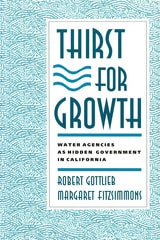
cover of Thirst for Growth: Water Agencies as Hidden Government in California

Thirst for Growth

Water Agencies as Hidden Government in California

Robert Gottlieb

University of Arizona Press, 1991

An overview of the key issues of public accountability and water policy innovation that confront urban and agricultural water agencies throughout the country--notably in California where the prospects for future water development have become especially problematic. Focusing on six agencies in the Southern California region, they offer a series of case studies analyzing the issues of water quality, including groundwater contamination and disinfection by-products; reallocation and transfer of existing supplies; and management programs based on pricing changes, the conjunctive use of surface and groundwater supplies, and increased storage capacity aimed at greater efficiencies in stretching those existing supplies.
[more]
cover of Three Ways to Be Alien: Travails and Encounters in the Early Modern World

Three Ways to Be Alien

Travails and Encounters in the Early Modern World

Sanjay Subrahmanyam

Brandeis University Press, 2011
Sanjay Subrahmanyam’s Three Ways to Be Alien draws on the lives and writings of a trio of marginal and liminal figures cast adrift from their traditional moorings into an unknown world. The subjects include the aggrieved and lost Meale, a “Persian” prince of Bijapur (in central India, no less) held hostage by the Portuguese at Goa; English traveler and global schemer Anthony Sherley, whose writings reveal a surprisingly nimble understanding of realpolitik in the emerging world of the early seventeenth century; and Nicolò Manuzzi, an insightful Venetian chronicler of the Mughal Empire in the later seventeenth century who drifted between jobs with the Mughals and various foreign entrepôts, observing all but remaining the eternal outsider. In telling the fascinating story of floating identities in a changing world, Subrahmanyam also succeeds in injecting humanity into global history and proves that biography still plays an important role in contemporary historiography.
[more]
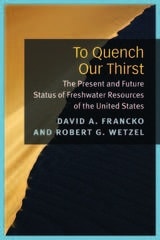
cover of To Quench Our Thirst: The Present and Future Status of Freshwater Resources of the United States

To Quench Our Thirst

The Present and Future Status of Freshwater Resources of the United States

David A. Francko and Robert G. Wetzel

University of Michigan Press, 1983
Freshwater resources underlie all agricultural and industrial processes and are fundamental to our survival. No technological substitutes for fresh water exist. United States society faces acute and chronic water resource crises, analogous to those that have repeatedly contributed to the demise and reduced standards in previous cultures. Corrective measures to reduce inefficient consumption, use, and degradation of existing water supplies can be accomplished with existing technology without losses of real economic productivity.
[more]
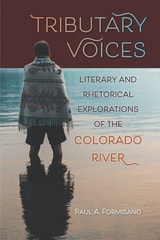
cover of Tributary Voices: Literary and Rhetorical Exploration of the Colorado River

Tributary Voices

Literary and Rhetorical Exploration of the Colorado River

Paul A. Formisano

University of Nevada Press, 2022

The Colorado River is in crisis. Persistent drought, climate change, and growing demands from ongoing urbanization threaten this life-source that provides water to more than forty million people in the U.S. and Mexico. Coupled with these challenges are our nation’s deeply rooted beliefs about the region as a frontier, garden, and wilderness that have created competing agendas about the river as something to both exploit and preserve. Over the last century and a half, citizens and experts looked to law, public policy, and science to solve worsening water problems. Yet today’s circumstances demand additional perspectives to foster a more sustainable relationship with the river.

Through literary, rhetorical, and historical analysis of some of the Colorado River’s lesser-known stakeholders, Tributary Voices considers a more comprehensive approach to river management on the eve of the one-hundredth anniversary of the signing of the Colorado River Compact, which governs the allocation of water rights to the seven states in the region. Ranging from the early twentieth century to the present, Tributary Voices examines nature writing, women’s narratives, critiques of dam development, the Latina/o communities’ appeals for river restoration, American Indian authors’ and tribal nations’ claims of water sovereignty, and teachings about environmental stewardship and provident living. This innovative study models an interdisciplinary approach to water governance and reinvigorates our imagination in achieving a more sustainable water ethic.
[more]