Results by title
1441 books match the query 'World' and 310 start with t
Taking Books to the World
American Publishers and the Cultural Cold WarAmanda Laugesen
University of Massachusetts Press, 2017
In Taking Books to the World, Amanda Laugesen tells the story of this purposeful enterprise, demonstrating the mix of goodwill and political drive behind its efforts to create modern book industries in developing countries. Examining the project through a clarifying lens, she reveals the ways Franklin's work aligned with cultural currents, exposing the imperial beliefs, charitable hopes, and intellectual reasoning behind this global experiment.
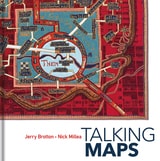
Talking Maps
Jerry Brotton and Nick Millea
Bodleian Library Publishing, 2019
Drawing on the Bodleian Library’s outstanding map collection and covering almost a thousand years, Talking Maps takes a new approach to map-making by showing how maps and stories have always been intimately entwined. Including such rare treasures as a unique map of the Mediterranean from the eleventh-century Arabic Book of Curiosities, a twelfth-century map of the world by al-Sharīf al-Idrīsī, and C. S. Lewis’s map of Narnia, this fascinating book analyzes maps as objects that enable us to cross sea and land; as windows into alternative and imaginary worlds; as guides to reaching the afterlife; as tools to manage cities, nations, and empires; as images of environmental change; and as digitized visions of the global future.
By telling the stories behind the artifacts and those generated by them, Talking Maps reveals how each map is not just a tool for navigation but also a worldly proposal that helps us to understand who we are by describing where we are.

Talking to North Korea
Ending the Nuclear StandoffGlyn Ford
Pluto Press, 2018
This provocative insider’s account blasts apart the myths which paint North Korea as a rogue state run by a mad leader. Informed by extraordinary access to the country's leadership, Glyn Ford investigates the regime from the inside, providing game-changing insights. Acknowledging that North Korea is a deeply flawed and barbaric state, he nonetheless shows that sections of the leadership are desperate to modernize and end their isolation.
With chapters on recent developments including the Trump / Kim summit, Ford supports a dialogue between East and West and provides a road map to avert the looming threat of a war that would threaten the lives of millions.

Telescopes, Tides, and Tactics
A Galilean Dialogue about The Starry Messenger and Systems of the WorldStillman Drake
University of Chicago Press, 1983
Drake has revised his earlier abridged translation of the Starry Messenger, and for the first time the entire work is presented here in modern English. No other edition or translation of this famous work has analyzed Galileo's recorded observations in detail, compared them with modern calculations, or explained the later use he made of them. In the accompanying fictional dialogue, Salviati, Sagredo, and Sarpi reread the Starry Messenger in 1613 and discuss events and issues raised in the three years since its publication. Much of the dialogue is based on archival materials not previously cited in English. Drake has unearthed a wealth of information that will interest the lay reader as well as the historian and the scientist—descriptions of the various and occasionally bizarre critics of Galileo, a reconstruction of Galileo's promised book on the system of the world, his tables of observations and calculations of satellite motions, and evidence for an early tide theory. It was this theory explaining tides by motions of the earth, rather than the influence of Platonic metaphysics, Drake argues that played a major role in Galileo's acceptance of Copernican astronomy.
Telescopes, Tides, and Tactics is a thorough portrait of Galileo as a working astronomer. Offering much more than a commentary on the Starry Messenger, Drake has written a novel and absorbing contribution to the history of physics and astronomy and the study of the Scientific Revolution.
Temple University
125 Years of Service to Philadelphia, the Nation, and the WorldJames W. Hilty with Matthew M. Hanson, foreword by Ann Weaver Hart
Temple University Press, 2010
Temple University: 125 Years of Service to Philadelphia, the Nation, and the World, by noted historian and Temple professor James Hilty offers the first full history of Temple University. Lovingly written and beautifully designed, it presents a rich chronicle from founder Russell Conwell’s vision to democratize, diversify, and broaden the reach of higher education to Temple's present-day status as the twenty-eighth largest university and the fifth largest provider of professional education in the United States. With its state-of-the-art technological capabilities, improved amenities, and new multi-million- dollar facilities, Temple remains at the forefront of America’s modern urban universities.
The book captures Temple’s long record of service to its North Philadelphia neighbors, its global reach to Rome, Tokyo, and beyond, and its development from a rowhouse campus into a lively 11,000- resident urban village—all the while assuring “Access to Excellence.” Along the way, we learn how Temple reacted to and helped shape major developments in the history of American higher education.
Featuring 250 full-color photos, Temple University provides a wonderful keepsake for those who already know the university and will become a valued resource for anyone interested in the urban university.
Ten Books That Shaped the British Empire
Creating an Imperial CommonsAntionette Burton and Isabel Hofmeyr, eds.
Duke University Press, 2014
Contributors. Tony Ballantyne, Elleke Boehmer, Catherine Hall, Isabel Hofmeyr, Aaron Kamugisha, Marilyn Lake, Charlotte Macdonald, Derek Peterson, Mrinalini Sinha, Tridip Suhrud, André du Toit
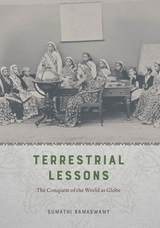
Terrestrial Lessons
The Conquest of the World as GlobeSumathi Ramaswamy
University of Chicago Press, 2017
In Terrestrial Lessons, Ramaswamy provides the first in-depth analysis of the globe’s history in and impact on the Indian subcontinent during the colonial era and its aftermath. Drawing on a wide array of archival sources, she delineates its transformation from a thing of distinction possessed by elite men into that mass-produced commodity used in classrooms worldwide—the humble school globe. Traversing the length and breadth of British India, Terrestrial Lessons is an unconventional history of this master object of pedagogical modernity that will fascinate historians of cartography, science, and Asian studies.
Terror and History, Volume 2003
Van Gosse , ed.
Duke University Press, 0
Contributors. Joel Beinin, Lisa Brock, Horace Campbell, Duane J. Corpis, Belinda Davis, Allen Feldman, Ian Christopher Fletcher, Van Gosse, Joy James, J. Angus Johnston, Amy Kaplan, Thomas Miller Klubock, R. J. Lambrose, Jesse Lemisch, Deborah Levenson, Walter Benn Michaels, Donnacha Ó Beacháin, Deborah Poole, Vijay Prashad, David Prochaska, Gerardo Rénique, Cedric J. Robinson, Nikhil Pal Singh, Stephanie J. Smith, Akinyele O. Umoja, Verónica Valdivia Ortiz de Zárate, Jon Wiener, Marilyn B. Young, Joseba Zulaika
The ANC and the Liberation Struggle
A Critical Political BiographyDale T. McKinley
Pluto Press, 1997
eloquent testimony of the continuing vitality of the South African left' Modern African Studies
The African National Congress, the ANC, negotiated a transition of government and power in South Africa in the early 1990s and gained widespread respect and legitimacy when Nelson Mandela was voted in as President in 1994.
In this controversial and radical critique of the ANC and the struggle for liberation in South Africa, Dale T. McKinley challenges conventional public perceptions of the organisation and its celebrated rise to power. McKinley offers the first detailed analysis of the ANC's leadership, tactics and strategies from the 1920s, through the years of exile, to the 1990s, focusing on its close alliance with the South African Communist Party. he reveals that the organisation, despite historical claims to the contrary, failed to stay in touch with the south African masses. The ANC made fundamental compromises to gain political power, and in so doing has ensured that the economic power-base of the ruling elites in South Africa remains essentially unaltered.
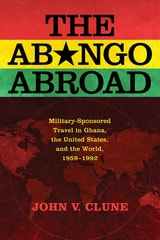
The Abongo Abroad
Military-Sponsored Travel in Ghana, the United States, and the World, 1959-1992John V. Clune
Vanderbilt University Press, 2017
Merging newly discovered documents from Ghana's armed forces and declassified sources on American military assistance to Africa, this work argues that military-sponsored travel made individual Ghanaians' outlooks on the world more international, just as military assistance planners hoped they would, but the Ghanaian state struggled to turn that new identity into political or economic progress.
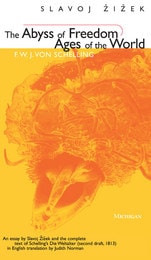
The Abyss of Freedom/Ages of the World
Slavoj Zizek and F.W.J. von Schelling
University of Michigan Press, 1997
Zizek argues that Schelling's most profound thoughts are found in the series of three consecutive attempts he made to formulate the "ages of the world/Weltalter," the stages of the self-development of the Absolute. Of the three versions, claims Zizek, it is the second that is the most eloquent and definitive encompassing of Schelling's lyrical thought. It centers on the problem of how the Absolute (God) himself, in order to become actual, to exist effectively, has to accomplish a radically contingent move of acquiring material, bodily existence. Never before available in English, this version finally renders accessible one of the key texts of modern philosophy, a text that is widely debated in philosophical circles today.
The Abyss of Freedom is Zizek's own reading of Schelling based upon Lacanian psychoanalytic theory. It focuses on the notion that Lacan's theory--which claims that the symbolic universe emerged from presymbolic drives--is prefigured in Schelling's idea of logos as given birth to from the vortex of primordial drives, or from what "in God is not yet God." For Zizek, this connection is monumental, showing that Schelling's ideas forcefully presage the post-modern "deconstruction" of logocentrism.
Slavoj Zizek is not a philosopher who stoops to conquer objects but a radical voice who believes that philosophy is nothing if it is not embodied, nothing if it is only abstract. For him, true philosophy always speaks of something rather than nothing. Those interested in the genesis of contemporary thought and the fate of reason in our "age of anxiety" will find this coupling of texts not only philosophically relevant, but vitally important.
Slavoj Zizek is the author of The Sublime Object of Ideology, Tarrying with the Negative: Kant, Hegel and the Critique of Ideology, and most recently, The Indivisible Remainder: An Essay on Schelling and Related Matters. Currently he is a Senior Researcher at the Institute for Social Sciences, University of Ljubljana. Judith Norman is Assistant Professor of Philosophy at Trinity University in San Antonio, Texas.
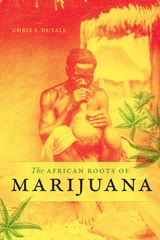
The African Roots of Marijuana
Chris S. Duvall
Duke University Press, 2019
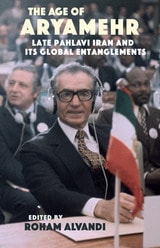
The Age of Aryamehr
Late Pahlavi Iran and Its Global EntanglementsEdited by Roham Alvandi
Gingko, 2025
The reign of the last Shah of Iran, Mohammad Reza Pahlavi (1941–79), marked the high point of Iran’s global interconnectedness. Never before had Iranians felt the impact of global political, social, economic, and cultural forces so intimately in their national and daily lives, nor had Iranian actors played such an important global role – on battlefields, barricades, and in board rooms far beyond Iran’s borders. Iranian intellectuals, technocrats, politicians, workers, artists, and students alike were influenced by the global ideas, movements, markets, and conflicts that they also helped to shape.
From the launch of the Shah’s White Revolution in 1963 to his overthrow in the popular revolution of 1978–79, Iran saw the longest period of sustained economic growth that the country had ever experienced. An entire generation took its cue from the shift from oil consumption to oil production to dream of, and aspire to, a modernized Iran, and the history of Iran in this period has tended to be presented as a prologue to the revolution. Those histories usually locate the political, social, and cultural origins of the revolution firmly within a national context, into which global actors intruded as Iranian actors retreated. While engaging with that national narrative, this volume is concerned with Iran’s place in the global history of the 1960s and ’70s. It examines and highlights the transnational threads that connected Pahlavi Iran to the world, from global traffic in modern art and narcotics to the embrace of American social science by Iranian technocrats and the encounter of European intellectuals with the Iranian Revolution.
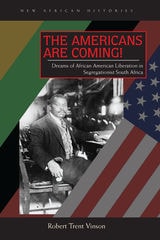
The Americans Are Coming!
Dreams of African American Liberation in Segregationist South AfricaRobert Trent Vinson
Ohio University Press, 2011
For more than half a century before World War II, black South Africans and “American Negroes”—a group that included African Americans and black West Indians—established close institutional and personal relationships that laid the necessary groundwork for the successful South African and American antiapartheid movements. Though African Americans suffered under Jim Crow racial discrimination, oppressed Africans saw African Americans as free people who had risen from slavery to success and were role models and potential liberators.
Many African Americans, regarded initially by the South African government as “honorary whites” exempt from segregation, also saw their activities in South Africa as a divinely ordained mission to establish “Africa for Africans,” liberated from European empires. The Jamaican-born Marcus Garvey’s Universal Negro Improvement Association, the largest black-led movement with two million members and supporters in forty-three countries at its height in the early 1920s, was the most anticipated source of liberation. Though these liberation prophecies went unfulfilled, black South Africans continued to view African Americans as inspirational models and as critical partners in the global antiapartheid struggle.
The Americans Are Coming! is a rare case study that places African history and American history in a global context and centers Africa in African Diaspora studies.
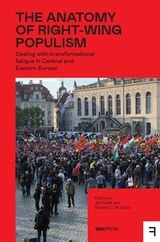
The Anatomy of Right-Wing Populism
Dealing with Transformational Fatigue in Central and Eastern EuropeEdited by Jan Kubik and Richard C. M. Mole
University College London, 2025
Over the past two decades, populist politicians and parties have enjoyed remarkable success across the globe. To develop a multidisciplinary understanding of the rise and functioning of right-wing populism in Central and Eastern Europe, The Anatomy of Right-Wing Populism examines two original concepts. The first, neo-feudalism, refers to an economic system whereby a relatively small group of elites holds most of the political power and controls a significant portion of the country’s economy. The second concept, neo-traditionalism, is a cultural strategy that aims to legitimize neo-feudal systems. Based on this framework, this volume provides empirical and theoretical analysis of populist movements and offers policy recommendations on how to resist illiberalism.
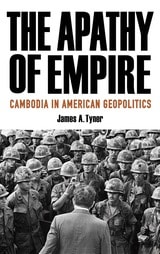
The Apathy of Empire
Cambodia in American GeopoliticsJames A. Tyner
University of Minnesota Press, 2024
What America’s intervention in Cambodia during the Vietnam War reveals about Cold War–era U.S. national security strategy
The Apathy of Empire reveals just how significant Cambodia was to U.S. policy in Indochina during the Vietnam War, broadening the lens to include more than the often-cited incursion in 1970 or the illegal bombing after the Paris Peace Accords in 1973. This theoretically informed and thoroughly documented case study argues that U.S. military intervention in Cambodia revealed America’s efforts to construct a hegemonic spatial world order.
James Tyner documents the shift of America’s post-1945 focus from national defense to national security. He demonstrates that America’s expansionist policies abroad, often bolstered by military power, were not so much about occupying territory but instead constituted the construction of a new normal for the exercise of state power. During the Cold War, Vietnam became the geopolitical lodestar of this unfolding spatial order. And yet America’s grand strategy was one of contradiction: to build a sovereign state (South Vietnam) based on democratic liberalism, it was necessary to protect its boundaries—in effect, to isolate it—through both covert and overt operations in violation of Cambodia’s sovereignty. The latter was deemed necessary for the former.
Questioning reductionist geopolitical understandings of states as central or peripheral, Tyner explores this paradox to rethink the formulation of the Cambodian war as sideshow, revealing it instead as a crucial site for the formation of this new normal.
Retail e-book files for this title are screen-reader friendly.
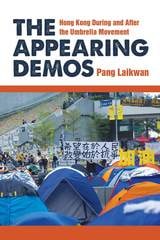
The Appearing Demos
Hong Kong During and After the Umbrella MovementPang Laikwan
University of Michigan Press, 2020
The 79-day-long Hong Kong Umbrella Movement occupied major streets in the busiest parts of the city, creating tremendous inconvenience to this city famous for capitalist order and efficiency. It was also a peaceful collective effort of appearance, and it was as much a political event as a cultural one. The urge for expressing an independent cultural identity underlined both the Occupy movement and the remarkably rich cultural expressions it generated. While understanding the specificity of Hong Kong’s situations, The Appearing Demos also comments on some global predicaments we are facing in the midst of neoliberalism and populism. It directs our attention from state-based sovereignty to city-based democracy, and emphasizes the importance of participation and cohabitation. The book also examines how the ideas of Hannah Arendt are useful to those happenings much beyond the political circumstances that gave rise to her theorization. The book pays particular attention to the actual intersubjective experiences during the protest. These experiences are local, fragile, and sometimes inarticulable, therefore resisting rationality and debates, but they define the fullness of any individual, and they also make politics possible. Using the Umbrella Movement as an example, this book examines the “freed” political agents who constantly take others into consideration in order to guarantee the political realm as a place without coercion and discrimination. In doing so, Pang Laikwan demonstrates how politics means neither to rule nor to be ruled, and these movements should be defined by hope, not by goals.
The Arabs
Maxime Rodinson
University of Chicago Press, 1981
The Arc of War
Origins, Escalation, and TransformationJack S. Levy and William R. Thompson
University of Chicago Press, 2011
The Archaeology of V. Gordon Childe
Contemporary PerspectivesEdited by David R. Harris
University of Chicago Press, 1994
With contributions from such distinguished prehistorians as Kent V. Flannery, David Harris, Leo S. Klejn, John Mulvaney, Colin Renfrew, Michael Rowlands, and Bruce Trigger, The Archaeology of V. Gordon Childe is an attempt to evaluate Childe's achievement from different "partly national" perspectives and to assess how far, and why, his work remains significant today. The contributors examine such persistent themes in Childe's thought as the nature of culture and the role of diffusion in cultural evolution and debate the question of whether Childe anticipated "processual archaeology" in his famous models of the Neolithic and Urban Revolutions. Also included are evaluations of Childe's early career in Australia, his relations with Soviet archaeology, including a previously unknown letter from Childe to Soviet archaeologists, and his impact on American archaeology.
The Art of Military Coercion
Why the West's Military Superiority Scarcely MattersRob de Wijk
Amsterdam University Press, 2014
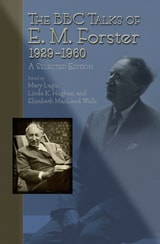
The BBC Talks of E.M. Forster, 1929-1960
A Selected EditionEdited by Mary Lago, Linda K. Hughes & Elizabeth MacLeod Walls
University of Missouri Press, 2008
Spanning three decades and a host of subjects, E. M. Forster’s radio broadcasts for the BBC were a major contribution to British cultural history, yet today they are rarely acknowledged by scholars of his life and work. But in their day they reached a larger audience than his fiction and established him as a household figure not only in Britain but also in the farthest reaches of its Empire.
As a frequent contributor to the BBC, Forster generally adhered to literary topics but did not shy away from social commentary. This book offers a new appreciation of his vitality and public importance through seventy annotated broadcasts that present him not only as a literary critic but also as a political activist, an advocate for India, and a wary yet cooperative ally of a colonialist government during World War II.
Gathering material either not in print or, if recast as essays, widely scattered, The BBC Talks of E. M. Forster reveals aspects of Forster’s intellect that have been given short shrift in previous studies. Nearly half the scripts date from 1941 to 1945 and provide an eyewitness account of war from a distinguished perspective. Forster comments on how the arts gallantly survived the blitz—even taking his listeners to the theater as bombing threats loom—and in other cases protests government interference in private life or the limits on free expression caused by the wartime paper shortage.
In these scripts, Forster casts a cosmopolitan eye on contemporary literature from James Joyce to John Steinbeck and provides early exposure for young writers and composers. He also enlarges the scope of European art by pairing Jane Austen or C. S. Lewis with Indian writers and offers pointed comments on contemporary literati such as Aldous Huxley and T. S. Eliot. Annotations to each piece identify Forster’s references and trace his revisions from script to broadcast, while the book’s introduction places his emergence as a distinctive radio voice within the historical, creative, and institutional contexts of broadcasting in his day.
This significant body of writing, too long overlooked, traces Forster’s evolution from novelist to adroit cultural critic and shows how a man who was never comfortable with machines played an important role in shaping a new medium. The BBC Talks of E. M. Forster situates Forster as one of the most poignant voices of the twentieth century as it offers new insight into a nation transfigured by war.
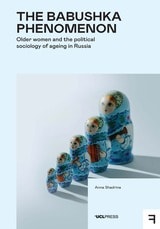
The Babushka Phenomenon
Older Women and the Political Sociology of Ageing in RussiaAnna Shadrina
University College London, 2025
The word “babushka” literally means “grandmother,” but it has come to represent much more since the Soviet era, not least the family caregiver. In her new study, Anna Shadrina explores the marginalization of older women in post-Soviet Russia, shedding light on the complex image of the babushka as both the cornerstone of the family unit and a passive recipient of social benefits. The author argues that this image has been shaped in no small part by welfare cutbacks that shifted the responsibility of family care from the state to individual women, as well as the increasing frustration of working-age people with the post-socialist economic system. Ultimately, she shows that despite being ostracized from society for defying age- and gender-specific social expectations, older women occupy a crucial position as active contributors to the economy.
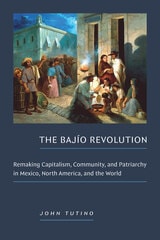
The Bajío Revolution
Remaking Capitalism, Community, and Patriarchy in Mexico, North America, and the WorldJohn Tutino
Duke University Press, 2025
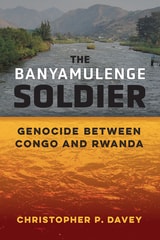
The Banyamulenge Soldier
Genocide between Congo and RwandaChristopher P. Davey
University of Michigan Press, 2025
Challenging the preconceived perpetrator and victim categories with a forward-thinking approach using the concept of genocide narrative identity—meaning a narrative identity shaped by experiences of social destruction or uses of genocide as a concept—Christopher P. Davey reveals how the stories we tell about ourselves shapes who we are. He shows that Banyamulenge experiences of genocide between Congo and Rwanda are layered around agencies of victimhood and perpetration of genocide. Using soldier and other community narratives, Davey examines the subjective nature of genocide in perception of an event, strategic deployment of the label, and in the (re)shaping of social worlds inhabited by this community and therefore impacting others in Congo and Rwanda. The Banyamulenge Soldier offers an insider view of the historical dynamics of current conflicts in South Kivu while adding to our understanding of relational genocide theory.
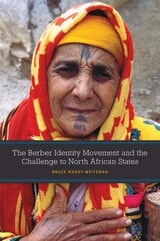
The Berber Identity Movement and the Challenge to North African States
By Bruce Maddy-Weitzman
University of Texas Press, 2011
Like many indigenous groups that have endured centuries of subordination, the Berber/Amazigh peoples of North Africa are demanding linguistic and cultural recognition and the redressing of injustices. Indeed, the movement seeks nothing less than a refashioning of the identity of North African states, a rewriting of their history, and a fundamental change in the basis of collective life. In so doing, it poses a challenge to the existing political and sociocultural orders in Morocco and Algeria, while serving as an important counterpoint to the oppositionist Islamist current.
This is the first book-length study to analyze the rise of the modern ethnocultural Berber/Amazigh movement in North Africa and the Berber diaspora. Bruce Maddy-Weitzman begins by tracing North African history from the perspective of its indigenous Berber inhabitants and their interactions with more powerful societies, from Hellenic and Roman times, through a millennium of Islam, to the era of Western colonialism. He then concentrates on the marginalization and eventual reemergence of the Berber question in independent Algeria and Morocco, against a background of the growing crisis of regime legitimacy in each country. His investigation illuminates many issues, including the fashioning of official national narratives and policies aimed at subordinating Berbers in an Arab nationalist and Islamic-centered universe; the emergence of a counter-movement promoting an expansive Berber "imagining" that emphasizes the rights of minority groups and indigenous peoples; and the international aspects of modern Berberism.

The Bird Who Cleans the World and Other Mayan Fables
Victor Montejo
Northwestern University Press, 1995
The Birth of Territory
Stuart Elden
University of Chicago Press, 2013
The Birth of the World as We Know It
Or TeiresiasMeredith Steinbach
Northwestern University Press, 1996
The Black Lights
Inside the World of Professional BoxingThomas Hauser
University of Arkansas Press, 0
The Blood of Abraham
Insights into the Middle EastJimmy Carter
University of Arkansas Press, 2007
The Book of Caterpillars
A Life-Size Guide to Six Hundred Species from around the WorldEdited by David G. James
University of Chicago Press, 2017
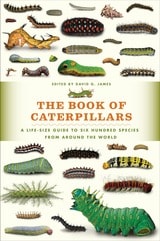
The Book of Caterpillars unveils the mysteries of six hundred species from around the world, introducing readers to the complexity and beauty of these underappreciated insects. With the advent of high-quality digital macrophotography, the world of caterpillars is finally opening up. The book presents a wealth of stunning imagery that showcases the astonishing diversity of caterpillar design, structure, coloration, and patterning. Each entry also features a two-tone engraving of the adult specimen, emphasizing the wing patterns and shades, as well as a population distribution map and table of essential information that includes their habitat, typical host plants, and conservation status. Throughout the book are fascinating facts that will enthrall expert entomologists and curious collectors alike.
A visually rich and scientifically accurate guide to six hundred of the world’s most peculiar caterpillars, this volume presents readers with a rare, detailed look at these intriguing forms of insect life.
The Book of Frogs
A Life-Size Guide to Six Hundred Species from around the WorldTim Halliday
University of Chicago Press, 2015
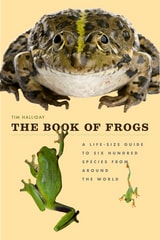
The Book of Frogs commemorates the diversity and magnificence of all of these creatures, and many more. Six hundred of nature’s most fascinating frog species are displayed, with each entry including a distribution map, sketches of the frogs, species identification, natural history, and conservation status. Life-size color photos show the frogs at their actual size—including the colossal seven-pound Goliath Frog. Accessibly written by expert Tim Halliday and containing the most up-to-date information, The Book of Frogs will captivate both veteran researchers and amateur herpetologists.
As frogs increasingly make headlines for their troubling worldwide decline, the importance of these fascinating creatures to their ecosystems remains underappreciated. The Book of Frogs brings readers face to face with six hundred astonishingly unique and irreplaceable species that display a diverse array of adaptations to habitats that are under threat of destruction throughout the world.
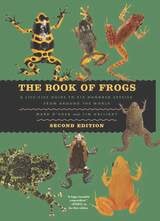
The Book of Frogs
A Life-Size Guide to Six Hundred Species from around the World, Second EditionMark O'Shea and Tim Halliday
University of Chicago Press, 2025
With almost nine thousand known species, frogs display a stunning array of forms and behaviors. A single gram of the toxin produced by the skin of the Golden Poison Frog can kill one hundred thousand people. Male Darwin’s Frogs carry their tadpoles in their vocal sacs for sixty days before coughing them out into the world. And the Wood Frogs of North America freeze every winter, reanimating in the spring.
The Book of Frogs documents the diversity and magnificence of all these anurans and many more. Readers meet six hundred of nature’s most fascinating frogs, with each entry including a distribution map, illustrations, species identification, natural history, and conservation status. Color photos show the frogs at their actual size—from Papua New Guinea’s diminutive Paedophryne amauensis, smaller than a coin, to Cameroon’s colossal Goliath Frog, heavier than some dogs. Written by experts Mark O’Shea and Tim Halliday and containing updated information on one hundred species and nearly twenty new entries, this revised edition will enthrall both veteran researchers and amateur herpetologists.
As frogs increasingly make headlines for their troubling worldwide decline, The Book of Frogs brings readers face to face with six hundred astonishingly unique and irreplaceable species that display a diverse array of adaptations to habitats that are ever changing.
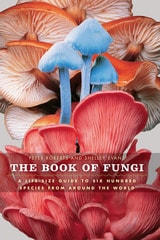
The Book of Fungi
A Life-Size Guide to Six Hundred Species from around the WorldPeter Roberts and Shelley Evans
University of Chicago Press, 2011
Colorful, mysterious, and often fantastically shaped, fungi have been a source of wonder and fascination since the earliest hunter-gatherers first foraged for them. Today there are few, if any, places on Earth where fungi have not found themselves a home. And these highly specialized organisms are an indispensable part of the great chain of life. They not only partner in symbiotic relationships with over ninety percent of the world’s trees and flowering plant species, they also recycle and create humus, the fertile soil from which such flora receive their nutrition. Some fungi are parasites or saprotrophs; many are poisonous and, yes, hallucinogenic; others possess life-enhancing properties that can be tapped for pharmaceutical products; while a delicious few are prized by epicureans and gourmands worldwide.
In this lavishly illustrated volume, six hundred fungi from around the globe get their full due. Each species here is reproduced at its actual size, in full color, and is accompanied by a scientific explanation of its distribution, habitat, association, abundance, growth form, spore color, and edibility. Location maps give at-a-glance indications of each species’ known global distribution, and specially commissioned engravings show different fruitbody forms and provide the vital statistics of height and diameter. With information on the characteristics, distinguishing features, and occasionally bizarre habits of these fungi, readers will find in this book the common and the conspicuous, the unfamiliar and the odd. There is a fungal predator, for instance, that hunts its prey with lassos, and several that set traps, including one that entices sows by releasing the pheromones of a wild boar.
Mushrooms, morels, puffballs, toadstools, truffles, chanterelles—fungi from habitats spanning the poles and the tropics, from the highest mountains to our own backyards—are all on display in this definitive work.
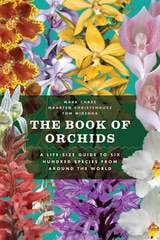
The Book of Orchids
A Life-Size Guide to Six Hundred Species from around the WorldMark W. Chase, Maarten J. M. Christenhusz, and Tom Mirenda
University of Chicago Press, 2017
The Book of Orchids revels in the diversity and oddity of these beguiling plants. Six hundred of the world’s most intriguing orchids are displayed, along with life-size photographs that capture botanical detail, as well as information about distribution, peak flowering period, and each species’ unique attributes, both natural and cultural. With over 28,000 known species—and more being discovered each year—the orchid family is arguably the largest and most geographically widespread of the flowering plant families. Including the most up-to-date science and accessibly written by botanists Mark Chase, Maarten Christenhusz, and Tom Mirenda, each entry in The Book of Orchids will entice researchers and orchid enthusiasts alike.
With stunning full-color images, The Book of Orchids is sure to become the go-to reference for these complex, alluring, and extraordinarily adaptable plants.
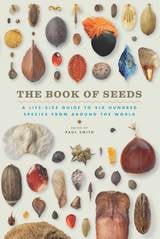
The Book of Seeds
A Life-Size Guide to Six Hundred Species from around the WorldEdited by Paul Smith
University of Chicago Press, 2018
The Book of Seeds takes readers through six hundred of the world’s seed species, revealing their extraordinary beauty and rich diversity. Each page pairs a beautifully composed photo of a seed—life-size, and, in some cases, enlarged to display fine detail—with a short description, a map showing distribution, and information on conservation status. The whole spectrum of seeds is covered here. There are prolific species like corn and less widely distributed species, like the brilliant blue seeds of the traveler’s palm or the bird of paradise flower, aptly named for its distinctive orange coiffure. There are tiny seeds and seeds weighing up to forty pounds. And while seeds in all their shapes, sizes, and colors grant us sustenance, there are even some we would be wise to treat with caution, such as the rosary pea, whose seeds are considered more toxic than ricin.
The essential guide to these complex plant creations, The Book of Seeds offers readers a rare, up-close look that will inspire scientists and nature lovers alike.
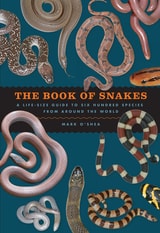
The Book of Snakes
A Life-Size Guide to Six Hundred Species from around the WorldMark O'Shea
University of Chicago Press, 2018
The Book of Snakes presents 600 species of snakes from around the world, covering nearly one in six of all snake species. It will bring greater understanding of a group of reptiles that have existed for more than 160 million years, and that now inhabit every continent except Antarctica, as well as two of the great oceans.
This volume pairs spectacular photos with easy-to-digest text. It is the first book on these creatures that combines a broad, worldwide sample with full-color, life-size accounts. Entries include close-ups of the snake’s head and a section of the snake at actual size. The detailed images allow readers to examine the intricate scale patterns and rainbow of colors as well as special features like a cobra’s hood or a rattlesnake’s rattle. The text is written for laypeople and includes a glossary of frequently used terms. Herpetologists and herpetoculturists alike will delight in this collection, and even those with a more cautious stance on snakes will find themselves drawn in by the wild diversity of the suborder Serpentes.
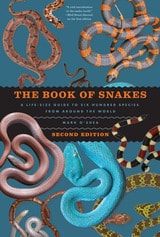
The Book of Snakes
A Life-Size Guide to Six Hundred Species from around the WorldMark O'Shea
University of Chicago Press, 2023
For millennia, humans have regarded snakes with an exceptional combination of fascination and revulsion. Some people recoil in fear at the very suggestion of these creatures, while others happily keep them as pets. Snakes can convey both beauty and menace in a single tongue flick, and so these creatures have held a special place in our cultures. Yet, for as many meanings as we attribute to snakes—from fertility and birth to sin and death—the real-life species represent an even wider array of wonders.
Now in a new edition, reflecting the most recent species classifications, The Book of Snakes presents 600 species of snakes from around the world, covering roughly one in seven of all snake species. It will bring greater understanding of a group of reptiles that have existed for more than 160 million years and that now inhabit every continent except Antarctica, as well as two of the great oceans.
This volume pairs spectacular photos with easy-to-digest text. It is the first book on these creatures that combines a broad, worldwide sample with full-color, life-size accounts. Entries include close-ups of the snake’s head and a section of the snake at actual size. The detailed images allow readers to examine the intricate scale patterns and rainbow of colors as well as special features like a cobra’s hood or a rattlesnake’s rattle. The text is written for laypeople and includes a glossary of frequently used terms. Herpetologists and herpetoculturists alike will delight in this collection, and even those with a more cautious stance on snakes will find themselves drawn in by the wild diversity of the suborder Serpentes.
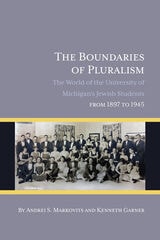
The Boundaries of Pluralism
The World of the University of Michigan’s Jewish Students from 1897 to 1945Andrei S. Markovits & Kenneth Garner
Michigan Publishing Services, 2020
Raoul Wallenberg Distinguished University Professor of History,
University of Michigan
Arthur F. Thurnau Professor, University of Michigan,
and Director, Bentley Historical Library
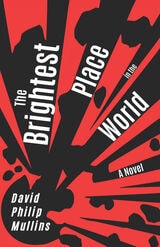
The Brightest Place in the World
A NovelDavid Philip Mullins
University of Nevada Press, 2020
Inspired by true events, The Brightest Place in the World traces the lives of four characters haunted by an industrial disaster. On an ordinary sunny morning in 2012, a series of explosions level a chemical plant on the outskirts of Las Vegas. The shock waves are felt as far away as Fremont Street. Homes and businesses suffer broken windows and caved-in roofs. Hundreds are injured, and eight employees of the plant are unaccounted for, presumed dead.
One of the missing is maintenance technician Andrew Huntley, a husband and father who is an orbital force in the novel as those who loved him grapple with his loss. Andrew’s best friend, Russell Martin—an anxiety-plagued bartender who calms his nerves with a steady inflow of weed—misses him more than he might a brother. Meanwhile Emma, Russell’s wife—a blackjack dealer at a downtown casino—tries to keep her years-long affair with Andrew hidden. Simon Addison, a manager at the plant who could have saved Andrew’s life, is afflicted by daily remorse, combined with a debilitating knowledge of his own cowardice. And then there’s Maddie, Andrew’s only child, a model high-school student whose response to the tragedy is to experiment with shoplifting and other deviant behavior.
Against the sordid backdrop of Las Vegas—and inspired by the PEPCON disaster of May 4, 1988—this engaging novel is a story of grief and regret, disloyalty and atonement, infatuation and love.
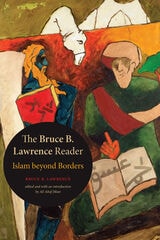
The Bruce B. Lawrence Reader
Islam beyond BordersBruce B. Lawrence. Edited and with an Introduction by Ali Altaf Mian
Duke University Press, 2020
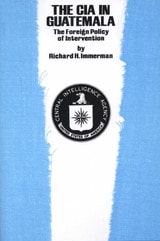
The CIA in Guatemala
The Foreign Policy of InterventionBy Richard H. Immerman
University of Texas Press, 1982
Using documents obtained through the Freedom of Information Act, recently opened archival collections, and interviews with the actual participants, Immerman provides us with a definitive, powerfully written, and tension-packed account of the United States' clandestine operations in Guatemala and their consequences in Latin America today.
The Chilean Senate
Internal Distribution of InfluenceBy Weston H. Agor
University of Texas Press, 1971
Weston Agor’s carefully documented analysis of the organization and workings of the Chilean Senate is the first of its kind and fills a long-standing need in the comparative study of the internal structure of legislative bodies.
Making eclectic use of role, power, and exchange theories, Agor bases his discussion on personal interviews with senators and staff as well as on extensive observation of the Senate in action during 1967–1968. He also analyzes in detail relevant documents, committee reports, and floor debates. Focused primarily on the formal decision-making structure within the Senate and on internal norms, both formal and informal, that hold that structure together, Agor’s study fruitfully compares the Chilean Senate with its peers, including the United States Senate, to which it bears surprising resemblance in form and function.
Agor examines the role of compromise and informal rules of the game in achieving a majority vote in the Senate, the power of committees and committee presidents, and political party control over Senate members. The influence of the executive, particularly in the passage of executive legislation, and its effect on the Senate’s internal system of checks and balances—both stated and understood—are examined in terms of their effect on the political strength of the Senate.
The Chilean Senate, unlike its counterparts in most other “developing countries,” has exercised genuine and effective influence in the national political system. In an epilogue to this study, Agor views events since 1968, including the election of Allende, that affected the future role of the Senate in Chilean politics.
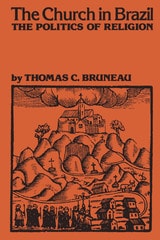
The Church in Brazil
The Politics of ReligionBy Thomas C. Bruneau
University of Texas Press, 1982
In 1980, Brazil was the largest Roman Catholic country in the world, with 90 percent of its more than 120 million people numbered among the faithful. The Church hierarchy became aware, however, that the religion practiced by the majority of its members was not that promoted by the institution, a point dramatized by the rapid growth of other religious movements in Brazil—particularly Protestant sects and spirit-possession cults. In response, the Church created and assumed new roles. The Church in Brazil is a case study of the changes within the Church and their impact on Brazilian society.
In an original and illuminating discussion, Thomas Bruneau combines institutional analysis and survey data to explore the relationship between structural changes in the Church and evolving patterns of practice and belief. His discussion displays the richness and variety of devotion in Brazil—characteristics recognized by many observers—and examines the Church's potential for influencing the people's religious life.
Moving from the historical and national to the regional, Bruneau analyzes and compares changes among eight dioceses. He concludes that the Church is actively promoting a progressive social role for itself and, by backing its statements with actions, is perceived as being socially effective by both supporters and opponents.
The first study in which the national and diocesan levels of the Church are analyzed together, it is also the first to inspect systematically the Basic Christian Communities, thought by some to be the most significant grass-roots movement in the Catholic world of that time.
The Collectivization of Agriculture in Communist Eastern Europe
Comparison and EntanglementsConstantin Iordachi
Central European University Press, 2014
The Common Camp
Architecture of Power and Resistance in Israel–PalestineIrit Katz
University of Minnesota Press, 2022
Seeing the camp as a persistent political instrument in Israel–Palestine and beyond
The Common Camp underscores the role of the camp as a spatial instrument employed for reshaping, controlling, and struggling over specific territories and populations. Focusing on the geopolitical complexity of Israel–Palestine and the dramatic changes it has experienced during the past century, this book explores the region’s extensive networks of camps and their existence as both a tool of colonial power and a makeshift space of resistance.
Examining various forms of camps devised by and for Zionist settlers, Palestinian refugees, asylum seekers, and other groups, Irit Katz demonstrates how the camp serves as a common thread in shaping lands and lives of subjects from across the political spectrum. Analyzing the architectural and political evolution of the camp as a modern instrument engaged by colonial and national powers (as well as those opposing them), Katz offers a unique perspective on the dynamics of Israel–Palestine, highlighting how spatial transience has become permanent in the ongoing story of this contested territory.
The Common Camp presents a novel approach to the concept of the camp, detailing its varied history as an apparatus used for population containment and territorial expansion as well as a space of everyday life and subversive political action. Bringing together a broad range of historical and ethnographic materials within the context of this singular yet versatile entity, the book locates the camp at the core of modern societies and how they change and transform.
The Complete Reflections
Conversations with PoliticiansPeter Hennessy and Robert Shepherd
Haus Publishing, 2020
In The Complete Reflections, Peter Hennessy and Robert Shepherd provide not only an overview of the past three decades of British politics but also delve into the minds of those at the forefront of public life during times of great change. Hennessy’s deep knowledge and understanding of the lives and motivations of his interviewees, along with the obvious esteem in which they hold their interlocutor, leads to frank and revealing conversations in which the subject is not an object but an equal, giving these exchanges a unique veracity. The results are portraits of high authority, in which interviews become the chronicles that endure above all others—nothing less than the first draft of history.
The Complexity of Evil
Perpetration and GenocideTimothy Williams
Rutgers University Press, 2021
Download the open access ebook here.
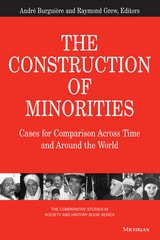
The Construction of Minorities
Cases for Comparison Across Time and Around the WorldAndre Burguiere and Raymond Grew, Editors
University of Michigan Press, 2001