Results by title
141 books match the query 'World War I' and 34 start with t
Tatiana Romanov, Daughter of the Last Tsar
Diaries and Letters, 1913–1918Helen Azar
Westholme Publishing, 2016
Grand Duchess Tatiana Nikolaevna of Russia was the second of the four daughters of Tsar Nicholas II and his wife, the Empress Alexandra Feodorovna. Long recognized by historians as the undisputed “beauty” of the family, Tatiana was acknowledged for her poise, her elegance, and her innate dignity within her own family. Helen Azar, translator of the diaries of Olga Romanov, and Nicholas B. A. Nicholson, Russian Imperial historian, have joined together to present a truly comprehensive picture of this extraordinarily gifted, complex, and intelligent woman in her own words. Tatiana Romanov, Daughter of the Last Tsar: Diaries and Letters, 1913–1918, presents translations of material never before published in Russian or in English, as well as materials never published in their entirety in the West.
The brisk, modern prose of Tatiana’s diary entries reveals the character of a young woman who was far more than the sheltered imperial beauty as she previously has been portrayed. While many historians and writers describe her as a cold, haughty, and distant aristocrat, this book shows instead a remarkably down-to-earth and humorous young woman, full of life and compassion. A detail-oriented and observant participant in some of the most important historical events of the early twentieth century, she left firsthand descriptions of the tercentenary celebrations of the House of Romanov, the early years of Russia’s involvement in World War I, and the road to her family’s final days in Siberian exile. Her writings reveal extraordinary details previously unknown or unacknowledged. Lavishly annotated for the benefit of the nonspecialist reader, this book is not only a reevaluation of Tatiana’s role as more than just one of four sisters, but also a valuable reference on Russia, the First World War, the Russian Revolution, and the people closest to the Grand Duchess and her family.
The Best World War I Story I Know
On the Point in the Argonne, September 26–October 16, 1918Nimrod T. Frazer
University of Alabama Press, 2018
The Best World War I Story I Know: On the Point in the Argonne is the breath-taking story of three US Army divisions tasked with capturing the Côte de Châtillon during the Meuse-Argonne offensive in autumn 1918. Readers will first follow in the footsteps of Missouri-Kansas Guard troops who were repulsed in the opening days of the battle; their courage in the face of heavy fire was not enough to overcome poor leadership.
They were replaced by the 1st Division, the “best of the Regular Army.” This fine unit became physically and mentally exhausted after suffering horrendous casualties. Unable to fight on, “The Big Red One” was exchanged at the base of Côte de Châtillon, with the 42nd, the Rainbow Division. It too struggled to gain ground on the heavily-contested hill until General Douglas MacArthur’s determined 84th Brigade of “Alabama cotton pickers and Iowa corn growers” forced their way past the Germans. The Côte was finally in American hands and the war all but over.
The Blitz Companion
Aerial Warfare, Civilians and the City since 1911Mark Clapson
University of Westminster Press, 2019
The Campaign of the Marne
Sewell Tyng
Westholme Publishing, 2007
The Definitive Account of the Battle of the Marne, One of World War I's Most Important Events
"A masterly account of the First World War in the West."—John Keegan
"A distinguished piece of historical writing."—Journal of Modern History
"Admirable... clear and interesting."—Foreign Affairs
"Direct and clear... it lays bare a most complicated course of events so that even the layman can follow."—New Republic
Named as One of The 100 Best Nonfiction Books of the Twentieth Century
With diplomacy unraveling during the summer of 1914, Germany swept into Belgium during the first week of August in an audacious attempt to catch France and England off guard. First contemplated after the Franco-Prussian War, the Schlieffen Plan was designed to keep Germany from fighting on two fronts. With a quick and decisive victory over France and its allies to the west, Germany could then confront Russia to the east. Despite the surprise of Germany's initial advance, the plan ultimately failed because it required much more mobile troops than were available at the time - something that would have to await the mechanized blitzkrieg of World War II—allowing France and British Expeditionary Forces to establish a tenacious defense. What followed was a stalemate along the Marne River and the beginning of four long years of destructive trench warfare that would only be lifted by a joint French, British, and American offensive across this same river plain in 1918. In The Campaign of the Marne, the entire genesis of the Schlieffen Plan, its modification, implementation, and the complex series of grueling battles that followed is laid out with the intent to make the entire episode comprehensible to the general reader. Hailed as one of the 100 best nonfiction books of the twentieth century by eminent military historian John Keegan, this is the first time the book has been available since its original publication in 1935.

The Chattertooth Eleven
Eduard Bass
Karolinum Press, 2009
In 1922, the same year that saw the establishment of the Czechoslovak Football Association, a former singer and cabaret director from Prague published a novel about soccer. Eighty-six years later, that novel, Eduard Bass’s The Chattertooth Eleven, has been reprinted more than thirty times, has been made into a film, and has become one of the most popular works of Czech fiction.
The novel tells the extraordinary adventures of an ordinary father, Chattertooth, and his eleven sons—whom he has raised as an unbeatable soccer team. This humorous tale—set in the aftermath of World War I—celebrates fair play and perseverance while simultaneously taking a gently ironic stance towards the Czech infatuation with soccer. This edition, in a new graphic layout by Zdenek Ziegler, is accompanied by charming illustrations by Jirí Grus.
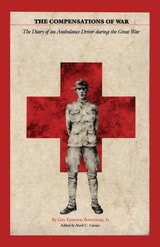
The Compensations of War
The Diary of an Ambulance Driver during the Great WarBy Guy Emerson Bowerman
University of Texas Press, 1983
In 1917, shortly after the United States’ declaration of war on Germany, Guy Emerson Bowerman, Jr., enlisted in the American army’s ambulance service. Like other young ambulance drivers—Hemingway, Dos Passos, Cummings, Cowley—Bowerman longed to “see the show.” He was glad to learn that the ambulance units were leaving for France right away.
For seventeen months, until the armistice of November 1918, Bowerman kept an almost daily diary of the war. To read his words today is to live the war with an immediacy and vividness of detail that is astonishing.
Only twenty when he enlisted, Bowerman was an idealistic, if snobbish, young man who exulted that his section was made up mostly of young “Yalies” like himself. But he expected the war to change him, and it did. In the end he writes that he and his compatriots scarcely remember a world at peace. "The old life was gone forever. . ."
Guy Bowerman’s unit was attached to a French infantry division stationed near Verdun. Sent to halt the German drive to Paris in 1918, the division participated in the decisive counterattack of July and tracked the routed Germans through Belgium. Then, “unwarned,” Bowerman and his comrades were “plunged into … a life of peace.” Into this life, he writes, they walked “bewildered,” like “men fearing ambush.”
This remarkable chronicle of one young man’s rite of passage is destined to become a classic in the literature of the Great War.
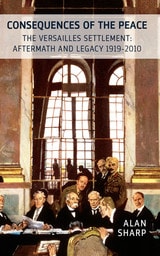
The Consequences of the Peace
The Versailles Settlement: Aftermath and Legacy 1919-2015Alan Sharp
Haus Publishing, 2015
This revised and updated edition of The Consequences of the Peace sets the ramifications of the Paris Peace treaties—for good or ill—within a long-term context. Alan Sharp presents new materials in order to argue that the responsibility for Europe’s continuing interwar instability cannot be wholly attributed to the peacemakers of 1919–23. Marking the centenary of World War I and the approaching centenary of the Peace Conference itself, this book is a clear and concise guide to the global legacy of the Versailles Settlement.

The Construction of Memory in Interwar France
Daniel J. Sherman
University of Chicago Press, 2000
Sherman shows how a wartime visual culture saturated with images of ordinary foot soldiers, together with contemporary novels, memoirs, and tourist literature, promoted a distinctive notion of combat experience. The contrast between battlefield and home front, soldier and civilian was the basis for memory and collective gratitude. Postwar commemoration, however, also grew directly out of the long and agonized search for the remains of hundreds of thousands of missing soldiers, and the sometimes contentious debates over where to bury them. For this reason, the local monument, with its inscribed list of names and its functional resemblance to tombstones, emerged as the focal point of commemorative practice. Sherman traces every step in the process of monument building as he analyzes commemoration's competing goals—to pay tribute to the dead, to console the bereaved, and to incorporate mourners' individual memories into a larger political discourse.
Extensively illustrated, Sherman's study offers a visual record of a remarkable moment in the history of public art. It is at once a moving account of a culture haunted by war and a sophisticated analysis of the political stakes of memory in the twentieth century.
Winner of the 2000 J. Russell Major Prize of the American Historical Association
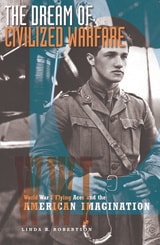
The Dream of Civilized Warfare
World War I Flying Aces and the American ImaginationLinda R. Robertson
University of Minnesota Press, 2005
Analyzes the link between “civilized warfare” and the American self-image
Linda R. Robertson argues that the development of the United States as a global military power arose from the influence of an image of air combat carefully constructed during World War I to mask the sordid realities of modern ground warfare. The Dream of Civilized Warfare carries this trajectory to its logical end, tracing the long history of the American desire to exert the nation’s will throughout the world without having to risk the lives of ground soldiers—a theme that continues to reverberate in public discussions, media portrayals, and policy decisions today.
Histories of American air power usually focus on World War II, when the air force became the foundation for the military strength of the United States. The equally fascinating story of World War I air combat is often relegated to a footnote, but it was the earlier war that first inspired the vision of the United States attaining dominance in world affairs through a massive air force. In The Dream of Civilized Warfare, Robertson presents the compelling story of the creation of the first American air force—and how, through the propaganda of the flying ace, a vision of “clean” or civilized combat was sold to politicians and the public. During World War I, air combat came to epitomize American ingenuity, technological superiority, adventure, leadership, and teamwork. Robertson reveals how the romantic and chivalric imagery associated with flying aces was a product of intentional propaganda and popular culture. Examining aviation history, military battles, films, literature, and political events, she looks at how the American public’s imagination was shaped—how flying aces offered not only a symbol of warfare in stark contrast to the muddy, brutal world of the trenches, but also a distraction to an American public resistant to both intervention in a European conflict and the new practice of conscription.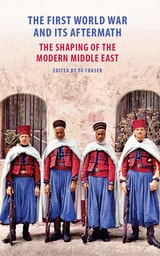
The First World War and Its Aftermath
The Shaping of the Modern Middle EastEdited by T.G. Fraser
Gingko, 2024
In addition to recounting the crucial international politics that drew fierce lines in the sands of the Middle East—a story of intrigue between the British, Russians, Ottomans, North Africans, Americans, and others—the contributors engage topics ranging from the war’s effects on women, the experience of the Kurds, sectarianism, the evolution of Islamism, and the importance of prominent intellectuals like Ziya Gökalp and Michel ‘Aflaq. They examine the dissolution of the Ottoman Empire, the exploitation of notions of Islamic unity and pan-Arabism, the influences of Woodrow Wilson and American ideals on Middle East leaders, and likewise the influence of Vladimir Lenin’s vision of a communist utopia. Altogether, they tell a story of promises made and promises broken, of the struggle between self-determination and international recognition, of centuries-old empires laying in ruin, and of the political poker of the twentieth century that carved up the region, separating communities into the artificial states we know today.
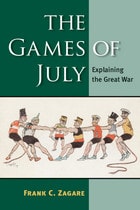
The Games of July
Explaining the Great WarFrank C. Zagare
University of Michigan Press, 2011
"Frank C. Zagare combines a deep command of historical scholarship and the sophisticated skills of an applied game theorist to develop and test a theory of why deterrence failed, catastrophically, in July 1914. . . . Zagare concludes with sage advice on how to avoid even more cataclysmic breakdowns in a nuclear world."
---Steven J. Brams, New York University
"Zagare's deft study of the origins of the First World War using his perfect deterrence theory uncovers new insights into that signal event and shows the value of formal theory applied to historical events. A must-read for those interested in security studies."
---James D. Morrow, University of Michigan
"Through an exemplary combination of formal theory, careful qualitative analysis, and lucid prose, The Games of July delivers important and interesting answers to key questions concerning the international political causes of World War I. Its well-formed narratives and its sustained engagement with leading works in IR and diplomatic history . . . make it a rewarding read for security scholars in general and a useful teaching tool for international security courses."
---Timothy W. Crawford, Boston College
Taking advantage of recent advances in game theory and the latest historiography, Frank C. Zagare offers a new, provocative interpretation of the events that led to the outbreak of World War I. He analyzes key events from Bismarck's surprising decision in 1879 to enter into a strategic alliance with Austria-Hungary to the escalation that culminated in a full-scale global war. Zagare concludes that, while the war was most certainly unintended, it was in no sense accidental or inevitable.
The Games of July serves not only as an analytical narrative but also as a work of theoretical assessment. Standard realist and liberal explanations of the Great War are evaluated along with a collection of game-theoretic models known as perfect deterrence theory.
Frank C. Zagare is UB Distinguished Professor of Political Science at the State University of New York at Buffalo.
Cover illustration: Satirical Italian postcard from World War I. Used with permission from The University of North Carolina at Chapel Hill Libraries.
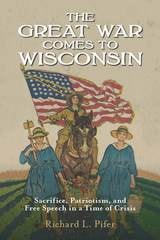
The Great War Comes to Wisconsin
Sacrifice, Patriotism, and Free Speech in a Time of CrisisRichard L. Pifer
Wisconsin Historical Society Press, 2017
Instead of a comprehensive history of the battlefield, this book captures the homefront experience: the political debates over war policy, the worry over loved ones fighting overseas, the countless everyday sacrifices, and the impact of a wartime hysteria that drove dissent underground. It also includes the voices of soldiers from Wisconsin’s famed 32nd Division, through extensively quoted letters and newspaper accounts. Immerse yourself in the Wisconsin experience during World War I—a conflict that demonstrated America’s great capacity for sacrifice and generosity, but also for prejudice, intolerance, and injustice.
The Hashemites
The Dream of ArabiaRobert McNamara
Haus Publishing, 2010
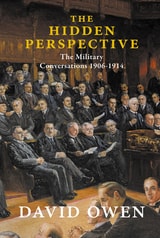
The Hidden Perspective
The Military Conversations 1906-1914David Owen
Haus Publishing, 2014
Using contemporary historical documents, David Owen, himself a former foreign secretary, shows how the foreign office’s underlying belief in Britain’s moral obligation to send troops to the Continent influenced political decision-making and helped create the impression that war was inevitable. Had Britain’s diplomatic and naval strategy been handled more skillfully during these years, Owen contends, the carnage of World War I might have been prevented altogether.
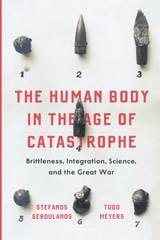
The Human Body in the Age of Catastrophe
Brittleness, Integration, Science, and the Great WarStefanos Geroulanos and Todd Meyers
University of Chicago Press, 2018
In The Human Body in the Age of Catastrophe, Stefanos Geroulanos and Todd Meyers uncover a fascinating story of how medical scientists came to conceptualize the body as an integrated yet brittle whole. Responding to the harrowing experience of the Great War, the medical community sought conceptual frameworks to understand bodily shock, brain injury, and the vast differences in patient responses they occasioned. Geroulanos and Meyers carefully trace how this emerging constellation of ideas became essential for thinking about integration, individuality, fragility, and collapse far beyond medicine: in fields as diverse as anthropology, political economy, psychoanalysis, and cybernetics.
Moving effortlessly between the history of medicine and intellectual history, The Human Body in the Age of Catastrophe is an intriguing look into the conceptual underpinnings of the world the Great War ushered in.
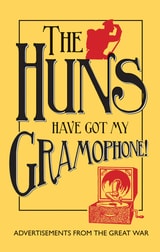
The Huns Have Got my Gramophone!
Advertisements from the Great WarAmanda Jane Doran and Andrew McCarthy
Bodleian Library Publishing, 2014
Ladies! Learn to Drive! Your Country Needs Women Drivers!
Do you drink German water?
When Britain declared war on Germany in 1914, industrious companies wasted no time in seizing the commercial opportunities presented by the conflict. Without TV or radio, newspapers provided one of the few ways in which the British public could get reliable news of the war. To cater to their rising readerships, advertising emerged as the new science of sales, growing increasingly sophisticated throughout the war years in both visual presentation and psychological appeal.
The Huns Have Got my Gramophone! collects some of the most compelling and cleverly worded original advertisements created between 1914 and 1918. Many of the advertisements are aimed at women, from fearless guard dogs promising protection while husbands are away to soaps and skin creams for “beauty on duty.” Others use the power of patriotism to push new products for men, including “officers’ waterproof trench coats,” and one young officer writing in the Times attests to the coats’ superior weather resistance by boldly asserting that he’d leave his sword behind before he left his Burberry. Together, the advertisements collected in the book reveal how advertisers sought to create new markets for products that took into account social change throughout the course of the conflict.
Featuring a range of products, from clothing, cigarettes, and invalid carriages to motorcycles and portable Decca phonographs—the “ideal gramophone for active service”—the book offers a new and unexpected source of historical information and an intimate glimpse of a nation at war.

The Lausanne Moment
Reckoning with the 1923 Treaty of Peace and Its LegaciesEdited by Ozan Ozavci, Julia Secklehner, and Georgios Giannakopoulos
Gingko, 2027
The 1923 Treaty of Lausanne remains one of the few interwar peace settlements that has endured into the twenty-first century. Yet, the memory of Lausanne has proved deeply contested. Celebrated by some as a triumph of state sovereignty and peacemaking, it has also come to symbolize forced displacement, the erasure of minority rights, and the codification of population transfers as instruments of international order.
Just over one hundred years after the signing of the Treaty of Lausanne, The Lausanne Moment revisits this diplomatic, legal, economic, and financial juncture that helped reshape the world and defined new norms of sovereignty, displacement, and identity. Building on a growing body of interdisciplinary scholarship and serving as a sequel to They All Made Peace—What is Peace?, also published by Gingko, this edited volume foregrounds the lived realities and long-term legacies of the treaty, critically re-examining the political, cultural, and social consequences of its provisions and aftershocks.
Rather than focusing solely on high diplomacy or legal text, The Lausanne Moment brings into view the human dimension of the Lausanne moment. Through case studies ranging from the refugee experience in Nikaia and Asia Minor orphans in Greece, to the enduring memory of loss in Pontic singing, the symbolic ethnicity of Cretan descendants, and the Kurdish experience in Turkey, the book documents the deeply personal and community-level consequences of forced migration and political rupture. These experiences are not confined to the immediate postwar period; they linger across time, informing the present-day politics of memory, migration, and identity.
This volume also interrogates the geopolitics of Lausanne through new thematic lenses. Essays explore how the treaty facilitated the continuation of imperial practices under new nationalist forms, shaped debates over public debt and cultural heritage, and affected actors and regions often overlooked in Lausanne historiography, such as Albania, Cyprus, and the Kurdish nationalist movements. Lausanne’s cultural afterlives, from its role in shaping archaeology, music, and education policy, are also covered in the book. Through its interdisciplinary and transregional approach, The Lausanne Moment breaks new ground in Lausanne studies, bringing together historians, anthropologists, archaeologists, political scientists, and cultural theorists, and introduces voices and perspectives—Kurdish, Cypriot, Pontic, Albanian, and Cretan—that have been marginal to mainstream narratives. By weaving together policy analysis, oral history, cultural production, and historical research, the volume offers an expansive and textured account of one of the twentieth century’s most consequential, yet paradoxical, peace settlements.
The Lausanne Moment situates the treaty within broader histories of state-led population engineering, colonial eugenic practices, and the moral politics of international humanitarianism. The “peace” of Lausanne, the volume suggests, was neither absolute nor apolitical—it was crafted, contested, and constantly renegotiated. The book’s contributors collectively ask not only what peace meant in 1923, but also what it means today for those still living with its consequences.
The League of Nations
Ruth Henig
Haus Publishing, 2010
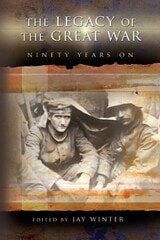
The Legacy of the Great War
Ninety Years OnEdited by Jay Winter
University of Missouri Press, 2009
In late 2007 and early 2008, world-renowned historians gathered in Kansas City for a series of public forums on World War I. Each of the five events focused on a particular topic and featured spirited dialogue between its prominent participants.
The Little Lead Soldier
Hugh D. Wise III
Westholme Publishing, 2017
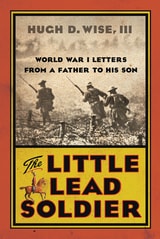
Arriving in France in April 1918, Col. Hugh D. Wise, commander of the U.S. 61st Infantry Division, held a precious object. It was a toy soldier given to him by his six-year-old son, Hugh, Jr. The boy had asked the little lead soldier to write him with news of his father. The colonel saw action in two of the most important campaigns the Americans fought, St. Mihiel and Meuse-Argonne, and the little lead soldier dutifully assured a boy thousands of miles away that his father was safe: “The men had been shelled, gassed, and raked by machine guns constantly: and undergone several intense bombardments; and made a difficult though successful attack; and had resisted a fierce counter-attack. They had dug trenches, moved, and dug again. All this time they had been without shelter, exposed to a cold driving rain and without warm food—They were wet, chilled, and tired when called upon for even greater efforts but they responded with the energy and spirit of fresh troops.” A treasured family heirloom, these wartime letters are presented for the first time along with letter from Colonel Wise to his wife, and engrossing historical context provided by his grandson, Hugh D. Wise, III. The Little Lead Soldier: World War I Letters from a Father to His Son is a remarkable story of how a father performed his dangerous duty while keeping a promise to his boy.
The Lost Cause and the Great War
Progressive Reform and Patriotism in the American SouthRobert E. Hunt
University of Alabama Press, 2025
How Tennessee reformers reconciled Southern heritage with rising nationalism, weaving the Lost Cause into the fabric of American progress and identity.
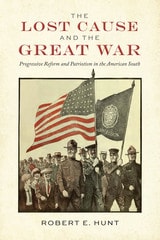
The Lost Cause and the Great War tells the stories of central Tennessee Progressive-era reformers to illustrate the fascinating broader issue of how Southerners steeped in Lost Cause Civil War mythologies simultaneously developed patriotic American fervor. Focusing on Luke Lea, a prominent politician and American army officer who attempted to capture Kaiser Wilhelm II during World War I, the book reveals the intricate interplay between three competing ideas: attachment to the memory of the Confederacy, intense American nationalism, and advocacy for progressive reforms.
Hunt shows that Lea and his contemporaries sought either to harmonize these competing loyalties or to compartmentalize them to use when needed. Through insightful accounts of Tennessee’s 1928 presidential campaign, the American Legion’s response to cuts to veteran benefits in 1933, and the redefinition of America’s global role post–World War II, Hunt shows how these reformers achieved a balance that held until the Civil Rights movement disrupted this delicate consensus.
Hunt’s rich account reveals how Lea and others like him wove national patriotism and Southern collective memory into a cohesive narrative that supported their broader Progressive goals. The book offers much to readers interested in Southern history, the Gilded Age, Prohibition, World War I, World War II, and the beginnings of the Civil Rights movement. It provides vivid examples of how collective memory and narratives shape social and political movements. General readers will discover how white Southerners who remained devoted to vindicating the Confederacy nonetheless became fervent supporters of America's growing nationalism in the early twentieth century.
The Missouri Home Guard
Protecting the Home Front during the Great WarPetra DeWitt
University of Missouri Press, 2022
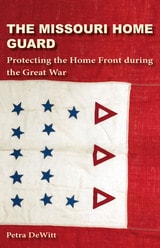
The Home Guard also functioned to preserve patriotism and reduce opposition to the war. Service in the Guard was a way to show loyalty to one’s country, particularly for German Americans, who were frequently under suspicion as untrustworthy. Many German Americans in Missouri enthusiastically signed up to dispel any whispers of treason, while others found themselves torn between the motherland and their new homeland. Men too old or exempt from the draft for other reasons found meaning in helping with the war effort through the Home Guard while also garnering respect from the community. For similar reasons, women attempted to join the organization as did African Americans, some of whom formed units of a “Negro Home Guard.” Informed by the dynamics of race, gender, and ethnicity, DeWitt’s consideration of this understudied but important organization examines the fluctuating definition of patriotism and the very real question of who did and who did not have the privilege of citizenship and acceptance in society.
The Origin of the Fighter Aircraft
Jon Guttman
Westholme Publishing, 2009
From Scouts to Balloon-busters, the Emergence of Air-to-Air Combat in World War I
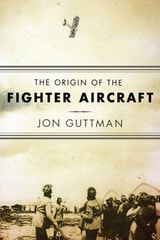
When World War I began in August 1914, the airplane had already proven its worth as an intelligence gathering “eye-in-the-sky.” These scouting aircraft soon became indispensable to armies on both sides, and the attempt to drive enemy planes away began in earnest. Local air superiority was incorporated into battlefield strategy, and the use of aircraft to conduct offensive operations would change warfare as dramatically as the first firearms 300 years before. By the end of 1915, the basic formula of the armed scout settled on a single-seater with a machine gun synchronized to fire through its propeller blades. This heavily armed aircraft became the first true fighter plane whose primary function was to destroy enemy aircraft, whether scouts, balloons, bombers, or other fighters. A new glamorized “knight of the air” was born: the ace, a fighter pilot who brought down five or more opponents. From 1916 on, as the combatants relied on airplanes more, flying tactics and strategy—including mass formations—were developed for what would become a deadly struggle for complete air superiority. By 1918, the final year of the war, air battles could be as sprawling as those on the ground.
In The Origin of the Fighter Aircraft, historian Jon Guttman tells the engrossing story of how one of the most amazing inventions became a integral component of warfare. Balancing technical description, personalities, and battle accounts, the author demonstrates that by the end of World War I most of the fundamentals for modern aerial combat had been established.
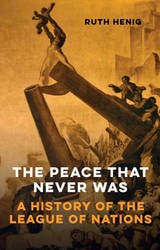
The Peace That Never Was
A History of the League of NationsRuth Henig
Haus Publishing, 2010
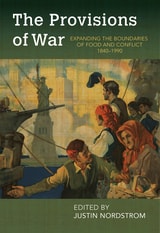
The Provisions of War
Expanding the Boundaries of Food and Conflict, 1840-1990Justin Nordstrom
University of Arkansas Press, 2021
The Provisions of War examines how soldiers, civilians, communities, and institutions have used food and its absence as both a destructive weapon and a unifying force in establishing governmental control and cultural cohesion during times of conflict. Historians as well as scholars of literature, regional studies, and religious studies problematize traditional geographic boundaries and periodization in this essay collection, analyzing various conflicts of the nineteenth and twentieth centuries through a foodways lens to reveal new insights about the parameters of armed interactions.
The subjects covered are as varied and inclusive as the perspectives offered—ranging from topics like military logistics and animal disease in colonial Africa, Indian vegetarian identity, and food in the counterinsurgency of the Malayan Emergency, to investigations of hunger in Egypt after World War I and American soldiers’ role in the making of US–Mexico borderlands. Taken together, the essays here demonstrate the role of food in shaping prewar political debates and postwar realities, revealing how dietary adjustments brought on by military campaigns reshape national and individual foodways and identities long after the cessation of hostilities
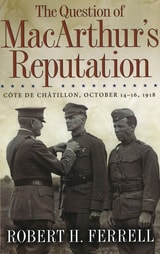
The Question of MacArthur's Reputation
Côte De Châtillon, October 14-16, 1918Robert H. Ferrell
University of Missouri Press, 2008
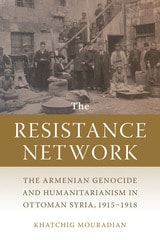
The Resistance Network
The Armenian Genocide and Humanitarianism in Ottoman Syria, 1915–1918Khatchig Mouradian
Michigan State University Press, 2021
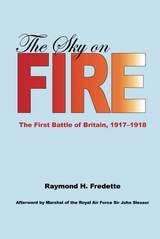
The Sky on Fire
The First Battle of Britain, 1917-1918Raymond H. Fredette
University of Alabama Press, 2005
The forgotten air campaign that gave birth to modern air power.
A fascinating examination of the strategies and uses of air power in the First World War, Sky on Fire covers not only developments in military hardware and tactics but also how public policy and political considerations shaped the ways air power was deployed. Providing an excellent balance of data and statistics as well as human insights, Fredette’s book is essential reading for readers interested in the air power, both historically and in contemporary conflicts.
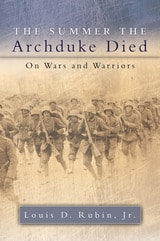
The Summer the Archduke Died
On Wars and WarriorsLouis D. Rubin, Jr.
University of Missouri Press, 2008
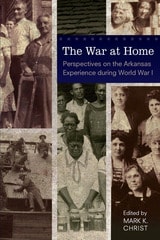
The War at Home
Perspectives on the Arkansas Experience during World War IMark K. Christ
University of Arkansas Press, 2020
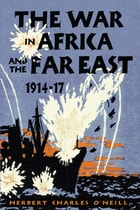
The War in Africa and the Far East, 1914-17
Herbert Charles O'Neill
Westholme Publishing, 2012
"This account will be welcome to a large circle of readers. . . . The arduous nature of these campaigns deserves to be far more widely known, and this is just the book for the purpose--short, clear, and easy to read."--Journal of the African Society
The largest battles of World War I were fought in Europe, and it is there where most critical studies focus. The fate of the far-flung colonies of Germany, however, are what gave the war its global scope, with campaigns reaching from China to New Guinea and East to West Africa. While there are detailed accounts of most of these campaigns, The War in Africa and the Far East, 1914-17 is unique in providing a concise history of the entire series of military events in Africa and Asia, giving the reader a better idea of the relationship and chronology of these wide-ranging events. While Germany was stripped of all its overseas colonies, the change in power had unintended consequences, most importantly the rise of Japan in the Pacific, where former German colonies now stood at the territorial boundary between Japan and the United States.
Waged by Allied troops from Britain, Kenya, Zambia, Portugal, Japan, India, Netherlands, and other countries and led by such personalities as General Jan Christian Smuts, the theater of operations crossed modern-day Tanzania, Rwanda, Burundi, Togo, Cameroon, Namibia, New Guinea, Qingdau, the Bismarck Archipelago, and other Pacific Island chains. Originally published in 1918 using official dispatches and other sources, and presented here for the first time in paperback, completely retypeset and with the original maps and additional photographs, The War in Africa and the Far East is a compact overview of an important aspect of the First World War.
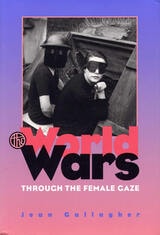
The World Wars Through the Female Gaze
Jean Gallagher
Southern Illinois University Press, 1998
For some women writers and photographers during the two world wars—Edith Wharton, Mildred Aldrich, Martha Gellhorn, Lee Miller, H.D., and Gertrude Stein—the construction of the female subject as an observer of combat became a vital concern. Their explorations of vision took place against the backdrop of a larger shift in Western culture's understanding of what "seeing" meant in common practice and philosophical discourse alike. The role of visuality in their lives was massively transformed not only by the rigid gender roles of war but by the introduction of new combat practices and technologies such as aerial surveillance, trench warfare, and civilian bombardment.
In The World Wars Through the Female Gaze, Jean Gallagher maps one portion of the historicized, gendered territory of what Nancy K. Miller calls the "gaze in representation." Expanding the notion of the gaze in critical discourse, Gallagher situates a number of visual acts within specific historic contexts to reconstruct the wartime female subject. She looks at both the female observer's physical act of seeing—and the refusal to see—for example, a battlefield, a wounded soldier, a torture victim, a national flag, a fashion model, a bombed city, or a wartime hallucination.
The book begins with two instances of wartime propaganda written by American women in France in 1915. Both Edith Wharton's Fighting France and Mildred Aldrich's A Hilltop on the Marne offer a complex and often contradictory sense of a woman writer's struggles with authority, resistance, and killing. In the process, Gallagher teases out the role of specular vision and the impossibility of "directly" seeing the war.
Gallagher then turns to literary and visual texts produced by two female journalists between 1940 and 1945. Martha Gellhorn's 1940 novel A Stricken Field exhibits a range of gendered seeing positions within and in opposition to the visual ideologies of fascism during the Nazi occupation of Czechoslovakia. Lee Miller's war correspondence and photography for Vogue show how Miller constructed herself and her predominantly female American audience as antifascist observers of war by working with and against some of the conventions of surrealist fashion photography.
Gallagher concludes by focusing on the experimental autobiographical prose of H.D. and Gertrude Stein to explore the functions of vision on two World War II "homefronts"—London during the Blitz and Vichy France.
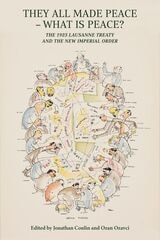
They All Made Peace—What Is Peace?
The 1923 Lausanne Treaty and the New Imperial OrderEdited by Jonathan Conlin and Ozan Ozavci
Gingko, 2023
The last of the post-World War One peace settlements, the 1923 Treaty of Lausanne departed from methods used in the Treaty of Versailles and took on a new peace-making initiative: a forced population exchange that affected one and a half million people. Like its German and Austro-Hungarian allies, the defeated Ottoman Empire had initially been presented with a dictated peace in 1920. In just two years, however, the Kemalist insurgency enabled Turkey to become the first sovereign state in the Middle East, while the Greeks, Armenians, Arabs, Egyptians, Kurds, and other communities previously under the Ottoman Empire sought their own forms of sovereignty.
Featuring historical analysis from multiple perspectives, They All Made Peace, What Is Peace? considers the Lausanne Treaty and its legacy. Chapters investigate British, Turkish, and Soviet designs in the post-Ottoman world, situate the population exchanges relative to other peacemaking efforts, and discuss the economic factors behind the reallocation of Ottoman debt and the management of refugee flows. Further chapters examine Kurdish, Arab, Iranian, Armenian, and other communities that were refused formal accreditation at Lausanne, but which were still forced to live with the consequences, consequences that are still emerging, one hundred years on.
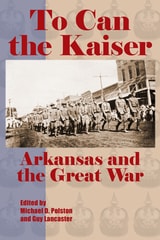
To Can the Kaiser
Arkansas and the Great WarMichael D. Polston
Butler Center for Arkansas Studies, 2015