Results by title
71 books match the query 'Writing centers' and 12 start with t
Tell Me How It Reads
Tutoring Deaf and Hearing Students in the Writing CenterRebecca Day Babcock
Gallaudet University Press, 2012
Deaf students are attending mainstream postsecondary institutions in increasing numbers, raising the stakes for the complicated and multifaceted task of tutoring deaf students at these schools. Common tutoring practices used with hearing students do not necessarily work for deaf people. Rebecca Day Babcock researched and wrote Tell Me How It Reads: Tutoring Deaf and Hearing Students in the Writing Center to supply writing instructors an effective set of methods for teaching Deaf and other students how to be better writers.
Babcock’s book is based on the resulting study of tutoring writing in the college context with both deaf and hearing students and their tutors. She describes in detail sessions between deaf students, hearing tutors, and the interpreters that help them communicate, using a variety of English or contact signing rather than ASL in the tutorials. These experiences illustrate the key differences between deaf-hearing and hearing-hearing tutorials and suggest ways to modify tutoring and tutor-training practices accordingly. Although this study describes methods for tutoring deaf students, its focus on students who learn differently can apply to teaching writing to Learning Disabled students, ESL students, and other students with different learning styles. Ultimately, the well-grounded theory analysis within Tell Me How It Reads provides a complete paradigm for tutoring in all writing centers.
The Activist WPA
Changing Stories About Writing and WritersLinda Adler-Kassner
Utah State University Press, 2008
Drawing on recent developments in framing theory and the resurgent traditions of progressive organizers, Linda Adler-Kassner calls upon composition teachers and administrators to develop strategic programs of collective action that do justice to composition’s best principles. Adler-Kassner argues that the “story” of college composition can be changed only when writing scholars bring the wonders down, to articulate a theory framework that is pragmatic and intelligible to those outside the field--and then create messages that reference that framework. In The Activist WPA, she makes a case for developing a more integrated vision of outreach, English education, and writing program administration.
The Idea of a Writing Laboratory
Neal Lerner
Southern Illinois University Press, 2009
The Idea of a Writing Laboratory is a book about possibilities, about teaching and learning to write in ways that can transform both teachers and students.
Author Neal Lerner explores higher education’s rich history of writing instruction in classrooms, writing centers and science laboratories. By tracing the roots of writing and science educators’ recognition that the method of the lab––hands-on student activity—is essential to learning, Lerner offers the hope that the idea of a writing laboratory will be fully realized more than a century after both fields began the experiment.
Beginning in the late nineteenth century, writing instructors and science teachers recognized that mass instruction was inadequate for a burgeoning, “non-traditional” student population, and that experimental or laboratory methods could prove to be more effective. Lerner traces the history of writing instruction via laboratory methods and examines its successes and failures through case studies of individual programs and larger reform initatives. Contrasting the University of Minnesota General College Writing Laboratory with the Dartmouth College Writing Clinic, for example, Lerner offers a cautionary tale of the fine line between experimenting with teaching students to write and “curing” the students of the disease of bad writing.
The history of writing within science education also wends its way through Lerner’s engaging work, presenting the pedagogical origins of laboratory methods to offer educators in science in addition to those in writing studies possibilities for long-sought after reform. The Idea of a Writing Laboratory compels readers and writers to “don those white coats and safety glasses and discover what works” and asserts that “teaching writing as an experiment in what is possible, as a way of offering meaning-making opportunities for students no matter the subject matter, is an endeavor worth the struggle.”
The Managerial Unconscious in the History of Composition Studies
Donna Strickland
Southern Illinois University Press, 2011
The Managerial Unconscious in the History of Composition Studies is the first book to address the history of composition studies as a profession rather than focusing on its pedagogical theories and systems. Strickland questions why writing and the teaching of writing have been the major areas of scholarly inquiry in the field when specialists often work primarily as writing program administrators, not teachers.
Strickland traces the emergence of writing programs in the early twentieth century, the founding of two professional organizations by and for writing program administrators, and the managerial overtones of the “social turn” of the field during the 1990s. She illustrates how these managerial imperatives not only have provided much of the impetus for the growth of composition studies over the past three decades but also have contributed to the stratified workplaces and managed writing practices the field’s pedagogical research often decries.
The Managerial Unconscious in the History of Composition Studies makes the case that administrative work should not be separated from intellectual work, calling attention to the interplay between these two kinds of work in academia at large and to the pronounced hierarchies of contingent faculty and tenure-track administrators endemic to college writing programs. The result is a reasoned plea for an alternative understanding of the very mission of the field itself.

The Memoir of Ednah Shepard Thomas
Ednah Shepard Thomas
University Press of Colorado, 2017
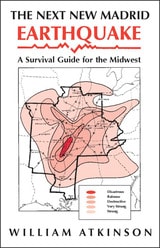
The Next New Madrid Earthquake
A Survival Guide for the MidwestWilliam Atkinson
Southern Illinois University Press, 1989
Scientists who specialize in the study of Mississippi Valley earthquakes say that the region is overdue for a powerful tremor that will cause major damage and undoubtedly some casualties.
The inevitability of a future quake and the lack of preparation by both individuals and communities provided the impetus for this book. Atkinson brings together applicable information from many disciplines: history, geology and seismology, engineering, zoology, politics and community planning, economics, environmental science, sociology, and psychology and mental health to provide the most comprehensive perspective to date of the myriad impacts of a major earthquake on the Mississippi Valley.
Atkinson addresses such basic questions as "What, actually, are earthquakes? How do they occur? Where are they likely to occur? Can they be predicted, perhaps even prevented?" He also addresses those steps that individuals can take to improve their chances for survival both during and after an earthquake.
The Reluctant Supervisor
Recognizing and Rethinking Power in Writing Center Supervisory PracticesRachel Azima
Utah State University Press, 2026
The discipline of writing center studies has long emphasized collaboration in every context, including leadership. But what does this emphasis mean for supervision, which is inherently hierarchical? The Reluctant Supervisor attends to how power—institutional, racial, and otherwise—operates in work relationships, staff policies, and administrative decisions.
Giving sustained attention to writing center administrators as supervisors (in addition to their roles as leaders, directors, mentors, and teachers), contributors write from the specificities of their local contexts, institutional positions, and embodied histories in ways that deepen our understanding of writing center supervisory practice.
The Reluctant Supervisor wrestles with the tensions, contradictions, and challenges necessary to name, own, and recognize supervision as a fundamental part of writing center work. It provides valuable perspectives for aspiring, new, and experienced writing center professionals and others in higher education looking to develop a more reflective supervisory practice—especially those who want to center equity and justice in their workplaces.
Things We Carry
Strategies for Recognizing and Negotiating Emotional Labor in Writing Program AdministrationCourtney Adams Wooten
Utah State University Press, 2020
The book is broken into three sections: one emphasizing the WPA’s own work identity, one on fostering community in writing programs, and one on balancing the professional and personal. Chapters written by a diverse range of authors in different institutional and WPA contexts examine the roles of WPAs in traumatic events, such as mass shootings and natural disasters, as well as the emotional labor WPAs perform on a daily basis, such as working with students who have been sexually assaulted or endured racist, sexist, homophobic, and otherwise disenfranchising interactions on campus. The central thread in this collection focuses on “preserving” by acknowledging that emotions are neither good nor bad and that they must be continually reflected upon as WPAs consider what to do with emotional labor and how to respond. Ultimately, this book argues for more visibility of the emotional labor WPAs perform and for WPAs to care for themselves even as they care for others.
The Things We Carry extends conversations about WPA emotional labor and offers concrete and useful strategies for administrators working in both a large range of traumatic events as well as daily situations that require tactical work to preserve their sense of self and balance. It will be invaluable to writing program administrators specifically and of interest to other types of administrators as well as scholars in rhetoric and composition who are interested in emotion more broadly.
Toward More Sustainable Metaphors of Writing Program Administration
edited by Lydia Wilkes, Lilian W. Mina, and Patti Poblete afterword by Douglas Hesse
Utah State University Press, 2022
This volume presents twelve chapters that reclaim and revise established metaphors; offer new metaphors based on sustainable, relational, or emotional labor practices and phenomena; and reveal the improvisational, artisanal nature of WPA work. Chapters resonate across three sections. The first section focuses on organic relationships captured in phrases like “putting out fires” and "seeing forests for the trees” alongside unexpected comparisons to ground and light. The second describes institutional landscapes featuring generative juxtapositions such as the WPA as a labor activist or a mapper of emotional geography. And the third discusses performance crafts like improv comedy and artisanal making.
Toward More Sustainable Metaphors of Writing Program Administration offers new and revised ways of thinking and acting for WPAs, who are constantly negotiating the paradoxical demands of their work and continually striving to act ethically in conflicted, and even fraught, situations. It will inspire practicing, aspiring, and former WPAs working in a time of transformation by highlighting more sustainable ways of enacting WPA identity.
Contributors: Jacob Babb, John Belk, Katherine Daily O'Meara, Ryan J. Dippre, Douglas Hesse, Andrew Hollinger, Rona Kaufman, Cynthia D. Mwenja, Manny Piña, Scott Rogers, Robyn Tasaka, Alexis Teagarden, Christy I. Wenger, Lydia Wilkes
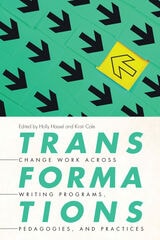
Transformations
Change Work across Writing Programs, Pedagogies, and PracticesHolly Hassel
Utah State University Press, 2021
The collection includes chapters from multiple award-winning writing programs, including the recipients of the Two-Year College Association’s Outstanding Programs in English Award and the Conference on College Composition and Communication’s Writing Program Certificate of Excellence. These authors offer perspectives that demonstrate the deep work of transformation in writing programs and practices writ large, confirm the ways in which writing programs are connected to and situated within larger institutional and disciplinary contexts, and outline successful methods for navigating these contexts in order to transform the work.
In using the prism of transformation as the organizing principle for the collection, Transformations offers a range of strategies for adapting writing programs so that they meet the needs of students and teachers in service of creating equitable, ethical literacy instruction in a range of postsecondary contexts.
Contributors: Leah Anderst, Cynthia Baer, Ruth Benander, Mwangi Alex Chege, Jaclyn Fiscus-Cannaday, Joanne Giordano, Rachel Hall Buck, Sarah Henderson Lee, Allison Hutchinson, Lynee Lewis Gaillet, Jennifer Maloy, Neil Meyer, Susan Miller-Cochran, Ruth Osorio, Lori Ostergaard, Shyam Pandey, Cassie Phillips, Brenda Refaei, Heather Robinson, Shelley Rodrigo, Julia Romberger, Tiffany Rousculp, Megan Schoen, Paulette Stevenson
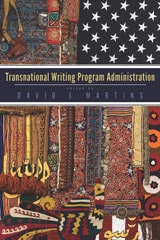
Transnational Writing Program Administration
David S. Martins
Utah State University Press, 2014
While local conditions remain at the forefront of writing program administration, transnational activities are slowly and thoroughly shifting the questions we ask about writing curricula, the space and place in which writing happens, and the cultural and linguistic issues at the heart of the relationships forged in literacy work. Transnational Writing Program Administration challenges taken-for-granted assumptions regarding program identity, curriculum and pedagogical effectiveness, logistics and quality assurance, faculty and student demographics, innovative partnerships and research, and the infrastructure needed to support writing instruction in higher education.
Well-known scholars and new voices in the field extend the theoretical underpinnings of writing program administration to consider programs, activities, and institutions involving students and faculty from two or more countries working together and highlight the situated practices of such efforts. The collection brings translingual graduate students at the forefront of writing studies together with established administrators, teachers, and researchers and intends to enrich the efforts of WPAs by examining the practices and theories that impact our ability to conceive of writing program administration as transnational.
This collection will enable writing program administrators to take the emerging locations of writing instruction seriously, to address the role of language difference in writing, and to engage critically with the key notions and approaches to writing program administration that reveal its transnationality.
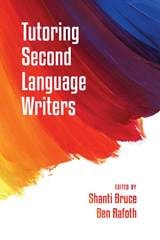
Tutoring Second Language Writers
Shanti Bruce
Utah State University Press, 2015
Tutoring Second Language Writers, a complete update of Bruce and Rafoth’s 2009 ESL Writers, is a guide for writing center tutors that addresses the growing need for tutors who are better prepared to work with the increasingly international population of students seeking guidance at the writing center.
Drawing upon philosopher John Dewey’s belief in reflective thinking as a way to help build new knowledge, the book is divided into four parts. Part 1: Actions and Identities is about creating a proactive stance toward language difference, thinking critically about labels, and the mixed feelings students may have about learning English. Part 2: Research Opportunities demonstrates writing center research projects and illustrates methods tutors can use to investigate their questions about writing center work. Part 3: Words and Passages offers four personal stories of inquiry and discovery, and Part 4: Academic Expectations describes some of the challenges tutors face when they try to help writers meet readers’ specific expectations.
Advancing the conversations tutors have with one another and their directors about tutoring second language writers and writing, Tutoring Second Language Writers engages readers with current ideas and issues that highlight the excitement and challenge of working with those who speak English as a second or additional language.
Contributors include Jocelyn Amevuvor, Rebecca Day Babcock, Valerie M. Balester, Shanti Bruce, Frankie Condon, Michelle Cox, Jennifer Craig, Kevin Dvorak, Paula Gillespie, Glenn Hutchinson, Pei-Hsun Emma Liu, Bobbi Olson, Pimyupa W. Praphan, Ben Rafoth, Jose L. Reyes Medina, Guiboke Seong, and Elizabeth (Adelay) Witherite.