Results by title
104 books match the query 'Writings' and 24 start with t
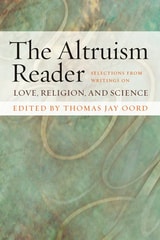
The Altruism Reader
Selections from Writings on Love, Religion, and ScienceThomas Oord
Templeton Press, 2007
This anthology brings together, for the first time, leading essays and book chapters from theologians, philosophers, and scientists on their research on ethics, altruism, and love. Because the general consensus today is that scholarship in moral theory requires empirical research, the arguments of the leading scholars presented in this book will be fundamental to those examining issues in love, ethics, religion, and science.
The first half of The Altruism Reader offers essential selections from religious texts, leading contemporary scholars, and cutting-edge ethicists. Buddhism, Christianity, Hinduism, Islam, and Judaism are represented. Among the highly respected writers are Thomas Aquinas, the Dalai Lama, Thich Nhat Hanh, John Polkinghorne, Stephen Pope, Louis Fischer, Amira Shamma Abdin, Katharine Doob Sakenfeld, and Daniel Day Williams.
The book’s second half features primary readings on love and altruism from the sciences. Here the focus is on anthropology, psychology, sociology, biology, and neurology, with material written by Daniel C. Batson, David Sloan Wilson, Robert Wright, Stephen G. Post, Robert Axelrod, Richard Dawkins, Holmes Rolston III, and other renowned scientists and philosophers.
“Virtually all people act—and often talk—as if they have some clue about love. We speak about loving food, falling in love, loving God, feeling loved, and loving a type of music. We say that love hurts, love waits, love stinks, and love means never having to say you’re sorry. We use the word and its derivatives in a wide variety of ways . . . . My definition of love is this: To love is to act intentionally, in sympathetic response to others (including God), to promote well-being.” —Thomas Jay Oord
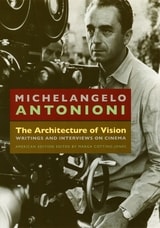
The Architecture of Vision
Writings and Interviews on CinemaMichelangelo Antonioni
University of Chicago Press, 2007
Through autobiographical sketches, theoretical essays, interviews, and conversations with such luminaries as Jean-Luc Godard and Alberto Moravia, this compelling volume explores the director’s unique brand of narrative-defying cinema as well as the motivations and anxieties of the man behind the camera.
“The Architecture of Vision provides a filmmaker’s absorbing reflections and insights on his career. . . . Antonioni’s comments . . . deepen and humanize a sometimes cerebral book.”—Publishers Weekly
“[Antonioni’s] erudition is astonishing . . . few of his peers can match his verbal articulateness.”—Film Quarterly
“This valuable resource offers entrée to material difficult to gain access to under other circumstances.”—Library Journal
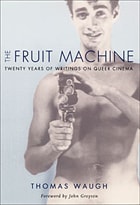
The Fruit Machine
Twenty Years of Writings on Queer CinemaThomas Waugh
Duke University Press, 2000
In this wide-ranging anthology Waugh touches on some of the great films of the gay canon, from Taxi zum Klo to Kiss of the Spider Woman. He also discusses obscure guilty pleasures like Born a Man . . . Let Me Die a Woman, unexpectedly rich movies like Porky’s and Caligula, filmmakers such as Fassbinder and Eisenstein, and film personalities from Montgomery Clift to Patty Duke. Emerging from the gay liberation movement of the 1970s, Waugh traverses crises from censorship to AIDS, tackling mainstream potboilers along with art movies, documentaries, and avant-garde erotic videos. In these personal perspectives on the evolving cinematic landscape, his words oscillate from anger and passion to wry wit and irony. With fifty-nine rare film stills and personal photographs and an introduction by celebrated gay filmmaker John Greyson, this volume demonstrates that the movie camera has been the fruit machine par excellence.
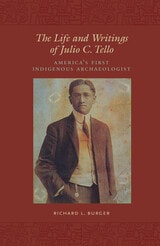
The Life and Writings of Julio C. Tello
America's First Indigenous ArchaeologistRichard L. Burger
University of Iowa Press, 2009
Tello’s vision remains unique, and his work has taken on additional interest as contemporary scholars have turned their attention to the relationship among nationalism, ethnicity, and archaeology. Unfortunately, many of his most important works were published in small journals or newspapers in Peru and have not been available even to those with a reading knowledge of Spanish. This volume thus makes available for the first time a broad sampling of Tello’s writings as well as complementary essays that relate these writings to his life and contributions.
Essays about Tello set the stage for the subsequent translations. Editor Richard Burger assesses his intellectual legacy, Richard Daggett outlines his remarkable life and career, and John Murra places him in both national and international contexts. Tello’s writings focus on such major discoveries as the Paracas mummies, the trepanation of skulls from Huarochirí, Andean iconography and cosmology, the relation between archaeology and nationhood, archaeological policy and preservation, and the role of science and museums in archaeology. Finally, the bibliography gives the most complete and accurate listing of Tello’s work ever compiled.
With its abundance of coups, wars, political dramas, class struggle, racial discrimination, looters, skulls, mummies, landslides, earthquakes, accusations, and counteraccusations, The Life and Writings of Julio C. Tello will become an indispensable reference for Andeanists.
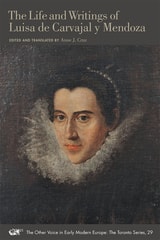
The Life and Writings of Luisa de Carvajal y Mendoza
Luisa de Carvajal y Mendoza, Edited by Anne J. Cruz, Translated by Anne J. Cruz
Iter Press, 2014
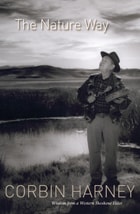
The Nature Way
Writings from a Western Shoshone ElderCorbin Harney
University of Nevada Press, 2009
Corbin Harney’s long life encompassed remarkable changes in the lives of Native Americans and in the technological and political development of the world. Born into an impoverished Western Shoshone family on the Nevada-Idaho border and orphaned as a newborn, he was brought up by grandparents who taught him the traditional ways of their people and the ancient spiritual beliefs that sustained their culture. As an adult, Harney found his calling as a traditional healer and spiritual leader. Soon he became involved in the Shoshone struggle for civil rights, including their efforts to protect and heal their traditional lands in what became the Nevada Test Site. This involvement led Harney to his eventual role as a leader of the international antinuclear movement.The Nature Way is a rich compendium of Corbin Harney’s experience and wisdom. His account of his life incorporates the tragic history of Native Americans in the Great Basin after the arrival of Euro-Americans, his realization of his own identity as a Native American, and his long study of his people’s traditions and spiritual practices. His summary of the Shoshone and Paiute use of indigenous plants for food and healing highlights their understanding that the Earth and her denizens and products must be respected and protected in order to preserve the connection that all creatures have with sacred Mother Earth. Finally, his account of his role as an antinuclear activist expands on his awareness of the human responsibility to protect the Earth, especially from the extreme danger posed by nuclear technology and nuclear weapons of mass destruction. Corbin Harney’s voice is one of the clearest expressions yet of the values, concerns, and spirituality of contemporary Native America. He offers all of us an eloquent plea that we respect and cooperate with Nature to ensure the survival of the planet.
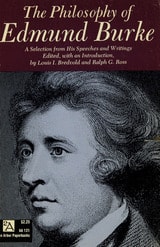
The Philosophy of Edmund Burke
A Selection from His Speeches and WritingsEdmund Burke
University of Michigan Press, 1960
The Search for God's Law
Islamic Jurisprudence in the Writings of Sayf al-Din al-AmidiBernard G Weiss
University of Utah Press, 2011
Weiss’s new introduction provides an overview of Amidi’s jurisprudence that facilitates deeper comprehension of the challenging dialectic of the text. This edition includes an in-depth analysis of the nature of language and the ways in which it mediates the law, while shaping it at the same time. An updated index has been added.
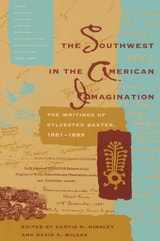
The Southwest in the American Imagination
The Writings of Sylvester Baxter, 1881-1889Curtis M. Hinsley
University of Arizona Press, 1996
Drawing on materials housed in half a dozen institutions and now brought together for the first time, this projected seven-volume work presents a cultural history of the Hemenway Expedition and early anthropology in the American Southwest, told in the voices of its participants and interpreted by contemporary scholars. Taken as a whole, the series comprises a thorough study and presentation of the cultural, historical, literary, and archaeological significance of the expedition, with each volume posing distinct themes and problems through a set of original writings such as letters, reports, and diaries. Accompanying essays guide readers to a coherent understanding of the history of the expedition and discuss the cultural and scientific significance of these data in modern debates.
This first volume, The Southwest in the American Imagination, presents the writings of Sylvester Baxter, a journalist who became Cushing's friend and publicist in the early 1880s and who traveled to the Southwest and wrote accounts of the expedition. Included are Baxter's early writings about Cushing and the Southwest, from 1881 to 1883, which reported enthusiastically on the anthropologist's work and lifestyle at Zuñi before the expedition. Also included are published accounts of the Hemenway Expedition and its scientific promise, from 1888 to 1889, drawing on Baxter's central role in expedition affairs as secretary-treasurer of the advisory board. Series co-editor Curtis Hinsley provides an introductory essay that reviews Baxter's relationship with Cushing and his career as a journalist and civic activist in Boston, and a closing essay that inquires further into the lasting implications of the "invention of the Southwest," arguing that this aesthetic was central to the emergence and development of southwestern archaeology.
Seen a century later, the Hemenway Expedition provides unusual insights into such themes as the formation of a Southwestern identity, the roots of museum anthropology, gender relations and social reform in the late nineteenth century, and the grounding of American nationhood in prehistoric cultures. It also conveys an intellectual struggle, ongoing today, to understand cultures that are different from the dominant culture and to come to grips with questions concerning America's meaning and destiny.
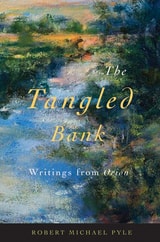
The Tangled Bank
Writings from OrionRobert Michael Pyle
Oregon State University Press, 2012
Robert Michael Pyle’s popular “Tangled Bank” column appeared in fifty-two consecutive issues of Orion and Orion Afield magazines over eleven years. Each essay collected in The Tangled Bank explores Charles Darwin’s contention that the elements of such a bank, and by extension all the living world, are endlessly interesting and ever evolving.
Pyle’s thoughtful and concise narratives range in subject from hops and those who love them to independent bookstores to the monarchs of Mexico. In each piece, Pyle refutes “the idea that the world is a boring place,” sharing his meticulous observations of the endless and fascinating details of the living earth.
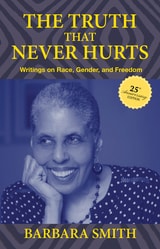
The Truth That Never Hurts 25th anniversary edition
Writings on Race, Gender, and FreedomBarbara Smith
Rutgers University Press, 2024
Barbara Smith has been doing groundbreaking work since the early 1970s, describing a Black feminism for Black women. Her work in Black women's literary traditions; in examining the sexual politics of the lives of women of color; in representing the lives of Black lesbians and gay men; and in making connections between race, class, sexuality and gender is gathered in The Truth That Never Hurts. This collection contains some of her major essays on Black women's literature, Black lesbian writing, racism in the women's movement, Black-Jewish relations, and homophobia in the Black community. Her forays into these areas ignited dialogue about topics that few other writers were addressing at the time, and which, sadly, remain pertinent to this day. This twenty-fifth anniversary edition, in a beautiful new package, also contains the essays from the original about the 1968 Chicago convention demonstrations; attacks on the NEA; the Anita Hill-Clarence Thomas Senate hearings; and police brutality against Rodney King and Abner Louima, which, after twenty-five years, still have the urgency they did when they were first written.
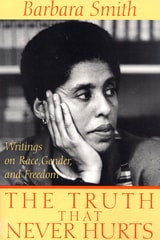
The Truth That Never Hurts
Writings on Race, Gender, and FreedomSmith, Barbara
Rutgers University Press, 2000
Smith’s essay “Toward a Black Feminist Criticism,” is often cited as a major catalyst in opening the field of black women’s literature. Pieces about racism in the women’s movement, black and Jewish relations, and homophobia in the Black community have ignited dialogue about topics that few other writers address. The collection also brings together topical political commentaries on the 1968 Chicago convention demonstrations; attacks on the NEA; the Anita Hill–Clarence Thomas Senate hearings; and police brutality against Rodney King and Abner Louima. It also includes a never-before-published personal essay on racial violence and the bonds between black women that make it possible to survive.
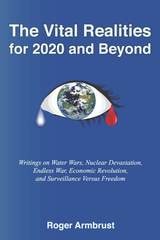
The Vital Realities for 2020 and Beyond
Writings on Water Wars, Nuclear Devastation, Endless War, Economic Revolution, and Surveillance Versus FreedomRoger Armbrust
Parkhurst Brothers, Inc., 2019
The Writings and Later Wisdom Books
Christl M. Maier
SBL Press, 2014
An international collection of ecumenical, gender-sensitive interpretations
The latest volume in the Bible and Women series seeks to provide an ecumenical, gender-sensitive interpretation and reception history of the Writings and later wisdom traditions including Ben Sira and the Wisdom of Solomon. Articles trace the living conditions of women, examine the presentation of female figures in the Israelite wisdom tradition, discuss women and gender relations in single books, and explore narratives about great female protagonists, such as Ruth, Esther, and Susanna, who prove their wit and strength in situations of conflict.
Features:
- Essays by scholars from five European countries, Israel, and the United States
- An introduction and fourteen essays focused on women and gender relations
- Coverage of power relations and ideologies within the texts and in current interpretations.
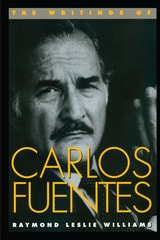
The Writings of Carlos Fuentes
By Raymond Leslie Williams
University of Texas Press, 1996
Smitten by the modernity of Cervantes and Borges at an early age, Carlos Fuentes has written extensively on the cultures of the Americas and elsewhere. His work includes over a dozen novels, among them The Death of Artemio Cruz, Christopher Unborn, The Old Gringo, and Terra Nostra, several volumes of short stories, numerous essays on literary, cultural, and political topics, and some theater.
In this book, Raymond Leslie Williams traces the themes of history, culture, and identity in Fuentes' work, particularly in his complex, major novel Terra Nostra. He opens with a biography of Fuentes that links his works to his intellectual life. The heart of the study is Williams' extensive reading of the novel Terra Nostra, in which Fuentes explores the presence of Spanish culture and history in Latin America. Williams concludes with a look at how Fuentes' other fiction relates to Terra Nostra, including Fuentes' own division of his work into fourteen cycles that he calls "La Edad del Tiempo," and with an interview in which Fuentes discusses his concept of this cyclical division.

The Writings of J.M. Coetzee, Volume 93
Michael Valdez Moses
Duke University Press, 0
The Writings of Jean-Paul Sartre Volume 2
Selected ProseJean-Paul Sartre
Northwestern University Press, 1974
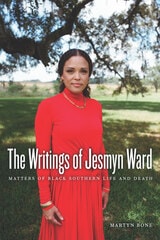
The Writings of Jesmyn Ward
Matters of Black Southern Life and DeathMartyn Bone
University of Iowa Press, 2025
Martyn Bone thoughtfully examines key themes running throughout Ward’s writing: Black life in the U.S. South; the legacies of slavery and segregation; neoliberalism as the contemporary form of capitalism; environmental crisis in the Anthropocene; and human-animal relations. Bone also connects Ward’s work to major figures in the U.S. literary canon, with particular focus on William Faulkner, Zora Neale Hurston, and Toni Morrison.
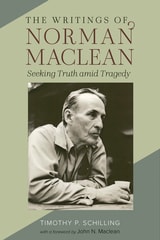
The Writings of Norman Maclean
Seeking Truth amid TragedyTimothy P. Schilling
University of Nevada Press, 2024
The Writings of Norman Maclean: Seeking Truth amid Tragedy provides the first critical reassessment of this celebrated author’s work in more than a decade. In his study, Timothy P. Schilling focuses on Maclean’s attempt, in A River Runs through It and Other Stories and Young Men and Fire, to come to grips with the tragic side of human existence. From the 1938 death of his brother Paul to the 1949 deaths of thirteen firefighters in Montana’s Mann Gulch wildfire, Maclean is driven by a desire to discover ultimate meaning—the truth—in the face of haunting tragedy. Through careful analysis of all of Maclean’s published works, Schilling highlights the audaciousness of Maclean’s quest to wrest free an answer from “the universe.”
Ever open to scientific, literary, philosophical, and theological ways of viewing reality, Maclean found ambiguity, paradoxically, to be an essential tool for probing the truth. Beyond exploring Maclean’s use of this tool, Schilling breaks new ground by considering Maclean’s invocation of the Transcendentals in “A River Runs through It,” noting the sly homage Maclean pays to Izaak Walton, examining Maclean’s often-neglected “Other Stories,” assessing Robert Redford’s film adaptation of “A River Runs through It,” and providing the most thorough exploration of Young Men and Fire yet available.
With this book, Schilling offers a current and complete analysis of Maclean—one of the most iconic figures in Western American literature.
The Writings of Salvian, the Presbyter
The Presbyter Salvian, The Presbyter
Catholic University of America Press, 1947
The Writings of William James
A Comprehensive EditionWilliam James
University of Chicago Press, 1978
The anthology features representive selections from The Principles of Psychology, The Will to Believe, and The Variety of Religious Experience in addition to the complete Essays in Radical Empiricism and A Pluralistic Universe. The original 1907 edition of Pragmatism is included, as well as classic selections from all of James's other major works. Of particular significance for James scholarship is the supplemented version of Ralph Barton Perry's Annotated Bibliography of the Writings of William James, with additions bringing it up to 1976.
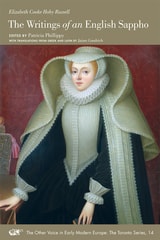
The Writings of an English Sappho
Elizabeth Cooke Hoby Russell
Iter Press, 2011
—Jane Donawerth
Professor of English and affiliate faculty in women’s studies
University of Maryland
The search for God's law
Islamic jurisprudence in the writings of Sayf al-Din al-AmidiBernard G Weiss
University of Utah Press, 1992
Thinking Out of Sight
Writings on the Arts of the VisibleJacques Derrida
University of Chicago Press, 2021
The book is divided into three sections. The first demonstrates Derrida’s preoccupation with visibility, image, and space. The second contains interviews and collaborations with artists on topics ranging from the politics of color to the components of painting. Finally, the book delves into Derrida’s writings on photography, video, cinema, and theater, ending with a text published just before his death about his complex relationship to his own image. With many texts appearing for the first time in English, Thinking out of Sight helps us better understand the critique of representation and visibility throughout Derrida’s work, and, most importantly, to assess the significance of his insights about art and its commentary.