Results by title
118 books match the query 'Youth' and 24 start with t
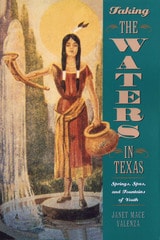
Taking the Waters in Texas
Springs, Spas, and Fountains of YouthBy Janet Mace Valenza
University of Texas Press, 2000
"It is well known that Southern Texas possesses a greater variety of Mineral Waters than any other country on the globe" enthused a promotion for one of Texas' many watering spas of the nineteenth century. Though most are closed and nearly forgotten today, Texas spas and resorts once drew thousands of visitors from across the country, seeking healing of body and spirit in the rejuvenating mineral waters.
This book offers the first comprehensive history of Texas' healing springs. Janet Valenza tracks the rise, popularity, and decline of the "water cure" from the 1830s to the present day. She follows the development of major spas and resorts, such as Mineral Wells and Indian Hot Springs near El Paso, as well as of smaller, family-run springs. She also describes how mineral waters influenced patterns of settlement, transportation routes, commerce, and people's attitudes toward the land. Period photos and quotes from those seeking cures offer vivid glimpses into the daily life at the springs, which Valenza lists and describes county-by-county in the appendix.
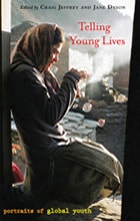
Telling Young Lives
Portraits of Global Youthedited by Craig Jeffrey and Jane Dyson
Temple University Press, 2008
Telling Young Lives presents more than a dozen fascinating, ethnograph-ically informed portraits of young people facing rapid changes in society and politics from different parts of the world. From a young woman engaged in agricultural labor in the High Himalayas to a youth activist based in Tanzania, the distinctive voices from the U.K., India, Germany, Sierra Leone, South Africa and Bosnia Herzegovina, provide insights into the active and creative ways these youths are addressing social and political challenges such as war, hunger and homelessness.
Telling Young Lives has great appeal for classroom use in geography courses and makes a welcome contribution to the growing field of “young geographies,” as well as to politics and political geography. Its focus on individual portraits gives readers a fuller, more vivid picture of the ways in which global changes are reshaping the actual experiences and strategies of young people around the world.
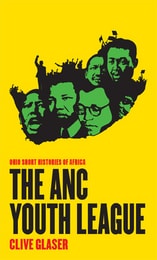
The ANC Youth League
Clive Glaser
Ohio University Press, 2012
This brilliant little book tells the story of the African National Congress (ANC) Youth League from its origins in the 1940s to the present and the controversies over Julius Malema and his influence in contemporary youth politics. Glaser analyzes the ideology and tactics of its founders, some of whom (notably Nelson Mandela and Oliver Tambo) later became iconic figures in South African history as well as inspirational figures such as A. P. Mda (father of author Zakes Mda) and Anton Lembede. It shows how the early Youth League gave birth not only to the modern ANC but also to its rival, the Pan Africanist Congress. Dormant for many years, the Youth League reemerged in the transition era under the leadership of Peter Mokaba—infused with the tradition of the militant youth politics of the 1980s. Throughout its history the Youth League has tried to “dynamize” and criticize the ANC from within, while remaining devoted to the mother body and struggling to find a balance between loyalty and rebellion.
The Age of Sex
Custom, Law, and Ritual in Twentieth-Century East AfricaCorrie Decker
University of Wisconsin Press, 2025
In The Age of Sex, Decker demonstrates how maturation became defined as the hypothetical moment when a girl becomes a woman capable of engaging in heterosexual activity and a boy becomes a man imbued with the right and responsibility to have heterosexual intercourse. Colonial ethnographic studies reduced complex precolonial rites of passage to “puberty rites” fixated on these sexual transformations. The resulting stereotypes influenced, in turn, how colonial and postcolonial court officials decided age-of-consent and other sex crime cases. Court rituals thus legally transformed girls into women by ruling on their sexual maturity and boys into men by sentencing them to corporal punishment, marking their acceptance of heterosexual responsibilities.
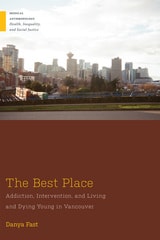
The Best Place
Addiction, Intervention, and Living and Dying Young in VancouverDanya Fast
Rutgers University Press, 2024
Winner of the CASCA Labrecque-Lee Book Prize
In both local and international imaginations, Vancouver, Canada, is often celebrated as one of the world’s most beautiful, cosmopolitan, and livable cities. Simultaneously, the city continues to be ground zero for successive waves of public health emergency and intervention, including a recent and unprecedented drug overdose crisis driven by the proliferation of illicitly manufactured fentanyl and related analogs in the local drug supply. In The Best Place: Addiction, Intervention, and Living and Dying Young in Vancouver, Danya Fast explores these politics of place from the perspectives of young people who use drugs. Those who are the subject of this book were in many ways relegated to the social, spatial, and economic margins of the city. Yet, they were also often at the very center of city life and state projects, including the project of protecting life in the context of the current overdose crisis.

The Best in Children's Books
The University of Chicago Guide to Children's Literature, 1973-78Zena Sutherland
University of Chicago Press, 1980
The Best in Children's Books
The University of Chicago Guide to Children's Literature, 1979-84Zena Sutherland
University of Chicago Press, 1986
This volume carries on the tradition established by Zena Sutherland's two earlier collections covering the periods from 1966 to 1972 and 1973 to 1978. Her 1973 edition of The Best in Children's Books was cited by the American School Board Journal as one of the outstanding books of the year in education.
The Creative Underclass
Youth, Race, and the Gentrifying CityTyler Denmead
Duke University Press, 2019
The Farm & Wilderness Summer Camps
Progressive Ideals in the Twentieth CenturyEmily K. Abel
Rutgers University Press, 2024
The Future of Democracy
Developing the Next Generation of American CitizensPeter Levine
University Press of New England, 2015
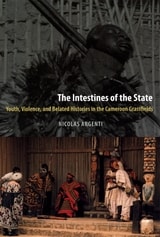
The Intestines of the State
Youth, Violence, and Belated Histories in the Cameroon GrassfieldsNicolas Argenti
University of Chicago Press, 2007
Beginning his study with a political analysis of youth in the Grassfields from the eighteenth century to the present, Argenti pays special attention to the repeated violent revolts staged by young victims of political oppression. He then combines this history with extensive ethnographic fieldwork in the Oku chiefdom, discovering that the specter of past violence lives on in the masked dance performances that have earned intense devotion from today’s youth. Argenti contends that by evoking the imagery of past cataclysmic events, these masquerades allow young Oku men and women to address the inequities they face in their relations with elders and state authorities today.
The Life of Arseniev
YouthIvan Bunin
Northwestern University Press, 1994
In ways similar to Nabokov's Speak, Memory, Bunin's novel powerfully evokes the atmosphere of Russia in the decades before the Revolution and illuminates those Russian literary and cultural traditions eradicated in the Soviet era. This first full English-language edition updates earlier translations, taking as its source the version Bunin revised in 1952, and including an introduction and annotations by Andrew Baruch Wachtel.
The Longevity Seekers
Science, Business, and the Fountain of YouthTed Anton
University of Chicago Press, 2013
With The Longevity Seekers, science writer Ted Anton takes readers inside this tale that began with worms and branched out to snare innovative minds from California to Crete, investments from big biotech, and endorsements from TV personalities like Oprah and Dr. Oz. Some of the research was remarkable, such as the discovery of an enzyme in humans that stops cells from aging. And some, like an oft-cited study touting the compound resveratrol, found in red wine—proved highly controversial, igniting a science war over truth, credit, and potential profit. As the pace of discovery accelerated, so too did powerful personal rivalries and public fascination, driven by the hope that a longer, healthier life was right around the corner. Anton has spent years interviewing and working with the scientists at the frontier of longevity science, and this book offers a behind-the-scenes look at the state-of-the-art research and the impact it might have on global public health, society, and even our friends and family.
With spectacular science and an unforgettable cast of characters, The Longevity Seekers has all the elements of a great story and sheds light on discoveriesthat could fundamentally reshape human life.
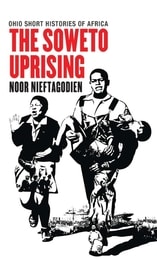
The Soweto Uprising
Noor Nieftagodien
Ohio University Press, 2015
The Soweto uprising was a true turning point in South Africa’s history. Even to contemporaries, it seemed to mark the beginning of the end of apartheid. This compelling book examines both the underlying causes and the immediate factors that led to this watershed event. It looks at the crucial roles of Black Consciousness ideology and nascent school-based organizations in shaping the character and form of the revolt. What began as a peaceful and coordinated demonstration rapidly turned into a violent protest when police opened fire on students. This short history explains the uprising and its aftermath from the perspective of its main participants, the youth, by drawing on a rich body of oral histories.

The Spirit of Youth and City Streets
Jane Addams
University of Illinois Press, 1972
When this book was first published in 1909, Addams was the most famous woman in America. A celebrity and a spiritual leader, she was widely regarded as practical, realistic, and endowed with a special insight into the problems of urban America. The Spirit of Youth and the City Streets--her favorite of her own books--establishes Addams as an accomplished writer as well as a reformer. In this compact volume she examines the causes for the discontent of youth in the city, chiding educators for their "persistent blindness to youth's most obvious needs."
Addams argues for the importance of providing direction and focus--for example, through public recreation, practical education, and experiences in the arts--for the pent-up energies of young men and women. She takes a realistic view of their basic social and sexual drives and their disaffection and alienation in an industrial world. At the same time, she rejects the hereditary explanations for delinquency that prevailed in her day. Allen F. Davis's introduction provides a biographical profile of Addams and a commentary on her importance as a writer and a social activist.
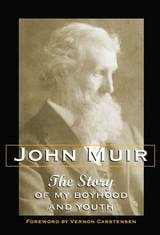
The Story of My Boyhood and Youth
John Muir
University of Wisconsin Press, 1965
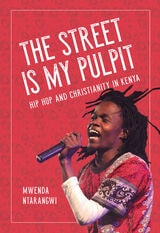
The Street Is My Pulpit
Hip Hop and Christianity in KenyaMwenda Ntarangwi
University of Illinois Press, 2016
Mwenda Ntarangwi explores the Kenyan hip hop scene through the lens of Juliani's life and career. A born-again Christian, Juliani produces work highlighting the tensions between hip hop's forceful self-expression and a pious approach to public life, even while contesting the basic presumptions of both. In The Street Is My Pulpit, Ntarangwi forges an uncommon collaboration with his subject that offers insights into Juliani's art and goals even as Ntarangwi explores his own religious experience and subjective identity as an ethnographer. What emerges is an original contribution to the scholarship on hip hop's global impact and a passionate study of the music's role in shaping new ways of being Christian in Africa.
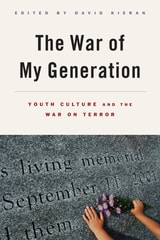
The War of My Generation
Youth Culture and the War on TerrorKieran, David
Rutgers University Press, 2015
The War of My Generation is the first essay collection to focus specifically on how the terrorist attacks and their aftermath have shaped these new generations of Americans. Drawing from a variety of disciplines, including anthropology, sociology, cultural studies, and literary studies, the essays cover a wide range of topics, from graphic war images in the classroom to computer games designed to promote military recruitment to emails from parents in the combat zone. The collection considers what cultural factors and products have shaped young people's experience of the 9/11 attacks, the wars that have followed, and their experiences as emerging citizen-subjects in that moment. Revealing how young people understand the War on Terror—and how adults understand the way young people think—The War of My Generation offers groundbreaking research on catastrophic events still fresh in our minds.
The World Saved by Kids
And Other EpicsElsa Morante
Seagull Books, 2016
First published in Italian in 1968, The World Saved by Kids was written in the aftermath of deep personal change and in the context of what Elsa Morante called the “great youth movement exploding against the funereal machinations of the organized contemporary world.” Morante believed that it was only the youth who could truly hear her revolutionary call. With the fiftieth anniversary of the tumultuous events of 1968 approaching, there couldn’t be a more timely moment for this first English translation of Morante’s work to appear.
Greeted by Antonio Porta as one of the most important books of its decade, The World Saved by Kids showcases Morante’s true mastery of tone, rhythm, and imagery as she works elegy, parody, storytelling, song, and more into an act of linguistic magic through which Gramsci and Rimbaud, Christ and Antigone, Mozart and Simone Weil, and a host of other figures join the sassy, vulnerable neighborhood kids in a renewal of the word’s timeless, revolutionary power to explore and celebrate life’s insoluble paradox.
Morante gained international recognition and critical acclaim for her novels History, Arturo’s Island, and Aracoeli, and The World Saved By Kids may be her best book and the one that most closely represents her spirit.
The Youth Labor Market Problem
Its Nature, Causes, and ConsequencesEdited by Richard B. Freeman and David A. Wise
University of Chicago Press, 1982
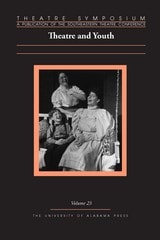
Theatre Symposium, Vol. 23
Theatre and YouthDavid S. Thompson
University of Alabama Press, 2015
The first set of essays draws from robustly diverse sources: the work of Frank Wedekind in nineteenth-century Germany, Peter Pan’s several stage incarnations, Evgeny Shvarts’s antitotalitarian plays in Soviet Russia, and Christopher Marlowe’s Dido, Queen of Carthage, whose depictions of childhood comment on both the classical period as well as Marlowe’s own Elizabethan age.
The second part of the collection explores and illustrates how youth participate in theatre, the cognitive benefits youth reap from theatre practice, and the ameliorating power of theatre to help at-risk youth. These essays show fascinating and valuable case studies of, for example, theatre employed in geography curricula to strengthen spatial thinking, theatre as an antidote to youth delinquency, and theatre teaching Latinos in the south strategies for coping in a multilingual world.
Rounding out this exemplary collection are a pair of essays that survey the state of the art, the significance of theatre-for-youth programming choices, and the shifting attitudes young Americans are bringing to the discipline. Eclectic and vital, this expertly curated collection will be of interest to educators and theatre professionals alike.
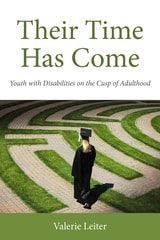
Their Time Has Come
Youth with Disabilities on the Cusp of AdulthoodLeiter, Valerie
Rutgers University Press, 2012
In Their Time Has Come, Valerie Leiter argues that there are crucial missing links between federal disability policies and the lives of young people. Youth and their parents struggle to gather information about the resources that disability policies have created, and youth are not typically prepared to use their disability rights effectively. Her argument is based on thorough examination of federal disability policy and interviews with young people with disabilities, their parents, and rehabilitation professionals. Attention is given to the diversity of expectations, the resources available to them, and the impact of federal policy and public and private attitudes on their transition to adulthood.
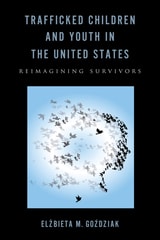
Trafficked Children and Youth in the United States
Reimagining SurvivorsElzbieta M. Gozdziak
Rutgers University Press, 2016
Breaking new ground, Trafficked Children in the United States offers a fresh take on what matters most to these young people as they rebuild their lives in America.
Troubling Gender
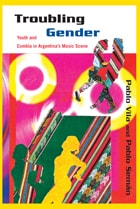
Youth and Cumbia in Argentina's Music SceneAuthored by Pablo Vila and Pablo Semán, contributions by Eloísa Martín and María Julia Carozzi
Temple University Press, 2011
Cumbia villera—literally, cumbia from the shantytowns— is a musical genre quite popular with Argentine youth who frequent urban dance halls. Its songs are known for having highly sexualized lyrics— about girls dancing provocatively or experiencing erotic pleasure. The songs exhibit the tensions at play in the different ways people relate to this musical genre.
In Troubling Gender, noted sociologists Pablo Vila and Pablo Semán scrutinize the music's lyrics and the singers' and dancers' performances. At the same time, the authors conduct in-depth interviews to examine the ways males construct and appropriate cumbia's lyrics, and how females identify, appropriate, and playfully and critically manipulate the same misogynistic songs.
Addressing the relationship between this form of music and the wider social, political, and economic changes that influence the lives of urban youth, Troubling Gender argues that the music both reflects and influences the ways in which women's and men's roles are changing in Argentine society.