Results by title
3703 books match the query '19th century' and 853 start with t
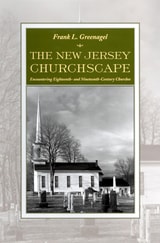
The New Jersey Churchscape
Encountering Eighteenth- and Nineteenth-Century ChurchesFrank L. Greenagel
Rutgers University Press, 2001
Although best known as the Garden State, New Jersey could also be called the Church State. The state boasts thousands of houses of worship, with more than one thousand still standing that were built in the eighteenth and nineteenth centuries. Frank L. Greenagel has photographed more than six hundred. He has selected two hundred of these historic landmarks for an examination of why they are sited where they are and why they look the way they do.
Greenagel has sought out and included images of not only mainstream Christian churches, but also Jewish synagogues as well as the places of worship of religious groups such as the Moravians, the Church of the Brethren, and the Seventh Day Baptists. The photographs are arranged chronologically within sections on three major early settlement regions of the state ¾ the Hudson River, the Delaware River, and the Raritan Valley. For each building, Greenagel details the date of construction, the cultural, historic, and religious influences that shaped it, the architectural details that distinguish it, and what purpose it currently serves.
The New Real
Media and Mimesis in Japan from Stereographs to EmojiJonathan E. Abel
University of Minnesota Press, 2022
Unlocking a vital understanding of how literary studies and media studies overlap and are bound together
A synthetic history of new media reception in modern and contemporary Japan, The New Real positions mimesis at the heart of the media concept. Considering both mimicry and representation as the core functions of mediation and remediation, Jonathan E. Abel offers a new model for media studies while explaining the deep and ongoing imbrication of Japan in the history of new media.
From stereoscopy in the late nineteenth century to emoji at the dawn of the twenty-first, Abel presents a pioneering history of new media reception in Japan across the analog and digital divide. He argues that there are two realities created by new media: one marketed to us through advertising that proclaims better, faster, and higher-resolution connections to the real; and the other experienced by users whose daily lives and behaviors are subtly transformed by the presence and penetration of the content carried through new media. Intervening in contemporary conversations about virtuality, copyright, copycat violence, and social media, each chapter unfolds with a focus on a single medium or technology, including 3D photographs, the phonograph, television, videogames, and emoji.
By highlighting the tendency of the mediated to copy the world and the world to copy the mediated, The New Real provides a new path for analysis of media, culture, and their function in the world.
The New Woman Gothic
Reconfigurations of DistressPatricia Murphy
University of Missouri Press, 2026
The controversial and compelling figure of the New Woman in late Victorian fiction has garnered extensive scholarly attention, but rarely has she been investigated through the fascinating lens of the Gothic. Yet the presence of sinister Gothic elements is so widespread in the generally realisitic British novels that the term "New Woman Gothic" readily comes to mind. Drawing from and reworking Gothic conventions of Romantic and later literature, the New Woman version is marshaled during this tumultuous cultural moment of gender anxieties either to defend or revile the complex individual who sought improvements in educational, marital, and professional realms.
The New Woman
Literary Modernism, Queer Theory, and the Trans Feminine AllegoryEmma Heaney
Northwestern University Press, 2017
The book is the first to identify the process by which medical sources simplified the diversity of trans feminine experience into a single diagnostic narrative. It then demonstrates that this medical figure became an archetype for the "sexual anarchy" of the Modernist period in works by Aldous Huxley, James Joyce, Djuna Barnes, T. S. Eliot, and Jean Genet.
Thus illuminating the trans feminine's Modernist provenance, the book examines foundational works of Queer Theory that resuscitated the trans feminine allegory at the end of the twentieth century. Insightful and seminal, The New Woman debunks the pervasive reflex beginning in the 1990s to connect trans experience to a late twentieth-century collapse of sexual differences by revealing the Modernist roots of that very formulation.
The News from Lone Rock
Observations and Witticisms of a Small-Town NewsmanFreeland Dexter
Wisconsin Historical Society Press, 2016
At the turn of the twentieth century, the bustling railroad town of Lone Rock, Wisconsin, was home to about a thousand residents, and Freeland Dexter seemed to know the business of every single one. Dexter reported all the news from Lone Rock—from the significant to the trivial, the tragic to the comical—for the Weekly Home News of neighboring Spring Green from 1884 to 1912.
This collection of Dexter’s most fascinating, amusing, and poignant stories and observations brings back to life the colorful characters of his time and takes readers on a journey to a world that was both simpler and changing fast. Whether he was reporting who grew the biggest watermelon, teasing the local lovebirds, or taking a side on the ever-controversial question of whether the town should go dry, Dexter wrote with a distinctive wit and an obvious affection for his town and its people. The News from Lone Rock also provides an illuminating window into a time period of rapid technological progress, showing how the introduction of electric light, telephones, and cars changed lives and connected this quaint village more and more to the outside world.

The Newspaper Indian
Native American Identity in the Press, 1820-90John M. Coward
University of Illinois Press, 1999
How newspapers shaped the image of Native Americans
John M. Coward looks at how nineteenth-century newspapers and news making practices shaped the contradictory and still persistent representation of Native Americans. As Coward reveals, journalism failed to describe Indigenous people on their own terms. Instead, reporters chose portrayals that adhered to the norms of the majority white, Anglo-Saxon, Protestant society that read their papers. In addition, Coward shows how journalists turned Native Americans into symbolic and ambiguous figures used to measure American progress.
An in-depth look at the power of the press, The Newspaper Indian provides insight into how journalism wove a skewed idea of Native Americans into the fabric of American life.

The Nights Of Labor
The Workers' Dream in Nineteenth-Century FranceJacques Ranciere
Temple University Press, 1991
The Notorious "Bull" Nelson
Murdered Civil War GeneralDonald A. Clark
Southern Illinois University Press, 2011
A dynamic figure in the pages of history, Major General William “Bull” Nelson played a formative role in the Union’s success in Kentucky and the Western theater of the Civil War. Now, Donald A. Clark presents a long-overdue examination of this irascible officer, his numerous accomplishments, and his grim fate. More popularly known for his temper than his intrepid endeavors on behalf of the North, Nelson nevertheless dedicated much of his life to his nation and the preservation of the Union.
The child of a privileged family, Nelson was one of the first officers to graduate from the newly formed U.S. Naval Academy. His years in the Navy imbued in him the qualities of bravery, loyalty, and fortitude; however, his term of service also seemed to breed an intolerance of others for which he became infamous, and that ultimately led to his violent downfall. Clark sheds new light upon Nelson’s pre–Civil War years as a naval officer, when he became a hardened veteran of battle, fighting at the siege of Veracruz and the capture of Tabasco during the Mexican War in the 1840s. On the basis of Nelson’s military experience, in 1861 President Lincoln sent him to Kentucky—which was considering secession—and Nelson rallied loyalists and helped the Union prepare to maintain control of the state during the next several years of war.
Nelson went on to prove instrumental in blocking Confederate attempts to subdue Kentucky and the West, serving important roles in the battle of Shiloh, General Henry W. Halleck’s advance against Corinth, and Brigadier General Don Carlos Buell’s movement toward Chattanooga. But while some viewed his bold maneuvers as the saving of the state, many others, including such notables as Ulysses S. Grant and William Tecumseh Sherman, argued that Nelson’s actions merited no praise. Unfortunately for the general, the question of his value to the Union abruptly became moot, as his achievements were shortly overshadowed by ignominious rumors of scandal and abuse.
His involvement in the defense of Louisville gave Nelson a chance to redeem himself and restore his military reputation, but the general’s famous temper soon robbed him of any potential glory. During September of 1862, in a crime that was never prosecuted, fellow Union general Jefferson C. Davis shot and killed Nelson after an argument. Clark explores this remarkable exception in military law, arguing that while the fact of the murder was indisputable, many considered Davis a hero for having dispatched the so-called tyrant. Although Nelson eventually received many posthumous honors for his indispensable role in the war, justice was never sought for his murder.
A comprehensive study of this well-known, yet misunderstood American figure, The Notorious “Bull” Nelson: Murdered Civil War General is an illuminating addition to the history of the Civil War. Through Clark’s impeccable research and richly layered narrative, William “Bull” Nelson springs from the pages as large and volatile as he was in life.
The Novel Map
Space and Subjectivity in Nineteenth-Century French FictionPatrick M. Bray
Northwestern University Press, 2013
Focusing on Stendhal, Gérard de Nerval, George Sand, Émile Zola, and Marcel Proust, The Novel Map: Mapping the Self in Nineteenth-Century French Fiction explores the ways that these writers represent and negotiate the relationship between the self and the world as a function of space in a novel turned map.
With the rise of the novel and of autobiography, the literary and cultural contexts of nineteenth-century France reconfigured both the ways literature could represent subjects and the ways subjects related to space. In the first-person works of these authors, maps situate the narrator within the imaginary space of the novel. Yet the time inherent in the text’s narrative unsettles the spatial self drawn by the maps and so creates a novel self, one which is both new and literary. The novel self transcends the rigid confines of a map. In this significant study, Patrick M. Bray charts a new direction in critical theory.
The Novel as Event
Mario Ortiz Robles
University of Michigan Press, 2010
"The Novel as Event brilliantly does two things: presents a strikingly new theory of the way novels have effect in the social world, and also presents original readings of five major Victorian novels as demonstrations of the way that theory may be exemplified in practice. No other book that I know of does either of these two things in at all the same way."
---J. Hillis Miller, University of California, Irvine
"I have no doubt that this book will become an important part of a renewed questioning of a certain unchallenged historicism prevalent in Victorian novel studies from the beginning."
---Kevin McLaughlin, Brown University
The Novel as Event is a timely reconsideration of the historical role of the Victorian novel from the perspective of its performativity. In a highly original application of the work of Jacques Derrida, Paul de Man, Pierre Bourdieu, Judith Butler, and other readers of J. L. Austin, Mario Ortiz Robles argues that the language of the novel is paramount and that the current emphasis on the representational and physical aspects of the novel tends to obscure this fact. He provides brilliant original readings of five major Victorian novels: Dickens's Our Mutual Friend, Brontë's Jane Eyre, George Eliot's Middlemarch, Thackeray's Vanity Fair, and Collins's The Woman in White, illustrating that it is impossible to fully grasp the cultural power of the novel, from its role in the cultivation of manners and the conduct of courtship to the consolidation of bourgeois ideology and the construction of the subject, without an adequate account of the performativity of its language. By considering the novel as a linguistic event, Ortiz Robles offers a new explanatory model for understanding how novels intervene materially in the reality they describe, and, in doing so, he seeks to reinvigorate critical debate on the historicity of the realist novel and current methods of cultural criticism. The Novel as Event serves as a well-timed corrective to the narrow historicist approach to the materiality of the novel that currently holds sway.
Mario Ortiz Robles is Assistant Professor of English at the University of Wisconsin, Madison.
Cover art: "Untitled page from Constance Sackville West Album." Courtesy of George Eastman House, International Museum of Photography and Film.
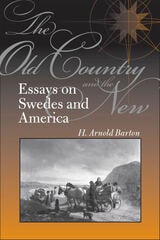
The Old Country and the New
Essays on Swedes and AmericaH. Arnold Barton
Southern Illinois University Press, 2006
Documenting a rich Scandinavian American culture and ethnic perspective
This notable collection of seventeen essays and six editorials by renowned Swedish American historian H. Arnold Barton was compiled from writings published between 1974 and 2005. The result of three decades of extensive research in the United States and Sweden, The Old Country and the New: Essays on Swedes and America, covers Swedish emigration to North America as well as the history and culture of Swedes in their new country.
In this rich mosaic of American ethnicity and cultural history, Barton analyzes the multifaceted Swedish emigration/immigration story. Essays include a survey of the historiography of emigration from the Scandinavian countries and the Scandinavian immigration to North America, Swedish emigration before 1846, and the Eric-Janssonist religious sect and its colony at Bishop Hill, Illinois.
Because Swedish immigrants were highly literate people, they wrote numerous letters describing their experiences to relatives and friends at home. What these letters related—or omitted—is the subject of another essay. Barton discusses Swedish immigrants who returned permanently to their homeland, affecting both the old country and the new. He also traces relations between the United States and Sweden, post—World War II Swedish immigration, and genealogy as history.
Offering a broad Scandinavian American ethnic perspective, The Old Country and the New appeals to both scholars and lay readers. Sixteen illustrations and a complete bibliography of Barton’s publications on Swedish American history and culture enhance the volume.
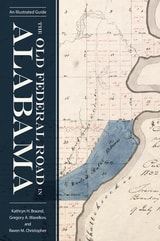
The Old Federal Road in Alabama
An Illustrated GuideKathryn H. Braund, Gregory A. Waselkov, and Raven M. Christopher
University of Alabama Press, 2019
A concise illustrated guidebook for those wishing to explore and know more about the storied gateway that made possible Alabama's development.
Forged through the territory of the Creek Nation by the United States federal government, the Federal Road was developed as a communication artery linking the east coast of the United States with Louisiana. Its creation amplified already tense relationships between the government, settlers, and the Creek Nation, culminating in the devastating Creek War of 1813–1814, and thereafter it became the primary avenue of immigration for thousands of Alabama settlers.
Central to understanding Alabama’s territorial and early statehood years, the Federal Road was both a physical and symbolic thoroughfare that cut a swath of shattering change through the land and cultures it traversed. The road revolutionized Alabama’s expansion, altering the course of its development by playing a significant role in sparking a cataclysmic war, facilitating unprecedented American immigration, and enabling an associated radical transformation of the land itself.
The first half of The Old Federal Road in Alabama: An Illustrated Guide offers a narrative history that includes brief accounts of the construction of the road, the experiences of historic travelers, and descriptions of major changes to the road over time. The authors vividly reconstruct the course of the road in detail and make use of a wealth of well-chosen illustrations. Along the way they give attention to the very terrain it traversed, bringing to life what traveling the road must have been like and illuminating its story in a way few others have ever attempted.
The second half of the volume is divided into three parts—Eastern, Central, and Southern—and serves as a modern traveler’s guide to the Federal Road. This section includes driving tours and maps, highlighting historical sites and surviving portions of the old road and how to visit them.
The Old South Frontier
Cotton Plantations and the Formation of Arkansas Society, 1819–1861Donald P. Mcneilly
University of Arkansas Press, 2000

The Opium Debate and Chinese Exclusion Laws in the Nineteenth-Century American West
Diana L. Ahmad
University of Nevada Press, 2011
America’s current "war on drugs" is not the nation’s first. In the mid-nineteenth century, opium-smoking was decried as a major social and public health problem, especially in the West. Although China faced its own epidemic of opium addiction, only a very small minority of Chinese immigrants in America were actually involved in the opium business. It was in Anglo communities that the use of opium soon spread and this growing use was deemed a threat to the nation’s entrepreneurial spirit and to its growing mportance as a world economic and military power. The Opium Debate examines how the spread of opium-smoking fueled racism and created demands for the removal of the Chinese from American life. This meticulously researched study of the nineteenth-century drug-abuse crisis reveals the ways moral crusaders linked their antiopium rhetoric to already active demands for Chinese exclusion. Until this time, anti-Chinese propaganda had been dominated by protests against the economic and political impact of Chinese workers and the alleged role of Chinese women as prostitutes. The use of the drug by Anglos added another reason for demonizing Chinese immigrants. Ahmad describes the disparities between Anglo-American perceptions of Chinese immigrants and the somber realities of these people’s lives, especially the role that opium-smoking came to play in the Anglo-American community, mostly among middle- and upper-class women. The book offers a brilliant analysis of the evolution of the Chinese Exclusion Act of 1882, plus important insights into the social history of the nineteenth-century West, the culture of American Victorianism, and the rhetoric of racism in American politics.
The Orient of Style
Modernist Allegories of ConversionBeryl Schlossman
Duke University Press, 1991
Toward the end of Remembrance of Things Past, the narrator describes the act of creating a work of art as a conversion of sensation into a spiritual equivalent. By means of such allegories of “conversion,” Schlossman shows, the modernist artist disappeared within the work of art and left behind the trace of his sublime vocation, a vocation in which he was transformed, in Schlossman’s words, “into a kind of priest kneeling at the altar of beauty before the masked divinity of representation.”
The author shows how allegory—the representation of the symbolic as something real—was adapted by modernist writers to reflect subjectivity while masking an authorial origin. She reveals how modernist allegory arose, as Walter Benjamin suggests, at the crossroads of history, sociology, economics, urban architecture, and art—providing a kind of map of capitalism—and was produced through the eyes of a melancholic gazing at a “monument of absence.”
The Origins of Catholic Evolutionism, 1831-1950
Kenneth W. Kemp
Catholic University of America Press, 2025
The Origins of Israel, 1882–1948
A Documentary HistoryEran Kaplan
University of Wisconsin Press, 2011
In 1880 the Jewish community in Palestine encompassed some 20,000 Orthodox Jews; within sixty-five years it was transformed into a secular proto-state with well-developed political, military, and economic institutions, a vigorous Hebrew-language culture, and some 600,000 inhabitants. The Origins of Israel, 1882–1948: A Documentary History chronicles the making of modern Israel before statehood, providing in English the texts of original sources (many translated from Hebrew and other languages) accompanied by extensive introductions and commentaries from the volume editors.
This sourcebook assembles a diverse array of 62 documents, many of them unabridged, to convey the ferment, dissent, energy, and anxiety that permeated the Zionist project from its inception to the creation of the modern nation of Israel. Focusing primarily on social, economic, and cultural history rather than Zionist thought and diplomacy, the texts are organized in themed chapters. They present the views of Zionists from many political and religious camps, factory workers, farm women, militants, intellectuals promoting the Hebrew language and arts—as well as views of ultra-Orthodox anti-Zionists. The volume includes important unabridged documents from the origins of the Arab-Israeli conflict that are often cited but are rarely read in full. The editors, Eran Kaplan and Derek J. Penslar, provide both primary texts and informative notes and commentary, giving readers the opportunity to encounter voices from history and make judgments for themselves about matters of world-historical significance.
Best Special Interest Books, selected by the Public Library Reviewers
Best Books for General Audiences, selected by the American Association of School Librarians
The Origins of Southern Sharecropping
Edward Royce
Temple University Press, 1993
Vivid primary accounts of post-Civil War life by planters and freed slaves complement this study of the rise of southern sharecropping. Edward Royce employs both historical and sociological methods to probe the question of why slavery was replaced by sharecropping rather than by some other labor arrangement. His detailed analysis illuminates conflicts between labor and capital as one group struggles to preserve the plantation system while the other pursues a quest for land and autonomy.
Royce contends that southern sharecropping occurred through a "constriction of possibilities," that it was shaped by default rather than orchestrated by economic reconstruction by white landowners and black laborers.
Highlighting the conflict-ridden nature of the process of social change, The Origins of Southern Sharecropping includes rich descriptions of the plantation system and gang labor, the freed slaves' dream of forty acres and a mule, the black colonization movement, the Freedman's Bureau, and racial relations after the war.
In the series Labor and Social Change, edited by Paula Rayman and Carmen Sirianni.
The Orphaned Imagination
Melancholy and Commodity Culture in English RomanticismGuinn Batten
Duke University Press, 1998
Building on the theoretical insights of Slavoj Zizek, Judith Butler, Julia Kristeva, and Eve Kosofsky Sedgwick, Batten interweaves the discourses of psychoanalysis, economics, biography, sexuality, melancholy, value, and exchange to question accepted ideas of how Romantic poetry works. She asserts that poetic labor is in fact paradigmatic of the kinds of production—and the kinds of desire—that capitalist culture renders invisible. If symbolic exchange, in cash or in words, requires the surrender of a beloved object, if healthy mourning requires an orphan to “work through” emotional loss through the consolation of art or a love for the living, then the rebellious Romantic poet, Batten contends, possessed unique insight into the alternative authority of a poetic language that renounced a culture of denial. Batten urges that scholars move beyond critical approaches condemning allegedly regressive forms of pleasure, recognizing that they, too, are haunted by melancholic attachments to dead poets as they conduct their work.
The Orphaned Imagination will interest anyone concerned with the claims of the English Romantic poets to a distinctive, valuable form of knowledge and those who may wonder about the power of contemporary theory to illuminate a traditional field.
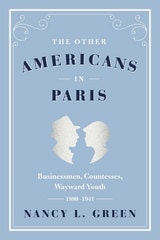
The Other Americans in Paris
Businessmen, Countesses, Wayward Youth, 1880-1941Nancy L. Green
University of Chicago Press, 2014
Nancy L. Green thus introduces us for the first time to a long-forgotten part of the American overseas population—predecessors to today’s expats—while exploring the politics of citizenship and the business relationships, love lives, and wealth (and poverty for some) of Americans who staked their claim to the City of Light. The Other Americans in Paris shows that elite migration is a part of migration tout court and that debates over “Americanization” have deep roots in the twentieth century.
The Other Brahmins
Boston's Black Upper Class 1750-1950Adelaide Cromwell
University of Arkansas Press, 1995
Adelaide Cromwell’s pioneering work explores race and the social caste system in an atypical northern environment over a period of two centuries. Based on scholarly sources, interviews, and questionnaires, the study identifies those blacks in Boston who exercised political, economic, and social leadership from the end of the eighteenth century to the middle of the twentieth. The central focus is a comparison of black and white upper-class women in the 1940s.
This rare look at a black social microcosm not located in the South is seminal and timely. Because it concludes at a critical period in American history, The Other Brahmins paints a colorful backdrop for evaluating subsequent changes in urban sociology and stratification. In a groundbreaking study, Cromwell effectively challenges the simplistic notions of hierarchy as they pertain to race.
The Other Renaissance
Italian Humanism between Hegel and HeideggerRocco Rubini
University of Chicago Press, 2014
Bookended by Giambattista Vico and Antonio Gramsci, this strand of Renaissance-influenced philosophy rose in reaction to the major revolutions of the time in Italy, such as national unity, fascism, and democracy. Exploring the ways its thinkers critically assimilated the thought of their northern counterparts, Rubini uncovers new possibilities in our intellectual history: that antihumanism could have been forestalled, and that our postmodern condition could have been entirely different. In doing so, he offers an important new way of thinking about the origins of modernity, one that renews a trust in human dignity and the Western legacy as a whole.
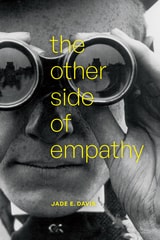
The Other Side of Empathy
Jade E. Davis
Duke University Press, 2023
The Other Trail of Tears
The Removal of the Ohio IndiansMary Stockwell
Westholme Publishing, 2015
The Indian Removal Act of 1830 was the culmination of the United States’ policy to force native populations to relocate west of the Mississippi River. The most well-known episode in the eviction of American Indians in the East was the notorious “Trail of Tears” along which Southeastern Indians were driven from their homes in Georgia, Alabama, and Mississippi to reservations in present-day Oklahoma. But the struggle in the South was part of a wider story that reaches back in time to the closing months of the War of 1812, back through many states—most notably Ohio—and into the lives of so many tribes, including the Delaware, Seneca, Shawnee, Ottawa, and Wyandot (Huron). They, too, were forced to depart from their homes in the Ohio Country to Kansas and Oklahoma. The Other Trail of Tears: The Removal of the Ohio Indians by award-winning historian Mary Stockwell tells the story of this region’s historic tribes as they struggled following the death of Tecumseh and the unraveling of his tribal confederacy in 1813. At the peace negotiations in Ghent in 1814, Great Britain was unable to secure a permanent homeland for the tribes in Ohio setting the stage for further treaties with the United States and encroachment by settlers. Over the course of three decades the Ohio Indians were forced to move to the West, with the Wyandot people ceding their last remaining lands in Ohio to the U.S. Government in the early 1850s. The book chronicles the history of Ohio’s Indians and their interactions with settlers and U.S. agents in the years leading up to their official removal, and sheds light on the complexities of the process, with both individual tribes and the United States taking advantage of opportunities at different times. It is also the story of how the native tribes tried to come to terms with the fast pace of change on America’s western frontier and the inevitable loss of their traditional homelands. While the tribes often disagreed with one another, they attempted to move toward the best possible future for all their people against the relentless press of settlers and limited time.
The Outward Mind
Materialist Aesthetics in Victorian Science and LiteratureBenjamin Morgan
University of Chicago Press, 2017
The Overland Journey From Utah To California
Wagon Travel From The City Of Saints To The City Of AngelsEdward Leo Lyman
University of Nevada Press, 2008
The wagon trail between Salt Lake City and Los Angeles is one of the most important and least-known elements of nineteenth-century Western migration. Known as the Southern Route, it included the western half of the Old Spanish Trail and was favored because it could be used for travel and freighting year-round. It was, however, likely the most difficult route that pioneers traveled with any consistency, following not rivers but leading from one--sometimes dubious--desert watering place to the next and offering few havens for the sick, weary, or unfortunate. Historian Edward Leo Lyman has provided the first history of the complete Southern Route and of the people who developed and used it. Based on extensive research in primary sources--including many early travelers’ accounts--and on Lyman’s own investigation of the route and its branches, the book discusses the exploration and development of the Old Spanish Trail, its horse thieves and traders, including Jed Smith and Kit Carson, along with government explorere John C. Frémont. Developing the old pack mule trail as a wagon road between Salt Lake City and Los Angeles, miners heading for the California gold fields first used the route extensively. Mormon missionaries and the colonizers of San Bernardino and other communities also traveled that way, as did a wide array of mail carriers, soldiers and world travelers. Later, a steady stream of Anglo-American emigrants seeking new homes or fortunes in California shared the road with a surprising number of freight wagon operators. The trail passed through the territories of numerous Native American peoples, and contacts with them--both friendly and hostile--played a significant role in the experiences of travelers and in the fates of Native American cultures in this region. Lyman’s discussions of Mormon-Indian relations and of the infamous Mountain Meadows Massacre offer fresh and important analyses of these vital aspects of the westward movement.
The Paddy Camps
The Irish of Lowell, 1821-61Brian C. Mitchell
University of Illinois Press, 1988
The dramatic story of the fights and compromises that shaped an Irish community
Disdained by many Yankee residents as Catholic lowlifes, the growing Irish population of the Lowell, Massachusetts, “paddy camps” in the nineteenth century proved a tempting source of cheap labor for local mill owners, who took advantage of the immigrants’ proximity to exploit them to the fullest. Displaced by their cheaper labor, other workers blamed the Irish for job losses and added to their plight through repression and segregation.
Now in paperback and featuring a new preface, Brian C. Mitchell’s The Paddy Camps demonstrates how the Irish community in Lowell overcame adversity to develop strong religious institutions, an increased political presence, and a sense of common traditions.
The Panic of 1819
The First Great DepressionAndrew H. Browning
University of Missouri Press, 2024
The Panic introduced Americans to the new phenomenon of boom and bust, changed the country's attitudes towards wealth and poverty, spurred the political movement that became Jacksonian Democracy, and helped create the sectional divide that would lead to the Civil War. Although it stands as one of the turning points of American history, few Americans today have heard of the Panic of 1819, with the result that we continue to ignore its lessons—and repeat its mistakes.

The Paradox of Progress
Economic Change, Individual Enterprise, and Politic Culture in Michigan, 1837-1878Martin J. Hershock
Ohio University Press, 2003
Guiding this transformation was the nineteenth-century Republican party. Drawing heavily from both the pro-market commitments of the early Whig party and the anti-capitalist culture of Jackson's Democratic party, the early Republican party found itself torn between these competing values. Nowhere was this contested process more obvious or more absorbing than in Civil War-era Michigan, the birthplace of the Republican party.
In The Paradox of Progress, a fascinating look at the central factors underlying the history of the GOP, Martin Hershock reveals how in their determination to resolve their ideological dilemma, Republicans of the Civil War era struggled to contrive a formula that wo uld enable them to win popular elections and to model America's acceptance of Gilded Age capitalism.
The Paris Commune
A Brief HistoryCarolyn J. Eichner
Rutgers University Press, 2022
At dawn on March 18, 1871, Parisian women stepped between cannons and French soldiers, using their bodies to block the army from taking the artillery from their working-class neighborhood. When ordered to fire, the troops refused and instead turned and arrested their leaders. Thus began the Paris Commune, France’s revolutionary civil war that rocked the nineteenth century and shaped the twentieth.
Considered a golden moment of hope and potential by the left, and a black hour of terrifying power inversions by the right, the Commune occupies a critical position in understanding modern history and politics. A 72-day conflict that ended with the ferocious slaughter of Parisians, the Commune represents for some the final insurgent burst of the French Revolution’s long wake, for others the first “successful” socialist uprising, and for yet others an archetype for egalitarian socio-economic, feminist, and political change. Militants have referenced and incorporated its ideas into insurrections across the globe, throughout the twentieth and into the twenty-first centuries, keeping alive the revolution’s now-iconic goals and images. Innumerable scholars in countless languages have examined aspects of the 1871 uprising, taking perspectives ranging from glorifying to damning this world-shaking event.
The Commune stands as a critical and pivotal moment in nineteenth-century history, as the linchpin between revolutionary pasts and futures, and as the crucible allowing glimpses of alternate possibilities. Upending hierarchies of class, religion, and gender, the Commune emerged as a touchstone for the subsequent century-and-a-half of revolutionary and radical social movements.
The Parker Sisters
A Border KidnappingLucy Maddox
Temple University Press, 2016
In The Parker Sisters, Lucy Maddox gives an eloquent, urgent account of the tragic kidnapping of these young women. Using archival news and courtroom reports, Maddox tells the larger story of the disastrous effect of the Fugitive Slave Act on the small farming communities of Chester County and the significant, widening consequences for the state and the nation.
The Parker Sisters is also a story about families whose lives and fates were deeply embedded in both the daily rounds of their community and the madness and violence consuming all of antebellum America. Maddox’s account of this horrific and startling crime reveals the strength and vulnerability of the Parker sisters and the African American population.
The Passage to Cosmos
Alexander von Humboldt and the Shaping of AmericaLaura Dassow Walls
University of Chicago Press, 2009
Explorer, scientist, writer, and humanist, Alexander von Humboldt was the most famous intellectual of the age that began with Napoleon and ended with Darwin. With Cosmos, the book that crowned his career, Humboldt offered to the world his vision of humans and nature as integrated halves of a single whole. In it, Humboldt espoused the idea that, while the universe of nature exists apart from human purpose, its beauty and order, the very idea of the whole it composes, are human achievements: cosmos comes into being in the dance of world and mind, subject and object, science and poetry.
Humboldt’s science laid the foundations for ecology and inspired the theories of his most important scientific disciple, Charles Darwin. In the United States, his ideas shaped the work of Emerson, Thoreau, Poe, and Whitman. They helped spark the American environmental movement through followers like John Muir and George Perkins Marsh. And they even bolstered efforts to free the slaves and honor the rights of Indians.
Laura Dassow Walls here traces Humboldt’s ideas for Cosmos to his 1799 journey to the Americas, where he first experienced the diversity of nature and of the world’s peoples—and envisioned a new cosmopolitanism that would link ideas, disciplines, and nations into a global web of knowledge and cultures. In reclaiming Humboldt’s transcultural and transdisciplinary project, Walls situates America in a lively and contested field of ideas, actions, and interests, and reaches beyond to a new worldview that integrates the natural and social sciences, the arts, and the humanities.
To the end of his life, Humboldt called himself “half an American,” but ironically his legacy has largely faded in the United States. The Passage to Cosmos will reintroduce this seminal thinker to a new audience and return America to its rightful place in the story of his life, work, and enduring legacy.
The Pastoral Role of the Roman Catholic Church in Pre-Famine Ireland, 1750–1850
Emmet Larkin
Catholic University of America Press, 2006
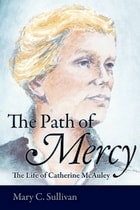
The Path of Mercy
The Life of Catherine McAuleyMary C. Sullivan
Catholic University of America Press, 2012
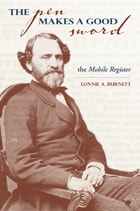
The Pen Makes a Good Sword
John Forsyth of the Mobile RegisterLonnie A. Burnett
University of Alabama Press, 2006
One editor. One era. A pen that cut through history.
This book is a biography of Alabama native John Forsyth Jr. and documents his career as a southern newspaper editor during the antebellum, Civil War, and Reconstruction periods. From 1837 to 1877 Forsyth wrote about many of the most important events of the 19th century. He used his various positions as an editor, Civil War field correspondent, and Reconstruction critic at the MobileRegister to advocate on behalf of both the South and the Democratic Party.
In addition, Forsyth played an active role in the events taking place around him through his political career, as United States Minister to Mexico, state legislator, Confederate Peace Commissioner to the Lincoln administration, staff officer to Braxton Bragg, and twice mayor of the city of Mobile.
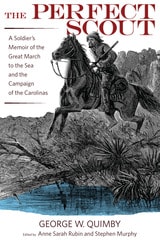
The Perfect Scout
A Soldier’s Memoir of the Great March to the Sea and the Campaign of the CarolinasGeorge W. Quimby, edited by Anne Sarah Rubin and Stephen Murphy
University of Alabama Press, 2018
After his father-in-law passed away, Stephen Murphy found, among the voluminous papers left behind, an ancestral memoir. Murphy quickly became fascinated with the recollections of George W. Quimby (1842–1926), a Union soldier and scout for General William Tecumseh Sherman.
Before Quimby became a part of Sherman’s March, he was held captive by Nathan Bedford Forrest’s troops in western Tennessee. He joined Sherman’s Army in Vicksburg, destroying railroads and bridges across Mississippi and Alabama on the way to Georgia. As the notorious march began, Quimby became a scout and no longer experienced war as his fellow soldiers did. Scouts moved ahead of the troops to anticipate opportunities and dangers. The rank and file were instructed to be seen and feared, while scouts were required to be invisible and stealthy. This memoir offers the rare perspective of a Union soldier who ventured into Confederate territory and sent intelligence to Sherman.
Written around 1901 in the wake of the Spanish American War, Quimby’s memoir shows no desire to settle old scores. He’s a natural storyteller, keeping his audience’s attention with tales of drunken frolics and narrow escapes, providing a memoir that reads more like an adventure novel. He gives a new twist to the familiar stories of Sherman’s March, reminding readers that while the Union soldiers faced few full-scale battles, the campaign was still quite dangerous.
More than a chronicle of day-to-day battles and marches, The Perfect Scout is more episodic and includes such additional elements as the story of how he met his wife and close encounters with the enemy. Offering a full picture of the war, Quimby writes not only about his adventures as one of Sherman’s scouts, but also about the suffering of the civilians caught in the war. He provides personal insight into some of the war’s historic events and paints a vivid picture of the devastation wreaked upon the South that includes destroyed crops and homes and a shattered economy. He also tells of the many acts of kindness he received from Southerners, including women and African Americans, who helped him and his fellow scouts by providing food, shelter, or information.
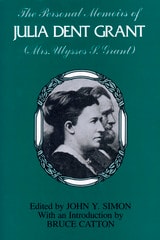
The Personal Memoirs of Julia Dent Grant
(Mrs. Ulysses S. Grant)Edited by John Y. Simon
Southern Illinois University Press, 1975
Written in the early twentieth century for her children and grandchildren and first published in 1975, these eloquent memoirs detail the life of General Ulysses S. Grant’s wife. First Lady Julia Dent Grant wrote her reminiscences with the vivacity and charm she exhibited throughout her life, telling her story in the easy flow of an afternoon conversation with a close friend. She writes fondly of White Haven, a plantation in St. Louis County, Missouri, where she had an idyllic girlhood and later met Ulysses.
In addition to relating the joys she experienced, Grant tells about the difficult and sorrowful times. Her anecdotes give fascinating glimpses into the years of the American Civil War. One recounts the night President Abraham Lincoln was assassinated. Grant insisted she and her husband turn down an invitation to the theater. Her decision saved her husband’s life: like Lincoln, he too had been marked for assassination.
Throughout these memoirs, which she ends with her husband’s death, Grant seeks to introduce her descendants to both her and the man she loved. She also strives to correct misconceptions that were circulated about him. She wanted posterity to share her pride in this man, whom she saw as one of America’s greatest heroes. Her book is a testament to their devoted marriage.
This forty-fifth-anniversary edition includes a new foreword by John F. Marszalek and Frank J. Williams, a new preface by Pamela K. Sanfilippo, the original foreword by Bruce Catton, the original introduction by editor John Y. Simon, recommendations for further reading, and more than twenty photographs of the Grants, their children, and their friends.
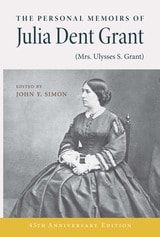
The Personal Memoirs of Julia Dent Grant
(Mrs. Ulysses S. Grant)Edited by John Y. Simon
Southern Illinois University Press, 1975
Written in the early twentieth century for her children and grandchildren and first published in 1975, these eloquent memoirs detail the life of General Ulysses S. Grant’s wife. First Lady Julia Dent Grant wrote her reminiscences with the vivacity and charm she exhibited throughout her life, telling her story in the easy flow of an afternoon conversation with a close friend. She writes fondly of White Haven, a plantation in St. Louis County, Missouri, where she had an idyllic girlhood and later met Ulysses.
In addition to relating the joys she experienced, Grant tells about the difficult and sorrowful times. Her anecdotes give fascinating glimpses into the years of the American Civil War. One recounts the night President Abraham Lincoln was assassinated. Grant insisted she and her husband turn down an invitation to the theater. Her decision saved her husband’s life: like Lincoln, he too had been marked for assassination.
Throughout these memoirs, which she ends with her husband’s death, Grant seeks to introduce her descendants to both her and the man she loved. She also strives to correct misconceptions that were circulated about him. She wanted posterity to share her pride in this man, whom she saw as one of America’s greatest heroes. Her book is a testament to their devoted marriage.
This forty-fifth-anniversary edition includes a new foreword by John F. Marszalek and Frank J. Williams, a new preface by Pamela K. Sanfilippo, the original foreword by Bruce Catton, the original introduction by editor John Y. Simon, recommendations for further reading, and more than twenty photographs of the Grants, their children, and their friends.
The Philadelphia Irish
Nation, Culture, and the Rise of a Gaelic Public SphereMichael L. Mullan
Rutgers University Press, 2021
Using Jurgen Habermas’s concept of a public sphere, the author reveals how the Irish constructed a plebian “counter” public of Gaelic meaning through various mechanisms of communication, the ethnic press, the meeting rooms of Irish societies, the consumption of circulating pamphlets, oratory, songs, ballads, poems, and conversation.
Settled in working class neighborhoods of vast spatial separation in an industrial city, the Irish resisted a parochialism identified with neighborhood and instead extended themselves to construct a vibrant, culturally engaged network of Irish rebirth in Philadelphia, a public of Gaelic meaning.
The Philosophy of Hegel as a Doctrine of the Concreteness of God and Humanity
Volume One: The Doctrine of GodI. A. Il’in, Translated by Philip T. Grier
Northwestern University Press, 2010
This landmark two-volume translation from Russian of The Philosophy of Hegel as a Doctrine of the Concreteness of God and Humanity marks the first appearance in English of any of the works of Russian philosopher Ivan Aleksandrovich Il’in (Ilyin). Originally published in 1918, on the eve of the Russian civil war, Il'in's commentary on Hegel marked both an apogee of Russian Silver Age philosophy and a significant manifestation of the resurgence of interest in Hegel that began in the early twentieth century.
A. F. Losev accurately observed in the same year it appeared: “Neither the study of Hegel nor the study of contemporary Russian philosophical thought is any longer thinkable without this book of I. A. Il’in’s.” Some Hegel scholars may know this work through the abridged translation into German that Il’in produced himself in 1946. However, that edition omitted most of the original volume two. Noted Hegel scholar Philip T. Grier’s edition—with an introduction setting Il’in’s work in its proper historical, cultural, and philosophical contexts and annotation throughout—represents the first opportunity for non-Russian-speaking readers to acquaint themselves with the full scope of Il’in’s still provocative interpretation of Hegel.
Volume 1 is "The Doctrine of God." Volume 2 is "The Doctrine of Humanity."
The Philosophy of Hegel as a Doctrine of the Concreteness of God and Humanity
Volume Two: The Doctrine of HumanityI. A. Il’in, Translated by Philip T. Grier
Northwestern University Press, 2011
The publication of volume 2 of Philip T. Grier’s translation of The Philosophy of Hegel as a Doctrine of the Concreteness of God and Humanity completes the first appearance in English of any of the works of Russian philosopher I. A. Il’in (Ilyin).
Most of the contents of volume 2 will be unknown even to those who have read the 1946 German version prepared by Il’in, because in that version he omitted eight of the original ten chapters. These omitted chapters provide an extended reflection on the central categories of Hegel’s moral, legal, and political philosophies, as well as of the philosophy of history. The topics examined are, in order: freedom, humanity, will, right, morality, ethical life, personhood and its virtue, and the state. Contained within these chapters are some notably insightful expositions of core doctrines in Hegel’s philosophy.
Il’in’s colleague A. F. Losev accurately observed in the same year the text first appeared: “Neither the study of Hegel nor the study of contemporary Russian philosophical thought is any longer thinkable without this book of I. A. Il’in’s.”

The Photography of Gustave Le Gray
Eugenia Parry Janis
University of Chicago Press, 1987
Drawing on entirely new material Eugenia Parry Janis fully analyzes the life and work of Le Gray and demonstrates the originality of his artistic achievement in the context of discoveries about his personal and professional history. Janis, approaching the photographs of Le Gray with the methods and sensibilities of an art historian, reveals telling connections between Le Gray's choices of subject matter and formal means of presentation and the existing pictorial practice of other media such as painting. This same approach makes her sensitive to Le Gray's departures from such traditional practice, and she skillfully illustrates how he evolved from student painter into master photographer. In doing so she gives us a glimpse of the way in which Le Gray's manipulation of the photographic process was always informed by his pictorial needs and by his developing style.
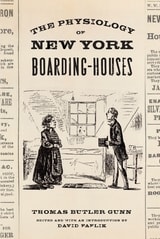
The Physiology of New York Boarding-Houses
Faflik, David
Rutgers University Press, 2008
In his introduction, David Faflik considers what made Gunn's book a compelling read in the past and how today it can elucidate our understanding of the formation and evolution of urban American life and letters.
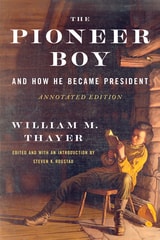
The Pioneer Boy, and How He Became President
Annotated EditionWilliam M. Thayer, edited and with an introduction by Steven K. Rogstad
University of Illinois Press, 2026
This new edition of Pioneer Boy reprints the text with extensive annotations by Steven K. Rogstad. In his reappraisal of the work, Rogstad taps the factual history woven into the plot and dialogue to illuminate how the young Lincoln presented by Thayer compares with historical documents and credible reminisces of the future president. Rogstad’s chapter-by-chapter analysis reveals the work as an astute biography while reevaluating Thayer as a source worthy of consideration within Lincoln scholarship. An introduction offers an in-depth consideration of Lincoln’s own presentations of his youth, Thayer’s career, and the book’s long life.
A new look at an overlooked text, The Pioneer Boy, and How He Became President analyzes what we can learn from William M. Thayer’s popular book.
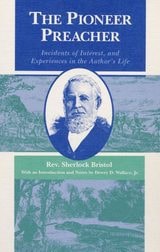
The Pioneer Preacher
Incidents of Interest, and Experiences in the Author's LifeRev. Sherlock Bristol. Introduction and notes by Dewey D. Wallace Jr. Illustrated by Isabelle Blood.
University of Illinois Press, 1989
Originally published in 1887, The Pioneer Preacher is a lively account of a Congregationalist minister's attempts to lead a sin-free existence on the American frontier. Sherlock Bristol (1815-1906) was a California gold miner, wagon train captain, Wisconsin farmer, Idaho rancher, Indian fighter, abolitionist, and Oberlin-trained clergyman. While serving a series of churches in the East, he periodically cured himself of "nervous disorders" by journeying out West. He only broke the Sabbath once---during an Indian attack!
Reflecting in his memoirs the exploits of Daniel Boone and Davy Crockett, Bristol delights in recounting his adventures, ecclesiastical or otherwise. He vividly recalls his redemption in the wilderness where he enjoyed having "little opportunity for reading books or mental exercise, and an abundance of calls for muscular employment." Greatly influenced by the evangelist Charles G. Finney at Oberlin, Bristol tried to teach miners and frontiersmen the principles of revivalism, postmillennialism, and perfectionism. In The Pioneer Preacher he shares his own disputatious views on abolition, American Indians, temperance, and other issues of his day.
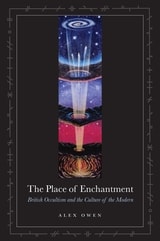
The Place of Enchantment
British Occultism and the Culture of the ModernAlex Owen
University of Chicago Press, 2004
In answering this question for the first time, The Place of Enchantment breaks new ground in its consideration of the role of occultism in British culture prior to World War I. Rescuing occultism from its status as an "irrational indulgence" and situating it at the center of British intellectual life, Owen argues that an involvement with the occult was a leitmotif of the intellectual avant-garde. Carefully placing a serious engagement with esotericism squarely alongside revolutionary understandings of rationality and consciousness, Owen demonstrates how a newly psychologized magic operated in conjunction with the developing patterns of modern life. She details such fascinating examples of occult practice as the sex magic of Aleister Crowley, the pharmacological experimentation of W. B. Yeats, and complex forms of astral clairvoyance as taught in secret and hierarchical magical societies like the Hermetic Order of the Golden Dawn.
Through a remarkable blend of theoretical discussion and intellectual history, Owen has produced a work that moves far beyond a consideration of occultists and their world. Bearing directly on our understanding of modernity, her conclusions will force us to rethink the place of the irrational in modern culture.

The Playwright as Thinker
A Study of Drama in Modern Times, Fourth EditionEric Bentley
University of Minnesota Press, 2010
The Plea
The True Story of Young Wesley Elkins and His Struggle for RedemptionPatricia L. Bryan
University of Iowa Press, 2022
On a moonlit night in 1889, Iowa farmer John Elkins and his young wife, Hattie, were brutally murdered in their bed. Eight days later, their son, eleven-year-old Wesley Elkins, was arrested and charged with murder. The community reeled with shock by both the gruesome details of the homicides and the knowledge of the accused perpetrator—a small, quiet boy weighing just 75 pounds.
Accessible and fast-moving, The Plea delivers a complete, complex, and nuanced narrative of this horrific crime, while shedding light on the legal, social, and political environment of Iowa and the country in the late 1800s and early 1900s.
The Plebeian Republic
The Huanta Rebellion and the Making of the Peruvian State, 1820–1850Cecilia Méndez
Duke University Press, 2005
In addition to official sources such as trial dossiers, census records, tax rolls, wills, and notary and military records, Méndez uses a wide variety of previously unexplored sources produced by the mostly Quechua-speaking rebels. She reveals the Huanta rebellion as a complex interaction of social, linguistic, economic, and political forces. Rejecting ideas of the Andean rebels as passive and reactionary, she depicts the barely literate insurgents as having had a clear idea of national political struggles and contends that most local leaders of the uprising invoked the monarchy as a source of legitimacy but did not espouse it as a political system. She argues that despite their pronouncements of loyalty to the Spanish crown, the rebels’ behavior evinced a political vision that was different from both the colonial regime and the republic that followed it. Eventually, their political practices were subsumed into those of the republican state.
The Plot Thickens
Illustrated Victorian Serial Fiction from Dickens to du MaurierMary Elizabeth Leighton
Ohio University Press, 2018
In the early 1800s, books were largely unillustrated. By the 1830s and 1840s, however, innovations in wood- and steel-engraving techniques changed how Victorian readers consumed and conceptualized fiction. A new type of novel was born, often published in serial form, one that melded text and image as partners in meaning-making.
These illustrated serial novels offered Victorians a reading experience that was both verbal and visual, based on complex effects of flash-forward and flashback as the placement of illustrations revealed or recalled significant story elements. Victorians’ experience of what are now canonical novels thus differed markedly from that of modern readers, who are accustomed to reading single volumes with minimal illustration. Even if modern editions do reproduce illustrations, these do not appear as originally laid out. Modern readers therefore lose a crucial aspect of how Victorians understood plot—as a story delivered in both words and images, over time, and with illustrations playing a key role.
In The Plot Thickens, Mary Elizabeth Leighton and Lisa Surridge uncover this overlooked narrative role of illustrations within Victorian serial fiction. They reveal the intricacy and richness of the form and push us to reconsider our notions of illustration, visual culture, narration, and reading practices in nineteenth-century Britain.