Results by title
8642 books match the query '20th century' and 1764 start with t
The Ethics of Swagger
Prizewinning African American Novels, 1977–1993Michael DeRell Hill
The Ohio State University Press, 2013
The Ethics of Witnessing
The Holocaust in Polish Writers' Diaries from Warsaw, 1939-1945Rachel Feldhay Brenner
Northwestern University Press, 2014
Winner, 2015 USC Book Award in Literary and Cultural Studies, for outstanding monograph published on Russia, Eastern Europe or Eurasia in the fields of literary and cultural studies
The Ethics of Witnessing investigates the reactions of five important Polish diaristswriters—Jaroslaw Iwaszkiewicz, Maria Dabrowska, Aurelia Wylezynska, Zofia Nalkowska, and Stanislaw Rembek—during the period when the Nazis persecuted and murdered Warsaw’s Jewish population. The responses to the Holocaust of these prominent prewar authors extended from insistence on empathic interaction with victims to resentful detachment from Jewish suffering. Whereas some defied the dehumanization of the Jews and endeavored to maintain intersubjective relationships with the victims they attempted to rescue, others selfdeceptively evaded the Jewish plight. The Ethics of Witnessing examines the extent to which ideologies of humanism and nationalism informed the diarists’ perceptions, proposing that the reality of the Final Solution exposed the limits of both orientations and ultimately destroyed the ethical landscape shaped by the Enlightenment tradition, which promised the equality and fellowship of all human beings.
The Ethiopian Army
From Victory to Collapse, 1977-1991Fantahun Ayele
Northwestern University Press, 2014
The Ethiopian popular revolution of 1974 ended a monarchy that claimed descent from King Solomon and the Queen of Sheba, and brought to power a military government that created one of the largest and best-equipped armies in Africa. In his panoramic study of the Ethiopian army, Fantahun Ayele draws upon his unprecedented access to Ethiopian Ministry of Defense archives to study the institution that was able to repel the Somali invasion of 1977 and suppress internal uprisings, but collapsed in 1991 under the combined onslaught of armed insurgencies in Eritrea and Tigray. Besides military operations, The Ethiopian Army discusses tactical areas such as training, equipment, intelligence, and logistics, as well as grand strategic choices such as ending the 1953 Ethio-American Mutual Defense Agreement and signing a treaty of military assistance with the Soviet Union. The result sheds considerable light on the military developments that have shaped Ethiopia and the Horn in the twentieth century.
The Eugenic Fortress
The Transylvanian Saxon Experiment in Interwar RomaniaTudor Georgescu
Central European University Press, 2016
The European Radical Left
Movements and Parties since the 1960sGiorgos Charalambous
Pluto Press, 2021
Is today’s left really new? How has the European radical left evolved?
Giorgos Charalambous answers these questions by looking at three moments of rapid political change - the late 1960s to late 1970s; the turn of the millennium; and post-2008. He challenges the conventional understanding of a ‘new left’, drawing out continuities with earlier movements and parties.
Charalambous examines the ‘Long ‘68’, symbolised by the May uprisings in France, which saw the rise of new left forces and the widespread criticism by younger radical activists of traditional communist and socialist parties. He puts this side by side with the turn of the millennium when the Global Justice Movement rose to prominence and changed the face of the international left, and also the period after the financial crash of 2008 and the rise of anti-austerity politics which initiated the most recent wave of new left parties such as Podemos in Spain and Syriza in Greece.
With a unique ‘two-level’ perspective, Charalambous approaches the left through both social movements and party politics, looking at identities, rhetoric and organization, and bringing a fresh new approach to radical history, as well as assessing challenges for both activists and scholars.
The Evolution of American Investigative Journalism
James L. Aucoin
University of Missouri Press, 2007
The Execution of Private Slovik
William Bradford Huie
Westholme Publishing, 2004
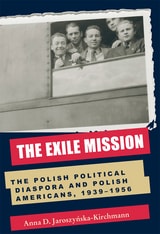
The Exile Mission
The Polish Political Diaspora and Polish Americans, 1939–1956Anna D. Jaroszynska-Kirchmann
Ohio University Press, 2009
At midcentury, two distinct Polish immigrant groups—those Polish Americans who were descendants of economic immigrants from the turn of the twentieth century and the Polish political refugees who chose exile after World War II and the communist takeover in Poland—faced an uneasy challenge to reconcile their concepts of responsibility toward the homeland.
The new arrivals did not consider themselves simply as immigrants, but rather as members of the special category of political refugees. They defined their identity within the framework of the exile mission, an unwritten set of beliefs, goals, and responsibilities, placing patriotic work for Poland at the center of Polish immigrant duties.
In The Exile Mission, an intriguing look at the interplay between the established Polish community and the refugee community, Anna Jaroszyńska–Kirchmann presents a tale of Polish Americans and Polish refugees who, like postwar Polish exile communities all over the world, worked out their own ways to implement the mission’s main goals. Between the outbreak of World War II and 1956, as Professor Jaroszyńska–Kirchmann demonstrates, the exile mission in its most intense form remained at the core of relationships between these two groups.
The Exile Mission is a compelling analysis of the vigorous debate about ethnic identity and immigrant responsibility toward the homeland. It is the first full–length examination of the construction and impact of the exile mission on the interactions between political refugees and established ethnic communities.
The Experimental Group
Ilya Kabakov, Moscow Conceptualism, Soviet Avant-GardesMatthew Jesse Jackson
University of Chicago Press, 2010
A compelling study of unofficial postwar Soviet art, The Experimental Group takes as its point of departure a subject of strange fascination: the life and work of renowned professional illustrator and conceptual artist Ilya Kabakov.
Kabakov’s art—iconoclastic installations, paintings, illustrations, and texts—delicately experiments with such issues as history, mortality, and disappearance, and here exemplifies a much larger narrative about the work of the artists who rose to prominence just as the Soviet Union began to disintegrate. By placing Kabakov and his conceptualist peers in line with our own contemporary perspective, Matthew Jesse Jackson suggests that the art that emerged in the wake of Stalin belongs neither entirely to its lost communist past nor to a future free from socialist nostalgia. Instead, these artists and their work produced a critical and controversial chapter in the as yet unwritten history of global contemporary art.
The Experimenters
Chance and Design at Black Mountain CollegeEva Díaz
University of Chicago Press, 2014
Díaz’s focus is on experimentation. Albers, Cage, and Fuller, she shows, taught new models of art making that favored testing procedures rather than personal expression. These methodologies represented incipient directions for postwar art practice, elements of which would be sampled, and often wholly adopted, by Black Mountain students and subsequent practitioners. The resulting works, which interrelate art and life in a way that imbues these projects with crucial relevance, not only reconfigured the relationships among chance, order, and design—they helped redefine what artistic practice was, and could be, for future generations.
Offering a bold, compelling new angle on some of the most widely studied creative figures of modern times, The Experimenters does nothing less than rewrite the story of art in the mid-twentieth century.
The FBI and the Catholic Church, 1935-1962
Steve Rosswurm
University of Massachusetts Press, 2009
Steve Rosswurm explores the history of that relationship from the turbulent 1930s to the 1960s, when growing Catholic opposition to the Vietnam War led Hoover to distance himself from the Church. Drawing on a vast range of sources, including thousands of pages of previously classified FBI files, Rosswurm pursues his investigation along two parallel tracks. First, he looks at the joint war waged by Hoover and the Catholic hierarchy against forces considered threats to their organizations, values, and nation. Second, he examines how each pursued its own institutional interests with the help of the other.
While opposition to communism was a preoccupation of both institutions, it was not the only passion they shared, according to Rosswurm. Even more important, perhaps, was their fervent commitment to upholding traditional gender roles, particularly the prerogatives of patriarchal authority. When women and men carried out their assigned obligations, they believed, society ran smoothly; when they did not, chaos ensued.
Organized topically, The FBI and the Catholic Church, 1935–1962 looks not only at the shared values and interests of the two institutions, but also at the personal relationships between Hoover and his agents and some of the most influential Catholic prelates of the time. Rosswurm discusses the role played by Edward A. Tamm, the FBI's highest-ranking Catholic, in forging the alliance; the story behind Father John Cronin's 1945 report on the dangers of communism; the spying conducted by Father Edward Conway S.J. on behalf of the FBI while treasurer of the National Committee for Atomic Information; and Monsignor Charles Owen Rice's FBI-aided battle against communists within the CIO.
The FBI in Latin America
The Ecuador FilesMarc Becker
Duke University Press, 2017
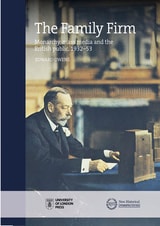
The Family Firm
monarchy, mass media and the British public, 1932-53Edward Owens
University of London Press, 2019
The Family Jewels
The CIA, Secrecy, and Presidential PowerBy John Prados
University of Texas Press, 2014
In December 1974, a front-page story in the New York Times revealed the explosive details of illegal domestic spying by the Central Intelligence Agency. This included political surveillance, eavesdropping, detention, and interrogation. The revelation of illegal activities over many years shocked the American public and led to investigations of the CIA by a presidential commission and committees in both houses of Congress, which found evidence of more abuse, even CIA plans for assassinations. Investigators and the public soon discovered that the CIA abuses were described in a top-secret document agency insiders dubbed the “Family Jewels.” That document became ground zero for a political firestorm that lasted more than a year. The “Family Jewels” debacle ultimately brought about greater congressional oversight of the CIA, but excesses such as those uncovered in the 1970s continue to come to light.
The Family Jewels probes the deepest secrets of the CIA and its attempts to avoid scrutiny. John Prados recounts the secret operations that constituted “Jewels” and investigators’ pursuit of the truth, plus the strenuous efforts—by the agency, the executive branch, and even presidents—to evade accountability. Prados reveals how Vice President Richard Cheney played a leading role in intelligence abuses and demonstrates that every type of “Jewel” has been replicated since, especially during the post-9/11 war on terror. The Family Jewels masterfully illuminates why these abuses are endemic to spying, shows that proper relationships are vital to control of intelligence, and advocates a system for handling “Family Jewels” crises in a democratic society.
With a new epilogue that discusses former CIA employee Edward Snowden’s revelation of massive covert surveillance by the NSA, this powerful accounting of intelligence abuses committed by the CIA from the Cold War through the war on terror reveals why such abuses and attempts to conceal them are endemic to spying and proposes how a democratic nation can rein in its spymasters.

The Family Meets the Depression
A Study of a Group of Highly Selected FamiliesWinona L. Morgan
University of Minnesota Press, 1939
The Family Meets the Depression was first published in 1939. Minnesota Archive Editions uses digital technology to make long-unavailable books once again accessible, and are published unaltered from the original University of Minnesota Press editions.
There have been very few studies of normal, happy family life. One such study, "The Family in the Present Social Order," by Ruth Lindquist, presented the circumstances of several hundred normal American families in 1927, one of the most prosperous years of our history.
The present investigation is a follow-up of Miss Lindquist's. Miss Morgan compares the circumstances of 331 of these families as they were in that year with those of the same families in 1933, which perhaps was the blackest year of the depression. The problems faced and the manner in which they were solved are carefully analyzed and presented in eminently readable form. Including as they do depleted incomes, lack of help in the household, dependent relatives, and health difficulties, these problems are in numerous ways typical of those faced by thousands of American families today.
The findings of this study should possess considerable significance not only for students of home economics but also for sociologists, parent educators, and psychologists concerned with problems of personal adjustment.
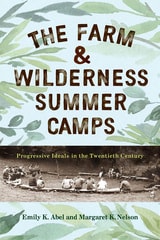
The Farm & Wilderness Summer Camps
Progressive Ideals in the Twentieth CenturyEmily K. Abel
Rutgers University Press, 2024
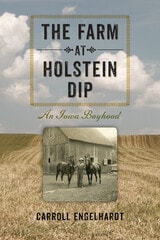
The Farm at Holstein Dip
An Iowa BoyhoodCarroll Engelhardt
University of Iowa Press, 2012
Engelhardt brings us into the world of his fourth-generation farm family, who lived by the family- and faith-based work ethic and concern for respectability they had inherited from their German and Norwegian ancestors. His writing has a particularly Iowa flavor, a style that needs no definition to those who live in the state. Readers will discover the appeal of his wry, humorous, and kind observations and appreciate his well-informed perspective on these transformative American decades.
The Farm on Badger Creek
Memories of a Midwest GirlhoodPeggy Prilaman Marxen
Wisconsin Historical Society Press, 2021
The Fascist Revolution
Toward a General Theory of FascismGeorge L. Mosse, with a critical introduction by Roger Griffin
University of Wisconsin Press, 2021
The Fate of the Object
From Modern Object to Postmodern Sign in Performance, Art, and PoetryJon Erickson
University of Michigan Press, 1995

The Fate of the Self
German Writers and French TheoryStanley Corngold
Duke University Press, 1994
The Fathers of the Church in Christian Theology
Catholic University of America Press, 2019
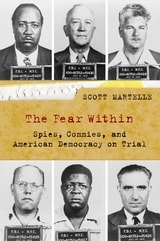
The Fear Within
Spies, Commies, and American Democracy on TrialMartelle, Scott
Rutgers University Press, 2011
Sixty years ago political divisions in the United States ran even deeper than today's name-calling showdowns between the left and right. Back then, to call someone a communist was to threaten that person's career, family, freedom, and, sometimes, life itself. Hysteria about the "red menace" mushroomed as the Soviet Union tightened its grip on Eastern Europe, Mao Zedong rose to power in China, and the atomic arms race accelerated. Spy scandals fanned the flames, and headlines warned of sleeper cells in the nation's midst--just as it does today with the "War on Terror."
In his new book, The Fear Within, Scott Martelle takes dramatic aim at one pivotal moment of that era. On the afternoon of July 20, 1948, FBI agents began rounding up twelve men in New York City, Chicago, and Detroit whom the U.S. government believed posed a grave threat to the nation--the leadership of the Communist Party-USA. After a series of delays, eleven of the twelve "top Reds" went on trial in Manhattan's Foley Square in January 1949.
The proceedings captivated the nation, but the trial quickly dissolved into farce. The eleven defendants were charged under the 1940 Smith Act with conspiring to teach the necessity of overthrowing the U.S. government based on their roles as party leaders and their distribution of books and pamphlets. In essence, they were on trial for their libraries and political beliefs, not for overt acts threatening national security. Despite the clear conflict with the First Amendment, the men were convicted and their appeals denied by the U.S. Supreme Court in a decision that gave the green light to federal persecution of Communist Party leaders--a decision the court effectively reversed six years later. But by then, the damage was done. So rancorous was the trial the presiding judge sentenced the defense attorneys to prison terms, too, chilling future defendants' access to qualified counsel.
Martelle's story is a compelling look at how American society, both general and political, reacts to stress and, incongruously, clamps down in times of crisis on the very beliefs it holds dear: the freedoms of speech and political belief. At different points in our history, the executive branch, Congress, and the courts have subtly or more drastically eroded a pillar of American society for the politics of the moment. It is not surprising, then, that The Fear Within takes on added resonance in today's environment of suspicion and the decline of civil rights under the U.S. Patriot Act.
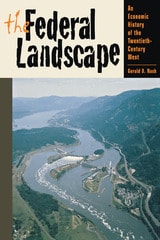
The Federal Landscape
An Economic History of the Twentieth-Century WestGerald D. Nash
University of Arizona Press, 1999
Historian Gerald D. Nash has written the first account of the epic growth of the economy of the American West during the twentieth century, showing how national interests shaped the West over the course of the past hundred years. In a book written for a broad readership, he tells the story of how America’s hinterland became the most dynamic and rapidly growing part of the country.
The Federal Landscape relates how in the nineteenth century the West was largely developed by individual enterprise but how in the twentieth Washington, D.C., became the central player in shaping the region. Nash traces the development of this process during the Progressive Era, World War I, the New Deal, World War II, the affluent postwar years, and the cold-war economy of the 1950s. He analyzes the growth of western cities and the emergence of environmental issues in the 1960s, the growth of a vibrant Mexican-U.S. border economy, and the impact of large-scale immigration from Latin America and Asia at century’s end.
Although specialists have studied many particular facets of western growth, Nash has written the only book to provide a much-needed overview of the subject. By addressing subjects as diverse as public policy, economic development, environmental and urban issues, and questions of race, class, and gender, he puts the entire federal landscape in perspective and shows how the West was really won.
The Federal Reserve
A New HistoryRobert L. Hetzel
University of Chicago Press, 2022
In The Federal Reserve: A New History, Robert L. Hetzel draws on more than forty years of experience as an economist in the central bank to trace the influences of the Fed on the American economy. Comparing periods in which the Fed stabilized the economy to those when it did the opposite, Hetzel tells the story of a century-long pursuit of monetary rules capable of providing for economic stability.
Recast through this lens and enriched with archival materials, Hetzel’s sweeping history offers a new understanding of the bank’s watershed moments since 1913. This includes critical accounts of the Great Depression, the Great Inflation, and the Great Recession—including how these disastrous events could have been avoided.
A critical volume for a critical moment in financial history, The Federal Reserve is an expert, sweeping account that promises to recast our understanding of the central bank in its second century.
The Feeling Intellect
Selected WritingsPhilip Rieff
University of Chicago Press, 1989
The Feminism of Charlotte Perkins Gilman
Sexualities, Histories, ProgressivismJudith A. Allen
University of Chicago Press, 2009
Famous for her short fiction—most notably “The Yellow Wallpaper”—Charlotte Perkins Gilman also produced a vast body of nonfiction in tandem with her work as a Progressive-era feminist reformer. Rooted in groundbreaking research on Gilman’s extensive correspondence, publications, and speeches, this keenly argued intellectual biography reconstructs her controversial output and the heady context in which she produced it.
Judith Allen provides the first comprehensive assessment of Gilman’s complicated feminism by exploring the renowned writer’s theories of sexuality and evolutionary analyses of androcentric—or male-dominated—culture. These ideas, Allen shows, informed Gilman’s many contributions to the suffrage movement, the fight to abolish regulated prostitution, and efforts to legalize birth control. Restoring a previously overlooked public intellectual to her preeminent place in Progressive-era politics and the history of feminism at home and abroad, Allen’s landmark study provides the fullest account available of Gilman’s consequential life and profoundly influential work.
The Feminist Avant-Garde In American Poetry
Elisabeth A. Frost
University of Iowa Press, 2005
The Feminist Avant-Garde in American Poetry offers a historical and theoretical account of avant-garde women poets in America from the 1910s through the 1990s and asserts an alternative tradition to the predominantly male-dominated avant-garde movements. Elisabeth Frost argues that this alternative lineage distinguishes itself by its feminism and its ambivalence toward existing avant-garde projects; she also thoroughly explores feminist avant-garde poets' debts and contributions to their male counterparts.
The Feminist Bookstore Movement
Lesbian Antiracism and Feminist AccountabilityKristen Hogan
Duke University Press, 2016
The Feminist Memoir Project
Voices from Women's LiberationDuPlessis, Rachel B
Rutgers University Press, 2007
What made these particular women rebel? And what experiences, ideas, feelings, and beliefs shaped their activism? How did they maintain the will and energy to keep such a struggle going for so long, and continuing still?
Memoirs and responses by Kate Millett, Vivian Gornick, Michele Wallace, Alix Kates Shulman, Joan Nestle, Jo Freeman, Yvonne Rainer, Barbara Smith, Ellen Willis, Eve Ensler, Shirley Geok-lin Lim, Roxanne Dunbar, Naomi Weisstein, Alice Wolfson and many more embody the excitement that fueled the movement and the conflicts that threatened it from within. Their stories trace the ways the world has changed.
The Feminization of Famine
Expressions of the Inexpressible?Margaret Kelleher
Duke University Press, 1997
Kelleher begins with a critical reading of the novels and short stories written about the Irish famine over the last 150 years, from the novels of William Carleton and Anthony Trollope to the writings of Liam O’Flaherty and John Banville. She then moves on to unveil a lesser-known body of literature—works written by women. This literature is read in the context of a rich variety of other sources, including eye-witness accounts, memoirs, journalistic accounts, and famine historiography. Concluding with a reading of the twentieth-century accounts of the famine in Bengal, this book reveals how gendered representations have played a crucial role in defining notions of famine.
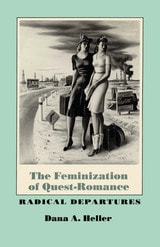
The Feminization of Quest-Romance
Radical DeparturesBy Dana A. Heller
University of Texas Press, 1990
What happens when a woman dares to imagine herself a hero? Questing, she sets out for unknown regions. Lighting a torch, she elicits from the darkness stories never told or heard before. The woman hero sails against the tides of great legends that recount the adventures of heroic men, legends deemed universal, timeless, and essential to our understanding of the natural order that holds us and completes us in its spiral. Yet these myths and rituals do not fulfill her need for an empowering self-image nor do they grant her the mobility she requires to imagine, enact, and represent her quest for authentic self-knowledge.
The Feminization of Quest-Romance proposes that a female quest is a revolutionary step in both literary and cultural terms. Indeed, despite the difficulty that women writers face in challenging myths, rituals, psychological theories, and literary conventions deemed universal by a culture that exalts masculine ideals and universalizes male experience, a number of revolutionary texts have come into existence in the second half of the twentieth century by such American women writers as Jean Stafford, Mary McCarthy, Anne Moody, Marilynne Robinson, and Mona Simpson, all of them working to redefine the literary portrayal of American women's quests. They work, in part, by presenting questing female characters who refuse to accept the roles accorded them by restrictive social norms, even if it means sacrificing themselves in the name of rebellion. In later texts, female heroes survive their "lighting out" experiences to explore diverse alternatives to the limiting roles that have circumscribed female development.
This study of The Mountain Lion, Memories of a Catholic Girlhood, Coming of Age in Mississippi, Housekeeping, and Anywhere but Here identifies transformations of the quest-romance that support a viable theory of female development and offer literary patterns that challenge the male monopoly on transformative knowledge and heroic action.
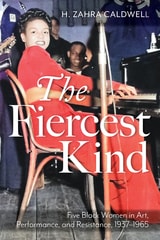
The Fiercest Kind
Five Black Women in Art, Performance, and Resistance, 1937–1965H. Zahra Caldwell
University of Massachusetts Press, 2026
Artists fighting racism and sexism from the end of the Great Depression through the Civil Rights era
In 1943, the production of the Columbia Pictures film The Heat’s On halted for three days due to an on-set protest by featured performer Hazel Scott. Appalled by the racially demeaning and stereotypical depictions of Black women extras and dancers, Scott—one of the top African American performers of the era—forced the studio to relent. But her protest of Hollywood racism angered powerful white men in the industry, and despite her rising career, she was soon banished from American film.
Scott was far from the only Black woman in a creative field to use her professional success as leverage against prejudice. In The Fiercest Kind, cultural historian H. Zahra Caldwell explores the biographical narratives of five Black women at the top of their artistic crafts in the mid-20th century to understand how they pushed back against racism and sexism. From 1937–1965, pianist Hazel Scott, dancer Katherine Dunham, cartoonist Jackie Ormes, multihyphenate fine artist (graphic artist, painter, and sculptor) Elizabeth Catlett, and singer Lena Horne were among the most popular and nationally known Black women in their respective fields, spanning film, television, print media, and fine art. Generating creative works at the end of the Great Depression through the Civil Rights era, they used their professional and personal lives to confront seemingly insurmountable repression through what Caldwell defines as “layered resistance.”
A Black feminist practice, layered resistance consists of four tactics: claiming and adapting cultural spaces for Black women; strategically crafting positive images of Black womanhood that directly challenge white supremacy; combining performance and/or visual representation with social and political activism; and choosing unconventional lifestyles that defy rigid gender and racial norms. These artists also lived in, worked in, and supported important Black spaces such as Harlem and Black Chicago. Using a methodology that combines textual analysis, archival research, and oral history, Caldwell understands this strategy within larger movements for Black freedom and equality that spanned the twentieth century and continue to the present day.
The Fifties Spiritual Marketplace
American Religion in a Decade of ConflictEllwood, Robert S
Rutgers University Press, 1997
A companion to his Sixties Spiritual Awakening, Ellwood explores the major Catholic-Protestant tensions of the decade, the conflict between theology and popular faith, and the underground forms of fifties religiosity like "Beat" Zen, UFO contactees, Thomas Merton monasticism, and the Joseph Campbell / Carl Jung revival of mythology. Ellwood frames his detailed and lively account with the provocative idea of the fifties as a "supply-side" free enterprise spiritual marketplace, with heady competition between religious groups and leaders, and with church attendance at a record high.
In addition to challenging an idealistic fifties cultural milieu, the book analyzes American religious responses to key historical events like the Korean War, McCarthyism, and the civil rights movement, turning a religious lens on the cultural history of the United States.
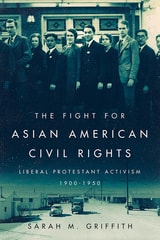
The Fight for Asian American Civil Rights
Liberal Protestant Activism, 1900-1950Sarah M Griffith
University of Illinois Press, 2018
The Figural Jew
Politics and Identity in Postwar French ThoughtSarah Hammerschlag
University of Chicago Press, 2010
The rootless Jew, wandering disconnected from history, homeland, and nature, was often the target of early twentieth-century nationalist rhetoric aimed against modern culture. But following World War II, a number of prominent French philosophers recast this maligned figure in positive terms, and in so doing transformed postwar conceptions of politics and identity.
Sarah Hammerschlag explores this figure of the Jew from its prewar usage to its resuscitation by Jean-Paul Sartre, Emmanuel Levinas, Maurice Blanchot, and Jacques Derrida. Sartre and Levinas idealized the Jew’s rootlessness in order to rethink the foundations of political identity. Blanchot and Derrida, in turn, used the figure of the Jew to call into question the very nature of group identification. By chronicling this evolution in thinking, Hammerschlag ultimately reveals how the figural Jew can function as a critical mechanism that exposes the political dangers of mythic allegiance, whether couched in universalizing or particularizing terms.
Both an intellectual history and a philosophical argument, The Figural Jew will set the agenda for all further consideration of Jewish identity, modern Jewish thought, and continental philosophy.
The Fine Art of Persuasion
Corporate Advertising Design, Nation, and Empire in Modern JapanGennifer Weisenfeld
Duke University Press, 2025
The Fire Ant Wars
Nature, Science, and Public Policy in Twentieth-Century AmericaJoshua Blu Buhs
University of Chicago Press, 2004
With political intrigue, environmental tragedy, and such figures as Rachel Carson and E. O. Wilson, The Fire Ant Wars is a grippingly perceptive tale of changing social attitudes and scientific practices. Tracing the political and scientific eradication campaigns, Joshua Buhs's bracing study uses the saga as a means to consider twentieth-century American concepts of nature and environmental stewardship. In telling the story, Buhs explores how human concepts of nature evolve and how these ideas affect the natural and social worlds.
Spotlighting a particular issue to discuss larger questions of science, public perceptions, and public policy—from pre-environmental awareness to the activist years of the early environmental movement—The Fire Ant Wars will appeal to historians of science, environmentalists, and biologists alike.
The First Black Actors on the Great White Way
Susan Curtis
University of Missouri Press, 1998
On April 5, 1917, Three Plays for a Negro Theater by Ridgely Torrence opened at the Garden Theatre in New York City. This performance was a monumental event in American stage history. Not only was this the first dramatic production to portray African American life beyond the cliché, it was also the first production on Broadway to feature an all-black cast. The morning after the three plays were performed, newspapers were filled with praise for the cast, crew, and playwright. Audience member W. E. B. Du Bois declared the show "epoch making." Despite such early critical acclaim, Three Plays for a Negro Theater closed before the end of the month and received little attention thereafter.
Why was a nation, so fascinated with firsts, able to forget these black actors and this production so quickly? It is this question that Susan Curtis addresses in The First Black Actors on the Great White Way.
Set against the backdrop of transforming theater conventions in the early 1900s and the war in 1917, this important study relates the stories of the actors, stage artists, critics, and many others—black and white—involved in this groundbreaking production. Curtis explores in great depth both the progress in race relations that led to this production and the multifaceted reasons for its quick demise.
Three Plays for a Negro Theater opened on the eve of the United States' entrance into World War I. Curtis attributes the early closure of the three plays to this coincidence, but she does not settle for so simple an explanation. Rather, she investigates the heightened national self-consciousness that followed the United States' entry into the war. America was ready to "make the world safe for democracy," but it was not fully ready to accept democracy and equality in its own culture.
The First Black Actors on the Great White Way is not simply a study of African American theater and its entrance into American culture. By focusing on a single event at a critical moment in history, Curtis offers a unique glimpse into race relations in early-twentieth-century American society. The experience of these pioneering artists reveals an unexplored aspect of the painfully slow evolution of racial equality.
A remarkable story about people who waged an extraordinary campaign against racism, The First Black Actors on the Great White Way will be of special interest to scholars of American studies, race relations, and cultural history, as well as the general reader.
The First Cold War
The Legacy of Woodrow Wilson in U.S. - Soviet RelationsDonald E. Davis & Eugene P. Trani
University of Missouri Press, 2002
The First Moderns
Profiles in the Origins of Twentieth-Century ThoughtWilliam R. Everdell
University of Chicago Press, 1997
"This exceptionally wide-ranging history is chock-a-block with anecdotes, factoids, odd juxtapositions, and useful insights. Most impressive. . . . For anyone interested in learning about late 19th- and early 20th- century imaginative thought, this engagingly written book is a good place to start."—Washington Post Book World
"The First Moderns brilliantly maps the beginning of a path at whose end loom as many diasporas as there are men."—Frederic Morton, The Los Angeles Times Book Review
"In this truly exciting study of the origins of modernist thought, poet and teacher Everdell roams freely across disciplinary lines. . . . A brilliant book that will prove useful to scholars and generalists for years to come; enthusiastically recommended."—Library Journal, starred review
"Everdell has performed a rare service for his readers. Dispelling much of the current nonsense about 'postmodernism,' this book belongs on the very short list of profound works of cultural analysis."—Booklist
"Innovative and impressive . . . [Everdell] has written a marvelous, erudite, and readable study."-Mark Bevir, Spectator
"A richly eclectic history of the dawn of a new era in painting, music, literature, mathematics, physics, genetics, neuroscience, psychiatry and philosophy."—Margaret Wertheim, New Scientist
"[Everdell] has himself recombined the parts of our era's intellectual history in new and startling ways, shedding light for which the reader of The First Moderns will be eternally grateful."—Hugh Kenner, The New York Times Book Review
"Everdell shows how the idea of "modernity" arose before the First World War by telling the stories of heroes such as T. S. Eliot, Max Planck, and Georges Serault with such a lively eye for detail, irony, and ambiance that you feel as if you're reliving those miraculous years."—Jon Spayde, Utne Reader
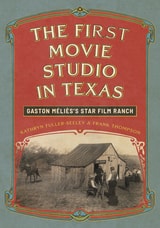
The First Movie Studio in Texas
Gaston Méliès's Star Film RanchKathryn Fuller-Seeley and Frank Thompson
University of Texas Press, 2026
The story of the Star Film Ranch and its pioneering crew, who created the first “authentic” Westerns filmed in Texas.
In 1910, the Méliès Star Film Company of Manhattan set up a moving-picture studio outside San Antonio, the first in Texas. Determined to make the most authentic Westerns possible, the company filmed there for a little over a year. In that brief time, it created more than seventy single-reel films, leaving a lasting mark on moviemaking.
Film historians Kathryn Fuller-Seeley and Frank Thompson return to a moment when on-location filmmaking was emerging as an artform. We meet producer Gaston Méliès, older brother of early-cinema legend Georges Méliès, and his cast and crew of young innovators, old hands, and genuine cowboys—like seventeen-year-old Edith Storey, the tomboy star who helped to ignite modern celebrity culture, and Francis Ford, who learned the art of film directing on the job and mentored his younger brother, Hollywood legend John Ford. The First Movie Studio in Texas traces the company’s trials and accomplishments, its influence on the depiction of race and gender in Western filmmaking, its surviving works, and its crowning achievement: The Immortal Alamo (1911), the earliest cinematic depiction of that famous battle.
Finally recovered from the shadows, the forgotten Méliès brother proves to be one of the key founders of the Western myth on screen.
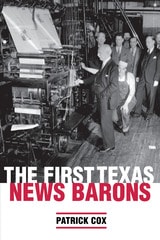
The First Texas News Barons
By Patrick Cox
University of Texas Press, 2005
Newspaper publishers played a crucial role in transforming Texas into a modern state. By promoting expanded industrialization and urbanization, as well as a more modern image of Texas as a southwestern, rather than southern, state, news barons in the early decades of the twentieth century laid the groundwork for the enormous economic growth and social changes that followed World War II. Yet their contribution to the modernization of Texas is largely unrecognized.
This book investigates how newspaper owners such as A. H. Belo and George B. Dealey of the Dallas Morning News, Edwin Kiest of the Dallas Times Herald, William P. Hobby and Oveta Culp Hobby of the Houston Post, Jesse H. Jones and Marcellus Foster of the Houston Chronicle, and Amon G. Carter Sr. of the Fort Worth Star-Telegram paved the way for the modern state of Texas. Patrick Cox explores how these news barons identified the needs of the state and set out to attract the private investors and public funding that would boost the state's civic and military infrastructure, oil and gas industries, real estate market, and agricultural production. He shows how newspaper owners used events such as the Texas Centennial to promote tourism and create a uniquely Texan identity for the state. To balance the record, Cox also demonstrates that the news barons downplayed the interests of significant groups of Texans, including minorities, the poor and underemployed, union members, and a majority of women.
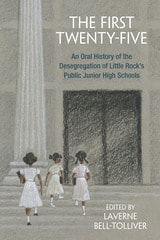
The First Twenty-Five
An Oral History of the Desegregation of Little Rock’s Public Junior High SchoolsLaVerne Bell-Tolliver
University of Arkansas Press, 2018
“It was one of those periods that you got through, as opposed to enjoyed. It wasn’t an environment that . . . was nurturing, so you shut it out. You just got through it. You just took it a day at a time. You excelled if you could. You did your best. You felt as though the eyes of the community were on you.”—Glenda Wilson, East Side Junior High
Much has been written about the historical desegregation of Little Rock Central High School by nine African American students in 1957. History has been silent, however, about the students who desegregated Little Rock’s five public junior high schools—East Side, Forest Heights, Pulaski Heights, Southwest, and West Side—in 1961 and 1962.
The First Twenty-Five gathers the personal stories of these students some fifty years later. They recall what it was like to break down long-standing racial barriers while in their early teens—a developmental stage that often brings emotional vulnerability. In their own words, these individuals share what they saw, heard, and felt as children on the front lines of the civil rights movement, providing insight about this important time in Little Rock, and how these often painful events from their childhoods affected the rest of their lives.

The First Well
A Bethlehem BoyhoodJabra Ibrahim Jabra
University of Arkansas Press, 1995
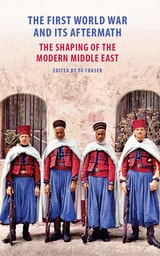
The First World War and Its Aftermath
The Shaping of the Modern Middle EastEdited by T.G. Fraser
Gingko, 2024
In addition to recounting the crucial international politics that drew fierce lines in the sands of the Middle East—a story of intrigue between the British, Russians, Ottomans, North Africans, Americans, and others—the contributors engage topics ranging from the war’s effects on women, the experience of the Kurds, sectarianism, the evolution of Islamism, and the importance of prominent intellectuals like Ziya Gökalp and Michel ‘Aflaq. They examine the dissolution of the Ottoman Empire, the exploitation of notions of Islamic unity and pan-Arabism, the influences of Woodrow Wilson and American ideals on Middle East leaders, and likewise the influence of Vladimir Lenin’s vision of a communist utopia. Altogether, they tell a story of promises made and promises broken, of the struggle between self-determination and international recognition, of centuries-old empires laying in ruin, and of the political poker of the twentieth century that carved up the region, separating communities into the artificial states we know today.
The Fixers
Devolution, Development, and Civil Society in Newark, 1960-1990Julia Rabig
University of Chicago Press, 2016
Rabig argues that fixers play dual roles. They support resistance, but also mediation; they fight for reform, but also more radical and far-reaching alternatives; they rally others to a collective cause, but sometimes they broker factions. Fixers reflect longer traditions of organizing while responding to the demands of their times. In so doing, they end up fixing (like a fixative) a new and enduring pattern of activist strategies, reforms, and institutional expectations—a pattern we continue to see today.
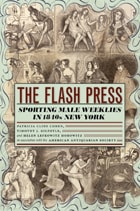
The Flash Press
Sporting Male Weeklies in 1840s New YorkPatricia Cline Cohen, Timothy J. Gilfoyle, Helen Lefkowitz Horowitz, in association with the American Antiquarian Society
University of Chicago Press, 2008
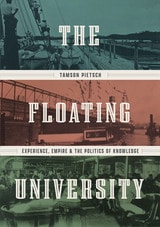
The Floating University
Experience, Empire, and the Politics of KnowledgeTamson Pietsch
University of Chicago Press, 2023
In 1926, New York University professor James E. Lough—an educational reformer with big dreams—embarked on a bold experiment he called the Floating University. Lough believed that taking five hundred American college students around the globe by ship would not only make them better citizens of the world but would demonstrate a model for responsible and productive education amid the unprecedented dangers, new technologies, and social upheavals of the post–World War I world. But the Floating University’s maiden voyage was also its last: when the ship and its passengers returned home, the project was branded a failure—the antics of students in hotel bars and port city back alleys that received worldwide press coverage were judged incompatible with educational attainment, and Lough was fired and even put under investigation by the State Department.
In her new book, Tamson Pietsch excavates a rich and meaningful picture of Lough’s grand ambition, its origins, and how it reveals an early-twentieth-century America increasingly defined both by its imperialism and the professionalization of its higher education system. As Pietsch argues, this voyage—powered by an internationalist worldview—traced the expanding tentacles of US power, even as it tried to model a new kind of experiential education. She shows that this apparent educational failure actually exposes a much larger contest over what kind of knowledge should underpin university authority, one in which direct personal experience came into conflict with academic expertise. After a journey that included stops at nearly fifty international ports and visits with figures ranging from Mussolini to Gandhi, what the students aboard the Floating University brought home was not so much knowledge of the greater world as a demonstration of their nation’s rapidly growing imperial power.
The Floating University
Experience, Empire, and the Politics of KnowledgeTamson Pietsch
University of Chicago Press, 2023
This is an auto-narrated audiobook edition of this book.
The Floating University sheds light on a story of optimism and imperialist ambition in the 1920s.In 1926, New York University professor James E. Lough—an educational reformer with big dreams—embarked on a bold experiment he called the Floating University. Lough believed that taking five hundred American college students around the globe by ship would not only make them better citizens of the world but would demonstrate a model for responsible and productive education amid the unprecedented dangers, new technologies, and social upheavals of the post–World War I world. But the Floating University’s maiden voyage was also its last: when the ship and its passengers returned home, the project was branded a failure—the antics of students in hotel bars and port city back alleys that received worldwide press coverage were judged incompatible with educational attainment, and Lough was fired and even put under investigation by the State Department.
In her new book, Tamson Pietsch excavates a rich and meaningful picture of Lough’s grand ambition, its origins, and how it reveals an early-twentieth-century America increasingly defined both by its imperialism and the professionalization of its higher education system. As Pietsch argues, this voyage—powered by an internationalist worldview—traced the expanding tentacles of US power, even as it tried to model a new kind of experiential education. She shows that this apparent educational failure actually exposes a much larger contest over what kind of knowledge should underpin university authority, one in which direct personal experience came into conflict with academic expertise. After a journey that included stops at nearly fifty international ports and visits with figures ranging from Mussolini to Gandhi, what the students aboard the Floating University brought home was not so much knowledge of the greater world as a demonstration of their nation’s rapidly growing imperial power.