Results by title
28164 books match the query 'History' and 6372 start with t
The American Negro Theatre and the Long Civil RIghts Era
Jonathan Shandell
University of Iowa Press, 2018
Jonathan Shandell provides the first in-depth study of the historic American Negro Theatre (ANT) and its lasting influence on American popular culture. Founded in 1940 in Harlem, the ANT successfully balanced expressions of African American consciousness with efforts to gain white support for the burgeoning civil rights movement. The theatre company featured innovative productions with emerging artists—Sidney Poitier, Harry Belafonte, Ruby Dee, and many others—who would become giants of stage, film, and television. In 1944, the ANT made theatrical history by creating the smash hit Anna Lucasta, the most popular play with an African American cast ever to perform on Broadway. Starting from a shoestring budget, the ANT grew into one of the most important companies in the history of African American theatre. Though the group folded in 1949, it continued to shape American popular culture through the creative work of its many talented artists.
Examining oral histories, playbills, scripts, production stills, and journalistic accounts, Shandell gives us the most complete picture to date of the theatre company by analyzing well-known productions alongside groundbreaking and now-forgotten efforts. Shedding light on this often-overlooked chapter of African American history, which fell between the New Negro Renaissance and the Black Arts Movement, Shandell reveals how the ANT became a valued community institution for Harlem—an important platform for African American artists to speak to racial issues—and a trailblazer in promoting integration and interracial artistic collaboration in the U.S. In doing so, Shandell also demonstrates how a small amateur ensemble of the 1940s succeeded in challenging, expanding, and transforming how African Americans were portrayed in the ensuing decades. The result is a fascinating and entertaining examination that will be of interest to scholars and students of African American and American studies and theatre history, as well as popular culture enthusiasts.
The American New Woman Revisited
A Reader, 1894-1930Patterson, Martha H
Rutgers University Press, 2008
In North America between 1894 and 1930, the rise of the “New Woman” sparked controversy on both sides of the Atlantic and around the world. As she demanded a public voice as well as private fulfillment through work, education, and politics, American journalists debated and defined her. Who was she and where did she come from? Was she to be celebrated as the agent of progress or reviled as a traitor to the traditional family? Over time, the dominant version of the American New Woman became typified as white, educated, and middle class: the suffragist, progressive reformer, and bloomer-wearing bicyclist. By the 1920s, the jazz-dancing flapper epitomized her. Yet she also had many other faces.
Bringing together a diverse range of essays from the periodical press of the late nineteenth and early twentieth centuries, Martha H. Patterson shows how the New Woman differed according to region, class, politics, race, ethnicity, and historical circumstance. In addition to the New Woman’s prevailing incarnations, she appears here as a gun-wielding heroine, imperialist symbol, assimilationist icon, entrepreneur, socialist, anarchist, thief, vamp, and eugenicist. Together, these readings redefine our understanding of the New Woman and her cultural impact.

The American Newsroom
A History, 1920-1960Will Mari
University of Missouri Press, 2023

The American Pipe Dream
Performance of Drug Addiction, 1890-1940Max Shulman
University of Iowa Press, 2022
Chapters look at how theatre, film, and popular culture linked the Chinese immigrant and opium smoking; the early attacks on doctors for their part in the creation of addicts; the legislation of addiction as a criminal condition; the comic portrayals of addiction; the intersection of Black, jazz, and drug cultures through cabaret performance; and the linkage between narcotic inebriation and artistic inspiration. The American Pipe Dream creates active connections between these case studies, demonstrating how this history has influenced our contemporary understanding, treatment, and legislation of drug use and addiction.
The American Presence in Ulster
A Diplomatic History, 1796–1996Francis M. Carroll
Catholic University of America Press, 2005

The American Response to Canada Since 1776
Gordon T. Stewart
Michigan State University Press, 1992
Canadians long have engaged in in-depth, wide-ranging discussions about their nation's relations with the United States. On the other hand, American citizens usually have been satisfied to accept a series of unexamined myths about their country's unchanging, benign partnership with the "neighbor to the north". Although such perceptions of uninterrupted, friendly relations with Canada may dominate American popular opinion, not to mention discussions in many American scholarly and political circles, they should not, according to Stewart, form the bases for long-term U.S. international economic, political, and cultural relations with Canada. Stewart describes and analyzes the evolution of U.S. policymaking and U.S. policy thinking toward Canada, from the tense and confrontational post-Revolutionary years to the signing of the Free Trade Agreement in 1988, to discover if there are any permanent characteristics of American policies and attitudes with respect to Canada. American policymakers were concerned for much of the period before World War II with Canada's role in the British empire, often regarded as threatening, or at least troubling, to developing U.S. hegemony in North America and even, in the late nineteenth century, to U.S. trade across the Pacific. A permanent goal of U.S. policymakers was to disengage Canada from that empire. They also thought that Canada's natural geographic and economic orientation was southward to the U.S., and policymakers were critical of Canadian efforts to construct an east- west economy. The Free Trade Agreement of 1988 which prepared the way for north-south lines of economic force, in this context, had been an objective of U.S. foreign policy since the founding of the republic in 1776. At the same time, however, these deep-seated U.S. goals were often undermined by domestic lobbies and political factors within the U.S., most evidently during the era of high tariffs from the 1860s to the 1930s when U.S. tariff policies actually encouraged a separate, imperially-backed economic and cultural direction in Canada. When the dramatic shift toward integration in trade, investment, defense and even popular culture began to take hold in the 1930s, 1940s and 1950s in the wake of the Depression and World War II, American policymakers viewed themselves as working in harmony with underlying, "natural" converging economic, political and cultural trends recognized and accepted by their Canadian counterparts.
The American Revolution and the Press
The Promise of IndependenceCarol Sue Humphrey
Northwestern University Press, 2013
Carol Sue Humphrey’s The American Revolution and the Pressargues that newspapers played an important role during America’s struggle for independence by keeping Americans engaged in the war even when the fighting occurred in distant locales. From the moment that the colonials received word of Britain’s new taxes in 1764 until reports of the peace treaty arrived in 1783, the press constituted the major source of information about events and developments in the conflict with the mother country. Both Benjamin Franklin, one of the Revolution’s greatest leaders, and Ambrose Serle, a Loyalist, described the press as an “engine” that should be used to advance the cause. The efforts of Patriot printers to keep readers informed about the war helped ensure ultimate success by boosting morale and rallying Americans to the cause until victory was achieved. As Humphrey illustrates, Revolutionary-era newspapers provided the political and ideological unity that helped Americans secure their independence and create a new nation.
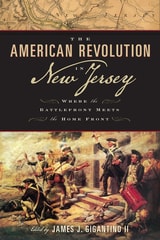
The American Revolution in New Jersey
Where the Battlefront Meets the Home FrontJames J. Gigantino II
Rutgers University Press, 2015
Battles were fought in many colonies during the American Revolution, but New Jersey was home to more sustained and intense fighting over a longer period of time. The nine essays in The American Revolution in New Jersey, depict the many challenges New Jersey residents faced at the intersection of the front lines and the home front.

The American Robot
A Cultural HistoryDustin A. Abnet
University of Chicago Press, 2020
In tracing the history of the idea of robots in US culture, Abnet draws on intellectual history, religion, literature, film, and television. He explores how robots and their many kin have not only conceptually connected but literally embodied some of the most critical questions in modern culture. He also investigates how the discourse around robots has reinforced social and economic inequalities, as well as fantasies of mass domination—chilling thoughts that the recent increase in job automation has done little to quell. The American Robot argues that the deep history of robots has abetted both the literal replacement of humans by machines and the figurative transformation of humans into machines, connecting advances in technology and capitalism to individual and societal change. Look beneath the fears that fracture our society, Abnet tells us, and you’re likely to find a robot lurking there.

The American Supreme Court
Robert G. McCloskey
University of Chicago Press, 2000
As in the second edition, McCloskey's original text remains unchanged. In his historical interpretation, he argues that the strength of the Court has always been its sensitivity to the changing political scene, as well as its reluctance to stray too far from the main currents of public sentiments. In two new chapters, Levinson discusses the Court's more recent role, especially during the 1960s, as protector of the civil rights and liberties of minorities. He updates as well the Court's continuing role as monitor of the welfare state, looking at the litigation following the 1996 changes in welfare policy by Congress and the President. Also covered in this new edition are the recent Court decisions on federalism, which perhaps portend an enhanced role for the court as the "umpire" of the federal system; the clash between Congress and the Court over the scope of the required accommodation by government of religious conduct; and the Court's role in the impeachment of President Clinton.
Wonderfully readable and concisely written, McCloskey's book is an essential guide to the past, present, and future prospects of America's highest court.
The American Supreme Court
Robert G. McCloskey
University of Chicago Press, 2004
As in previous editions, McCloskey's original text remains unchanged. He argues that the Court's strength has always been its sensitivity to the changing political scene, as well as its reluctance to stray too far from the main currents of public sentiment. Levinson's two new chapters show how McCloskey's approach continues to illuminate recent developments, such as the Court's seeming return to its pre-1937 role as "umpire" of the federal system. It is in Bush v. Gore, however, where the implications of McCloskey's interpretation stand out most clearly.
The best and most concise account of the Supreme Court and its place in American politics, McCloskey's wonderfully readable book is an essential guide to its past, present, and future prospects of this institution.
The American Supreme Court, Sixth Edition
Robert G. McCloskey and Sanford Levinson
University of Chicago Press, 2016
As in prior editions, McCloskey’s original text remains unchanged. In his historical interpretation, he argues that the strength of the Court has always been its sensitivity to the changing political scene, as well as its reluctance to stray too far from the main currents of public sentiment. In this new edition, Sanford Levinson extends McCloskey’s magisterial treatment to address developments since the 2010 election, including the Supreme Court’s decisions regarding the Defense of Marriage Act, the Affordable Care Act, and gay marriage.
The best and most concise account of the Supreme Court and its place in American politics, McCloskey's wonderfully readable book is an essential guide to the past, present, and future prospects of this institution.
The American Supreme Court, Sixth Edition
Robert G. McCloskey and Sanford Levinson
University of Chicago Press, 2016
For more than fifty years, Robert G. McCloskey’s classic work on the Supreme Court’s role in constructing the US Constitution has introduced generations of students to the workings of our nation’s highest court.
As in prior editions, McCloskey’s original text remains unchanged. In his historical interpretation, he argues that the strength of the Court has always been its sensitivity to the changing political scene, as well as its reluctance to stray too far from the main currents of public sentiment. In this new edition, Sanford Levinson extends McCloskey’s magisterial treatment to address developments since the 2010 election, including the Supreme Court’s decisions regarding the Defense of Marriage Act, the Affordable Care Act, and gay marriage.
The best and most concise account of the Supreme Court and its place in American politics, McCloskey's wonderfully readable book is an essential guide to the past, present, and future prospects of this institution.
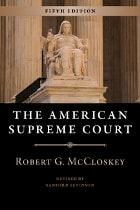
The American Supreme Court
Fifth EditionRobert G. McCloskey
University of Chicago Press, 2010
Celebrating its fiftieth anniversary, Robert McCloskey’s classic work on the Supreme Court’s role in constructing the U.S. Constitution has introduced generations of students to the workings of our nation’s highest court. For this new fifth edition, Sanford Levinson extends McCloskey’s magisterial treatment to address the Court’s most recent decisions.
As in prior editions, McCloskey’s original text remains unchanged. In his historical interpretation, he argues that the strength of the Court has always been its sensitivity to the changing political scene, as well as its reluctance to stray too far from the main currents of public sentiments. In two revised chapters, Levinson shows how McCloskey’s approach continues to illuminate developments since 2005, including the Court’s decisions in cases arising out of the War on Terror, which range from issues of civil liberty to tests of executive power. He also discusses the Court’s skepticism regarding campaign finance regulation; its affirmation of the right to bear arms; and the increasingly important nomination and confirmation process of Supreme Court justices, including that of the first Hispanic justice, Sonia Sotomayor.
The best and most concise account of the Supreme Court and its place in American politics, McCloskey's wonderfully readable book is an essential guide to the past, present, and future prospects of this institution.

The American Surveillance State
How the U.S. Spies on DissentDavid H. Price
Pluto Press, 2022
New evidence has come to light proving how far the FBI monitored its citizens throughout the Cold War and beyond
When the possibility of wiretapping first became known to Americans they were outraged. Now, in our post-9/11 world, it’s accepted that corporations are vested with human rights, and government agencies and corporations use computers to monitor our private lives. David H. Price pulls back the curtain to reveal how the FBI and other government agencies have always functioned as the secret police of American capitalism up to today, where they luxuriate in a near-limitless NSA surveillance of all.
Price looks through a roster of campaigns by law enforcement, intelligence agencies, and corporations to understand how we got here. Starting with J. Edgar Hoover and the early FBI’s alignment with business, his access to 15,000 pages of never-before-seen FBI files shines a light on the surveillance of Edward Said, Andre Gunder Frank and Alexander Cockburn, Native American communists, and progressive factory owners.
Price uncovers patterns of FBI monitoring and harassing of activists and public figures, providing the vital means for us to understand how these new frightening surveillance operations are weaponized by powerful governmental agencies that remain largely shrouded in secrecy.
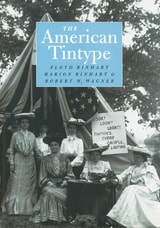
The American Tintype
Floyd Rinhart, Marion Rinhart, and Robert W. Wagner
The Ohio State University Press, 2026
Making a tintype involved reproducing a photographic image on very thin sheets of iron instead of glass; multiple tintypes could be produced at one time from a single sheet of iron. The tintype process was faster, simpler, cheaper, and more durable than that of the daguerreotype. The characteristics of the tintype that led its critics to dismiss it as a serious art form are precisely the ones we find so appealing today. The men, women, children, and dogs in these images look as though they lived real lives. The informality of the medium encouraged its subjects to relax, so their poses are natural. We see details of hairstyles, clothing, and surroundings that are missing in the more formal daguerreotypes of the time. These wonderful tintypes provide us with a special appreciation of nineteenth-century American life that we are unlikely to encounter elsewhere.
The American Tintype is the first comprehensive history of the subject. Most of the illustrations in this book are in the Floyd and Marion Rinhart Collection at The Ohio State University and are reproduced here for the first time. The text provides an accessible history of the tintype, including an appendix that contains information about 400 American tintypists.

The American University of Beirut
Arab Nationalism and Liberal EducationBy Betty S. Anderson
University of Texas Press, 2011
Since the American University of Beirut opened its doors in 1866, the campus has stood at the intersection of a rapidly changing American educational project for the Middle East and an ongoing student quest for Arab national identity and empowerment. Betty S. Anderson provides a unique and comprehensive analysis of how the school shifted from a missionary institution providing a curriculum in Arabic to one offering an English-language American liberal education extolling freedom of speech and analytical discovery.
Anderson discusses how generations of students demanded that they be considered legitimate voices of authority over their own education; increasingly, these students sought to introduce into their classrooms the real-life political issues raging in the Arab world. The Darwin Affair of 1882, the introduction of coeducation in the 1920s, the Arab nationalist protests of the late 1940s and early 1950s, and the even larger protests of the 1970s all challenged the Americans and Arabs to fashion an educational program relevant to a student body constantly bombarded with political and social change. Anderson reveals that the two groups chose to develop a program that combined American goals for liberal education with an Arab student demand that the educational experience remain relevant to their lives outside the school's walls. As a result, in eras of both cooperation and conflict, the American leaders and the students at the school have made this American institution of the Arab world and of Beirut.

The American Warfare State
The Domestic Politics of Military SpendingRebecca U. Thorpe
University of Chicago Press, 2014
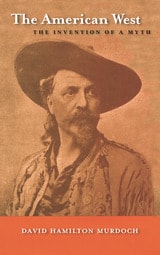
The American West
The Invention Of A MythDavid Hamilton Murdoch
University of Nevada Press, 2001
The American and Japanese Auto Industries in Transition
Report of the Joint U.S.–Japan Automotive StudyRobert E. Cole and Taizo Yakushiji, Editors
University of Michigan Press, 1984
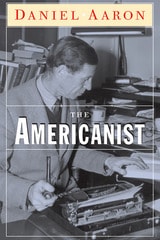
The Americanist
Daniel Aaron
University of Michigan Press, 2009
“I have read all of Daniel Aaron’s books, and admired them, but in The Americanist I believe he has composed an intellectual and social memoir for which he will be remembered. His self-portrait is marked by personal tact and admirable restraint: he is and is not its subject. The Americanist is a vision of otherness: literary and academic friends and acquaintances, here and abroad. Eloquently phrased and free of nostalgia, it catches a lost world that yet engendered much of our own.”
—Harold Bloom
“The Americanist is the absorbing intellectual autobiography of Daniel Aaron, who is the leading proponent and practitioner of American Studies. Written with grace and wit, it skillfully blends Daniel Aaron’s personal story with the history of the field he has done so much to create. This is a first-rate book by a first-rate scholar.”
—David Herbert Donald, Professor Emeritus, Harvard University
The Americanist is author and critic Daniel Aaron’s anthem to nearly a century of public and private life in America and abroad. Aaron, who is widely regarded as one of the founders of American Studies, graduated from the University of Michigan, received his Ph.D. from Harvard, and taught for over three decades each at Smith College and Harvard.
Aaron writes with unsentimental nostalgia about his childhood in Los Angeles and Chicago and his later academic career, which took him around the globe, often in the role of America’s accidental yet impartial critic. When Walt Whitman, whom Aaron frequently cites as a touchstone, wrote, “I am large, I contain multitudes,” he could have been describing Daniel Aaron—the consummate erudite and Renaissance individual whose allegiance to the truth always outweighs mere partisan loyalty.
Not only should Aaron’s book stand as a resplendent and summative work from one of the finest thinkers of the last hundred years, it also succeeds on its own as a first-rate piece of literature, on a par with the writings of any of its subjects. The Americanist is a veritable Who’s Who of twentieth-century writers Aaron interviewed, interacted with, or otherwise encountered throughout his life: Ralph Ellison, Robert Frost, Lillian Hellman, Richard Hofstadter, Alfred Kazin, Sinclair Lewis, Malcolm Muggeridge, John Crowe Ransom, Upton Sinclair, Edmund Wilson, Leonard Woolf, and W. B. Yeats, to name only a few.
Aaron’s frank and personal observations of these literary lights make for lively reading. As well, scattered throughout The Americanist are illuminating portraits of American presidents living and passed—miniature masterworks of astute political observation that offer dazzlingly fresh approaches to well-trod subjects.

The Americanization of Social Science
Intellectuals and Public Responsibility in the Postwar United StatesDavid Paul Haney
Temple University Press, 2008
A highly readable introduction to and overview of the postwar social sciences in the United States, The Americanization of Social Science explores a critical period in the evolution of American sociology’s professional identity from the late 1940s through the early 1960s. David Paul Haney contends that during this time leading sociologists encouraged a professional secession from public engagement in the name of establishing the discipline’s scientific integrity.
According to Haney, influential practitioners encouraged a willful withdrawal from public sociology by separating their professional work from public life. He argues that this separation diminished sociologists’ capacity for conveying their findings to wider publics, especially given their ambivalence towards the mass media, as witnessed by the professional estrangement that scholars like David Riesman and C. Wright Mills experienced as their writing found receptive lay audiences. He argues further that this sense of professional insularity has inhibited sociology’s participation in the national discussion about social issues to the present day.
The Americanization of the Global Village
Essays in Comparative Popular CultureRoger Rollin
University of Wisconsin Press, 1989
This collection of essays taken from a series of papers given at the Popular Culture division of the MLA convention in 1987 consists of a serious investigation of Popular Culture and in simplest terms investigates what people do and why they do it. Rolin's collection deals with the national identity of consumer countries and comes to grips with the fact that the consumption of foreign products could generate emoions of disjunction and displacement.
The Americanization of the Synagogue, 1820–1870
Leon A. Jick
Brandeis University Press, 1992
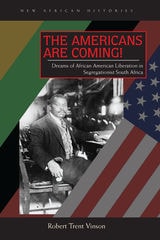
The Americans Are Coming!
Dreams of African American Liberation in Segregationist South AfricaRobert Trent Vinson
Ohio University Press, 2011
For more than half a century before World War II, black South Africans and “American Negroes”—a group that included African Americans and black West Indians—established close institutional and personal relationships that laid the necessary groundwork for the successful South African and American antiapartheid movements. Though African Americans suffered under Jim Crow racial discrimination, oppressed Africans saw African Americans as free people who had risen from slavery to success and were role models and potential liberators.
Many African Americans, regarded initially by the South African government as “honorary whites” exempt from segregation, also saw their activities in South Africa as a divinely ordained mission to establish “Africa for Africans,” liberated from European empires. The Jamaican-born Marcus Garvey’s Universal Negro Improvement Association, the largest black-led movement with two million members and supporters in forty-three countries at its height in the early 1920s, was the most anticipated source of liberation. Though these liberation prophecies went unfulfilled, black South Africans continued to view African Americans as inspirational models and as critical partners in the global antiapartheid struggle.
The Americans Are Coming! is a rare case study that places African history and American history in a global context and centers Africa in African Diaspora studies.
The Americas That Might Have Been
Native American Social Systems through TimeJulian Granberry
University of Alabama Press, 2005
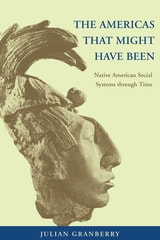
This work answers the hypothetical question: What would the Americas be like today—politically, economically, culturally—if Columbus and the Europeans had never found them, and how would American peoples interact with the world’s other societies? It assumes that Columbus did not embark from Spain in 1492 and that no Europeans found or settled the New World afterward, leaving the peoples of the two American continents free to follow the natural course of their Native lives.
The Americas That Might Have Been is a professional but layman-accessible, fact-based, nonfiction account of the major Native American political states that were thriving in the New World in 1492. Granberry considers a contemporary New World in which the glories of Aztec Mexico, Maya Middle America, and Inca Peru survived intact. He imagines the roles that the Iroquois Confederacy of the American Northeast, the powerful city-states along the Mississippi River in the Midwest and Southeast, the Navajo Nation and the Pueblo culture of the Southwest, the Eskimo Nation in the Far North, and the Taino/Arawak chiefdoms of the Caribbean would play in American and world politics in the 21st Century.
Following a critical examination of the data using empirical archaeology, linguistics, and ethnohistory, Granberry presents a reasoned and compelling discussion of native cultures and the paths they would have logically taken over the past five centuries. He reveals the spectacular futures these brilliant pre-Columbian societies might have had, if not for one epochal meeting that set off a chain of events so overwhelming to them that the course of human history was forever changed.
The Americas' First Sermons
The Nahuatl Sermonary of Fray Bernardino de SahagúnTranslation and Introduction study by Ben Leeming
University of Utah Press, 2025
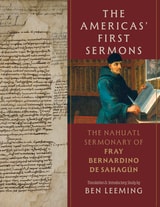
The Americas’ First Sermons presents the first English translation and critical study of the complete set of sermons composed by Franciscan friar Bernardino de Sahagún and his Nahua students at the Imperial College of Santa Cruz in Tlatelolco, Mexico in 1540. The volume represents a crucial moment in the cultural exchange between European and Indigenous civilizations in sixteenth-century colonial Mexico.
With the collaboration of Mario Alberto Sánchez Aguilera, this edition offers unprecedented access to the collaboration between European friars and Nahua scholars in translating Christian concepts into Native languages. It captures Sahagún’s evolving methods across three phases (1530s–1560s) through his extensive annotations, bridging the divide between his ethnographic and doctrinal works. Unique in its analysis of both text and manuscript features—such as rare maguey paper—it highlights Indigenous intellectual contributions at the Colegio de Santa Cruz. This translation provides essential insights into early colonial religious negotiations and makes previously inaccessible material available to scholars across multiple disciplines.
The Anarchy of Black Religion
A Mystic SongJ. Kameron Carter
Duke University Press, 2023

The Anatomy of Eleven Towns in Michoacán
By Dan Stanislawski
University of Texas Press, 1950
In this book, Dan Stanislawski studies the geography of various small towns in one Mexican state. He discusses the factors—landscape, buildings, culture groups, and so forth—that create a unique personality for each of these towns.
The Anatomy of National Fantasy
Hawthorne, Utopia, and Everyday LifeLauren Berlant
University of Chicago Press, 1991
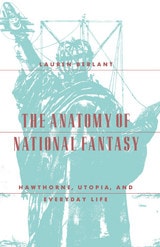
At the core of Berlant's work is a three-part study of The Scarlet Letter, analyzing the modes and effects of national identity that characterize the narrator's representation of Puritan culture and his construction of the novel's political present tense. This analysis emerges from an introductory chapter on American citizenship in the 1850s and a following chapter on national fantasy, ranging from Hawthorne's early work "Alice Doane's Appeal" to the Statue of Liberty. In her conclusion, Berlant suggests that Hawthorne views everyday life and local political identities as alternate routes to the revitalization of the political and utopian promises of modern national life.
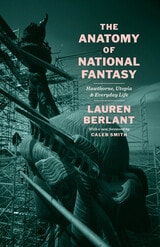
The Anatomy of National Fantasy
Hawthorne, Utopia, and Everyday LifeLauren Berlant
University of Chicago Press, 2026
A classic work that launched the career of one of the most influential scholars of their generation.
Lauren Berlant influenced generations of scholars in gender studies, affect theory, literary criticism, anthropology, sociology, and beyond. Her first book, The Anatomy of National Fantasy, was published in 1991, and it marked the start of an extraordinary career of groundbreaking essays, editorial collaborations, and monographs. This new edition reintroduces Berlant’s earliest work with a new foreword by Caleb Smith, who connects Berlant’s initial investigations as a scholar of nineteenth-century American literature to her more widely known interventions in how we understand the entanglements of national ideology, citizenship, affect, and everyday life.
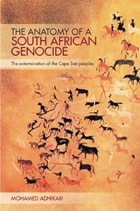
The Anatomy of a South African Genocide
The Extermination of the Cape San PeoplesMohamed Adhikari
Ohio University Press, 2011

The Ancient Art of Emulation
Studies in Artistic Originality and Tradition from the Present to Classical AntiquityElaine K. Gazda, Editor
University of Michigan Press, 2002
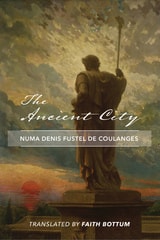
The Ancient City
Numa Denis Fustel de Coulanges
St. Augustine's Press, 2022
Fustel de Coulanges plunged deep into the world and language of the ancient Greeks and Romans. His presentation of religion as a factor in civilization equates to a vision of how and why the ancient city-state died. This is a non-partisan and spiritually unmotivated work of political-philosophical merit, in which from a perspective of Cartesian doubt Coulanges strips away layers of cultural façade until the most foundational and hidden stratospheres of Greek and Roman institutions are laid bare.
The Ancient City places ancient Greek and Roman cities in relation to each other, and the daily life in both are illustrated in detail. Morality and custom are rendered as living and breathing entities, and the dynamics of social life are displayed in a way that the tragic influence of Christianity is rendered obvious, yet not heartbreaking.
This new translation is an essential component to a well-rounded understanding of where the notion of the city and political ordering come from, the role of religion in politics, the development of law, and its reliance on custom and the eternal fabric of the family.
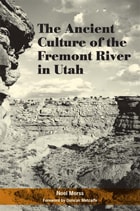
The Ancient Culture of the Fremont River in Utah
Report on the Explorations under the Claflin-Emerson Fund, 1928-1929Noel Morss
University of Utah Press, 2009
One such survey was conducted by author Noel Morss during the summer of 1928, resulting in an unexpected revelation: the Fremont (Dirty Devil) River drainage area being surveyed proved to be host to a prehistoric culture different from all other established Southwestern cultures. Excavations completed the following field season confirmed Morss’s findings. This distinct culture was defined by unique unpainted black or gray pottery, sole use of a primitive moccasin type, elaborate clay figurines, and abundant distinctive pictographs. Though too definite and well developed to be confined to a single drainage, Morss concluded that the Fremont were nonetheless a periphery culture and not an integral part of the mainstream of Southwestern development.
Originally published in 1931 and now featuring a new foreword by Duncan Metcalfe, The Ancient Culture of the Fremont River in Utah has become a classic in Southwestern archaeology, furthering a conversation about the early peoples of southern Utah that continues even today.
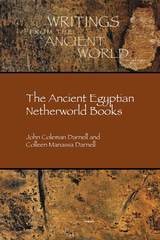
The Ancient Egyptian Netherworld Books
John Coleman Darnell
SBL Press, 2018
The first, complete English translation of the ancient Egyptian Netherworld Books
The ancient Egyptian Netherworld Books, important compositions that decorated the New Kingdom royal tombs in the Valley of the Kings, present humanity's oldest surviving attempts to provide a scientific map of the unseen realms beyond the visible cosmos and contain imagery and annotations that represent ancient Egyptian speculation (essentially philosophical and theological) about the events of the solar journey through the twelve hours of the night. The Netherworld Books describe one of the central mysteries of Egyptian religious belief—the union of the solar god Re with the underworldly god Osiris—and provide information on aspects of Egyptian theology and cosmography not present in the now more widely read Book of the Dead. Numerous illustrations provide overview images and individual scenes from each Netherworld Book, emphasizing the unity of text and image within the compositions. The major texts translated include the Book of Adoring Re in the West (the Litany of Re), the Book of the Hidden Chamber (Amduat), the Book of Gates, the Book of Caverns, the Books of the Creation of the Solar Disk, and the Books of the Solar-Osirian Unity.
Features:
- Accessible presentations of the main concepts of the Netherworld Books and the chief features of each text
- Notes and commentary address major theological themes within the texts as well as lexicographic and/or grammatical issues
- An overview of later uses of these compositions during the first millennium BCE
The Ancient Egyptian Pyramid Texts
James P. Allen
SBL Press, 2005
The Ancient Egyptian Pyramid Texts, Second Edition
James P. Allen
SBL Press, 2015
Completely revised and updated
James P. Allen provides a translation of the oldest corpus of ancient Egyptian religious texts from the six royal pyramids of the Fifth and Sixth Dynasties (ca. 2350–2150 BCE). Allen’s revisions take into account recent advances in the understanding of Egyptian grammar.
Features:
- Sequential translations based on all available sources, including texts newly discovered in the last decade
- Texts numbered according to the most widely used numbering system with new numbers from the latest 2013 concordance
- Translations reflect the primarily atemporal verbal system of Old Egyptian, which conveys the timeless quality that the text’s authors understood the texts to have
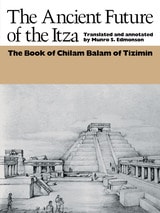
The Ancient Future of the Itza
The Book of Chilam Balam of TiziminTranslated and annotated by Munro S. Edmonson
University of Texas Press, 1982
The title of Edmonson's work refers to the Mayan custom of first predicting their history and then living it, and it may be that no other peoples have ever gone so far in this direction. The Book of Chilam Balam was a sacred text prepared by generations of Mayan priests to record the past and to predict the future. The official prophet of each twenty-year rule was the Chilam Balam, or Spokesman of the Jaguar—the Jaguar being the supreme authority charged with converting the prophet's words into fact.
This is a literal but poetic translation of one of fourteen known manuscripts in Yucatecan Maya on ritual and history. It pictures a world of all but incredible numerological order, slowly yielding to Christianity and Spanish political pressure but never surrendering. In fact, it demonstrates the surprising truth of a secret Mayan government during the Spanish rule, which continued to collect tribute in the names of the ruined Classic cities and preserved the essence of the Mayan calendar as a legacy for the tradition's modern inheritors.
The history of the Yucatecan Maya from the seventh to the nineteenth century is revealed. And this is history as the Maya saw it—of a people concerned with lords and priests, with the cosmology which justified their rule, and with the civil war which they perceived as the real dimension of the colonial period.
A work of both history and literature, the Tizimin presents a great deal of Mayan thought, some of which has been suspected but not previously documented. Edmonson's skillful reordering of the text not only makes perfect historical sense but also resolves the long-standing problem of correlating the two colonial Mayan calendars. The book includes both interpretative and literal translations, as well as the Maya parallel couplets and extensive annotations on each page. The beauty of the sacred text is illuminated by the literal translation, while both versions unveil the magnificent historical, philosophical, and social traditions of the most sophisticated native culture in the New World.
The prophetic history of the Tizimin creates a portrait of the continuity and vitality, of the ancient past and the foreordained future of the Maya.
The Ancient Greek Roots of Human Rights
By Rachel Hall Sternberg
University of Texas Press, 2021
2022 PROSE Award Finalist in Classics
Although the era of the Enlightenment witnessed the rise of philosophical debates around benevolent social practice, the origins of European humane discourse date further back, to Classical Athens. The Ancient Greek Roots of Human Rights analyzes the parallel confluences of cultural factors facing ancient Greeks and eighteenth-century Europeans that facilitated the creation and transmission of humane values across history. Rachel Hall Sternberg argues that precursors to the concept of human rights exist in the ancient articulation of emotion, though the ancient Greeks, much like eighteenth-century European societies, often failed to live up to those values.
Merging the history of ideas with cultural history, Sternberg examines literary themes upholding empathy and human dignity from Thucydides’s and Xenophon’s histories to Voltaire’s Candide, and from Greek tragic drama to the eighteenth-century novel. She describes shared impacts of the trauma of war, the appeal to reason, and the public acceptance of emotion that encouraged the birth and rebirth of humane values.
The Ancient Martyrdom Accounts of Peter and Paul
David L. Eastman
SBL Press, 2015
New English translations based upon the most up-to-date critical editions
This book for the first time collects the various ancient accounts of the martydoms of Peter and Paul, which number more than a dozen, along with more than forty references to the martyrdoms from early Christian literature. At last a more complete picture of the traditions about the deaths of Peter and Paul is able to emerge.
Features:
- Greek, Latin, and Syriac accounts from antiquity translated into English
- Introductions and notes for each text
- Original texts are produced on facing pages for specialists
The Angel and Beehive
THE MORMON STRUGGLE WITH ASSIMILATIONArmand L. Mauss
University of Illinois Press, 1994
This retrenchment among Mormons is the main theme of Mauss's book, which analyzes the last forty years of Mormon history from a sociological perspective. At the official ecclesiastical level, Mauss finds, the retrenchment can be seen in the greatly increased centralization of bureaucratic control and in renewed emphases on obedience to modern prophets, on genealogy and vicarious temple work, and on traditional family life; retrenchment is also apparent in extensive formal religious indoctrination by full-time professionals and in increased sophistication and intensity of proselytizing.

The Angel in the Marketplace
Adwoman Jean Wade Rindlaub and the Selling of AmericaEllen Wayland-Smith
University of Chicago Press, 2020
The Angel in the Marketplace is the story of one of America’s most accomplished advertising executives. It is also the story of how advertisers like Rindlaub sold a postwar American dream of capitalism and a Christian corporate order. Rindlaub was responsible for award-winning, mega sales-generating advertisements for all things domestic, including Oneida silverware, Betty Crocker cake mix, Campbell’s soup, and Chiquita bananas. Her success largely came from embracing, rather than subverting, the cultural expectations of women. She believed her responsibility as an advertiser was not to spring women from their trap, but to make that trap more comfortable.
Rindlaub wasn’t just selling silverware and cakes; she was selling the virtues of free enterprise. By following the arc of Rindlaub’s career from the 1920s through the 1960s, we witness how a range of cultural narratives—advertising chief among them—worked powerfully to shape women’s emotional and economic behavior in support of the free market system. Alongside Rindlaub’s story, Ellen Wayland-Smith provides a riveting history of how women were repeatedly sold the idea that their role as housewives was more powerful, and more patriotic, than any outside the home. And by buying into the image of morality through an unregulated market, many of these women helped fuel backlash against economic regulation and socialization efforts throughout the twentieth century.
The Angel in the Marketplace is a nuanced portrayal of a complex woman, one who both shaped and reflected the complicated cultural, political, and religious forces defining femininity in America at mid-century. This compelling account of one of advertising’s most fervent believers is a tale of a Mad Woman we haven’t been told.
The Animal Claim
Sensibility and the Creaturely VoiceTobias Menely
University of Chicago Press, 2015
In the Restoration and eighteenth century, philosophers emphasized the role of sympathy in collective life and began regarding the passionate expression humans share with animals, rather than the spoken or written word, as the elemental medium of community. Menely shows how poetry came to represent this creaturely voice and, by virtue of this advocacy, facilitated the development of a viable discourse of animal rights in the emerging public sphere. Placing sensibility in dialogue with classical and early-modern antecedents as well as contemporary animal studies, The Animal Claim uncovers crucial connections between eighteenth-century poetry; theories of communication; and post-absolutist, rights-based politics.

The Annotated Malay Archipelago
Alfred Russell Wallace
National University of Singapore Press, 2014
This edition explains, updates and corrects the original text with an historical introduction and hundreds of explanatory notes. Wallace left hundreds of people, places, publications and species unidentified. He referred to most species only with the scientific name current at the time. Whenever available, the common names for species have been provided, and scientific names updated. The content of the book has never been thoroughly analysed and compared against other contemporary sources. It turns out that the book contains many errors. This includes not just incorrect dates and place names but some of the most remarkable anecdotes; for example, the dramatic claim that tigers "kill on an average a Chinaman every day" in Singapore or that a Dutch Governor General committed suicide by leaping from a waterfall on Celebes.
By correcting the text of the Malay Archipelago against Wallace's letters and notebooks and other contemporary sources and by enriching it with modern identifications this edition reveals Wallace's work as never before.
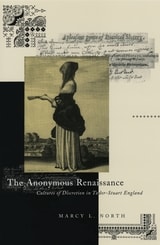
The Anonymous Renaissance
Cultures of Discretion in Tudor-Stuart EnglandMarcy L. North
University of Chicago Press, 2003
The Renaissance was in many ways the beginning of modern and self-conscious authorship, a time when individual genius was celebrated and an author's name could become a book trade commodity. Why, then, did anonymous authorship flourish during the Renaissance rather than disappear? In addressing this puzzle, Marcy L. North reveals the rich history and popularity of anonymity during this period.
The book trade, she argues, created many intriguing and paradoxical uses for anonymity, even as the authorial name became more marketable. Among ecclesiastical debaters, for instance, anonymity worked to conceal identity, but it could also be used to identify the moral character of the author being concealed. In court and coterie circles, meanwhile, authors turned name suppression into a tool for the preservation of social boundaries. Finally, in both print and manuscript, anonymity promised to liberate an authentic female voice, and yet made it impossible to authenticate the gender of an author. In sum, the writers and book producers who helped to create England's literary culture viewed anonymity as a meaningful and useful practice.
Written with clarity and grace, The Anonymous Renaissance will fill a prominent gap in the study of authorship and English literary history.
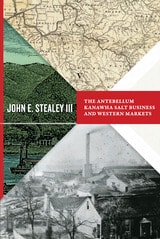
The Antebellum Kanawha Salt Business and Western Markets
John E. Stealey
West Virginia University Press, 2016
In his illuminating study, now available with a new preface by the author, John Stealey examines the legal basis of this industry, its labor practices, and its marketing and distribution patterns. Through technological innovation, salt producers harnessed coal and steam as well as men and animals, constructed a novel evaporative system, and invented drilling tools later employed in oil and natural gas exploration. Thus in many ways the salt industry was the precursor of the American extractive and chemical industries. Stealey's informative study is an important contribution to American economic, business, labor, and legal history.
The Anthropology of Labor Unions
E. Paul Durrenberger
University Press of Colorado, 2010
Union-organized workplaces consistently afford workers higher wages and better pensions, benefits, and health coverage than their nonunion counterparts. In addition, women and minorities who belong to unions are more likely to receive higher wages and benefits than their nonunion peers. Given the economic advantages of union membership, one might expect to see higher rates of organization across industries, but labor affiliation is at an all-time low. What accounts for this discrepancy?
The contributors in this volume provide a variety of perspectives on this paradox, including discussions of approaches to and findings on the histories, cultures, and practices of organized labor. They also address substantive issues such as race, class, gender, age, generation, ethnicity, health and safety concerns, corporate co-optation of unions, and the cultural context of union-management relationships.
The first to bring together anthropological case studies of labor unions, this volume will appeal to cultural anthropologists, social scientists, sociologists, and those interested in labor studies and labor movements.

The Anthropology of Slavery
The Womb of Iron and GoldClaude Meillassoux
University of Chicago Press, 1991

The Anti-American Century
Ivan Krastev
Central European University Press, 2007