Results by title
3258 books match the query 'Performing Arts' and 658 start with t
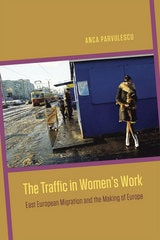
The Traffic in Women's Work
East European Migration and the Making of EuropeAnca Parvulescu
University of Chicago Press, 2014
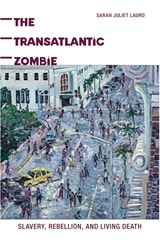
The Transatlantic Zombie
Slavery, Rebellion, and Living DeathSarah Juliet Lauro
Rutgers University Press, 2015

The Traumatic Screen
The Films of Christopher NolanStuart Joy
Intellect Books, 2020
From 1997’s Doodlebug to 2017’s Dunkirk, Nolan’s films highlight cinema’s ability to probe the nature of human consciousness while commenting on the relationship between spectator and screen. Joy examines Nolan’s treatment of trauma—both individual and collective—through the formal construction, mise-en-scène, and repeated themes of his films. The argument presented is based on close textual analysis and a methodological framework that incorporates the works of Sigmund Freud and Jacques Lacan. The first in-depth, overtly psychoanalytic understanding of trauma in the context of the director’s filmography, this book builds on and challenges existing scholarship in a bold new interpretation of the Nolan canon.
The Trojan Women
Euripides
University of Chicago Press, 2013
A stand-alone edition of Euripides’s The Trojan Women, taken from Chicago’s renowned translations of the Greek tragedies.
Drawn from the authoritative third edition of the University of Chicago Press’s Complete Greek Tragedies series, this stand-alone edition presents Richmond Lattimore’s celebrated translation of a play with an antiwar message that continues to inspire and resonate with readers today. The Trojan Women takes place following the conquest of Troy and tells the story of its sole survivors—all women—who have been enslaved by the Greeks. Mourning their families and their fate, they grapple with the trauma they have experienced and contemplate a future far from home.
The aftermath of the Trojan War, while extensively depicted in ancient Greek epic, lyric poetry, and art, is rendered especially powerful through the hands of Euripides. An introduction by Mark Griffith and Glenn W. Most provides essential contextual information about the play’s first production, plot, and reception in antiquity.
The Trustus Plays
The Hammerstone, Drift, and Holy GhostJon Tuttle
Intellect Books, 2009
The Trustus Plays collects three full-length, award-winning performance texts by American playwright Jon Tuttle. Each play was a winner of the national Trustus Playwrights Festival contest and was then produced by the Trustus Theatre in Columbia, South Carolina. The Hammerstone is a comedy about two professors aging gracelessly, Drift is a dark comedy about marriage and divorce, and Holy Ghost is the story of German POWs held in the camps in the American south. Jon Tuttle provides an introduction to the plays, and Trustus founder and artistic director, Jim Thigpen, offers a preface describing Tuttle’s work within the context of the Trustus theatre’s dedication to experimental, edgy social drama.
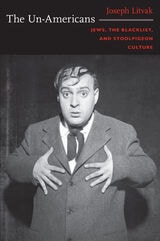
The Un-Americans
Jews, the Blacklist, and Stoolpigeon CultureJoseph Litvak
Duke University Press, 2009
Litvak traces the outlines of comic cosmopolitanism in a series of performances in film and theater and before HUAC, performances by Jewish artists and intellectuals such as Zero Mostel, Judy Holliday, and Abraham Polonsky. At the same time, through an uncompromising analysis of work by informers including Jerome Robbins, Elia Kazan, and Budd Schulberg, he explains the triumph of a stoolpigeon culture that still thrives in the America of the early twenty-first century.
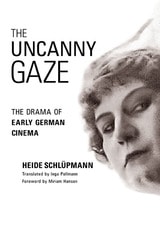
The Uncanny Gaze
The Drama of Early German CinemaHeide Schlupmann. Translated by Inga Pollmann. Foreword by Miriam Hansen.
University of Illinois Press, 2010
Heide Schlüpmann's classic study of early German cinema was published in German as Unheimlichkeit des Blicks: Das Drama des Frühen deutschen Kinos in 1990. For the first time in English, this translation makes available her feminist examination of German cinema and Germany in the sociopolitical context of Wilhelmine society. By examining then-unknown pre-World War I narrative films, this study paints a picture of the conflicted early years of the German cinema. During this period cinema and film production were able to develop independently from the cultural bourgeoisie and relied on those forces excluded from high "culture": technology, business, performers, showmen, and actors. In cinema, the dime novel and kitsch were exhibited for all, and the internationalism of modernity prevailed over the prevailing nationalism of the period.
Featuring a foreword by film scholar Miriam Hansen and a new afterword by Schlüpmann, this volume performs a critical perusal of film commentary and offers an in-depth look at little-known films in early German cinema.
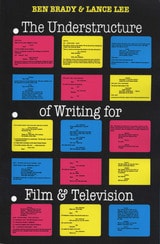
The Understructure of Writing for Film and Television
By Ben Brady and Lance Lee
University of Texas Press, 1988
This unique, comprehensive introduction to screenwriting offers practical advice for the beginning writer, whether college student or freelancer. Based on their experience as professional writers and as teachers in a large, successful screenwriting program at California State University, Northridge, the authors provide a progression of assignments at manageable screenwriting lengths for beginners. They lead students through development of a premise, treatment, stepsheet, and, finally, miniscreenplay—essential elements in writing a longer script.
A major feature of the text is the use of many example scenes from contemporary and classic American films, such as On the Waterfront, Kramer vs. Kramer, The Godfather, The Graduate, Tootsie, and more. Other scenes are drawn from international films and dramatic literature. The criticism of these scenes invites students to develop their own comparative models, while simultaneously providing exposure to the central analytical terms of good dramatic writing.
The authors also place screenwriting within the larger tradition of dramatic writing in order to put the beginning writer in touch with the wealth of art, experience, and practical ideas the drama contains. They provide an up-to-date, practical discussion of marketing and copywriting a screenplay, with addresses of relevant professional societies. Most importantly, they never offer an ill-advised shortcut or restrict students to only one way of thinking about a character, situation, or scene. In The Understructure of Writing for Film & Television, the student's thought and creativity are central.

The Unfinished Art of Theater
Avant-Garde Intellectuals in Mexico and BrazilSarah J. Townsend
Northwestern University Press, 2018
A certain idea of the avant-garde posits the possibility of a total rupture with the past. The Unfinished Art of Theater pulls back on this futuristic impulse by showing how theater became a key site for artists on the semiperiphery of capitalism to reconfigure the role of the aesthetic between 1917 and 1934. The book argues that this “unfinished art”—precisely because of its historic weakness as a representative institution in Mexico and Brazil, where the bourgeois stage had not (yet) coalesced—was at the forefront of struggles to redefine the relationship between art and social change.
Drawing on extensive archival research, Sarah J. Townsend reveals the importance of projects and texts that belie the rhetoric of rupture and immediacy associated with the avant-garde: ethnographic operas with ties to the recording industry, populist puppet plays, children’s radio programs about the wonders of technology, a philosophical drama about the birth of a new race, and an antifascist spectacle written for (but never performed at) a theater shut down by the police. Ultimately, the book makes the case that the very category of avant-garde art is bound up in the experience of dependency, delay, and the uneven development of capitalism.
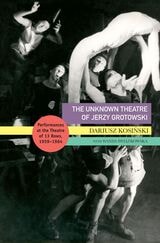
The Unknown Theatre of Jerzy Grotowski
Performances in the Theatre of 13 Rows, 1959–1964Dariusz Kosinski and Wanda Swiatkowska
Seagull Books, 2025
Polish director Jerzy Grotowski (1933–1999) was an international leader in experimental theater who became famous in the late 1960s for his revolutionary approach to audience involvement. This volume is devoted to Grotowski’s early work—the performances he directed in the Theatre of 13 Rows (later Laboratory Theatre of 13 Rows) between 1959 and 1964 when the theater was working in the provincial town Opole in south-western Poland. Having decided to work in his own independent theater, Grotowski moved to Opole in September 1956 and developed his ideas with young, inexperienced actors, creating important performances that foreshadowed his renowned masterpieces of the late 1960s.
In The Unknown Theatre of Jerzy Grotowski, Dariusz Kosiński and Wanda Świątkowska reconstruct, analyze, and interpret each of the nine performances directed by Grotowski over this period: from Orpheus based onJean Cocteau (1959) to Hamlet Study based on Stanisław Wyspiański (1964). Previously mentioned mainly in the context of the development of Grotowski’s method, these performances dealt with important social, political, and philosophical problems of postwar and post-Holocaust Poland. Grotowski also used these performances to experiment with the forces and problems that he later tried to be discreet about, such as sexuality.
Revealing unnoticed and forgotten aspects of Grotowski’s theater, this landmark book presents new materials and perspectives that give fresh life to the study of a genius of twentieth-century theater.
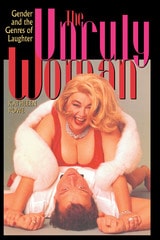
The Unruly Woman
Gender and the Genres of LaughterBy Kathleen Rowe
University of Texas Press, 1995
Unruly women have been making a spectacle of themselves in film and on television from Mae West to Roseanne Arnold. In this groundbreaking work, Kathleen Rowe explores how the unruly woman—often a voluptuous, noisy, joke-making rebel or "woman on top"—uses humor and excess to undermine patriarchal norms and authority.
At the heart of the book are detailed analyses of two highly successful unruly women—the comedian Roseanne Arnold and the Muppet Miss Piggy. Putting these two figures in a deeper cultural perspective, Rowe also examines the evolution of romantic film comedy from the classical Hollywood period to the present, showing how the comedic roles of actresses such as Katharine Hepburn, Barbara Stanwyck, and Marilyn Monroe offered an alternative, empowered image of women that differed sharply from the "suffering heroine" portrayed in classical melodramas.
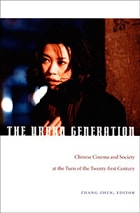
The Urban Generation
Chinese Cinema and Society at the Turn of the Twenty-First CenturyZhen Zhang, ed.
Duke University Press, 2007
The contributors analyze the historical and social conditions that gave rise to the Urban Generation, its aesthetic innovation, and its ambivalent relationship to China’s mainstream film industry and the international film market. Focusing attention on the Urban Generation’s sense of social urgency, its documentary impulses, and its representations of gender and sexuality, the contributors highlight the characters who populate this new urban cinema—ordinary and marginalized city dwellers including aimless bohemians, petty thieves, prostitutes, postal workers, taxi drivers, migrant workers—and the fact that these “floating urban subjects” are often portrayed by non-professional actors. Some essays concentrate on specific films (such as Shower and Suzhou River) or filmmakers (including Jia Zhangke and Zhang Yuan), while others survey broader concerns. Together the thirteen essays in this collection give a multifaceted account of a significant, ongoing cinematic and cultural phenomenon.
Contributors. Chris Berry, Yomi Braester, Shuqin Cui, Linda Chiu-han Lai, Charles Leary, Sheldon H. Lu, Jason McGrath, Augusta Palmer, Bérénice Reynaud, Yaohua Shi, Yingjin Zhang, Zhang Zhen, Xueping Zhong
The Value Gap
Female-Driven Films from Pitch to PremiereCourtney Brannon Donoghue
University of Texas Press, 2023
How female directors, producers, and writers navigate the challenges and barriers facing female-driven projects at each stage of filmmaking in contemporary Hollywood.
Conversations about gender equity in the workplace accelerated in the 2010s, with debates inside Hollywood specifically pointing to broader systemic problems of employment disparities and exploitative labor practices. Compounded by the devastating #MeToo revelations, these problems led to a wide-scale call for change. The Value Gap traces female-driven filmmaking across development, financing, production, film festivals, marketing, and distribution, examining the realities facing women working in the industry during this transformative moment. Drawing from five years of extensive interviews with female producers, writers, and directors at different stages of their careers, Courtney Brannon Donoghue examines how Hollywood business cultures “value” female-driven projects as risky or not bankable. Industry claims that “movies targeting female audiences don’t make money” or “women can’t direct big-budget blockbusters” have long circulated to rationalize systemic gender inequities and have served to normalize studios prioritizing the white male–driven status quo. Through a critical media industry studies lens, The Value Gap challenges this pervasive logic with firsthand accounts of women actively navigating the male-dominated and conglomerate-owned industrial landscape.

The Very Thought of Herbert Blau
Clark Lunberry and Joseph Roach, Editors
University of Michigan Press, 2018
Herbert Blau (1926–2013) was the most influential theater theorist, practitioner, and educator of his generation. He was the leading American interpreter of the works of Samuel Beckett and as a director was instrumental in introducing works of the European avant-garde to American audiences. He was also one of the most far-reaching and thoughtful American theorists of theater and performance, and author of influential books such as The Dubious Spectacle, The Audience, and Take Up the Bodies: Theater at the Vanishing Point.
In The Very Thought of Herbert Blau, distinguished artists and scholars offer reflections on what made Blau's contributions so visionary, transformative, and unforgettable, and why his ideas endure in both seminar rooms and studios. The contributors, including Lee Breuer, Sue-Ellen Case, Gautam Dasgupta, Elin Diamond, S. E. Gontarski, Linda Gregerson, Martin Harries, Bill Irwin, Julia Jarcho, Anthony Kubiak, Daniel Listoe, Clark Lunberry, Bonnie Marranca, Peggy Phelan, Joseph Roach, Richard Schechner, Morton Subotnick, Julie Taymor, and Gregory Whitehead, respond to Blau's fierce and polymorphous intellect, his relentless drive and determination, and his audacity, his authority, to think, as he frequently insisted, "at the very nerve ends of thought."
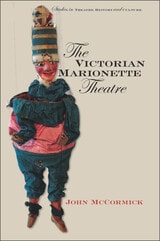
The Victorian Marionette Theatre
John Mccormick
University of Iowa Press, 2004
The Violate Man
Male/Male Rape in the American ImaginationAaron C. Thomas
Vanderbilt University Press, 2025
From the punchline of bro comedies to the vengeance arc of prison dramas, Thomas argues that male/male rape narratives are used by writers, filmmakers, and comedians to make sense of the changing landscape of American masculinity, and that these narratives have shifted widely since the 1960s, reflecting masculinity’s varying anxieties and concerns.
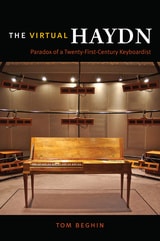
The Virtual Haydn
Paradox of a Twenty-First-Century KeyboardistTom Beghin
University of Chicago Press, 2015
With The Virtual Haydn, Tom Beghin—himself a professional keyboard player—delves deeply into eighteenth-century history and musicology to help us hear a properly complex Haydn. Unusually for a scholarly work, the book is presented in the first person, as Beghin takes us on what is clearly a very personal journey into the past. When a discussion of a group of Viennese sonatas, for example, leads him into an analysis of the contemporary interest in physiognomy, Beghin applies what he learns about the role of facial expressions during his own performance of the music. Elsewhere, he analyzes gesture and gender, changes in keyboard technology, and the role of amateurs in eighteenth-century musical culture.
The resulting book is itself a fascinating, bravura performance, one that partakes of eighteenth-century idiosyncrasy while drawing on a panoply of twenty-first-century knowledge.

The Visible Wall
Jews and Other Ethnic Outsiders in Swedish FilmRochelle Wright
Southern Illinois University Press, 1998
Rochelle Wright provides the first historical overview and analysis of the manner in which Jews and other ethnic outsiders have been depicted in Swedish film from 1930 to the present.
Focusing on films produced in Sweden for primarily Swedish audiences, Wright analyzes how the portrayal of the relatively small Jewish minority has evolved over the years. She compares the images of Jews in Swedish film with those of other ethnic subcultures: long-term resident communities such as tattare (‘travelers’, an indigenous pariah group often confused with gypsies), Finns, the Sami, and recent immigrant populations such as Greeks, Italians, Turks, and Yugoslavians.
Wright’s cross-disciplinary approach to interrelated issues of ethnicity and national identity enables her to take advantage of the methodologies of historians and sociologists as well as those of literary and film critics. She bases her study on a detailed analysis of the films, but, by way of comparison, she examines filmscripts and literary sources. She also consults contemporary reviews, interviews with actors and directors, and biographies and memoirs as well as critical discussion among film historians.
Wright confronts important—and exceedingly difficult—social questions. She deals head-on with xenophobia, anti-Semitism, immigration, assimilation, ethnicity, multiculturalism, and the national self-image of Swedes as reflected in their cinema. She also analyzes the manner in which Swedish film represents the persecution of Jews in Nazi-dominated Europe.
The Visual Guillotine
The Cinematic Cut and Politics in Latin AmericaThomas Matusiak
University of Minnesota Press, 2026
The violence of the cinematic cut in twentieth-century Latin American film
Splice, montage, close-up: modern cinema routinely presents bodies in pieces. Not unlike the guillotine, argues Thomas Matusiak, these techniques have served both overt and symbolic political ends as they accomplish and project the efficient production of severed bodies. In The Visual Guillotine, Matusiak traces the use of cinematic tools of dismemberment in twentieth-century Latin American film to theorize the symbolic and material violence of the cut.
A robust genealogy of Latin American cinematic politics, The Visual Guillotine encompasses national filmmaking traditions; radical and reactionary political registers; and the proliferated aesthetics of narrative, documentary, experimental, and expanded cinema through an innovative critical viewing practice. From the national cinemas of the 1930s to the decapitation videos produced in the Mexican narco-conflict and beyond, Matusiak shows how the cinematic cut has been employed to inspire terror as well as invoke and critique a range of political programs.
A refreshing dialogue between film theory and Latin American cultural studies, The Visual Guillotine offers a new way for film to conceptualize politics. In our present political moment, with rapidly generated and circulated visual media central to a resurgent leftist-populist battle against oligarchy and authoritarianism, this book calls for readers to reassess their viewing position when confronted with violent imagery.
Retail e-book files for this title are screen-reader friendly with images accompanied by short alt text and/or extended descriptions.
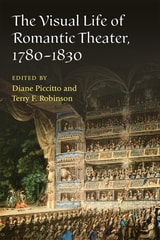
The Visual Life of Romantic Theater, 1780-1830
Edited by Diane Piccitto and Terry F. Robinson
University of Michigan Press, 2023
The Visual Life of Romantic Theater examines the dynamism and vibrancy of stage spectacle and its impact in an era of momentous social upheaval and aesthetic change. Situating theatrical production as key to understanding visuality ca. 1780-1830, this book places the stage front and center in Romantic scholarship—a field in a period long defined by its focus on poetry—by reenvisioning traditional approaches to artistic and social production. How, it asks, did dramaturgy and stagecraft influence aesthetic and sociopolitical concerns? How does a focus on visuality expand our understanding of the historical experience of theatergoing? In what ways did stage performance converge with visual culture beyond the theater? How did extra-theatrical genres engage with theatrical sight and spectacle? Finally, how does a focus on dramatic vision change the way we conceive of Romanticism itself? The volume’s essays by emerging and established scholars provide exciting and suggestive answers to these questions, along with a more capacious conception of Romantic theater as a locus of visual culture that reached well beyond playhouse walls.
The Visual Turn
Classical Film Theory and Art HistoryDalle Vacche, Angela
Rutgers University Press, 2002
The Visual Turn is a cutting-edge dialogue between art historians and film theorists from the silent period to the aftermath of World War II. Its aim is to broaden the horizons of film studies, while making students of art history more comfortable when they approach the key texts of classical film theory.
Through pairings of articles, The Visual Turn demonstrates that an implicit dialogue between art historians and film specialists has enriched both fields for decades. By combining original essays, reprints, and translations from French and Italian, The Visual Turn makes this little-known dialogue between two disciplines speak about such rich issues as: iconophobia, iconophilia, and iconoclasm; haptic and optical images; cognitivism and aesthetics; visual form, history, and technology.
The Vital Lie
Reality and Illusion in Modern DramaAnthony S. Abbott
University of Alabama Press, 1988
The Vital Lie: Reality and Illusion in Modern Drama is a sweeping inquiry into the stories people tell themselves in order to endure, survive, and belong. Moving from Ibsen and Strindberg to Beckett, Pinter, and beyond, Anthony S. Abbott traces the uneasy traffic between actuality and self-invention that animates modern theater. Rather than offering a simple survey, he uncovers a recurring dramatic predicament: the cognitive dissonance that afflict people when the beliefs they hold about themselves collide with reality.
Anthony S. Abbott writes with the erudite observation of a critic and the curiosity of a participant. His book explores illusion, meaning, and human resilience, a perspective that lends unusual urgency to its readings of canonical playwrights. Abbott's scholarship is expansive without becoming academic in the pejorative sense; his arguments remain animated by large questions about purpose, dignity, and the imaginative structures that sustain ordinary lives.
Ideal for theater devotees, literary historians, students of modernism, philosophy-minded readers, directors, dramaturgs, and anyone fascinated by self-deception, mythmaking, and identity. Admirers of intellectual biography, cultural criticism, existential inquiry, and ambitious cross-author interpretation will find this volume especially rewarding. Those who relish fresh angles on familiar classics will discover a study that is probing, elegant, and unexpectedly memorable.
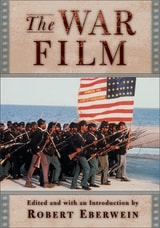
The War Film
Eberwein, Robert
Rutgers University Press, 2004
War has had a powerful impact on the film industry. But it is not only wars that affect films; films influence war-time behavior and incisively shape the way we think about the battles that have been waged.
In The War Film, Robert Eberwein brings together essays by scholars using a variety of critical approaches to explore this enduringly popular film genre. Contributors examine the narrative and aesthetic elements of war films from four perspectives: consideration of generic conventions in works such as All Quiet on the Western Front, Bataan, and The Thin Red Line; treatment of race in various war films, including Glory, Home of the Brave, Platoon,and Hamburger Hill; aspects of gender, masculinity and feminism in The Red Badge of Courage, Rambo, Dogfight, and Courage under Fire; and analysis of the impact of contemporary history on the production and reception of films such as The Life and Times of Rosie the Riveter, Saving Private Ryan, and We Were Soldiers.
Drawing attention to the dynamic interrelationships among politics, nationalism, history, gender, and film, this comprehensive anthology is bound to become a classroom favorite.

The Way of Nature and the Way of Grace
Philosophical Footholds on Terrence Malick's "The Tree of Life"Jonathan Beever and Vernon W. Cisney
Northwestern University Press, 2016
The White Savior Film
Content, Critics, and ConsumptionMatthew Hughey
Temple University Press, 2014
In The White Savior Film, Matthew Hughey provides a cogent, multipronged analysis of this subgenre of films to investigate the underpinnings of the Hollywood-constructed images of idealized (and often idealistic) white Americans.
Hughey considers the production, distribution, and consumption of white savior films to show how the dominant messages of sacrifice, suffering, and redemption are perceived by both critics and audiences. Examining the content of fifty films, nearly 3,000 reviews, and interviews with viewer focus groups, he accounts for the popularity of this subgenre and its portrayal of "racial progress."
The White Savior Film shows how we as a society create and understand these films and how they reflect the political and cultural contexts of their time.
The Whiteness Between Us
Early Modern Playbooks of Racial TriangulationNoémie Ndiaye
University of Chicago Press, 2026
A theorization of the representational juxtapositions, frictions, and connections between Black people and other non-white people in early modern European theatre.
Over the course of the seventeenth century, European drama was an important tool for whiteness to imagine itself at the top of an aspirational structure of power relations. Indeed, that structure could only be aspirational at a time when Europeans were profoundly divided along easily racializable religious and ethnic lines, and when their sovereignty was threatened by the Ottoman empire. It was to strengthen this emerging consciousness of racial whiteness, Noémie Ndiaye argues, that European drama engaged in a form of racial triangulation, fitting Muslim, Jewish, Indigenous, Romani, and Asian characters into a spurious black/white racial binary.
Focusing on English, Spanish, and French drama from 1580 to 1715, The Whiteness Between Us shows how plays became a crucial tool to position not only black people but any non-white community in the new racial architecture that white supremacy sought to build. Ndiaye reveals the stage of this era as a space for wish fulfillment, enabling participants to imagine and work towards a whiter future.
The early modern playbooks of racial triangulation that Ndiaye brings to light can and have been reactivated for white supremacist purposes in our own day and age. Partly in response to the contemporary threat of white nationalism, scholars and students have sought to unearth the early modern roots of racial whiteness and white supremacy. Ndiaye’s book participates in this wave of interest, offering several innovations, including its capacious transnational claims.
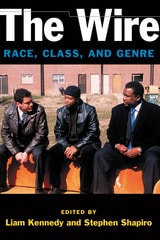
The Wire
Race, Class, and GenreEdited by Liam Kennedy and Stephen Shapiro
University of Michigan Press, 2012
Few other television series have received as much academic, media, and fan celebration as The Wire, which has been called the best dramatic series ever created. The show depicts the conflict between Baltimore's police and criminals to raise a warning about race; drug war policing; deindustrialization; and the inadequacies of America’s civic, educational, and political institutions. The show's unflinching explorations of a city in crisis and its nuanced portrayals of those affected make it a show all about race and class in America.
The essays in this volume offer a range of astute critical responses to this television phenomenon. More consistently than any other crime show of its generation, The Wire challenges viewers' perceptions of the racialization of urban space and the media conventions that support this. The Wire reminds us of just how remarkably restricted the grammar of race is on American television and related media, and of the normative codings of race---as identity, as landscape---across urban narratives, from documentary to entertainment media.
The Wise Body
Conversations with Experienced DancersJacky Lansley and Fergus Early
Intellect Books, 2011
The Witch's Flight
The Cinematic, the Black Femme, and the Image of Common SenseKara Keeling
Duke University Press, 2007
Keeling draws on the thought of Frantz Fanon, Angela Davis, Karl Marx, Antonio Gramsci, and others in addition to Deleuze. She pursues the elusive figure of the black femme through Haile Gerima’s film Sankofa, images of women in the Black Panther Party, Pam Grier’s roles in the blaxploitation films of the early 1970s, F. Gary Gray’s film Set It Off, and Kasi Lemmons’s Eve’s Bayou.
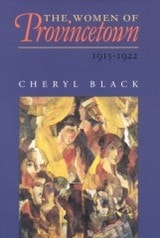
The Women of Provincetown, 1915–1922
Cheryl Black
University of Alabama Press, 2001
In this fascinating work, Cheryl Black reveals that, in addition to its role in developing an American tradition of non-commercial theatre, Provincetown has another, largely unacknowledged claim to fame as one of the first theatre companies in America in which women achieved prominence in every area of operation. At a time when women playwrights were rare, women directors rarer, and women scenic designers unheard of, Provincetown’s female members excelled in all of these roles.
In addition to the well-known playwright Susan Gaspell, the company’s female membership included luminaries such poets Edna St. Vincent Millay, Mina Loy, and Djuna Barnes; journalists Louise Bryant and Mary Heaton Vorce; novelists Neith Boyce and Evelyn Scott; and painter Marguerite Zorach. Illuminating a fascinating chapter in the history of one of the world's most picturesque and beloved artist colonies, The Women of Provincetown is an engaging work of social history, offering new insights into the relationship between gender and theatre. This work includes 40 images of the key artists in the book.
The World According to Hollywood, 1918–1939
Ruth Vasey
University of Wisconsin Press, 1997
Ruth Vasey shows how the Motion Picture Producers and Distributors of America (MPPDA), by implementing such strategies as the industry’s Production Code, ensured that domestic and foreign distribution took place with a minimum of censorship or consumer resistance. Drawing upon MPPDA archives, studio records, trade papers, and the records of the U.S. Department of Commerce, Vasey reveals the ways the MPPDA influenced the representation of sex, violence, religion, foreign and domestic politics, corporate capitalism, ethnic minorities, and the conduct of professional classes.
Vasey is the first scholar to document fully how the demands of the global market frequently dictated film content and created the movies’ homogenized picture of social and racial characteristics, in both urban America and the world beyond. She uncovers telling evidence of scripts and treatments that were abandoned before or during the course of production because of content that might offend foreign markets. Among the fascinating points she discusses is Hollywood’s frequent use of imaginary countries as story locales, resulting from a deliberate business policy of avoiding realistic depictions of actual countries. She argues that foreign governments perceived movies not just as articles of trade, but as potential commercial and political emissaries of the United States. Just as Hollywood had to persuade its domestic audiences that its products were morally sound, its domination of world markets depended on its ability to create a culturally and politically acceptable product.
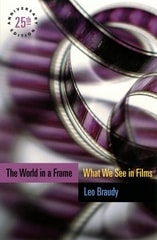
The World in a Frame
What We See in FilmsLeo Braudy
University of Chicago Press, 1976

The World in a Frame
What We See in Films, 25th Anniversary EditionLeo Braudy
University of Chicago Press, 2002
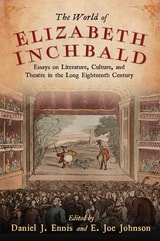
The World of Elizabeth Inchbald
Essays on Literature, Culture, and Theatre in the Long Eighteenth CenturyDaniel J. Ennis
University of Delaware Press, 2022
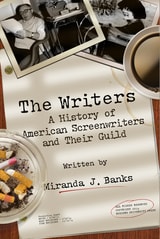
The Writers
A History of American Screenwriters and Their GuildBanks, Miranda J
Rutgers University Press, 2016
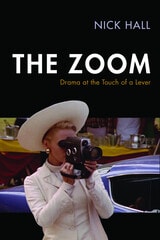
The Zoom
Drama at the Touch of a LeverHall, Nick
Rutgers University Press, 2018
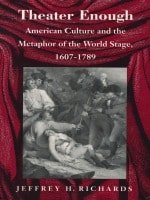
Theater Enough
American Culture and the Metaphor of the World Stage, 1607–1789Jeffrey H. Richards
Duke University Press, 1991
The rhetoric, or discourse, of early American theater emerged out of the figures of speech that permeated the colonists’ lives and literary productions. Jeffrey H. Richards examines a variety of texts—histories, diaries, letters, journals, poems, sermons, political tracts, trial transcripts, orations, and plays—and looks at the writings of such authors as John Winthrop and Mercy Otis Warren. Richards places the American usage of theatrum mundi—the world depicted as a stage—in the context of classical and Renaissance traditions, but shows how the trope functions in American rhetoric as a register for religious, political, and historical attitudes.
Theater Game File
Viola Spolin
Northwestern University Press, 1989
Features include:
Over 200 color-coded cards
Suggestions for focusing, side-coaching, and evaluating games
Games for students of all ages and levels of experience
Handbook included
Theater Games for Rehearsal
A Director's HandbookViola Spolin
Northwestern University Press, 1985
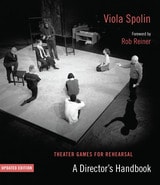
Theater Games for Rehearsal
A Director's Handbook, Updated EditionViola Spolin with a foreword by Rob Reiner
Northwestern University Press, 2010
An updated edition of a key reference text by “the high priestess of improvisational theater”
A major force in the development of American theater, Viola Spolin devised pedagogical techniques that have influenced and inspired legions of actors, improvisers, and directors. Theater Games for Rehearsal: A Director's Handbook, first published in 1985, is a practical application of Spolin's famous method that guides directors and their companies step-by-step through all phases of the rehearsal period.
In Theater Games for Rehearsal, Spolin shows in easy-to-follow detail how her techniques can be used for a variety of theater needs, from selecting performance material, casting, and building a harmonious company to warming up actors, creating stage space, and overcoming opening-night jitters. This new edition, edited by Carol Bleackley Sills, incorporates Spolin's wished-for updates: four important exercises have been added, and instructions presenting her improvisational approach have been clarified throughout. Sidecoaching instructions and game evaluations are boxed and highlighted for on-the-spot reading by the director during rehearsal.
With these additions and improvements, Theater Games for Rehearsal: A Director's Handbook brings Spolin's ideas to a new generation with greater accessibility and excitement. Featuring a new foreword by renowned film director Rob Reiner, the updated edition is mandatory for any theater bookshelf.
Theater Games for the Classroom
A Teacher's HandbookViola Spolin
Northwestern University Press, 1986
The most comprehensive theater instruction guide for all types of students
This best-selling book by Viola Spolin offers the most comprehensive theater instruction for all types of students, from small children to young adults. It includes over 130 theater games, plus exercises and instructional strategies. First developed by Spolin, the originator of modern improvisational theater techniques, these games have been tried and tested for over fifty years.
Theater Games for the Lone Actor
A HandbookViola Spolin
Northwestern University Press, 2001
Spolin's improvisational techniques changed the nature and practice of modern theater. Her work has inspired actors, directors, teachers, and writers in theater, television, and film. Her techniques have also influenced the fields of education, mental health, social work, and psychology.
Theater Historiography
Critical InterventionsHenry Bial and Scott Magelssen, editors
University of Michigan Press, 2010
Theater after Film
Martin Harries
University of Chicago Press, 2025
In Theater after Film, Martin Harries argues that after 1945, as cinema became omnipresent in popular culture, theater had to respond to cinema’s hegemony. Theater couldn’t break that hegemony, but it could provide a zone of contestation. Theater made film’s domination of the cultural field visible through hyperbole, refusal, and other strategies, thereby unsettling its power. Postwar theatrical experiment, Harries shows, often channeled and represented film’s mass cultural force, while knowing that it could never possess that force. Throughout the book, Harries brings critical theory into contact with theories of performance. Although Theater after Film treats the theatrical work of many figures, its central focus falls on Tennessee Williams, Samuel Beckett, and Adrienne Kennedy. Discussions of these dramatists consider their ways of addressing spectators, the politics of race between film and theater, and the place of the theatrical apparatus. Readings of these central figures in twentieth-century theater exemplify the book’s historical engagement with the media surround that drama confronted. This confrontation, Harries shows, was central to the development of some of the most continually compelling postwar drama.

Theater and Democracy in an Era of Immersion
James R. Ball III
University of Michigan Press, 2027
From theater to virtual reality, we find ourselves making sense of imagined worlds that surround us. Our experience of democracy in the twenty-first century is similar: we are spectators to politics, immersed in 24-hour news, joining candidates on the campaign trail, reflecting on civic life and national memory in spaces of culture. Theater and Democracy in an Era of Immersion draws on extensive interviews with artists to develop a theory of immersive spectatorship as political action, arguing that through our experience of art, we can cultivate practices to navigate the disorientations and disenchantments of our democracy. This theory complements and complicates debates over the democratic promise of participatory performance by theorizing a mode of spectatorship that cuts across media, disciplines, genres, and everyday experiences.
James R. Ball III investigates phenomena that compose our experience of democracy, including campaign trail debates and rallies; electoral microtargeting; misinformation, disinformation, and conspiracy theory; sonic weapons and psychic spying; political assassination; racist state violence; public commemoration; AI in government; and the democratic work of mourning. Theater and Democracy in an Era of Immersion provides a unique performance studies intervention into political theory, indicating new avenues for research into political spectatorship and the theatricality of deliberative and ocular democracy.
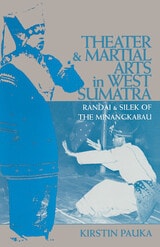
Theater and Martial Arts in West Sumatra
Randai and Silek of the MinangkabauKirstin Pauka
Ohio University Press, 1998
Randai, the popular folk theater tradition of the Minangkabau ethnic group in West Sumatra, has evolved to include influences of martial arts, storytelling, and folk songs. Theater and Martial Arts in West Sumatra describes the origin, development, and cultural background of randai and highlights two recent developments: the emergence of female performers and modern staging techniques.
This book also explores the indigenous martial arts form silek, a vital part of randai today. The strong presence of silek is illustrated in the martial focus of the stories that are told through randai, in its movement repertoire, and even in its costumes and musical accompaniment. As Kirstin Pauka shows, randai, firmly rooted in silek and Minangkabau tradition, is an intriguing mirror of the Minangkabau culture.

Theater and Social Change, Volume 31
Alisa Solomon, ed.
Duke University Press, 0
Theater and Social Change not only tracks the historical evolution of political theater but also explores the current state and future prospects of different modes, including agit-prop, demonstrations, solo performance, Augusto Boal’s Theater of the Oppressed, and community-based production. With such notable contributors as Anna Deavere Smith, Jonathan Kalb, Holly Hughes, and Tony Kushner, the issue offers a diverse assemblage of personal statements, conversations, photographs, interviews, and performance text.
Contributors include: Reverend Billy, Jan Cohen-Cruz, Arlene Goldbard, Sharon Green, Lani Guinier, Holly Hughes, Jonathan Kalb, Tony Kushner, Judith Malina, Robbie McCauley, John O'Neal, Claudia Orenstein, Bill Rauch, Julie Salverson, Anna Deavere Smith, Alisa Solomon, Roberta Uno
Theater and Society in the Classical World
Ruth Scodel, Editor
University of Michigan Press, 1993
Theater and Violence, Volume 35
Tom Sellar, ed.
Duke University Press, 0
In Theater and Violence, through interviews, play excerpts, and full-length plays—including the first American publication of two major German playwrights and directors—theater artists offer their own narratives for humankind’s violent psychologies. One full-length play, Falk Richter’s Seven Seconds (In God We Trust), probes the mind of an American pilot moments before he releases a bomb on a city below. Another, René Pollesch’s 24 Hours Are Not a Day, humorously explores the ironies and pathologies of globalization after September 11. The issue also includes a commentary on the National Endowment for the Arts’ Shakespeare presentations for the U.S. military; interviews with Russian theater artists on the first anniversary of the Chechen rebels’ siege of a Moscow theater; and Jonathan Kalb’s powerful adaptation of Heiner Müller’s Mauser, set in Tikrit.
Contributors. Josh Fox, Gitta Honegger, Jonathan Kalb, Anna Kohler, James Leverett, Mark Lord, Marlene Norst, René Pollesch, Falk Richter, Yana Ross, Scott Saul, Tom Sellar, Catherine Sheehy, Robert Woodruff
Theater as Data
Computational Journeys into Theater ResearchMiguel Escobar Varela
University of Michigan Press, 2021