Results by title
28250 books match the query 'History' and 6388 start with t
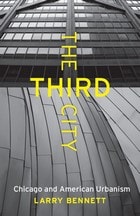
The Third City
Chicago and American UrbanismLarry Bennett
University of Chicago Press, 2010
Our traditional image of Chicago—as a gritty metropolis carved into ethnically defined enclaves where the game of machine politics overshadows its ends—is such a powerful shaper of the city’s identity that many of its closest observers fail to notice that a new Chicago has emerged over the past two decades. Larry Bennett here tackles some of our more commonly held ideas about the Windy City—inherited from such icons as Theodore Dreiser, Carl Sandburg, Daniel Burnham, Robert Park, Sara Paretsky, and Mike Royko—with the goal of better understanding Chicago as it is now: the third city.
Bennett calls contemporary Chicago the third city to distinguish it from its two predecessors: the first city, a sprawling industrial center whose historical arc ran from the Civil War to the Great Depression; and the second city, the Rustbelt exemplar of the period from around 1950 to 1990. The third city features a dramatically revitalized urban core, a shifting population mix that includes new immigrant streams, and a growing number of middle-class professionals working in new economy sectors. It is also a city utterly transformed by the top-to-bottom reconstruction of public housing developments and the ambitious provision of public works like Millennium Park. It is, according to Bennett, a work in progress spearheaded by Richard M. Daley, a self-consciously innovative mayor whose strategy of neighborhood revitalization and urban renewal is a prototype of city governance for the twenty-first century. The Third City ultimately contends that to understand Chicago under Daley’s charge is to understand what metropolitan life across North America may well look like in the coming decades.
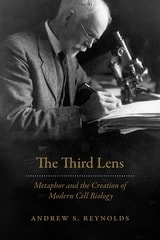
The Third Lens
Metaphor and the Creation of Modern Cell BiologyAndrew S. Reynolds
University of Chicago Press, 2018
Reynolds here investigates the role of metaphors in the creation of scientific concepts, theories, and explanations, using cell theory as his primary case study. He explores the history of key metaphors that have informed the field and the experimental, philosophical, and social circumstances under which they have emerged, risen in popularity, and in some cases faded from view. How we think of cells—as chambers, organisms, or even machines—makes a difference to scientific practice. Consequently, an accurate picture of how scientific knowledge is made requires us to understand how the metaphors scientists use—and the social values that often surreptitiously accompany them—influence our understanding of the world, and, ultimately, of ourselves.
The influence of metaphor isn’t limited to how we think about cells or proteins: in some cases they can even lead to real material change in the very nature of the thing in question, as scientists use technology to alter the reality to fit the metaphor. Drawing out the implications of science’s reliance upon metaphor, The Third Lens will be of interest to anyone working in the areas of history and philosophy of science, science studies, cell and molecular biology, science education and communication, and metaphor in general.
The Third Sector
Community Organizations, NGOs, and NonprofitsMeghan Elizabeth Kallman and Terry Nichols Clark
University of Illinois Press, 2019
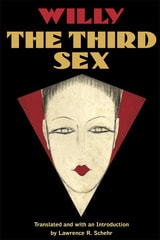
The Third Sex
Willy. Translated and with an Introduction by Lawrence R. Schehr
University of Illinois Press, 2007
Thirty-two years before Simone de Beauvoir's classic The Second Sex, popular French novelist Willy published The Third Sex, a vivid description of the world of European homosexuals in France, Italy, and Germany during the late 1920s. Stepping directly into the heart of gay men's culture, Willy follows homosexual nightlife into music halls, nightclubs, casinos, bars, and saunas. While he finds plenty of drug and alcohol abuse, he also discovers homosexual publishers, scientific societies, group rivalries, and opinions--both medical and political--about the nature of homosexuality itself. Lawrence R. Schehr's introduction provides context and translator's notes for this first-ever English edition.
The Thirty-Year War
A History of Detroit's Streetcars, 1892–1922Neil J. Lehto
Michigan State University Press, 2017
The Thirty-first of March
An Intimate Portrait of Lyndon JohnsonHorace Busby, with a Preface by Scott Busby and an Introduction by Hugh Sidey
University of Texas Press, 2023
An intimate retelling of Lyndon B. Johnson’s politics and presidency by one of his closest advisors.
Horace Busby was one of LBJ’s most trusted advisors; their close working and personal relationship spanned twenty years. In The Thirty-First of March he offers an indelible portrait of a president and a presidency at a time of crisis. From the aftereffects of the Kennedy assassination, when Busby was asked by the newly sworn-in president to sit by his bedside during his first troubled nights in office, to the concerns that defined the Great Society—civil rights, the economy, social legislation, housing, and the Vietnam War—Busby not only articulated and refined Johnson's political thinking, he also helped shape the most ambitious, far-reaching legislative agenda since FDR's New Deal.
Here is Johnson the politician, Johnson the schemer, Johnson who advised against JFK’s choice of an open limousine that fateful day in Dallas, and Johnson the father, sickened by the deaths of young men fighting and dying in Vietnam on his orders. The Thirty-first of March is a rare glimpse into the inner sanctum of Johnson's presidency, as seen through the eyes of one of the people who understood him best.
The Thomistic Response to the Nouvelle Theologie
Concerning the Truth of Dogma and the Nature of TheologyJon Kirwan
Catholic University of America Press, 2023
The Thoughtbook of F. Scott Fitzgerald
A Secret Boyhood DiaryF. Scott Fitzgerald
University of Minnesota Press, 2013
When F. Scott Fitzgerald was fourteen and living in the Crocus Hill neighborhood of St. Paul, he began keeping a short diary of his exploits among his friends, friendly rivals, and crushes. He gave the journal a title page—Thoughtbook of Francis Scott Key Fitzgerald of St. Paul Minn. U.S.A.—and kept it securely locked in a box under his bed. He would later use The Thoughtbook as the basis for “The Book of Scandal” in his Basil Lee Duke stories, and brief sections were copied over the years for use by scholars and even published in Life magazine.“Are you going to the Ordways’? the Herseys’? the Schultzes’?” Here, for the first time, is a complete transcription of this charming, twenty-seven-page diary highlighting Fitzgerald’s escapades among the children of some of St. Paul’s most influential families—models for the families described in The Great Gatsby. Presented in a simple format for both scholars and general readers alike, The Thoughtbook of F. Scott Fitzgerald includes a new introduction by Dave Page that covers the history and provenance of the diary, its place and meaning in Fitzgerald’s literary development, and its revelations about his life and writing process.
One of the earliest known works by F. Scott Fitzgerald, The Thoughtbook provides a unique glimpse of Fitzgerald as a young boy and his social circle as they played among the grand homes of Summit Avenue, making up games, starting secret societies, competing with rivals, and (at all times) staying up-to-date on who exactly is vying for whose attention.
The Thousand Dollar Dinner
America's First Great Cookery ChallengeBecky Libourel Diamond
Westholme Publishing, 2015
In 1851, fifteen wealthy New Yorkers wanted to show a group of Philadelphia friends just how impressive a meal could be and took them to Delmonico’s, New York’s finest restaurant. They asked Lorenzo Delmonico to “astonish our Quaker City friends with the sumptuousness of our feast,” and assured him that money was no object, as the honor of New York was at stake. They were treated to a magnificent banquet, enjoyed by all. However, not to be outdone, the Philadelphia men invited the New Yorkers to a meal prepared by James W. Parkinson in their city. In what became known as the “Thousand Dollar Dinner,” Parkinson successfully rose to the challenge, creating a seventeen-course extravaganza featuring fresh salmon, baked rockfish, braised pigeon, turtle steaks, spring lamb, out-of-season fruits and vegetables, and desserts, all paired with rare wines and liquors. Midway through the twelve-hour meal, the New Yorkers declared Philadelphia the winner of their competition, and at several times stood in ovation to acknowledge the chef ’s mastery. In The Thousand Dollar Dinner: America’s First Great Cookery Challenge, research historian Becky Libourel Diamond presents the entire seventeen-course meal, course by course, explaining each dish and its history. A gastronomic turning point, Parkinson’s luxurious meal helped launch the era of grand banquets of the gilded age and established a new level of American culinary arts to rival those of Europe.

The Thousand-Year Flood
The Ohio-Mississippi Disaster of 1937David Welky
University of Chicago Press, 2011
In the early days of 1937, the Ohio River, swollen by heavy winter rains, began rising. And rising. And rising. By the time the waters crested, the Ohio and Mississippi had climbed to record heights. Nearly four hundred people had died, while a million more had run from their homes. The deluge caused more than half a billion dollars of damage at a time when the Great Depression still battered the nation.
Timed to coincide with the flood's seventy-fifth anniversary, The Thousand-Year Flood is the first comprehensive history of one of the most destructive disasters in American history. David Welky first shows how decades of settlement put Ohio valley farms and towns at risk and how politicians and planners repeatedly ignored the dangers. Then he tells the gripping story of the river's inexorable rise: residents fled to refugee camps and higher ground, towns imposed martial law, prisoners rioted, Red Cross nurses endured terrifying conditions, and FDR dispatched thousands of relief workers. In a landscape fraught with dangers—from unmoored gas tanks that became floating bombs to powerful currents of filthy floodwaters that swept away whole towns—people hastily raised sandbag barricades, piled into overloaded rowboats, and marveled at water that stretched as far as the eye could see. In the flood's aftermath, Welky explains, New Deal reformers, utopian dreamers, and hard-pressed locals restructured not only the flood-stricken valleys, but also the nation's relationship with its waterways, changes that continue to affect life along the rivers to this day.
A striking narrative of danger and adventure—and the mix of heroism and generosity, greed and pettiness that always accompany disaster—The Thousand-Year Flood breathes new life into a fascinating yet little-remembered American story.

The Threat of Liberation
Imperialism and Revolution in ZanzibarAmrit Wilson
Pluto Press, 2013
The Threat of Liberation returns to the tumultuous years of the Cold War, when, in a striking parallel with today, imperialist powers were seeking to institute ‘regime change’ and install pliant governments.
Using iconic photographs, declassified US and British documents, and in-depth interviews, Amrit Wilson examines the role of the Umma Party of Zanzibar and its leader, the visionary Marxist revolutionary, Abdulrahman Mohamed Babu. Drawing parallels between US paranoia about Chinese Communist influence in the 1960s with contemporary fears about Chinese influence, it looks at the new race for Africa’s resources, the creation of AFRICOM and how East African politicians have bolstered US control. The book also draws on US cables released by Wikileaks showing Zanzibar's role in the ‘War on Terror’ in Eastern Africa today.
The Threat of Liberation reflects on the history of a party which confronted imperialism and built unity across ethnic divisions, and considers the contemporary relevance of such strategies.
The Three Ages of Government
From the Person, to the Group, to the WorldJos C.N. Raadschelders
University of Michigan Press, 2020

The Three Axial Ages
Moral, Material, MentalTorpey, John
Rutgers University Press, 2017
Torpey’s argument advances the idea that there are in fact three “Axial Ages,” instead of one original Axial Age and several subsequent, smaller developments. Each of the three ages contributed decisively to how humanity lives, and the difficulties it faces. The earliest, or original, Axial Age was a moral one; the second was material, and revolved around the creation and use of physical objects; and the third is chiefly mental, and focused on the technological. While there are profound risks and challenges, Torpey shows how a worldview that combines the strengths of all three ages has the potential to usher in a period of exceptional human freedom and possibility.
The Three Orders
Feudal Society ImaginedGeorges Duby
University of Chicago Press, 1980
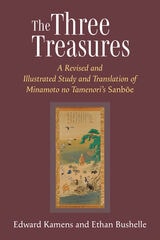
The Three Treasures
A Revised and Illustrated Study and Translation of Minamoto no Tamenori's SanboeEdward Kamens and Ethan Bushelle
University of Michigan Press, 2023
When the young Princess Sonshi became a Buddhist nun in the year 984, a scholar-official of the royal court was commissioned to create a guide to the Buddhist religion that would be accessible for her. He did so in the form of the illustrated works of fiction (monogatari) that appealed to women readers of her time and class. The text has survived in later manuscripts; the illustrations, if they ever existed, have not. This revised translation recreates Sonshi’s experience of receiving this multimedia presentation, with illustrations selected to help contemporary readers visualize its content and essays that provide context on the religious and cultural experience of the author. The Three Jewels is a unique document that opens a window onto the world of Buddhist religious experience—especially for women—in high classical Japan, the time of Sei Shōnagon’s Pillow Book and Murasaki Shikibu’s Tale of Genji.
The Three Worlds
Culture and World DevelopmentPeter Worsley
University of Chicago Press, 1984
Peter Worsley first considers existing theories of development, synthesizing the Marxist approach with that of social anthropologists and identifying culture—in the sense of a shared set of values—as the key element missing in more traditional approaches to the sociology of development. Worsley then examines successive forms of rural organization, develops a new definition of the urban poor, considers the relation of ethnicity and nationalism to social class and to each other, and, finally, discusses the nature of the three worlds implied in the term Third World.
The Ties That Bind
The Economic Relationships of Twelve Tebtunis FamiliesEdited by Ryosuke Takahashi
University of London Press, 2021
Tebtunis, an ancient village formerly located in lower Egypt, is one of the most enduring subjects of study from the civilization's Roman era. This fascinating volume details a dozen newly-discovered family papers that have survived from the second century AD. Belonging to families of various different classes, this unique documentation provides a rare opportunity to explore how local elites under Roman rule exploited their wealth in the countryside and interacted with its rural inhabitants.
Ties That Bind is the first book to investigate these family papers holistically, focusing on the economic activities in which the families engaged: land leases, loans in cash and kind, and the employment of managers and laborers on landed estates. This study also addresses strategy and decision-making among both elite families and villagers, the complexity of interfamilial relationships, and the implications of this social networking. This micro-historical study elucidates the diversity of socio-economic life in a village where no single family dominated.
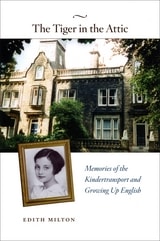
The Tiger in the Attic
Memories of the Kindertransport and Growing Up EnglishEdith Milton
University of Chicago Press, 2006
In this illuminating chronicle, Edith describes how she struggled to fit in and to conquer self-doubts about her German identity. Her realistic portrayal of the seemingly mundane yet historically momentous details of daily life during World War II slowly reveals istelf as a hopeful story about the kindness and generosity of strangers. She paints an account rich with colorful characters and intense relationships, uncanny close calls and unnerving bouts of luck that led to survival. Edith's journey between cultures continues with her final passage to America—yet another chapter in her life that required adjustment to a new world—allowing her, as she narrates it here, to visit her past as an exile all over again.
The Tiger in the Attic is a literary gem from a skilled fiction writer, the story of a thoughtful and observant child growing up against the backdrop of the most dangerous and decisive moment in modern European history. Offering a unique perspective on Holocaust studies, this book is both an exceptional and universal story of a young German-Jewish girl caught between worlds.
“Milton is brilliant at the small stroke . . . as well as broader ones.”—Alana Newhouse, New York Times Book Review

The Tillamook
A Created Forest Comes of AgeGail Wells
Oregon State University Press, 1999
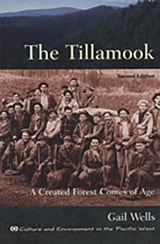
The Tillamook
A Created Forest Comes of Age: Second EditionGail Wells
Oregon State University Press, 2004
The Time of Liberty
Popular Political Culture in Oaxaca, 1750–1850Peter Guardino
Duke University Press, 2005
Guardino makes extensive use of archival materials, including judicial transcripts and newspaper accounts, to illuminate the dramatic contrasts between the local politics of the city and of the countryside, describing in detail how both sets of citizens spoke and acted politically. He contends that although it was the elites who initiated the national change to republicanism, the transition took root only when engaged by subalterns. He convincingly argues that various aspects of the new political paradigms found adherents among even some of the most isolated segments of society and that any subsequent failure of electoral politics was due to an absence of pluralism rather than a lack of widespread political participation.
The Timeline of Presidential Elections
How Campaigns Do (and Do Not) MatterRobert S. Erikson and Christopher Wlezien
University of Chicago Press, 2012
The Times Were Strange and Stirring
Methodist Preachers and the Crisis of EmancipationReginald F. Hildebrand
Duke University Press, 1995
Hildebrand explores the ideas and ideals of missionaries from several branches of Methodism—the African Methodist Episcopal Church, the Colored Methodist Episcopal Church, and the northern-based Methodist Episcopal Church—and the significant and highly charged battle waged between them over the challenge and meaning of freedom. He traces the various strategies and goals pursued by these competing visions and develops a typology of some of the ways in which emancipation was approached and understood.
Focusing on individual church leaders such as Lucius H. Holsey, Richard Harvey Cain, and Gilbert Haven, and with the benefit of extensive research in church archives and newspapers, Hildebrand tells the dramatic and sometimes moving story of how missionaries labored to organize their denominations in the black South, and of how they were overwhelmed at times by the struggles of freedom.
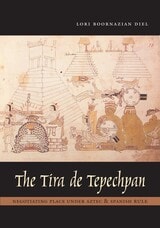
The Tira de Tepechpan
Negotiating Place under Aztec and Spanish RuleBy Lori Boornazian Diel
University of Texas Press, 2008
Created in Tepechpan, a relatively minor Aztec city in Central Mexico, the Tira de Tepechpan records important events in the city's history from 1298 through 1596. Most of the history is presented pictographically. A line of indigenous year signs runs the length of the Tira, with images above the line depicting events in Tepechpan and images below the line recording events at Tenochtitlan, capital of the Aztec empire and later the seat of Spanish rule. Written annotations amplify some of the images.
In this volume, which includes color plates of the entire Tira, Lori Boornazian Diel investigates the motives behind the creation and modification of the Tira in the second half of the sixteenth century. She identifies the Tira's different contributors and reconciles their various histories by asking why these painters and annotators, working at different times, recorded the events that they did. Comparing the Tira to other painted histories from Central Mexico, Diel demonstrates that the main goal of the Tira was to establish the antiquity, autonomy, and prestige of Tepechpan among the Central Mexican city-states that vied for power and status in the preconquest and colonial worlds. Offering the unique point of view of a minor city with grand ambitions, this study of the Tira reveals imperial strategy from the grassroots up, showing how a subject city negotiated its position under Aztec and Spanish control.
The Tizard Mission
The Top-Secret Operation That Changed the Course of World War IIStephen Phelps
Westholme Publishing, 2010
Alone Against Germany, Britain Gave America Its Most Astonishing Secrets
In August 1940, a German invasion of Britain looked inevitable. Luftwaffe bombers were pounding British cities, France had surrendered, and the Low Countries were under German control. Although sympathetic to Britain’s plight, the United States remained staunchly neutral. Unknown to the rest of the world, Britain’s brightest scientific and military minds had been working on futuristic technology for a decade, including radar and jet propulsion. While the great value of radar to locate and identify objects at long distance and at night or in bad weather was appreciated, at the time it was thought that practical radar required a room-sized device for generating an effective signal. Now, suddenly, British scientists had something extraordinary—the cavity magnetron, a generator hundreds of times more powerful than any other in use and small enough to be held in the hand. With the British economy and industry reeling from the war, Winston Churchill gambled on an unorthodox plan: a team of scientists and engineers would travel under cover to the United States and give the still-neutral Americans the best of Britain’s military secrets. It was hoped that in exchange the United States would provide financial and manufacturing support—which might even lead to their official entry into the war.
The Tizard Mission, named for its leader Sir Henry Tizard, steamed across the Atlantic carrying a suitcase-sized metal deed box. Designed to sink in the event the ship was torpedoed by a U-boat, the box contained details of the Whittle jet engine, research for an atomic bomb, and a precious cavity magnetron. The Americans proved to be astonished, receptive, and efficient: Bell Telephone produced the first thirty magnetrons in October 1940, and over a million by the end of the war. With this device, both warships and aircraft could carry war-winning radar. But Britain did not only give America military secrets, these same technologies would produce a fortune for postwar commercial industries, with the magnetron being the key component to the microwave oven. In The Tizard Mission: The Top-Secret Operation That Changed the Course of World War II, Stephen Phelps reveals how the Tizard Mission was the turning point in the technological war, giving Britain the weapons it desperately needed and laying the groundwork for both the Special Relationship and much of the United States’s postwar economic boom, an effect that still resonates today.
The Tocco of the Greek Realm
Nobility, Power and Migration in Latin Greece (14th – 15th centuries)Nada Zečević
Central European University Press, 2015
The Toddler in Chief
What Donald Trump Teaches Us about the Modern PresidencyDaniel W. Drezner
University of Chicago Press, 2020
Every president faces criticism and caricature. Donald Trump, however, is unique in that he is routinely characterized in ways more suitable for a toddler. What’s more, it is not just Democrats, pundits, or protestors who compare the president to a child; Trump’s staffers, subordinates, and allies on Capitol Hill also describe Trump like a small, badly behaved preschooler.
In April 2017, Daniel W. Drezner began curating every example he could find of a Trump ally describing the president like a toddler. So far, he’s collected more than one thousand tweets—a rate of more than one a day. In The Toddler-in-Chief, Drezner draws on these examples to take readers through the different dimensions of Trump’s infantile behavior, from temper tantrums to poor impulse control to the possibility that the President has had too much screen time. How much damage can really be done by a giant man-baby? Quite a lot, Drezner argues, due to the winnowing away of presidential checks and balances over the past fifty years. In these pages, Drezner follows his theme—the specific ways in which sharing some of the traits of a toddler makes a person ill-suited to the presidency—to show the lasting, deleterious impact the Trump administration will have on American foreign policy and democracy.
The “adults in the room” may not be able to rein in Trump’s toddler-like behavior, but, with the 2020 election fast approaching, the American people can think about whether they want the most powerful office turned into a poorly run political day care facility. Drezner exhorts us to elect a commander-in-chief, not a toddler-in-chief. And along the way, he shows how we must rethink the terrifying powers we have given the presidency.
The Toledo War
The First Michigan-Ohio RivalryDon Faber
University of Michigan Press, 2008
Most are familiar with the Michigan-Ohio football rivalry, an intense but usually good-natured contest that stretches back over one hundred years. Yet far fewer may know that in the early nineteenth century Michigan and Ohio were locked in a different kind of battle---one that began before Michigan became a state.
The conflict started with a long-simmering dispute over a narrow wedge of land called the Toledo Strip. Early maps were famously imprecise, adding to the uncertainty of the true boundary between the states. When Ohio claimed to the mouth of the Maumee River, land that according to the Northwest Ordinance of 1787 fell in the territory of Michigan, the "Toledo War" began.
Today the fight may bring a smile to Michiganians and Ohioans because both states benefited: Ohioans won the war and Michigan got the Upper Peninsula. But back then passions about rightful ownership ran high, and it would take many years---and colorful personalities all the way up to presidents---to settle the dispute. The Toledo War: The First Michigan-Ohio Rivalry gives a well-researched and fascinating account of the famous war.
The Tolerant Populists, Second Edition
Kansas Populism and NativismWalter Nugent
University of Chicago Press, 2013
Historians wrote approvingly of the Populists up into the 1950s. But with time and new voices, led by historian Richard Hofstadter, the Populists were denigrated, depicted as demagogic, conspiratorial, and even anti-Semitic.
In a landmark study, Walter Nugent set out to uncover the truth of populism, focusing on the most prominent Populist state, Kansas. He focused on primary sources, looking at the small towns and farmers that were the foundation of the movement. The result, The Tolerant Populists, was the first book-length, source-based analysis of the Populists. Nugent’s work sparked a movement to undo the historical revisionism and ultimately found itself at the center of a controversy that has been called “one of the bloodiest episodes in American historiography.”
This timely re-release of The Tolerant Populists comes as the term finds new currency—and new scorn—in modern politics. A definitive work on populism, it serves as a vivid example of the potential that political movements and popular opinion can have to change history and affect our future.
The Tomato in America
Early History, Culture, and CookeryAndrew F. Smith
University of Illinois Press, 1994
In this first concerted study of the tomato in America, Andrew F. Smith separates myth from historical fact, beginning with the Salem, New Jersey, man who, in 1820, allegedly attracted spectators from hundreds of miles to watch him eat a tomato on the courthouse steps (the legend says they expected to see him die a painful death). Later, hucksters such as Dr. John Cook Bennett and the Amazing Archibald Miles peddled the tomato's purported medicinal benefits. The competition was so fierce that the Tomato Pill War broke out in 1838.
The Tomato in America traces the early cultivation of the tomato, its infiltration of American cooking practices, the early manufacture of preserved tomatoes and ketchup (soon hailed as "the national condiment of the United States"), and the "great tomato mania" of the 1820s and 1830s. The book also includes tomato recipes from the pre-Civil War period, covering everything from sauces, soups, and main dishes to desserts and sweets.
Now available for the first time in paperback, The Tomato in America provides a piquant and entertaining look at a versatile and storied figure in culinary history.
The Tombigbee Watershed in Southeastern Prehistory
Ned J. Jenkins
University of Alabama Press, 1986
Representing the synthesis of approximately ten years of archaeological research along the central Tombigbee River, this book offers new theoretical and interpretive contributions to the study of human activity in the Tombigbee River Valley from 1000 B.C. to A.D. 1450. The authors have devised a new taxonomic approach that allows them to portray cultures as they gathered momentum and peaked in their potential as social, economic, and political structures. The data acquired for this study are from the massive cultural resource management program that accompanied the construction of the Tennessee-Tombigbee Waterway.
The Tongue Is Fire
South African Storytellers and ApartheidHarold E. Scheub
University of Wisconsin Press, 1996
With tape-recorder and camera in hand, Scheub registered the testaments of Swati, Xhosa, Ndebele, and Zulu storytellers, farming people who lived in the remote reaches of rural South Africa. While young people fought in the streets of Soweto and South African writers made the world aware of apartheid’s evils, the rural storytellers resisted apartheid in their own way, using myth and metaphor to preserve their traditions and confront their oppressors. For more than 20 years, Scheub kept the promise he made to the storytellers to publish his translations of their stories only when freedom came to South Africa. The Tongue Is Fire presents these voices of South African oral tradition—the historians, the poets, the epic-performers, the myth-makers—documenting their enduring faith in the power of the word to sustain tradition in the face of determined efforts to distort or eliminate it. These texts are a tribute to the storytellers who have always, in periods of crisis, exercised their art to inspire their own people.
The Topography of Violence in the Greco-Roman World
Werner Riess and Garrett G. Fagan, editors
University of Michigan Press, 2016
The contributors to The Topography of Violence in the Greco-Roman World take on a task not yet addressed in classical scholarship: they examine how topography shaped the perception and interpretation of violence in Greek and Roman antiquity. After an introduction explaining the “spatial turn” in the theoretical study of violence, “paired” chapters review political assassination, the battlefield, violence against women and slaves, and violence at Greek and Roman dinner parties. No other book either adopts the spatial theoretical framework or pairs the examination of different classes of violence in classical antiquity in this way.
Both undergraduate and graduate students of classics, history, and political science will benefit from the collection, as will specialists in those disciplines. The papers are original and stimulating, and they are accessible to the educated general reader with some grounding in classical history.
The Total Black Experience
A History of Television’s Positively BlackRonald Bishop
Rutgers University Press, 2026
The Total Black Experience is the first book to chronicle the history and social significance of Positively Black, one of the longest-running public affairs shows in the history of television. Spurred on by the findings of the Kerner Commission, executives at WNBC-TV greenlit the show and turned production over to a small but dedicated team of storytellers who quickly made it their mission to carve out a space for serious and nuanced discussion of issues important to the Black community and to celebrate all aspects of Black culture. They believed that accurate representation of their experiences was a right, not a privilege. The show’s first cohosts included the well-known Harlem-based activist Rev. Eugene Callender and Gus Heningburg, activist, successful consultant and mediator, and advocate for organized labor. Callender had founded Harlem Prep to equip young Black people for college, while Heningburg played a key role in stabilizing life in Newark following the rebellion there in the late 1960s. Both were adept at using the media to reach their constituencies. Combining in-depth interviews with painstaking archival research, The Total Black Experience introduces readers to key members of the Positively Black production team and analyzes thematic shifts in the show’s content. The book celebrates Positively Black’s longevity and challenges readers to explore the current state of Black representation on television.
The Totalitarian Experience
Tzvetan Todorov
Seagull Books, 2011
The Toughest Fighting in the World
The Australian and American Campaign for New Guinea in World War IIGeorge H. Johnston
Westholme Publishing, 2011
A Classic Firsthand Account of the Struggle to Stop the Japanese Advance Toward Australia in 1942
Following their attacks on Pearl Harbor, the Dutch East Indies, and the Philippines, the Japanese invaded New Guinea in early 1942 as part of their attempt to create a Pacific empire. Control of New Guinea would enable Japan to establish large army, air force, and naval bases in close proximity to Australia. The Australians, with American cooperation, began a counterattack in earnest. The mountainous terrain covered with nearly impenetrable tropical forest and full of natural hazards resulted in an exceedingly grueling battleground. The struggle for New Guinea, one of the major campaigns of World War II, lasted the entire war, with the crucial fighting occurring in the first year. In The Toughest Fighting in the World, first published in 1943, Australian war correspondent George H. Johnston recorded the efforts of both the Australian and American troops, aided by the New Guinea native people, throughout 1942 as they fought a series of vicious and bitter battles against a determined foe. In one of the classic accounts of combat in World War II, the author makes a compelling case that the hardships endured by the soldiers in New Guinea from both nature and the enemy were among the most severe in the war.
The Toughest Kid We Knew
The Old New West: A Personal HistoryFrank Bergon
University of Nevada Press, 2020
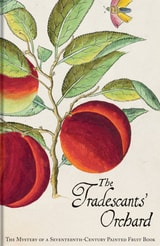
The Tradescants' Orchard
The Mystery of a Seventeenth-Century Painted Fruit BookBarrie Juniper and Hanneke Grootenboer
Bodleian Library Publishing, 2013
The Tradescants’ Orchard reproduces for the first time the entire manuscript, traditionally associated with the renowned father-and-son nurserymen the John Tradescants. The paintings pose many questions: Who painted them and why? What is the significance of the wildlife—birds, butterflies, frogs, and snails—that appear throughout? Why is there only one depiction of an apple tree despite its popularity? Were there others that have since gone missing?
A visual feast that will appeal to botany and gardening enthusiasts, the book also includes an introduction that maps out the mystery of how and why these enigmatic watercolors were made.
The Tragedy of the Sack of Cabrières
Translated by Charles-Louis Morand-Métivier
Arizona Center for Medieval and Renaissance Studies, 2022
April 1542 saw a massacre of epic proportions in the Luberon, in southeastern France, of its Waldensian population, who had been peacefully living there after they settled in a few centuries before. This massacre foreshadowed the wars of religion, which tore apart the kingdom for almost forty years. The Tragédie du Sac de Cabrières is the only play devoted to these events. This is a critical edition and English translation of the French play. Three critical editions of the play have been published in 1927, 1928, and 1998, and this new edition complements the previous works. This is the first English translation of the play and makes it available to an international audience of scholars and students of the early modern period.
This edition “translates” the moment of the play's creation, the representation of the event, and its importance in the narrative of religious persecutions in sixteenth-century France. It explains how history is dramatized through the creation of the scenic story and scenic play of Cabrières. and how the specific retelling of the events of Cabrières makes this a tool of historical narration, thus allowing the audience to participate in the unfolding of history before their eyes. Therefore, they become part of history, because it is played before their eyes so that they can not only witness it but also propagate the glory of the martyrs for future generations. This is not only a translation and a work of literary scholarship, it is an analysis of the literary, political, and religious production of this period, and a multidisciplinary analysis of Waldensianism in southeastern France.
The Tragic Sense of Life
Ernst Haeckel and the Struggle over Evolutionary ThoughtRobert J. Richards
University of Chicago Press, 2008
Prior to the First World War, more people learned of evolutionary theory from the voluminous writings of Charles Darwin’s foremost champion in Germany, Ernst Haeckel (1834–1919), than from any other source, including the writings of Darwin himself. But, with detractors ranging from paleontologist Stephen Jay Gould to modern-day creationists and advocates of intelligent design, Haeckel is better known as a divisive figure than as a pioneering biologist. Robert J. Richards’s intellectual biography rehabilitates Haeckel, providing the most accurate measure of his science and art yet written, as well as a moving account of Haeckel’s eventful life.
The Trail Drivers of Texas
Interesting Sketches of Early Cowboys...Compiled and edited by J. Marvin Hunter
University of Texas Press, 1993
These are the chronicles of the trail drivers of Texas—those rugged men and, sometimes, women who drove cattle and horses up the trails from Texas to northern markets in the late 1800s. Gleaned from members of the Old Time Trail Drivers' Association, these hundreds of real-life stories—some humorous, some chilling, some rambling, all interesting—form an invaluable cornerstone to the literature, history, and folklore of Texas and the West. First published in the 1920s and reissued by the University of Texas Press in 1985, this classic work is now available in a handsome paperback edition that contains the full text, historical illustrations, and name index of the hardcover edition.
The Trail of Gold and Silver
Mining in Colorado, 1859-2009Duane A. Smith
University Press of Colorado, 2009
Written in a lively manner by one of Colorado's preeminent historians, this book honors the 2009 sesquicentennial of Colorado's gold rush. Smith's narrative will appeal to anybody with an interest in the state's fascinating mining history over the past 150 years.
The Trail of Tears across Missouri
Joan Gilbert
University of Missouri Press, 1996
As settlers moved beyond the eastern seaboard during the early nineteenth century, the government forced thousands of American Indians from their ancestral lands. The Cherokees, the largest and most important tribe in the Southeast, fought exile with a combination of passive resistance and national publicity for their plight. Because they had successfully resisted the government's efforts to move them from their homeland, their removal was particularly brutal when it finally came. The Trail of Tears across Missouri is a moving account of the 1837-1838 removal of the Cherokees from the southeastern United States to Indian Territory (now Oklahoma).
After providing an overview of the Cherokees' life in the Southeast and of the events leading up to their exile, Joan Gilbert traces the mass exodus state by state from Tennessee to Arkansas. Successive chapters highlight the experiences and the hardships endured by those forced to travel with inadequate supplies of food, clothing, and transportation. It is estimated that four thousand Cherokees, nearly a quarter of the tribe, died.
In bringing the grim realities of the forced march to life, Gilbert draws from such primary sources as letters, newspaper stories, and the writings of missionaries, guides, and doctors who accompanied them. She focuses on the Cherokees' experiences as they passed through Missouri, using the journals of Dr. W. I. I. Morrow and guide B. B. Cannon.
In addition to chronicling the removal of the Cherokees, Gilbert also brings the story up to date by describing how the nation lives today and how the Trail of Tears has been commemorated.
The Trans Midwest
Trans Feminist Coalition Building Since World War IIJoy Ellison
University of Chicago Press, 2027
A revelatory regional history of trans feminist coalition-building between feminist, queer, and Black communities.
In the face of heightened transphobia and rising fascism in the United States, Joy Ellison’s TheTrans Midwest recounts the history of Midwestern trans women and femmes as a force in the larger feminist movement in the United States. Facing repression and geographic isolation, trans feminine Midwesterners built, and continue to build, vibrant coalitions with feminist, queer, and Black organizations.
Drawing on a vast range of archives and oral histories, Ellison shares a detailed and intersectional description of trans life and politics. These historical figures range from the Black trans women who worked in drag shows to the student coalitions that led to the passage of the country’s first trans-inclusive anti-discrimination ordinance and transsexual lesbian feminist activism in the 1990s. Ellison examines community networks and support groups, newsletters and advertisements, and Midwestern cities from Detroit to Kansas City to elucidate how trans regional groups found common interests across different races, classes, abilities, and sexualities, a marked difference from existing historical accounts of similar movements elsewhere.
Contributing to our understanding of trans history and the impact of intersectional organizing, The Trans Midwest presents new possibilities and critical lessons for trans feminist movements today.
The Transatlantic Collapse of Urban Renewal
Postwar Urbanism from New York to BerlinChristopher Klemek
University of Chicago Press, 2011
The Transatlantic Collapse of Urban Renewal examines how postwar thinkers from both sides of the Atlantic considered urban landscapes radically changed by the political and physical realities of sprawl, urban decay, and urban renewal. With a sweep that encompasses New York, London, Berlin, Philadelphia, and Toronto, among others, Christopher Klemek traces changing responses to the challenging issues that most affected the lives of the world’s cities.
In the postwar decades, the principles of modernist planning came to be challenged—in the grassroots revolts against the building of freeways through urban neighborhoods, for instance, or by academic critiques of slum clearance policy agendas—and then began to collapse entirely. Over the 1960s, several alternative views of city life emerged among neighborhood activists, New Left social scientists, and neoconservative critics. Ultimately, while a pessimistic view of urban crisis may have won out in the United States and Great Britain, Klemek demonstrates that other countries more successfully harmonized urban renewal and its alternatives. Thismuch anticipated book provides one of the first truly international perspectives on issues central to historians and planners alike, making it essential reading for anyone engaged with either field.
The Transatlantic Materials of American Literature
Publishing US Writing in Britain, 1830–1860Katie McGettigan
University of Massachusetts Press, 2023
Winner, Transatlantic Studies Association and Cambridge University Press Book Prize, 2023
During the antebellum period, British publishers increasingly brought out their own authorized and unauthorized editions of American literary works as the popularity of print exploded and literacy rates grew. Playing a formative role in the shaping of American literature, the industry championed the work of US-based writers, highlighted the cultural value of American literary works, and intervened in debates about the future of American literature, authorship, and print culture.
The Transatlantic Materials of American Literature examines the British editions of American fiction, poetry, essays, and autobiographies from writers like Edgar Allan Poe, Harriet Beecher Stowe, Frederick Douglass, and Hannah Flagg Gould. Putting these publications into historical context, Katie McGettigan considers key issues of the day, including developments in copyright law, changing print technologies, and the financial considerations at play for authors and publishers. This innovative study also uncovers how the transatlantic circulation of these works exposed the racial violence and cultural nationalism at the heart of the American experiment, producing overlapping and competing visions of American nationhood in the process.
The Transatlantic Zombie
Slavery, Rebellion, and Living DeathSarah Juliet Lauro
Rutgers University Press, 2015

The Transcendent Mystery of God's Word
A Critical Synthesis of Antioch and AlexandriaJohn W. Martens
Saint Paul Seminary Press, 2024
The Transfiguring Sword
The Just War of the Women's Social and Political UnionCheryl R. Jorgensen-Earp
University of Alabama Press, 1997
Provides a new understanding of the recurrent rhetorical need to employ conservative rhetoric in support of a radical cause
The Women’s Social and Political Union, the militant branch of the English women’s suffrage movement, turned to arson, bombing, and widespread property destruction as a strategy to achieve suffrage for women. Because of its comparative rarity, terrorist violence by reform (as opposed to revolutionary) movements is underexplored, as is the discursive rhetoric that accompanies this violence. Largely because of the moral stance that drives such movements, the need to justify violence is greater for the reformist than for the revolutionary terrorist. The burden of rhetorical justification falls even more heavily on women utilizing violence, an option generally perceived as open only to men.The militant suffragettes justified their turn to limited terrorism by arguing that their violence was part of a “just war.” Appropriating the rhetoric of a just war in defense of reformist violence allowed the suffragettes to exercise a traditional rhetorical vision for the sake of radical action. The concept of a just war allowed a spinning out of a fantasy of heroes, of a gallant band fighting against the odds. It challenged the imagination of the public to extend to women a heroic vision usually reserved for men and to accept the new expectations inherent in that vision. By incorporating the concept of a just war into their rhetoric, the WSPU leaders took the most conventional justification that Western tradition provides for the use of violence and adapted it to meet their unique circumstance as women using violence for political reform.
This study challenges the common view that the suffragettes’ use of military metaphors, their vilification of the government, and their violent attacks on property were signs of hysteria and self-destruction. Instead, what emerges is a picture of a deliberate, if controversial, strategy of violence supported by a rhetorical defense of unusual power and consistency.
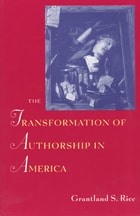
The Transformation of Authorship in America
Grantland S. Rice
University of Chicago Press, 1997
Rice shows that the rigorous censorship practiced by Puritan authorities conferred an implicit prestige on texts as civic interventions, helping to foster a vigorous and indigenous tradition of sociopolitical criticism. With special attention to the sudden emergence of the novel in post-revolutionary America, Rice reveals how the emergence of economic liberalism undermined the earlier tradition of political writing by transforming American authorship from an expression of individual civic conscience to a market-oriented profession.
Includes discussions of the writings of Benjamin Franklin, Michel-Guillaume-Jean de Crèvecoeur, and Hugh Henry Brackenridge.