Results by title
28250 books match the query 'history' and 6388 start with t

This Giving Birth
Pregnancy and Childbirth in American Women's WritingJulie Tharp
University of Wisconsin Press, 2000

This Grand and Magnificent Place
The Wilderness Heritage of the White MountainsChristopher Johnson
University of New Hampshire Press, 2020
This is the complex story of New Hampshire's White Mountains, from the range's days as the majestic homeland of the Abenaki, first seen by English colonists four centuries ago, to its unassailable standing today as one of America's most beloved national forests, comprising 112,000 acres of protected wilderness.
Christopher Johnson, an avid hiker intimately familiar with the White Mountains, achieves two important objectives in This Grand and Magnificent Place. He lovingly explores their rich ecological, political, economic, and cultural history and, more broadly, opens a panoramic window on the evolution of American attitudes and policies toward wilderness over time.
Two competing visions of wilderness historically have coexisted in America: the instrumental, in which the wilderness is seen as a conglomeration of resources to be exploited for the benefit of entrepreneurs and consumers, and the aesthetic, in which the wilderness is appreciated for its natural beauty, the personal growth that it stimulates, the national pride it engenders, and the spiritual truth it offers. Johnson never loses sight of this fundamental dichotomy as he shares marvelous true tales of the first intrepid European settlers who “tamed” the Whites. He discusses Ethan Allen Crawford, the area's first innkeeper, the emergence of tourism, and America's love affair with the “wilderness experience”; and he explores tales of Thomas Cole, Nathaniel Hawthorne, and other renowned artists who immortalized these mountains in their works. He considers the coming of grand resort hotels—and the contemporaneous wilderness revival—in the late nineteenth century and the passing of the landmark 1911 Weeks Act, which was instrumental in preserving American wilderness in the face of development and threats of irreparable environmental damage. Johnson traces the perilous course of the twentieth-century movement toward wilderness preservation, which has successfully conserved the Whites, an extraordinary American treasure, for future generations. Finally, he poses thoughtful and essential questions regarding the destiny of this American wilderness, exploring the balance between maintaining its usefulness while conserving its glorious heritage.
This skillful and accessible history will rivet general readers, students, and professionals interested in the history, culture, and politics of the White Mountains, as well as those fascinated by environmental history and wilderness protection everywhere.
This Great Symbol
Pierre de Coubertin and the Origins of the Modern Olympic GamesJohn J. MacAloon
University of Chicago Press, 1981
This Happy Land
The Jews of Colonial and Antebellum CharlestonJames William Hagy
University of Alabama Press, 1993
This Incurable Evil
Mapuche Resistance to Spanish Enslavement, 1598–1687Eugene C.Berger
University of Alabama Press, 2023
Documents how initial Mapuche-Spanish alliances were built and how they were destroyed by increasingly powerful slave-trading elites operating like organized crime families
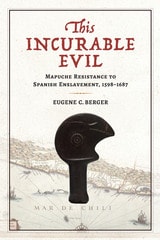
The history of Spanish presence in the Americas is usually viewed as a one-sided conquest. In This Incurable Evil: Mapuche Resistance to Spanish Enslavement, 1598–1687, Eugene C. Berger provides a major corrective in the case of Chile. For example, in the south, indigenous populations were persistent in their resistance against Spanish settlement. By the end of the sixteenth century, Spanish aspirations to conquer the entire Pacific Coast were dashed at least twice by armed resistance from the Mapuche peoples. By 1600, the Mapuche had killed two Spanish governors and occupied more than a dozen Spanish towns. Chile’s colonial future was quite uncertain.
As Berger documents, for much of the seventeenth century it seemed that there could be peace along the Spanish-Mapuche frontier. Through trade, intermarriage, and even mutual distrust of Dutch and English pirates, the Mapuche and the Spanish began to construct a colonial entente. However, this growing alliance was obliterated by the “incurable evil,” an ever-expanding enslavement of Mapuches, and one which prompted a new generation of Mapuche resistance. This trade saw Mapuche rivals, neutrals, and even friends placed in irons and forced to board ships in Valdivia and Concepción or to march northward along the Andes. The Mapuche labored in the gold mines of La Serena, in urban workshops in Lima, in the silver mines of Potosí, or on the thousands of haciendas in between and would never return to their homes. With this tragic betrayal, Chile was left a more corrupt, violent, and polarized place, which would cause deep wounds for centuries.
This Is All I Choose to Tell
History and Hybridity in Vietnamese American LiteratureAuthored by Isabelle T. Pelaud
Temple University Press, 2010
In the first book-length study of Vietnamese American literature, Isabelle Thuy Pelaud probes the complexities of Vietnamese American identity and politics. She provides an analytical introduction to the literature, showing how generational differences play out in genre and text. In addition, she asks, can the term Vietnamese American be disassociated from representations of the war without erasing its legacy?
Pelaud delineates the historical, social, and cultural terrains of the writing as well as the critical receptions and responses to them. She moves beyond the common focus on the Vietnam war to develop an interpretive framework that integrates post-colonialism with the multi-generational refugee, immigrant, and transnational experiences at the center of Vietnamese American narratives.
Her readings of key works, such as Andrew Pham's Catfish and Mandala and Lan Cao's Monkey Bridge show how trauma, racism, class and gender play a role in shaping the identities of Vietnamese American characters and narrators.
This Is Enlightenment
Edited by Clifford Siskin and William Warner
University of Chicago Press, 2010
Debates about the nature of the Enlightenment date to the eighteenth century, when Imanual Kant himself addressed the question, “What is Enlightenment?” The contributors to this ambitious book offer a paradigm-shifting answer to that now-famous query: Enlightenment is an event in the history of mediation. Enlightenment, they argue, needs to be engaged within the newly broad sense of mediation introduced here—not only oral, visual, written, and printed media, but everything that intervenes, enables, supplements, or is simply in between.
With essays addressing infrastructure and genres, associational practices and protocols, this volume establishes mediation as the condition of possibility for enlightenment. In so doing, it not only answers Kant’s query; it also poses its own broader question: how would foregrounding mediation change the kinds and areas of inquiry in our own epoch? This Is Enlightenment is a landmark volumewith the polemical force and archival depth to start a conversation that extends across the disciplines that the Enlightenment itself first configured.
This Is Jerusalem Calling
State Radio in Mandate PalestineBy Andrea L. Stanton
University of Texas Press, 2013
Modeled after the BBC, the Palestine Broadcasting Service was launched in 1936 to serve as the national radio station of Mandate Palestine, playing a pivotal role in shaping the culture of the emerging middle class in the region. Despite its significance, the PBS has become nearly forgotten by scholars of twentieth-century Middle Eastern studies. Drawn extensively from British and Israeli archival sources, “This Is Jerusalem Calling” traces the compelling history of the PBS’s twelve years of operation, illuminating crucial aspects of a period when Jewish and Arab national movements simultaneously took form.
Andrea L. Stanton describes the ways in which the mandate government used broadcasting to cater to varied audiences, including rural Arab listeners, in an attempt to promote a “modern” vision of Arab Palestine as an urbane, politically sophisticated region. In addition to programming designed for the education of the peasantry, religious broadcasting was created to appeal to all three main faith communities in Palestine, which ultimately may have had a disintegrating, separatist effect. Stanton’s research brings to light the manifestation of Britain’s attempts to prepare its mandate state for self-governance while supporting the aims of Zionists. While the PBS did not create the conflict between Arab Palestinians and Zionists, the service reflected, articulated, and magnified such tensions during an era when radio broadcasting was becoming a key communication tool for emerging national identities around the globe.
This Is My Body
Representational Practices in the Early Middle AgesMichal Kobialka
University of Michigan Press, 2003
Michal Kobialka is Professor in the Department of Theatre Arts and Dance at the University of Minnesota.

This Is New Jersey
Cunningham, John T
Rutgers University Press, 1995
This Is Not Civil Rights
Discovering Rights Talk in 1939 AmericaGeorge I. Lovell
University of Chicago Press, 2012

This Is Not Dixie
Racist Violence in Kansas, 1861-1927Brent M.S. Campney
University of Illinois Press, 2018
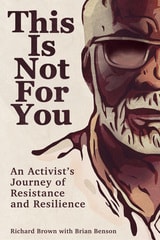
This Is Not For You
An Activist's Journey of Resistance and ResilienceRichard Brown
Oregon State University Press, 2021
The book finds Brown approaching his eightieth birthday and reflecting on his life. As he recalls his childhood in 1940s Harlem, his radicalization in the newly desegregated Air Force, and his decades of activism in one of America’s whitest cities, he questions how much longer he’ll do this work, and he wonders who, if anyone, will take his place.
This is a book about how and why to become an engaged, activist citizen, and how activists can stay grounded, no matter how deeply they immerse themselves in the work. It also offers an intimate, firsthand look at policing: what policing is and could be, how civilians can have a say, and how police can and should be responsive to and inclusive of civilian voices. This Is Not For You speaks on every page about being Black in America: about Black pride; Black history, art, and culture; and the experience of resisting white supremacy. It also stands as a much-needed counternarrative to Portlandia, telling a different story about the city and who has shaped it.
Over fifty percent of royalties earned on this book will be donated to organizations working on behalf of Black Portlanders.
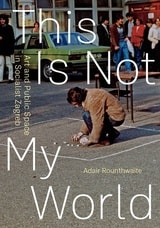
This Is Not My World
Art and Public Space in Socialist ZagrebAdair Rounthwaite
University of Minnesota Press, 2024
A close-up history of the Yugoslav artists who broke down the boundaries between public and private
In the decades leading up to the dissolution of socialist Yugoslavia, a collective of young artists based in Zagreb took to using the city’s public spaces as a platform for radical individual expression. This Is Not My World presents a detailed account of the Group of Six Authors and their circle in the prolific and experimental period from 1975 to 1985, highlighting the friction between public and private that underlied their innovative practices.
Looking to circumvent the rigid bureaucracy of official art institutions, this freewheeling group of conceptual artists and their peers brought artistic activities directly to an unwitting public by staging provocative performances, exhibiting artworks, and interacting with passersby on the streets. Exploring artworks such as Vlasta Delimar’s act of tying herself to a tree in a busy pedestrian area, Željko Jerman’s production of a giant banner declaring “Intimate Inscription” in the city’s central square, and Vlado Martek’s creation of an artwork on a seaside beach using women’s underwear, Adair Rounthwaite examines the work of these artists as a site of tension between the intimacy of artistic expression and the political structure of the public sphere under state socialism.
Whereas many histories of modern and contemporary art in formerly socialist countries tend to be dominated by discussions of ideology and resistance, This Is Not My World focuses its attention on the affective aspects of the group’s activities, using artist interviews and extensive documentation to bring the reader closer to the felt experience of their public interventions. Situating the group’s work within the context of broader developments in conceptualism and theories of the avant-garde, Rounthwaite provides a fresh consideration and newly detailed account of this marginalized episode in global art history.
This Is Our Land
Grassroots Environmentalism in the Late Twentieth CenturyFerguson, Cody
Rutgers University Press, 2015
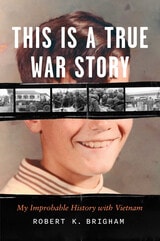
This Is a True War Story
My Improbable History with VietnamRobert K. Brigham
University of Chicago Press, 2026
Robert K. Brigham has had a substantial career as a historian of the Vietnam War, with a hand in nine books, a documentary, public history projects, and more. While many a historian has felt compelled at some point to write about a subject close to them personally, Brigham did not think he was doing that. But, at age fifty-eight, Brigham, who had long known he was adopted, discovered that he’d improbably and unknowingly been studying and talking about his biological father for decades. That man, Bruce Atwell, was a Marine Corps photographer who took some of that war’s most indelible and widely reproduced pictures. Brigham had used those images over and over again in decades’ worth of classes and public lectures, never knowing the truth.
Both Brigham and Atwell were products of the American foster care and adoption system, and both were defined professionally by Vietnam. In a story shot through with echoes and shadows, Brigham not only reveals his own history as an adoptee but opens a startlingly fresh vantage on the fragility of American families; the power of social norms and taboos to shape lives; and the forces that inequitably disrupt families, not least of them war. The result is an accessible and moving book that is at once both a powerful personal story and an illuminating social critique.
This Is a True War Story
My Improbable History with VietnamRobert K. Brigham
University of Chicago Press, 2026
Robert K. Brigham has had a substantial career as a historian of the Vietnam War, with a hand in nine books, a documentary, public history projects, and more. While many a historian has felt compelled at some point to write about a subject close to them personally, Brigham did not think he was doing that. But, at age fifty-eight, Brigham, who had long known he was adopted, discovered that he’d improbably and unknowingly been studying and talking about his biological father for decades. That man, Bruce Atwell, was a Marine Corps photographer who took some of that war’s most indelible and widely reproduced pictures. Brigham had used those images over and over again in decades’ worth of classes and public lectures, never knowing the truth.
Both Brigham and Atwell were products of the American foster care and adoption system, and both were defined professionally by Vietnam. In a story shot through with echoes and shadows, Brigham not only reveals his own history as an adoptee but opens a startlingly fresh vantage on the fragility of American families; the power of social norms and taboos to shape lives; and the forces that inequitably disrupt families, not least of them war. The result is an accessible and moving book that is at once both a powerful personal story and an illuminating social critique.
This Is the Plate
Utah Food TraditionsEdited by Carol Edison, Eric A Eliason, and Lynne S McNeill
University of Utah Press, 2019
This Is the Route of My Forefathers
The 1837 Ioway MapWilliam Green
University of Iowa Press, 2025
Illustrating nearly 200 years of Ioway history, the 1837 Ioway map provides insights into the tribe’s political and diplomatic strategies, their relationships with neighboring nations, and how they resisted and negotiated in the face of dispossession. This Is the Route of My Forefathers uses an interdisciplinary approach to reveal how group accounts may fade over time, while accounts of origin—legendary histories—remain rich and vibrant.
This Land Is Ours Now
Social Mobilization and the Meanings of Land in BrazilWendy Wolford
Duke University Press, 2010
Drawing on extensive ethnographic research, Wolford compares the development of the movement in Brazil’s southern state of Santa Catarina and its northeastern state of Pernambuco. As she explains, in the south, most of the movement’s members were sons and daughters of small peasant farmers; in the northeast, they were almost all former plantation workers, who related awkwardly to the movement’s agenda of accessing “land for those who work it.” The MST became an effective presence in Pernambuco only after the local sugarcane economy had collapsed. Worldwide sugarcane prices dropped throughout the 1990s, and by 1999 the MST was a prominent political organizer in the northeastern plantation region. Yet fewer than four years later, most of the region’s workers had dropped out of the movement. By delving into the northeastern workers’ motivations for joining and then leaving the MST, Wolford adds nuance and depth to accounts of a celebrated grassroots social movement, and she highlights the contingent nature of social movements and political identities more broadly.
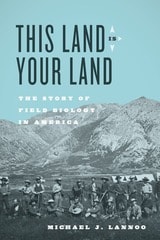
This Land Is Your Land
The Story of Field Biology in AmericaMichael J. Lannoo
University of Chicago Press, 2018
Lannoo illuminates characters such as John Wesley Powell, William Temple Hornaday, and Olaus and Adolph Murie—homegrown midwestern field biologists who either headed east to populate major research centers or went west to conduct their fieldwork along the frontier. From the pioneering work of Victor Shelford, Henry Chandler Cowles, and Aldo Leopold to contemporary insights from biologists such as Jim Furnish and historians such as William Cronon, Lannoo’s unearthing of American—and particularly midwestern—field biologists reveals how these scientists influenced American ecology, conservation biology, and restoration ecology, and in turn drove global conservation efforts through environmental legislation and land set-asides. This Land Is Your Land reveals the little-known legacy of midwestern field biologists, whose ethos and discoveries have enabled us to preserve and understand not just their land, but all lands.
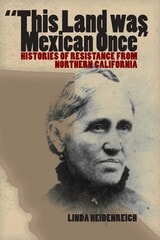
This Land Was Mexican Once
Histories of Resistance from Northern CaliforniaBy Linda Heidenreich
University of Texas Press, 2007
The territory of Napa County, California, contains more than grapevines. The deepest roots belong to Wappo-speaking peoples, a group whose history has since been buried by the stories of Spanish colonizers, Californios (today's Latinos), African Americans, Chinese immigrants, and Euro Americans. Napa's history clearly is one of co-existence; yet, its schoolbooks tell a linear story that climaxes with the arrival of Euro Americans. In "This Land was Mexican Once," Linda Heidenreich excavates Napa's subaltern voices and histories to tell a complex, textured local history with important implications for the larger American West, as well.
Heidenreich is part of a new generation of scholars who are challenging not only the old, Euro-American depiction of California, but also the linear method of historical storytelling—a method that inevitably favors the last man writing. She first maps the overlapping histories that comprise Napa's past, then examines how the current version came to dominate—or even erase—earlier events. So while history, in Heidenreich's words, may be "the stuff of nation-building," it can also be "the stuff of resistance." Chapters are interspersed with "source breaks"—raw primary sources that speak for themselves and interrupt the linear, Euro-American telling of Napa's history. Such an inclusive approach inherently acknowledges the connections Napa's peoples have to the rest of the region, for the linear history that marginalizes minorities is not unique to Napa. Latinos, for instance, have populated the American West for centuries, and are still shaping its future. In the end, "This Land was Mexican Once" is more than the story of Napa, it is a multidimensional model for reflecting a multicultural past.
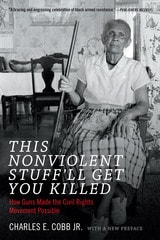
This Nonviolent Stuff'll Get You Killed
How Guns Made the Civil Rights Movement PossibleCharles E. Cobb Jr.
Duke University Press, 2015
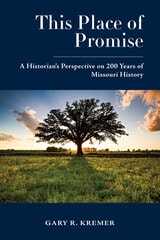
This Place of Promise
A Historian's Perspective on 200 Years of Missouri HistoryGary R. Kremer
University of Missouri Press, 2023
Key elements of the book include the centrality of race to the Missouri experience—from the time Missourians began to seek statehood in 1817 all the way up to the Black Lives Matter movement of the 21st century—as well as ongoing tensions created by the urban-rural divide and struggle to define the proper role of government in society.
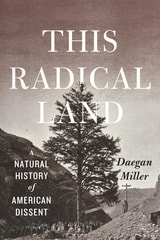
This Radical Land
A Natural History of American DissentDaegan Miller
University of Chicago Press, 2018
But if you know where to look, you can uncover a different history, one of vibrant resistance, one that’s been mostly forgotten. This Radical Land recovers that story. Daegan Miller is our guide on a beautifully written, revelatory trip across the continent during which we encounter radical thinkers, settlers, and artists who grounded their ideas of freedom, justice, and progress in the very landscapes around them, even as the runaway engine of capitalism sought to steamroll everything in its path. Here we meet Thoreau, the expert surveyor, drawing anticapitalist property maps. We visit a black antislavery community in the Adirondack wilderness of upstate New York. We discover how seemingly commercial photographs of the transcontinental railroad secretly sent subversive messages, and how a band of utopian anarchists among California’s sequoias imagined a greener, freer future. At every turn, everyday radicals looked to landscape for the language of their dissent—drawing crucial early links between the environment and social justice, links we’re still struggling to strengthen today.
Working in a tradition that stretches from Thoreau to Rebecca Solnit, Miller offers nothing less than a new way of seeing the American past—and of understanding what it can offer us for the present . . . and the future.
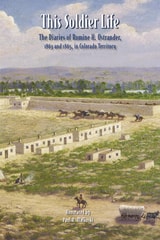
This Soldier Life
The Diaries of Romine H. Ostrander, 1863 and 1865, in Colorado TerritoryPaul A. Malkoski
University Press of Colorado, 2006
Jan. 24, 1865:
"I have had pretty spirited arguments with these third reg't ducks sometimes about the barbarity of indiscriminately murdering defenseless women and children of the Indians at sand creek. Some of them deny that any thing of the kind was done except in the general action when there was no telling the difference; and some acknowledge that there were women and children killed after the general action was over; but argue that it was right because Indians have done the same."
Oct. 17, 1863:
"I know that I have written a great many foolish - yes silly things in this book, and - well, what of it? What if I have? Who's business is it? Who's going to read them? I am!"
Published by the Colorado Historical Society
This State of Wonders
The Letters of an Iowa Frontier Family, 1858-1861John Kent Folmar
University of Iowa Press, 1991
When the John Hugh Williams family immigrated to Homer, Iowa, in the 1850s, they had six children, ranging in age from five to twenty. Suddenly land poor, in debt, and caught in the Panic of '57, they sent their eldest son, James, to Georgia to work and add to the family income.
The seventy-five letters collected here represent the family's correspondence to their absent son and brother. From 1858 to 1861, James' sisters, brothers, mother, and father wrote to him frequently, each with distinct views on their daily life and struggles. While Mr. Williams wrote most often about money, farming, and moral advice (he was minister in the Church of New Jerusalem, as well as a merchant and farmer), Mrs. Williams commented on her daily chores, the family's health, the ever-important weather, and her leisure activities, including the contemporary journals and books she read, such as David Copperfield and Jane Eyre. James' sisters and brothers wrote about many concerns, from schoolwork and housework to games and family celebrations in nearby Webster City.
As the letters continue, the affection for the absent James becomes more pronounced. And, as the years go by, the letters touch on more current national trends, including the Pikes Peak Gold Rush and the growing North/South crisis, on which James and his family strongly disagree. James was never to return to Iowa but married and remained in the South, becoming a lieutenant colonel in the Confederate army.
Complete with voices both young and old, male and female, This State of Wonders offers a wealth of information about the daily life of an ordinary family on the Iowa prairie. It is a book to be treasured by all Iowans interested in the early life of their state and by all historians looking for a complete portrait of family life on the midwestern frontier.
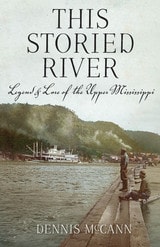
This Storied River
Legend & Lore of the Upper MississippiDennis McCann
Wisconsin Historical Society Press, 2017
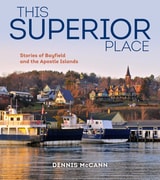
This Superior Place
Stories of Bayfield and the Apostle IslandsDennis McCann
Wisconsin Historical Society Press, 2013
Picturesque little Bayfield on Lake Superior is Wisconsin’s smallest city by population but one of its most popular visitor destinations. This book captures those unique qualities that keep tourists coming back year after year and offers a historically reliable look at the community as it is today and how it came to be. Abundantly illustrated with both historical and contemporary images, This Superior Place showcases, as author Dennis McCann writes, “a community where the past was layered with good times and down times, where natural beauty was the one resource that could not be exhausted by the hand of man, and where history is ever present.”
Because Bayfield serves as “the gateway to the Apostle Islands,” the book also includes chapters on the Apostle Islands National Lakeshore, Madeline Island, and the nearby Red Cliff Ojibwe community. It also covers the significant eras in the city’s history: lumbering, quarrying, commercial fishing, and the advent of the orchards visitors see today. It is not a guidebook as such but more of a visual and written tour of the city and the major elements that came together to make it what it is. Colorful stories from the past, written in Dennis McCann’s casual, humorous style, give a sense of the unique characters and events that have shaped this charming city on the lake.
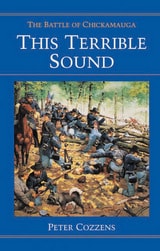
This Terrible Sound
The Battle of ChickamaugaPeter Cozzens
University of Illinois Press, 1992
In this study of the campaign, the first to appear in over thirty years and the most comprehensive account ever written on Chickamauga, Peter Cozzens presents a vivid narrative about an engagement that was crucial to the outcome of the war in the West. Drawing upon a wealth of previously untapped sources, Cozzens offers startling new interpretations that challenge the conventional wisdom on key moments of the battle, such as Rosecrans's fateful order to General Wood and Thomas's historic defense of Horseshoe Ridge.
Chickamauga was a battle of missed opportunities, stupendous tactical blunders, and savage fighting by the men in ranks. Cozzens writes movingly of both the heroism and suffering of the common soldiers and of the strengths and tragic flaws of their commanders. Enhanced by the detailed battle maps and original sketches by the noted artist Keith Rocco, this book will appeal to all Civil War enthusiasts and students of military history.
This Vast Book of Nature
Writing the Landscape of New Hampshire’s White Mountains, 1784–1911Pavel Cenkl
University of Iowa Press, 2006
Starting with an exploration of Jeremy Belknap’s 1784 expedition to Mount Washington, which Cenkl links to the origins of tourism in the White Mountains, to the transformation of touristic and residential relationships to landscape, This Vast Book of Nature explores the ways competing visions of the landscape have transformed the White Mountains culturally and physically, through settlement, development, and—most recently—preservation, a process that continues today.
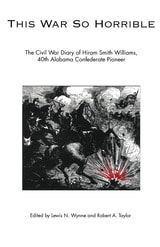
This War So Horrible
The Civil War Diary of Hiram Smith Williams, 40th Alabama Confederate PioneerHiram Smith Williams
University of Alabama Press, 1993
The Civil War diary of Hiram Smith Williams is extremely unusual. A carriage maker and native of New Jersey, Williams only arrived in the Deep South in 1959 and yet enlisted in the Confederate Army. As a middle-class craftsman, he represented neither wealthy Southern planters nor yeoman farmers. Part of the 40th Alabama Volunteer Regiment, he was first in Mobile, where he attempted to transfer to the CSA Navy. Failing that, he went with his regiment to Atlanta to engage in the great battle there.
A careful writer, Williams paid the same attention to his composition as he did to his carriages. Unlike many Civil War veterans, he never revised his diary to embellish his record or heroism. Prized by historians both for providing an unique point of view as well as an exceptionally articulate narrative, Williams' diary is an important addition to any Civil War library.
This Was Not Our War
Bosnian Women Reclaiming the PeaceSwanee Hunt
Duke University Press, 2004
This Was Not Our War shares amazing first-person accounts of twenty-six Bosnian women who are reconstructing their society following years of devastating warfare. A university student working to resettle refugees, a paramedic who founded a veterans’ aid group, a fashion designer running two nonprofit organizations, a government minister and professor who survived Auschwitz—these women are advocates, politicians, farmers, journalists, students, doctors, businesswomen, engineers, wives, and mothers. They are from all parts of Bosnia and represent the full range of ethnic traditions and mixed heritages. Their ages spread across sixty years, and their wealth ranges from expensive jewels to a few chickens. For all their differences, they have this much in common: all survived the war with enough emotional strength to work toward rebuilding their country. Swanee Hunt met these women through her diplomatic and humanitarian work in the 1990s. Over the course of seven years, she conducted multiple interviews with each one. In presenting those interviews here, Hunt provides a narrative framework that connects the women’s stories, allowing them to speak to one another.
The women describe what it was like living in a vibrant multicultural community that suddenly imploded in an onslaught of violence. They relate the chaos; the atrocities, including the rapes of many neighbors and friends; the hurried decisions whether to stay or flee; the extraordinary efforts to care for children and elderly parents and to find food and clean drinking water. Reflecting on the causes of the war, they vehemently reject the idea that age-old ethnic hatreds made the war inevitable. The women share their reactions to the Dayton Accords, the end of hostilities, and international relief efforts. While they are candid about the difficulties they face, they are committed to rebuilding Bosnia based on ideals of truth, justice, and a common humanity encompassing those of all faiths and ethnicities. Their wisdom is instructive, their courage and fortitude inspirational.
This Wicked Rebellion
Wisconsin Civil War Soldiers Write HomeJohn Zimm
Wisconsin Historical Society Press, 2012
Over one hundred and fifty years after it began, the Civil War still fascinates us—the vast armies marching to war, iconic leaders like Abraham Lincoln and Robert E. Lee, the drama of a nation divided. But the Civil War was also about individuals, the hundreds of thousands of ordinary men and boys who fought and died on either side and the families and friends left at home.
This Wicked Rebellion: Wisconsin Civil War Soldiers Write Home tells this other side of the story. Drawing from over 11,000 letters in the Wisconsin Historical Society’s Civil War collection, it gives a unique and intimate glimpse of the men and women who took part in the War for the Union. Follow Wisconsin soldiers as they sign up or get drafted, endure drill and picket duty, and get their first experiences of battle. Join them as they fight desperation and fear, encounter the brutality of slavery, and struggle with the reasons for war.
From impressions of army life and the South to the hardships of disease and battle, these letters tell the story of the war through the eyes and pens of those who fought in it. This Wicked Rebellion brings to life the heroism and heartache, mayhem and misery of the Civil War, and the powerful role Wisconsin played in it.
Thomas Aquinas Today
Still the Common Doctor?Andrew Hofer
Catholic University of America Press, 2026
Thomas Aquinas and Medieval Canon Law
Justin M. Anderson
Catholic University of America Press, 2025
Thomas Aquinas and the Philosophy of Punishment
Peter Karl Koritansky
Catholic University of America Press, 2012

Thomas Aquinas as Spiritual Teacher
Michael A. Dauphinais
Sapientia Press of Ave Maria University, 2023
Thomas De Quincey
British Rhetoric's Romantic TurnLois Peters Agnew
Southern Illinois University Press, 2012
This wide-ranging volume gives proper attention to the views on rhetoric and style set forth by British literary figure Thomas De Quincey (1785–1859), whose contributions to the history of rhetoric are often overlooked. Lois Peters Agnew presents an overview of this theorist’s life and provides cultural context for his time and place, with particular emphasis on the significance of his rhetoric as both an alternative strain of rhetorical history and a previously unrealized example of rhetoric’s transformation in nineteenth-century Britain.
Agnew presents an extensive discussion of De Quincey’s ideas on rhetoric, his theory and practice of conversation, his theory of style and its role in achieving rhetoric’s dialogic potential, and his strategic use of humor and irony in such works as Confessions of an English Opium Eater. Synthesizing previous treatments of De Quincey’s rhetoric and connecting his unusual perspectives on language to the biographical details of his life, Agnew helps readers understand his intellectual development while bringing to light the cultural contexts that prompted radical changes in the ways nineteenth-century British intellectuals conceived of the role of language and the imagination in public and private discourse.
Agnew presents an alternative vision of rhetoric that departs from many common assumptions about rhetoric’s civic purpose and offers insights into the topic of rhetoric and technological change. The result is an accessible and thorough explanation of De Quincey’s complex ideas on rhetoric and the first work to fully show the reach of his ideas across multiple texts written during his lifetime.
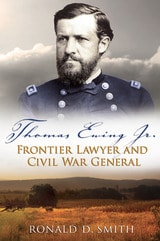
Thomas Ewing Jr.
Frontier Lawyer and Civil War GeneralRonald D. Smith
University of Missouri Press, 2008
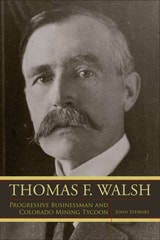
Thomas F. Walsh
Progressive Businessman and Colorado Mining TycoonJohn Stewart
University Press of Colorado, 2007
In the first complete biography of Thomas Walsh, John Stewart recounts the tycoon's life from his birth in 1850 and his beginnings as a millwright and carpenter in Ireland to his tenacious, often fruitless mining work in the Black Hills and Colorado, which finally led to his discovery of an extremely rich vein of gold ore in the Imogene Basin. Walsh's Camp Bird Mine yielded more than $20 million worth of gold and other minerals in twenty years, and the mine's 1902 sale to British investors made Walsh very wealthy.
He achieved national prominence, living with his family in mansions in Colorado and Washington, D.C., and maintaining a rapport with Presidents McKinley, Theodore Roosevelt, and Taft, as well as King Leopold II of Belgium.
Despite his fame and lavish lifestyle, Walsh is remembered as an unassuming and philanthropic man who treated his employees well. In addition to making many anonymous donations, he established the Walsh Library in Ouray and a library near his Irish birthplace, and helped establish a research fund for the study of radium and other rare western minerals at the Colorado School of Mines. Walsh gave his employees at the Camp Bird Mine top pay and lodged them in an alpine boardinghouse featuring porcelain basins, electric lighting, and excellent food.
Stewart's engaging account explores the exceptional path of this Colorado mogul in detail, bringing Walsh and his time to life.
Thomas Frederick Tout (1855–1929)
refashioning history for the twentieth centuryEdited by Joel T. Rosenthal and Caroline M. Barron
University of London Press, 2019
Thomas Goode Jones
Race, Politics, and Justice in the New SouthBrent J. Aucoin
University of Alabama Press, 2016
Thomas Goode Jones of Alabama is the first comprehensive biography of a key Alabama politician and federal jurist whose life and times embody the conflicts and transformations in the Deep South between the Civil War and World War I.
A man who both represented and differed from his class, Thomas Goode Jones offers contemporary readers and scholars an ideal subject of study to understand a period of southern history that still shapes American life today. Often overshadowed by the pharaonic antebellum period, the Civil War, and the luminous heights of the civil rights movement, the deceptively placid decades at the turn of the century were, in fact, a period when southerners fiercely debated the course of the South’s future. In tracing Jones’s career, Brent J. Aucoin offers vivid accounts of the great events and trends of that pivotal period: Reconstruction, the birth of the “Solid South,” the Populist Revolt, and the establishment of racial disenfranchisement and segregation.
Born in 1844, Jones served in the Confederate army and after the war identified as a conservative “Bourbon” Democrat. He served as Alabama's governor from 1890 to 1894 and as a federal judge from 1901 until his death in 1914. As a veteran, politician, and judge, Jones embodied numerous roles in the shifting political landscape of the South.
Jones was not, however, a reflexive conformist and sometimes pursued policies at odds with his party. Jones’s rhetoric and support of African American civil rights were exceptional and earned him truculent criticism from unrepentant racist factions in his party. His support was so fearless that it inspired Booker T. Washington to recommend Jones to Republican president Theodore Roosevelt as a federal judge. On the bench, Jones garnered national attention for his efforts to end peonage and lynching, and yet he also enabled the establishment of legalized segregation in Alabama, confounding attempts easily to categorize him as an odious reactionary or fearless progressive.
Thomas H. Begay and the Navajo Code Talkers
Alysa Landry
Ohio University Press, 2023
Thomas Hart Benton
Discoveries and InterpretationsHenry Adams
University of Missouri Press, 2027
Few American artists have incited more controversy than Thomas Hart Benton. Argumentative, brilliant, and enormously influential, Benton painted for nearly seventy years, inspiring acclaim and loathing among students, friends, fellow artists, and outraged critics.
Now, in a series of provocative essays, premier Benton scholar Henry Adams examines the many facets of the man as artist and the pitched battles of his long career, including the fight that raged over the subject matter of his murals, the real reasons for Benton’s feud with the radical left and his fall from grace in the New York art world, and his tumultuous, 36-year-long love-hate relationship with the student with whom he worked most closely, another iconic artist of the 20th century, Jackson Pollock. Adams ends with an account of his own twenty-five-year struggle to expose fakes of Benton’s work.
Thomas Hauser on Sports
Remembering the JourneyThomas Hauser
University of Arkansas Press, 2013
Thomas Heywood's Art of Love
The First Complete English Translation of Ovid's Ars AmatoriaEdited, with Introduction, Notes, and Commentary by M. L. Stapleton
University of Michigan Press, 2000
The present edition represents the first instance in which the translation has been edited in a scholarly manner. Besides a full Introduction that accounts for the history of Loues Schoole, Ovid in the English Renaissance, and the editorial method, each of the three books of the poem includes a Commentary that provides cross-references within the text; glosses for unusual, archaic, or regional forms peculiar to Heywood's English; annotations from sourcebooks that Heywood used to identify or understand characters from classical history, literature, and mythology; and explanations for any emendations the editor deemed necessary. In his efforts to make the Ars a seventeenth-century poem, Heywood contemporizes Ovid's references to dress, behavior, courtship, marriage, games, theater, agriculture, horsemanship, war, literature --all of which the Commentary explains at great length.
Loues Schoole will find readership in these areas: early modern history, literature, and culture; classical studies; Renaissance drama; the history of sexuality; and translation theory.
M. L. Stapleton is Associate Professor of English and Philosophy, Stephen F. Austin State University.
Thomas Hirschhorn
A New Political Understanding of Art?Christina Braun
Dartmouth College Press, 2018
Thomas Kuhn
A Philosophical History for Our TimesSteve Fuller
University of Chicago Press, 2000
Steve Fuller argues that Kuhn actually held a profoundly conservative view of science and how one ought to study its history. Early on, Kuhn came under the influence of Harvard President James Bryant Conant (to whom Structure is dedicated), who had developed an educational program intended to help deflect Cold War unease over science's uncertain future by focusing on its illustrious past. Fuller argues that this rhetoric made its way into Structure, which Fuller sees as preserving and reinforcing the old view that science really is just a steady accumulation of truths about the world (once "paradigm shifts" are resolved).
Fuller suggests that Kuhn, deliberately or not, shared the tendency in Western culture to conceal possible negative effects of new knowledge from the general public. Because it insists on a difference between a history of science for scientists and one suited to historians, Fuller charges that Structure created the awkward divide that has led directly to the "Science Wars" and has stifled much innovative research. In conclusion, Fuller offers a way forward that rejects Kuhn's fixation on paradigms in favor of a conception of science as a social movement designed to empower society's traditionally disenfranchised elements.
Certain to be controversial, Thomas Kuhn must be read by anyone who has adopted, challenged, or otherwise engaged with The Structure of Scientific Revolutions.
"Structure will never look quite the same again after Fuller. In that sense, he has achieved one of the main aims of his ambitious and impressively executed project."—Jon Turney, Times Higher Education Supplement
"Philosophies like Kuhn's narrow the possible futures of inquiry by politically methodizing and taming them. More republican philosophies will leave the future open. Mr. Fuller has amply succeeded in his program of distinguishing the one from the other."—William R. Everdell, Washington Times
Thomas Mann's World
Empire, Race, and the Jewish QuestionTodd Kontje
University of Michigan Press, 2011