Results by title
28250 books match the query 'History' and 6388 start with t
Time Passages
Collective Memory and American Popular CultureGeorge Lipsitz
University of Minnesota Press, 2001
The classic work on collective memory and popular culture in the United States.
Probes the complicated relationship between postwar America between historical memory and commercial culture—popular television, music, and film.
Time Slips
Queer Temporalities, Contemporary Performance, and the Hole of HistoryJaclyn I. Pryor
Northwestern University Press, 2017
Masterfully synthesizing a wealth of research and experiences, Time Slips will interest scholars and readers in the fields of theater and performance studies, queer studies, and American studies.
Time Travelers
Victorian Encounters with Time and HistoryEdited by Adelene Buckland and Sadiah Qureshi
University of Chicago Press, 2020
Out of their discoveries, new histories emerged, giving rise to fresh debates, while seemingly well-known histories were thrown into confusion by novel tools and methods of scrutiny. If in the eighteenth century the study of the past had been the province of a handful of elites, new technologies and economic development in the nineteenth century meant that the past, in all its brilliant detail, was for the first time the property of the many, not the few. Time Travelers is a book about the myriad ways in which Victorians approached the past, offering a vivid picture of the Victorian world and its historical obsessions.

Time and Chance
Gerald Ford's Appointment with HistoryJames Cannon
University of Michigan Press, 1998
"James Cannon, formerly national affairs editor at Newsweek and Ford's domestic policy advisor, has written a superbly provocative and arresting biography that traces Ford's life from his July 4, 1913, birth in Omaha, Nebraska, to his September 8,1974, decision to pardon Nixon of the Watergate conspiracy." --Washington Post Book World
James M. Cannon is a journalist and was Domestic Policy Adviser to President Ford and Chief of Staff to Senate Majority Leader Howard Baker.
Time and Change
150 Years of The Ohio State UniversityTamar Chute with a Letter by President Michael V. Drake and an Afterword by Provost Bruce A. McPheron
The Ohio State University Press, 2019
Gain a visually stunning new perspective on iconic landmarks such as Mirror Lake, the Oval, Ohio Stadium, and the neighborhoods surrounding the Columbus and regional campuses. From beloved teams, symbols, and traditions to scenes from academic and campus life, reflect on time and change and rediscover the extraordinary connection that unites generations of Buckeyes.
Time and Narrative, Volume 1
Paul Ricoeur
University of Chicago Press, 1990
Ricoeur finds a "healthy circle" between time and narrative: time is humanized to the extent that it portrays temporal experience. Ricoeur proposes a theoretical model of this circle using Augustine's theory of time and Aristotle's theory of plot and, further, develops an original thesis of the mimetic function of narrative. He concludes with a comprehensive survey and critique of modern discussions of historical knowledge, understanding, and writing from Aron and Mandelbaum in the late 1930s to the work of the Annales school and that of Anglophone philosophers of history of the 1960s and 1970s.
"This work, in my view, puts the whole problem of narrative, not to mention philosophy of history, on a new and higher plane of discussion."—Hayden White, History and Theory
"Superb. . . . A fine point of entrance into the work of one of the eminent thinkers of the present intellectual age."—Joseph R. Gusfield, Contemporary Sociology
Time and Narrative, Volume 2
Paul Ricoeur
University of Chicago Press, 1990
Ricoeur treats the question of just how far the Aristotelian concept of "plot" in narrative fiction can be expanded and whether there is a point at which narrative fiction as a literary form not only blurs at the edges but ceases to exist at all. Though some semiotic theorists have proposed all fiction can be reduced to an atemporal structure, Ricoeur argues that fiction depends on the reader's understanding of narrative traditions, which do evolve but necessarily include a temporal dimension. He looks at how time is actually expressed in narrative fiction, particularly through use of tenses, point of view, and voice. He applies this approach to three books that are, in a sense, tales about time: Virgina Woolf's Mrs. Dalloway; Thomas Mann's Magic Mountain; and Marcel Proust's Remembrance of Things Past.
"Ricoeur writes the best kind of philosophy—critical, economical, and clear."—Eugen Weber, New York Times Book Review
"A major work of literary theory and criticism under the aegis of philosophical hermenutics. I believe that . . . it will come to have an impact greater than that of Gadamer's Truth and Method—a work it both supplements and transcends in its contribution to our understanding of the meaning of texts and their relationship to the world."—Robert Detweiler, Religion and Literature
"One cannot fail to be impressed by Ricoeur's encyclopedic knowledge of the subject under consideration. . . . To students of rhetoric, the importance of Time and Narrative . . . is all too evident to require extensive elaboration."—Dilip Parameshwar Gaonkar, Quarterly Journal of Speech
Time and Narrative, Volume 3
Paul Ricoeur
University of Chicago Press, 1990
Ricoeur's aim here is to explicate as fully as possible the hypothesis that has governed his inquiry, namely, that the effort of thinking at work in every narrative configuration is completed in a refiguration of temporal experience. To this end, he sets himself the central task of determing how far a poetics of narrative can be said to resolve the "aporias"—the doubtful or problematic elements—of time. Chief among these aporias are the conflicts between the phenomenological sense of time (that experienced or lived by the individual) and the cosmological sense (that described by history and physics) on the one hand and the oneness or unitary nature of time on the other. In conclusion, Ricoeur reflects upon the inscrutability of time itself and attempts to discern the limits of his own examination of narrative discourse.
"As in his previous works, Ricoeur labors as an imcomparable mediator of often estranged philosophical approaches, always in a manner that compromises neither rigor nor creativity."—Mark Kline Taylor, Christian Century
"In the midst of two opposing contemporary options—either to flee into ever more precious readings . . . or to retreat into ever more safe readings . . . —Ricoeur's work offers an alternative option that is critical, wide-ranging, and conducive to new applications."—Mary Gerhart, Journal of Religion

Time and the Town
A Provincetown ChronicleAdele Heller
Rutgers University Press, 1991
Time and the Town was the last of Mary Heaton Vorse's books. It is about many things —a town and its people, the author, a certain kind of idyllic life. As much as anything else, it is the biography of the house Vorse bought in 1907 and lived in, off and on, for the next thirty-six years. The moods of the house mirrored her own. "Our houses," she wrote, "are our biographies, the stories of our defeats and victories."
Tinged with nostalgia and disenchantment, the book describes a Provincetown that has changed, a place on the verge of modernity. It is no longer a major fishing port. It has become a place whose business is tourism. Contrasting the old and the new, Vorse celebrates the enduring character of the town itself. She tells stories that are engaging and charming, droll and fabulous. The wrinkled Mrs. Mary Mooncusser who, though drunk and stark naked, conducts herself with great decorum when Vorse pays her a call, might have stepped out of the pages of Sherwood Anderson or Eudora Welty. In another anecdote, the townspeople scour the beaches for cases of booze dumped into the sea by rumrunners and are briefly inflated with the spirit of ancestral smugglers and buccaneers.
Vorse herself remained something of an outsider in Provincetown, despite her evident affection for the place and its inhabitants. They surely regarded her as simply another of those artist-intellectuals--many of whom appear in the pages of this book. The "off-Cape" outsiders put the town in the national limelight but took no interest in local matters. Vorse here ponders local matters exclusively, almost, one suspects, as a way of forgetting the more complex matters that occupied her--her agonies of parental guilt, her resentment of domestic obligations, her third marriage, her depressions and breakdowns. The town is in that sense beyond time.
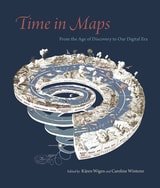
Time in Maps
From the Age of Discovery to Our Digital EraEdited by Kären Wigen and Caroline Winterer
University of Chicago Press, 2020
Focusing on maps created in Spanish America, Europe, the United States, and Asia, these essays take us from the Aztecs documenting the founding of Tenochtitlan, to early modern Japanese reconstructing nostalgic landscapes before Western encroachments, to nineteenth-century Americans grappling with the new concept of deep time. The book also features a defense of traditional paper maps by digital mapmaker William Rankin. With more than one hundred color maps and illustrations, Time in Maps will draw the attention of anyone interested in cartographic history.
Time in the Barrel
A Marine's Account of the Battle for Con ThienJames P. Coan
University of Alabama Press, 2019
A Marine’s highly personal memoir reliving the hellish days of a pivotal conflict of the Vietnam War.
Con Thien, located only two miles from the demilitarized zone dividing North and South Vietnam, was a United States Marine Corps firebase that was the scene of fierce combat for months on end during 1967. Staving off attacks and ambushes while suffering from ineffectual leadership from Washington as well as media onslaughts, courageous American Marines protected this crucial piece of land at all costs. They would hold Con Thien, but many paid the ultimate price. By the end of the war, more than 1,400 Marines had died and more than 9,000 sustained injuries defending the “Hill of Angels.”
For eight months, James P. Coan’s five-tank platoon was assigned to Con Thien while attached to various Marine infantry battalions. A novice second lieutenant at the time, the author kept a diary recording the thoughts, fears, and frustrations that accompanied his life on “The Hill.” Time in the Barrel: A Marine’s Account of the Battle for Con Thien offers an authentic firsthand account of the daily nightmare that was Con Thien. An enticing and fascinating read featuring authentic depictions of combat, it allows readers to fully grasp the enormity of the fierce struggle for Con Thien.
The defenders of Con Thien were bombarded with hundreds of rounds of incoming rockets, mortars, and artillery that pounded the beleaguered outpost daily. Monsoon downpours turned the red laterite clay soil into a morass of oozing mud, flooded bunkers and trenches, and made Con Thien a living hell. .Being at Con Thien came to be ruefully referred to by the Marines stationed there as "time in the barrel” because they were targets as easy as fish in a barrel.
More than a retelling of military movements, Coan’s engrossing narratives focus on the sheer sacrifice and misery of one Marine’s experience in Vietnam. Through his eyes, we experience the abysmal conditions the Marines endured, from monsoon rainstorms to the constant threat of impending attack. Climatic moments in history are captured through the rare, personal perspective of one particularly astute and observant participant.

Time in the Ditch
American Philosophy and the McCarthy EraJohn McCumber
Northwestern University Press, 2023

Time's Reasons
Philosophies of History Old and NewLeonard Krieger
University of Chicago Press, 1989
The heart of Krieger's narrative is an insightful analysis of theories of history from the classical period to the present, with a principal focus on the modern period. Krieger's exposition covers such figures as Ranke, Hegel, Comte, Marx, Acton, Troeltsch, Spengler, Braudel, and Foucault, among others, and his discussion involves him in subtle distinctions among terms such as historism, historicism, and historicity. He points to the impact on history of academic political radicalism and its results: the new social history. Krieger argues for the autonomy of historical principles and methods while tracing the importation in the modern period of external principles for historical coherence.
Time's Reasons is a profound attempt to rejuvenate and restore integrity to the discipline of history by one of the leading masters of nineteenth- and twentieth-century historiography. As such, it will be required reading for all historiographers and intellectual historians of the modern period.
Time's River
Archaeological Syntheses from the Lower Mississippi ValleyEdited by Janet Rafferty and Evan Peacock
University of Alabama Press, 2008
An archaeologically rich region, in advance of impending disturbance
This volume stands as a key general resource for archaeologists working in the region extending from Louisiana through Mississippi north to Missouri and Kentucky, and it represents an opportunity to influence for decades a large part of the archaeological work to take place in the Southeast.
The book responds to a need for a comprehensive archaeological overview of the Lower Mississippi Valley that forms a portion of an interstate corridor spanning nine states that will run from southern Michigan to the Texas-Mexico border. The culturally sensitive Mississippi Delta is one of the richest archaeological areas in North America, and it is crucial that research designs be comprehensive, coordinated, and meet current preservation and future research needs. The authors are well-respected researchers from both within and outside the region with expertise in the full range of topics that comprise American archaeology. They examine matters of method and theory, the application of materials science, geophysics, and other high-tech tools in archaeology that provide for optimum data-recovery.
Time, Creation and the Continuum
Theories in Antiquity and the Early Middle AgesRichard Sorabji
University of Chicago Press, 2006
“Splendid. . . . The canvas is vast, the picture animated, the painter nonpareil. . . . Sorabji’s work will encourage more adventurers to follow him to this fascinating new-found land.”—Jonathan Barnes, Times Literary Supplement
“One of the most important works in the history of metaphysics to appear in English for a considerable time. No one concerned with the problems with which it deals either as a historian of ideas or as a philosopher can afford to neglect it.”—Donald MacKinnon, Scottish Journal of Theology
“Unusually readable for such scholarly content, the book provides in rich and cogent terms a lively and well-balanced discussion of matters of concern to a wide academic audience.”—Choice
Time, History, and Belief in Aztec and Colonial Mexico
By Ross Hassig
University of Texas Press, 2001
Based on their enormously complex calendars that recorded cycles of many kinds, the Aztecs and other ancient Mesoamerican civilizations are generally believed to have had a cyclical, rather than linear, conception of time and history. This boldly revisionist book challenges that understanding. Ross Hassig offers convincing evidence that for the Aztecs time was predominantly linear, that it was manipulated by the state as a means of controlling a dispersed tribute empire, and that the Conquest cut off state control and severed the unity of the calendar, leaving only the lesser cycles. From these, he asserts, we have inadequately reconstructed the pre-Columbian calendar and so misunderstood the Aztec conception of time and history.
Hassig first presents the traditional explanation of the Aztec calendrical system and its ideological functions and then marshals contrary evidence to argue that the Aztec elite deliberately used calendars and timekeeping to achieve practical political ends. He further traces how the Conquest played out in the temporal realm as Spanish conceptions of time partially displaced the Aztec ones. His findings promise to revolutionize our understanding of how the Aztecs and other Mesoamerican societies conceived of time and history.

Time, Science, and Society in China and the West / Time and Mind
Fraser, J.T.
University of Massachusetts Press, 1986
For the first fifteen centuries of Western civilization, the Chinese were far ahead of Europe in applying their knowledge of nature to useful purposes. Why, then, did modern mathematized science, with all its implications for advanced technology, rise meteorically in Renaissance Europe rather than in China? Prompted by this observation, Joseph Needham explored the paradox three decades ago in what he termed “The Scientific Revolution Problem.” This collection of original papers continues the exploration, focusing on the idea and experience of the time, twenty-four scholars from China and the West speak of the different aspects of cultural life and tradition that favored the creation of mathematized science in Europe and discouraged such development in China. An understanding of this cultural history is of interest to modern China, which labors to join the advanced scientific and technological communities of the world. It is also of interest to those concerned with the position of science and technology in the West, since a comparative interpretation of the origins of Western advances helps identify the many problems those very advances have created.
Time, Trees, and Prehistory
Tree Ring dating and the Development of NA Archaeology 1914 to 1950Stephen E Nash
University of Utah Press, 2006
Dendrochronology, the science of assigning precise calendar dates to annual growth rings in trees, provided accurate dates at a time when North American archaeologists had no absolute dating techniques available to guide their analyses. Time, Trees, and Prehistory examines the growth, development, application, and interpretive implications of North American archaeological tree-ring dating from 1914 to 1950.
The development of dendrochronology forced archaeologists to radically revise their understanding of the prehistoric past, compressing by nearly fifty percent the time scale of the archaeological record. Basketmaker sites, for instance, were once thought to be four thousand years old; tree-ring application demonstrated that these sites dated well into the present millennium. Classic sites in Chaco Canyon and Mesa Verde were believed occupied for nearly a thousand years, but tree-ring dates demonstrated that such sites were often built, occupied, and abandoned in just over a century. Other similar changes in temporal scale forced archaeologists to reconsider their interpretations of the rate of prehistoric cultural change, population growth, and the degree of social and political complexity in the Southwest.
Time, Trees, and Prehistory examines archaeological practices of the 1920s, 30s, and 40s and demonstrates that tree-ring dating set the stage that enabled revolutionary developments in archaeological method and theory in succeeding decades.
Time, Typology, and Point Traditions in North Carolina Archaeology
Formative Cultures ReconsideredI. Randolph Daniel Jr.
University of Alabama Press, 2021
Revisiting the stone tools that reshaped our understanding of North Carolina's prehistoric past.
In the 1964 landmark publication The Formative Cultures of the Carolina Piedmont, Joffre Coe established a projectile point typology and chronology that, for the first time, allowed archaeologists to identify the relative age of a site or site deposit based on the point types recovered there. Consistent with the cultural-historical paradigm of the day, the “Coe axiom” stipulated that only one point type was produced at one moment in time in a particular location. Moreover, Coe identified periods of “cultural continuity” and “discontinuity” in the chronology based on perceived similarities and differences in point styles through time.
In Time, Typology, and Point Traditions in North Carolina Archaeology: Formative Cultures Reconsidered, I. Randolph Daniel Jr. reevaluates the Coe typology and sequence, analyzing their strengths and weaknesses. Daniel reviews the history of the projectile point type concept in the Southeast and revisits both Coe’s axiom and his notions regarding cultural continuity and change based on point types. In addition, Daniel updates Coe’s typology by clarifying or revising existing types and including types unrecognized in Coe’s monograph. Daniel also adopts a practice-centered approach to interpreting types and organizes them into several technological traditions that trace ancestral-descendent communities of practice that relate to our current understanding of North Carolina prehistory.
Appealing to professional and avocational archaeologists, Daniel provides ample illustrations of points in the book as well as color versions on a dedicated website. Daniel dedicates a final chapter to a discussion of the ethical issues related to professional archaeologists using private artifact collections. He calls for greater collaboration between professional and avocational communities, noting the scientific value of some private collections.
Time, Work, and Culture in the Middle Ages
Jacques Le Goff
University of Chicago Press, 1980
Time-Fetishes
The Secret History of Eternal RecurrenceNed Lukacher
Duke University Press, 1999
The thinkers in this counter-history of the eternal return lingered long enough on the question of time to learn how to resist separating eternity from time, and how to reflect on the possible identity of time and eternity as a way of resisting all prior metaphysical determinations. Drawing out the implications of Nietzsche’s reinvention of the doctrine of return, Lukacher ranges across a broad spectrum of ancient and modern thinkers. Shakespeare’s role in this history as the “poet of time” is particularly significant, for not only does Shakespeare reactivate the pre-Christian arguments of eternal return, he regards them, and all arguments and images concerning the essence of time and Being, from an inimitably ironic perspective.
As he makes transitions from literature to philosophy and psychoanalysis, Lukacher displays a theoretical imagination and historical vision that bring to the forefront a host of pre- and post-Christian texts in order to decipher in them an encounter with the thought of eternal recurrence that has been too long buried under layers of rigid metaphysical interpretation.

Times of History
Universal Topics in Islamic HistoriographyAziz Al-Azmeh
Central European University Press, 2007

Times of Trouble
Violence in Russian Literature and CultureEdited by Marcus C. Levitt and Tatyana Novikov
University of Wisconsin Press, 2007
From the country that has added to our vocabulary such colorful terms as "purges," "pogroms," and "gulag," this collection investigates the conspicuous marks of violence in Russian history and culture.
Russians and non-Russians alike have long debated the reasons for this endemic violence. Some have cited Russia's huge size, unforgiving climate, and exposed geographical position as formative in its national character, making invasion easy and order difficult. Others have fixed the blame on cultural and religious traditions that spurred internecine violence or on despotic rulers or unfortunate episodes in the nation's history, such as the Mongol invasion, the rule of Ivan the Terrible, or the "Red Terror" of the revolution. Even in contemporary Russia, the specter of violence continues, from widespread mistreatment of women to racial antagonism, the product of a frustrated nationalism that manifests itself in such phenomena as the wars in Chechnya.
Times of Trouble is the first in English to explore the problem of violence in Russia. From a variety of perspectives, essays investigate Russian history as well as depictions of violence in the visual arts and in literature, including the works of Fyodor Dostoevsky, Isaac Babel, Mikhail Lermontov, and Nina Sadur. From the Mongol invasion to the present day, topics include the gulag, genocide, violence against women, anti-Semitism, and terrorism as a tool of revolution.
Times of Upheaval
Four Medievalists in Twentieth-Century Central Europe. Conversations with Jerzy Kloczowski, János M. Bak, František Šmahel, and Herwig WolframPavlína Rychterová
Central European University Press, 2019
Timon of Athens
William Shakespeare
Arizona Center for Medieval and Renaissance Studies, 2021
Never performed in Shakespeare’s lifetime, Timon of Athens presents an intriguing puzzle for contemporary audiences. The disjointed plot and many gaps in the story have led scholars to believe it was a collaboration between Shakespeare and Thomas Middleton, a younger writer known for his satires, and productions for decades have faced choices about the most effective way to present the play. In this translation, Cavander acts as a third playwright in this collaborative process. Wrangling the voices of Shakespeare and Middleton on the page, Cavander unveils poetic lines and phrases that have sat stubbornly in the cobwebs, cutting these voices through the time barrier and into the world as we know it.
This translation was written as part of the Oregon Shakespeare Festival’s Play On! project, which commissioned new translations of thirty-nine Shakespeare plays. These translations present the work of "The Bard" in language accessible to modern audiences while never losing the beauty of Shakespeare’s verse. These volumes make these works available for the first time in print—a new First Folio for a new era.

Tinker to Evers to Chance
The Chicago Cubs and the Dawn of Modern AmericaDavid Rapp
University of Chicago Press, 2018
Tinker to Evers to Chance examines this pivotal moment in American history, when baseball became the game we know today. Each man came from a different corner of the country and brought a distinctive local culture with him: Evers from the Irish-American hothouse of Troy, New York; Tinker from the urban parklands of Kansas City, Missouri; Chance from the verdant fields of California’s Central Valley. The stories of these early baseball stars shed unexpected light not only on the evolution of baseball and on the enthusiasm of its players and fans all across America, but also on the broader convulsions transforming the US into a confident new industrial society. With them emerged a truly national culture.
This iconic trio helped baseball reinvent itself, but their legend has largely been relegated to myths and barroom trivia. David Rapp’s engaging history resets the story and brings these men to life again, enabling us to marvel anew at their feats on the diamond. It’s a rare look at one of baseball’s first dynasties in action.
Tippecanoe and Tyler Too
Famous Slogans and Catchphrases in American HistoryJan R. Van Meter
University of Chicago Press, 2008
“By necessity, by proclivity, by delight,” Ralph Waldo Emerson said in 1876, “we all quote.” But often the phrases that fall most readily from our collective lips—like “fire when ready,” “speak softly and carry a big stick,” or “nice guys finish last”—are those whose origins and true meanings we have ceased to consider. Restoring three-dimensionality to more than fifty of these American sayings, Tippecanoe and Tyler Too turns clichés back into history by telling the life stories of the words that have served as our most powerful battle cries, rallying points, laments, and inspirations.
In individual entries on slogans and catchphrases from the early seventeenth to the late twentieth century, Jan Van Meter reveals that each one is a living, malleable entity that has profoundly shaped and continues to influence our public culture. From John Winthrop’s “We shall be as a city upon a hill” and the 1840 Log Cabin Campaign’s “Tippecanoe and Tyler Too” to Martin Luther King Jr.’s “I have a dream” and Ronald Reagan’s “Mr. Gorbachev, tear down this wall,” each of Van Meter’s selections emerges as a memory device for a larger political or cultural story. Taken together in Van Meter’s able hands, these famous slogans and catchphrases give voice to our common history even as we argue about where it should lead us.
“As Van Meter argues, these are important ‘memory devices for a larger story.’ . . . The author has thoroughly researched all the catchphrases . . . . This book would make delightful in-flight reading or a nice gift for a trivia buff. Recommended.”—Choice
Tirana Modern
Biblio-Ethnography on the Margins of EuropeMatthew Rosen
Vanderbilt University Press, 2022
Drawing on material collected through fieldwork with a community of readers, writers, and translators attached to the independent Albanian publisher Pika pa sipërfaqe (Point without Surface), Tirana Modern provides a tightly focused ethnography of literary culture in Albania that brings into relief the more general dialectic between social imagination and social reality as mediated by reading and literature.

Tired of Weeping
Mother Love, Child Death, and Poverty in Guinea-BissauJonina Einarsdottir
University of Wisconsin Press, 2004

Tissue of the World
The Nature of Ancient SympathyBrooke Holmes
University of Chicago Press, 0
A multidisciplinary account showing how ancient notions of sympathy changed ways of thinking about interconnectedness.
When we hear the word sympathy today, we tend to imagine the emotional bond between people. But for centuries, sympathy just as commonly brought to mind interdependencies between plants, rocks, and celestial bodies. It explained why magnets attract iron, how the stars influence human destiny, and why one trembles when one is afraid. It implicated human beings in a complex network of loves (sympathies) and hates (antipathies). The ancient notion of sympathy led to ways of thinking about community even beyond the boundaries of the human that continue to influence how we think about life, society, and Nature today.
This book offers the first comprehensive account of ancient sympathy, spanning the fifth century BCE to the third century CE. Tracing connections across works of philosophy, natural history, cosmology, medicine, and literature, Brooke Holmes argues that how people thought about sympathetic communities played a crucial role in shaping the idea of Nature as a webbed, well-ordered whole in the Hellenistic and Roman Imperial Mediterranean. From the scale of the organism to that of the cosmos, this book interrogates the ancient history of a protoecological, antimechanistic conception of Nature, proposing the richly textured thought-world of sympathy as a resource for rethinking and reimagining human and nonhuman communities, the stories we tell about the classical world, and the political and theoretical stakes of vital materialisms.
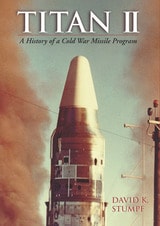
Titan II
A History of a Cold War Missile ProgramDavid K. Stumpf
University of Arkansas Press, 2002
This is the richly detailed story of the Titan II missile and the men and women who developed and operated the system. David K. Stumpf uses a wide range of sources, drawing upon interviews with and memoirs by engineers and airmen as well as recently declassified government documents and other public materials. Over 170 drawings and photographs, most of which have never been published, enhance the narrative. The three major accidents of the program are described in detail for the first time using authoritative sources.
Titan II will be welcomed by librarians for its prodigious reference detail, by technology history professionals and laymen, and by the many civilian and Air Force personnel who were involved in the program—a deterrent weapons system that proved to be successful in defending America from nuclear attack.
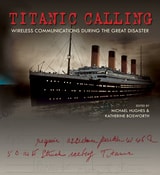
Titanic Calling
Wireless Communications during the Great DisasterEdited by Michael Hughes and Katherine Bosworth
Bodleian Library Publishing, 2012
Published in commemoration of the one-hundredth anniversary of the Titanic’s sinking, this book tells the story of that fateful night from an unusual angle: through the many wireless communications sent to and from the land stations and the ships involved as the tragic events unfolded.
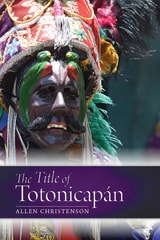
Title of Totonicapán
transcription, translation, and commentary by Allen J. Christenson
University Press of Colorado, 2022
The Title of Totonicapán is a land title written by surviving members of the K’iche’ Maya nobility, a branch of the Maya that dominated the highlands of western Guatemala prior to the Spanish invasion in 1524, and it was duly signed by the ruling lords of all three major K’iche’ lineages—the Kaweqib’, the Nijayib’, and the Ajaw K’iche’s. Titles of this kind were relatively common for Maya communities in the Guatemalan highlands in the first century after the Spanish Conquest as a means of asserting land rights and privileges for its leaders. Like the Popol Vuh, the Title of Totonicapán is written in the elevated court language of the early Colonial period and eloquently describes the mythic origins and history of the K’iche’ people. For the most part, the Title of Totonicapán agrees with the Popol Vuh’s version of K’iche’ history and cosmology, providing a complementary account that attests traditions that must have been widely known and understood. But in many instances the Totonicapán document is richer in detail and departs from the Popol Vuh’s more cursory description of history, genealogy, and political organization. In other instances, it contradicts assertions made by the authors of the Popol Vuh, perhaps a reflection of internal dissent and jealousy between rival lineages within the K’iche’ hierarchy. It also contains significant passages of cosmology and history that do not appear in any other highland Maya text.
This volume makes a comprehensive and updated edition of the Title of Totonicapán accessible to scholars and students in history, anthropology, archaeology, and religious studies in Latin America, as well as those interested in Indigenous literature and Native American/Indigenous studies more broadly. It is also a stand-alone work of Indigenous literature that provides additional K’iche’ perspectives, enhancing the reading of other colonial Maya sources.

Tito and His Comrades
Jože Pirjevec, Foreword by Emily Greble
University of Wisconsin Press, 2018
With his Partisans he fought Hitler during World War II, and after the war he shrewdly resisted the Soviet Union's grasp. A leader of the non-aligned nations, he long enjoyed a reputation in the West as "the only good Communist" despite a dubious human rights record at home. Jože Pirjevec employs impressive research from archives in eight languages to offer this illuminating, definitive portrait of a complex man in turbulent times.
Pirjevec recounts how Tito, with little schooling but an astute intellect and driving ambition, rose through Communist Party ranks to shape and rule the Yugoslav federation. Surviving multiple assassination attempts by Nazis, Soviet spies, and others, Tito boldly threatened Stalin in return and may have, Pirjevec reveals, contrived Stalin's death. The narrative follows Tito's personal and political life into old age, as the specter of a Soviet invasion haunted him until his death at age eighty-seven. Available in English for the first time, this edition includes new material from Pirjevec and a foreword by Emily Greble.

Tito, Mihailovic, and the Allies
Walter R. Roberts
Duke University Press, 1987

Titus Andronicus
William Shakespeare
Arizona Center for Medieval and Renaissance Studies, 2022
One of Shakespeare’s goriest plays, Titus Andronicus traces the fall of the Andronicus family in ancient Rome. Clinging to the ways of the past, Titus desperately seeks to remain loyal to the throne as his world crumbles around him. Amy Freed’s translation of Titus Andronicus is careful and meticulous, making small but mighty changes in moments that enhance the drama of each scene. Freed’s version gives this extraordinary play an even faster track on which to run.
This translation of Titus Andronicus was written as part of the Oregon Shakespeare Festival’s Play On! project, which commissioned new translations of thirty-nine Shakespeare plays. These translations present work from “The Bard” in language accessible to modern audiences while never losing the beauty of Shakespeare’s verse. Enlisting the talents of a diverse group of contemporary playwrights, screenwriters, and dramaturges from diverse backgrounds, this project reenvisions Shakespeare for the twenty-first century. These volumes make these works available for the first time in print—a new First Folio for a new era.

To Advance the Race
Black Women's Higher Education from the Antebellum Era to the 1960sLinda M. Perkins
University of Illinois Press, 2024
A first of its kind history, To Advance the Race is an enlightening look at African American women and their multi-generational commitment to the ideal of education as a collective achievement.
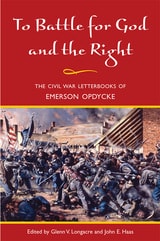
To Battle for God and the Right
The Civil War Letterbooks of Emerson OpdyckeEmerson Opdycke, Ed. by Glenn V. Longacre and John E. Haas.
University of Illinois Press, 2002
To Be A Slave in Brazil
1550-1888Mattoso, Katia M de Queiros
Rutgers University Press, 1986
To Be Nsala's Daughter
Decomposing the Colonial GazeChérie N. Rivers
Duke University Press, 2023
To Be a Man Is Not a One-Day Job
Masculinity, Money, and Intimacy in NigeriaDaniel Jordan Smith
University of Chicago Press, 2017
Drawing on twenty-five years of experience in southeastern Nigeria, Daniel Jordan Smith takes readers through the principal phases and arenas of men’s lives: the transition to adulthood; searching for work and making a living; courtship, marriage, and fatherhood; fraternal and political relationships; and finally, the attainment of elder status and death. He relates men’s struggles both to fulfill their own aspirations and to meet society’s expectations. He also considers men who behave badly, mistreat their wives and children, or resort to crime and violence. All of these men face similar challenges as they navigate the complex geometry of money and intimacy. Unraveling these connections, Smith argues, provides us with a deeper understanding of both masculinity and society in Nigeria.
To Be in This Number
Alane Rollings
Northwestern University Press, 2005
To Be the Main Leaders of Our People
A History of Minnesota Ojibwe Politics, 1825-1898Rebecca Kugel
Michigan State University Press, 1998
In the spring of 1868, people from several Ojibwe villages located along the upper Mississippi River were relocated to a new reservation at White Earth, more than 100 miles to the west. In many public declarations that accompanied their forced migration, these people appeared to embrace the move, as well as their conversion to Christianity and the new agrarian lifestyle imposed on them. Beneath this surface piety and apparent acceptance of change, however, lay deep and bitter political divisions that were to define fundamental struggles that shaped Ojibwe society for several generations.
In order to reveal the nature and extent of this struggle for legitimacy and authority, To Be The Main Leaders of Our People reconstructs the political and social history of these Minnesota Ojibwe communities between the years 1825 and 1898. Ojibwe political concerns, the thoughts and actions of Ojibwe political leaders, and the operation of the Ojibwe political system define the work's focus. Kugel examines this particular period of time because of its significance to contemporary Ojibwe history. The year 1825, for instance, marked the beginning of a formal alliance with the United States; 1898 represented not an end, but a striking point of continuity, defying the easy categorizations of Native peoples made by non-Indians, especially in the closing years of the nineteenth century.
In this volume, the Ojibwe "speak for themselves," as their words were recorded by government officials, Christian missionaries, fur traders, soldiers, lumbermen, homesteaders, and journalists. While they were nearly always recorded in English translation, Ojibwe thoughts, perceptions, concerns, and even humor, clearly emerge. To Be The Main Leaders of Our People expands the parameters of how oral traditions can be used in historical writing and sheds new light on a complex, but critical, series of events in ongoing relations between Native and non-Native people.
To Become an American
Immigrants and Americanization Campaigns of the Early Twentieth CenturyLeslie A. Hahner
Michigan State University Press, 2017
To Can the Kaiser
Arkansas and the Great WarMichael D. Polston
Butler Center for Arkansas Studies, 2015

To Care for the Sick and Bury the Dead
African American Lodges and Cemeteries in TennesseeLeigh Ann Gardner
Vanderbilt University Press, 2022
These Black cemeteries dot the Tennessee landscape, but few know their history or the societies of care they represent. To Care for the Sick and Bury the Dead is the first book-length look at these cemeteries and the lodges that fostered them.
This book is a must-have for genealogists, historians, and family members of the people buried in these cemeteries.

To Change the World
My Years in CubaRandall, Margaret
Rutgers University Press, 2009
Randall gives readers an inside look at her children's education, the process through which new law was enacted, the ins and outs of healthcare, employment, internationalism, culture, and ordinary people's lives. She explores issues of censorship and repression, describing how Cuban writers and artists faced them. She recounts one of the country's last beauty pageants, shows us a night of People's Court, and takes us with her when she shops for her family's food rations. Key figures of the revolution appear throughout, and Randall reveals aspects of their lives never before seen.
More than fifty black and white photographs, most by the author, add depth and richness to this astute and illuminating memoir. Written with a poet's ear, depicted with a photographer's eye, and filled with a feminist vision, To Change the Worldùneither an apology nor gratuitous attackùadds immensely to the existing literature on revolutionary Cuba.
To Come to the Land
Immigration and Settlement in 16th-Century Eretz-IsraelAbraham David, translated by Dena Ordan
University of Alabama Press, 1999
To Come to the Land makes available in English a vast body of research,
previously available only in Hebrew, on the early history of the land now
known as Israel.
Abraham David here focuses on the Spanish and Portuguese Jews who fled
the Iberian Peninsula during the 16th century, tracing the beginnings of
Sephardic influence in the land of Israel.
After the Ottoman Turks conquered Syria, Palestine, and Egypt in 1516,
the Ottoman regime, unlike their Mamluk predecessors, encouraged economic
development and settlement throughout the region. This openness to immigration
offered a solution to the crisis Iberian Jews were undergoing as a result
of their expulsion from Spain and the forced conversions in Portugal. Within
a few years of the Ottoman conquest, Jews of Spanish extraction, many of
them clustered in urban areas, dominated the Jewish communities of Eretz-Israel.
In this carefully researched study, David examines the lasting impression
made by these enterprising Jewish settlers on the commercial, social, and
intellectual life of the area under early Ottoman rule. Of particular interest
is his examination of the cities of Jerusalem and Safed and David's succinct
biographies of leading Jewish personalities throughout the region.
This first English translation of a ground-breaking Hebrew work provides
a comprehensive overview of a significant chapter in the history of Israel
and explores some of the factors that brought to it the best minds of the
age. Essential for scholars of late Medieval Jewish history, To Come to
the Land will also be an important resource for scholars of intellectual
history, as it provides background crucial to an understanding of the intellectual
flourishing of the period.

To Command the Sky
The Battle for Air Superiority Over Germany, 1942-1944Stephen L. McFarland and Wesley Phillips Newton
University of Alabama Press, 2006
To Command the Sky is a scholarly record of the fight for domination of the skies over western Europe during World War II. It also explains the technical details of the tactics used to defeat the Luftwaffe. This book is important for serious students of World War II or military aviation.
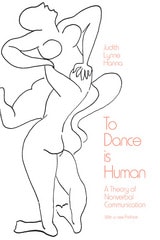
To Dance is Human
A Theory of Nonverbal CommunicationJudith Lynne Hanna
University of Chicago Press, 1987