Results by title
4413 books match the query 'Anthropology' and 750 start with t
The Sublime Object of Orientalism
Asian Physical Culture in the WestPaul Bowman
Hong Kong University Press, 2026
An exploration of the little-understood relationship between popular Asian physical practices and the sublime.
This book proposes that globalized Asian physical and cultural practices such as taiji, qigong, yoga, and meditation can be understood by examining the intimate connection between Western orientalism and the Romantic aesthetic notion of the sublime. The Sublime Object of Orientalism recasts “orientalist physical culture” as a set of practices animated by the sublime.
Paul Bowman combines new readings of philosophers and cultural critics such as Slavoj Žižek and Jane Iwamura with analyses of film, media, and Asian physical practices and their entrepreneurial forms to shed light on the quest to articulate a philosophy of orientalist physical culture. He also explores ways to make sense of orientalist physical culture in the contemporary world and evaluate the often problematic ideologies that circulate around these cultural practices without uncritically accepting their value or rejecting them outright. This empathetic and accessible volume is a must-read for students, researchers, and teachers of cross-cultural studies, cultural theory, postcolonialism, and orientalism.
The Subtlety of the Street
The Discourse of ResponsibilityM Peregrine Balmat
University of Michigan Press, 2026
The Subtlety of the Street examines the effects of small, seemingly mundane words that occur in conversations between street-level workers and those they serve. Combining discourse analysis, public policy studies, and higher education and social work research, M Peregrine Balmat examines data from two distinct ethnographies that comprise over 1100 pages of transcribed social interaction and 24 months of participant observation fieldwork. Balmat uses Interactional Linguistics to examine how responsibility is constructed over time in social work (homeless shelter) and higher education (community college) contexts, bringing to light systemic issues that face street-level disciplines. Analyzing constellations of words—personal pronouns, terms referring to performance benchmarks and assessments, and cultural mythologies—the author shows that clusters of seemingly generic phrases street-level workers use to communicate responsibility can function, in concert, as racialized microaggressions —termed the Gestalt of Responsibility.
These problematic linguistic choices can accumulate over a student’s time in the classroom or over a person’s time in shelter. They shift in response to performance assessments and measurements, increasing in unfriendly, morally-loaded constructions of responsibility as testing days and shelter restrictions approach. While street-level research suggests that strategies like these are utilized because workers believe those discourse practices work, the phrases reflect historical English Poor Laws and racialized ideologies leveled against enslaved Black people as well as more modern neoliberal welfare state and education politics where such ideologies persist. The Subtlety of the Street offers recommendations for street-level workers’ collaborative professional development and implications for street-level approaches to pedagogy and practice.
The Sun God and the Savior
The Christianization of the Nahua and Totonac in the Sierra Norte de Puebla, MexicoGuy Stresser-Péan
University Press of Colorado, 2009
The first English translation of Guy Stresser-Péan's tour-de-force presents two decades of fieldwork in the Sierra Norte de Puebla, Mexico, where native pre-Hispanic pagan beliefs blended with traditional Catholic evangelization from the sixteenth century and the more recent intrusion of modernism.
The Indians of the Sierra Norte de Puebla are deeply devoted to Christianity, but their devotion is seamlessly combined with pagan customs, resulting in a hybrid belief system that is not wholly indigenous, yet not wholly Christian. The syncretism practiced here has led the Totonac and Nahua people to identify Christ with the Sun God, a belief expressed symbolically in ritual practices such as the Dance of the Voladores.
Spanning the four centuries from the earliest systematic campaign against Nahua ritual practices - Zumárraga's idolatry trials of 1536-1540 - to the twentieth century, Stresser-Péan contextualizes Nahua and Totonac ritual practices as a series of responses to Christian evangelization and the social reproduction of traditional ritual practices. The Sun God and the Savior is a monumental work on the ethnographic and historical knowledge of the peoples of the Sierra Norte.
The Supernatural in Society, Culture, and History
Dennis Waskul and Marc Eaton
Temple University Press, 2018
In the twenty-first century, as in centuries past, stories of the supernatural thrill and terrify us. But despite their popularity, scholars often dismiss such beliefs in the uncanny as inconsequential, or even embarrassing. The editors and contributors to The Supernatural in Society, Culture, and History have made a concerted effort to understand encounters with ghosts and the supernatural that have remain present and flourished. Featuring folkloric researchers examining the cultural value of such beliefs and practices, sociologists who acknowledge the social and historical value of the supernatural, and enthusiasts of the mystical and uncanny, this volume includes a variety of experts and interested observers using first-hand ethnographic experiences and historical records.
The Supernatural in Society, Culture, and History seeks to understand the socio-cultural and socio-historical contexts of the supernatural. This volume takes the supernatural as real because belief in it has fundamentally shaped human history. It continues to inform people’s interpretations, actions, and identities on a daily basis. The supernatural is an indelible part of our social world that deserves sincere scholarly attention.
Contributors include: Janet Baldwin, I'Nasah Crockett, William Ryan Force, Rachael Ironside, Tea Krulos, Joseph Laycock, Stephen L. Muzzatti, Scott Scribner, Emma Smith, Jeannie Banks Thomas, and the editors

The Surgery Issue
Eric Plemons and Chris Straayer, special issue editors
Duke University Press, 2018
Contributors. Paisley Currah, Joshua Franklin, Cressida J. Heyes, Julia Horncastle, Riki Lane, J.R. Latham, Sandra Mesics, Eric Plemons, Katherine Rachlin, Chris Straayer, Susan Stryker
The Surrounds
Urban Life within and beyond CaptureAbdouMaliq Simone
Duke University Press, 2022
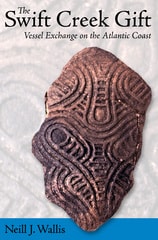
The Swift Creek Gift
Vessel Exchange on the Atlantic CoastNeill J. Wallis
University of Alabama Press, 2011
A unique dataset for studying past social interactions comes from Swift Creek Complicated Stamped pottery that linked sites throughout much of the Eastern Woodlands but that was primarily distributed over the lower Southeast. Although connections have been demonstrated, their significance has remained enigmatic. How and why were apparently utilitarian vessels, or the wooden tools used to make them, distributed widely across the landscape?
This book assesses Woodland Period interactions using technofunctional, mineralogical, and chemical data derived from Swift Creek Complicated Stamped sherds whose provenience is fully documented from both mortuary mounds and village middens along the Atlantic coast. Together, these data demonstrate formal and functional differences between mortuary and village assemblages along with the nearly exclusive occurrence of foreign-made cooking pots in mortuary contexts. The Swift Creek Gift provides insight into the unique workings of gift exchanges to transform seemingly mundane materials like cooking pots into powerful tools of commemoration, affiliation, and ownership.

The Tango Machine
Musical Culture in the Age of ExpediencyMorgan James Luker
University of Chicago Press, 2016
Luker traces the diverse and often contradictory ways tango is used in Argentina in activities ranging from state cultural policy-making to its export abroad as a cultural emblem, from the expanding nonprofit arts sector to tango-themed urban renewal projects. He shows how projects such as these are not peripheral to an otherwise “real” tango—they are the absolutely central means by which the values of this musical culture are cultivated. By richly detailing the interdependence of aesthetic value and the regimes of cultural management, this book sheds light on core conceptual challenges facing critical music scholarship today.
The Task of Cultural Critique
Teresa L. Ebert
University of Illinois Press, 2008
Through groundbreaking analyses of cultural texts, Ebert questions the contemporary Derridian dogma that asserts "the future belongs to ghosts." Events-to-come are not spectral, she contends, but the material outcome of global class struggles. Not "hauntology" but history produces cultural practices and their conflictive representations--from sexuality, war, and consumption to democracy, torture, globalization, and absolute otherness. With close readings of texts from Proust and Balzac to "Chick Lit," from Lukács, de Man, Deleuze, and Marx to Derrida, Žižek, Butler, Kollontai, and Agamben, the book opens up new directions for cultural critique today.
The Taste of Nostalgia
Women, Race, and Culinary Longing in PeruAmy Cox Hall
University of Texas Press, 2024
An exploration of gender, race, and food in Peru in the 1950s and 1960s and today.
From the late 1940s to the mid 1960s, Peru’s rapid industrialization and anti-communist authoritarianism coincided with the rise of mass-produced cookbooks, the first televised cooking shows, glossy lifestyle magazines, and imported domestic appliances and foodstuffs. Amy Cox Hall’s The Taste of Nostalgia uses taste as a thematic and analytic thread to examine the ways that women, race, and the kitchen were foundational to Peruvian longings for modernity, both during the Cold War and today.
Drawing on interviews, personal stories, media images, and archival and ethnographic research, Cox Hall considers how elite, European-descended women and the urban home were central to Peru’s modernizing project and finds that all women who labored within the deeply racialized and gendered world of food helped set the stage for a Peruvian food nationalism that is now global in the twenty-first century. Cox Hall skillfully connects how the sometimes-unsavory tastes of the past are served again in today’s profitable and pervasive gastronostalgia that helps sell Peru and its cuisine both at home and abroad.
The Teacup Ministry and Other Stories
Subtle Boundaries of ClassBy Rhoda H. Halperin
University of Texas Press, 2001
In the global world of the twenty-first century, class boundaries are subtle and permeable, though real nonetheless. Markers of identity, authenticity, and belonging can change with a gesture or a glance, making people feel they do or don't belong in certain places, with certain people, at certain times. In these powerfully written ethnographic stories, Rhoda Halperin maps the boundaries of class by examining three themes: crossing class boundaries, class creativity, and class vulnerability.
In telling these stories, Halperin draws on a wealth of ethnographic experiences in this country and abroad. Her book challenges class stereotypes in ways that touch on universals across cultures and over time.
The Terror of the Machine
Technology, Work, Gender, and Ecology on the U.S.-Mexico BorderBy Devon G. Peña
University of Texas Press, 1995
Born of thirteen years of field research, this interdisciplinary work explores the complex intersections of technology, class, gender, and ecology in the transnational milieu of Mexico's maquiladoras, foreign-owned assembly plants located along the U.S. border.
Devon Peña examines workplace and community struggles from the perspective of the women who work in the maquiladoras. He describes the workers' struggles for workplace democracy, social justice, and sustainable development. He also observes the circulation of struggle from the factory to the community, highlighting the efforts to establish worker-owned cooperatives in the border region during the 1970s and 1980s.
Female maquila workers are typically portrayed as passive, apolitical, and easily exploited. This book, however, presents an opposing view, investigating the "subaltern life of the shop floor"—the workers' informal methods of resistance to hazardous conditions, sexual harassment, and managerial tyranny. Using survey research, oral history, discourse analysis, and site ethnography, the author develops a cogent critique of labor-process theory, a critique grounded on his extensive study of actual workplace politics in the maquiladoras.
The Terror of the Machine is a trenchant analysis of the political, cultural, and environmental effects of maquila industrialization and an eloquent and persuasive call for alternatives in the direction of ecologically sustainable and culturally appropriate modes of development.
The Tewa World
Space, Time, Being and Becoming in a Pueblo SocietyAlfonso Ortiz
University of Chicago Press, 1972
The Theater of Operations
National Security Affect from the Cold War to the War on TerrorJoseph Masco
Duke University Press, 2014
The Third Eye
Race, Cinema, and Ethnographic SpectacleFatimah Tobing Rony
Duke University Press, 1996
In films as seemingly dissimilar as Nanook of the North, King Kong, and research footage of West Africans from an 1895 Paris ethnographic exposition, Rony exposes a shared fascination with—and anxiety over—race. She shows how photographic “realism” contributed to popular and scientific notions of evolution, race, and civilization, and how, in turn, anthropology understood and critiqued its own use of photographic technology. Looking beyond negative Western images of the Other, Rony considers performance strategies that disrupt these images—for example, the use of open resistance, recontextualization, and parody in the films of Katherine Dunham and Zora Neale Hurston, or the performances of Josephine Baker. She also draws on the work of contemporary artists such as Lorna Simpson and Victor Masayesva Jr., and writers such as Frantz Fanon and James Baldwin, who unveil the language of racialization in ethnographic cinema.
Elegantly written and richly illustrated, innovative in theory and original in method, The Third Eye is a remarkable interdisciplinary contribution to critical thought in film studies, anthropology, cultural studies, art history, postcolonial studies, and women’s studies.
The Three Worlds
Culture and World DevelopmentPeter Worsley
University of Chicago Press, 1984
Peter Worsley first considers existing theories of development, synthesizing the Marxist approach with that of social anthropologists and identifying culture—in the sense of a shared set of values—as the key element missing in more traditional approaches to the sociology of development. Worsley then examines successive forms of rural organization, develops a new definition of the urban poor, considers the relation of ethnicity and nationalism to social class and to each other, and, finally, discusses the nature of the three worlds implied in the term Third World.
The Time Has Grown Short
René Girard, or the Last LawBenoît Chantre
Michigan State University Press, 2022
The Tombigbee Watershed in Southeastern Prehistory
Ned J. Jenkins
University of Alabama Press, 1986
Representing the synthesis of approximately ten years of archaeological research along the central Tombigbee River, this book offers new theoretical and interpretive contributions to the study of human activity in the Tombigbee River Valley from 1000 B.C. to A.D. 1450. The authors have devised a new taxonomic approach that allows them to portray cultures as they gathered momentum and peaked in their potential as social, economic, and political structures. The data acquired for this study are from the massive cultural resource management program that accompanied the construction of the Tennessee-Tombigbee Waterway.
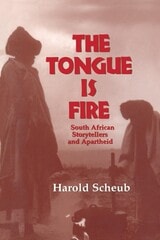
The Tongue Is Fire
South African Storytellers and ApartheidHarold E. Scheub
University of Wisconsin Press, 1996
With tape-recorder and camera in hand, Scheub registered the testaments of Swati, Xhosa, Ndebele, and Zulu storytellers, farming people who lived in the remote reaches of rural South Africa. While young people fought in the streets of Soweto and South African writers made the world aware of apartheid’s evils, the rural storytellers resisted apartheid in their own way, using myth and metaphor to preserve their traditions and confront their oppressors. For more than 20 years, Scheub kept the promise he made to the storytellers to publish his translations of their stories only when freedom came to South Africa. The Tongue Is Fire presents these voices of South African oral tradition—the historians, the poets, the epic-performers, the myth-makers—documenting their enduring faith in the power of the word to sustain tradition in the face of determined efforts to distort or eliminate it. These texts are a tribute to the storytellers who have always, in periods of crisis, exercised their art to inspire their own people.

The Torture Letters
Reckoning with Police ViolenceLaurence Ralph
University of Chicago Press, 2019
In The Torture Letters, Laurence Ralph chronicles the history of torture in Chicago, the burgeoning activist movement against police violence, and the American public’s complicity in perpetuating torture at home and abroad. Engaging with a long tradition of epistolary meditations on racism in the United States, from James Baldwin’s The Fire Next Time to Ta-Nehisi Coates’s Between the World and Me, Ralph offers in this book a collection of open letters written to protesters, victims, students, and others. Through these moving, questing, enraged letters, Ralph bears witness to police violence that began in Burge’s Area Two and follows the city’s networks of torture to the global War on Terror. From Vietnam to Geneva to Guantanamo Bay—Ralph’s story extends as far as the legacy of American imperialism. Combining insights from fourteen years of research on torture with testimonies of victims of police violence, retired officers, lawyers, and protesters, this is a powerful indictment of police violence and a fierce challenge to all Americans to demand an end to the systems that support it.
With compassion and careful skill, Ralph uncovers the tangled connections among law enforcement, the political machine, and the courts in Chicago, amplifying the voices of torture victims who are still with us—and lending a voice to those long deceased.

The Torture Letters
Reckoning with Police ViolenceLaurence Ralph
University of Chicago Press, 2020
In The Torture Letters, Laurence Ralph chronicles the history of torture in Chicago, the burgeoning activist movement against police violence, and the American public’s complicity in perpetuating torture at home and abroad. Engaging with a long tradition of epistolary meditations on racism in the United States, from James Baldwin’s The Fire Next Time to Ta-Nehisi Coates’s Between the World and Me, Ralph offers in this book a collection of open letters written to protesters, victims, students, and others. Through these moving, questing, enraged letters, Ralph bears witness to police violence that began in Burge’s Area Two and follows the city’s networks of torture to the global War on Terror. From Vietnam to Geneva to Guantanamo Bay—Ralph’s story extends as far as the legacy of American imperialism. Combining insights from fourteen years of research on torture with testimonies of victims of police violence, retired officers, lawyers, and protesters, this is a powerful indictment of police violence and a fierce challenge to all Americans to demand an end to the systems that support it.
With compassion and careful skill, Ralph uncovers the tangled connections among law enforcement, the political machine, and the courts in Chicago, amplifying the voices of torture victims who are still with us—and lending a voice to those long deceased.

The Tourist State
Performing Leisure, Liberalism, and Race in New ZealandMargaret Werry
University of Minnesota Press, 2011
No longer the dreary sheep farm at the end of the world, the New Zealand of the new millennium is a hot global ticket, heralded for its bicultural dynamism, laid-back lifestyle, and scenery extraordinary enough to pass for Tolkien’s Middle Earth. How this image was crafted is the story The Tourist State tells. In a series of narratives that address the embodied dimensions of biopolitics and explore the collision of race, performance, and the cultural poetics of the state, Margaret Werry exposes the real drama behind the new New Zealand, revealing how a nation was sold to the world—and to itself.
The story stretches back to the so-called Liberal Era at the beginning of the twentieth century, in which the young settler colony touted itself as the social laboratory of the world. Focusing on where tourism and liberal governmentality coincide, The Tourist State takes us from military diplomacy at the dawn of the American Pacific to the exotic blandishments of Broadway and Coney Island, from landscape preservation to health reform and town planning, from blockbuster film to knowledge economy policy.
Weaving together interpretive history, performance ethnography, and cultural criticism, Werry offers new ways to think about race and indigeneity—and about the role of human agency in state-making.
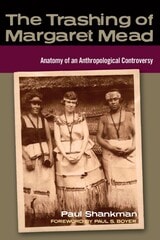
The Trashing of Margaret Mead
Anatomy of an Anthropological ControversyPaul Shankman; Foreword by Paul S. Boyer
University of Wisconsin Press, 2009
In The Trashing of Margaret Mead, Paul Shankman explores the many dimensions of the Mead-Freeman controversy as it developed publicly and as it played out privately, including the personal relationships, professional rivalries, and larger-than-life personalities that drove it. Providing a critical perspective on Freeman’s arguments, Shankman reviews key questions about Samoan sexuality, the alleged hoaxing of Mead, and the meaning of the controversy. Why were Freeman’s arguments so readily accepted by pundits outside the field of anthropology? What did Samoans themselves think? Can Mead’s reputation be salvaged from the quicksand of controversy? Written in an engaging, clear style and based on a careful review of the evidence, The Trashing of Margaret Mead illuminates questions of enduring significance to the academy and beyond.
The Trauma Mantras
A Memoir in Prose PoemsAdrie Kusserow
Duke University Press, 2024
The Tree That Bends
Discourse, Power, and the Survival of Maskoki PeoplePatricia Riles Wickman
University of Alabama Press, 1999
In her compelling and controversial arguments, Wickman rejects the myths that erase Native Americans from Florida through the agency of Spaniards and diseases and make the area an empty frontier awaiting American expansion. Through research on both sides of the Atlantic and extensive oral history interviews among the Seminoles of Florida and Oklahoma, Wickman shatters current theories about the origins of the people encountered by the Spaniards and presents, for the first time ever, the Native American perspective. She describes the genesis of the groups known today as Creek, Seminole, and Miccosukee—the Maskoki peoples—and traces their common Mississippian heritage, affirming their claims to continuous habitation of the Southeast and Florida. Her work exposes the rhetoric of conquest and replaces it with the rhetoric of survival.
An important cross-disciplinary work, The Tree That Bends reveals the flexibility of the Maskoki people and the sociocultural mechanisms that allowed them to survive the pressures introduced at contact. Their world was capable of incorporating the New without destroying the Old, and their descendants not only survive today but also succeed as a discrete culture as a result.

The Trials of Mrs. K.
Seeking Justice in a World with WitchesAdam Ashforth
University of Chicago Press, 2018
In The Trials of Mrs. K., Adam Ashforth studies this and similar stories of witchcraft that continue to circulate in Malawi. At the heart of the book is Ashforth’s desire to understand how claims to truth, the pursuit of justice, and demands for security work in contemporary Africa, where stories of witchcraft can be terrifying. Guiding us through the history of legal customs and their interactions with the court of public opinion, Ashforth asks challenging questions about responsibility, occult forces, and the imperfect but vital mechanisms of law. A beautifully written and provocative book, The Trials of Mrs. K. will be an essential text for understanding what justice means in a fragile and dangerous world.
The Trouble with Ancient DNA
Telling Stories of the Past with Genomic ScienceAnna Källén
University of Chicago Press, 2025
In recent years, discoveries brought to light through analysis of ancient DNA—or aDNA—have made headlines around the world. While ancient DNA studies may appear to focus on laboratory science and objective results, the findings have also relied heavily on storytelling and can be influenced by political interests.
In The Trouble with Ancient DNA, Anna Källén explores how the parameters of genetic science influence the stories we tell about our ancient ancestors, questioning what narratives we can and should take at face value. Through accounts of migrations, warriors, and figures like Cheddar Man, we see enticing and potent narratives that reach far beyond what can be gathered from the scientific study of molecules alone. Rather, by privileging certain narratives and questions—like those about sex or eye and skin color—our stories of ancient DNA are spun around the structure of today’s methodologies, technologies, and popular and political interests. Källén considers how DNA is used to sensationalize stories, how its use poses questions of ethics and care, and who is responsible if stories of ancient DNA are adopted for dangerous political projects.

The Trouble with Community
Anthropological Reflections on Movement, Identity and CollectivityVered Amit and Nigel Rapport
Pluto Press, 2002
The trouble with 'community' is that this is not necessarily so; the personal social networks of individuals' actual experience crosscut collective categories, situations and institutions. Communities can prove unviable or imprisoning; the reality of community life and identity can often be very different from the ideology and the ideal.
In this provocative new book, anthropologists Vered Amit and Nigel Rapport draw on their various ethnographic experiences to reappraise the concept and the reality of 'community', in the light of globalization, religious fundamentalism, identity politics, and renascent localisms. How might anthropology better apprehend social identities which are intrinsically plural, transgressive and ironic? What has anthropology to say about the way in which civil society might hope to accommodate the on-going construction and the rightful expression of such migrant identities? Nigel Rapport and Vered Amit give their own answers to these questions before entering into dialogue to assess each other's positions.
Nigel Rapport is Professor of Anthropological and Philosophical Studies at the University of St. Andrews. He is author of Transcendent Individual (1997). Vered Amit is an Associate Professor at Concordia University in Montreal. She is the editor of Realizing Community (2002).
The Troubles in Ballybogoin
Memory and Identity in Northern IrelandWilliam F. Kelleher, Jr.
University of Michigan Press, 2004
Why are the political polarities of Northern Ireland so intractable? Why, in a society riven by class division, do Northern Ireland's people identify most strongly with the nationalist and religious groupings of British Protestant versus Irish Catholic? Why, after over thirty years of violence and death, is dialogue about the future so difficult to create and sustain?
In The Troubles in Ballybogoin, William F. Kelleher Jr. examines the patterns of avoidance and engagement deployed by people in the western region of Northern Ireland and compares them to colonial patterns of settlement and retreat. The book shows how social memories inform and are strengthened by mundane aspects of daily life—the paths people use to move through communal spaces, the bodily movements involved in informal social encounters that mark political identities, and the "holiday" marches that displace citizens for the day and divide cross-community friendships.
The Troubles in Ballybogoin is the story of Ireland, its historical conundrums, its violence. It details the location of historical memory in the politics of the everyday and the colonial modernities that so often nurture long-term conflict.
". . . Bill Kelleher brings the reader in to the heart of Northern Ireland and its long, tragic conflict. Northern Ireland, in all its complexity, is authentically rendered."-Robert Connolly, writer and co-director, The Road to Reconciliation
". . . this exemplary ethnography is among the best books on Northern Ireland, and one of the very few that makes human sense of daily sectarian life."
-Lawrence Taylor, National University of Ireland, Maynooth
"More than a tour-a moving narrative."
-David Stark, Columbia University
"This is a wonderful contribution to Irish studies, postcolonial studies, and anthropology."
-Begoña Arétxaga, University of Texas, Austin
"It is a book that will be widely read and greatly appreciated."
--David Lloyd, Scripps College

The True Christian Life
Thomistic Reflections on Divinization, Prudence, Religion, and PrayerAmbroise Gardeil, OP
Catholic University of America Press, 2022
The Truth about Crime
Sovereignty, Knowledge, Social OrderJean Comaroff and John L. Comaroff
University of Chicago Press, 2016
To do so, the Comaroffs draw on their vast knowledge of South Africa, especially, and its struggle to build a democracy founded on the rule of law out of the wreckage of long years of violence and oppression. There they explore everything from the fascination with the supernatural in policing to the extreme measures people take to prevent home invasion, drawing illuminating comparisons to the United States and United Kingdom. Going beyond South Africa, they offer a global criminal anthropology that attests to criminality as the constitutive fact of contemporary life, the vernacular by which politics are conducted, moral panics voiced, and populations ruled.
The result is a disturbing but necessary portrait of the modern era, one that asks critical new questions about how we see ourselves, how we think about morality, and how we are going to proceed as a global society.

The Two Taríacuris and the Early Colonial and Prehispanic Past of Michoacán
David L. Haskell
University Press of Colorado, 2018
Informed by theoretical approaches to narrative, historicity, structure, and agency developed by cultural and historical anthropologists, Haskell demonstrates that the author of the Relación de Michoacán shaped, and was shaped by, a culturally distinct conceptualization and experience of the time in which the past and the present are mutually informing. The book asks, How reliable are past accounts of events when these accounts are removed from the events they describe? How do the personal agendas of past chroniclers and their informants shape our present understanding of their cultural history? How do we interpret chronicles such as the Relación de Michoacán on multiple levels? It also demonstrates that answers to these questions are possible when attention is paid to the context of narrative production and the narratives themselves are read closely.
The Two Taríacuris and the Early Colonial and Prehispanic Past of Michoacán makes a significant contribution to the scholarship on indigenous experience and its cultural manifestations in Early Colonial period Central Mexico and the anthropological literature on historicity and narrative. It will be of interest to Mesoamerican specialists of all disciplines, cultural and historical anthropologists, and theorists and critics of narrative.
The U.S.-Mexico Transborder Region
Cultural Dynamics and Historical InteractionsEdited by Carlos G. Vélez-Ibáñez and Josiah Heyman
University of Arizona Press, 2017
The U.S.-Mexico Transborder Region presents advanced anthropological theorizing of culture in an important regional setting. Not a static entity, the transborder region is peopled by ever-changing groups who face the challenges of social inequality: political enforcement of privilege, economic subordination of indigenous communities, and organized resistance to domination.
The book, influenced by the work of Eric Wolf and senior editor Carlos G. Vélez-Ibáñez, centers on the greater Mexican North/U.S. Southwest, although the geographic range extends farther. This tradition, like other transborder approaches, attends to complex and fluid cultural and linguistic processes, going beyond the classical modern anthropological vision of one people, one culture, one language. With respect to recent approaches, however, it is more deeply social, focusing on vertical relations of power and horizontal bonds of mutuality.
Vélez-Ibáñez and Heyman envision this region as involving diverse and unequal social groups in dynamic motion over thousands of years. Thus the historical interaction of the U.S.-Mexico border, however massively unequal and powerful, is only the most recent manifestation of this longer history and common ecology. Contributors emphasize the dynamic “transborder” quality—conflicts, resistance, slanting, displacements, and persistence—in order to combine a critical perspective on unequal power relations with a questioning perspective on claims to bounded simplicity and perfection.
The book is notable for its high degree of connection across the various chapters, strengthened by internal syntheses from notable border scholars, including Robert R. Alvarez and Alejandro Lugo. In the final section, Judith Freidenberg draws general lessons from particular case studies, summarizing that “access to valued scarce resources prompts the erection of human differences that get solidified into borders,” dividing and limiting, engendering vulnerabilities and marginalizing some people.
At a time when understanding the U.S.-Mexico border is more important than ever, this volume offers a critical anthropological and historical approach to working in transborder regions.
Contributors:
Amado Alarcón
Robert R. Álvarez
Miguel Díaz-Barriga
Margaret E. Dorsey
Judith Freidenberg
Ruth Gomberg-Muñoz
James Greenberg
Josiah Heyman
Jane H. Hill
Sarah Horton
Alejandro Lugo
Luminiţa-Anda Mandache
Corina Marrufo
Guillermina Gina Núñez-Mchiri
Anna Ochoa O’Leary
Luis F. B. Plascencia
Lucero Radonic
Diana Riviera
Thomas E. Sheridan
Kathleen Staudt
Carlos G. Vélez-Ibáñez
The Uncaring, Intricate World
A Field Diary, Zambezi Valley, 1984-1985Pamela Reynolds
Duke University Press, 2019
The Unequal Ocean
Living with Environmental Change along the Peruvian CoastMaximilian Viatori
University of Arizona Press, 2023
Tackling important subjects of global concern, the author presents a complex image of Peru’s global seascapes as historical spaces comprising precarious worlds that expose people, nonhuman species, and places to unequal levels of harm. He traces how powerful actors in Peru represent the ocean in ways that erase the systemic inequalities, histories of uneven development, and extractive violence that have shaped ocean life. These erasures underscore the need for alternative representations of the ocean that highlight the engagements and commitments that make oceanic ecologies possible, as well as the material relationships and unequal positions of different people and species within them.
The author analyzes a multitude of timely topics, including waves and coastal development, the circulation of ocean waste, El Niño warming events, and the extraction of jumbo squid. This book also addresses expanding scholarly interest in the world’s oceans as sites for thinking about social inequities, environmental politics, and multispecies relationships.
The Urban Grotesque
Life and Debt in JakartaDoreen Lee
Duke University Press, 2025
The Use and Abuse of Biology
An Anthropological Critique of SociobiologyMarshall D. Sahlins
University of Michigan Press, 1976
The Use and Abuse of Biology: An Anthropological Critique of Sociobiology is Marshall Sahlins's fierce intellectual takedown of genetic determinism and the then-emerging field of sociobiology popularized by E.O. Wilson. Writing from his then-position at the University of Chicago, Sahlins argues that human behavior cannot be reduced to evolutionary biology, selfish genes, or a simple drive to maximize reproductive success. Instead, he demonstrates how human social structures—particularly kinship systems, which form the bedrock of many traditional societies—are defined by arbitrary cultural rules and symbolic meanings rather than biological or genetic proximity. By showing that culture dictates human action far more than animal instincts do, Sahlins's critique remains a foundational text in anthropological theory, warning against the dangers of importing Western capitalist concepts of competition and individualism into the study of human evolution. Sahlins argues that human behavior cannot be reduced to mere biological imperatives because culture interposes itself as a unique, symbolic meaning system between human genetics and social practice. He takes aim at "vulgar sociobiology," demonstrating through vast cross-cultural examples that fundamental social structures—especially human kinship systems—are constructed on variable cultural rules rather than calculated genetic or evolutionary self-interest. Furthermore, Sahlins provides an ideological critique, revealing that sociobiological models often reflect Western capitalist frameworks mistakenly projected onto nature. Ultimately, this foundational text remains an indispensable defense of the autonomy of cultural anthropology, asserting that while biology sets physical limits, it is the symbolic faculty of culture that dictates human society.
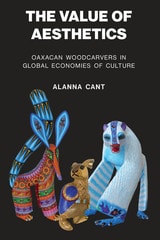
The Value of Aesthetics
Oaxacan Woodcarvers in Global Economies of CultureBy Alanna Cant
University of Texas Press, 2019
Unlike many other handicrafts in the Mexican state of Oaxaca, which have long cultural and historical trajectories, Oaxacan woodcarving began in the second half of the twentieth century and has always been done for the commercial market. In The Value of Aesthetics, Alanna Cant explores how one family’s workshop in the village of San Martín Tilcajete has become the most critically and economically successful, surpassing those of neighbors who use similar materials and techniques. The dominance of this family is tied to their ability to produce a new aesthetic that appeals to three key “economies of culture”: the tourist market for souvenirs, the national market for traditional Mexican artesanías, and the international market for indigenous art.
Offering a new analytical model by which anthropologists can approach visual aesthetics and conceptualize the power of artworks as socially active objects, The Value of Aesthetics shows how aesthetic practices produce and redefine social and political relationships. By investigating the links between aesthetics and issues of production, authorship, ownership, and identity, Cant shows aesthetic change to be a process that ultimately repackages everyday life into commodified objects in Oaxaca.

The Value of Comparison
Peter van der Veer
Duke University Press, 2016
The Value of Labor
The Science of Commodification in Hungary, 1920-1956Martha Lampland
University of Chicago Press, 2016
Lampland trains her eye on the scientific claims of modern economic modeling, using Hungary’s unique vantage point to show how theories, policies, and techniques for commodifying agrarian labor that were born in the capitalist era were adopted by the socialist regime as a scientifically designed wage system on cooperative farms. Paying attention to the specific historical circumstances of Hungary, she explores the ways economists and the abstract notions they traffic in can both shape and be shaped by local conditions, and she compellingly shows how labor can be commodified in the absence of a labor market. The result is a unique account of economic thought that unveils hidden but necessary continuities running through the turbulent twentieth century.
The Value of Things
Prehistoric to Contemporary Commodities in the Maya RegionEdited by Jennifer P. Mathews and Thomas H. Guderjan
University of Arizona Press, 2017
Jade, stone tools, honey and wax, ceramics, rum, land. What gave these commodities value in the Maya world, and how were those values determined? What factors influenced the rise and fall of a commodity’s value? The Value of Things examines the social and ritual value of commodities in Mesoamerica, providing a new and dynamic temporal view of the roles of trade of commodities and elite goods from the prehistoric Maya to the present.
Editors Jennifer P. Mathews and Thomas H. Guderjan begin the volume with a review of the theoretical literature related to the “value of things.” Throughout the volume, well-known scholars offer chapters that examine the value of specific commodities in a broad time frame—from prehistoric, colonial, and historic times to the present. Using cases from the Maya world on both the local level and the macro-regional, contributors look at jade, agricultural products (ancient and contemporary), stone tools, salt, cacao (chocolate), honey and wax, henequen, sugarcane and rum, land, ceramic (ancient and contemporary), and contemporary tourist handicrafts.
Each chapter author looks into what made their specific commodity valuable to ancient, historic, and contemporary peoples in the Maya region. Often a commodity’s worth goes far beyond its financial value; indeed, in some cases, it may not even be viewed as something that can be sold. Other themes include the rise and fall in commodity values based on perceived need, rarity or overproduction, and change in available raw materials; the domestic labor side of commodities, including daily life of the laborers; and relationships between elites and nonelites in production.
Examining, explaining, and theorizing how people ascribe value to what they trade, this scholarly volume provides a rich look at local and regional Maya case studies through centuries of time.
Contributors:
Rani T. Alexander
Dean E. Arnold
Timothy Beach
Briana Bianco
Steven Bozarth
Tiffany C. Cain
Scott L. Fedick
Thomas H. Guderjan
John Gust
Eleanor Harrison-Buck
Brigitte Kovacevich
Samantha Krause
Joshua J. Kwoka
Richard M. Leventhal
Sheryl Luzzadder-Beach
Jennifer P. Mathews
Heather McKillop
Allan D. Meyers
Gary Rayson
Mary Katherine Scott
E. Cory Sills
The Victim and its Masks
An Essay on Sacrifice and Masquerade in the MaghrebAbdellah Hammoudi
University of Chicago Press, 1993
The View from Afar
Claude Lévi-Strauss
University of Chicago Press, 1992
"Hardly a field remains untouched—sociobiology, linguistics, botany, genetics, psychiatry, esthetics, ecology, politics, neuroscience, education, morality, psychology. . . . It's all breathtaking and alarming, some of it wonderful, some of it ridiculous. . . . At times the experience is exhilarating."—Richard A. Shweder, New York Times Book Review
The Village Is Like a Wheel
Rethinking Cargos, Family, and Ethnicity in Highland MexicoRoger Magazine
University of Arizona Press, 2012
According to Magazine, where Western anthropologists often assume that persons are individuals capable of acting on their own to produce things, rural highland Mexicans see persons as inherently interdependent and in need of others even to act. He utilizes the term “active subjectivity” to denote the fact that what they produce in others is not simply action but also a subjective state or attitude of willingness to perform the action.
The author’s goals are to improve understandings of rural highland Mexicans’ lives and to contribute to a broader disciplinary effort aimed at revealing the cultural specificity or ethnocentricity of our supposedly universally applicable concepts and theories.
The Virgin's Children
Life in an Aztec Village TodayBy William Madsen
University of Texas Press, 1960
An absorbing account of the descendants of the ancient Aztecs and of the survival of their culture into the twentieth century in the Valley of Mexico is presented in this fascinating volume. Focusing on San Francisco Tecospa—a village of some eight hundred Indians who still spoke Nahuatl, whose lives were dominated by supernaturalism, and who observed with only slight modification much of their Aztec heritage—this story bears out the anthropological principle that innovations are most likely to be accepted when they are useful, communicable, and compatible with established tradition.
Nowhere is the Indian genius for combining the old and the new better exemplified than in the story of how the Virgin of Guadalupe came to fulfill the role formerly played by the pagan goddess Tonantzin and of how Christian saints replaced the Aztec gods. At the time of this study, the Tecospans still called the Catholic Virgin Tonantzin, but their concept of the mother goddess had changed profoundly since Aztec times.
Tonantzin the Pagan, a hideous goddess with claws on her hands and feet and with snakes entwining her face, wore a necklace of hearts, hands, and skulls to represent her insatiable appetite for corpses. Tonantzin the Catholic—also called Guadalupe—is a beautiful and benevolent mother deity who repeatedly stays God’s anger against her Mexican children and answers the prayers of the poorest Indian, with no thought of return.
In Tecospa the road to social recognition lay in the performance of religious works, and the neglect of ritual obligation subjected both the individual and the community to the anger of supernaturals who punished with illness or other misfortune. Religion was inextricably a part of every phase of life, and it is the whole life of the Aztecan that is recorded here: fiesta, clothing, food, agricultural practices, courtship, marriage, pregnancy and childbirth, death, witchcraft and its cures, medical practices and attitudes, houses and home life, ethics, and the hot-cold complex that classifies everything in the Tecospan universe from God to Bromo-Seltzer.
With a marked simplicity of style and language William Madsen has produced a profoundly significant anthropological study that is delightful reading from the first sentence to the last. The drawings, the work of a ten-year-old Tecospan lad, are remarkable for their penetrating insight into the culture.

The Visual Afterlife of Abdelkader Bennahar
Robert Desjarlais
Duke University Press, 2025
The Voice and Its Doubles
Media and Music in Northern AustraliaDaniel Fisher
Duke University Press, 2016
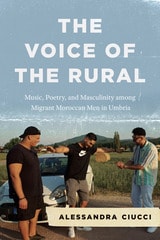
The Voice of the Rural
Music, Poetry, and Masculinity among Migrant Moroccan Men in UmbriaAlessandra Ciucci
University of Chicago Press, 2022
Umbria is known to most Americans for its picturesque rolling hills and medieval villages, but to the many migrant Moroccan men who travel there, Umbria is better known for the tobacco fields, construction sites, small industries, and the outdoor weekly markets where they work. Marginalized and far from their homes, these men turn to Moroccan traditions of music and poetry that evoke the countryside they have left— l-‘arubiya, or the rural. In this book, Alessandra Ciucci takes us inside the lives of Moroccan workers, unpacking the way they share a particular musical style of the rural to create a sense of home and belonging in a foreign and inhospitable nation. Along the way, she uncovers how this culture of belonging is not just the product of the struggles of migration, but also tied to the reclamation of a noble and virtuous masculine identity that is inaccessible to Moroccan migrants in Italy.
The Voice of the Rural allows us to understand the contemporary experiences of migrant Moroccan men by examining their imagined relationship to the rural through sound, shedding new light on the urgent issues of migration and belonging.
The Wanano Indians of the Brazilian Amazon
A Sense of SpaceBy Janet M. Chernela
University of Texas Press, 1996
The Wanano Indians of the northwest Amazon have a social system that differs from those of most tropical forest tribes. Neither stratified by wealth nor strictly egalitarian, Wanano society is "ranked" according to rigidly bound descent groups. In this pioneering ethnographic study, Janet M. Chernela decodes the structure of Wanano society.
In Wanano culture, children can be "grandparents," while elders can be "grandchildren." This apparent contradiction springs from the fact that descent from ranked ancestors, rather than age or accumulated wealth, determines one's standing in Wanano society. But ranking's impulse is muted as senior clans, considered to be succulent (referring to both seniority and resource abundance), must be generous gift-givers. In this way, resources are distributed throughout the society.
In two poignant chapters aptly entitled "Ordinary Dramas," Chernela shows that rank is a site of contest, resulting in exile, feuding, personal shame, and even death. Thus, Chernela's account is dynamic, placing rank in historic as well as personal context.
As the deforestation of the Amazon continues, the Wanano and other indigenous peoples face growing threats of habitat destruction and eventual extinction. If these peoples are to be saved, they must first be known and valued. The Wanano Indians of the Brazilian Amazon is an important step in that direction.

The War Machines
Young Men and Violence in Sierra Leone and LiberiaDanny Hoffman
Duke University Press, 2011
Hoffman argues that in contemporary West Africa, space, sociality, and life itself are organized around making young men available for all manner of dangerous work. Drawing on his ethnographic research over the past nine years, as well as the anthropology of violence, interdisciplinary security studies, and contemporary critical theory, he maintains that the mobilization of West African men exemplifies a global trend in the outsourcing of warfare and security operations. A similar dynamic underlies the political economy of violence in Iraq, Afghanistan, and a growing number of postcolonial spaces. An experienced photojournalist, Hoffman integrates more than fifty of his photographs of young West Africans into The War Machines.