Results by title
8642 books match the query '20th Century' and 1764 start with t
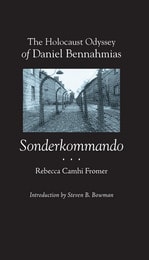
The Holocaust Odyssey of Daniel Bennahmias, Sonderkommando
Rebecca Fromer
University of Alabama Press, 1993
A poignant reminder of the ways enslaved Jews and others were forced to destroy their families and fellow prisoners.
The Holocaust Odyssey of Daniel Bennahmias, Sonderkommando presents the extraordinary testimony of Daniel Bennahmias, a Greek Jew whose life was forever altered by the Holocaust. Deported to Auschwitz-Birkenau as a teenager, Bennahmias was separated from his family and forced into the Sonderkommando, the prisoner unit compelled to work in the crematoria and gas chamber complex. Through painstaking collaboration with survivor and author Rebecca Fromer, this powerful narrative documents his struggle to endure unimaginable brutality while preserving his humanity. Bennahmias's account sheds rare light on the inner workings of Auschwitz, the Sonderkommando revolt, the death marches, and the difficult path toward liberation and recovery. More than a historical record, the book is a testament to courage, memory, and resilience in the face of systematic dehumanization. An essential contribution to Holocaust literature, it preserves the voice of a survivor whose experiences deepen our understanding of one of history's darkest chapters.

The Holocaust and Other Genocides
History, Representation, EthicsHelmut Walser Smith
Vanderbilt University Press, 2002
The book consists of five parts: introduction; history of the Holocaust; representations of the Holocaust in literature, film, and the arts; other genocides; and ethics. The curriculum, shaped with feedback from those who teach Holocaust studies, consists mainly of primary documents and their analysis. Each section includes a general introduction to a body of knowledge that reflects current research and detailed introductions to particular documents. Throughout the book, there are provocative discussion questions and suggestions for further reading and other resources. Each section features "links" to other parts to encourage interdisciplinary reflection. The final section on ethics addresses the difficult questions raised by genocide.
The Holocaust and Other Genocides is designed as a model for flexible, innovative teaching about this complex subject. It is also a sophisticated, interdisciplinary effort to create the conditions for discussing and understanding the genocides of the twentieth century.
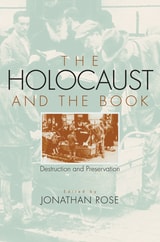
The Holocaust and the Book
Destruction and PreservationJonathan Rose
University of Massachusetts Press, 2001
Between 1933 and 1945, Nazi Germany systematically destroyed an estimated 100 million books throughout occupied Europe, an act that was inextricably bound up with the murder of 6 million Jews. By burning and looting libraries and censoring “un-German” publications, the Nazis aimed to eradicate all traces of Jewish culture along with the Jewish people themselves.
The Holocaust and the Book examines this bleak chapter in the history of printing, reading, censorship, and libraries. Topics include the development of Nazi censorship policies, the celebrated library of the Vilna ghetto, the confiscation of books from the Sephardic communities in Rome and Salonika, the experience of reading in the ghettos and concentration camps, the rescue of Polish incunabula, the uses of fine printing by the Dutch underground, and the suppression of Jewish books and authors in the Soviet Union. Several authors discuss the continuing relevance of Nazi book burnings to the present day, with essays on German responses to Friedrich Nietzsche and the destruction of Bosnian libraries in the 1990s.
The collection also includes eyewitness accounts by Holocaust survivors and a translation of Herman Kruk's report on the Vilna ghetto library. An annotated bibliography offers readers a concise guide to research in this growing field.
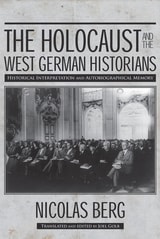
The Holocaust and the West German Historians
Historical Interpretation and Autobiographical MemoryNicolas Berg, Translated and edited by Joel Golb
University of Wisconsin Press, 2015
This English-language translation is also a shortened and reorganized edition, which includes a new introduction by Berg reviewing and commenting on the response to the German editions. Notably, in this American edition, discussion of historian Joseph Wulf and his colleague and fellow Holocaust survivor Léon Poliakov has been united in one chapter. And special care has been taken to make clear to English speakers the questions raised about German historiographical writing. Translator Joel Golb comments, "From 1945 to the present, the way historians have approached the Holocaust has posed deep-reaching problems regarding choice of language. . . . This book is consequently as much about language as it is about facts."
The Holocaust as Culture
Imre Kertész
Seagull Books, 2011
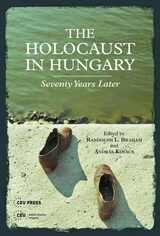
The Holocaust in Hungary
Seventy Years LaterRandolph L. Braham
Central European University Press, 2016
The Holocaust of Texts
Genocide, Literature, and PersonificationAmy Hungerford
University of Chicago Press, 2002
Hungerford examines the implications of conflating texts with people in a broad range of texts: Art Spiegelman's Maus; Ray Bradbury's Fahrenheit 451; the poetry of Sylvia Plath; Binjamin Wilkomirski's fake Holocaust memoir Fragments; and the fiction of Saul Bellow, Philip Roth, and Don DeLillo. She considers the ethical consequences of this trend in the work of recent and contemporary theorists and literary critics as well, including Cathy Caruth, Jacqueline Rose, Jacques Derrida, and Paul de Man. What she uncovers are fundamentally flawed ideas about representation that underwrite and thus undermine powerful and commonly accepted claims about literature and identity. According to Hungerford, the personification of texts is ethically corrosive and theoretically unsound. When we exalt the literary as personal and construe genocide as less a destruction of human life than of culture, we esteem memory over learning, short-circuit debates about cultural change, lend credence to the illusion or metaphysics of presence, and limit our conception of literature and its purpose.
Ultimately, The Holocaust of Texts asks us to think more deeply about the relationship between reading, experience, and memorialization. Why, for instance, is it more important to remember acts of genocide than simply to learn about them? If literary works are truly the bearers of ontology, then what must be our conduct toward them? Considering difficult questions such as these with fresh logic, Hungerford offers us an invigorating work, one that will not only interest scholars of American and postwar literature, but students of the Holocaust and critical theory as well.
The Holocaust, Corporations, and the Law
Unfinished BusinessLeora Bilsky
University of Michigan Press, 2017
Leora Bilsky argues class action litigation and settlement offer a mode of accountability well suited to addressing the bureaucratic nature of business involvement in atrocities. Prior to these lawsuits, legal treatment of the Holocaust was dominated by criminal law and its individualistic assumptions, consistently failing to relate to the structural aspects of Nazi crimes. Engaging critically with contemporary debates about corporate responsibility for human rights violations and assumptions about “law,” she argues for the need to design processes that make multinational corporations accountable, and examines the implications for transitional justice, the relationship between law and history, and for community and representation in a post-national world. Her novel interpretation of the restitution lawsuits not only adds an important dimension to the study of Holocaust trials, but also makes an innovative contribution to broader and pressing contemporary legal and political debates. In an era when corporations are ever more powerful and international, Bilsky’s arguments will attract attention beyond those interested in the Holocaust and its long shadow.
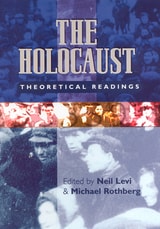
The Holocaust
Theoretical ReadingsLevi, Neil
Rutgers University Press, 2003
This agenda-setting reader brings together both classic and new writings to demonstrate how concerns arising from the Nazi genocide shaped contemporary literary and cultural theory. Wide in its thematic scope, it covers such vital questions as:
- Authenticity and experience
- Memory and trauma
- Historiography and the philosophy of history
- Fascism and Nazi anti-Semitism
- Representation and identity formation
- Race, gender, and genocide
- Implications of the Holocaust for theories of the unconscious, ethics, politics, and aesthetics
The readings, which are fully contextualized by a general introduction, section introductions, and bibliographical notes, represent the work of many influential writers and theorists, including Theodor Adorno, Giorgio Agamben, Hannah Arendt, Jean Baudrillard, Zygmunt Bauman, Walter Benjamin, Cathy Caruth, Jacques Derrida, Shoshana Felman, Saul Friedlander, Paul Gilroy, Lawrence Langer, Emmanuel Levinas, Primo Levi, Jean-François Lyotard, Hayden White, and James E. Young. This multidisciplinary anthology will be welcomed by students and scholars of the Holocaust.
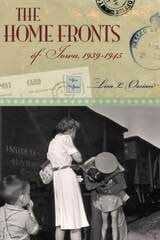
The Home Fronts of Iowa, 1939-1945
Lisa L. Ossian
University of Missouri Press, 2018
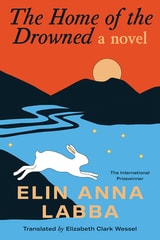
The Home of the Drowned
A NovelElin Anna Labba
University of Minnesota Press, 2026
The haunting, multigenerational saga of a family of Sámi women fighting the devastation of their way of life
Nothing is true, and everything is true; poetry will never hurt more than what has happened. Every summer, Iŋgá, her mother Rávdná, and her Aunt Ánne travel west to their village on the lake. But the summer Iŋgá is thirteen, they arrive to find their home and possessions have disappeared under water, the land flooded by a dam built to supply hydropower to a society that has continually stolen from them.
The Home of the Drowned follows these women’s fortunes over forty years—from 1942 to 1982—as the water their people have lived near for centuries is transformed into a menacing force that threatens all they hold dear. Defying the authorities, Rávdná decides to build a proper house on the lake to replace what was lost, becoming an unlikely activist even as her actions isolate her family from the rest of the community. Meanwhile, Ánne’s health is in decline, and a concerned Iŋgá merely longs to live like everyone else—an impossible wish when the Swedish state is relentlessly drowning her world.
Drawing on her own family’s history of forced relocation and violent colonial dispossession, Elin Anna Labba’s debut novel brings Sámi history to the fore through this intimate story. In poetic prose deftly translated by Elizabeth Clark Wessel, she reveals connections between land, water, and people that hauntingly reverberate with the question: what is it that makes a home?
Retail e-book files for this title are screen-reader friendly.
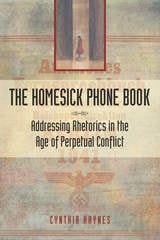
The Homesick Phone Book
Addressing Rhetorics in the Age of Perpetual ConflictCynthia Haynes
Southern Illinois University Press, 2016
Terrorist attacks, war, and mass shootings by individuals occur on a daily basis all over the world. In The Homesick Phone Book, author Cynthia Haynes examines the relationship of rhetoric to such atrocities. Aiming to disrupt conventional modes of rhetoric, logic, argument, and the teaching of writing, Haynes illuminates rhetoric’s ties to horrific acts of violence and the state of perpetual conflict around the world, both in the Holocaust era and more recently.
Each chapter, marked by a physical address, functions as a kind of expanded phone book entry, with a discussion of violent events at a particular location giving way to explorations of larger questions related to rhetoric and violence. At the core of the work is Haynes’s call for a writing pedagogy based on abstraction that would allow students to appeal to emotional and ethical grounds in composing arguments. Written in a lyrical style, the book weaves rhetorical theories, poetics, philosophy, works of art, and personal experience into a complex, compelling, and innovative mode of writing.
Ultimately, The Homesick Phone Book demonstrates how scholars of rhetoric and writing studies can break their dependence on conventional argument and logic to discover what might be possible if we dive into and become lost within the very concepts and events that frighten and terrorize us.
The Hopwood Awards
75 Years of Prized WritingEdited by Nicholas Delbanco, Andrea Beauchamp, and Michael Barrett
University of Michigan Press, 2006
-Arthur Miller
The Hopwood Awards claim a gallery of prizewinners who rose to become the Who's Who of writers of the last three generations: Max Apple, John Ciardi, Mary Gaitskill, Robert Hayden, Laura Kasischke, Jane Kenyon, Arthur Miller, Howard Moss, Frank O'Hara, Marge Piercy, Ronald Wallace, and Nancy Willard, among many others.
Since they first began in 1931, funded by a bequest from the will of playwright Avery Hopwood, University of Michigan Class of 1905, the Hopwood Awards have grown in profile and stature to become one of the most sought after and celebrated writing prizes for students.
The Hopwood Awards: 75 Years of Prized Writing collects-for the first time in one volume-poetry and prose by writers who won Hopwood Awards when they were students at the University of Michigan and who went on to achieve fame as writers.
Nicholas Delbanco is Professor of English and Director of the Hopwood Program at the University of Michigan. He is author or editor of numerous books, including Anywhere Out of the World: Essays on Travel, Writing, Death;The Sincerest Form; and The Writing Life: The Hopwood Lectures.
Andrea Beauchamp is Program Associate at the Hopwood Program, and Michael Barrett is Associate Editor at the Hopwood Program, University of Michigan.

The Hot 'Cold War'
The USSR in Southern AfricaVladimir Shubin
Pluto Press, 2008
This book analyses the causes of armed conflicts in Southern Africa during the Cold War. It examines the influence of the various external forces in the region during this period and their relationship to local movements and governments.
The book focuses on states experiencing violent internal conflict and foreign intervention, that is Angola, Mozambique, Namibia , South Africa and Zimbabwe.
The author provides an unique history of the key part that the Soviet Union played in these developments. Spanning 30 years, the book explores how each country struggled for genuine independence against colonialism and apartheid and their place in the wider conflicts encompassed by the Cold War.
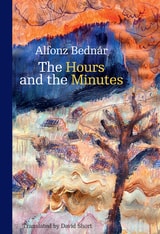
The Hours and the Minutes
Alfonz Bednár
Karolinum Press, 2025
The Hours and The Minutes was first published in Bratislava in 1956, the year of Nikita Khrushchev’s “secret speech,” in which the Soviet leader formally acknowledged Stalin’s tyranny and opened the way for political reform throughout the Eastern Bloc. Alfonz Bednár’s writing was one of the first free of nationalist and communist propaganda, rejecting earlier ideologization of life by both the fascist right and Stalinist left and finding more empathetic ways to explore the complexity of human experience. His novellas defy traditional heroic depictions and portray the human individual, his relations, and morality as the subject of history rather than a utopian, collectivist ideology.
In these five novellas, Bednár is preoccupied with the insensitive, even inhuman, rootless, and amoral modernity that the war and Communist Party import into traditional Slovak life. The destruction of the traditional Slovak countryside during the twentieth century through modernization and urbanization, and with it a particular approach to life, forms his central theme. His spare, epic style and devotion to plot and dynamic narration render The Hours and The Minutes a genuine and gripping read.
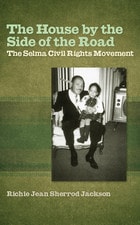
The House by the Side of the Road
The Selma Civil Rights MovementRichie Jean Sherrod Jackson
University of Alabama Press, 2011
King’s informal headquarters in Selma was the home of Dr. Sullivan and Richie Jean Sherrod Jackson and their young daughter, Jawana. The House by the Side of the Road is Richie Jean’s firsthand account of the private meetings King and his lieutenants, including Ralph David Abernathy and John Lewis, held in the haven of the Jackson home.
Sullivan Jackson was an African American dentist in Selma and a prominent supporter of the civil rights movement. Richie Jean was a close childhood friend of King’s wife, Coretta Scott King, a native of nearby Marion, Alabama. Richie Jean’s fascinating account narrates how, in the fraught months of 1965 that preceded the Voting Rights March, King and his inner circle held planning sessions and met with Assistant Attorney General John Doar to negotiate strategies for the event.
Just eight days after Bloody Sunday, President Lyndon Johnson made a televised addressed to a joint session of Congress on Monday, March 15. Jackson relates the intimate scene of King and his lieutenants watching as Johnson called the nation to dedicate itself to equal rights for all and ending his address with the words: “We shall overcome.” Five months later, Congress passed the 1965 Voting Rights Act on August 6.
The major motion picture Selma now commemorates the fiftieth anniversary of Bloody Sunday and the 1965 Voting Rights Act. In it, Niecy Nash and Kent Faulcon star as Sullivan and Richie Jean Jackson among a cast including Oprah Winfrey, Tom Wilkinson, and Cuba Gooding Jr. A gripping primary source, The House by the Side of the Road illuminates the private story whose public outcomes electrified the world and changed the course of American history.
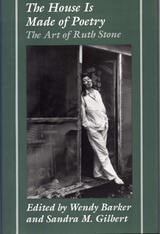
The House is Made of Poetry
The Art of Ruth StoneEdited by Wendy Barker and Sandra M. Gilbert
Southern Illinois University Press, 1996
Ruth Stone has always eschewed self-promotion and, in the words of Leslie Fiedler, "has never been a member of any school or clique or gaggle of mutual admirers." But her poems speak so vibrantly for her that she cannot be ignored.
In her preface to this volume, Sandra M. Gilbert declares that Stone’s "intense attention to the ordinary transforms it into (or reveals it as) the extraordinary. Her passionate verses evoke impassioned responses." At the same time, Gilbert continues, the essays collected here "consistently testify to Stone’s radical unworldliness, in particular her insouciant contempt for the ‘floor walkers and straw bosses’ who sometimes seem to control the poetry ‘factory’ both inside and outside the university."
Wendy Barker and Sandra Gilbert have organized the book into three sections: "Knowing Ruth Stone," "A Life of Art," and "Reading Ruth Stone." In "Knowing Ruth Stone," writers of different generations who have known the poet over the years provide memoirs. Noting Stone’s singularity, Fiedler points out that "she resists all labels" and is "one of the few contemporaries whom it is possible to think of simply as a ‘poet.’" Sharon Olds defines her vitality ("A Ruth Stone poem feels alive in the hands"), and Jan Freeman praises her aesthetic intensity ("Everything in the life of Ruth Stone is integrated with poetry").
"A Life of Art" sketches the outlines of Stone’s career and traces her evolution as a poet. Barker and Norman Friedman, for example, trace her development from the "high spirits and elegant craft" of her first volume—Inan Iridescent Time— through the "deepening shadows," "poignant wit," and "bittersweet meditations" of her later work. In interviews separated by decades (one in the 1970s and one in the 1990s), Sandra Gilbert and Robert Bradley discuss with Stone her own sense of her aesthetic origins and literary growth.
"Reading Ruth Stone" is an examination of Stone’s key themes and modes. Diane Wakoski and Diana O’Hehir focus on the tragicomic vision that colors much of her work; Kevin Clark and Elyse Blankley explore the political aspects of her poetry; Roger Gilbert analyzes her "often uncannily astute insights into the ‘otherness’ of other lives"; Janet Lowery and Kandace Brill Lombart draw on the biographical background of Stone’s "grief work"; and Sandra Gilbert studies her caritas, her empathic love that redeems pain.
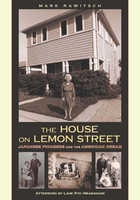
The House on Lemon Street
Japanese Pioneers and the American DreamMark Rawitsch
University Press of Colorado, 2013
Bringing this little-known story to light, The House on Lemon Street details the Haradas' decision to fight for the American dream. Chronicling their experiences from their immigration to the United States through their legal battle over their home, their incarceration during World War II, and their lives after the war, this book tells the story of the family's participation in the struggle for human and civil rights, social justice, property and legal rights, and fair treatment of immigrants in the United States.
The Harada family's quest for acceptance illuminates the deep underpinnings of anti-Asian animus, which set the stage for Executive Order 9066, and recognizes fundamental elements of our nation's anti-immigrant history that continue to shape the American story. It will be worthwhile for anyone interested in the Japanese American experience in the twentieth century, immigration history, public history, and law.
This publication was made possible with the support of Naomi, Kathleen, Ken, and Paul Harada, who donated funds in memory of their father, Harold Shigetaka Harada, honoring his quest for justice and civil rights. Additional support for this publication was also provided, in part, by UCLA's Aratani Endowed Chair as well as Wallace T. Kido, Joel B. Klein, Elizabeth A. Uno, and Rosalind K. Uno.
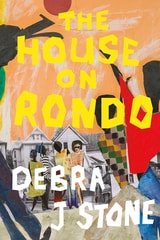
The House on Rondo
Debra J Stone
University of Minnesota Press, 2025
A young girl reckons with the demolition of a Black Saint Paul neighborhood to make way for the Interstate in the early 1960s
When thirteen-year-old Zenobia has to leave her friends and spend the summer at Grandma’s while Mama recovers from a stroke, life seems so unfair. But then the eviction letters start arriving throughout her grandparents’ neighborhood, and white men chalk arrows to mark the gas and water lines, and a new world of unfairness unfolds before her. It’s 1963, and Zenobia’s grandparents’ house on Rondo Avenue in Saint Paul—like all the homes in this thriving Black community—is targeted for demolition to make way for the new Interstate Highway 94.
As Zenobia gradually learns about what’s planned for the Rondo neighborhood and what this means for everyone who lives there, she discovers how her story is intertwined with the history of her family, all the way back to Great Grandma Zenobia and the secrets Grandma Essie held close about the reason for her light skin. With the destruction of the neighborhood looming, Zenobia takes a stand on behalf of her community, joining her no-nonsense neighbor, onetime cowgirl Mrs. Ruby Pearl, in a protest and ultimately getting arrested. Though Zenobia is grounded for a month, her punishment seems of little consequence in comparison to what is happening all around her. Even though the demolition continues, she is proud to discover the power and connection in protesting injustice.
The House on Rondo captures the heartbreak, resistance, and resilience that marks a community sacrificed in the name of progress—a “progress” that never seems to favor Black families and neighborhoods and that haunts cities like Saint Paul to this day. As Zenobia learns what can be destroyed and what cannot, her story teaches us that joy, community, and love persist, even amid violence and loss.
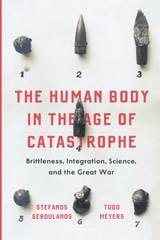
The Human Body in the Age of Catastrophe
Brittleness, Integration, Science, and the Great WarStefanos Geroulanos and Todd Meyers
University of Chicago Press, 2018
In The Human Body in the Age of Catastrophe, Stefanos Geroulanos and Todd Meyers uncover a fascinating story of how medical scientists came to conceptualize the body as an integrated yet brittle whole. Responding to the harrowing experience of the Great War, the medical community sought conceptual frameworks to understand bodily shock, brain injury, and the vast differences in patient responses they occasioned. Geroulanos and Meyers carefully trace how this emerging constellation of ideas became essential for thinking about integration, individuality, fragility, and collapse far beyond medicine: in fields as diverse as anthropology, political economy, psychoanalysis, and cybernetics.
Moving effortlessly between the history of medicine and intellectual history, The Human Body in the Age of Catastrophe is an intriguing look into the conceptual underpinnings of the world the Great War ushered in.
The Human Race
Robert Antelme
Northwestern University Press, 1998
The Humana Festival
The History of New Plays at Actors Theatre of LouisvilleJeffrey Ullom
Southern Illinois University Press, 2008
Far from the glittering lights of Broadway, in a city known more for its horse racing than its artistic endeavors, an annual festival in Louisville, Kentucky, has transformed the landscape of the American theater. The Actors Theatre of Louisville—the Tony Award–winning state theater of Kentucky—in 1976 successfully created what became the nation's most respected new-play festival, the Humana Festival of New American Plays.
The Humana Festival: The History of New Plays at Actors Theatre of Louisville examines the success of the festival and theater’s Pulitzer Prize–winning productions that for decades have reflected new-play trends in regional theaters and on Broadway—the result of the calculated decisions, dogged determination, and good luck of its producing director, Jon Jory.
The volume details how Actors Theatre of Louisville was established, why the Humana Festival became successful in a short time, and how the event’s success has been maintained by the Louisville venue that has drawn theater critics from around the world for more than thirty years.
Author Jeffrey Ullom charts the theater’s early struggles to survive, the battles between troupe leaders, and the desperate measures to secure financial support from the Louisville community. He examines how Jory established and expanded the festival to garner extraordinary local support, attract international attention, and entice preeminent American playwrights to premier their works in the Kentucky city.
In The Humana Festival, Ullom provides a broad view of new-play development within artistic, administrative, and financial contexts. He analyzes the relationship between Broadway and regional theaters, outlining how the Humana Festival has changed the process of new-play development and even Broadway’s approach to discovering new work, and also highlights the struggles facing regional theaters across the country as they strive to balance artistic ingenuity and economic viability.
Offering a rare look at the annual event, The Humana Festival provides the first insider’s view of the extraordinary efforts that produced the nation’s most successful new-play festival.
The Hunger Book
A Memoir from Communist PolandAgata Izabela Brewer
The Ohio State University Press, 2023
“A searing memoir about growing up behind the Iron Curtain, motherhood, addiction, and finding sustenance in the natural world.” —Kirkus
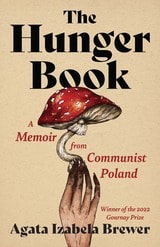
In The Hunger Book, Agata Izabela Brewer evokes her Polish childhood under Communism, where the warmth of her grandparents’ love and the scent of mushrooms drying in a tiny apartment are as potent as the deprivations and traumas of life with a terrifyingly unstable, alcoholic single mother. Brewer indelibly renders stories of foraging for food, homemade potato vodka (one of the Eastern Bloc’s more viable currencies), blood sausage, sparrows plucked and fried with linseed oil, and the respite of a country garden plot, all amid Stalinist-era apartment buildings, food shortages, martial law, and nuclear disaster in nearby Ukraine.
Brewer reflects on all of this from her immigrant’s vantage point, as she wryly tries to convince her children to enjoy the mushrooms she gathers from a roadside and grieves when they choose to go by Americanized versions of their Polish names. Hunting mushrooms, like her childhood, carried both reward and mortal peril. The Hunger Book, which includes recipes, is an unforgettable meditation on motherhood and addiction, resilience and love.
The Hunt for Nazi Spies
Fighting Espionage in Vichy FranceSimon Kitson
University of Chicago Press, 2007
Simon Kitson informs this remarkable story with findings from his investigation—the first by any historian—of thousands of Vichy documents seized in turn by the Nazis and the Soviets and returned to France only in the 1990s. His pioneering detective work uncovers a puzzling paradox: a French government that was hunting down left-wing activists and supporters of Charles de Gaulle’s Free French forces was also working to undermine the influence of German spies who were pursuing the same Gaullists and resisters. In light of this apparent contradiction, Kitson does not deny that Vichy France was committed to assisting the Nazi cause, but illuminates the complex agendas that characterized the collaboration and shows how it was possible to be both anti-German and anti-Gaullist.
Combining nuanced conclusions with dramatic accounts of the lives of spies on both sides, The Hunt for Nazi Spies adds an important new dimension to our understanding of the French predicament under German occupation and the shadowy world of World War II espionage.
The Hybrid Muse
Postcolonial Poetry in EnglishJahan Ramazani
University of Chicago Press, 2001
In The Hybrid Muse, Jahan Ramazani argues that postcolonial poets have also dramatically expanded the atlas of literature in English, infusing modern and contemporary poetry with indigenous metaphors and creoles. A rich and vibrant poetry, he contends, has issued from the hybridization of the English muse with the long resident muses of Africa, India, and the Caribbean. Starting with the complex case of Ireland, Ramazani closely analyzes the work of leading postcolonial poets and explores key questions about the relationship between poetry and postcolonialism. As inheritors of both imperial and native cultures, poets such as W. B. Yeats, Derek Walcott, Louise Bennett, A. K. Ramanujan, and Okot p'Bitek invent compelling new forms to articulate the tensions and ambiguities of their cultural in-betweeness. They forge hybrid figures, vocabularies, and genres that embody the postcolonial condition.
Engaging an array of critical topics, from the aesthetics of irony and metaphor to the politics of nationalism and anthropology, Ramazani reconceptualizes issues central to our understanding of both postcolonial literatures and twentieth-century poetry. The first book of its kind, The Hybrid Muse will help internationalize the study of poetry, and in turn, strengthen the place of poetry in postcolonial studies.

The Hygienic Apparatus
Weimar Cinema and Environmental DisorderPaul Dobryden
Northwestern University Press, 2022
Framing hygiene within the project of national reconstruction after World War I, The Hygienic Apparatus explores cinema’s material contexts alongside its representations of housework, urban space, traffic, pollution, disability, aging, and labor. Reformers worried about the health risks associated with moviegoing but later used film to popularize hygienic ideas, encouraging viewers to see the world and themselves in relation to public health objectives. Modernist architecture and design fashioned theaters into regenerative environments for fatigued spectators. Filmmakers like F. W. Murnau and Slatan Dudow, meanwhile, explored the aesthetic and political possibilities of dirt, contagion, intoxication, and disorder. Dobryden recovers a set of ecological and biopolitical concerns to show how the problem of environmental disorder fundamentally shaped cinema’s relationship to modernity. As accessible as it is persuasive, the book adds to a growing body of scholarship on biopolitics within German studies and reveals fresh ways of understanding the apparatus of Weimar cinema.
The Icon Curtain
The Cold War's Quiet BorderYuliya Komska
University of Chicago Press, 2015
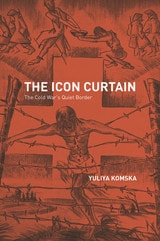
Yuliya Komska transports readers to the western edge of the Bohemian Forest, one of Europe’s oldest borderlands, where in the 1950s civilians set out to shape the so-called prayer wall. A chain of new and repurposed pilgrimage sites, lookout towers, and monuments, the prayer wall placed two long-standing German obsessions, forest and border, at the heart of the century’s most protracted conflict. Komska illustrates how civilians used the prayer wall to engage with and contribute to the new political and religious landscape. In the process, she relates West Germany’s quiet sylvan periphery to the tragic pitch prevalent along the Iron Curtain’s better-known segments.
Steeped in archival research and rooted in nuanced interpretations of wide-ranging cultural artifacts, from vandalized religious images and tourist snapshots to poems and travelogues, The Icon Curtain pushes disciplinary boundaries and opens new perspectives on the study of borders and the Cold War alike.
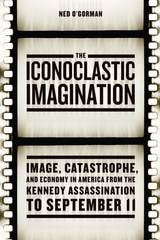
The Iconoclastic Imagination
Image, Catastrophe, and Economy in America from the Kennedy Assassination to September 11Ned O'Gorman
University of Chicago Press, 2015
In The Iconoclastic Imagination, Ned O’Gorman approaches each of these moments as an image of icon-destruction that give us distinct ways to imagine social existence in American life. He argues that the Cold War gave rise to crises in political, aesthetic, and political-aesthetic representations. Locating all of these crises within a “neoliberal imaginary,” O’Gorman explains that since the Kennedy assassination, the most powerful way to see “America” has been in the destruction of representative American symbols or icons. This, in turn, has profound implications for a neoliberal economy, social philosophy, and public policy. Richly interwoven with philosophical, theological, and rhetorical traditions, the book offers a new foundation for a complex and innovative approach to studying Cold War America, political theory, and visual culture.
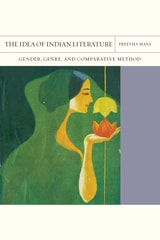
The Idea of Indian Literature
Gender, Genre, and Comparative MethodPreetha Mani
Northwestern University Press, 2022
Indian literature is not a corpus of texts or literary concepts from India, argues Preetha Mani, but a provocation that seeks to resolve the relationship between language and literature, written in as well as against English. Examining canonical Hindi and Tamil short stories from the crucial decades surrounding decolonization, Mani contends that Indian literature must be understood as indeterminate, propositional, and reflective of changing dynamics between local, regional, national, and global readerships. In The Idea of Indian Literature, she explores the paradox that a single canon can be written in multiple languages, each with their own evolving relationships to one another and to English.
Hindi, representing national aspirations, and Tamil, epitomizing the secessionist propensities of the region, are conventionally viewed as poles of the multilingual continuum within Indian literature. Mani shows, however, that during the twentieth century, these literatures were coconstitutive of one another and of the idea of Indian literature itself. The writers discussed here—from short-story forefathers Premchand and Pudumaippittan to women trailblazers Mannu Bhandari and R. Chudamani—imagined a pan-Indian literature based on literary, rather than linguistic, norms, even as their aims were profoundly shaped by discussions of belonging unique to regional identity. Tracing representations of gender and the uses of genre in the shifting thematic and aesthetic practices of short vernacular prose writing, the book offers a view of the Indian literary landscape as itself a field for comparative literature.
The Idea of Spatial Form
Frank, Joseph
Rutgers University Press, 1991
The Idea of Spatial Form contains the classic essay that introduced the concept of "spatial form" into literary discussion in 1945, and has since been accepted as one of the foundations for a theory of modern literature. It is here reprinted along with two later reconsiderations, one of which answers its major critics, while the second places the theory in relation to Russian Formalism and French Structuralism. Originally conceived to clarify the formal experiments of avant-garde literature, the idea of spatial form, when placed in this wider context, also contributes importantly to the foundations of a general poetics of the literary text. Also included are related discussions of André Malraux, Heinrich Wölfflin, Herbert Read, and E. H. Gombrich.
New material has been added to the essays in the form of footnotes and postscripts to two of them. These either illustrate the continuing relevance of the questions raised, or offer Frank's more recent opinions on the topic.
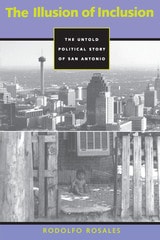
The Illusion of Inclusion
The Untold Political Story of San AntonioBy Rodolfo Rosales
University of Texas Press, 2000
To many observers, the 1981 election of Henry Cisneros as mayor of San Antonio, Texas, represented the culminating victory in the Chicano community's decades-long struggle for inclusion in the city's political life. Yet, nearly twenty years later, inclusion is still largely an illusion for many working-class and poor Chicanas and Chicanos, since business interests continue to set the city's political and economic priorities.
In this book, Rodolfo Rosales offers the first in-depth history of the Chicano community's struggle for inclusion in the political life of San Antonio during the years 1951 to 1991, drawn from interviews with key participants as well as archival research. He focuses on the political and organizational activities of the Chicano middle class in the context of post-World War II municipal reform and how it led ultimately to independent political representation for the Chicano community. Of special interest is his extended discussion of the role of Chicana middle-class women as they gained greater political visibility in the 1980s.
The Image and the Fire
The Subversive Anthology in the Twentieth CenturyWhit Frazier Peterson
University of Massachusetts Press, 2026
Racial identity and literary form in the modernist anthology
The Image and the Fire examines the coterie anthology—a small, outsider literary collection—as a key, yet understudied, instrument of literary intervention within American modernism. Whit Frazier Peterson argues that these anthologies, produced outside of institutional or canonical frameworks, served as deliberate challenges to dominant literary paradigms. Distinct from academic anthologies that helped codify the American literary canon, coterie anthologies were used by both white and Black avant-garde movements to disrupt prevailing cultural narratives and assert alternative literary visions.
Through close analysis of three seminal case studies—Des Imagistes, edited by Ezra Pound; Fire!!, a short-lived but groundbreaking magazine from the Harlem Renaissance, co-edited by Wallace Thurman; and Black Fire, compiled by Amiri Baraka and Larry Neal during the Black Arts Movement—Peterson traces a genealogy of the coterie anthology as a politically charged genre. He reveals how Black American writers and editors, particularly during the Harlem Renaissance and the Black Arts Movement, reappropriated and reconfigured this type of anthology format from white modernists.
Ultimately, The Image and the Fire positions the coterie anthology as a site of aesthetic and ideological contestation, one through which marginalized literary communities engaged in acts of cultural self-definition, canon revision, and formal innovation. By foregrounding the coterie anthology’s role in shaping a hybrid American modernism, Peterson contributes to ongoing conversations in literary studies around race, authorship, and the politics of literary form.
The Immigrant Scene
Ethnic Amusements in New York, 1880–1920Sabine Haenni
University of Minnesota Press, 2008
Explores the relationship between immigrant and national culture
Yiddish melodramas about the tribulations of immigration. German plays about alpine tourism. Italian vaudeville performances. Rubbernecking tours of Chinatown. In the New York City of the late nineteenth and early twentieth centuries, these seemingly disparate leisure activities played similar roles: mediating the vast cultural, demographic, and social changes that were sweeping the nation’s largest city.
In The Immigrant Scene, Sabine Haenni reveals how theaters in New York created ethnic entertainment that shaped the culture of the United States in the early twentieth century. Considering the relationship between leisure and mass culture, The Immigrant Scene develops a new picture of the metropolis in which the movement of people, objects, and images on-screen and in the street helped residents negotiate the complexities of modern times. In analyzing how communities engaged with immigrant theaters and the nascent film culture in New York City, Haenni traces the ways in which performance and cinema provided virtual mobility—ways of navigating the socially complex metropolis—and influenced national ideas of immigration, culture, and diversity in surprising and lasting ways.
The Immigrant Threat
The Integration of Old and New Migrants in Western Europe since 1850Leo Lucassen
University of Illinois Press, 2005
Leo Lucassen tackles the question of whether the integration process of these recent immigrants will fundamentally differ in the long run (over multiple generations) from the experiences of similar immigrant groups in the past. For comparison, Lucassen focuses on "large and problematic groups" from Western Europe's past (the Irish in the United Kingdom, the Poles in Germany, and the Italians in France) and demonstrates a number of structural similarities in the way migrants and their descendants integrated into these nation states. Lucassen emphasizes that the geographic sources of the "threat" have changed and that contemporaries tend to overemphasize the threat of each successive wave of immigrants, in part because the successfully incorporated immigrants of the past have become invisible in national histories.
The Imperial Style of Inquiry in Twentieth-Century China
The Emergence of New ApproachesDonald J. Munro
University of Michigan Press, 1996
The Imperialist Imaginary
Visions of Asia and the Pacific in American CultureJohn Eperjesi
Dartmouth College Press, 2014
The Importance of Being Urban
Designing the Progressive School District, 1890-1940David A. Gamson
University of Chicago Press, 2019
The Importance of Being Urban
Designing the Progressive School District, 1890-1940David A. Gamson
University of Chicago Press, 2019
From the 1890s through World War II, the greatest hopes of American progressive reformers lay not in the government, the markets, or other seats of power but in urban school districts and classrooms. The Importance of Being Urban focuses on four western school systems—in Denver, Oakland, Portland, and Seattle—and their efforts to reconfigure public education in the face of rapid industrialization and the perceived perils of the modern city. In an era of accelerated immigration, shifting economic foundations, and widespread municipal shake-ups, reformers argued that the urban school district could provide the broad blend of social, cultural, and educational services needed to prepare students for twentieth-century life. These school districts were a crucial force not only in orchestrating educational change, but in delivering on the promise of democracy. David A. Gamson’s book provides eye-opening views of the histories of American education, urban politics, and the Progressive Era.
The Improbable First Century of Cosmopolitan Magazine
James Landers
University of Missouri Press, 2010
The Inability to Love
Jews, Gender, and America in Recent German LiteratureAgnes C. Mueller
Northwestern University Press, 2014
The Inability to Love borrows its title from Alexander and Margarete Mitscherlich’s 1967 landmark book The Inability to Mourn, which discussed German society’s lack of psychological reckoning with the Holocaust. Challenging that notion, Agnes Mueller turns to recently published works by prominent contemporary German, non-Jewish writers to examine whether there has been a thorough engagement with German history and memory. She focuses on literature that invokes Jews, Israel, and the Holocaust. Mueller’s aim is to shed light on pressing questions concerning German memories of the past, and on German images of Jews in Germany at a moment that s ideologically and historically fraught.
The Increasingly United States
How and Why American Political Behavior NationalizedDaniel J. Hopkins
University of Chicago Press, 2018
With The Increasingly United States, Daniel J. Hopkins explores this trend and its implications for the American political system. The change is significant in part because it works against a key rationale of America’s federalist system, which was built on the assumption that citizens would be more strongly attached to their states and localities. It also has profound implications for how voters are represented. If voters are well informed about state politics, for example, the governor has an incentive to deliver what voters—or at least a pivotal segment of them—want. But if voters are likely to back the same party in gubernatorial as in presidential elections irrespective of the governor’s actions in office, governors may instead come to see their ambitions as tethered more closely to their status in the national party.
The Indescribable and the Undiscussable
Reconstructing Human Discourse after TraumaDan Bar-On
Central European University Press, 1998
The Indian Craze
Primitivism, Modernism, and Transculturation in American Art, 1890–1915Elizabeth Hutchinson
Duke University Press, 2009
Illustrating her argument with images culled from late-nineteenth- and early-twentieth-century publications, Hutchinson revises the standard history of the mainstream interest in Native American material culture as “art.” While many locate the development of this cross-cultural interest in the Southwest after the First World War, Hutchinson reveals that it began earlier and spread across the nation from west to east and from reservation to metropolis. She demonstrates that artists, teachers, and critics associated with the development of American modernism, including Arthur Wesley Dow and Gertrude Käsebier, were inspired by Native art. Native artists were also able to achieve some recognition as modern artists, as Hutchinson shows through her discussion of the Winnebago painter and educator Angel DeCora. By taking a transcultural approach, Hutchinson transforms our understanding of the role of Native Americans in modernist culture.
The Inner Harbour
A Post-Exotic NovelAntoine Volodine
University of Minnesota Press, 2025
A beguiling, perspective-shifting story of obsession and loss set in the grimy, late-colonial decadence of Macau at the end of the twentieth century
In The Inner Harbour, Antoine Volodine focuses his literary investigations away from dystopian futures to a specific place at a particular historical moment: Macau on the eve of the Portuguese colony’s transfer to China. In a seedy flat in one of the city’s slums, a hired assassin named Kotter interrogates Breughel, a writer on the run from a mysterious organization code-named Paradise. Breughel has been hiding out in Macau with his lover, Gloria Vancouver, and a significant sum of the organization’s money. But Gloria is dead and the money spent—or so Breughel claims—and now he lives alone in humid squalor.
With increasing severity, Kotter extracts Breughel’s confessions, but are they truth or subterfuge? Or are the confessions an elaborate work of fiction by a writer aware that they are no longer able to differentiate between memory and fantasy? Volodine brilliantly blurs the levels of narration—between what Breughel tells his interrogator, what he remembers or invents, and the stories he has written, including his accounts of Gloria’s hallucinatory visions of an apocalyptic war between military forces and the “chrysalids.”
Interweaving threads of fiction and truth, lies and hallucinations, The Inner Harbour evokes many of the themes found in Volodine’s other “post-exotic” works: the slippage between dreams and reality, the nightmares of history, the exhaustion of literature and politics, and questions about what it means to be faithful to people or ideas long since vanished. But Volodine also uses the setting of Macau’s late-colonial decadence to explore new sensations of foreignness, alienation, and resignation, all of which coalesce into a nesting doll of narrative that houses an unconventional and tragic love story.
Retail e-book files for this title are screen-reader friendly.

The Inner Life of Mestizo Nationalism
Estelle Tarica
University of Minnesota Press, 2008
The only recent English-language work on Spanish-American indigenismo from a literary perspective, Estelle Tarica’s work shows how modern Mexican and Andean discourses about the relationship between Indians and non-Indians create a unique literary aesthetic that is instrumental in defining the experience of mestizo nationalism.
Engaging with narratives by Jesús Lara, José María Arguedas, and Rosario Castellanos, among other thinkers, Tarica explores the rhetorical and ideological aspects of interethnic affinity and connection. In her examination, she demonstrates that these connections posed a challenge to existing racial hierarchies in Spanish America by celebrating a new kind of national self at the same time that they contributed to new forms of subjection and discrimination.
Going beyond debates about the relative merits of indigenismo and mestizaje, Tarica puts forward a new perspective on indigenista literature and modern mestizo identities by revealing how these ideologies are symptomatic of the dilemmas of national subject formation. The Inner Life of Mestizo Nationalism offers insight into the contemporary resurgence and importance of indigenista discourses in Latin America.
Estelle Tarica is associate professor of Latin American literature and culture at the University of California, Berkeley.
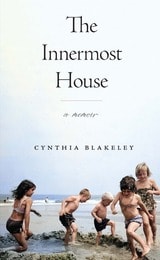
The Innermost House
A MemoirCynthia Blakeley
University of Massachusetts Press, 2024
Finalist, 2025 Georgia Author of the Year Award in Memoir
A stunning account of year-round life on the windswept shores of Cape Cod, threaded with meditations on memory, forgetting, and identity
Raised in a nineteenth-century saltbox house in Wellfleet, Massachusetts, Cynthia Blakeley was both surrounded by generations of immediate and extended family and isolated by the mysteries locked inside her affectionate yet elusive mother and short-fused father. While she and her sisters and cousins roamed the Outer Cape—drinking in the dunes, swimming in kettle ponds, and dancing in Provincetown—Blakeley also turned to the inner world of her journals as she contended with her own secrets and memories.
Over-identifying with her unconventional and artistic mother, Blakeley felt certain that the key to understanding her mother’s drinking and distractions, her generosity and easy forgiveness, was the unexplained absence of two of Blakeley’s half-siblings and their connection to her mother’s unhappy first marriage. Blakeley kept her distance, however, from her disciplinarian father. Though he took his daughters sailing and clamming and beachcombing, he was the chill to their mother’s warmth, the maker, not the breaker, of rules. Slipping through these dynamics in that small house and evocative landscape, Blakeley eventually crossed the bridge and left home, only to return later in search of the family stories that would help her decode her present.
Blakeley’s captivating memoir moves fluidly through time, grappling with the question of who owns a memory or secret and how our narrative choices not only describe but also shape and change us. In this insightful and poignant account of tenacious year-rounders on Cape Cod, Blakeley contends that making sense of ourselves is a collaborative affair, one that begins with understanding those we came from.
The Inquisition in Hollywood
Politics in the Film Community, 1930-60Larry Ceplair and Steven Englund
University of Illinois Press, 1979
The definitive work on the Hollywood blacklist era
The Inquisition in Hollywood examines the suppression of radical political activity in the film industry from the days of the Great Depression through the tumultuous House Un-American Activities Commission era to the waning days of the infamous blacklist.
Although this thirty-year period of American history is marked by widespread targeting of leftists in all areas of life, those in the film industry–-predominately screenwriters–-were considered to be in positions of great potential indoctrinating power, and found themselves under intense scrutiny as the Cold War hysteria mounted.
Ceplair and Englund trace the history of political struggle in Hollywood back to the formation of the Screen Writers Guild in 1933. Many of the blacklisted filmmakers were members of the Communist Party and all of the graylisted filmmakers had expressed their sympathy with progressive (mainly anti-fascist) causes.
Although no Hollywood Communist has ever been linked to espionage or sabotage, and charges of subversive indoctrination have no basis in documented fact, this book powerfully shows how devastating a mere suspicion or insinuation of guilt could be during the era of the Red Menace.
Twenty-two years after its initial publication, The Inquisition in Hollywood remains the definitive work on the blacklist era, and this new edition features a new introduction by the authors.
The Insane Chicago Way
The Daring Plan by Chicago Gangs to Create a Spanish MafiaJohn M. Hagedorn
University of Chicago Press, 2015
The book centers on the secret history of Spanish Growth & Development (SGD)—an organization of Latino gangs founded in 1989 and modeled on the Mafia’s nationwide Commission. It also tells a story within a story of the criminal exploits of the C-Note$, the “minor league” team of the Chicago’s Mafia (called the “Outfit”), which influenced the direction of SGD. Hagedorn’s tale is based on three years of interviews with an Outfit soldier as well as access to SGD’s constitution and other secret documents, which he supplements with interviews of key SGD leaders, court records, and newspaper accounts. The result is a stunning, heretofore unknown history of the grand ambitions of Chicago gang leaders that ultimately led to SGD’s shocking collapse in a pool of blood on the steps of a gang-organized peace conference.
The Insane Chicago Way is a compelling history of the lives and deaths of Chicago gang leaders. At the same time it is a sociological tour de force that warns of the dangers of organized crime while arguing that today’s relative disorganization of gangs presents opportunities for intervention and reductions in violence.
The Insider
How the Kiplinger Newsletter Bridged Washington and Wall StreetRob Wells
University of Massachusetts Press, 2022
When Willard M. Kiplinger launched the groundbreaking Kiplinger Washington Letter in 1923, he left the sidelines of traditional journalism to strike out on his own. With a specialized knowledge of finance and close connections to top Washington officials, Kiplinger was uniquely positioned to tell deeper truths about the intersections between government and business. With careful reporting and insider access, he delivered perceptive analysis and forecasts of business, economic, and political news to busy business executives, and the newsletter’s readership grew exponentially over the coming decades.
More than just a pioneering business journalist, Kiplinger emerged as a quiet but powerful link between the worlds of Presidents Hoover and Roosevelt, and used his Letter to play a little-known but influential role in the New Deal. Part journalism history, part biography, and part democratic chronicle, The Insider offers a well-written and deeply researched portrayal of how Kiplinger not only developed a widely read newsletter that launched a business publishing empire but also how he forged a new role for the journalist as political actor.
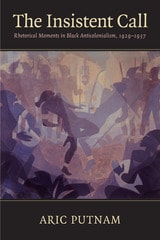
The Insistent Call
Rhetorical Moments in Black Anticolonialism, 1929-1937Aric Putnam
University of Massachusetts Press, 2012
Throughout the nineteenth century, African heritage played an important role in black America, as personal memories and cultural practices continued to shape the everyday experience of people of African descent living under the shadow of slavery. Resisting efforts to de-Africanize their values, customs, and beliefs, Black Americans invoked their African roots in public arguments about their identity and place in the “new” world. At the outset of the twentieth century many still saw Africa primarily as the source of a common cultural and spiritual past. But after the 1920s, the meaning of African heritage changed as people of African descent expressed new relationships between themselves, the United States, and the African Diaspora.
In The Insistent Call, Aric Putnam studies the rhetoric of newspapers, literature, and political pamphlets that expressed this shift. He demonstrates that as people of African descent debated the United States' occupation of Haiti, the Liberian labor crisis, and the Italian invasion of Ethiopia, they formed a new collective identity, one that understood the African Diaspora in primarily political rather than cultural terms. In addition to uncovering a neglected period in the history of Black rhetoric, Putnam shows how rhetoric that articulates the interests of a population not defined by the boundaries of a state can still motivate collective action and influence policies.