Results by title
3390 books match the query 'Fiction' and 1041 start with t
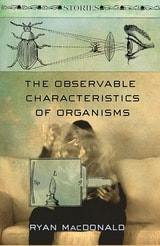
The Observable Characteristics of Organisms
StoriesRyan MacDonald
University of Alabama Press, 2014
As MacDonald says, “I think what I’m after in the stories as well as in the video work is finding an experiential moment, nothing really stable, something pleasantly unstable, or uncomfortable . . . purposefully pleasant uncomfortable instability with moments of tenderness and definitely humor. Certainly nothing concrete, unless it needs that. A certain fear of and respect for banality. I’m after a good time, which can often turn into a really bad time, but either way, one we’ll remember forever.”
Despite the range of circumstances they reveal, these stories are unified by a brightness of vision, deft observation, and consistently sharp, funny, and unbridled language.
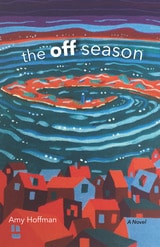
The Off Season
Amy Hoffman
University of Wisconsin Press, 2019
In the damp, windy winter, Nora contends with heartbreak, aging, and local environmental worries, while painting what she hopes will be her masterpiece. Along the way, she encounters the chain-smoking, motor scooter–driving landlady Miss Ruby; Reverend Patsy, the vegan minister of the Unitarian church; and Brunhilde, barista extraordinaire and rival for Baby's affections. As the first tourists begin to arrive in June, Nora must decide what she really wants from life.
The Offbeat
Collecting GlancesKristen DeMay
Michigan State University Press, 2005
The Offbeat is an independent literary series devoted to publishing a diverse collection of voices,and to promoting contactand discussion among Michigan writers. The Offbeat is run entirely by Michigan State University undergraduates, and is centered in East Lansing. Student editors encourage contributions by all individuals with a Michigan connection, past and present, visitor and resident, urban and rural, student and non-student alike. The Offbeat’s goal is to provide an alternative literary outlet for all Michigan writers.
The Offbeat
Fully ClothedKristen DeMay
Michigan State University Press, 2006
The Offbeat is an independent literary series devoted to publishing a diverse collection of voices, and to promoting contact and discussion among Michigan writers. The Offbeat is run entirely by Michigan State University undergraduates, and is centered in East Lansing. Student editors encourage contributions by all individuals with a Michigan connection, past and present, visitor and resident, urban and rural, student and non student alike. The Offbeat’s goal is to provide an alternative literary outlet for all Michigan writers.
The Offbeat
Tell Me EverythingKristen DeMay
Michigan State University Press, 2007
The Offbeat is an independent literary series devoted to publishing a diverse collection of voices, and to promoting contactand discussion among Michigan writers. The Offbeat is run entirely by Michigan State University undergraduates, and is centered in East Lansing. Student editors encourage contributions by all individuals with a Michigan connection, past and present, visitor and resident, urban and rural, student and non-student alike. The Offbeat's goal is to provide an alternative literary outlet for all Michigan writers.
The Offbeat
Unvarnished VoicesKristen DeMay
Michigan State University Press, 2004
The Offbeat is a literary collection series devoted to publishing a diverse selection of voices and to promoting contact and discussion among writers. The Offbeat is run entirely by Michigan State University students, with the goal of providing an alternative literary outlet for Michigan writers.
This edition contains work by Steven Rajewski, Erin Ashmore, Neil Kennedy, Victoria Henderson, Mary Helmic, Rebecca Klein, Jamie Miller, Ken Sleight, Laura Tisdel, and many others.
The Offbeat
Wisdom from ExplorationMarla Koenigsknecht
Michigan State University Press, 2014
The Offbeat
With AbandonChris Cobb
Michigan State University Press, 2008
With Abandon is the eighth volume in the independent literary series, The Offbeat, devoted to publishing a diverse collection of voices, and to promoting contact and discussion among writers. The Offbeat is run entirely by Michigan State Undergraduates, and is centered in East Lansing. The mission of The Offbeat is to provide an alternative literary outlet for writers from Michigan and beyond, and to call attention to voices both emerging and established.
The Offbeat: With Abandon features a wide array of writing that cuts across genres, highlighting the best work by authors ranging from professional journalists to undergraduate writers. Thrown into the mix are voices from professors of literature, graduate students in creative writing, and even a few of our editorial staff. In this volume, writing is an act of faith, a documentation of the joy and terror of life, and above all, an act of witness.
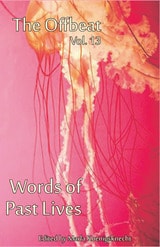
The Offbeat
Words of Past LivesMarla Koenigsknecht
Michigan State University Press, 2013
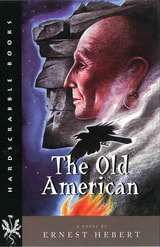
The Old American
A NovelErnest Hebert
Dartmouth College Press, 2001
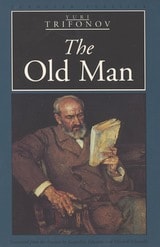
The Old Man
Yuri Trifonov
Northwestern University Press, 1999
The Old Man veers between a contemporary effort to buy a dacha and the memories of an incident in the Civil War. A questionable action in the past haunts the present and throws into relief the materialism that has come to replace revolutionary idealism; suggesting this idealism may have been tainted in the first place. While the setting and situation are very Soviet, the quandary Trifonov describes has universal significance.
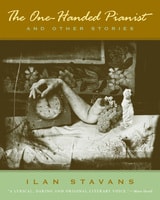
The One-Handed Pianist and Other Stories
Ilan Stavans
Northwestern University Press, 2007
The One-Handed Pianist was published to acclaim in the early 1990’s, with the two-part Spanish edition winning the Latino Literature Prize in 1989 and the Gamma Literature Prize in 1992. Its tales look at what it means to be Jewish in the Hispanic world—a world in which spirituality is often exercised outside the realm of orthodoxy.
Stavans constructs fables that raise questions about ethnicity and community; even Stavans’ person raises questions about ethnicity and community: what does it mean that a Jew of Eastern European lineage can call himself Latino and speak for that group?
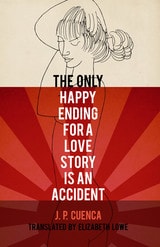
The Only Happy Ending for a Love Story Is an Accident
J. P. Cuenca
Tagus Press, 2013
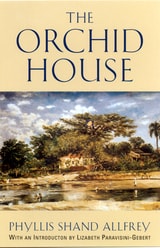
The Orchid House
Allfrey, Phyllis Shand
Rutgers University Press, 1996

The Original Frankenstein
Mary Shelley (with Percy Shelley)
Bodleian Library Publishing, 2008
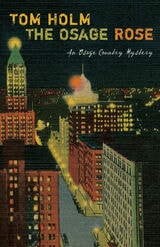
The Osage Rose
Tom Holm
University of Arizona Press, 2008
Life is looking easy for J. D. Daugherty, a crusty ex-cop who has set up his own PI firm in Tulsa, Oklahoma, just after World War I. J. D. expects to make a straightforward living off the intrigues of the city’s wealthy socialites, but then Rose Chichester, a privileged young white woman, runs off with Tommy Ruffle, a young Indian who is heir to Osage oil. Hired by Rose’s father to track down the young pair, J. D. and his associate, a Cherokee named Hoolie Smith, find themselves caught in the cross fire of a deadly scheme. When Tommy turns up murdered and with Rose still missing, J. D. and Hoolie must navigate a twisting maze of deception, race riots, and gun battles in their unrelenting search for the truth—a search that ultimately leads to an intimate secret no one suspected.
Tom Holm writes a true private-eye mystery, yet he entwines the story’s layers of conspiracy and deceit with the realities of prejudice and hatred that existed during the early years of Oklahoma statehood. Rooted firmly in its time, Holm’s well-researched novel tells a complex and compelling story of individuals struggling to find justice at any cost in a world still caught between modernity and its Wild West legacy.
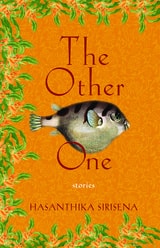
The Other One
StoriesHasanthika Sirisena
University of Massachusetts Press, 2016
Set in Sri Lanka and America, the ten short stories in this debut collection feature characters struggling to contend with the brutality of a decades-long civil war while also seeking security, love, and hope. The characters are students, accountants, soldiers, servants. They are immigrants and strivers. They are each forced to make sometimes comic, sometimes tragic, choices. What they share, despite what they've endured, is the sustaining power of human connection.
An excerpt from the book:
“All I want to know is when you are coming? When are you bringing my sons, my family?”
She watched as a gecko, tinier than normal, skittered across the far wall. It disappeared into a small crack. The room was very hot, and she hadn't turned on the ceiling fan so that the family could save a little money. She took a handkerchief from her nightstand and wiped the beads of sweat from her forehead and the back of her neck.
“I can't leave malli alone here. He's making progress but—”
“It will be for two years only. Then you can sponsor him.”
“The lawyer says it's not so easy.”
“He's a grown man. Let the government take him. The government did this to malli. Let the government pay the price for his care.”
Even though there was no chance that her brother Ranjith could hear her, Anoja dropped her voice. “Malli is all alone here. He has nobody but aiya and me.”
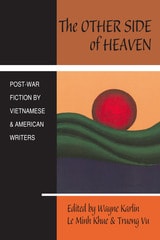
The Other Side of Heaven
Post-War Fiction by Vietnamese and American WritersEdited by Wayne Karlin, Le Minh Khue, and Truong Vu
Northwestern University Press, 1995
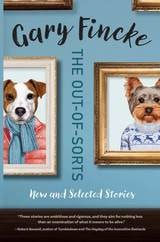
The Out-of-Sorts
New and Selected StoriesGary Fincke
West Virginia University Press, 2017
These stories are often set against large, significant events like the Cold War, Vietnam, and the Kent State shootings, but are always uniquely local. A mother fends off the police by brandishing copperhead snakes. A woman cares for the dog of an alleged double murderer. A husband who has lost his job works at trying to save his wife from a debilitating phobia.
This extensive collection by Gary Fincke, an accomplished poet and writer of fiction, gives rise to ordinary people living lives made fascinating by attention to the particulars of voice, place, and character. With precise language, surprising imagery, and sharp, evocative dialogue, these stories deepen beyond the oddities of their characters, who are scarred and defeated by circumstance and choice, but also attain moments of grace, compassion, and generosity of the spirit.
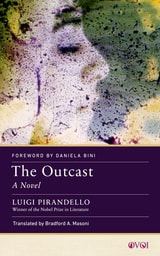
The Outcast
A NovelLuigi Pirandello
Rutgers University Press, 2023
The Outcast is an early masterwork from Nobel Prize–winning Italian author Luigi Pirandello that combines elements of Zolaesque naturalism with emerging modernist aesthetics. This fresh English translation, the first in nearly one hundred years, showcases Pirandello’s deft play with language and his use of irony.
This book was translated thanks to a grant awarded by the Italian Ministry of Foreign Affairs and International Cooperation.
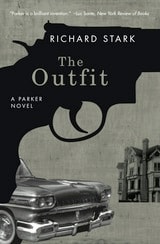
The Outfit
A Parker NovelRichard Stark
University of Chicago Press, 1963
In The Outfit, Parker goes toe-to-toe with the mob, hellbent on taking him down. The notorious lone wolf has some extra tricks up his sleeve, and the entire underworld will learn an unforgettable lesson: whatever Parker does, he does deadly. This third novel in the series, which was the basis for the classic 1973 film The Outfit, with Robert Duvall in the lead, is chock full of astonishing heists and violent battles of will.
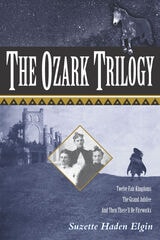
The Ozark Trilogy
Twelve Fair Kingdoms, The Grand Jubilee, And Then There’ll Be FireworksSuzette Haden Elgin
University of Arkansas Press, 2000
The Ozark Trilogy (previously published in 1981, Doubleday) is a widely acclaimed fantasy/science fiction story with, as the title suggests, very strong ties to the Ozark region. Twelve Fair Kingdoms, The Grand Jubilee, And Then There’ll Be Fireworks—the books that comprise the trilogy—chronicle life on the planet Ozark and its Confederation of Continents, which are appropriately named Arkansaw, Oklahomah, Mizzurah, Tinaseeh, Kintucky, and Marktwain. However, the story told here involves much more than a mere transplant of Ozark culture and heritage onto a new planet. While this new Ozark culture maintains and even intensifies many of the “real” Ozark traditions and customs (for instance, “Grannys” hold significant, stabilizing social roles and are important sources of wisdom), the planet Ozark combines many new, fantastical elements with traditional ways. Mules on Ozark fly, and the wise “Grannys” also work magic.
The protagonist of The Ozark Trilogy, Responsible of Brightwater, appears at the center of Ozark society, a society she must save from evil magic, civil war, and, ultimately, alien invasion. As Responsible travels from continent to continent in an attempt to discover and squelch the evil magic and calm the civil unrest, we are witness to many dangerous and sometimes comical adventures along the way, including a spectacular flying Mule crash and a magic duel with a Granny gone bad.
Elgin has created a fantastic world infused with the folk traditions, social and familial hierarchies, and traditional dialect of the Ozarks. While parallels might be drawn between, for example, the break-up of the Confederacy of Continents on planet Ozark and the American Civil War, Elgin comments on aspects of Ozark history and tradition in a non didactic way. The trilogy, with its strong heroine and witty engagement of tradition, is a classic of Ozark literature.
The Packhorseman
Charles Hudson
University of Alabama Press, 2009
The Painted Canoe
Anthony Winkler
University of Chicago Press, 1989
Still on land are the villagers, the woman, and the sons who comprise life for Zachariah. While he struggles with the forces of nature, the natural faith of the villagers encounters the incapacity for belief of the troubled English doctor. As the superstitions and certainties of Jamaican life and the consequences of science meet, Winkler reveals a rich understanding of the precarious balance between thought and reality, between the coincidental and the miraculous.
"This is one of those rare novels that announces its presence with such modest grace that the size of its ambition and accomplishments steals gently into the consciousness."—Michael Thelwell, Washington Post Book World
"Mr. Winkler deftly unfurls his exquisitely written story, which is redolent of the colorful patois and chaotic flavor of rural Jamaican culture."—Bob Allen, Baltimore Sun
The Pale Light of Sunset
Scattershots and Hallucinations in an Imagined LifeLee Maynard
West Virginia University Press, 2009
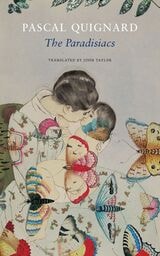
The Paradisiacs
Last Kingdom IVPascal Quignard
Seagull Books, 2025
What if paradise was not a place we lost, but one we never truly knew? In Paradisiacs, the fourth volume of the Last Kingdom series, Pascal Quignard meditates on the nature of paradise—not as an Eden to which we might return, but as a place of origin that lingers in myth. Through his signature blend of ancient texts, Paleolithic art, psychoanalysis, and personal reflection, Quignard explores our primal longing for recognition. He traces this yearning back to the erstwhile, a prenatal paradise from which we are expelled at birth, and examines how resemblance and recognition shape our identities.
At once poetic and philosophical, Paradisiacs invites readers into Quignard’s singular world, where language and history coalesce into a profound rumination on the origins of selfhood. With John Taylor’s masterly translation, this latest installment of Last Kingdom is a hypnotic and revelatory reading experience for those drawn to the intersections of philosophy and the ineffable.
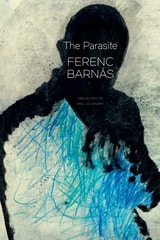
The Parasite
Ferenc Barnás
Seagull Books, 2020
When he gets to know a woman referred to as L., he thinks his demons may have finally subsided. But when he hears of her past, the jealousy returns. He seeks relief through writing—by weaving an imagined tale of L.’s amorous adventures. What will he do with this strange manuscript, and can it bring him healing?
A breathtaking blend of Dostoevskian visions, episodes of madness, and intellectual fervor, all delivered in precise, lucid prose, The Parasite is a novel that one cannot escape.
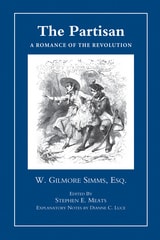
The Partisan
A Romance of RevolutionWilliam Gilmore Simms
University of Arkansas Press, 2011
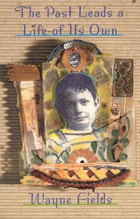
The Past Leads a Life of Its Own
Wayne Fields
University of Chicago Press, 1997
"Going through these pages quickly would be like chug-a-lugging a jar of honey fresh from the comb, or wolfing down a slow-cured, hickory-smoked country ham. It is a rich and complexly flavored work of fiction, a book to be savored."—Harper Barnes, St. Louis Post-Dispatch
"Set against the rhythms of nature, Fields's 16 luminous, interrelated stories celebrate a boy's coming-of-age. . . . The beauty of these deeply felt stories lies in their spare, ear-perfect language and in quiet epiphanies."—Publishers Weekly
"[A] beautifully subtle work. . . . Here are a series of vignettes, each capturing some moment in nature, poetic and ethereal. . . . [They] are like stones skipping on water, capturing the struggles of a family leaving one way of life behind for another, Fields remembers the feeling of a time and a place gone forever."—Library Journal
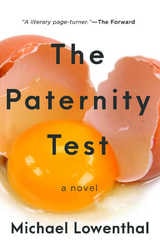
The Paternity Test
A NovelMichael Lowenthal
University of Wisconsin Press, 2018
Pat Faunce is a faltering romantic, a former poetry major who now writes textbooks. A decade into his relationship with Stu, an airline pilot from a fraught Jewish family, he fears he’s losing Stu to other men—and losing himself in their “no rules” arrangement. Yearning for a baby and a deeper commitment, he pressures Stu to move from Manhattan to Cape Cod, to the cottage where Pat spent boyhood summers.
As they struggle to adjust to their new life, they enlist a surrogate: Debora, a charismatic Brazilian immigrant, married to Danny, an American carpenter. Gradually, Pat and Debora bond, drawn together by the logistics of getting pregnant and away from their spouses. Pat gets caught between loyalties—to Stu and his family, to Debora, to his own potent desires—and wonders: is he fit to be a father?
In one of the first novels to explore the experience of gay men seeking a child through surrogacy, Michael Lowenthal writes passionately about marriages and mistakes, loyalty and betrayal, and about how our drive to create families can complicate the ones we already have. The Paternity Test is a provocative look at the new “family values.”
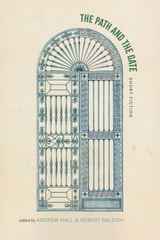
The Path and the Gate
Mormon Short FictionAndrew Hall
Signature Books, 2023

The People from Heaven
John Sanford
University of Illinois Press, 1996
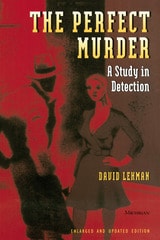
The Perfect Murder
A Study in DetectionDavid Lehman
University of Michigan Press, 2000
As Lehman shows, the detective story draws deeply from ancient storytelling traditions. The mystery's conventions--the locked room, the clue "hidden" in plain sight, the diabolical double, the villainous least likely subject--work on us as childhood fairy tales do; they prey upon our darkest fears, taking us to the brink of the unbearable before restoring a comforting sense of order. The myth of Oedipus, for example, contains the essential elements of a whodunit, with the twist that the murderer the detective pursues is himself.
With their wisecracking gumshoe heroes, Dashiell Hammett and Raymond Chandler fashioned an existential romance out of the detective novel. More recent writers such as Ross MacDonald, P. D. James, and Ruth Rendell have raised the genre to a new level of psychological sophistication. Yet the form evolves still, and Lehman guides us to the epistemological riddles of Jorge Luis Borges and Umberto Eco, who challenge the notion of a knowable truth. Originally published in 1989, this new edition features an additional chapter on the mystery novels of the 1990s.
"A lively study of the development and varieties of the detective story since Poe, its relations with other forms high and low, and the latter-day appropriation of its techniques by such writers as Borges and Eco. . . . A thoroughly intelligent and readable book." --Richard Wilbur, Pulitzer-Prize winning poet
David Lehman is the series editor of both the The Best American Poetry, published by Scribner, and the Poets on Poetry series published by the University of Michigan Press. He is a former Guggenheim Fellow in poetry, a vice president of the National Book Critics Circle, and the author of several books of criticism and collections of poems.
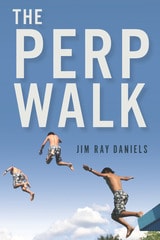
The Perp Walk
Jim Ray Daniels
Michigan State University Press, 2019
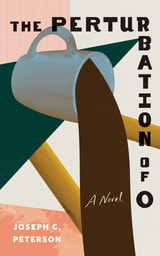
The Perturbation of O
Joseph G. Peterson
University of Iowa Press, 2025
Told mostly in a single conversation between Gideon and Regina as they sit on a spring morning drinking coffee and eating pastries, The Perturbation of O deals with concepts of fame and intimacy, and who has the right to speak about whom.
The Pet Thief
Kassten Alonso
University of Alabama Press, 2013
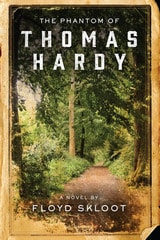
The Phantom of Thomas Hardy
Floyd Skloot
University of Wisconsin Press, 2016
In this imaginative novel, worlds continue to collide as Floyd, an American writer recovering from a devastating neuro-viral attack, and his wife, Beverly, immerse themselves in Hardy’s world. While pondering the enigma of a fictional character living in a factual building, Floyd is approached by Hardy himself—despite his death in 1928.
This phantom—possibly conjured out of Floyd’s damaged brain—tasks the Americans with finding out what Hardy missed in love. Embarking on their quest, they visit Hardy’s birthplace, home, and grave, exploring the Dorset landscape and the famous novels with their themes of tormented love. Peering into the Victorian past, they slowly dismantle the clutter of screens that Hardy placed around his private life, even as their own love story unfolds, filled with healing and hope.
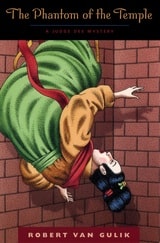
The Phantom of the Temple
A Judge Dee MysteryRobert van Gulik
University of Chicago Press, 1966
Judge Dee presided over his imperial Chinese court with a unique brand of Confucian justice. A near mythic figure in China, he distinguished himself as a tribunal magistrate, inquisitor, and public avenger. Long after his death, accounts of his exploits were celebrated in Chinese folklore, and later immortalized by Robert van Gulik in his electrifying mysteries.
In The Phantom of the Temple, three separate puzzles—the disappearance of a wealthy merchant's daughter, twenty missing bars of gold, and a decapitated corpse—are pieced together by the clever judge to solve three murders and one complex, gruesome plot.
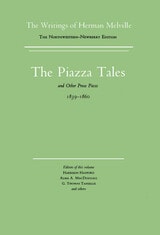
The Piazza Tales and Other Prose Pieces, 1839-1860
Volume Nine, Scholarly EditionHerman Melville
Northwestern University Press, 1987
This scholarly edition presents texts as close to the author's intentions as surviving evidence permits. Based on surviving manuscripts, on original newspaper and magazine printings, and on collations of magazine printings with the book of editions of The Piazza Tales, the text incorporates over 800 emendations by the editors and over 200 from later printings during Melville's lifetime.
This edition is an Approved Text of the Center for Editions of American Authors (Modern Language Association of America).
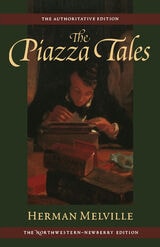
The Piazza Tales
Volume NineHerman Melville
Northwestern University Press, 1996
This scholarly edition presents texts as close to the author's intentions as surviving evidence permits. Based on surviving manuscripts, on original newspaper and magazine printings, and on collations of magazine printings with the book of editions of The Piazza Tales, the text incorporates over 800 emendations by the editors and over 200 from later printings during Melville's lifetime.
This edition is an Approved Text of the Center for Editions of American Authors (Modern Language Association of America).
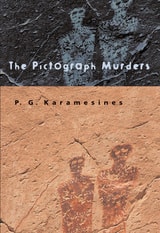
The Pictograph Murders
P. G. Karamasines
Signature Books, 2004
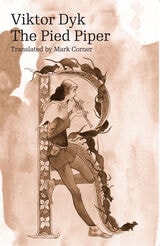
The Pied Piper
Viktor Dyk
Karolinum Press, 2018
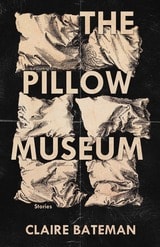
The Pillow Museum
StoriesClaire Bateman
University of Alabama Press, 2025
A collection of 56 flash fictions, micro-essays, and contemporary fables about the burden on women and families.
The Pillow Museum is a collection of 56 flash fictions, micro-essays, and contemporary fables set in various simulacra of our world. Claire Bateman’s gorgeous prose captures the imagination with closely observed details of people and places that are startlingly familiar yet unreal, where nothing can be taken for granted, including narrative logic: "It was snowing the night they had the fight about the glass piano whose music provided all the light in the house."
In an authoritative voice that offers no apologies or justifications, The Pillow Museum evokes a closely observed slipstream strangeness that refuses to take any moment or detail for granted—a fruitful, delirious disruption.
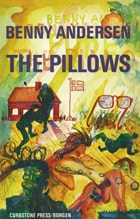
The Pillows
Benny Andersen
Northwestern University Press, 1995
A collection of 16 uniquely funny short stories by acclaimed Danish poet Benny Andersen.
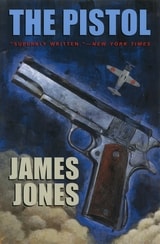
The Pistol
James Jones
University of Chicago Press, 2003
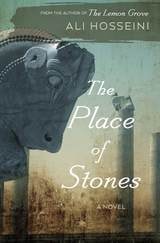
The Place of Stones
A NovelAli Hosseini
Northwestern University Press, 2017
The Place of Stones is Ali Hosseini’s newly translated first novel, his second book to appear in English. In it, he paints a vivid portrait of Sangriz, a village in the southern part of Iran where life has been disrupted by industrialization and the revolution of 1979.
Haydar and Jamal are best friends, and their families have always made their living from the land in the foothills of Iran’s Zagros Mountains. Haydar is a dreamer who searches the hills for an ancient treasure called the Black Globe. Jamal is in love with Haydar’s sister, Golandam, and he attempts to accommodate himself to modernization as a way to create a better life for the two of them. The rapacious conversion of farmland to brick factories draws the trio into escalating conflict with the village landlord.
As Jamal, Haydar, and their families confront land reform, industrialization, revolution, and war, their lives are pulled forcefully toward the explosive events that will change them all. In masterfully crafted prose that never sinks into sentimentality, The Place of Stones illuminates how a lost past continues to shape the present.

The Plays of David Garrick, Volume 3
Garrick's Adaptations of Shakespeare, 1744 - 1756Edited by Harry William Pedicord and Fredrick Louis Bergmann
Southern Illinois University Press, 1981
David Garrick’s accomplishments as an actor, manager, and theatrical innovator brought him great fame and fortune, and his ideas influenced not only his own age but succeeding ages as well. Yet as a playwright, a part of the elegant combination of talents that was David Garrick, he has never achieved the critical reputation he richly deserves, in main because of the unavailability of texts and the lack of proper assessment of the historic importance of his plays in the English theatre.
This first complete edition makes available to scholars and students all the plays of Garrick in well edited texts, with commentary and notes.
Contents: Macbeth. A Tragedy, 1744; Romeo and Juliet, 1748; The Fairies. An Opera, 1755; Catherine and Petruchio. A Comedy, 1756; Florizel and Perdita. A Dramatic Pastoral, 1756; The Tempest. An Opera, 1756; and King Lear. A Tragedy, 1756.
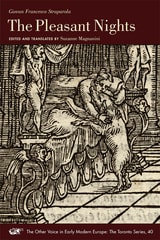
The Pleasant Nights
Giovan Straparola
Iter Press, 2015
In Giovan Francesco Straparola’s The Pleasant Nights, a group of men and women gather together in a villa on the Venetian island of Murano during Carnival to sing songs, tell tales, and solve riddles. A sixteenth-century bestseller, The Pleasant Nights is today a fundamental text for European folk and fairy tale studies, for alongside triumphal and tragic love stories, comical tales of practical jokes, and accounts of witty retorts, Straparola (1480? – 1557?) placed some of the first fairy tales printed in Europe. Straparola’s eloquent female narrators and the fairy tales they recount became a model for a generation of French women writers in Parisian salons, who used the fairy tale to interrogate the gender norms of their day. This book presents the first new and complete English translation of Straparola’s tales and riddles to be published since the nineteenth century.
The Pleasure Marriage
A NovelTahar Ben Jelloun; Translated from the French by Rita S. Nezami
Northwestern University Press, 2021
Nabou returns to Fez as Amir’s second wife, weathering the jealous cruelty of Lalla Fatma, his first partner. Isolated within her new home, Nabou gives birth to twin sons, one black and one white, who come of age on the opposite sides of racial, social, and political chasms and who chart vastly different courses. The Pleasure Marriage showcases Ben Jelloun’s mastery of metaphor and lyrical narrative as he continues to take us into the worlds of Moroccan culture through his exquisite language and literary genius.
The Pledge
Friedrich Dürrenmatt
University of Chicago Press, 2000
One of Dürrenmatt’s most diabolically imagined and constructed novels, The Pledge was adapted for the screen in 2000 in a film directed by Sean Penn and starring Jack Nicholson.