Results by title
3071 books match the query 'Business & Economics' and 687 start with t
Trade and Protectionism
Edited by Takatoshi Ito and Anne O. Krueger
University of Chicago Press, 1993
The authors look at the current global trading system and at the potential threats to East Asian economies from possible regional arrangements, such as separate trading blocks in the Western Hemisphere and Europe. They cover trade between the United States and Japan, Korea and Japan, and Japanese-East Asian trade policies; trade in agriculture and semiconductors and the frictions that have jeopardized this trade; and direct foreign investment. The contributors round out the work with discussions of the political economy of protection in Korea and Taiwan and political economy considerations as they affect trade policy in general.
This is the second volume of the National Bureau of Economic Research-East Asia Seminar on Economics. The first volume, The Political Economy of Tax Reform, also edited by Takatoshi Ito and Anne O. Krueger, addresses tax reform in the global economy.
Trade and Structural Change in Pacific Asia
Edited by Colin I. Bradford Jr. and William H. Branson
University of Chicago Press, 1987
Themes in the research reported here includes the sectoral composition of output and trade; rates of structural change in production and exports and their relation to economic growth; the effect of abundant resource endowments on industrialization and manufactured exports; the nature of the mix between active government policies and market forces; and the balance between demand-determined and supply-determined industrialization and exports. Many of the issues explored have important implications for United States foreign economic policy, and the volume includes a look at the basic economic and political forces influencing shifts in United States trade policy in the postwar period.
A timely and informative analysis, the volume probes the causes and consequences of economic growth in Pacific Asia, focusing on the interaction of exports of manufactured goods and the developmental process. The results reported contribute to ongoing research in structural change and economic policy and will be important to economists working on empirical patters in international trade and the process of economic development.
Trade in Services in the Asia-Pacific Region
Edited by Takatoshi Ito and Anne O. Krueger
University of Chicago Press, 2002
This volume is the first book-length attempt to analyze trade in services in the Asia-Pacific region. Contributors provide overviews of basic issues involved in studying the service sector; investigate the impact of increasing trade in services on the economies of Taiwan, Korea, and Hong Kong; present detailed analyses of specific service sectors (telecommunications, financial services, international tourism, and accounting); and extend our understanding of trade in services beyond the usual concept (measured in balance of payment statistics) to include indirect services and services undertaken abroad by subsidiaries and affiliates.
Trade with Japan
Has the Door Opened Wider?Edited by Paul Krugman
University of Chicago Press, 1991
Trade-Offs
An Introduction to Economic ReasoningHarold Winter
University of Chicago Press, 2023
The highly engaging introduction to thinking like an economist, updated for a new generation of readers.
When economists wrestle with any social issue—be it unemployment, inflation, healthcare, or crime and punishment—they do so impersonally. The big question for them is: what are the costs and benefits, or trade-offs, of the solutions to such matters? These trade-offs constitute the core of how economists see the world—and make the policies that govern it.
Trade-Offs is an introduction to the economic approach of analyzing controversial policy issues. A useful introduction to the various factors that inform public opinion and policymaking, Trade-Offs is composed of case studies on topics drawn from across contemporary law and society.
Intellectually stimulating yet accessible and entertaining, Trade-Offs will be appreciated by students of economics, public policy, health administration, political science, and law, as well as by anyone following current social policy debates.

Trade-Offs
An Introduction to Economic ReasoningHarold Winter
University of Chicago Press, 2023
This is an auto-narrated audiobook edition of this book.
The highly engaging introduction to thinking like an economist, updated for a new generation of readers.
When economists wrestle with any social issue—be it unemployment, inflation, healthcare, or crime and punishment—they do so impersonally. The big question for them is: what are the costs and benefits, or trade-offs, of the solutions to such matters? These trade-offs constitute the core of how economists see the world—and make the policies that govern it.
Trade-Offs is an introduction to the economic approach of analyzing controversial policy issues. A useful introduction to the various factors that inform public opinion and policymaking, Trade-Offs is composed of case studies on topics drawn from across contemporary law and society.
Intellectually stimulating yet accessible and entertaining, Trade-Offs will be appreciated by students of economics, public policy, health administration, political science, and law, as well as by anyone following current social policy debates.
Trade-Offs
An Introduction to Economic Reasoning and Social IssuesHarold Winter
University of Chicago Press, 2005
Harold Winter provides readers with the analytical tools needed to identify and understand the trade-offs associated with these topics. By considering both the costs and benefits of potential policy solutions, Winter stresses that real-world policy decision making is best served by an explicit recognition of as many trade-offs as possible.
Intellectually stimulating yet accessible and entertaining, Trade-Offs will be appreciated by students of economics, public policy, health administration, political science, and law, as well as by anyone who follows current social policy debates.

Trade-Offs
An Introduction to Economic Reasoning and Social Issues, Second EditionHarold Winter
University of Chicago Press, 2013

Traders in a Brave New World
The Uruguay Round and the Future of the International Trading SystemErnest H. Preeg
University of Chicago Press, 1995
Preeg places the Uruguay Round in the broader context of global politics and economics, showing how changes in the world order—from the collapse of communism to dramatic economic reforms in developing countries—influenced both the topics of negotiations and their outcome. He then assesses the final GATT agreement as a case study in international negotiations and evaluates its probable effects on income and trade.
Finally, Preeg looks to the short- and long-term issues confronting future trade-policy negotiators. He shows that the international trade agenda will consist of three evolving types of agreement—further multilateral commitments, regional free-trade agreements, and selective bilateral accords. Going to the heart of current debates on the "new world order," an important final chapter evaluates the political and economic relationships that will result from the international trading system.
Trading Blocs
States, Firms, and Regions in the World EconomyKerry A. Chase
University of Michigan Press, 2005
Trading Blocs is the first book to systematically demonstrate the theoretical significance of economies of scale in domestic pressure for trading blocs, and thereby build on a growing research agenda in areas of political economy and domestic politics.
"Chase has written a superb book that provides us with an innovative and compelling explanation for the development of trading blocs."
--Vinod Aggarwal, Director, Berkeley APEC Study Center, University of California, Berkeley
Kerry A. Chase is Assistant Professor of Political Science at Tufts University.
Trading Freedom
How Trade with China Defined Early AmericaDael A. Norwood
University of Chicago Press, 2022
The economic and geographic development of the early United States is usually thought of in trans-Atlantic terms, defined by entanglements with Europe and Africa. In Trading Freedom, Dael A. Norwood recasts these common conceptions by looking to Asia, making clear that from its earliest days, the United States has been closely intertwined with China—monetarily, politically, and psychologically.
Norwood details US trade with China from the late eighteenth through the late nineteenth centuries—a critical period in America’s self-definition as a capitalist nation—and shows how global commerce was central to the articulation of that national identity. Trading Freedom illuminates how debates over political economy and trade policy, the building of the transcontinental railroad, and the looming sectional struggle over slavery were all influenced by Sino-American relations. Deftly weaving together interdisciplinary threads from the worlds of commerce, foreign policy, and immigration, Trading Freedom thoroughly dismantles the idea that American engagement with China is anything new.
Trading Futures
A Theological Critique of Financialized CapitalismFilipe Maia
Duke University Press, 2022
Trading Roles
Gender, Ethnicity, and the Urban Economy in Colonial PotosíJane E. Mangan
Duke University Press, 2005
Drawing on wills and dowries, judicial cases, town council records, and royal decrees, Mangan brings alive the bustle of trade in Potosí. She examines quotidian economic transactions in light of social custom, ethnicity, and gender, illuminating negotiations over vendor locations, kinship ties that sustained urban trade through the course of silver booms and busts, and credit practices that developed to mitigate the pressures of the market economy. Mangan argues that trade exchanges functioned as sites to negotiate identities within this colonial multiethnic society. Throughout the study, she demonstrates how women and indigenous peoples played essential roles in Potosí’s economy through the commercial transactions she describes so vividly.

Trading Spaces
The Colonial Marketplace and the Foundations of American CapitalismEmma Hart
University of Chicago Press, 2019
When we talk about the economy, “the market” is often just an abstraction. While the exchange of goods was historically tied to a particular place, capitalism has gradually eroded this connection to create our current global trading systems. In Trading Spaces, Emma Hart argues that Britain’s colonization of North America was a key moment in the market’s shift from place to idea, with major consequences for the character of the American economy.
Hart’s book takes in the shops, auction sites, wharves, taverns, fairs, and homes of seventeenth- and eighteenth-century America—places where new mechanisms and conventions of trade arose as Europeans re-created or adapted continental methods to new surroundings. Since those earlier conventions tended to rely on regulation more than their colonial offspring did, what emerged in early America was a less-fettered brand of capitalism. By the nineteenth century, this had evolved into a market economy that would not look too foreign to contemporary Americans. To tell this complex transnational story of how our markets came to be, Hart looks back farther than most historians of US capitalism, rooting these markets in the norms of seventeenth- and eighteenth-century Britain. Perhaps most important, this is not a story of specific commodity markets over time but rather is a history of the trading spaces themselves: the physical sites in which the grubby work of commerce occurred and where the market itself was born.
Trading with the Enemy
The Covert Economy During the American Civil WarPhilip Leigh
Westholme Publishing, 2022
While Confederate blockade runners famously carried the seaborne trade for the South during the American Civil War, the amount of Southern cotton exported to Europe was only half of that shipped illicitly to the North. Most went to New England textile mills where business “was better than ever,” according to textile mogul Amos Lawrence. Rhode Island senator William Sprague, a mill owner and son-in-law to Treasury Secretary Salmon P. Chase, was a member of a partnership supplying weapons to the Confederacy in exchange for cotton. The trade in contraband was not confined to New England. Union General William T. Sherman claimed Confederates were supplied with weapons from Cincinnati, while General Ulysses S. Grant captured Rebel cavalry armed with carbines purchased in Union-occupied Memphis. During the last months of the war, supplies entering the Union-controlled port of Norfolk, Virginia, were one of the principal factors enabling Robert E. Lee’s Confederate army to avoid starvation. Indeed, many of the supplies that passed through the Union blockade into the Confederacy originated in Northern states, instead of Europe as is commonly supposed. Merchants were not the only ones who profited; Union officers General Benjamin Butler and Admiral David Dixon Porter benefited from this black market. President Lincoln admitted that numerous military leaders and public officials were involved, but refused to stop the trade.
In Trading with the Enemy: The Covert Economy During the American Civil War, New York Times Disunion contributor Philip Leigh recounts the little-known story of clandestine commerce between the North and South. Cotton was so important to the Northern economy that Yankees began growing it on the captured Sea Islands of South Carolina. Soon the neutral port of Matamoras, Mexico, became a major trading center, where nearly all the munitions shipped to the port—much of it from Northern armories—went to the Confederacy. After the fall of New Orleans and Vicksburg, a frenzy of contraband-for-cotton swept across the vast trans-Mississippi Confederacy, with Northerners sometimes buying the cotton directly from the Confederate government. A fascinating study, Trading with the Enemy adds another layer to our understanding of the Civil War.
Training and the Private Sector
International ComparisonsEdited by Lisa M. Lynch
University of Chicago Press, 1994
The authors focus on Germany's widespread, formal apprenticeship programs; the U.S. system of learning-by-doing; Japan's low employee turnover and extensive company training; and Britain's government-led and school-based training schemes. The evidence shows that, overall, training in the workplace is more effective than training in schools. Moreover, even when U.S. firms spend as much on training as other countries do, their employees may still be less skilled than workers in Europe or Japan.
Training and the Private Sector points to training programs in Germany, Japan, and other developed countries as models for creating a workforce in the United States that can compete more successfully in today's economy.
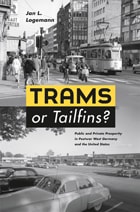
Trams or Tailfins?
Public and Private Prosperity in Postwar West Germany and the United StatesJan L. Logemann
University of Chicago Press, 2012
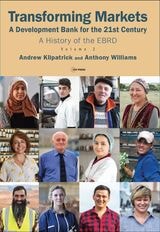
Transforming Markets
A Development Bank for the 21st Century. A History of the EBRD, Volume 2Andrew Kilpatrick
Central European University Press, 2021

Transforming Masculine Rule
Agriculture and Rural Development in the European UnionElisabeth Prügl
University of Michigan Press, 2011
"The premise of mainstreaming gender is to bring equality concerns into every aspect of policy-making, and this brave book offers a close look at how feminists have taken up the challenge to transform the hidden dynamics of male domination in agricultural policy in Europe. In contrast to the automatic assumption that (neo)liberal policy always works against women’s interests, Prügl demonstrates the potential for feminist ju-jitsu to take advantage of multiple levels of governance to empower women in some circumstances. Although feminists were not always successful, the story of their efforts to remake agricultural policy should encourage activists to look for points of leverage in this and other contested and changing multilevel power systems."
---Myra Marx Ferree, University of Wisconsin
"Information on policy development, conflicts about improving the status of farm women, and using rural development policies to foster gender equality is hard to access in English and extremely useful for researchers concerned with the specifics of gender equality policy in the EU."
---Alison Woodward, Institute for European Studies, Vrije Universiteit Brussel
"This book is a must-read for scholars interested in the gendered process of global restructuring. Elisabeth Prügl succeeds superbly in teasing out the power politics involved in European agricultural policy. Through the lens of a feminist-constructivist approach, she makes visible the multiple mechanisms of gendered power within the state. This very lucid narrative is a milestone in a new generation of feminist theoretical scholarship."
---Brigitte Young, University of Muenster, Germany
Taking West and East Germany as case studies, Elisabeth Prügl shows how European agricultural policy has cemented long-standing gender-based inequalities and how feminists have used liberalization as an opportunity to challenge such inequalities. Through a comparison of the EU’s rural development program known as LEADER as it played out in the Altmark region in the German East and in the Danube/Bavarian Forest region in the West, Prügl provides a close-up view of the power politics involved in government policies and programs.
In identifying mechanisms of power (refusal, co-optation, compromise, normalization, and silencing of difference), Prügl illustrates how these mechanisms operate in arguments over gender relations within the state. Her feminist-constructivist approach to global restructuring as a gendered process brings into view multiple levels of governance and the variety of gender constructions operating in different societies. Ultimately, Prügl offers a new understanding of patriarchy as diverse, contested, and in flux.
Jacket photograph: © iStockphoto.com/Wojtek Kryczka

Transforming Peasants, Property and Power
The Collectivization of Agriculture in Romania, 1949–1962Dorin Dobrincu
Central European University Press, 2009
Transforming a Business School
Entrepreneurial Leadership in an Era of DisruptionPorat, M. Moshe
Rutgers University Press, 2019

Transglobal Fashion Narratives
Clothing Communication, Style Statements and Brand StorytellingEdited by Anne Peirson-Smith and Joeseph H. Hancock II
Intellect Books, 2018
Transition Scenarios
China and the United States in the Twenty-First CenturyDavid P. Rapkin and William R. Thompson
University of Chicago Press, 2013

Translation in a Global Market, Volume 13
Emily Apter, ed.
Duke University Press, 0
Translation in a Global Market assembles contributors from several academic disciplines as well as visual artists for a closer look at the formation of an international canon and at the kinds of texts that gain international visibility. The essays urge a shift in emphasis from global literacy—which implies the use of a standard language and a preference for translatability in texts—to transnational literacy, which places minority and diaspora literatures in direct conversation with each other rather than with Paris, London, or New York.
Contributors. Dina Al-Kassim, Emily Apter, Timothy Brennan, Elena Climent, Maryse Condé, Michael Eng, Renée Green, Rainer Ganahl, Sarah M. Hudgins, Michael North, Gayatri Chakravorty Spivak

Transnational Capitalism in East Central Europe's Heavy Industry
From Flagship Enterprises to SubsidiariesAleksandra Sznajder Lee
University of Michigan Press, 2016
This book has broad implications for the political economy of reform because it illuminates the political determinants of privatization and the resources used to resist it. In addition, Sznajder Lee sheds new light on why some countries are more likely than others to be subject to external constraints, such as IMF conditionality, and how some allegedly pro-market reformers manage to maintain public ownership over certain industry sectors.

Transnational Korean Cinema
Cultural Politics, Film Genres, and Digital TechnologiesDal Yong Jin
Rutgers University Press, 2020
The book emphasizes the economic and industrial aspects of the story, looking at questions on the interaction of politics and economics, including censorship and public funding, and provides a better view of the big picture by laying bare the relationship between film industries, the global market, and government. Jin also sheds light on the operations and globalization strategies of Korean film industries alongside changing cultural policies in tandem with Hollywood’s continuing influences in order to comprehend the power relations within cultural politics, nationally and globally. This is the first book to offer a full overview of the nascent development of Korean cinema.

Travel Behaviour Reconsidered in an Era of Decarbonisation
David Metz
University College London, 2024
Transport systems are central to daily life, but simultaneously have a salient impact on our environment. However, this perspective has little influence on conventional economic analysis and transport investments, creating dissonance between traditional investment goals and the need to reduce carbon emissions to net zero by 2050. For fifty years, public road and railway expenditures were justified by claims to improve travel time. On the contrary, the average time of travel never changed. Travel Behaviour Reconsidered in an Era of Decarbonisation argues that this outdated economic analysis is misconceived and that fresh perspectives on transport networks are imperative.
Trimming the Sails
The Comparative Political Economy of Expansionary Fiscal ConsolidationsIstvan Benczes
Central European University Press, 2008
Trust and Distrust In Organizations
Dilemmas and ApproachesRoderick M. Kramer
Russell Sage Foundation, 2004

Trust, Ethnicity, and Identity
Beyond the New Institutional Economics of Ethnic Trading Networks, Contract Law, and Gift-ExchangeJanet Tai Landa
University of Michigan Press, 1995
Trust, Ethnicity, and Identity deals with the economic role of laws and institutions in achieving social order in a decentralized economy. Specifically, this book considers the coordinating role of three major nonprice institutions--ethnic trading networks, contract law, and gift-exchange--in economizing on transaction costs and thus facilitating the process of exchange in decentralized economies in different historical contexts.
The major unifying theme of the book is this: identity matters when traders operate in an environment characterized by contract uncertainty, where the legal framework for the enforcement of contracts is not well developed. This in turn points out the importance of trust embedded in particularistic exchange relations such as kinship or ethnicity.
One unique facet of this book is that the author uses a property rights--public choice approach--part of the New Institutional Economics--to provide a unifying theoretical framework to explain such diverse exchange institutions as contract law, ethnic trading networks, and gift-exchange, In addition, it goes beyond the New Institutional Economics paradigm by incorporating some crucial concepts from sociology, anthropology, and bioeconomics, such as social structure, social norms, culture, reciprocity, and kin-related altruism. This broad interdisciplinary framework gives Landa's work a relevance beyond economics to law, political science, sociology, anthropology, and bioeconomics.
Trustees of Culture
Power, Wealth, and Status on Elite Arts BoardsFrancie Ostrower
University of Chicago Press, 2002
Her new study demonstrates that members of elite arts boards walk a fine line between maintaining their status and serving the needs of the large-scale organizations they oversee. As class members whose status depends in part on the prestige of the boards on which they serve, trustees seek to perpetuate arts boards as exclusive elite enclaves. But in response to pressures to increase and diversify the audiences for arts institutions, elite board members act in a surprisingly open manner in terms of organizational accessibility and operations.
Written with clarity and grace, Trustees of Culture will contribute significantly to our understanding of organizational governance; the politics of fundraising; elite arts participation and philanthropy; as well as the consequences of wider social policies that continue to emphasize private financial support. Ostrower's study will prove to be indispensable reading for not just sociologists of culture, but anyone interested in how the arts are financially and institutionally supported.

Trusteeship and the Management of Foundations
Donald Young
Russell Sage Foundation, 1969

Tulipmania
Money, Honor, and Knowledge in the Dutch Golden AgeAnne Goldgar
University of Chicago Press, 2007
“Goldgar tells us at the start of her excellent debunking book: ‘Most of what we have heard of [tulipmania] is not true.’. . . She tells a new story.”—Simon Kuper, Financial Times

Twentieth Century-Fox
The Zanuck-Skouras Years, 1935–1965By Peter Lev
University of Texas Press, 2013
When the Fox Film Corporation merged with Twentieth Century Pictures in 1935, the company posed little threat to industry juggernauts such as Paramount and MGM. In the years that followed however, guided by executives Darryl F. Zanuck and Spyros Skouras, it soon emerged as one of the most important studios. Though working from separate offices in New York and Los Angeles and often of two different minds, the two men navigated Twentieth Century-Fox through the trials of the World War II boom, the birth of television, the Hollywood Blacklist, and more to an era of exceptional success, which included what was then the highest grossing movie of all time, The Sound of Music.
Twentieth Century-Fox is a comprehensive examination of the studio’s transformation during the Zanuck-Skouras era. Instead of limiting his scope to the Hollywood production studio, Lev also delves into the corporate strategies, distribution models, government relations, and technological innovations that were the responsibilities of the New York headquarters. Moving chronologically, he examines the corporate history before analyzing individual films produced by Twentieth Century-Fox during that period. Drawn largely from original archival research, Twentieth Century-Fox offers not only enlightening analyses and new insights into the films and the history of the company, but also affords the reader a unique perspective from which to view the evolution of the entire film industry.
Two Lucky People
MemoirsMilton Friedman and Rose D. Friedman
University of Chicago Press, 1998
"The Friedmans come across as the last Enlightenment thinkers in a post-modern world. . . . This is a book that restores your faith in reasoned discourse. . . . There really are people who believe in scholarly exchange as a way to discover truth."—David Brooks, New York Times Book Review
"The Friedmans are a feisty couple, who clearly delight in their lives and each other. And shining through their reticence, and their conservatism, is a decency that even liberals will recognize."—Milton and Judith Viorst, Washington Post Book World
"This engaging book recounts the life and contributions of one of America's most influential writers and economists in the second half of the twentieth century. And her husband's no slouch either. . . . An indispensable guide through the evolution of economic thought."—Stephen Moore, National Review
"A thought-provoking book and one rich in history, the personal history of the Friedmans . . . and the cultural and political history of our country."—Steve Huntley, Chicago Sun-Times Books
"[Two Lucky People] is almost like a letter from a couple of old friends—a couple of old friends who had a long, compelling intellectual journey, came to know some of the great world leaders of this century, and had 60 years of happy, supportive marriage."—N. Gregory Mankiw, Fortune
"A rich autobiographical and historical panorama."—William P. Kucewicz, Wall Street Journal

Two Lucky People
MemoirsMilton Friedman and Rose D. Friedman
University of Chicago Press, 2026
The story of Rose and Milton Friedman’s incredible lives and influential work told in their own words, now with a new foreword by Sebastian Edwards.
In Two Lucky People, Rose and Milton Friedman provide a memorable and lively account of their lives, the people they knew, and the work they shared. Their involvement with world leaders and many of this century's most important public policy issues moves their memoir beyond the merely personal and makes fascinating reading for anyone interested in the history of twentieth-century ideas.
This new edition of the Friedmans’ jointly authored memoir includes a foreword by economist Sebastian Edwards, the Henry Ford II Professor of International Economics at the University of California, Los Angeles.
Tyranny of the Market
A Critique of Theoretical FoundationsDouglas Vickers
University of Michigan Press, 1995