Results by title
3703 books match the query '19th Century' and 853 start with t
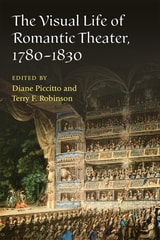
The Visual Life of Romantic Theater, 1780-1830
Edited by Diane Piccitto and Terry F. Robinson
University of Michigan Press, 2023
The Visual Life of Romantic Theater examines the dynamism and vibrancy of stage spectacle and its impact in an era of momentous social upheaval and aesthetic change. Situating theatrical production as key to understanding visuality ca. 1780-1830, this book places the stage front and center in Romantic scholarship—a field in a period long defined by its focus on poetry—by reenvisioning traditional approaches to artistic and social production. How, it asks, did dramaturgy and stagecraft influence aesthetic and sociopolitical concerns? How does a focus on visuality expand our understanding of the historical experience of theatergoing? In what ways did stage performance converge with visual culture beyond the theater? How did extra-theatrical genres engage with theatrical sight and spectacle? Finally, how does a focus on dramatic vision change the way we conceive of Romanticism itself? The volume’s essays by emerging and established scholars provide exciting and suggestive answers to these questions, along with a more capacious conception of Romantic theater as a locus of visual culture that reached well beyond playhouse walls.
The Vital Lie
Reality and Illusion in Modern DramaAnthony S. Abbott
University of Alabama Press, 1988
The Vital Lie: Reality and Illusion in Modern Drama is a sweeping inquiry into the stories people tell themselves in order to endure, survive, and belong. Moving from Ibsen and Strindberg to Beckett, Pinter, and beyond, Anthony S. Abbott traces the uneasy traffic between actuality and self-invention that animates modern theater. Rather than offering a simple survey, he uncovers a recurring dramatic predicament: the cognitive dissonance that afflict people when the beliefs they hold about themselves collide with reality.
Anthony S. Abbott writes with the erudite observation of a critic and the curiosity of a participant. His book explores illusion, meaning, and human resilience, a perspective that lends unusual urgency to its readings of canonical playwrights. Abbott's scholarship is expansive without becoming academic in the pejorative sense; his arguments remain animated by large questions about purpose, dignity, and the imaginative structures that sustain ordinary lives.
Ideal for theater devotees, literary historians, students of modernism, philosophy-minded readers, directors, dramaturgs, and anyone fascinated by self-deception, mythmaking, and identity. Admirers of intellectual biography, cultural criticism, existential inquiry, and ambitious cross-author interpretation will find this volume especially rewarding. Those who relish fresh angles on familiar classics will discover a study that is probing, elegant, and unexpectedly memorable.

The Voice of Toil
Nineteenth-Century British Writings about WorkDavid J. Bradshaw
Ohio University Press, 1999
One of the most recurrent and controversial subjects of nineteenth–century discourse was work. Many thinkers associated work with honest pursuit of doing good, not the curse accompanying exile from Eden but rather “a great gift of God.” Sincerely undertaken work comprised a mission entailing a commitment to serve others and promote a better future for all.
Satisfaction with what work could do for individuals had its counterbalance in the anger and dismay expressed at the conditions of those whom Robert Owen, in 1817, first called the “working class.” What working–class people confronted both at the labor site and at their lodgings was construed as oppressive, and the misery of their lives became the subject of sentimental poetry, government report, popular fiction, and journalistic expose. Perhaps as heated as the discussion about conditions of lower–class workers was the conversation about separate spheres of work for men and women. This conversation, too, found its way into the literature and public discourse of the day.
In The Voice of Toil, the editors have collected the central writings from a pivotal place and time, including poems, stories, essays, and a play that reflect four prominent ways in which the subject of work was addressed: Work as Mission, Work as Opportunity, Work as Oppression, and (Separate) Spheres of Work. The resulting anthology offers a provocative text for students of nineteenth-century British literature and history and a valuable resource for scholars.
The text includes readings from John Wesley, William Blake, Elizabeth Gaskell, William Wordsworth, Charles Dickens, Florence Nightingale, William Morris, Joanna Baillie, Friedrich Engels, Matthew Arnold, Angela Burdett–Coutts, John Stuart Mill, Elizabeth Barrett Browning, Bernard Shaw and many others.
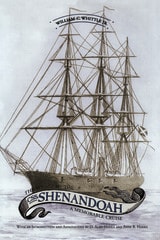
The Voyage of the CSS Shenandoah
A Memorable CruiseWilliam C. Whittle
University of Alabama Press, 2005
The only Confederate ship to circumnavigate the globe
The Confederate cruiser Shenandoah was the last of a group of commerce raiders deployed to prey on Union merchant ships. Ordered to the Pacific Ocean to “greatly damage and disperse” the Yankee whaling fleet in those waters, the Shenandoah’s successful pursuit of her quarry compared favorably with the exploits of the more celebrated Alabama and Florida but has never been as well known because it coincided with the war’s end and the Confederacy’s downfall. It was, however, one of the best documented naval expeditions—from England to the Indian Ocean, Australia and the South Pacific, the Bering Sea, San Francisco, and finally to port in Liverpool—during the Civil War.
The ship’s log and Captain James Waddell’s notes are well preserved, and a number of the Shenandoah’s officers kept detailed journals of the entire voyage. One of the most significant journals, by Lieutenant William Whittle, is presented here, with annotations from other journals, the official records and logs, and newspaper accounts of the Shenandoah’s activities, together bringing to life the history of this remarkable voyage.
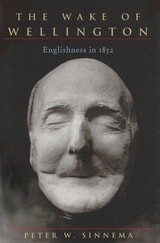
The Wake of Wellington
Englishness in 1852Peter W. Sinnema
Ohio University Press, 2006
Soldier, hero, and politician, the Duke of Wellington is one of the best-known figures of nineteenth-century England. From his victory at Waterloo over Napoleon in 1815, he rose to become prime minister of his country. But Peter Sinnema finds equal fascination in Victorian England’s response to the duke’s death.
The Wake of Wellington considers Wellington’s spectacular funeral pageant in the fall of 1852—an unprecedented event that attracted one and a half million spectators to London—as a threshold event against which the life of the soldier-hero and High Tory statesman could be re-viewed and represented.
Canvassing a profuse and dramatically proliferating Wellingtoniana, Sinnema examines the various assumptions behind, and implications of, the Times’s celebrated claim that the Irish-born Wellington “was the very type and model of an Englishman.” The dead duke, as Sinnema demonstrates, was repeatedly caught up in interpretive practices that stressed the quasi-symbolic relations between hero and nation.
The Wake of Wellington provides a unique view of how in death Wellington and his career were promoted as the consummation of a national destiny intimately bound up with Englishness itself, and with what it meant to be English at midcentury.
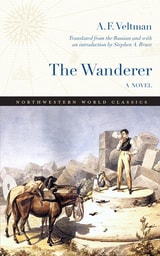
The Wanderer
A NovelAlexander Veltman, Stephen A. Bruce
Northwestern University Press, 2026
An unnamed narrator embarks on a rambling journey across the diverse borderlands of the Russian and Ottoman Empires—all without leaving his divan. Drawing on his own experiences in Bessarabia during the Russo-Turkish War of 1828–29, A. F. Veltman describes our Romantic narrator poring over a map and traversing distant, contested regions—at once imperial backwaters and cosmopolitan crossroads—where Romanians, Ruthenians, Jews, Bulgarians, Germans, and Turks comingle.
Meandering and motley in form and language, this lost classic of the early nineteenth century deploys metafictional innovations that anticipate postmodernist literature. The novel is speckled with dictionary entries, multiplication tables, philosophical digressions, and love poetry as Veltman swings from Gothic horror to antiquarian commentary to burlesque comedy. Past, present, and fantasy blend together, as Alexander the Great, Ovid, and Augustus join the narrator on his daydreamed journey of self-discovery.
Hugely popular in its day, The Wanderer is a remarkable tale that depicts the extraordinary places and peoples that met along the fault lines of once-great empires.

The Wandering Signifier
Rhetoric of Jewishness in the Latin American ImaginaryErin Graff Zivin
Duke University Press, 2008
In her readings of Spanish American and Brazilian fiction, Graff Zivin highlights inventions of Jewishness in which the concept is constructed as a rhetorical device. She argues that Jewishness functions as a wandering signifier that while not wholly empty, can be infused with meaning based on the demands of the textual project in question. Just as Jews in Latin America possess distinct histories relative to their European and North American counterparts, they also occupy different symbolic spaces in the cultural landscape. Graff Zivin suggests that in Latin American fiction, anxiety, desire, paranoia, attraction, and repulsion toward Jewishness are always either in tension with or representative of larger attitudes toward otherness, whether racial, sexual, religious, national, economic, or metaphysical. She concludes The Wandering Signifier with an inquiry into whether it is possible to ethically represent the other within the literary text, or whether the act of representation necessarily involves the objectification of the other.

The War against Catholicism
Liberalism and the Anti-Catholic Imagination in Nineteenth-Century GermanyMichael B. Gross
University of Michigan Press, 2005
---Helmut Walser Smith, Vanderbilt University
"A marvelously original account of how the Kulturkampf emerged from the cultural, social, and gendered worlds of German liberalism. While not neglecting the 1870s, Gross's analysis directs historians' attention to the under-researched 1850s and 1860s-decades in which liberals' anti-Catholic arguments were formulated against a backdrop of religious revival, democratic innovation, national ambition, and the articulation of new roles for women in society, politics, and the church. The drama of these decades resonates in every chapter of Gross's fine study."
---James Retallack, University of Toronto
"Michael Gross has put the culture back into the Kulturkampf! Integrating social and political analysis with illuminating interpretations of visual and linguistic evidence, Gross explores the work of religious cleavage in defining German national identity. An emerging women's movement, liberal virtues, and Catholic difference come together to explain why, in a century of secularization, Germany's Catholics experienced a religious revival, and why its liberals responded with enmity and frustration. Vividly written and a pleasure to read, this groundbreaking study offers real surprises."
---Margaret Lavinia Anderson, University of California, Berkeley
An innovative study of the relationship between the two most significant, equally powerful, and irreconcilable movements in Germany, Catholicism and liberalism, in the decades following the 1848 Revolution.
After the defeat of liberalism in the Revolution of 1848, and in the face of the dramatic revival of popular Catholicism, German middle-class liberals used anti-Catholicism to orient themselves culturally in a new age. Michael B. Gross's study shows how anti-Catholicism and specifically the Kulturkampf, the campaign to break the power of the Catholic Church, were not simply attacks against the church nor were they merely an attempt to secure state autonomy. Gross shows that the liberal attack on Catholicism was actually a complex attempt to preserve moral, social, political, and sexual order during a period of dramatic pressures for change.
Gross argues that a culture of anti-Catholicism shaped the modern development of Germany including capitalist economics, industrial expansion, national unification, and gender roles. He demonstrates that images of priests, monks, nuns, and Catholics as medieval, backward, and sexually deviant asserted the liberal middle-class claim to social authority after the Revolution of 1848. He pays particular attention to the ways anti-Catholicism, Jesuitphobia, and antimonastic hysteria were laced with misogyny and expressed deeper fears of mass culture and democracy in the liberal imagination. In doing so, he identifies the moral, social, and cultural imperatives behind the Kulturkampf in the 1870s.
By offering a provocative reinterpretation of liberalism and its relationship to the German anti-Catholic movement, this work ultimately demonstrates that in Germany, liberalism itself contributed to a culture of intolerance that would prove to be a serious liability in the twentieth century. It will be of particular interest to students and scholars of culture, ideology, religion, and politics.
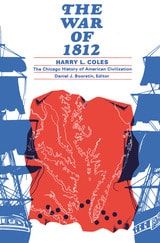
The War of 1812
Harry L. Coles
University of Chicago Press, 1966
"A balanced analysis of tactics and strategy, this book also summarizes succinctly and clearly recent scholarship on causes and describes briefly the war's military, economic, and political consequences. Coles has surveyed thoroughly the existing literature but arrives at a number of independent judgments. It is the best single-volume account of the war in all its aspects. In recounting sea battles, Coles puts aside the patriotic blinders that have for so long prevented a sensible understanding of American capabilities and strategic necessities; thus American naval victories are put in a proper perspective. And in dealing with land engagements, he has shunned the mocking and amused attitude which has so often passed for historical judgment. Undergraduates will be stimulated by the hints of modern parallels and will find useful the excellent annotated bibliography and simple maps."—Choice

The War of 1812
Harry L. Coles
University of Chicago Press, 1966
"A balanced analysis of tactics and strategy, this book also summarizes succinctly and clearly recent scholarship on causes and describes briefly the war's military, economic, and political consequences. Coles has surveyed thoroughly the existing literature but arrives at a number of independent judgments. It is the best single-volume account of the war in all its aspects. In recounting sea battles, Coles puts aside the patriotic blinders that have for so long prevented a sensible understanding of American capabilities and strategic necessities; thus American naval victories are put in a proper perspective. And in dealing with land engagements, he has shunned the mocking and amused attitude which has so often passed for historical judgment. Undergraduates will be stimulated by the hints of modern parallels and will find useful the excellent annotated bibliography and simple maps."—Choice
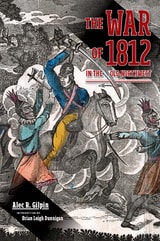
The War of 1812 in the Old Northwest
Alec R. Gilpin
Michigan State University Press, 2012
This engaging narrative history deftly illustrates the War of 1812 as it played out in the Old Northwest — Ohio, Indiana, Illinois, Michigan, and bordering parts of Canada. From the stirrings of conflict in the area beginning as early as the 1760s, through the Battle of Tippecanoe, and to Michigan Territory’s role as a focal point in prewar preparation, the book examines the lead-up to the war before delving into key battles in the region. In this accessible text, Gilpin explores key figures, dates, and wartime developments, shedding considerable light on the strategic and logistical issues raised by the region’s unique geography, culture, economy, and political temperament. Battles covered include the Surrender of Detroit, the Siege of Fort Meigs, and the battles of River Raisin, Lake Erie, the Thames, and Mackinac Island.
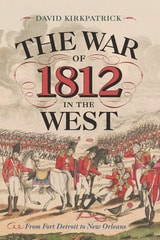
The War of 1812 in the West
From Fort Detroit to New OrleansDavid Kirkpatrick
Westholme Publishing, 2019
The spring of 1812 found the young American republic on edge. The British Navy was impressing American seamen with impunity at an alarming rate while vicious attacks on frontier settlements by American Indians armed with British weapons had left a trail of fear and outrage. As calls for a military response increased, Kentucky, the first state west of the Appalachians, urged that only by defeating the British could the nation achieve security. The very thought conjured up embellished memories of the American Revolution, and once war was declared, many soldiers believed that the “Spirit of 76” would lead them to victory. But the conflict quickly transformed from a patriotic parade to a desperate attempt to survive against a major military power. While the War of 1812 is known mostly for later events, including the burning of Washington and the siege of Fort McHenry, much of the first two years of the war was fought in the west, with the British Army and their Indian allies nearly overrunning the Old Northwest and threatening the borders of the original colonies.
In The War of 1812 in the West: From Fort Detroit to New Orleans, David Kirkpatrick chronicles the near catastrophic loss of the Ohio, Indiana, and Illinois Territories, the bitter fight against both Tecumseh’s Confederation and the Creek Nation, and the slow recovery and ultimate victory of American forces—a large portion of which was supplied by Kentucky—from Canada to the Gulf of Mexico. Battles such as River Raisin, Thames River, Fort Meigs, and New Orleans are placed in context to show how they secured America’s frontier and opened territory to the west to new settlement following the war.
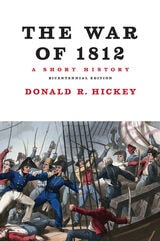
The War of 1812, A Short History
Donald R. Hickey
University of Illinois Press, 2012
This abridged edition of Donald R. Hickey's comprehensive and authoritative The War of 1812: A Forgotten Conflict has been thoroughly revised for the 200th anniversary of the historic conflict. A myth-shattering study that will inform and entertain students and general readers alike, The War of 1812: A Short History explores the military, diplomatic, and domestic history of our second war with Great Britain, bringing the study up to date with recent scholarship on all aspects of the war, from the Gulf of Mexico to Canada.

The War of 1812
A Forgotten Conflict, Bicentennial EditionDonald R. Hickey
University of Illinois Press, 2012
Book-of-the-Month Club and History Book Club selections and received one of the two 1990 "Best Book Awards" from the American Military Institute.
The War on Words
Slavery, Race, and Free Speech in American LiteratureMichael T. Gilmore
University of Chicago Press, 2010
How did slavery and race impact American literature in the nineteenth century? In this ambitious book, Michael T. Gilmore argues that they were the carriers of linguistic restriction, and writers from Frederick Douglass to Stephen Crane wrestled with the demands for silence and circumspection that accompanied the antebellum fear of disunion and the postwar reconciliation between the North and South.
Proposing a radical new interpretation of nineteenth-century American literature, The War on Words examines struggles over permissible and impermissible utterance in works ranging from Thoreau’s “Civil Disobedience” to Henry James’s The Bostonians. Combining historical knowledge with groundbreaking readings of some of the classic texts of the American past, The War on Words places Lincoln’s Cooper Union address in the same constellation as Margaret Fuller’s feminism and Thomas Dixon’s defense of lynching. Arguing that slavery and race exerted coercive pressure on freedom of expression, Gilmore offers here a transformative study that alters our understanding of nineteenth-century literary culture and its fraught engagement with the right to speak.

The Wardian Case
How a Simple Box Moved Plants and Changed the WorldLuke Keogh
University of Chicago Press, 2020
Roses, jasmine, fuchsia, chrysanthemums, and rhododendrons bloom in gardens across the world, and yet many of the most common varieties have roots in Asia. How is this global flowering possible? In 1829, surgeon and amateur naturalist Nathaniel Bagshaw Ward placed soil, dried leaves, and the pupa of a sphinx moth into a sealed glass bottle, intending to observe the moth hatch. But when a fern and meadow grass sprouted from the soil, he accidentally discovered that plants enclosed in glass containers could survive for long periods without watering. After four years of experimentation in his London home, Ward created traveling glazed cases that would be able to transport plants around the world. Following a test run from London to Sydney, Ward was proven correct: the Wardian case was born, and the botanical makeup of the world’s flora was forever changed.
In our technologically advanced and globalized contemporary world, it is easy to forget that not long ago it was extremely difficult to transfer plants from place to place, as they often died from mishandling, cold weather, and ocean salt spray. In this first book on the Wardian case, Luke Keogh leads us across centuries and seas to show that Ward’s invention spurred a revolution in the movement of plants—and that many of the repercussions of that revolution are still with us, from new industries to invasive plant species. From the early days of rubber, banana, tea, and cinchona cultivation—the last used in the production of the malaria drug quinine—to the collecting of beautiful and exotic flora like orchids in the first great greenhouses of the United States Botanic Garden in Washington, DC, and England’s Royal Botanic Gardens, Kew, the Wardian case transformed the world’s plant communities, fueled the commercial nursery trade and late nineteenth-century imperialism, and forever altered the global environment.
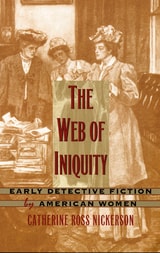
The Web of Iniquity
Early Detective Fiction by American WomenCatherine Ross Nickerson
Duke University Press, 1998
This subgenre allowed women writers to participate in postbellum culture and to critique other aspects of a rapidly changing society. Domestic detective fiction combined elements of sensationalist papers, popular nonfiction crime stories, and the domestic novel. Nickerson shows how it also incorporated the gothic tropes found in the work of Harriet Beecher Stowe, Louisa May Alcott, and Charlotte Brontë and influenced the work of Pauline Hopkins. Mid-nineteenth-century writer Metta Fuller Victor, who represented such important areas of cultural conflict as the role of professions in the formation of class identity and the possibility of women's independence and self-determination, paved the way for the appearance of women detectives in the late-nineteenth-century fiction of Anna Katharine Green. Nickerson credits Mary Roberts Rinehart, in particular, for bringing sophistication to the subgenre by amplifying the humorous, terrifying, and feminist elements inherent in earlier detective novels by women. Throughout the volume, Nickerson focuses on the narrative qualities of the domestic novel tradition and the ways in which it reflected ideologies of domesticity and gender. Also included are a discussion of various rewritings of the Lizzie Borden scandal in this tradition and an afterword on the relation of domestic detective fiction to the hard-boiled style.
The Web of Iniquity places the detective fiction written by women between 1850 and 1940 into ongoing discussions regarding women, culture, and literature and will appeal to scholars and students of women's studies, American studies, and literary history.
The Western Journals of Nehemiah and Henry Sanford, 1839–1846
Kenneth E. Lewis
Michigan State University Press, 2019
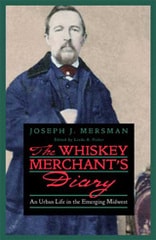
The Whiskey Merchant’s Diary
An Urban Life in the Emerging MidwestJoseph J. Mersman
Ohio University Press, 2007
Joseph J. Mersman was a liquor merchant, a German American immigrant who aspired—successfully—to become a self-made man. Hundreds of the residents of Mersman’s hometown in Germany immigrated to Cincinnati in the 1830s, joining many thousands of other German immigrants. In 1847, at the age of twenty-three, Mersman began recording his activities in a bound volume, small enough to fit into his coat pocket. His diary, filled with work and play, eating and drinking, flirting and dancing, provides a unique picture of everyday life, first in Cincinnati and then in St. Louis, the new urban centers of the emerging Midwest.
Outside of Gold Rush diaries and emigration journals, few narrative records of the antebellum period have been published. Illustrated with photographs, maps, and period advertisements, the diary reveals how a young man worked to establish himself during an era that was rich in opportunity.
As a whiskey rectifier, Mersman bought distilled spirits, redistilled or reprocessed them to remove contaminants or increase the alcohol content, and added various flavorings before selling his product to liquor retailers. In his diary, he describes scrambling for capital, marketing his wares, and arranging transportation by steamboat, omnibus, and train. Although the business that he sought to master was eliminated by the passage of the Pure Food Law of 1906, Mersman, like most rectifiers, was a reputable wholesaler. Merchants like him played an important role in distributing liquor in nineteenth-century America.
Mersman confronted serious disease, both as a sufferer from syphilis and as a witness to two devastating cholera epidemics. Unlike other residents of St. Louis, who fled the relative safety of the countryside, he remained in the city and saw the impact of the epidemics on the community.
Linda A. Fisher’s extensive, insightful, and highly readable annotations add a wealth of background information to Mersman’s story. Her professional training and career as a physician give her a particularly valuable perspective on the public health aspects of Mersman’s life and times.

The Whites Are Enemies of Heaven
Climate Caucasianism and Asian Ecological ProtectionMark W. Driscoll
Duke University Press, 2020

The Winter Sailor
Francis R. Stebbins on Florida's Indian River, 1878-1888Edited by Carolyn Frances Baker Lewis
University of Alabama Press, 2004
A unique guide to Florida's frontier history along Indian River.
The Winter Sailor is a historical adventure that details the yearly winter travels of Francis R. Stebbins to Florida's Indian River. Stebbins, a writer from Michigan, visited Florida in March of 1878 and became entranced by its pristine beauty. Subsequently, Stebbins and his traveling companions made annual visits to Indian River—until 1888 when tragedy struck and ended Stebbins' yearly journeys.
Being an observant traveler, Stebbins began a series of descriptive articles for his hometown newspaper that chronicled his journeys to the Indian River area. Stebbins's articles tell of his own personal experiences during his leisurely visits, which included such activities as hunting and fishing, studying the natural surroundings, and excavating Indian mounds. What Stebbins enjoyed most was sailing down the river interviewing townspeople and examining local attractions as he went. His articles also detail the lifestyle of the region, food, fashion, industry, history, environment, and changes that occurred over time. Stebbins's articles not only entertained and informed but also became a travelogue for his readers. He inspired northern travelers to go south and visit Florida, which contributed to the beginnings of large-scale tourism in the region.
The Winter Sailor combines Stebbins's 49 articles along with three by his companions, to provide an enjoyable, historical guide. Unique among 19th-century travelogues, this fascinating look into Florida's past documents a decade of change to the Indian River wilderness and becomes Stebbins's gift to the present.
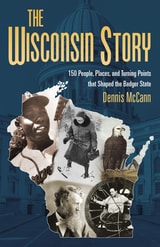
The Wisconsin Story
150 People, Places, and Turning Points that Shaped the Badger StateDennis McCann
Wisconsin Historical Society Press, 2019
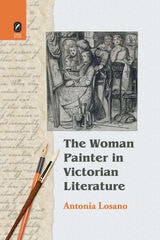
The Woman Painter in Victorian Literature
Antonia Losano
The Ohio State University Press, 2008
The nineteenth century saw a marked rise both in the sheer numbers of women active in visual art professions and in the discursive concern for the woman artist in fiction, the periodical press, art history, and politics. The Woman Painter in Victorian Literature argues that Victorian women writers used the controversial figure of the woman painter to intervene in the discourse of aesthetics. These writers were able to assert their own status as artistic producers through the representation of female visual artists.
Women painters posed a threat to the traditional heterosexual erotic art scenarios—a male artist and a male viewer admiring a woman or feminized art object. Antonia Losano traces an actual movement in history in which women writers struggled to rewrite the relations of gender and art to make a space for female artistic production. She examines as well the disruption female artists caused in the socioeconomic sphere. Losano offers close readings of a wide array of Victorian writers, particularly those works classified as noncanonical—by Anne Thackeray Ritchie, Margaret Oliphant, Anne Brontë, and Mrs. Humphrey Ward—and a new look at better-known novels such as Jane Eyre and Daniel Deronda, focusing on the pivotal social and aesthetic meanings of female artistic production in these texts. Each of the novels considered here is viewed as a contained, coherent, and complex aesthetic treatise that coalesces around the figure of the female painter.
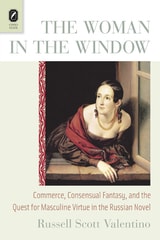
The Woman in the Window
Commerce, Consensual Fantasy, and the Quest for Masculine Virtue in the Russian NovelRussell Scott Valentino
The Ohio State University Press, 2014
With chapters on Gogol, Tolstoy, and Dostoevsky as well as Pasternak and Nabokov, The Woman in the Window argues that Russian authors worked through this question via their depictions of “mixed-up men.” Such characters, according to Valentino, reveal that in a world where social reality and personal identity depend on consensual fantasies, the old masculine figure loses its grounding and can easily drift away. Valentino charts a range of masculine character types thrown off stride by the new commercially inflected world: those who embrace blind confidence, those who are split with doubt or guilt, and those who look for an ideal of steadfastness and purity to keep afloat—a woman in a window.

The Word Unheard
Legacies of Anti-Semitism in German Literature and CultureMartha B. Helfer
Northwestern University Press, 2011
The publication of Martha B. Helfer’s The Word Unheard: Legacies of Anti-Semitism in German Literature and Culture marks a stunningly original new direction in the interpretation of canonical works of eighteenth- and nineteenth-century German literature.
Between 1749 and 1850—the formative years of the so-called Jewish Question in Germany—the emancipation debates over granting full civil and political rights to Jews provided the topical background against which all representations of Jewish characters and concerns in literary texts were read. Helfer focuses sharply on these debates and demonstrates through close readings of works by Gotthold Lessing, Friedrich Schiller, Achim von Arnim, Annette von Droste- Hülshoff, Adalbert Stifter, and Franz Grillparzer how disciplinary practices within the field of German studies have led to systematic blind spots in the scholarship on anti-Semitism to date.
While all the authors discussed are well known and justly celebrated, the particular works addressed represent an effective mix of enduring classics and less recognized, indeed often scandalously overlooked, texts whose consideration leads to a reevaluation of the author’s more mainstream oeuvre. Although some of the works and authors chosen have previously been noted for their anti-Semitic proclivities, the majority have not, and some have even been marked by German scholarship as philo-Semitic—a view that The Word Unheard undertakes not so much to refute as to complicate, and in the process to question not only these texts but also the deafness of the German scholarly tradition. With implications that reach into many disciplines, The Word Unheard will be a foundational study for all scholars of modern Germany.
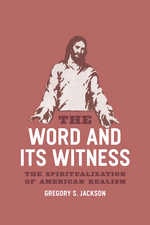
The Word and Its Witness
The Spiritualization of American RealismGregory S. Jackson
University of Chicago Press, 2009
Jackson shows how the homiletic tradition in Protestant sermons provided a foundation for the development of visual and literary realism. Evangelical preachers and writers used vivid language grounded in everyday life to translate abstract concepts like hell into concrete reality—a key influence on realist authors that brought about the more secular forms of the movement we know today. This emphasis on the sensuous also paved the way for Protestantism’s embrace of new media, evident in the photographs of Jacob Riis as well as the video game Left Behind: Eternal Forces.
With its remarkable scope and timely insights into the interplay between religion, secularism, and politics, The Word and Its Witness will transform the way we understand American realism and American religion.
The Wordsworth Circle, volume 52 number 4 (Autumn 2021)
The University of Chicago Press
University of Chicago Press Journals, 2021

The Wordsworth Circle, volume 53 number 1 (Winter 2022)
The University of Chicago Press
University of Chicago Press Journals, 2022

The Wordsworth Circle, volume 53 number 2 (Spring 2022)
The University of Chicago Press
University of Chicago Press Journals, 2022

The Wordsworth Circle, volume 53 number 3 (Summer 2022)
The University of Chicago Press
University of Chicago Press Journals, 2022

The Wordsworth Circle, volume 53 number 4 (Autumn 2022)
The University of Chicago Press
University of Chicago Press Journals, 2022

The Wordsworth Circle, volume 54 number 1 (Winter 2023)
The University of Chicago Press
University of Chicago Press Journals, 2023

The Wordsworth Circle, volume 54 number 3 (Summer 2023)
The University of Chicago Press
University of Chicago Press Journals, 2023

The Wordsworth Circle, volume 54 number 4 (Autumn 2023)
The University of Chicago Press
University of Chicago Press Journals, 2023
The Wordsworth Circle, volume 55 number 1 (Winter 2024)
The University of Chicago Press
University of Chicago Press Journals, 2024
The Wordsworth Circle, volume 55 number 2 (Spring 2024)
The University of Chicago Press
University of Chicago Press Journals, 2024
The Wordsworth Circle, volume 55 number 3 (Summer 2024)
The University of Chicago Press
University of Chicago Press Journals, 2024
The Wordsworth Circle, volume 55 number 4 (Autumn 2024)
The University of Chicago Press
University of Chicago Press Journals, 2024

The Wordsworth Circle, volume 56 number 1 (Winter 2025)
The University of Chicago Press
University of Chicago Press Journals, 2025

The Wordsworth Circle, volume 56 number 2 (Spring 2025)
The University of Chicago Press
University of Chicago Press Journals, 2025

The Wordsworth Circle, volume 56 number 3 (Summer 2025)
The University of Chicago Press
University of Chicago Press Journals, 2025

The Wordsworth Circle, volume 56 number 4 (Autumn 2025)
The University of Chicago Press
University of Chicago Press Journals, 2025

The Wordsworth Circle, volume 57 number 1 (Winter 2026)
The University of Chicago Press
University of Chicago Press Journals, 2026
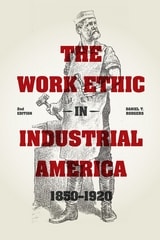
The Work Ethic in Industrial America 1850-1920
Second EditionDaniel T. Rodgers
University of Chicago Press, 2014
Daniel T. Rodgers masterfully explores the ways in which the eclipse of small-scale workshops by mechanized production and mass consumption triggered far-reaching shifts in perceptions of labor, leisure, and personal success. He also shows how the new work culture permeated society, including literature, politics, the emerging feminist movement, and the labor movement.
A staple of courses in the history of American labor and industrial society, Rodgers’s sharp analysis is sure to find a new audience, as twenty-first-century workers face another shift brought about by technology. The Work Ethic in Industrial America 1850–1920 is a classic with critical relevance in today’s volatile economic times.

The Work Ethic in Industrial America, 1850-1920
Daniel T. Rodgers
University of Chicago Press, 1978
The Work of Music
Labor and Creativity in Germany's Long Nineteenth CenturyCelia Applegate
University of Wisconsin Press, 2025

The World of Juliette Kinzie
Chicago before the FireAnn Durkin Keating
University of Chicago Press, 2019
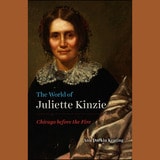
Juliette is one of Chicago’s forgotten founders. Early Chicago is often presented as “a man’s city,” but women like Juliette worked to create an urban and urbane world, often within their own parlors. With The World of Juliette Kinzie, we finally get to experience the rise of Chicago from the view of one of its most important founding mothers.
Ann Durkin Keating, one of the foremost experts on nineteenth-century Chicago, offers a moving portrait of a trailblazing and complicated woman. Keating takes us to the corner of Cass and Michigan (now Wabash and Hubbard), Juliette’s home base. Through Juliette’s eyes, our understanding of early Chicago expands from a city of boosters and speculators to include the world that women created in and between households. We see the development of Chicago society, first inspired by cities in the East and later coming into its own midwestern ways. We also see the city become a community, as it developed its intertwined religious, social, educational, and cultural institutions. Keating draws on a wealth of sources, including hundreds of Juliette’s personal letters, allowing Juliette to tell much of her story in her own words.
Juliette’s death in 1870, just a year before the infamous fire, seemed almost prescient. She left her beloved Chicago right before the physical city as she knew it vanished in flames. But now her history lives on. The World of Juliette Kinzie offers a new perspective on Chicago’s past and is a fitting tribute to one of the first women historians in the United States.
The World of Juliette Kinzie
Chicago before the FireAnn Durkin Keating
University of Chicago Press, 2019
When Juliette Kinzie first visited Chicago in 1831, it was anything but a city. An outpost in the shadow of Fort Dearborn, it had no streets, no sidewalks, no schools, no river-spanning bridges. And with two hundred disconnected residents, it lacked any sense of community. In the decades that followed, not only did Juliette witness the city’s transition from Indian country to industrial center, but she was instrumental in its development.
Juliette is one of Chicago’s forgotten founders. Early Chicago is often presented as “a man’s city,” but women like Juliette worked to create an urban and urbane world, often within their own parlors. With The World of Juliette Kinzie, we finally get to experience the rise of Chicago from the view of one of its most important founding mothers.
Ann Durkin Keating, one of the foremost experts on nineteenth-century Chicago, offers a moving portrait of a trailblazing and complicated woman. Keating takes us to the corner of Cass and Michigan (now Wabash and Hubbard), Juliette’s home base. Through Juliette’s eyes, our understanding of early Chicago expands from a city of boosters and speculators to include the world that women created in and between households. We see the development of Chicago society, first inspired by cities in the East and later coming into its own midwestern ways. We also see the city become a community, as it developed its intertwined religious, social, educational, and cultural institutions. Keating draws on a wealth of sources, including hundreds of Juliette’s personal letters, allowing Juliette to tell much of her story in her own words.
Juliette’s death in 1870, just a year before the infamous fire, seemed almost prescient. She left her beloved Chicago right before the physical city as she knew it vanished in flames. But now her history lives on. The World of Juliette Kinzie offers a new perspective on Chicago’s past and is a fitting tribute to one of the first women historians in the United States.
The Wreck of the "America" in Southern Illinois
A Flatboat on the Ohio RiverMark J. Wagner
Southern Illinois University Press, 2015
Winner, Illinois State Historical Society Superior Achievement, 2016
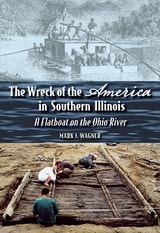
Flatboats were the most prolific type of vessel on the Ohio and Mississippi Rivers during the early 1800s. Thousands of these boats descended the two rivers each year, carrying not only valuable cargo to New Orleans but also western-bound emigrants to newly opened territories. By the late 1800s, flatboats had completely disappeared, and no intact examples were known to exist. Our knowledge of these historic vessels had been limited to illustrations, memoirs, and traveler accounts.
That changed in 2000 after local residents found a wreck on the Ohio River shoreline in Illinois. Archaeologist Mark J. Wagner and his colleagues from Southern Illinois University Carbondale investigated extensively and established that the wreck was a pre–Civil War flatboat, which they named America, after a nearby town.
In The Wreck of the America in Southern Illinois: A Flatboat on the Ohio River, Wagner provides a brief description and general history of flatboats and the various reasons they wrecked—such as poor workmanship and encounters with pirates, storms, rocks, and floating trees. Wagner describes the remains of the America, how it was constructed, the artifacts found nearby and inside—including pewter spoons, utensils with bone handles, metal buttons, and an iron felling axe—and the probable cause of its sinking. Wagner concludes with a history of the America since its discovery in 2000 and a plea that the boat be removed from the riverbank and preserved before the Ohio washes it away.

The Wright Company
From Invention to IndustryEdward J. Roach
Ohio University Press, 2014
Fresh from successful flights before royalty in Europe, and soon after thrilling hundreds of thousands of people by flying around the Statue of Liberty, in the fall of 1909 Wilbur and Orville Wright decided the time was right to begin manufacturing their airplanes for sale. Backed by Wall Street tycoons, including August Belmont, Cornelius Vanderbilt III, and Andrew Freedman, the brothers formed the Wright Company. The Wright Company trained hundreds of early aviators at its flight schools, including Roy Brown, the Canadian pilot credited with shooting down Manfred von Richtofen—the “Red Baron”—during the First World War; and Hap Arnold, the commander of the U.S. Army Air Forces during the Second World War. Pilots with the company’s exhibition department thrilled crowds at events from Winnipeg to Boston, Corpus Christi to Colorado Springs. Cal Rodgers flew a Wright Company airplane in pursuit of the $50,000 Hearst Aviation Prize in 1911.
But all was not well in Dayton, a city that hummed with industry, producing cash registers, railroad cars, and many other products. The brothers found it hard to transition from running their own bicycle business to being corporate executives responsible for other people’s money. Their dogged pursuit of enforcement of their 1906 patent—especially against Glenn Curtiss and his company—helped hold back the development of the U.S. aviation industry. When Orville Wright sold the company in 1915, more than three years after his brother’s death, he was a comfortable man—but his company had built only 120 airplanes at its Dayton factory and Wright Company products were not in the U.S. arsenal as war continued in Europe.
Edward Roach provides a fascinating window into the legendary Wright Company, its place in Dayton, its management struggles, and its effects on early U.S. aviation.