Results by title
4743 books match the query 'Religion' and 1168 start with t
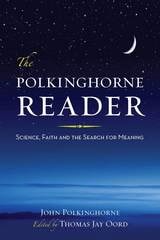
The Polkinghorne Reader
Science, Faith, and the Search for MeaningJohn C. Polkinghorne
Templeton Press, 2010
The Revd. Dr. John Polkinghorne is a world-renowned authority in the field of science and religion. His numerous books in this area, written over the past three decades, have been hugely influential. The Polkinghorne Reader brings together key extracts from his writings on core issues such as the nature of science, the physical world, human nature, love, theology, creation, providence, prayer and miracle, time, evil, Jesus, the resurrection, the Trinity, eschatology, and world faiths.
Ideal for readers who are new to Polkinghorne or who are just beginning to explore the interplay between science and religion, this collection will also be welcomed by all who have read his earlier works but would like one handy resource that presents the major facets of his thought in an accessible and systematic fashion.
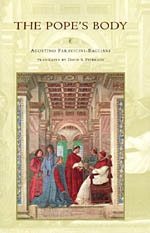
The Pope's Body
Agostino Paravicini-Bagliani
University of Chicago Press, 2000
Masterfully translated from the Italian, this engaging history of the pope's body provides a new perspective for readers to understand the papacy, both historically and in our own time.
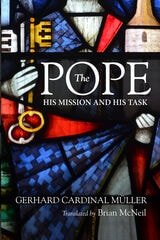
The Pope
His Mission and His TaskGerhard Cardinal Muller
Catholic University of America Press, 2021
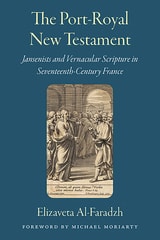
The Port Royal New Testament
Jansenists and Vernacular Scripture in Seventeenth-Century FranceElizaveta Al-Faradzh
Catholic University of America Press, 2026
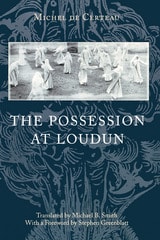
The Possession at Loudun
Michel de Certeau
University of Chicago Press, 2000
Interweaving substantial excerpts from primary historical documents with fascinating commentary, de Certeau shows how the plague of sorceries and possessions in France that climaxed in the events at Loudun both revealed the deepest fears of a society in traumatic flux and accelerated its transformation. In this tour de force of psychological history, de Certeau brings to vivid life a people torn between the decline of centralized religious authority and the rise of science and reason, wracked by violent anxiety over what or whom to believe.
At the time of his death in 1986, Michel de Certeau was a director of studies at the école des hautes études en sciences sociales, Paris. He was author of eighteen books in French, three of which have appeared in English translation as The Practice of Everyday Life,The Writing of History, and The Mystic Fable, Volume 1, the last of which is published by The University of Chicago Press.
"Brilliant and innovative. . . . The Possession at Loudun is [de Certeau's] most accessible book and one of his most wonderful."—Stephen Greenblatt (from the Foreword)
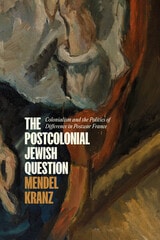
The Postcolonial Jewish Question
Colonialism and the Politics of Difference in Postwar FranceMendel Kranz
University of Chicago Press, 2026
A history of how decolonization shaped Jewish political identity in late-twentieth-century France.
In The Postcolonial Jewish Question, Mendel Kranz shows how France’s colonial history fundamentally shaped contemporary debates among Jews in France about racism, discrimination, and minority politics during the late twentieth century. As the wider country confronted the legacies of the Holocaust and the decline of its colonial empire, Jewish thinkers questioned the boundaries of their own political identity and challenged prevailing paradigms of Western universalism. This book traces how prominent and lesser-known thinkers—including Albert Memmi, Emmanuel Levinas, Alain Finkielkraut, and Wladimir Rabi—as well as organizations like the Colloque des intellectuels juifs de langue française engaged with issues of oppression, nationhood, and communal identity, and the ways that colonialism and its afterlives shaped those discussions. Kranz reveals how the Jewish question itself changed shape through confrontations with postcolonial politics. In doing so, he calls for a reassessment of the parameters of the Jewish question amid colonialism’s enduring legacies in the present.
The Power of Dialogue between Israelis and Palestinians
Stories of Change from the School for PeaceSonnenschein, Nava
Rutgers University Press, 2019
The Power of Forgiving
Everett L. Worthington Jr.
Templeton Press, 2005
Forgiveness is a virtue that author Everett L.Worthington Jr. has advocated throughout his career as a counselor and psychologist. In this book, he explains the paradoxical power of forgiveness through his personal and professional experiences andthrough the wisdom of others. The paradox is that in forgiving for the well-being of others, we actually receive tremendous benefits for ourselves in terms of physical and mental health.
This book treats forgiveness as a quest to find the treasure of restored relationships, personal peace, and even health, which has often become buried in relational harms, betrayals, and injustices. Worthington shows how one begins the quest, prepares the self for the rigors of the search, and makes the journey.
In the process, he describes the resources and supports needed. He also discusses how enemies can continue to betray and how unruly angry emotions can arise but can be tamed by forgiving. Worthington shows readers the map to forgiveness using methods such as his time-tested and research-supported method of REACH, a five-step process of forgiving.
The Power of Forgiving will inspire people to use forgiveness. It will show how forgiving is a transforming process that will enrich relationships and empower people to improve their own lives.
The Power of God
Dynamis in Gregory of Nyssa's Trinitarian TheologyMichel René Barnes
Catholic University of America Press, 2001
The Power of Huacas
Change and Resistance in the Andean World of Colonial PeruBy Claudia Brosseder
University of Texas Press, 2014
Based on extensive archival research, The Power of Huacas is the first book to take account of the reciprocal effects of religious colonization as they impacted Andean populations and, simultaneously, dramatically changed the culture and beliefs of Spanish Christians.
Winner, Award for Excellence in the Study of Religion in the category of Historical Studies, American Academy of Religion, 2015
The role of the religious specialist in Andean cultures of the sixteenth, seventeenth, and eighteenth centuries was a complicated one, balanced between local traditions and the culture of the Spanish. In The Power of Huacas, Claudia Brosseder reconstructs the dynamic interaction between religious specialists and the colonial world that unfolded around them, considering how the discourse about religion shifted on both sides of the Spanish and Andean relationship in complex and unexpected ways. In The Power of Huacas, Brosseder examines evidence of transcultural exchange through religious history, anthropology, and cultural studies. Taking Andean religious specialists—or hechizeros (sorcerers) in colonial Spanish terminology—as a starting point, she considers the different ways in which Andeans and Spaniards thought about key cultural and religious concepts. Unlike previous studies, this important book fully outlines both sides of the colonial relationship; Brosseder uses extensive archival research in Bolivia, Chile, Ecuador, Peru, Spain, Italy, and the United States, as well as careful analysis of archaeological and art historical objects, to present the Andean religious worldview of the period on equal footing with that of the Spanish. Throughout the colonial period, she argues, Andean religious specialists retained their own unique logic, which encompassed specific ideas about holiness, nature, sickness, and social harmony. The Power of Huacas deepens our understanding of the complexities of assimilation, showing that, within the maelstrom of transcultural exchange in the Spanish Americas, European paradigms ultimately changed more than Andean ones.
The Power of Patristic Preaching
The Word in Our FleshAndrew Hofer, OP
Catholic University of America Press, 2023
The Power of Sacrifice
Roman and Christian Discourses in ConflictGeorge Heyman
Catholic University of America Press, 2007
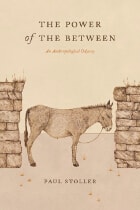
The Power of the Between
An Anthropological OdysseyPaul Stoller
University of Chicago Press, 2008
Beginning with his early days with the Peace Corps in Africa and culminating with a recent bout with cancer, The Power of the Between is an evocative account of the circuitous path Stoller’s life has taken, offering a fascinating depiction of how a career is shaped over decades of reading and research. Stoller imparts his accumulated wisdom not through grandiose pronouncements but by drawing on his gift for storytelling. Tales of his apprenticeship to a sorcerer in Niger, his studies with Claude Lévi-Strauss in Paris, and his friendships with West African street vendors in New York City accompany philosophical reflections on love, memory, power, courage, health, and illness.
Graced with Stoller’s trademark humor and narrative elegance, The Power of the Between is both the story of a distinguished career and a profound meditation on coming to terms with the impermanence of all things.
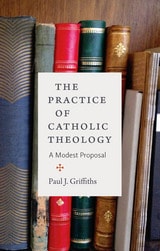
The Practice of Catholic Theology
Paul J. Griffiths
Catholic University of America Press, 2016
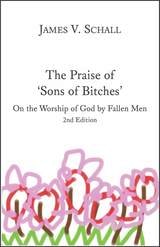
The Praise of 'Sons of Bitches'
On the Worship of God by Fallen MenJames V. Schall
St. Augustine's Press, 2014
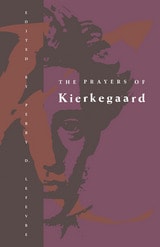
The Prayers of Kierkegaard
Edited by Perry D. LeFevre
University of Chicago Press, 1956
The second part of the volume is a reinterpretation of the life and thought of Kierkegaard. Long regarded as primarily a poet or a philosopher, Kierkegaard is revealed as a fundamentally religious thinker whose central problem was that of becoming a Christian, of realizing personal existence. Perry D. LeFevre's penetrating analysis takes the reader to the religious center of Kierkegaard's world.
The Pre-Nicene New Testament
Fifty-four Formative TextsRobert M. Price
Signature Books, 2006
As an interpretive translation, Price’s text is both accurate and readable and is tied more closely to the Greek than most previous translations. Price conveys the meanings of words in context, carefully choosing the right phrase or idiom to convey their sense in English. For words that had a specific theological import when first written, Price leaves the Greek transliteration, giving readers archons for the fallen angels thought to be ruling the world, paraclete for encourager, andpleroma for the Gnostic godhead.
Within the collection, each book is introduced with comments about the cultural setting, information about when a document was probably written, and significant textual considerations, which together form a running commentary that continues into the footnotes. The findings of scholars, documented and summarized by Price, will come as a surprise to some readers. It appears, as Price suggests, that most of what is known about Jesus came by way of revelation to Christian oracles rather than by word of mouth as historical memory. In addition, the major characters in the New Testament, including Peter, Stephen, and Paul, appear to be composites of several historical individuals each, their stories comprising a mix of events, legend, and plot themes borrowed from the Old Testament and Greek literature.
In the New Testament world, theology developed gradually along different trajectories, with tension between the charismatic ascetics such as Marcion and Thecla, as examples, and the emerging Catholic orthodoxy of such clergy as Ignatius and Polycarp. The tension is detectable in the texts themselves, many of which represent “heretical” points of view: Gnostic, Jewish-Christian, Marcionite, and proto-orthodox, and were later edited, sometimes clumsily, in an attempt to harmonize all into one consistent theology.
What may occur to many readers, among the more striking aspects of the narratives, is that the earliest, most basic writings, such as Mark’s Gospel in inarticulate Greek, are ultimately more impressive and inspirational than the later attempts by more educated Christians to appeal to sophisticated readers with better grammar and more allusions to classical mythology and apologetic embellishments.
The critical insights and theories on display in these pages have seldom been incorporated into mainstream conservative Bible translations, and in many ways, Price has made the New Testament a whole new book for readers, allowing them, by virtue of the translation, to comprehend the meaning of the text where it is obscured by the traditional wording. Whatever usefulness teachers, students, and clergy may find here in terms of pedagogical and inspirational value, The Pre-Nicene New Testament is guaranteed to provoke further thought and conversation among the general public—hopefully toward the goal of more personal study and insights.
The Predestination of Humans
Augustinus, <i>Tome III, Book IX</i>Cornelius Jansen
Catholic University of America Press, 2022

The Presence of God and Union with God
Creation, Divine Indwelling Through Grace, Incarnation and the Blessed Vision According to Saint Thomas AquinasGilles Emery, OP
Catholic University of America Press, 2027
The Presence of Light
Divine Radiance and Religious ExperienceEdited by Matthew T. Kapstein
University of Chicago Press, 2004
The essays in this volume make an important contribution to religious studies by proposing that it is misleading to conceive of religious experience in terms of an irreconcilable dichotomy between universality and cultural construction. An esteemed group of contributors, representing the study of Asian and Western religious traditions from a range of disciplinary perspectives, suggests that attention to various forms of divine radiance shows that there is indeed a range of principles that, if not universal, are nevertheless very widely occurring and amenable to fruitful comparative inquiry. What results is a work of enormous scope, demonstrating compelling cross-connections that will be of value to scholars of comparative religions, mysticism, and the relationship between art and the sacred.
Contributors:
* Catherine B. Asher
* Raoul Birnbaum
* Sarah Iles Johnston
* Matthew T. Kapstein
* Andrew Louth
* Paul E. Muller-Ortega
* Elliot R. Wolfson
* Mimi Hall Yiengpruksawan
* Hossein Ziai
The Presence of Myth
Leszek Kolakowski
University of Chicago Press, 1989
With The Presence of Myth, Kolakowski demonstrates that no matter how hard man strives for purely rational thought, there has always been-and always will be-a reservoir of mythical images that lend "being" and "consciousness" a specifically human meaning.
"Kolakowski undertakes a philosophy of culture which extends to all realms of human intercourse—intellectual, artistic, scientific, and emotional. . . . [His] book has real significance for today, and may well become a classic in the philosophy of culture."—Anglican Theological Review
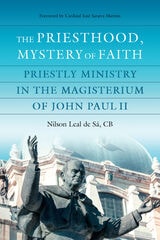
The Priesthood, Mystery of Faith
Priestly Ministry in the Magisterium of John Paul IINilson Leal de Sa, CB
Catholic University of America Press, 2022
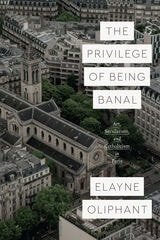
The Privilege of Being Banal
Art, Secularism, and Catholicism in ParisElayne Oliphant
University of Chicago Press, 2021
Exploring the violent histories and alternate trajectories effaced through this banal backgrounding of a crucial aspect of French history and culture, this richly textured ethnography lays bare the profound nostalgia that undergirds Catholicism’s circulation in nonreligious sites such as museums, corporate spaces, and political debates. Oliphant’s aim is to unravel the contradictions of religion and secularism and, in the process, show how aesthetics and politics come together in contemporary France to foster the kind of banality that Hannah Arendt warned against: the incapacity to take on another person’s experience of the world. A creative meditation on the power of the taken-for-granted, The Privilege of Being Banal is a landmark study of religion, aesthetics, and public space.

The Promise Keepers
Servants, Soldiers, and Godly MenBartkowski, John P
Rutgers University Press, 2004
“Remember the Promise Keepers?” queries a recent media story on the evangelical men’s movement that captured America’s imagination and generated intense controversy during much of the 1990s. This group of Christian men, who promoted adherence to a strict code of conduct that masculinized conservative religious and social values, now evokes little more than a hazy memory of football stadiums teeming with men whose tear-stained faces and clasped arms signaled spiritual transformation. What happened? What factors contributed to their demise? What broader insights can be gleaned from the rapid rise and fall of the movement?
John P. Bartkowski has written the first account scrutinizing the turbulent forces that contributed to the group’s wild popularity, declining fortunes, and current efforts to reinvent itself. He provides a broad and balanced portrait of the movement while evaluating its impact on the landscape of American religion. Bartkowski argues that there are many insights to be gained about the changing contours of American religion, culture, and social life through a study of the Promise Keepers. By carefully examining their character and contagious appeal, Bartkowski provides new insights about evangelicalism, gender, family, therapeutic culture, sport, and multiculturalism.
The Promise of Salvation
A Theory of ReligionMartin Riesebrodt
University of Chicago Press, 2010
Why has religion persisted across the course of human history? Secularists have predicted the end of faith for a long time, but religions continue to attract followers. Meanwhile, scholars of religion have expanded their field to such an extent that we lack a basic framework for making sense of the chaos of religious phenomena. To remedy this state of affairs, Martin Riesebrodt here undertakes a task that is at once simple and monumental: to define, understand, and explain religion as a universal concept.
Instead of propounding abstract theories, Riesebrodt concentrates on the concrete realities of worship, examining religious holidays, conversion stories, prophetic visions, and life-cycle events. In analyzing these practices, his scope is appropriately broad, taking into consideration traditions in Judaism, Christianity, Islam, Buddhism, Daoism, and Shinto. Ultimately, Riesebrodt argues, all religions promise to avert misfortune, help their followers manage crises, and bring both temporary blessings and eternal salvation. And, as The Promise of Salvation makes clear through abundant empirical evidence, religion will not disappear as long as these promises continue to help people cope with life.
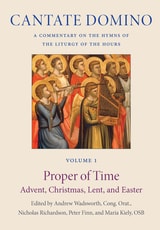
The Proper of Time
Advent, Christmas, Lent, and Easter, Volume 1Andrew Wadsworth
Catholic University of America Press, 2024
The Prophecy of Enoch as Restoration Blueprint
Terryl Givens
Utah State University Press, 2013
Volume 18, The Leonard J. Arrington Lecture Series
The Special Collections and Archives of Utah State University's Merrill-Cazier Library houses the personal and historical collection of Leonard J. Arrington, renowned scholar of the American West.
The Leonard J. Arrington Mormon History Lecture annually hosts the presentation of current research by a leading scholar. Among the lecturers have been such notable historians as Thomas G. Alexander, Richard L. Bushman, Sarah Barringer Gordon, Howard Lamar, Jan Shipps, Donald Worster, and Pulitzer Prize-winner Laurel Thatcher Ulrich.
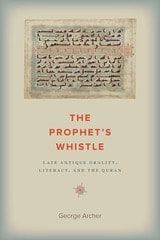
The Prophet's Whistle
Late Antique Orality, Literacy, and the QuranGeorge Archer
University of Iowa Press, 2024
The Prophet’s Whistle is a study of the ancient, nonliterary features of the Quran, many of which are often overlooked by historians and the public. George Archer corrects this striking absence by using observations from the anthropologies of living oral cultures, the cognitive sciences of literacy, and the study of other dead oral cultures. The Prophet’s Whistle shows that the thought systems of the Quran are oral, through and through, but by the end of the life of its Prophet, the Quran likewise hints at a personal and cultural embrace of writing and the mindsets of literate people.
The Prophetic Law
Essays in Judaism, Girardianism, Literary Studies, and the EthicalSandor Goodhart
Michigan State University Press, 2014
The Prophets Speak on Forced Migration
Mark J. Boda
SBL Press, 2015
A valuable resource with productive avenues for inquiry
In this collection of essays dealing with the prophetic material in the Hebrew Bible, scholars explore the motifs, effects, and role of forced migration on prophetic literature. Contributors focus on the study of geographical displacement, social identity ethics, trauma studies, theological diversification, hermeneutical strategies in relation to the memory, and the effects of various exilic conditions in order to open new avenues of study into the history of Israelite religion and early Judaism.
Features:
- An introductory essay that presents a history of scholarship and an overview of the collection
- Ten essays examining the rhetoric of exile in the prophets
- Current, thorough approaches to the issues and problems related to historical and cultural features of exile in biblical literature
The Protestant Ethic Revisited
Philip S. Gorski
Temple University Press, 2013
In The Protestant Ethic Revisited, pioneering sociologist Philip Gorski revisits the question raised by Max Weber in The Protestant Ethic and the Spirit of Capitalism about how the Christian West was reshaped by world-changing energies of the Calvinist movement. Gorski not only considers the perennial debate about religion and capitalism, but he also devotes particular attention to the influence of Calvinism on the political development of the West.
The Protestant Ethic Revisited is a masterful new collection of Gorski's essays on religion and comparative historical sociology. Reflecting the aim of much of Gorski's work, this anthology shows how nationalism, secularism, politics, and religion in public life are either older—or less stable—than previously thought.
The Psalms of Solomon
Language, History, TheologyEberhard Bons
SBL Press, 2015
A fresh analysis of that sheds new light on the Psalms of Solomon
Researchers whose work focuses on the Psalms of Solomon, experts on the Septuagint, and scholars of Jewish Hellenistic literature take a fresh look at debates surrounding the text. Authors engage linguistic, historical, and theological issues including the original language of the psalms, their historical setting, and their theological intentions with the goal of expanding our understanding of first-century BCE Jewish theology.
Features:
- New methods applied to open questions of authorship and historical context
- Focusd scholarly attention on a work of theological and literary importance
- Revised essays originally presented at the First International Meeting on the Psalms of Solomon
The Psalms of Solomon
Texts, Contexts, and IntertextsPatrick Pouchelle
SBL Press, 2021
Explore new approaches to the Psalms of Solomon
The Psalms of Solomon: Texts, Contexts, and Intertexts explores a unique pseudepigraphal document that bears witness to the 63 BCE Roman conquest of Jerusalem. Essays address a variety of themes, notably their political, social, religious, and historical contexts, through the lens of anthropology of religion, cognitive science, socioeconomic theory, and more. Contributors include Kenneth Atkinson, Eberhard Bons, Johanna Erzberger, Angela Kim Harkins, G. Anthony Keddie, Patrick Pouchelle, Stefan Schreiber, Shani Tzoref, and Rodney A. Werline.
The Psychology of Character
Rudolf Allers
Catholic University of America Press, 2022
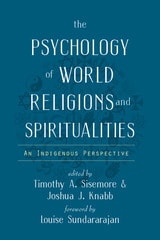
The Psychology of World Religions and Spiritualities
An Indigenous PerspectiveTimothy A. Sisemore
Templeton Press, 2020
With this goal in mind, editors Timothy Sisemore and Joshua Knabb have made one of the world’s major religions the subject of a separate chapter. In addition, they have arranged for each chapter to be written by a psychologist who practices—or is culturally connected with—that religion. This marks the book’s unique contribution to the field: it is the product of people who have lived the world’s religions, not merely studied them. By taking such a respectful approach, the book promotes an appreciation for the ways that religious belief animates, inspires, and instructs its adherents. Moreover, the indigenous point-of-view of these essays will help scholars identify their own biases when researching religious groups, allowing them to produce more accurate and holistic analyses.
Psychologists understand that religion and spirituality provide meaning and purpose to billions of people around the globe. But the actual experience of these beliefs eludes the grasp of the reductionistic methods of science. With this resource at their side, psychologists in academic and clinical settings will be equipped to understand religious experience from the bottom-up, and honor the beliefs and practices of the people they are trying to help.
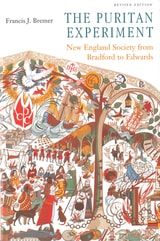
The Puritan Experiment
New England Society from Bradford to EdwardsFrancis J. Bremer
University Press of New England, 1995
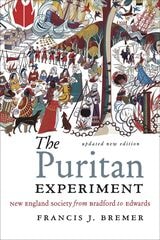
The Puritan Experiment
New England Society from Bradford to EdwardsFrancis J. Bremer
Brandeis University Press, 2026
A revised and updated edition of a classic text on the early puritans.
The Puritan Experiment is an accessible, authoritative account of early New England, one with an enduring appeal for students and general readers. This revised and updated edition explains puritanism while incorporating fresh insights from current scholarship.
Tracing the puritans’ journey from the Old World to America, Francis J. Bremer examines the causes and contexts of the puritan movement and analyzes the cultural, political, and economic revolutions wrought by the movement in both Old and New England. A pioneering text in its field, The Puritan Experiment is sweeping in scope. Bremer’s examination begins with the English Act of Supremacy of 1534 which placed King Henry VIII at the head of the Church of England, and it ends with the death of the puritan theologian Jonathan Edwards in 1758. From meeting house architecture to the Salem witch trials, from relations with Native Americans to the founding of the nation’s first colleges, Bremer details with style and grace how “a living system of faith” profoundly influenced the course of history in the New World.
This illustrated edition includes new information about lay empowerment, the role of women, Native society, and the enslavement of Native Americans and Africans.

The Puritan Tradition in America, 1620–1730
Edited by Alden T. Vaughan
University Press of New England, 1997

The Purposeful Graduate
Why Colleges Must Talk to Students about VocationTim Clydesdale
University of Chicago Press, 2015
The key, he argues, is simple: direct, systematic, and creative programs that engage undergraduates on the question of purpose. Backing up his argument with rich data from a Lilly Endowment grant that funded such programs on eighty-eight different campuses, he shows that thoughtful engagement of the notion of vocational calling by students, faculty, and staff can bring rich rewards for all those involved: greater intellectual development, more robust community involvement, and a more proactive approach to lifelong goals. Nearly every institution he examines—from internationally acclaimed research universities to small liberal arts colleges—is a success story, each designing and implementing its own program, that provides students with deep resources that help them to launch flourishing lives.
Flying in the face of the pessimistic forecast of higher education’s emaciated future, Clydesdale offers a profoundly rich alternative, one that can be achieved if we simply muster the courage to talk with students about who they are and what they are meant to do.
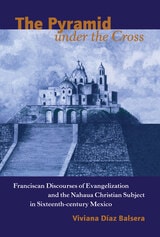
The Pyramid under the Cross
Franciscan Discourses of Evangelization and the Nahua Christian Subject in Sixteenth-century MexicoViviana Díaz Balsera
University of Arizona Press, 2005
The Pyramid under the Cross looks at the epic project of Christianization as well as the limits of the Spanish spiritual colonizers' power to accomplish it. The book focuses on activities of Franciscan missionaries who, as the first religious order to arrive, occupied the most important political and social centers in the Valley of Mexico and set the strategies of evangelization that others would follow. One such activity, the Nahua theater of evangelization, is represented as an exemplary case of the inevitable cultural negotiation involved in the missionary process. The author explores not only the imposition of a Eurocentric worldview upon the Nahua but also the hybridization of this view as the spiritual colonizer attempted to encompass a new non-Western constituency and the latter interpreted Christianity according to its own cultural paradigms.
The book treats a wide range of texts—the Historia eclesiástica indiana, the Confessionario Mayor, the Coloquios de los Doce, and more—both by renowned Franciscan figures such as Gerónimo de Mendieta, Alonso de Molina, Bernardino de Sahagún, and by Nahua grammarians Antonio Valeriano de Azcapotzalco, Andrés Leonardo de Tlatelolco, and others. Díaz Balsera engages the cultural constraints of all the actors in the episodes she relates in order to show how the exchange between them resulted in the appropriation and/or alteration of the Spanish discourses of spiritual domination—sometimes even in their breakdown—and how it brought about the emergence of Nahua Christian subjects that would never fully leave behind their ancient ways of relating to the gods.
The Pyramid under the Cross will be of interest to readers in the areas of Hispanic literatures, history, religion, anthropology, Latin American and cultural studies, and to those working in the field of colonial studies.
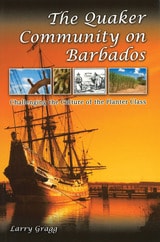
The Quaker Community on Barbados
Challenging the Culture of the Planter ClassLarry Gragg
University of Missouri Press, 2009
Gragg has conducted meticulous research on two continents to re-create the Barbados Quaker community. Drawing on wills, censuses, and levy books along with surviving letters, sermons, and journals, he tells how the Quakers sought to implement their beliefs in peace, simplicity, and equality in a place ruled by a planter class that had built its wealth on the backs of slaves. He reveals that Barbados Quakers were a critical part of a transatlantic network of Friends and explains how they established a “counterculture” on the island—one that challenged the practices of the planter class and the class’s dominance in island government, church, and economy.
In this compelling study, Gragg focuses primarily on the seventeenth century when the Quakers were most numerous and active on Barbados. He tells how Friends sought to convert slaves and improve their working and living conditions. He describes how Quakers refused to fund the Anglican Church, take oaths, participate in the militia, or pay taxes to maintain forts—and how they condemned Anglican clergymen, disrupted their services, and wrote papers critical of the established church. By the 1680s, Quakers were maintaining five meetinghouses and several cemeteries, paying for their own poor relief, and keeping their own records of births, deaths, and marriages. Gragg also tells of the severe challenges and penalties they faced for confronting and rejecting the dominant culture.
With their civil disobedience and stand on slavery, Quakers on Barbados played an important role in the early British Empire but have been largely neglected by scholars. Gragg’s work makes their contribution clear as it opens a new window on the seventeenth- and eighteenth-century Atlantic world.
The Quest for God and the Good Life
Mark T. Miller
Catholic University of America Press, 2013
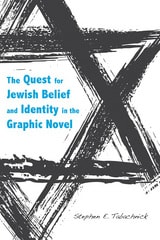
The Quest for Jewish Belief and Identity in the Graphic Novel
Stephen E. Tabachnick
University of Alabama Press, 2014
The creators of Superman (Jerry Siegel and Joe Shuster), Batman (Bob Kane and Bill Finger), and the Marvel superheroes (Stan Lee and Jack Kirby), were Jewish, as was the founding editor of Mad magazine (Harvey Kurtzman). They often adapted Jewish folktales (like the Golem) or religious stories (such as the origin of Moses) for their comics, depicting characters wrestling with supernatural people and events. Likewise, some of the most significant graphic novels by Jews or about Jewish subject matter deal with questions of religious belief and Jewish identity. Their characters wrestle with belief—or nonbelief—in God, as well as with their own relationship to the Jews, the historical role of the Jewish people, the politics of Israel, and other issues related to Jewish identity.
In The Quest for Jewish Belief and Identity in the Graphic Novel, Stephen E. Tabachnick delves into the vivid kaleidoscope of Jewish beliefs and identities, ranging from Orthodox belief to complete atheism, and a spectrum of feelings about identification with other Jews. He explores graphic novels at the highest echelon of the genre by more than thirty artists and writers, among them Harvey Pekar (American Splendor), Will Eisner (A Contract with God), Joann Sfar (The Rabbi’s Cat), Miriam Katin (We Are On Our Own), Art Spiegelman (Maus), J. T. Waldman (Megillat Esther), Aline Kominsky Crumb (Need More Love), James Sturm (The Golem’s Mighty Swing), Leela Corman (Unterzakhn), Ari Folman and David Polonsky (Waltz with Bashir), David Mairowitz and Robert Crumb’s biography of Kafka, and many more. He also examines the work of a select few non-Jewish artists, such as Robert Crumb and Basil Wolverton, both of whom have created graphic adaptations of parts of the Hebrew Bible.
Among the topics he discusses are graphic novel adaptations of the Bible; the Holocaust graphic novel; graphic novels about the Jews in Eastern and Western Europe and Africa, and the American Jewish immigrant experience; graphic novels about the lives of Jewish women; the Israel-centered graphic novel; and the Orthodox graphic novel. The book concludes with an extensive bibliography.
No study of Jewish literature and art today can be complete without a survey of the graphic novel, and scholars, students, and graphic novel fans alike will delight in Tabachnick’s guide to this world of thought, sensibility, and artfulness.
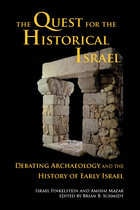
The Quest for the Historical Israel
Debating Archaeology and the History of Early IsraelIsrael Finkelstein
SBL Press, 2007
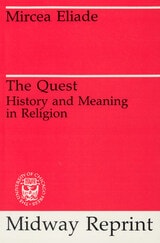
The Quest
History and Meaning in ReligionMircea Eliade
University of Chicago Press, 1969
"Each of these essays contains insights which will be fruitful and challenging for professional students of religion, but at the same time they all retain the kind of cultural relevance and clarity of style which makes them accessible to anyone seriously concerned with man and his religious possibilities."—Joseph M. Kitagawa, Religious Education
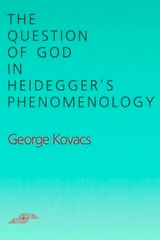
The Question of God in Heidegger's Phenomenology
George Kovacs
Northwestern University Press, 1990
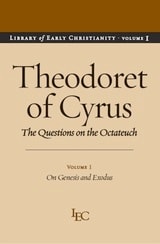
The Questions on the Octateuch, Volume 1
John F. Theodoret of Cyrus
Catholic University of America Press, 2007
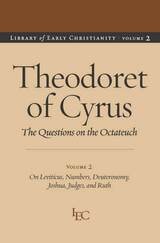
The Questions on the Octateuch, Volume 2
John F. Theodoret of Cyrus
Catholic University of America Press, 2007
The Qumran Paradigm
Critical Evaluation of Some Foundational Hypotheses in the Construction of the QGwynned de Looijer
SBL Press, 2015
A fundamentally revisionist approach that leaves behind the constructed social reality of a “sectarian” paradigm
Gwynned de Looijer reexamines the key hypotheses that have driven scholars’ understandings of the Dead Sea Scrolls, the archaeological site of Khirbet Qumran, and the textual descriptions of the Essenes. She demonstrates that foundational hypotheses regarding a sect at Qumran have heavily influenced the way the texts found in the surrounding caves are interpreted. De Looijer’s approach abandon’s those assumptions to illustrate that the Dead Sea Scrolls reflect a wider range of backgrounds reflecting the many diverse forms of Judaism that existed in the Second Temple period.
Features:
- In depth analysis of 4QMMT
- Reevaluation of the concept of dualism as it has been applied to Qumran texts
- Charts and tables illustrate complex theories, concepts, and connections
The Quotable Augustine
Phillip H. Melton
Catholic University of America Press, 2016