Results by title
8642 books match the query '20th Century' and 1764 start with t
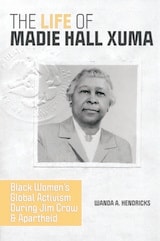
The Life of Madie Hall Xuma
Black Women's Global Activism during Jim Crow and ApartheidWanda A. Hendricks
University of Illinois Press, 2022
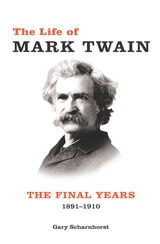
The Life of Mark Twain
The Final Years, 1891–1910Gary Scharnhorst
University of Missouri Press, 2022
In the final volume of his three-volume biography, Gary Scharnhorst chronicles the life of Samuel Langhorne Clemens from his family’s extended trip to Europe in 1891 to his death in 1910 at age 74. During these years Clemens grapples with bankruptcy, returns to the lecture circuit, and endures the loss of two daughters and his wife. It is also during this time that he writes some of his darkest, most critical works; among these include Pudd’nhead Wilson; Personal Recollections of Joan of Arc; Tom Sawyer Abroad; Tom Sawyer, Detective; Following the Equator; No. 44, the Mysterious Stranger; and portions of his Autobiography.
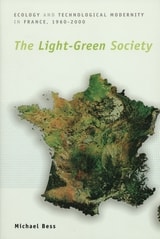
The Light-Green Society
Ecology and Technological Modernity in France, 1960-2000Michael Bess
University of Chicago Press, 2003
The Light-Green Society limns sharply these trends over the last fifty years. The rise of environmentalism in the 1960s stemmed from a fervent desire to "save" wild nature-nature conceived as a qualitatively distinct domain, wholly separate from human designs and endeavors. And yet, Bess shows, after forty years of environmentalist agitation, much of it remarkably successful in achieving its aims, the old conception of nature as a "separate sphere" has become largely untenable. In the light-green society, where ecology and technological modernity continually flow together, a new hybrid vision of intermingled nature-culture has increasingly taken its place.
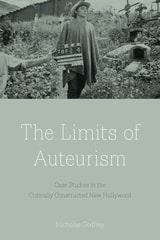
The Limits of Auteurism
Case Studies in the Critically Constructed New HollywoodGodfrey, Nicholas
Rutgers University Press, 2018
The book explores the role that contemporary critics played in determining how the movies of this period were understood and how, in turn, strategies of distribution influenced critical responses and dictated the conditions of entry into the rapidly codifying New Hollywood canon. Focusing on a small number of industrially significant films, this new history advances our understanding of this important moment of transition from Classical to contemporary modes of production.
The Limits of Ferocity
Sexual Aggression and Modern Literary RebellionDaniel Fuchs
Duke University Press, 2011
The Limits of Revolution
Worker Citizens in a Bolivian Mining CityElena McGrath
University of Texas Press, 2026
The role of Bolivian mining families in revolution and politics.
In 1952, Bolivia’s Revolutionary Nationalist Movement (MNR) swept into power, promising collective prosperity through class-based nationalism. The heroic symbol of the movement was the worker citizen—the formerly indigenous miner who would fuel economic development in a nationalized mining economy.
The Limits of Revolution explores this history from the worker barrios of the copper mining city of Corocoro. As the state walked back its promises of worker political power at the national level, mining men and women in Corocoro struggled—through protests, court battles, and barfights—to maintain the benefits of worker citizenship locally. After the MNR fell to a military dictatorship in 1964, however, families retreated to defending the nationalized mining company against an increasingly hostile state. In this battle to keep the revolution alive, the expansive potential of worker citizenship disappeared and old racial exclusions resurfaced. Largely forgotten today, Bolivia’s experience of revolution exposes the contradictions of postcolonial nationalism and sheds light on Latin America’s transition from Cold War–era class politics to twenty-first-century Pink Tide politics.
The Literary Voices of Winnifred Eaton
Redefining Ethnicity and AuthenticityCole, Jean Lee
Rutgers University Press, 2002
Eaton attempted to disguise her Chinese heritage by writing under a hypothetically Japanese pen name. In legal documents, she usually claimed a "white" racial identity. In her fiction, Eaton portrayed Japanese, Chinese, Irish, and American characters, relying on the accepted stereotypes of the day. Jean Lee Cole shows that the many voices Eaton adopted show her deep preoccupations with "American" identity as a whole. The author attempts to reconcile all of these "voices," examining how Eaton survived in a climate hostile to minority writers in the early twentieth century, and how her seemingly anomalous works conjoin Asian American and American literary history.

The Little Legislatures
Committees of CongressGeorge Goodwin
University of Massachusetts Press, 1970
In this study, Mr. Goodwin deals with decision making in the American Congress. He maintains that competition among political organizations and government institutions plays an extremely important role, but that political parties, both parliamentary and national, are relatively weak participants in the struggles. Mr. Goodwin shows that the bipartisan, specialized standing committees, often acting as surrogates for the whole Congress, are a powerful force in Congress, and are on occasion powerful enough to stand as equals of the President. The author makes clear that any analysis of decision making must appreciate the strength of the committees, and their particular place in the democratic process. The Little Legislatures traces the development of the committee system in both the House and the Senate from the beginning of World War II through the Johnson Administration. It provides a comprehensive analysis of the organization, make-up, and assignment traditions of the standing committees, and presents innovative ideas for reform of the system.

The Lives of Jessie Sampter
Queer, Disabled, ZionistSarah Imhoff
Duke University Press, 2022
The Living Line
Modern Art and the Economy of EnergyRobin Veder
Dartmouth College Press, 2015
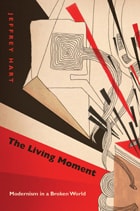
The Living Moment
Modernism in a Broken WorldJeffrey Hart
Northwestern University Press, 2012
In the spirit of Lionel Trilling, Edmund Wilson, and Susan Sontag, the renowned literary critic Jeffrey Hart writes The Living Moment, a close reading of literature as it intersects with the political. Hart’s book is an even-handed guide for anyone toddling into the mists of the modernist moment, effortlessly moving between such modernist monuments as Eliot’s “The Waste Land,” Hemingway’s A Farewell to Arms, Mann’s Doctor Faustus, and Fitzgerald’s The Great Gatsby. Hart’s most stunning achievement is his brilliant inclusion of Marilynne Robinson’s Gilead as a modernist text, for the way the novel teaches us to see more, to hear more, to feel more. Hart’s dazzling study is an examination of important works of literature as they explore the experience of living in a broken world with thought and sometimes with examples of resolve that possess permanent validity. The Living Moment is for anyone who is wearied by so much of today’s trendy, narrow, and ideologically driven criticism.
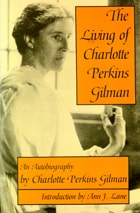
The Living of Charlotte Perkins Gilman
An AutobiographyCharlotte Perkins Gilman
University of Wisconsin Press, 1991
Charlotte Perkins Gilman (1869-1935) was one of the leading intellectuals of the American women's movement in the first two decades of the twentieth century. Moving beyond the struggle for suffrage, Gilman confronted an even larger problem—economic and social discrimination against women. Her book, Women and Economics, published in 1898, was repeatedly printed and translated into seven languages. She was a tireless traveler, lecturer, and writer and is perhaps best known for her dramatic short story, "The Yellow Wallpaper." Gilman's autobiography gives us access to the life of a remarkable and courageous woman.
Originally published in 1935, soon after Gilman's death, The Living of Charlotte Perkins Gilman has been out of print for several years. This edition includes a new introduction by Gilman's noted biographer, Anne J. Lane.
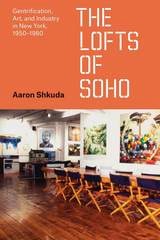
The Lofts of SoHo
Gentrification, Art, and Industry in New York, 1950–1980Aaron Shkuda
University of Chicago Press, 2016
American cities entered a new phase when, beginning in the 1950s, artists and developers looked upon a decaying industrial zone in Lower Manhattan and saw, not blight, but opportunity: cheap rents, lax regulation, and wide open spaces. Thus, SoHo was born. From 1960 to 1980, residents transformed the industrial neighborhood into an artist district, creating the conditions under which it evolved into an upper-income, gentrified area. Introducing the idea—still potent in city planning today—that art could be harnessed to drive municipal prosperity, SoHo was the forerunner of gentrified districts in cities nationwide, spawning the notion of the creative class.
In The Lofts of SoHo, Aaron Shkuda studies the transition of the district from industrial space to artists’ enclave to affluent residential area, focusing on the legacy of urban renewal in and around SoHo and the growth of artist-led redevelopment. Shkuda explores conflicts between residents and property owners and analyzes the city’s embrace of the once-illegal loft conversion as an urban development strategy. As Shkuda explains, artists eventually lost control of SoHo’s development, but over several decades they nonetheless forced scholars, policymakers, and the general public to take them seriously as critical actors in the twentieth-century American city.
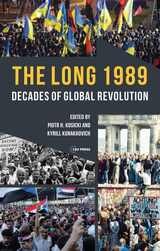
The Long 1989
Decades of Global RevolutionKyrill Kunakhovich
Central European University Press, 2019
The Long Détente
Changing Concepts of Security and Cooperation in Europe, 1950s–1980sPoul Villaume
Central European University Press, 2017

The Long March of Basic Trust
Chronicle of Emotions; Notebook 2Alexander Kluge
Seagull Books, 2025
A kaleidoscopic journey through history and the vast landscape of human emotion, The Long March of Basic Trust presents Alexander Kluge at his most expansive and incisive. Moving seamlessly across time and space, Kluge weaves a tapestry of lived and imagined experience, interrogating the forces that shape our resilience in the face of catastrophe. From the wreckage of World War II to the deep time of geology, his singular prose dissolves boundaries between the real and the speculative.
Blurring the lines between fiction and philosophy, Kluge builds an intricate world enriched by hybrid images and his latest experiment: the “virtual camera,” a cinematic eye that captures the interplay of memory and invention. Now in his tenth decade, Kluge continues his lifelong pursuit of uncovering the patterns that connect us and the basic trust that allows us to go on. Both intellectually provocative and deeply humane, this latest installment in his Chronicle of Emotions is a testament to his unmatched ability to fuse thought and feeling into an electrifying literary form.
The Long March of Coxey’s Army
The Path of Protest from Populism to the New DealWesley R. Bishop
University of Illinois Press, 2027
Wesley R. Bishop explores how Coxey and his allies organized the first national protest to bring citizens to Washington, D.C. Though the march failed in its immediate goals, for the next forty years its ideas influenced America’s political parties. The demonstration pioneered marching for economic justice while its push for federal public works projects and government responsibility for unemployment helped shaped the New Deal. But in the years after the march, racism and other types of exclusion muddied hopes and tainted demands for democratic and economic fairness.
Eye-opening and insightful, The Long March of Coxey’s Army examines the influence and aftermath of an important historical event.
The Long Night of the Watchman
Essays by Vaclav Benda, 1977-1989F. Flagg Taylor
St. Augustine's Press, 2017
The Long Shadow of Lincoln's Gettysburg Address
Jared Peatman
Southern Illinois University Press, 2013
The Long War on Drugs
Anne L. Foster
Duke University Press, 2023
The Long War
The Intellectual People’s Front and Anti-Stalinism, 1930–1940Judy Kutulas
Duke University Press, 1994
Judy Kutulas takes us into the debates and outright fights between and within the ranks of organizations such as the League of American Writers, the John Reed Clubs, the Committee for Cultural Freedom, the American Civil Liberties Union, and the National Committee for the Defense of Political Prisoners. Showing how extremist views about the nature and value of communism triumphed over more moderate ones, she traces the transfer of the left’s leadership from one generation to the next. She describes how supporters of the People’s Front were discredited by the time of the Nazi-Soviet Pact and how this opened the way for a new generation of leaders better known as the New York intellectuals. In this shift, Kutulas identifies the beginnings of the liberal anti-communism that would follow World War II.
A book for students and scholars of the intersection of politics and culture, The Long War offers a new, informed perspective on the intellectual maneuvers of the American left of the 1930s and leads to a reinterpretation of the time and its complex legacy.
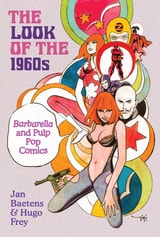
The Look of the 1960s
Barbarella and Pulp Pop ComicsJan Baetens and Hugo Frey
University of Texas Press, 2026
How the classic aesthetic of 1960s pulp comics influenced art, culture, and politics.
As a form of visual art, comic books rely on a distinct and eye-catching aesthetic. This is especially true of the iconic comics, graphic novels, and illustrations of the 1960s and 1970s. The Look of the 1960s explores the sources of inspiration that influenced the world of comics, beginning with the well-known French comics series Barbarella.
Noted comics scholars Jan Baetens and Hugo Frey analyze the impacts of the often-provocative images featured in the comics of the 1960s, which pushed back against French censorship in a politically tense time, and detail how women resisted their objectification in the comic book industry. Barbarella left its mark on the world and gained international attention, inspiring a movie adaptation and changing the look and content of other popular comics. The “Pulp Pop” movement remains relevant today, continuing to influence the art and political world. With new information about artists and an astute analysis of sociopolitical influence, The Look of the 1960s offers deep insights, making it a must read for comics fans all over the world.
The Loss of Java
The Final Battles for the Possession of Java Fought by Allied Air, Naval and Land Forces in the Period of 18 February - 7 March 1942P.C. Boer
National University of Singapore Press, 2011
P.C. Boer considers whether the assessment of Major General Van Oyen that deploying the Allied air forces might prevent Japanese invasion of Java was realistic, and whether reliance on air power limited the capacity of land and naval forces to repel Japan's advances. The generally accepted idea is that the Allies were ineffective in their fight against the Japanese invaders but in fact the Japanese suffered serious losses. Boer's study shows that Dutch strategy grew out of a carefully-devised plan of defense, and that the battle for Java comprised not one (the Battle of the Java Sea) but four major engagements. However, Japanese commanders at various levels consciously took steps that exposed their forces to great risk but succeeded in putting the Allies under great pressure. In the end the Royal Netherlands East Indies Army (KNIL) and the allied forces capitulated on 8 March 1942.
This book is a translation of Het Verlies Van Java: Een kwestie van Air Power. De eindstrijd om Nederlands-Indie van de geallieerde lucht-, zee- en landstrijdkrschten in de periode van 18 februari t/m 7 maart 1942 (Amsterdam: Bataafsche Leeuw BV for the Koninklijke Militaire Academie, 2006).
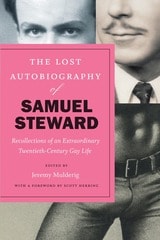
The Lost Autobiography of Samuel Steward
Recollections of an Extraordinary Twentieth-Century Gay LifeSamuel Steward
University of Chicago Press, 2018
The story of this life would undoubtedly have been a sensation if it had reached publication. But after finishing a 110,000-word draft in 1979, Steward lost interest in the project and subsequently published only a slim volume of selections from his manuscript.
In The Lost Autobiography of Samuel Steward, Jeremy Mulderig has integrated Steward’s truncated published text with the text of the original manuscript to create the first extended version of Steward’s autobiography to appear in print—the first sensational, fascinating, and ultimately enlightening story of his many lives told in his own words. The product of a rigorous line-by-line comparison of these two sources and a thoughtful editing of their contents, Mulderig’s thoroughly annotated text is more complete and coherent than either source alone while also remaining faithful to Steward’s style and voice, to his engaging self-deprecation and his droll sense of humor. Compellingly readable and often unexpectedly funny, this newly discovered story of a gay life full of wildly improbable—but nonetheless true—events is destined to become a landmark queer autobiography from the twentieth century.
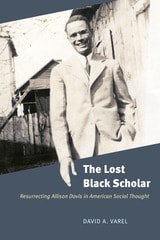
The Lost Black Scholar
Resurrecting Allison Davis in American Social ThoughtDavid A. Varel
University of Chicago Press, 2018
In The Lost Black Scholar, David A. Varel tells Davis’s compelling story, showing how a combination of institutional racism, disciplinary eclecticism, and iconoclastic thinking effectively sidelined him as an intellectual. A close look at Davis’s career sheds light not only on the racial politics of the academy but also the costs of being an innovator outside of the mainstream. Equally important, Varel argues that Davis exemplifies how black scholars led the way in advancing American social thought. Even though he was rarely acknowledged for it, Davis refuted scientific racism and laid bare the environmental roots of human difference more deftly than most of his white peers, by pushing social science in bold new directions. Varel shows how Davis effectively helped to lay the groundwork for the civil rights movement.
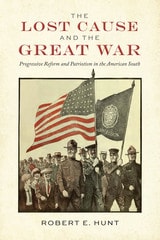
The Lost Cause and the Great War
Progressive Reform and Patriotism in the American SouthRobert E. Hunt
University of Alabama Press, 2025
How Tennessee reformers reconciled Southern heritage with rising nationalism, weaving the Lost Cause into the fabric of American progress and identity.
The Lost Cause and the Great War tells the stories of central Tennessee Progressive-era reformers to illustrate the fascinating broader issue of how Southerners steeped in Lost Cause Civil War mythologies simultaneously developed patriotic American fervor. Focusing on Luke Lea, a prominent politician and American army officer who attempted to capture Kaiser Wilhelm II during World War I, the book reveals the intricate interplay between three competing ideas: attachment to the memory of the Confederacy, intense American nationalism, and advocacy for progressive reforms.
Hunt shows that Lea and his contemporaries sought either to harmonize these competing loyalties or to compartmentalize them to use when needed. Through insightful accounts of Tennessee’s 1928 presidential campaign, the American Legion’s response to cuts to veteran benefits in 1933, and the redefinition of America’s global role post–World War II, Hunt shows how these reformers achieved a balance that held until the Civil Rights movement disrupted this delicate consensus.
Hunt’s rich account reveals how Lea and others like him wove national patriotism and Southern collective memory into a cohesive narrative that supported their broader Progressive goals. The book offers much to readers interested in Southern history, the Gilded Age, Prohibition, World War I, World War II, and the beginnings of the Civil Rights movement. It provides vivid examples of how collective memory and narratives shape social and political movements. General readers will discover how white Southerners who remained devoted to vindicating the Confederacy nonetheless became fervent supporters of America's growing nationalism in the early twentieth century.
The Lost Chance in China and the Rise of Cold War Populism
Stephen J. Hartnett
Michigan State University Press, 2025
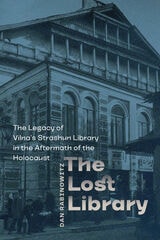
The Lost Library
The Legacy of Vilna's Strashun Library in the Aftermath of the HolocaustDan Rabinowitz
Brandeis University Press, 2018
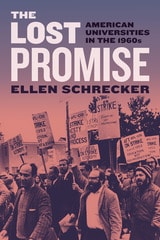
The Lost Promise
American Universities in the 1960sEllen Schrecker
University of Chicago Press, 2021
The 1950s through the early 1970s are widely seen as American academia’s golden age, when universities—well-funded and viewed as essential for national security, economic growth, and social mobility—embraced an egalitarian mission. Swelling in size, schools attracted new types of students and professors, including radicals who challenged their institutions’ calcified traditions. But that halcyon moment soon came to a painful and confusing end, with consequences that still afflict the halls of ivy. In The Lost Promise, Ellen Schrecker—our foremost historian of both the McCarthy era and the modern American university—delivers a far-reaching examination of how and why it happened.
Schrecker illuminates how US universities’ explosive growth intersected with the turmoil of the 1960s, fomenting an unprecedented crisis where dissent over racial inequality and the Vietnam War erupted into direct action. Torn by internal power struggles and demonized by conservative voices, higher education never fully recovered, resulting in decades of underfunding and today’s woefully inequitable system. As Schrecker’s magisterial history makes blazingly clear, the complex blend of troubles that disrupted the university in that pivotal period haunts the ivory tower to this day.

The Luck of the Devil
From Hell to HappinessLadislav Grosman
Karolinum Press, 2026
Ladislav Grosman's powerful story of a twelve-year-old Jewish boy in wartime Slovakia smuggled into Hungary to escape deportation.
In The Luck of the Devil, readers experience the horrors of war and the Holocaust through the lens of the young boy’s obsessive reading of pulp fiction, imposing a layer of adventure on the bleak landscape of his experience. This simultaneously tragic, humorous, and poetic novel by Ladislav Grosman was published posthumously.
The Lyric Now
James Longenbach
University of Chicago Press, 2020
In poet and critic James Longenbach’s title, the word “now” does double duty, evoking both a lyric sense of the present and twentieth-century writers’ assertion of “nowness” as they crafted their poetry in the wake of Modernism. Longenbach examines the fruitfulness of poetic repetition and indecision, of naming and renaming, and of the evolving search for newness in the construction, history, and life of lyrics. Looking to the work of thirteen poets, from Marianne Moore and T. S. Eliot through George Oppen and Jorie Graham to Carl Phillips and Sally Keith, and several musicians, including Virgil Thomson and Patti Smith, he shows how immediacy is constructed through language. Longenbach also considers the life and times of these poets, taking a close look at the syntax and diction of poetry, and offers an original look at the nowness of lyrics.
The Made Thing
An Anthology of Contemporary Southern PoetryLeon Stokesbury
University of Arkansas Press, 2000
The Magic of Concepts
History and the Economic in Twentieth-Century ChinaRebecca E. Karl
Duke University Press, 2017
The Magical State
Nature, Money, and Modernity in VenezuelaFernando Coronil
University of Chicago Press, 1997
The Making of Arab Americans
From Syrian Nationalism to U.S. CitizenshipBy Hani J. Bawardi
University of Texas Press, 2014
The Making of Modern Medicine
Turning Points in the Treatment of DiseaseMichael Bliss
University of Chicago Press, 2011
At the dawn of the twenty-first century, we have become accustomed to medical breakthroughs and conditioned to assume that, regardless of illnesses, doctors almost certainly will be able to help—not just by diagnosing us and alleviating our pain, but by actually treating or even curing diseases, and significantly improving our lives.
For most of human history, however, that was far from the case, as veteran medical historian Michael Bliss explains in The Making of Modern Medicine. Focusing on a few key moments in the transformation of medical care, Bliss reveals the way that new discoveries and new approaches led doctors and patients alike to discard fatalism and their traditional religious acceptance of suffering in favor of a new faith in health care and in the capacity of doctors to treat disease. He takes readers in his account to three turning points—a devastating smallpox outbreak in Montreal in 1885, the founding of the Johns Hopkins Hospital and Medical School, and the discovery of insulin—and recounts the lives of three crucial figures—researcher Frederick Banting, surgeon Harvey Cushing, and physician William Osler—turning medical history into a fascinating story of dedication and discovery.
Compact and compelling, this searching history vividly depicts and explains the emergence of modern medicine—and, in a provocative epilogue, outlines the paradoxes and confusions underlying our contemporary understanding of disease, death, and life itself.
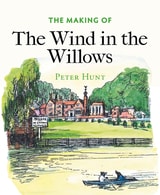
The Making of The Wind in the Willows
Peter Hunt
Bodleian Library Publishing, 2018
Peter Hunt explores the unusual trajectory of The Wind in the Willows through previously unpublished archival materials, original drawings, and fan letters (including one from Theodore Roosevelt). He identifies the colleagues and friends on whom Grahame is thought to have based the characters of Mole, Rat, Badger, and Toad, and explores the literary genres of boating, caravanning, and motoring on which the author drew. He also recounts the extraordinary correspondence surrounding the book’s first publication and the influence of two determined women—publisher’s agent Constance Smedley and the author’s wife, Elspeth Grahame—who helped turn the book into the classic for children we know and love today. Generously illustrated throughout, this book celebrates one of the most beloved works of children’s literature ever published.
The Making of Theatrical Reputations
Studies from the Modern London TheatreYael Zarhy-Levo
University of Iowa Press, 2008
Today's successful plays and playwrights achieve their prominence not simply because of their intrinsic merit but because of the work of mediators, who influence the whole trajectory of a playwright's or a theatre company's career. Critics and academic writers are primarily considered the makers of reputations, but funding organizations and various media agents as well as artistic directors, producers, and directors also pursue separate agendas in shaping the reputations of theatrical works. In The Making of Theatrical Reputations Yael Zarhy-Levo demonstrates the processes through which these mediatory practices by key authority figures situate theatrical companies and playwrights within cultural and historical memory.
To reveal how these authorizing powers-that-be promote theatrical events, companies, and playwrights, Zarhy-Levo presents four detailed case studies that reflect various angles of the modern London theatre. In the case of the English Stage Company's production of John Osborne's Look Back in Anger, she centers on a specific event. She then focuses on the trajectory of a single company, the Theatre Workshop, particularly through its first decade at the Theatre Royal, Stratford East, London. Next, she explores the career of the dramatist John Arden, especially its first ten years, in part drawing upon an interview with Arden and his wife, actress and playwright Margaretta D'Arcy, before turning to her fourth study: the playwright Harold Pinter's shifting reputation throughout the different phases of his career.
Zarhy-Levo's accounts of these theatrical events, companies, and playwrights through the prism of mediation bring fresh insights to these landmark productions and their creators.
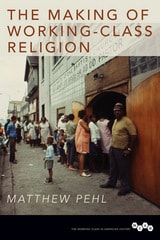
The Making of Working-Class Religion
Matthew Pehl
University of Illinois Press, 2016
Pehl embarks on an integrative view of working-class faith that ranges across boundaries of class, race, denomination, and time. As he shows, workers in the 1910s and 1920s practiced beliefs characterized by emotional expressiveness, alliance with supernatural forces, and incorporation of mass culture's secular diversions into the sacred. That gave way to the more pragmatic class-conscious religion cultures of the New Deal era and, from the late Thirties on, a quilt of secular working-class cultures that coexisted in competitive, though creative, tension. Finally, Pehl shows how the ideology of race eclipsed class in the 1950s and 1960s, and in so doing replaced the class-conscious with the race-conscious in religious cultures throughout the city.
An ambitiously inclusive contribution to a burgeoning field, The Making of Working-Class Religion breaks new ground in the study of solidarity and the sacred in the American heartland.
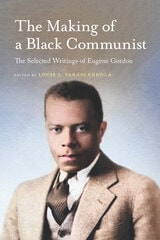
The Making of a Black Communist
The Selected Writings of Eugene GordonLouis J. Parascandola, Editor
University of Massachusetts Press, 2025
Eugene Gordon (1891–1974) was a major writer involved in the development of the burgeoning Black literary scene in Boston in the 1920s, an active player in the Harlem Renaissance, and a longtime member of the Communist Party. Despite his credentials as a reporter, editor, fiction writer, and political activist, he is rarely mentioned in studies of the Harlem Renaissance or Marxist politics. Here, Louis J. Parascandola has pulled together Gordon’s journalism, autobiographical writing, and fiction. This new collection, featuring both previously published pieces from a wide variety of publications as well as material that has never before been published, demonstrates his range and his skill while establishing his importance as a critical voice of his time.
Gordon was born and raised in the South but made his way north at a young age. In Boston, he founded the Saturday Evening Quill Club, an African American literary group that included other notable writers such as Helene Johnson and Dorothy West. He later became editor of and contributor to two major publications coming out of the era: the Messenger and Opportunity: A Journal of Negro Life. As he grew more political, he joined the Communist Party in the 1930s and became editor of and contributor to the New Masses. Scholars looking to research him have struggled to find disparate writings to get a fuller sense of his literary stylings as well as his political commitments. This welcome new volume establishes Gordon as a significant, understudied figure.
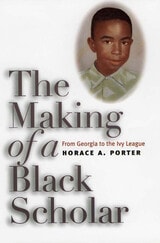
The Making of a Black Scholar
From Georgia to the Ivy LeagueHorace A. Porter
University of Iowa Press, 2003
The Making of a Black Scholar is structured around schools. Porter attends Georgia's segregated black schools until he enters the privileged world of Amherst College. He graduates (spending one semester at Morehouse College) and moves on to graduate study at Yale. He starts his teaching career at Detroit's Wayne State University and spends the 1980s at Dartmouth College and the 1990s at Stanford University.
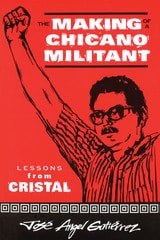
The Making of a Chicano Militant
Lessons from CristalJose Angel Gutierrez
University of Wisconsin Press, 1999
Texas, for years, was a one-party state controlled by white democrats. In 1962, a young eighteen-year-old heard the first rumblings of Chicano community organization in the barrios of Cristal. The rumor in the town was that five Mexican Americans were going to run for all five seats on the city council. But first, poor citizens had to find a way to pay the $1.75 poll tax. Money had to be raised—through bake sales of tamales, cake walks, and dances. So began the political activism of José Angel Gutiérrez.
Gutiérrez's autobiography, The Making of a Chicano Militant, is the first insider's view of the important political and social events within the Mexican American communities in South Texas during the 1960s and 1970s. A controversial and dynamic political figure during the height of the Chicano movement, Gutiérrez offers an absorbing personal account of his life at the forefront of the Mexican-American civil rights movement—first as a Chicano and then as a militant.
Gutiérrez traces the racial, ethnic, economic, and social prejudices facing Chicanos with powerful scenes from his own life: his first summer job as a tortilla maker at the age of eleven, his racially motivated kidnapping as a teenager, and his coming of age in the face of discrimination as a radical organizer in college and graduate school. When Gutiérrez finally returned to Cristal, he helped form the Mexican American Youth Organization and, subsequently the Raza Unida Party to confront issues of ethnic intolerance in his community. His story is soon to be a classic in the developing literature of Mexican American leaders.
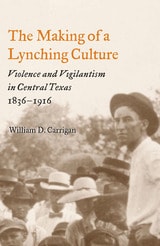
The Making of a Lynching Culture
Violence and Vigilantism in Central Texas, 1836-1916William D. Carrigan
University of Illinois Press, 2006
How a culture of violence legitimized lynching among ordinary people
On May 15, 1916, a crowd of fifteen thousand witnessed the lynching of an eighteen-year-old black farm worker named Jesse Washington. Most central Texans of the time failed to call for the punishment of the mob’s leaders. In The Making of a Lynching Culture, now in paperback, William D. Carrigan seeks to explain not how a fiendish mob could lynch one man but how a culture of violence that nourished this practice could form and endure for so long among ordinary people.
Beginning with the 1836 independence of Texas, The Making of a Lynching Culture reexamines traditional explanations of lynching, including the role of the frontier, economic tensions, and political conflicts. Using a voluminous body of court records, newspaper accounts, oral histories, and other sources, Carrigan shows how notions of justice and historical memory were shaped to glorify violence and foster a culture that legitimized lynching.
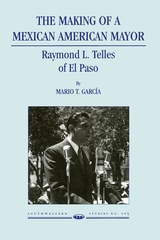
The Making of a Mexican American Mayor
Mario Garcia
University of Arizona Press, 1999
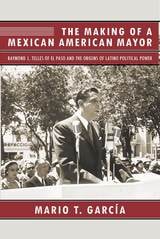
The Making of a Mexican American Mayor
Raymond L. Telles of El Paso and the Origins of Latino Political PowerMario T. García
University of Arizona Press, 2018
In the border metropolis of El Paso, more than half the population is Mexican American, yet this group had been denied effective political representation. Mexican Americans broke this barrier and achieved the “politics of status” through Telles’s stunning 1957 victory. This book captures the excitement of that long-awaited election.
The Making of a Mexican American Mayor also examines Telles’s story as a microcosm of the history of Mexican Americans before and after World War II—the Mexican American Generation. As mayor and ambassador, Telles symbolized this generation’s striving for political participation, and his legacy is evident in the growing number of Latinas/os holding office today.
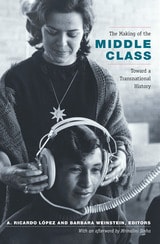
The Making of the Middle Class
Toward a Transnational HistoryA. Ricardo López and Barbara Weinstein, eds.
Duke University Press, 2012
Contributors. Susanne Eineigel, Michael A.Ervin, Iñigo García-Bryce, Enrique Garguin, Simon Gunn, Carol E. Harrison, Franca Iacovetta, Sanjay Joshi, Prashant Kidambi, A. Ricardo López, Gisela Mettele, Marina Moskowitz, Robyn Muncy, Brian Owensby, David S. Parker, Mrinalini Sinha, Mary Kay Vaughan, Daniel J. Walkowitz, Keith David Watenpaugh, Barbara Weinstein, Michael O. West
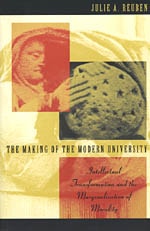
The Making of the Modern University
Intellectual Transformation and the Marginalization of MoralityJulie A. Reuben
University of Chicago Press, 1996
Based on extensive research at eight universities—Harvard, Yale, Columbia, Johns Hopkins, Chicago, Stanford, Michigan, and California at Berkeley—Reuben examines the aims of university reformers in the context of nineteenth-century ideas about truth. She argues that these educators tried to apply new scientific standards to moral education, but that their modernization efforts ultimately failed. By exploring the complex interaction between institutional and intellectual change, Reuben enhances our understanding of the modern university, the secularization of intellectual life, and the association of scientific objectivity with value-neutrality.
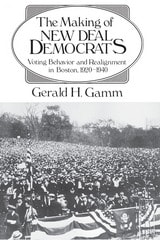
The Making of the New Deal Democrats
Voting Behavior and Realignment in Boston, 1920-1940Gerald H. Gamm
University of Chicago Press, 1990
Almost all previous work on the subject has dealt with large-scale national patterns which make it difficult to pin down the precise processes by which the alignment took place. Gamm's work is most remarkable in that it is a close analysis of shifting voter alignments on the precinct and block level in the city of Boston. His extremely detailed and painstaking work of isolating homogeneous ethnic units over a twenty-year period allows one to trace the voting behavior of the particular ethnic groups that ultimately formed the core of the New Deal realignment."—Sidney Verba, Harvard University
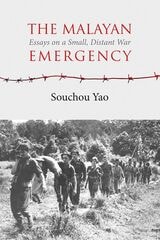
The Malayan Emergency
Essays on a Small, Distant WarSouchou Yao
National University of Singapore Press, 2016
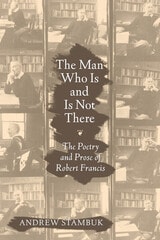
The Man Who Is and Is Not There
The Poetry and Prose of Robert FrancisAndrew Stambuk
University of Massachusetts Press, 2011
Robert Francis (1901–1987), the author of eight volumes of poetry, an autobiography, a book of fiction, essays on poetry, and a reminiscence of Robert Frost, lived for most of his career on the outskirts of Amherst, Massachusetts, devoting himself to Yankee simplicity and self-renunciation derived from his reading of Thoreau. His preference for solitude and disinclination to write about or promote himself account for the elusiveness of his persona in his prose and poetry.
This book charts how Francis developed and elaborated this persona through distanced self-portraits in prose and through poems that both reveal and conceal the self of the poet. Folded into the study are discussions of Francis's pastoralism, his affinities with Emerson and Thoreau, his experimentation with new poetic forms, his protest against the Vietnam War and environmental despoliation, his homoeroticism, and a comparison of his poetry with that of Robert Frost. The book also explores Francis's characteristic attitude, figured as “hovering,” where his speaker is both subject and object, writing about himself while inhabiting the role of detached observer.
Complementing the emphasis on Francis's elusiveness, Andrew Stambuk offers readings of his poems attentive to aesthetic qualities that give them their particular reticence. Stambuk's sensitive evaluations underscore that Francis is a craftsman of intricate precisions whose work speaks to contemporary political and global concerns.