Results by title
28250 books match the query 'History' and 6388 start with t
The Black Arts Enterprise and the Production of African American Poetry
Howard Rambsy II
University of Michigan Press, 2013
The outpouring of creative expression known as the Black Arts Movement of the 1960s and 1970s spawned a burgeoning number of black-owned cultural outlets, including publishing houses, performance spaces, and galleries. Central to the movement were its poets, who in concert with editors, visual artists, critics, and fellow writers published a wide range of black verse and advanced new theories and critical approaches for understanding African American literary art.
The Black Arts Enterprise and the Production of African American Poetry offers a close examination of the literary culture in which BAM's poets (including Amiri Baraka, Nikki Giovanni, Sonia Sanchez, Larry Neal, Haki Madhubuti, Carolyn Rodgers, and others) operated and of the small presses and literary anthologies that first published the movement's authors. The book also describes the role of the Black Arts Movement in reintroducing readers to poets such as Langston Hughes, Robert Hayden, Margaret Walker, and Phillis Wheatley.
Focusing on the material production of Black Arts poetry, the book combines genetic criticism with cultural history to shed new light on the period, its publishing culture, and the writing and editing practices of its participants. Howard Rambsy II demonstrates how significant circulation and format of black poetic texts—not simply their content—were to the formation of an artistic movement. The book goes on to examine other significant influences on the formation of Black Arts discourse, including such factors as an emerging nationalist ideology and figures such as John Coltrane and Malcolm X.
The Black Boom
Riley, Jason L.
Templeton Press, 2021
Economic inequality continues to be one of America’s most hotly debated topics. Still, there has been relatively little discussion of the fact that black-white gaps in joblessness, income, poverty and other measures were shrinking before the pandemic. Why was it happening, and why did this phenomenon go unacknowledged by so much media?
In The Black Boom, Jason L. Riley—acclaimed Wall Street Journal columnist and senior fellow at the Manhattan Institute—digs into the data and concludes that the economic lives of black people improved significantly under policies put into place during the Trump administration. To acknowledge as much is not to endorse the 45th president but to champion policies that achieve a clear moral objective shared by most Americans.
Riley argues that before the Covid-19 pandemic of 2020, the economic fortunes of blacks improved under Trump to an extent unseen under Obama and unseen going back several generations. Black unemployment and poverty reached historic lows, and black wages increased faster than white wages.
Less inequality is something that everyone wants, but disapproval of Trump’s personality and methods too often skewed the media’s appraisal of effective policies advocated by his administration. If we're going to make real progress in improving the lives of low-income minorities, says Riley, we must look beyond our partisan differences at what works and keep doing it. Unfortunately, many press outlets were unable or unwilling to do that.
Riley notes that political reporters were not unaware of this data. Instead, they chose to ignore or downplay it because it was inconvenient. In their view, Trump, because he was a Republican and because he was Trump, had it in for blacks, and thus his policy preferences would be harmful to minorities. To highlight that significant racial disparities were narrowing on his watch—that the administration’s tax and regulatory reforms were mainly boosting the working and middle classes rather than ‘the rich’—would have undermined a narrative that the media preferred to advance, regardless of its veracity.”
As with previous books in our New Threats to Freedom series, The Black Boom includes two essays from prominent experts who take issue with the author’s perspective. Juan Williams, a veteran journalist, and Wilfred Reilly, a political scientist, contribute thoughtful responses to Riley and show that it is possible to share a deep concern for disadvantaged groups while disagreeing on how best to help them.
The Black Butterfly
Brazilian Slavery and the Literary ImaginationMarcus Wood
West Virginia University Press, 2019
The Black Butterfly focuses on the slavery writings of three of Brazil’s literary giants—Machado de Assis, Castro Alves, and Euclides da Cunha. These authors wrote in the late nineteenth and early twentieth centuries, as Brazil moved into and then through the 1888 abolition of slavery. Assis was Brazil’s most experimental novelist; Alves was a Romantic poet with passionate liberationist politics, popularly known as “the poet of the slaves”; and da Cunha is known for the masterpiece Os Sertões (The Backlands), a work of genius that remains strangely neglected in the scholarship of transatlantic slavery.
Wood finds that all three writers responded to the memory of slavery in ways that departed from their counterparts in Europe and North America, where emancipation has typically been depicted as a moment of closure. He ends by setting up a wider literary context for his core authors by introducing a comparative study of their great literary abolitionist predecessors Luís Gonzaga Pinto da Gama and Joaquim Nabuco. The Black Butterfly is a revolutionary text that insists Brazilian culture has always refused a clean break between slavery and its aftermath. Brazilian slavery thus emerges as a living legacy subject to continual renegotiation and reinvention.
The Black Chicago Renaissance
Edited by Darlene Clark Hine and John McCluskey Jr.
University of Illinois Press, 2012
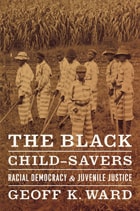
The Black Child-Savers
Racial Democracy and Juvenile JusticeGeoff K. Ward
University of Chicago Press, 2012
At once an inspiring story about the shifting boundaries of race, citizenship, and democracy in America and a crucial look at the nature of racial inequality, The Black Child Savers is a stirring account of the stakes and meaning of social justice.
The Black Church in the African American Experience
C. Eric Lincoln and Lawrence H. Mamiya
Duke University Press, 1990
Drawing on interviews with more than 1,800 black clergy in both urban and rural settings, combined with a comprehensive historical overview of seven mainline black denominations, C. Eric Lincoln and Lawrence H. Mamiya present an analysis of the Black Church as it relates to the history of African Americans and to contemporary black culture. In examining both the internal structure of the Church and the reactions of the Church to external, societal changes, the authors provide important insights into the Church’s relationship to politics, economics, women, youth, and music.
Among other topics, Lincoln and Mamiya discuss the attitude of the clergy toward women pastors, the reaction of the Church to the civil rights movement, the attempts of the Church to involve young people, the impact of the black consciousness movement and Black Liberation Theology and clergy, and trends that will define the Black Church well into the next century.
This study is complete with a comprehensive bibliography of literature on the black experience in religion. Funding for the ten-year survey was made possible by the Lilly Endowment and the Ford Foundation.
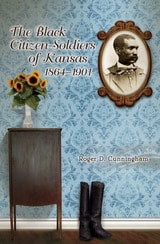
The Black Citizen-Soldiers of Kansas, 1864-1901
Roger D. Cunningham
University of Missouri Press, 2008
Roger Cunningham examines a lost history to show that, in addition to black regulars, hundreds of other black militiamen and volunteers from the Sunflower State provided military service from the Civil War until the dawn of the twentieth century. He tells how African Americans initially filled segregated companies hurriedly organized to defend the state from the threat of Confederate invasion, with some units ordered into battle around Kansas City. Then after the state constitution was amended to admit blacks into the Kansas National Guard, but its generals still refused to integrate, blacks served in reserve militia and independent companies and in all-black regiments that were raised for the Spanish-American and Philippine wars.
Cunningham has researched service records, African American newspapers, and official correspondence to give voice to these citizen-soldiers. He shares stories of real people like William D. Matthews, a captain in the First Kansas Colored Infantry who was refused a commission when his regiment was mustered into the Union army; Charles Grinsted, who commanded the first black militia company after the Civil War; and other unsung heroes.
More than a military history, Cunningham’s account records the quest of black men, many of them former slaves, for inclusion in American society. Many came from the bottom of the socioeconomic order and found that as militiamen they could gain respect within their communities. And by marching in public ceremonies and organizing fund-raising activities to compensate for lack of financial support from the state, they also strengthened the ties that bound African American communities together.
The Black Death in Egypt and England
A Comparative StudyBy Stuart J. Borsch
University of Texas Press, 2005
Throughout the fourteenth century AD/eighth century H, waves of plague swept out of Central Asia and decimated populations from China to Iceland. So devastating was the Black Death across the Old World that some historians have compared its effects to those of a nuclear holocaust. As countries began to recover from the plague during the following century, sharp contrasts arose between the East, where societies slumped into long-term economic and social decline, and the West, where technological and social innovation set the stage for Europe's dominance into the twentieth century. Why were there such opposite outcomes from the same catastrophic event?
In contrast to previous studies that have looked to differences between Islam and Christianity for the solution to the puzzle, this pioneering work proposes that a country's system of landholding primarily determined how successfully it recovered from the calamity of the Black Death. Stuart Borsch compares the specific cases of Egypt and England, countries whose economies were based in agriculture and whose pre-plague levels of total and agrarian gross domestic product were roughly equivalent. Undertaking a thorough analysis of medieval economic data, he cogently explains why Egypt's centralized and urban landholding system was unable to adapt to massive depopulation, while England's localized and rural landholding system had fully recovered by the year 1500.
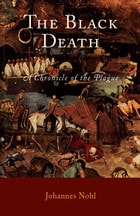
The Black Death
A Chronicle of the PlagueJohannes Nohl
Westholme Publishing, 2005
A History of the Most Catastrophic Plague Through Contemporary Accounts and How Humans Reacted
Hailed by the New York Times as "unusually interesting both as history and sociological study," The Black Death: A Chronicle of the Plague traces the ebb and flow of European pandemics over the course of centuries through translations of contemporary accounts. Originally published in 1926 and now in paperback for the first time, Nohl's volume is unique for its geographical and historical scope as well as its combination of detailed accounts and overarching contemporary views of the history of the plague in Europe, a disease that claimed nearly 40 million people during the fourteenth century alone. With current concerns about pandemics, The Black Death provides lessons on how humans reacted to and survived catastrophic loss of life to disease.
Contents
Preface
1. The Aspect of the Plague
2. The Precursors of the Plague
3. The Medical Profession and the Plague
4. Plague Remedies
5. Administrative Precautions
6. Attitude of the Church
7. The Diabolical Element of the Plague
8. Persecutions of the Jews
9. The Erotic Element of the Plague
10. The Flagellants
11. Choreomania and Children's Pilgrimages
12. Life Victorious
Bibliography
Geographical Index
Index of Persons
The Black Experience in America
Selected EssaysEdited by James C. Curtis and Lewis L. Gould
University of Texas Press, 1970
In the fall of 1968, the University of Texas at Austin sponsored a series of public lectures delivered by outstanding students of the black past in an effort to clarify the role of the African American in America’s history. This volume of essays by eight of the ten participants makes the lectures available to a broader public.
The essays demonstrate that the black experience in America has been integral throughout the nation’s history. Although each contributor deals with a different aspect of this experience, they all share a common commitment to sound historical scholarship. The essays also reflect the intensive research in the field of black history during a time of high racial tension.
Henry Allen Bullock, in an exploration of education in the slave experience, shows that, despite organized attempts to dehumanize the Negro, the black man’s position in the American social order was not static. By training and educating the Negro, the slaveowner was weakening the peculiar institution and preparing the slave for freedom. In the field of cultural anthropology, which had largely ignored blacks in the United States, William S. Willis, Jr., examines the interaction of whites, blacks, and Indians on the Southern colonial frontier. Arthur Zilversmit traces the development of abolitionist attitudes from patience to militance and points out that both those reformers who abandoned action and those who demanded radical violent change were forced into their positions by society’s failure to listen to the arguments of moderate reformers.
William S. McFeely takes a fresh look at the Reconstruction era, one of the only times in American history when white Americans have even come close to wanting for black Americans what black Americans wanted for themselves. In a discussion of protest against segregated streetcars in the South, August Meier and Elliott Rudwick show that the boycotts of the late 1950s had their counterparts in more than twenty-five Southern cities between 1900 and 1906. Thomas R. Cripps attacks the myth of the Southern box office and shows how Hollywood’s own timidity fostered racial stereotyping in American movies. Robert L. Zangrando outlines the role of the NAACP, founded in 1909, in the evolution of civil rights protests during the mid-twentieth century. He argues that the organization’s precarious position in American society prevented it from exercising strong leadership within the black community. Louis R. Harlan concludes the volume by assessing the past and looking toward the future of black history in America.
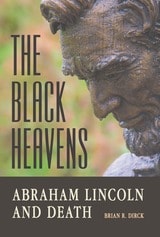
The Black Heavens
Abraham Lincoln and DeathBrian R. Dirck
Southern Illinois University Press, 2019
From multiple personal tragedies to the terrible carnage of the Civil War, death might be alongside emancipation of the slaves and restoration of the Union as one of the great central truths of Abraham Lincoln’s life. Yet what little has been written specifically about Lincoln and death is insufficient, sentimentalized, or devoid of the rich historical literature about death and mourning during the nineteenth century. The Black Heavens: Abraham Lincoln and Death is the first in-depth account of how the sixteenth president responded to the riddles of mortality, undertook personal mourning, and coped with the extraordinary burden of sending hundreds of thousands of soldiers to be killed on battlefields.
Going beyond the characterization of Lincoln as a melancholy, tragic figure, Brian R. Dirck investigates Lincoln’s frequent encounters with bereavement and sets his response to death and mourning within the social, cultural, and political context of his times. At a young age Lincoln saw the grim reality of lives cut short when he lost his mother and sister. Later, he was deeply affected by the deaths of two of his sons, three-year-old Eddy in 1850 and eleven-year-old Willie in 1862, as well as the combat deaths of close friends early in the war. Despite his own losses, Lincoln learned how to approach death in an emotionally detached manner, a survival skill he needed to cope with the reality of his presidency.
Dirck shows how Lincoln gradually turned to his particular understanding of God’s will in his attempts to articulate the meaning of the atrocities of war to the American public, as showcased in his allusions to religious ideas in the Gettysburg Address and the Second Inaugural. Lincoln formed a unique approach to death: both intellectual and emotional, typical and yet atypical of his times. In showing how Lincoln understood and responded to death, both privately and publicly, Dirck paints a compelling portrait of a commander in chief who buried two sons and gave the orders that sent an unprecedented number of Americans to their deaths.
The Black Intellectual Tradition
African American Thought in the Twentieth CenturyEdited by Derrick P. Alridge, Cornelius L. Bynum, and James B. Stewart
University of Illinois Press, 2021
From 1900 to the present, people of African descent living in the United States have drawn on homegrown and diasporic minds to create a Black intellectual tradition engaged with ideas on race, racial oppression, and the world. This volume presents essays on the diverse thought behind the fight for racial justice as developed by African American artists and intellectuals; performers and protest activists; institutions and organizations; and educators and religious leaders. By including both women’s and men’s perspectives from the U.S. and the Diaspora, the essays explore the full landscape of the Black intellectual tradition. Throughout, contributors engage with important ideas ranging from the consideration of gender within the tradition, to intellectual products generated outside the intelligentsia, to the ongoing relationship between thought and concrete effort in the quest for liberation.
Expansive in scope and interdisciplinary in practice, The Black Intellectual Tradition delves into the ideas that animated a people’s striving for full participation in American life.
Contributors: Derrick P. Alridge, Keisha N. Blain, Cornelius L. Bynum, Jeffrey Lamar Coleman, Pero Gaglo Dagbovie, Stephanie Y. Evans, Aaron David Gresson III, Claudrena N. Harold, Leonard Harris, Maurice J. Hobson, La TaSha B. Levy, Layli Maparyan, Zebulon V. Miletsky, R. Baxter Miller, Edward Onaci, Venetria K. Patton, James B. Stewart, and Nikki M. Taylor
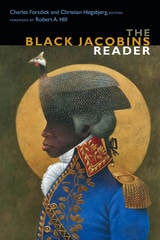
The Black Jacobins Reader
Charles Forsdick and Christian Høgsbjerg, editors
Duke University Press, 2017
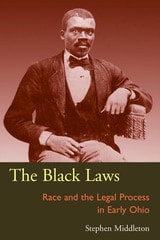
The Black Laws
Race and the Legal Process in Early OhioStephen Middleton
Ohio University Press, 2005

The Black Mecca Blueprint
Race, Class, and Place in Atlanta, GeorgiaJonathan P. Grant
Temple University Press, 2027
Black people have been on a continual search for freedom. Since their arrival in the West as exploited sources of labor, through the great migrations out of and back to the U.S. South, to repatriation efforts to Africa and throughout the Diaspora, they have been longing for place and to find or create a Mecca.
The Black Mecca Blueprint examines the current Black Mecca, Atlanta, Georgia. Jonathan Grant explores the dynamism of Black life in a “Black city,” homing in on race, class, and place and all their inherent complexities. He analyzes the ways place and city spaces are negotiated through power and class struggles and how various spaces, such as the Atlanta University Center and its reputation as a beacon, are recreated.
Drawing on in-depth interviews, hip hop music, cultural podcasts, stand-up comedy, archival research, media, autoethnographic data, and historiography, The Black Mecca Blueprint captures the beauty and burden of Atlanta while creating a blueprint that can be used to help devise more democratic cities across the U.S. and around the world.

The Black Mind
A History of African LiteratureO.R. Dathorne
University of Minnesota Press, 1974
The Black Mind was first published in 1974. Minnesota Archive Editions uses digital technology to make long-unavailable books once again accessible, and are published unaltered from the original University of Minnesota Press editions.
The comprehensive account of the development of African literature from its beginnings in oral tradition to its contemporary expression in the writings of Africans in various African and European languages provides insight, both broad and deep, into the Black intellect. Professor Dathorne examines the literature of Africans as spoken or written in their local languages and in Latin, French, Portuguese, and English. This extensive survey and interpretation gives the reader a remarkable pathway to an understanding of the Black imagination and its relevance to thought and creativity throughout the world.
The author himself lived in Africa for ten years, and his view in not that of an outsider, since it is as a Black man that he speaks about Black people. Throughout the book, a major theme is the demonstration that, despite slavery and colonialism, Africans remained very close to their own cultures. Professor Dathorne shows that African writers may be, like some Afro-American writers, "marginal men," but that they are Black men and it is as Black men that they feel the nostalgia of their past and the corrosive influences of their present.
The chapters are divided into sections: Tradition; Heritage; The Presence of Europe; and Crosscurrents. In the final chapters the author extends the thread of continuity to the New World—Africa as present in the work of Black writers in the United States and in the Caribbean.
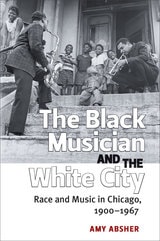
The Black Musician and the White City
Race and Music in Chicago, 1900-1967Amy Absher
University of Michigan Press, 2014
Absher’s work diverges from existing studies in three ways: First, she takes the history beyond the study of jazz and blues by examining the significant role that classically trained black musicians played in building the Chicago South Side community. By acknowledging the presence and importance of classical musicians, Absher argues that black migrants in Chicago had diverse education and economic backgrounds but found common cause in the city’s music community. Second, Absher brings numerous maps to the history, illustrating the relationship between Chicago’s physical lines of segregation and the geography of black music in the city over the years. Third, Absher’s use of archival sources is both extensive and original, drawing on manuscript and oral history collections at the Center for Black Music Research in Chicago, Columbia University, Rutgers’s Institute of Jazz Studies, and Tulane’s Hogan Jazz Archive. By approaching the Chicago black musical community from these previously untapped angles, Absher offers a history that goes beyond the retelling of the achievements of the famous musicians by discussing musicians as a group. In The Black Musician and the White City, black musicians are the leading actors, thinkers, organizers, and critics of their own story.
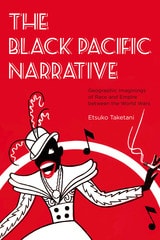
The Black Pacific Narrative
Geographic Imaginings of Race and Empire between the World WarsEtsuko Taketani
Dartmouth College Press, 2014
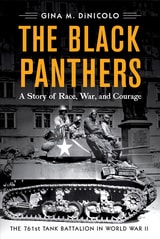
The Black Panthers
A Story of Race, War, and Courage—the 761st Tank Battalion in World War IIGina M. DiNicolo
Westholme Publishing, 2014
Known primarily for being the first African American armored unit to see combat in World War II and as future baseball star Jackie Robinson’s onetime outfit, the 761st Tank Battalion was forged in a devil’s cauldron of heat and prejudice at Camp Claiborne, Louisiana. Here, most viewed the tankers as tokens in a racial experiment, rather than as fellow American soldiers who would actually be deployed to fight a common enemy. Led by a small cadre of white and black officers, the 761st trained to the pinnacle of its craft. The Black Panthers, as they soon were called, proved their battle prowess against other units bound for combat on the parched Texas training fields. For this, they earned a coveted assignment to fight under General George S. Patton and go head-to-head with the best of Hitler’s arsenal. Moving to the front in November 1944, trial by fire soon shook the unit to its core. Ambushed by a veteran German force, the 761st suffered heavy casualties in the confusion as they cut their way out of the trap. But the men rallied to overcome self-doubt and vindicate their losses. Quickly battle hardened, the tankers saw intense combat through November and when Germany launched its last-ditch offensive through the Ardennes in December, the 761st fought side-by-side with Patton’s Third Army. Moving swiftly, the unit helped check the German advance, cut resupply routes to the forces surrounding beleaguered Bastogne, and drove the enemy back, recapturing towns crucial to the final defeat of Germany.
In The Black Panthers: A Story of Race, War, and Courage—the 761st Tank Battalion in World War II, historian Gina M. DiNicolo tells the full and unvarnished history of this important American fighting force. Relying on extensive archival research, including documents that had not been consulted in previous accounts, and interviews with surviving soldiers and family members, the author describes the unit’s training, deployment, combat, and individuals, such as Sgt. Ruben Rivers, one of only seven African American men awarded the Medal of Honor for World War II heroism. The professionalism, dedication, and courage of the 761st and other non-white units made clear that the strength of the American army in the future lay with integration—one of the enduring accomplishments of these servicemen.
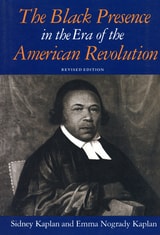
The Black Presence in the Era of the American Revolution
Sidney Kaplan and Emma Nogrady Kaplan
University of Massachusetts Press, 1989
The book is a revised and expanded edition of the authors' classic catalog that accompanied a pioneering exhibition mounted in 1973 by the National Portrait Gallery.
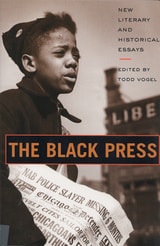
The Black Press
New Literary and Historical EssaysEdited by Todd Vogel
Rutgers University Press, 2001
In a segregated society in which black scholars, writers, and artists could find few ways to reach an audience, journalism was a means of dispersing information to communities throughout the United States. The black press has offered incisive critiques of such issues as racism, identify, class, and economic injustice, but that contribution to public discourse has remained largely unrecognized until now. The original essays in this volume broaden our understanding of the “public sphere” and show how marginalized voices attempted to be heard in the circles of debate and dissent that existed in their day.
The Black Press progresses chronologically from slavery to the impact and implications of the Internet to reveal how the press’s content and its very form changed with evolving historical and cultural conditions in America. The first papers fought for rights for free blacks in the North. The early twentieth-century black press sought to define itself and its community amidst American modernism. Writers in the 1960s took on the task of defining revolution in that decade’s ferment. It was not been until the mid-twentieth century that African American cultural study began to achieve intellectual respectability.
The Black Press addresses the production, distribution, regulation, and reception of black journalism in order to illustrate a more textured public discourse, one that exchanges ideas not just within the black community, but also within the nation at large. The essays demonstrate that the black press redefined class, restaged race and nationhood, and reset the terms of public conversation, providing a fuller understanding of not just African American culture, but also the varied cultural battles fought throughout our country’s history.

The Black Rock Desert
Text by William L. Fox; Photographs by Mark Klett
University of Arizona Press, 2002
The Black Shoals
Offshore Formations of Black and Native StudiesTiffany Lethabo King
Duke University Press, 2019
The Black Struggle for Public Schooling in Nineteenth-Century Illinois
Robert L. McCaul
Southern Illinois University Press, 1987
In the pre-Civil War and Civil War periods the Illinois black code deprived blacks of suffrage and court rights, and the Illinois Free Schools Act kept most black children out of public schooling. But, as McCaul documents, they did not sit idly by. They applied the concepts of “bargaining power” (rewarding, punishing, and dialectical) and the American ideal of “community” to participate in winning two major victories during this era.
By the use of dialectical power, exerted mainly via John Jones’ tract, The Black Laws of Illinois, they helped secure the repeal of the state’s black code; by means of punishing power, mainly through boycotts and ‘‘invasions,’’ they exerted pressures that brought a cancellation of the Chicago public school policy of racial segregation.
McCaul makes clear that the blacks’ struggle for school rights is but one of a number of such struggles waged by disadvantaged groups (women, senior citizens, ethnics, and immigrants). He postulates a “stage’’ pattern for the history of the black struggle—a pattern of efforts by federal and state courts to change laws and constitutions, followed by efforts to entice, force, or persuade local authorities to comply with the laws and constitutional articles and with the decrees of the courts.
The Black Student Protest Movement at Rutgers
Richard P. McCormick
Rutgers University Press, 1990
Richard P. McCormick has chronicled the black student protest movement at Rutgers University, from the 1960s to today. He examines the forces that produced the protest movement, the tactics that were employed, and the qualified gains that were achieved. He tells us about demonstrations, building occupations, committee hearings, and countless meetings, but he also paints portraits of the many student leaders who mobilized protest. This is the story of a lot of pain, some blunders, and some successes.
In the mid-sixties, the University established committees to recruit black students and to add more blacks to the faculty. These efforts produced only modest results. By 1968, there were still not enough black students on campus, but there were enough to create a political presence for the first time. They were committed to acting against the racism they perceived within the University. To respond to their protests, in March 1969 the Board of Governors passed a dramatically new and controversial policy to encourage disadvantaged students who lived in Camden, Newark, and New Brunswick to apply to Rutgers, where they would take college-preparatory classes as unmatriculated students, and then enter Rutgers as matriculated students. This program, never very successful, lasted only two years.
Unrest did not end with the sixties. During the seventies, black students sporadically voiced protests against what they perceived to be an unsupportive environment. During the eighties, black enrollment actually declined, as did the black graduation rate. In conclusion, McCormick points to the effort that has been made but even more to the effort that still needs to be made and the social cost of ignoring the problem.
The Black Tax
150 Years of Theft, Exploitation, and Dispossession in AmericaAndrew W. Kahrl
University of Chicago Press, 2024
American taxation is unfair, and it is most unfair to the very people who critically need its support. Not only do taxpayers with fewer resources—less wealth, power, and land—pay more than the well-off, but they are forced to fight for their rights within an unjust system that undermines any attempts to improve their position or economic standing. In The Black Tax, Andrew W. Kahrl reveals the shocking history and ruinous consequences of inequitable and predatory tax laws in this country—above all, widespread and devastating racial dispossession.
Throughout the twentieth century, African Americans acquired substantial amounts of property nationwide. But racist practices, obscure processes, and outright theft diminished their holdings and their power. Of these, Kahrl shows, few were more powerful, or more quietly destructive, than property taxes. He examines all the structural features and hidden traps within America’s tax system that have forced Black Americans to pay more for less and stripped them of their land and investments, and he reveals the staggering cost. The story of America’s now enormous concentration of wealth at the top—and the equally enormous absence of wealth among most Black households—has its roots here.
Kahrl exposes the painful history of these practices, from Reconstruction up to the present, and tells, for the first time, the story of Black Americans’ experiences as taxpayers and their fight for a more fair and equitable system for raising and spending the public’s money. This is a history that deepens our understanding of the disadvantages and persistent inequalities that African American households continue to face and reveals hidden engines of economic inequality in America. Detailing the hows and whys of America’s profoundly unequal tax system, The Black Tax equips readers with the knowledge needed to combat inequality and injustice today.

The Black Tax
150 Years of Theft, Exploitation, and Dispossession in AmericaAndrew W. Kahrl
University of Chicago Press, 2024
Revealing a history that is deep, broad, and infuriating, The Black Tax casts a bold light on the racist practices long hidden in the shadows of America’s tax regimes.
American taxation is unfair, and it is most unfair to the very people who critically need its support. Not only do taxpayers with fewer resources—less wealth, power, and land—pay more than the well-off, but they are forced to fight for their rights within an unjust system that undermines any attempts to improve their position or economic standing. In The Black Tax, Andrew W. Kahrl reveals the shocking history and ruinous consequences of inequitable and predatory tax laws in this country—above all, widespread and devastating racial dispossession.
Throughout the twentieth century, African Americans acquired substantial amounts of property nationwide. But racist practices, obscure processes, and outright theft diminished their holdings and their power. Of these, Kahrl shows, few were more powerful, or more quietly destructive, than property taxes. He examines all the structural features and hidden traps within America’s tax system that have forced Black Americans to pay more for less and stripped them of their land and investments, and he reveals the staggering cost. The story of America’s now enormous concentration of wealth at the top—and the equally enormous absence of wealth among most Black households—has its roots here.
Kahrl exposes the painful history of these practices, from Reconstruction up to the present, and tells, for the first time, the story of Black Americans’ experiences as taxpayers and their fight for a more fair and equitable system for raising and spending the public’s money. This is a history that deepens our understanding of the disadvantages and persistent inequalities that African American households continue to face and reveals hidden engines of economic inequality in America. Detailing the hows and whys of America’s profoundly unequal tax system, The Black Tax equips readers with the knowledge needed to combat inequality and injustice today.
The Black Widows of the Eternal City
The True Story of Rome's Most Infamous PoisonersCraig A. Monson
University of Michigan Press, 2020
In the present study, Craig A. Monson takes advantage of a recent discovery—the 1,450-page notary’s transcript of the 1659 investigation. It is supplemented here by many ancillary archival sources, unknown to all previous writers. Since the story of Gironima Spana and the would-be widows is partially about what people believed to be true, however, this investigation also juxtaposes some of the “alternative facts” from earlier, sensational accounts with what the notary’s transcript and other, more reliable archival documents reveal.
Written in a style that avoids arcane idioms and specialist jargon, the book can potentially speak to students and general readers interested in seventeenth-century social history and gender issues. It rewrites the life story of Gironima Spana (largely unknown until now), who has dominated all earlier accounts, usually in caricatures that reiterate the tropes of witchcraft. It also concentrates on the dozen other widows whose stories could be the most recovered from archival sources and whom Spana had totally eclipsed in earlier accounts. Most were women “of a very ordinary sort” (prostitutes; beggars; wives of butchers, barbers, dyers, lineners, innkeepers), the kinds of women commonly lost to history. The book seeks to explain why some women were hanged (only six, in fact, most of whom may not have directly poisoned anyone), while dozens of others who did poison their husbands escaped the gallows and, in some cases, were not even interrogated. It also reveals what happened to these other alleged perpetrators, whose fates have remained unknown until now. Other purported culprits, about whom less complete pictures emerge, are briefly discussed in an appendix.
The study incorporates illustrations of archival manuscripts to demonstrate the challenges of deciphering them and illustrates “scenes of the crime” and other important locations, identified on seventeenth-century, bird’s eye-perspective views of Rome and in modern photographs. It also includes GPS coordinates for any who might wish to revisit the sites.
The Black Worker
Race, Labor, and Civil Rights Since EmancipationEdited by Eric Arnesen
University of Illinois Press, 2006
Uniting the latest scholarship on race, labor, and civil rights, The Black Worker aims to establish the richness of the African American working-class experience, and the indisputable role of black workers in shaping the politics and history of labor and race in the United States.
To capture the complexity of African Americans’ experiences in the workplace, this reader examines workers engaged in a wide array of jobs, including sharecropping, coal mining, domestic service, longshoring, automobile manufacturing, tobacco processing, railroading, prostitution, lumbering, and municipal employment. The essays’ subjects include black migration, strikebreaking, black conservatism, gender, and the multiple forms of employment discrimination in the South and North. Other contributions deal explicitly with state policy and black workers during the transition from slavery to freedom, World Wars I and II, and the 1960s.
The variety of challenges made by these workers, both quiet and overt, served as clear reminders to the supporters of white supremacy that, despite their best efforts through violence, fraud, and the law, as long as they insisted on racial inequality, the “race question” would never be fully resolved.
Contributors: Eric Arnesen, Beth Tompkins Bates, Cynthia M. Blair, Tera W. Hunter, William Powell Jones, Brian Kelly, Robert Korstad, Nelson Lichtenstein, Joseph A. McCartin, Steven A. Reich, Leslie A. Schwalm, Nan Elizabeth Woodruff
The Black and White Rainbow
Reconciliation, Opposition, and Nation-Building in Democratic South AfricaCarolyn E. Holmes
University of Michigan Press, 2020
Based on ethnographic and interview-based fieldwork conducted in 2012–13, The Black and White Rainbow: Reconciliation, Opposition, and Nation-Building in Democratic South Africa explores various themes of nation- and democracy-building, including the emotional and banal content of symbols of the post-apartheid state, the ways that gender and race condition nascent nationalism, the public performance of nationalism and other group-based identities, integration and sharing of space, language diversity, and the role of democratic functioning including party politics and modes of opposition. Each of these thematic chapters aims to explicate a feature of the multifaceted nature of identity-building, and link the South African case to broader literatures on both nationalism and democracy.
The Blind African Slave
Memoirs of Boyrereau Brinch, Nicknamed Jeffrey BraceJeffrey Brace, as told to Benjamin F. Prentiss, Esq.
University of Wisconsin Press, 2005

The Blitz Companion
Aerial Warfare, Civilians and the City since 1911Mark Clapson
University of Westminster Press, 2019
The Blood in Their Veins
The Kimballs, Polygamy, and the Shaping of MormonismKimball, Andrew
Signature Books, 2025
This meticulously documented, deeply engaging book represents a unique approach to Utah and Latter-day Saint history, drawing on previously untapped private letters and diaries of members of the large and widely known polygamist family of the prominent Latter-day Saint leader, Heber C. Kimball.
The story includes compelling accounts of Helen Kimball Whitney, who married Joseph Smith polygamously at fourteen and became, according to Emmeline B. Wells, “one of the best known and most estimable women of the Church,” and of her son Orson F. Whitney, who forswore his embrace of reincarnation only six years before his call as an apostle of the Church of Jesus Christ of Latter-day Saints. Another daughter, Alice Kimball Smith, married a man who was tracked to a brothel and arrested for armed robbery and assault in 1883, after which Alice turned to family friend and apostle Joseph F. Smith and became his fifth wife. Heber’s son, J. Golden Kimball, one of the most beloved and colorful personalities in Mormon and Utah history, is brought to life in another sketch. The Kimballs had to navigate the ticklish business of explaining or obfuscating polygamy to disapproving family in the East, including the extended claim by Heber’s wife Christeen to her New Jersey family that she had married a Mr. Chase monogamously. Two of Heber’s sons, both stake presidents, contemplated plural marriage in the first decade of the twentieth century, well after the church publicly disavowed the practice.
Additional light is shone on the now-defunct Latter-day Saint practices of adult adoptions and speaking in tongues, Mormon-settler relations with the Utes and Pahvants, the 1856 handcart rescue, the John Hyrum Koyle “Dream Mine,” the Jackson County, Missouri, Temple Lot suit of 1892, and federal pursuit of polygamists.
The Blood of Abraham
Insights into the Middle EastJimmy Carter
University of Arkansas Press, 2007
The Blood of Guatemala
A History of Race and NationGreg Grandin
Duke University Press, 2000
Focusing on Mayan elites in the community of Quetzaltenango, Grandin shows how their efforts to maintain authority over the indigenous population and secure political power in relation to non-Indians played a crucial role in the formation of the Guatemalan nation. To explore the close connection between nationalism, state power, ethnic identity, and political violence, Grandin draws on sources as diverse as photographs, public rituals, oral testimony, literature, and a collection of previously untapped documents written during the nineteenth century. He explains how the cultural anxiety brought about by Guatemala’s transition to coffee capitalism during this period led Mayan patriarchs to develop understandings of race and nation that were contrary to Ladino notions of assimilation and progress. This alternative national vision, however, could not take hold in a country plagued by class and ethnic divisions. In the years prior to the 1954 coup, class conflict became impossible to contain as the elites violently opposed land claims made by indigenous peasants.
This “history of power” reconsiders the way scholars understand the history of Guatemala and will be relevant to those studying nation building and indigenous communities across Latin America.
The Blood of the People
Revolution and the End of Traditional Rule in Northern SumatraAnthony Reid
National University of Singapore Press, 2014
The events in northern Sumatra were among the most dramatic episodes of Indonesia’s national revolution, and brought about more profound changes even than in Java, from where the revolution is normally viewed. Some ethnic groups saw the revolution as a popular, peasant-supported movement that liberated them from foreign rule. Others, though, felt victimised by a radical, levelling agenda imposed by outsiders. Java, with a relatively homogeneous population, passed through the revolution without significant social change. The ethnic complexity of Sumatra, in contrast, meant that the revolution demanded an altogether new “Indonesian” identity to override the competing ethnic categories of the past.
The Bloodless Revolution
England, 1688Stuart E. Prall
University of Wisconsin Press, 1985
The Glorious Revolution of 1688 represented a crucial turning point in modern British history by decisively shifting political power from the monarchy to Parliament. In this cogent study, first published in 1972, Stuart Prall offers a well-balanced account of the Revolution, its roots, and its consequences. The events of 1688, Prall argues, cannot be viewed in isolation. Examining the tempestuous half-century that preceded and precipitated William and Mary’s accession, he provides a comprehensive overview of the Revolution’s context and of its historical meaning.
“[Prall] insists that the Revolution of 1688 was the culmination of a long crisis begun back in 1640, and the revolution settlement was the resolution of problems which the Puritan Revolution and the Restoration had left unsolved. This is an admirable combination of analysis, commentary upon views of historians, and chronological narrative, starting with the Restoration in 1660 and continuing through the Act of Settlement in 1701.”—Choice

The Bloody Sunday Inquiry
The Families Speak OutEdited by Eamonn McCann
Pluto Press, 2005
Twenty-one wounded survivors and relatives of the dead describe the campaign which led to the establishment of the Inquiry under Lord Saville. They reveal their bitterness at the 'whitewash' of the first inquiry under Lord Chief Justice Widgery, and describe the frustrations and elations of their long struggle to force the British Government to launch a new search for the truth.
The relatives comment sharply on Saville’s performance, and on the attitudes of British and Irish politicians, the media and an array of celebrity lawyers. They reflect on whether soldiers and leading politicians should now be prosecuted for murder, and discuss whether the outcome of the Inquiry is likely to hinder or enhance the peace process. Will the truth about Bloody Sunday raise more ghosts than it sets to rest?
This is the story of the longest legal proceedings in British or Irish history in the raw words of those most intimately involved. What they have to say puts a new focus on the significance of State atrocities in shaping perceptions of the past and aspirations for the future in Ireland.

The Blue and the Green
A Cultural Ecological History of an Arizona Ranching CommunityJack Stauder
University of Nevada Press, 2016
In The Blue and the Green, anthropologist Jack Stauder analyzes how large-scale political, social, and environmental processes have transformed ranching and rural life in the West. Focusing on the community of Blue, Arizona, Stauder details how the problems of overgrazing, erosion, and environmental stresses on the open range in the early twentieth century coincided with a push by the newly created US Forest Service to develop fenced grazing allotments on federal lands. Later in the twentieth century, with the enactment of the Endangered Species Act and other laws, the growing power of urban-based environmental groups resulted in the reduction of federal grazing leases throughout the West.
The author combines historical research with oral interviews to explore the impact of these transformations on the ranchers residing in the Blue River Valley of eastern Arizona. Stauder gives voice to these ranchers, along with Forest Service personnel, environmental activists, scientists, and others involved with issues on “the Blue,” shedding light on how the ranchers’ rural way of life has changed dramatically over the course of the past century. This is a fascinating case study of the effects of increasing government regulations and the influence of outsiders on ranching communities in the American West.
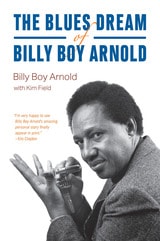
The Blues Dream of Billy Boy Arnold
Billy Boy Arnold with Kim Field
University of Chicago Press, 2021
Simply put, Billy Boy Arnold is one of the last men standing from the Chicago blues scene’s raucous heyday. What’s more, unlike most artists in this electrifying melting pot, who were Southern transplants, Arnold—a harmonica master who shared stages with Bo Diddley, Muddy Waters, and Howlin’ Wolf, plus a singer and hitmaker in his own right who first recorded the standards “I Wish You Would” and “I Ain’t Got You”—was born right here and has lived nowhere else. This makes his perspective on Chicago blues, its players, and its locales all the rarer and all the more valuable. Arnold has witnessed musical generations come and go, from the decline of prewar country blues to the birth of the electric blues and the worldwide spread of rock and roll. Working here in collaboration with writer and fellow musician Kim Field, he gets it all down. The Blues Dream of Billy Boy Arnold is a remarkably clear-eyed testament to more than eighty years of musical love and creation, from Arnold’s adolescent quest to locate the legendary Sonny Boy Williamson, the story of how he named Bo Diddley Bo Diddley, and the ups and downs of his seven-decade recording career. Arnold’s tale—candidly told with humor, insight, and grit—is one that no fan of modern American music can afford to miss.
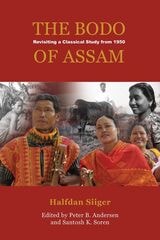
The Bodo of Assam
Revisiting a Classical Study from 1951Halfdan Siiger
National University of Singapore Press, 2015
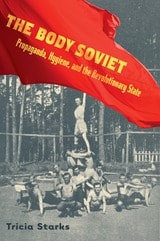
The Body Soviet
Propaganda, Hygiene, and the Revolutionary StateTricia Starks
University of Wisconsin Press, 2008
Health, though essential to the revolutionary vision and crucial to Soviet plans for utopia, has been neglected by traditional histories caught up in Cold War debates. The Body Soviet recovers this significant aspect of Soviet thought by providing a cross-disciplinary, comparative history of Soviet health programs that draws upon rich sources of health care propaganda, including posters, plays, museum displays, films, and mock trials. The analysis of propaganda makes The Body Soviet more than an institutional history; it is also an insightful critique of the ideologies of the body fabricated by health organizations.
"A masterpiece that will thoroughly fascinate and delight readers. Starks's understanding of propaganda and hygiene in the early Soviet state is second to none. She tells the stories of Soviet efforts in this field with tremendous insight and ingenuity, providing a rich picture of Soviet life as it was actually lived."— Elizabeth Wood, author of From Baba to Comrade: Gender and Politics in Revolutionary Russia

The Body and the Song
Elizabeth Bishop's PoeticsMarilyn May Lombardi
Southern Illinois University Press, 1995
In this original contribution to Elizabeth Bishop studies, Marilyn May Lombardi uses previously unpublished materials (letters, diaries, notebooks, and unfinished poems) to shed new light on the poet’s published work. She explores the ways Bishop’s lesbianism, alcoholism, allergic illnesses, and fear of mental instability affected her poetry—the ways she translated her bodily experiences into poetic form.
A cornerstone of The Body and the Song is the poet’s thirty-year correspondence with her physician, Dr. Anny Baumann, who was both friend and surrogate mother to Bishop. The letters reveal Bishop’s struggles to understand the relation between her physical and creative drives. "Dr. Anny" also helped Bishop unravel the connections in her life between psychosomatic illness and early maternal deprivation—her mother was declared incurably insane and institutionalized in 1916, when Bishop was five years old. Effectively an orphan, she spent the rest of her childhood with relatives.
In addition to these letters, Lombardi uses Bishop’s unpublished notebooks to demonstrate the poet’s resolve to "face the facts"—to confront her own emotional, intellectual, and physical frailties—and translate them into poetry that is clear-eyed and economical in its form.
Lombardi argues that in her subtle way, Bishop explores the same issues that preoccupy the current generation of women writers. A deeply private artist, Bishop never directly refers to her homosexuality in her published work, but the metaphors she draws from her carnal desires and aversions confront stifling cultural prescriptions for personal and erotic expression. In choosing restraint over confession, Bishop parted company with her friend Robert Lowell, but Lombardi shows that her reticence becomes a powerful artistic strategy resulting in poetry remarkable for its hermeneutic potential.
Informed by recent gender criticism, Lombardi’s lucid argument advances our understanding of the ways the material circumstances of life can be transformed into art.
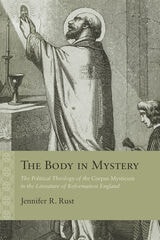
The Body in Mystery
The Political Theology of the Corpus Mysticum in the Literature of Reformation EnglandJennifer R. Rust
Northwestern University Press, 2013
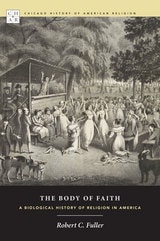
The Body of Faith
A Biological History of Religion in AmericaRobert C. Fuller
University of Chicago Press, 2013
The postmodern view that human experience is constructed by language and culture has informed historical narratives for decades. Yet newly emerging information about the biological body now makes it possible to supplement traditional scholarly models with insights about the bodily sources of human thought and experience.
The Body of Faith is the first account of American religious history to highlight the biological body. Robert C. Fuller brings a crucial new perspective to the study of American religion, showing that knowledge about the biological body deeply enriches how we explain dramatic episodes in American religious life. Fuller shows that the body’s genetically evolved systems—pain responses, sexual passion, and emotions like shame and fear—have persistently shaped the ways that Americans forge relationships with nature, to society, and to God.
The first new work to appear in the Chicago History of American Religion series in decades, The Body of Faith offers a truly interdisciplinary framework for explaining the richness, diversity, and endless creativity of American religious life.
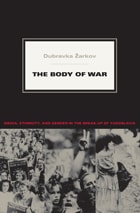
The Body of War
Media, Ethnicity, and Gender in the Break-up of YugoslaviaDubravka Zarkov
Duke University Press, 2007
Tracing the links between the war and press representations of ethnicity, gender, and sexuality, Žarkov examines the media’s coverage of two major protests by women who explicitly identified themselves as mothers, of sexual violence against women and men during the war, and of women as militants. She draws on contemporary feminist analyses of violence to scrutinize international and local feminist writings on the war in former Yugoslavia. Demonstrating that some of the same essentialist ideas of gender and sexuality used to produce and reinforce the significance of ethnic differences during the war often have been invoked by feminists, she points out the political and theoretical drawbacks to grounding feminist strategies against violence in ideas of female victimhood.
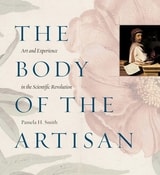
The Body of the Artisan
Art and Experience in the Scientific RevolutionPamela H. Smith
University of Chicago Press, 2004
From goldsmiths to locksmiths and from carpenters to painters, artists and artisans were much sought after by the new scientists for their intimate, hands-on knowledge of natural materials and the ability to manipulate them. Drawing on a fascinating array of new evidence from northern Europe including artisans' objects and their writings, Smith shows how artisans saw all knowledge as rooted in matter and nature. With nearly two hundred images, The Body of the Artisan provides astonishingly vivid examples of this Renaissance synergy among art, craft, and science, and recovers a forgotten episode of the Scientific Revolution-an episode that forever altered the way we see the natural world.
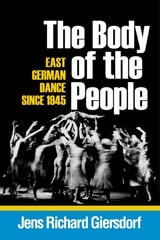
The Body of the People
East German Dance since 1945Jens Richard Giersdorf
University of Wisconsin Press, 2013
Giersdorf looks closely at uniquely East German dance forms—including mass exercise events, national folk dances, Marxist-Leninist visions staged by the dance ensemble of the armed forces, the vast amateur dance culture, East Germany’s version of Tanztheater, and socialist alternatives to rock ‘n’ roll—to demonstrate how dance was used both as a form of corporeal utopia and of embodied socialist propaganda and indoctrination. The Body of the People also explores the artists working in the shadow of official culture who used dance and movement to critique and resist state power, notably Charlotte von Mahlsdorf, Arila Siegert, and Fine Kwiatkowski. Giersdorf considers a myriad of embodied responses to the Communist state even after reunification, analyzing the embodiment of the fall of the Berlin Wall in the works of Jo Fabian and Sasha Waltz, and the diasporic traces of East German culture abroad, exemplified by the Chilean choreographer Patricio Bunster.
The Bohemian Body
Gender and Sexuality in Modern Czech CultureAlfred Thomas
University of Wisconsin Press, 2007
By re-examining the work of key Czech male and female writers and poets from the National Revival to the Velvet Revolution, Alfred Thomas exposes the tendency of Czech literary criticism to separate the political and the personal in modern Czech culture. He points instead to the complex interplay of the political and the personal across ethnic, cultural, and intellectual lines and within the works of such individual writers as Karel Hynek Mácha, Bozena Nemcová, and Rainer Maria Rilke, resulting in the emergence and evolution of a protean modern identity. The product is a seemingly paradoxical yet nuanced understanding of Czech culture (including literature, opera, and film), long overlooked or misunderstood by Western scholars.
The Boke of the Cyte of Ladyes
Brian Anslay's Translation of 1521 in Modernized EnglishChristine de Pizan
Iter Press, 2025
Christine de Pizan's defense of women against centuries of misogyny, Cité des dames, was the only work of literature translated into English by Brian Anslay, an administrator in the household of King Henry VII. While numerous manuscripts were held in royal and aristocratic libraries, Anslay’s printed translation enabled a broader range of readers to appreciate the arguments for female rule crucial to the reigns of Mary I and Elizabeth I. Anslay’s translation also played a key role in the late-nineteenth-century revival of interest in Christine. This modernization of Anslay’s Tudor English makes his translation accessible to contemporary readers while preserving the rhythms of early Tudor prose. It includes an extensive introduction and notes highlighting both the history of the language and the cultural references embodied in the text.