Results by title
28167 books match the query 'History' and 6372 start with t

The Brazilian Photographs of Genevieve Naylor, 1940–1942
Robert M. Levine
Duke University Press, 1998
Working under the constraints of the Vargas dictatorship, the instructions of her employers, and a chronic shortage of film and photographic equipment, Naylor took advantage of the freedom granted her as an employee of the U.S. government. Traveling beyond the fashionable neighborhoods of Rio de Janeiro, she conveys in her work the excitement of an outside observer for whom all is fresh and new—along with a sensibility schooled in depression-era documentary photography of Dorothea Lange and Walker Evans, as well as the work of Cartier-Bresson and filmmaker Serge Eisenstein. Her subjects include the very rich and the very poor, black Carnival dancers, fishermen, rural peasants from the interior, workers crammed into trolleys—ordinary Brazilians in their own setting—rather than simply Brazilian symbols of progress as required by the dictatorship or a population viewed as exotic Latins for the consumption of North American travelers.
With Levine’s text providing details of Naylor’s life, perspectives on her photographs as social documents, and background on Brazil’s wartime relationship with the United States, this volume, illustrated with more than one hundred of Naylor’s Brazilian photographs will interest scholars of Brazilian culture and history, photojournalists and students of photography, and all readers seeking a broader perspective on Latin American culture during World War II.
Genevieve Naylor began her career as a photojournalist with Time, Fortune, and the Associated Press before being sent to Brazil. In 1943, upon her return, she became only the second woman to be the subject of a one-woman show at New York’s Museum of Modern Art. She served as Eleanor Roosevelt’s personal photographer and, in the 1950s and 1960s became well known for her work in Harper’s Bazaar, primarily as a fashion photographer and portraitist. She died in 1989.
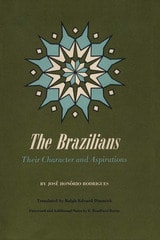
The Brazilians
Their Character and AspirationsBy José Honório Rodrigues
University of Texas Press, 1967
Brazil has long been a country in search of its own meaning and mission. Early in their history Brazilians began to puzzle over their surroundings and their relation to them. The eighteenth century produced an entire school of nativistic writers who, with the advent of independence, became fiery nationalists, still pursuing introspective studies of their homeland. Throughout the nineteenth century, the intellectuals of Brazil determined to define their nation, its character, and its aspirations.
In this now well-established tradition, José Honório Rodrigues confronts the questions of who and what the Brazilian is, what Brazil stands for, where it has been, and where it is going. This study, originally published in Portuguese as Aspirações nacionais, was especially timely at a period when strong feelings of nationalism led Brazilians to seek to define their own image, and when the revolution of rising expectations disposed them to determine what goals they were seeking and how far they were on the road to achieving them.
In order to understand and explain his nation, Rodrigues poses two questions: what are the national characteristics, and what are the national aspirations? Both questions are complex, but the reader will find well-reasoned answers, with a wealth of information on growth and development and abundant statistics to substantiate these answers.

The Breakaway
The Inside Story of the Wirtz Family Business and the Chicago BlackhawksBryan Smith
Northwestern University Press, 2018
When Rocky Wirtz took over the Wirtz Corporation in 2007, including management of the Chicago Blackhawks, the fiercely beloved hockey team had fallen to a humiliating nadir. As chronic losers playing to a deserted stadium, they were worse than bad—they were irrelevant. ESPN named the franchise the worst in all of sports. Rocky's resurrection of the team's fortunes was—publicly, at least—a feel-good tale of shrewd acumen. Behind the scenes, however, it would trigger a father, son, and brother-against-brother drama of Shakespearean proportions. The Breakaway reveals that untold story.
Arthur Wirtz founded the family's business empire during the Depression. From roots in real estate, "King Arthur" soon expanded into liquor and banking, running his operations with an iron hand and a devotion to profit that earned him the nickname Baron of the Bottom Line. His son Bill further expanded the conglomerate, taking the helm of the Blackhawks in 1966. "Dollar Bill" Wirtz demanded unflinching adherence to Arthur's traditions and was notorious for an equally fierce temperament.
Yet when Rocky took the reins of the business after Bill's death, it was an organization out of step with the times and financially adrift. The Hawks weren't only failing on the ice—the parlous state of the team's finances imperiled every facet of the Wirtz empire. To save the team and the company, Rocky launched a radical turnaround campaign. Yet his modest proposal to televise the Hawks' home games provoked fierce opposition from Wirtz family insiders, who considered any deviation from Arthur and Bill's doctrines to be heresy.
Rocky's break with the edicts of his grandfather and father led to a reversal for the ages—three Stanley Cup championships in six years, a feat Fortune magazine called "the greatest turnaround in sports business history." But this resurrection came at a price, a fracturing of Rocky's relationships with his brother and other siblings. In riveting prose that recounts a story spanning three generations, The Breakaway reveals an insider's view of a brilliant but difficult Chicago business and sports dynasty and the inspiring story of perseverance and courage in the face of intense family pressures.
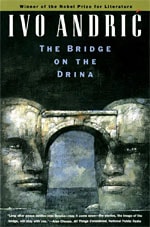
The Bridge on the Drina
Ivo Andric
University of Chicago Press, 1977
Internationally acclaimed since its original publication just after World War II, The Bridge on the Drina is a vivid historical novel that uses the Mehmed Paša Sokolović Bridge as the centerpiece of the story of Bosnia and its people from the late sixteenth century to the beginning of World War I. As we seek to make sense of the current nightmare in this region, this remarkable, timely book serves as a reliable guide to its people and history. Through powerful stories of the people who make history—and the people suffer under those who do—Ivo Andric traces the story of the Bosnian people from the Ottoman Empire through the domination of Austria-Hungary and into the rising tide of competing nationalist ideologies that set the stage for the tragedy of World War I.
Written while Andric was under house arrest during the Nazi occupation, The Bridge on the Drina is as gripping as a soap opera, bringing history down to the level of compelling individual lives and experiences. It is one of the landmark works of twentieth-century literature, as powerful today as it ever was.

The Bridgeport Township Site
Archaeological Investigation at 20SA620, Saginaw County, MichiganEdited by John M. O'Shea and Michael Shott with contributions by Kathryn Egan, William Farrand, Claire McHale Milner, and Karen Mudar
University of Michigan Press, 1990
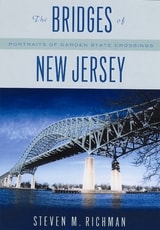
The Bridges of New Jersey
Portraits of Garden State CrossingsSteven M. Richman
Rutgers University Press, 2005
In The Bridges of New Jersey, Steven M. Richman provides a rare photographic and poetic journey across sixty of the state's bridges, ranging from impressive suspension spans such as the Ben Franklin and George Washington Bridges, to the small wrought iron and stone bridges that are cherished by local citizens. The book provides a rich diversity of stories that place the bridges in the context of New Jersey history and culture. Richman also explores the contribution New Jersey bridges have made to engineering-some of the most prominent engineers of the nineteenth and twentieth centuries either lived or established businesses in the Garden State or designed its bridges.
Lavishly illustrated with over seventy photographs, this book is much more than a documentary survey. It is a visual portrait that beautifully captures the metaphoric significance and aesthetic pleasures of New Jersey's bridges, and indeed all bridges. Perhaps more than any other structure built by humans, bridges typify progress and they give us a sense of connectedness. The Bridges of New Jersey provides a compelling visual demonstration of these symbolic functions, as well as their practical purposes and engineering accomplishments.
The Brink of Freedom
Improvising Life in the Nineteenth-Century Atlantic WorldDavid Kazanjian
Duke University Press, 2016
The Briny South
Displacement and Sentiment in the Indian Ocean WorldNienke Boer
Duke University Press, 2023
The British Army of the Rhine
Turning Nazi Enemies into Cold War PartnersPeter Speiser
University of Illinois Press, 2016
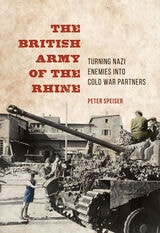
Peter Speiser charts the BAOR's fraught transformation from occupier to ally by looking at the charged nexus where British troops and their families interacted with Germany's civilian population. Examining the relationship on many levels, Speiser ranges from how British mass media representations of Germany influenced BAOR troops to initiatives taken by the Army to improve relations. He also weighs German perceptions, surveying clashes between soldiers and civilians and comparing the popularity of the British services with that of the other occupying powers. As Speiser shows, the BAOR's presence did not improve the relationship between British servicemen and the German populace, but it did prevent further deterioration during a crucial and dangerous period of the early Cold War.
An incisive look at an under-researched episode, The British Army of the Rhine sheds new light on Anglo-German diplomatic, political, and social relations after 1945, and evaluates their impact on the wider context of European integration in the postwar era.
The British Blues Network
Adoption, Emulation, and CreativityAndrew Kellett
University of Michigan Press, 2017

The British Soldier in America
A Social History of Military Life in the Revolutionary PeriodBy Sylvia R. Frey
University of Texas Press, 1981
In her investigation of the social history of the common British soldier in the era of the American Revolution, Sylvia Frey has extensively surveyed recruiting records, contemporary training manuals, statutes, and memoirs in an attempt to provide insight into the soldier's "life and mind." In the process she has discovered more about the common soldier than anyone thought possible: his social origins and occupational background, his size, age, and general physical condition, his personal economics and daily existence. Her findings dispel the traditional assumption that the army was made up largely of criminals and social misfits.
Special attention is given to soldiering as an occupation. Focusing on two of the major campaigns of the war—the Northern Campaign which culminated at Saratoga and the Southern Campaign which ended at Yorktown—Frey describes the human face of war, with particular emphasis on the physical and psychic strains of campaigning in the eighteenth century.
Perhaps the most important part of the work is the analysis of the moral and material factors which induced men to accept the high risks of soldiering. Frey rejects the traditional assumption that soldiers were motivated to fight exclusively by fear and force and argues instead that the primary motivation to battle was generated by regimental esprit, which in the eighteenth century substituted for patriotism. After analyzing the sources of esprit, she concludes that it was the sustaining force for morale in a long and discouraging war.
This book is a contribution to our understanding of the eighteenth century and should appeal not only to military historians but also to social and economic historians and to those interested in the history of medicine.
The Brodsky Center at Rutgers University
Three Decades, 1986-2017Ferris Olin
Rutgers University Press, 2024
Published in partnership with the Zimmerli Museum.
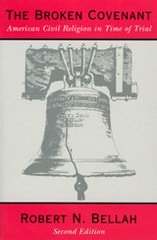
The Broken Covenant
American Civil Religion in Time of TrialRobert N. Bellah
University of Chicago Press, 1992
This edition includes his 1978 article "Religion and the Legitimation of the American Republic," and a new Preface.
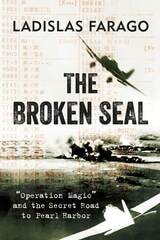
The Broken Seal
"Operation Magic" and the Secret Road to Pearl HarborLadislas Farago
Westholme Publishing, 1967
“In this fascinating account. . . . Mr. Farago’s investigation suggests that the real villain was the system itself.”—New York Times
“In this well-written and informative account. . . Mr. Farago provides many new facts from both American and Japanese sources.”—Library Journal
“A good history of Japanese and American code-breaking operations between 1921 and December 7, 1941. . . . Farago is important because in this technical study of cryptology he has arrived independently at the same general conclusion as did the non-revisionist diplomatic historians: there was no plot by Roosevelt or his advisers.”—Choice
“His conclusions should act as a corrective to the enthusiasts who claim that intelligence always provides the complete answer.”—Times Literary Supplement
The Broken Seal: The Story of “Operation Magic” and the Pearl Harbor Disaster explores the questions of why, if the United States knew the Japanese codes, did we not anticipate the December 7, 1941 surprise attack and how did the Japanese spy system in Hawaii operate? As a chief of research and planning in the Special Warfare Branch of the Office of Naval Intelligence, the author had access to both Japanese and American classified material to write this study. The author’s intent was to independently ascertain the validity of earlier claims that the Pearl Harbor attack could have been avoided. The result is an eminently readable and engrossing story, first published in 1968, of the relationship between America and Japan in the interwar years and the relentless cat-and-mouse intelligence game conducted by both sides. Despite more recent suppositions that there was a conspiracy among American and British officials to ignore warnings of a Japanese attack that had been gleaned from deciphered diplomatic codes in order to force America into a world war, the author confirms that human error and misjudgment and the actual state of intelligence interpretation at the time made an accurate assessment of Japanese intentions impossible.

The Bronx
The Ultimate Guide to New York City's Beautiful BoroughUltan, Lloyd
Rutgers University Press, 2015
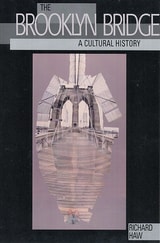
The Brooklyn Bridge
A Cultural HistoryHaw, Richard
Rutgers University Press, 2008
Hailed by some as the Eighth Wonder of the World when it opened in 1883, the Brooklyn Bridge is one of the world’s most recognizable and beloved icons. For over one hundred years it has excited and fascinated with stories of ingenuity and heroism, and it has been endorsed as a flawless symbol of municipal improvement and a prime emblem of American technological progress.
Despite its impressive physical presence, however, Brooklyn’s grand old bridge is much more than a testament of engineering and architectural achievement. As Richard Haw shows in this first of its kind cultural history, the Brooklyn Bridge owes as much to the imagination of the public as it does to the historical events and technical prowess that were integral to its construction.
Bringing together more than sixty images of the bridge that, over the years, have graced postcards, magazine covers, and book jackets and appeared in advertisements, cartoons, films, and photographs, Haw traces the diverse and sometimes jarring ways in which this majestic structure has been received, adopted, and interpreted as an American idea. Haw’s account is not a history of how the bridge was made, but rather of what people have made of the Brooklyn Bridge—in film, music, literature, art, and politics—from its opening ceremonies to the blackout of 2003.
Classic accounts from such writers and artists as H. G. Wells, Charles Reznikoff, Hart Crane, Lewis Mumford, Joseph Pennell, Walker Evans, and Georgia O’Keeffe, among many others, present the bridge as a deserted, purely aestheticized romantic ideal, while others, including Henry James, Joseph Stella, Yun Gee, Ernest Poole, Alfred Kazin, Paul Auster, and Don DeLillo, offer a counter-narrative as they question not only the role of the bridge in American society, but its function as a profoundly public, communal place. Also included are never-before-published photographs by William Gedney and a discussion of Alexis Rockman’s provocative new mural Manifest Destiny.
Drawing on hundreds of cultural artifacts, from the poignant, to the intellectual, to the downright quirky, The Brooklyn Bridge sheds new light on topics such as ethnic and foreign responses to America, nationalism, memory, parade culture, commemoration, popular culture, and post-9/11 America icons. In the end, we realize that this impressive span is as culturally remarkable today as it was technologically and physically astounding in the nineteenth century.
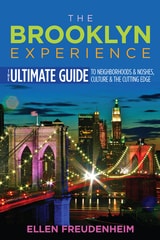
The Brooklyn Experience
The Ultimate Guide to Neighborhoods & Noshes, Culture & the Cutting EdgeFreudenheim, Ellen
Rutgers University Press, 2016
Targeting the independent, curious traveler, The Brooklyn Experience includes a dozen “do-it-yourself” tours, including a visit to Woody Allen’s childhood neighborhood, and amazing Revolutionary and Civil War sites.
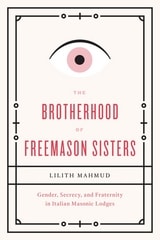
The Brotherhood of Freemason Sisters
Gender, Secrecy, and Fraternity in Italian Masonic LodgesLilith Mahmud
University of Chicago Press, 2014
Offering a tantalizing look behind lodge doors, The Brotherhood of Freemason Sisters unveils a complex culture of discretion in which Freemasons simultaneously reveal some truths and hide others. Women—one of Freemasonry’s best-kept secrets—are often upper class and highly educated but paradoxically antifeminist, and their self-cultivation through the Masonic path is an effort to embrace the deeply gendered ideals of fraternity. Mahmud unravels this contradiction at the heart of Freemasonry: how it was at once responsible for many of the egalitarian concepts of the Enlightenment and yet has always been, and in Italy still remains, extremely exclusive. The result is not only a thrilling look at an unfamiliar—and surprisingly influential—world, but a reevaluation altogether of the modern values and ideals that we now take for granted.
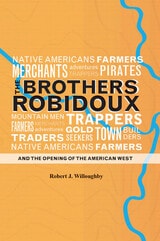
The Brothers Robidoux and the Opening of the American West
Robert J. Willoughby
University of Missouri Press, 2012

The Brown Plague
Travels in Late Weimar and Early Nazi GermanyDaniel Guérin
Duke University Press, 1994
Guérin’s travels took him across the countryside and into the cities of Germany. He describes with extraordinary clarity, for example, his encounters with large groups of unemployed workers in Berlin and the spectacle of Goering presiding over the Reichstag. Staying in youth hostels, Guérin met individuals representing a range of various groups and movements, including the Wandervögel, leftist brigades, Hitler Youth, and the strange, semicriminal sexual underground of the Wild-frei. Devoting particular attention to the cultural politics of fascism and the lure of Nazism for Germany’s disaffected youth, he describes the seductive rituals by which the Nazis were able to win over much of the population. As Robert Schwartzwald makes clear in his introduction, Guérin’s interest in Germany at this time was driven, in part, by a homoerotic component that could not be stated explicitly in his published material. This excellent companion essay also places The Brown Plague within a broad historical and literary context while drawing connections between fascism, aesthetics, and sexuality.
Informed by an epic view of class struggle and an admiration for German culture, The Brown Plague, a notable primary source in the literature of modern Europe, provides a unique view onto the rise of Nazism.
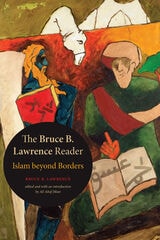
The Bruce B. Lawrence Reader
Islam beyond BordersBruce B. Lawrence. Edited and with an Introduction by Ali Altaf Mian
Duke University Press, 2020
The Brutus Revival
Parricide and Tyrranicide During the RenaissanceManfredi Piccolomini
Southern Illinois University Press, 1991
In a discussion of the Renaissance revival of classical culture, Piccolomini considers the period’s mythologizing of Brutus, Caesar’s assassin. He cites Dante as the initiator of an important literary, dramatic, political, and artistic theme and explains how the historical Brutus was changed by literature and theatre into a symbol of the just citizen rebelling against the unjust tyrant.
Piccolomini discusses several Renaissance political conspiracies modeled after Brutus’ act and explores how those conspiracies, in turn, formed the basis for the theme’s recurrence in Italian, French, and English theatre of the period.
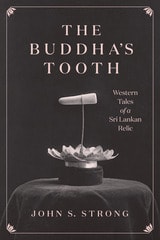
The Buddha's Tooth
Western Tales of a Sri Lankan RelicJohn S. Strong
University of Chicago Press, 2021
Bodily relics such as hairs, teeth, fingernails, pieces of bone—supposedly from the Buddha himself—have long served as objects of veneration for many Buddhists. Unsurprisingly, when Western colonial powers subjugated populations in South Asia, they used, manipulated, redefined, and even destroyed these objects to exert control.
In The Buddha’s Tooth, John S. Strong examines Western stories, from the sixteenth to the twentieth century, surrounding two significant Sri Lankan sacred objects to illuminate and concretize colonial attitudes toward Asian religions. First, he analyzes a tale about the Portuguese capture and public destruction, in the mid-sixteenth century, of a tooth later identified as a relic of the Buddha. Second, he switches gears to look at the nineteenth-century saga of British dealings with another tooth relic of the Buddha—the famous Daḷadā enshrined in a temple in Kandy—from 1815, when it was taken over by English forces, to 1954, when it was visited by Queen Elizabeth II. As Strong reveals, the stories of both the Portuguese tooth and the Kandyan tooth reflect nascent and developing Western understandings of Buddhism, realizations of the cosmopolitan nature of the tooth, and tensions between secular and religious interests.
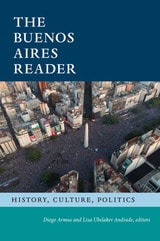
The Buenos Aires Reader
History, Culture, PoliticsDiego Armus and Lisa Ubelaker Andrade, editors
Duke University Press, 2024

The Buffalo Book
The Full Saga Of The American AnimalDavid A. Dary
Ohio University Press, 1989

The Burden of Over-representation
Race, Sport, and PhilosophyGrant Farred
Temple University Press, 2018
The Burden of Over-representation artfully explores three curious racial moments in sport: Jackie Robinson’s expletive at a Dodgers spring training game; the transformation of a formality into an event at the end of the 1995 rugby World Cup in South Africa; and a spectral moment at the 2010 FIFA World Cup. Grant Farred examines the connotations at play in these moments through the lenses of race, politics, memory, inheritance and conciliation, deploying a surprising cast of figures in Western thought, ranging from Jacques Derrida and Friedrich Nietzsche to Judith Butler, William Shakespeare, and Jesus-the-Christ. Farred makes connection and creates meaning through the forces at play and the representational burdens of team, country and race.
Farred considers Robinson’s profane comments at black Dodgers fans, a post-match exchange of “thank yous” on the rugby pitch between white South African captain François Pienaar and Nelson Mandela, and being “haunted” by the ghost of Derrida on the occasion of the first FIFA World Cup on African soil. In doing so, The Burden of Over-representation provides a passionate, insightful analysis of the social, political, racial, and cultural consequences of conciliation at key sporting events.
The Burden of Responsibility
Blum, Camus, Aron, and the French Twentieth CenturyTony Judt
University of Chicago Press, 1998
Through the prism of the lives of Leon Blum, Albert Camus, and Raymond Aron, Judt examines pivotal issues in the history of contemporary French society—antisemitism and the dilemma of Jewish identity, political and moral idealism in public life, the Marxist moment in French thought, the traumas of decolonization, the disaffection of the intelligentsia, and the insidious quarrels rending Right and Left. Judt focuses particularly on Blum's leadership of the Popular Front and his stern defiance of the Vichy governments, on Camus's part in the Resistance and Algerian War, and on Aron's cultural commentary and opposition to the facile acceptance by many French intellectuals of communism's utopian promise. Severely maligned by powerful critics and rivals, each of these exemplary figures stood fast in their principles and eventually won some measure of personal and public redemption.
Judt constructs a compelling portrait of modern French intellectual life and politics. He challenges the conventional account of the role of intellectuals precisely because they mattered in France, because they could shape public opinion and influence policy. In Blum, Camus, and Aron, Judt finds three very different men who did not simply play the role, but evinced a courage and a responsibility in public life that far outshone their contemporaries.
"An eloquent and instructive study of intellectual courage in the face of what the author persuasively describes as intellectual irresponsibility."—Richard Bernstein, New York Times
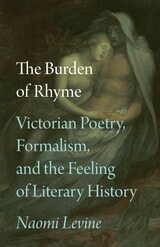
The Burden of Rhyme
Victorian Poetry, Formalism, and the Feeling of Literary HistoryNaomi Levine
University of Chicago Press, 2024
The Burden of Rhyme shows how the nineteenth-century search for the origin of rhyme shaped the theory and practice of poetry. For Victorians, rhyme was not (as it was for the New Critics, and as it still is for us) a mere technique or ahistorical form. Instead, it carried vivid historical fantasies derived from early studies of world literature. Naomi Levine argues that rhyme’s association with the advent of literary modernity and with a repertoire of medievalist, Italophilic, and orientalist myths about love, loss, and poetic longing made it a sensitive historiographic instrument. Victorian poets used rhyme to theorize both literary history and the most elusive effects of aesthetic form. This Victorian formalism, which insisted on the significance of origins, was a precursor to and a challenge for twentieth-century methods. In uncovering the rich relationship between Victorian poetic forms and a forgotten style of literary-historical thought, The Burden of Rhyme reveals the unacknowledged influence of Victorian poetics—and its repudiation—on the development of modern literary criticism.
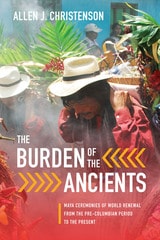
The Burden of the Ancients
Maya Ceremonies of World Renewal from the Pre-columbian Period to the PresentBy Allen J. Christenson
University of Texas Press, 2016
In Maya theology, everything from humans and crops to gods and the world itself passes through endless cycles of birth, maturation, dissolution, death, and rebirth. Traditional Maya believe that human beings perpetuate this cycle through ritual offerings and ceremonies that have the power to rebirth the world at critical points during the calendar year. The most elaborate ceremonies take place during Semana Santa (Holy Week), the days preceding Easter on the Christian calendar, during which traditionalist Maya replicate many of the most important world-renewing rituals that their ancient ancestors practiced at the end of the calendar year in anticipation of the New Year’s rites.
Marshaling a wealth of evidence from Pre-Columbian texts, early colonial Spanish writings, and decades of fieldwork with present-day Maya, The Burden of the Ancients presents a masterfully detailed account of world-renewing ceremonies that spans the Pre-Columbian era through the crisis of the Conquest period and the subsequent colonial occupation all the way to the present. Allen J. Christenson focuses on Santiago Atitlán, a Tz’utujil Maya community in highland Guatemala, and offers the first systematic analysis of how the Maya preserved important elements of their ancient world renewal ceremonies by adopting similar elements of Roman Catholic observances and infusing them with traditional Maya meanings. His extensive description of Holy Week in Santiago Atitlán demonstrates that the community’s contemporary ritual practices and mythic stories bear a remarkable resemblance to similar cultural entities from its Pre-Columbian past.
The Burden of the Past
Problems of Historical Perception in Japan-Korea RelationsKan Kimura; Translated by Marie Speed
University of Michigan Press, 2019
Utilizing Japanese and South Korean newspaper databases to review discussion of the two countries’ disputed historical perceptions from the end of World War II to the present, The Burden of the Past provides readers with the historical framework and the major players involved, offering much-needed clarity on such polarizing issues. By seeing behind the public discourse and political rhetoric, this book offers a firmer footing for a discussion and the steps toward resolution.
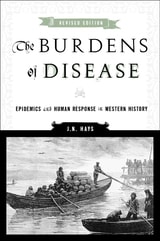
The Burdens of Disease
Epidemics and Human Response in Western HistoryJ.N. Hays
Rutgers University Press, 2009
In this updated volume, with revisions and additions to the original content, including the evolution of drug-resistant diseases and expanded coverage of HIV/AIDS, along with recent data on mortality figures and other relevant statistics, J. N. Hays chronicles perceptions and responses to plague and pestilence over two thousand years of western history. Disease is framed as a multidimensional construct, situated at the intersection of history, politics, culture, and medicine, and rooted in mentalities and social relations as much as in biological conditions of pathology. This revised edition of The Burdens of Disease also studies the victims of epidemics, paying close attention to the relationships among poverty, power, and disease.

The Burdens of Disease
Epidemics and Human Response in Western HistoryHays, J. N
Rutgers University Press, 1998
In this sweeping approach to the history of disease, historian J. N. Hays chronicles perceptions and responses to plague and pestilence over two thousand years of western history. Hays frames disease as a multi-dimensional construct, situated at the intersection of history, politics, culture, and medicine, and rooted in mentalities and social relations as much as in biological conditions of pathology. He shows how diseases affect social and political change, reveal social tensions, and are mediated both within and outside the realm of scientific medicine.
Beginning with the legacy of Greek, Roman, and early Christian ideas about disease, the book then discusses many of the dramatic epidemics from the fourteenth through the twentieth centuries, moving from leprosy and bubonic plague through syphilis, smallpox, cholera, tuberculosis, influenza, and poliomyelitis to AIDS. Hays examines the devastating exchange of diseases between cultures and continents that ensued during the age of exploration. He also describes disease through the lenses of medical theory, public health, folk traditions, and government response. The history of epidemics is also the history of their victims. Hays pays close attention to the relationships between poverty and power and disease, using contemporary case studies to support his argument that diseases concentrate their pathological effects on the poor, while elites associate the cause of disease with the culture and habits of the poor.
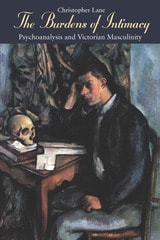
The Burdens of Intimacy
Psychoanalysis and Victorian MasculinityChristopher Lane
University of Chicago Press, 1998
Lane discredits the conservative notion that Victorian literature expresses only a demand for repression and moral restraint. But he also refutes historicist and Foucauldian approaches, arguing that they dismiss the very idea of repression and end up denouncing psychoanalysis as complicit in various kinds of oppression. These approaches, Lane argues, reduce Victorian literature to a drama about politics, power, and the ego. Striving instead to reinvigorate discussions of fantasy and the unconscious, Lane offers a clear, often startling account of writers who grapple with the genuine complexities of love, desire, and friendship.
The Bureaucrats of Buenos Aires, 1769-1810
Amor al Real ServicioSusan Migden Socolow
Duke University Press, 1988
The late eighteenth century was a critical time for the southernmost regions of Latin America, for in this period they became a separate political entity, the Viceroyalty of the Rio de la Plata. Socolow's work, part of a continuing study of the political, economic, and social elites of the emerging city of Buenos Aires, here considers the bureaucracy put into place by the Bourbon reforms. The author examines the professional and personal circumstances of all bureaucrats, from the high-ranking heads of agencies to the more lowly clerks, contrasting their expectations and their actual experiences. She pays particular attention to their recruitment, promotion, salary, and retirement, as well as their marriage and kinship relationships in the local society.

The Burial Complexes of the Knight and Norton Mounds in Illinois and Michigan
James B. Griffin, Richard E. Flanders and Paul F. Titterington
University of Michigan Press, 1970

The Burials of Cerro Azul, Peru
Joyce Marcus
University of Michigan Press, 2024
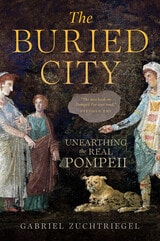
The Buried City
Unearthing the Real PompeiiGabriel Zuchtriegel
University of Chicago Press, 2025
In The Buried City, Gabriel Zuchtriegel takes us on a behind-the-scenes tour of Pompeii and reveals new archaeological finds that are being unearthed at the site’s biggest dig in a generation. As director of the Pompeii Archaeological Park, Zuchtriegel presents a uniquely intimate perspective on this city that was tragically destroyed and frozen in time by the eruption of Mount Vesuvius in 79 CE. Among the ruins, we find unmade beds, dishes left drying, and bodies of victims encased in ash, but Zuchtriegel shows that we’ve only begun to understand this fascinating place, as a third of the site remains unexcavated.
Zuchtriegel leads us into the heart of the city, reconstructing Pompeii as it would have been, showing us who lived there, what mattered to them, and what happened in their final hours. The Buried City reveals the latest discoveries unearthed at Pompeii—including a banquet hall with murals of Greek gods, a fresco of what appears to be a pizza, and the remains of individuals crushed by debris—all buried for almost two thousand years. Zuchtriegel offers a vivid portrait of this World Heritage site as a vibrant and diverse city, connecting us to a past that is much closer than we think and inviting us to reflect on our role as keepers of the site and its history.
The Buried City
Unearthing the Real PompeiiGabriel Zuchtriegel
University of Chicago Press, 2025
The director of the Pompeii Archaeological Park offers a vivid view of daily life in the lost city, shares the latest discoveries, and reflects on preserving heritage.
In The Buried City, Gabriel Zuchtriegel takes us on a behind-the-scenes tour of Pompeii and reveals new archaeological finds that are being unearthed at the site’s biggest dig in a generation. As director of the Pompeii Archaeological Park, Zuchtriegel presents a uniquely intimate perspective on this city that was tragically destroyed and frozen in time by the eruption of Mount Vesuvius in 79 CE. Among the ruins, we find unmade beds, dishes left drying, and bodies of victims encased in ash, but Zuchtriegel shows that we’ve only begun to understand this fascinating place, as a third of the site remains unexcavated.
Zuchtriegel leads us into the heart of the city, reconstructing Pompeii as it would have been, showing us who lived there, what mattered to them, and what happened in their final hours. The Buried City reveals the latest discoveries unearthed at Pompeii—including a banquet hall with murals of Greek gods, a fresco of what appears to be a pizza, and the remains of individuals crushed by debris—all buried for almost two thousand years. Zuchtriegel offers a vivid portrait of this World Heritage site as a vibrant and diverse city, connecting us to a past that is much closer than we think and inviting us to reflect on our role as keepers of the site and its history.
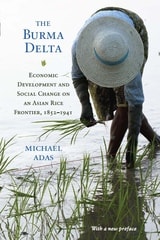
The Burma Delta
Economic Development and Social Change on an Asian Rice Frontier, 1852–1941Michael Adas
University of Wisconsin Press, 2011
In the decades following its annexation to the Indian Empire in 1852, Lower Burma (the Irrawaddy-Sittang delta region) was transformed from an underdeveloped and sparsely populated backwater of the Konbaung Empire into the world’s largest exporter of rice. This seminal and far-reaching work focuses on two major aspects of that transformation: the growth of the agrarian sector of the rice industry of Lower Burma and the history of the plural society that evolved largely in response to rapid economic expansion.
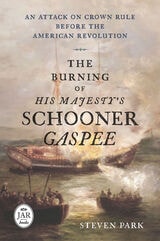
The Burning of His Majesty's Schooner Gaspee
An Attack on Crown Rule Before the American RevolutionSteven Park
Westholme Publishing, 2016
Between the Boston Massacre in 1770 and the Boston Tea Party in 1773—a period historians refer to as “the lull”—a group of prominent Rhode Islanders rowed out to His Majesty’s schooner Gaspee,which had run aground six miles south of Providence while on an anti-smuggling patrol. After threatening and shooting its commanding officer, the raiders looted the vessel and burned it to the waterline. Despite colony-wide sympathy for the June 1772 raid, neither the government in Providence nor authorities in London could let this pass without a response. As a result, a Royal Commission of Inquiry headed by Rhode Island governor Joseph Wanton zealously investigated the incident. In The Burning of His Majesty’s Schooner Gaspee: An Attack on Crown Rule Before the American Revolution, historian Steven Park reveals that what started out as a customs battle over the seizure of a prominent citizen’s rum was soon transformed into the spark that re-ignited Patriot fervor. The significance of the raid was underscored by a fiery Thanksgiving Day sermon given by a little-known Baptist minister in Boston. His inflammatory message was reprinted in several colonies and was one of the most successful pamphlets of the pre-Independence period. The commission turned out to be essentially a sham and made the administration in London look weak and ineffective. In the wake of the Gaspee affair, Committees of Correspondence soon formed in all but one of the original thirteen colonies, and later East India Company tea would be defiantly dumped into Boston Harbor.

The Business State
Empire and Big Business in the Twentieth-Century British StateIan Kumekawa
University of Chicago Press, 2027
Narrates how big business guided policy and expanded the state in early twentieth-century Britain.
During World War I, British businessmen streamed into government service. When Britain faced unprecedented economic challenges after the war’s end, civil servants turned to the same businessmen with whom they had worked. The result was a durable public-private network of both bureaucrats and executives: the business state.
In this book, Ian Kumekawa throws light on the previously obscured and hidden world of the business state and the economic thinking of its administrators. He breaks new methodological ground by treating the state and business together as a single entity. Twentieth-century states, he argues, were porous networks in which lines between business and governance were not clearly defined. In liberal democracies, the term “business-friendly” has long been understood as synonymous with laissez-faire. The Business State explores the historical limits of that assumption by focusing on Britain, the self-identified small, liberal state par excellence. In doing so, the book shows how a liberal democracy was effectively co-opted by private interests and explores how actively assisting big business became not just acceptable—but a political necessity.

The Business of Charity
The Woman's Exchange Movement, 1832-1900Kathleen Waters Sander
University of Illinois Press, 1998
In the nineteenth century, Woman's Exchanges formed a vast national network that created economic alternatives for financially vulnerable women in a world that permitted few respectable employment options. Many remain in business.
Kathleen Waters Sander delves into the history of Woman's Exchanges and looks at the women who led the organizations—and those who used them to stave off poverty. One of the nation's oldest continuously operating voluntary movements, Exchanges like the Philadelphia Ladies' Depository and the Dorcas Society were fashionable, popular shops where women who had fallen on hard times could sustain themselves. By selling their handiwork on consignment, they not only earned money but avoided the stigma of seeking public employment. As Sander shows, Exchanges evolved into an important forum for entrepreneurial growth. They also provide an example of how women used the voluntary sector, which had so successfully served as a conduit for their political and social reforms, to advance opportunities for economic independence.
The Business of Crime
Italians and Syndicate Crime in the United StatesHumbert S. Nelli
University of Chicago Press, 1981
"A definitive history of organized crime in America."—American Historical Review
The Business of Newspapers
University of Nevada Press, 1992
The Business of Private Medical Practice
Doctors, Specialization, and Urban Change in Philadelphia, 1900-1940James A. Schafer Jr.
Rutgers University Press, 2013
Unevenly distributed resources and rising costs have become enduring problems in the American health care system. Health care is more expensive in the United States than in other wealthy nations, and access varies significantly across space and social classes. James A. Schafer Jr. shows that these problems are not inevitable features of modern medicine, but instead reflect the informal organization of health care in a free market system in which profit and demand, rather than social welfare and public health needs, direct the distribution and cost of crucial resources.
The Business of Private Medical Practice is a case study of how market forces influenced the office locations and career paths of doctors in one early twentieth-century city, Philadelphia, the birthplace of American medicine. Without financial incentives to locate in poor neighborhoods, Philadelphia doctors instead clustered in central business districts and wealthy suburbs. In order to differentiate their services in a competitive marketplace, they also began to limit their practices to particular specialties, thereby further restricting access to primary care. Such trends worsened with ongoing urbanization.
Illustrated with numerous maps of the Philadelphia neighborhoods he studies, Schafer’s work helps underscore the role of economic self-interest in shaping the geography of private medical practice and the growth of medical specialization in the United States.
The Business of Professional Sports
Edited by Paul D. Staudohar and James A. Mangan
University of Illinois Press, 1991
Beyond the highly publicized heroics and foibles of players and teams, when the grandstands are empty and the scoreboards dark, there is a world of sport about which little is known by even the most ardent fan. It is the business world of sport; it is characterized by a thirst for power and money, and its players are just as active as those on the professional teams they oversee. In this collection, some of the best scholars in the field use examples from baseball, football, basketball, and hockey to illuminate the significant economic, legal, social, and historic aspects of the business of professional sports.
Contributors: Dennis A. Ahlburg, Rob B. Beamish, Joan M. Chandler, James B. Dworkin, Lawrence M. Kahn, Charles P. Korr, John J. MacAloon, David Mills, Roger G. Noll, Steven A. Reiss, Gary R. Roberts, Stephen F. Ross, Peter D. Sherer, Leigh Steinberg, and David G. Voigt,

The Business of Solidarity
Socialist Yugoslavia and Non-Aligned International DevelopmentPeter Wright
Central European University Press, 2027

The Butte Irish
Class and Ethnicity in an American Mining Town, 1875-1925David M. Emmons
University of Illinois Press, 1989
From a treasure trove of "Irish stuff," the reports, minutes, and correspondence of the major Irish-American organizations in Butte, Emmons shows how the stalwart supporters of the RELA and the Ancient Order of Hiberians marched and drilled for Irish freedom---and how, as they ran the town, the miners' union, and the largest mining companies, they used this tradition of ethnic cooperation to ensure safe and steady work, Irish mines taking care of Irish miners. Butte was new, overwhelmingly Irish, and extraordinarily dangerous---the ideal place to test the seam between class and ethnicity.

The Button Box
A Daughter's Loving Memoir of Mrs. George S. PattonRuth Ellen Patton Totten, Edited by James Patton Totten, Foreward by Carlo W. D'Este
University of Missouri Press, 2005
"There was never a moment in our lives that we were not reminded that our father was the finest, bravest, most gallant, and best-looking man who ever lived and that he was destined for unimaginable glory. This we took for granted. Being our father’s children was a special influence in all our lives, but the greatest, most pervasive, and most interesting influence in my life was Ma."
The Button Box is the loving memoir of Beatrice Ayer Patton (1886–1953), the wife of one of the greatest military figures in history, General George S. Patton, Jr. Written by the Pattons’ daughter, Ruth Ellen, the book covers Beatrice’s life from her youth in a wealthy New England family until her death, with an emphasis on her years of marriage to George Patton. A supportive and loving wife, Beatrice was accomplished in her own right as an equestrian, musician, lecturer, sailor, and internationally published author. Courageous and adventurous, Beatrice played a significant role in her husband’s life. Without her, General Patton might never have reached his own level of success.
The Byzantine Art of War
Michael J. Decker
Westholme Publishing, 2013
The Byzantine Art of War explores the military history of the thousand-year empire of the eastern Mediterranean, Byzantium. Throughout its history the empire faced a multitude of challenges from foreign invaders seeking to plunder its wealth and to occupy its lands, from the deadly Hunnic hordes of Attila, to the Arab armies of Islam, to the western Crusaders bent on carving out a place in the empire or its former lands. In order to survive the Byzantines relied on their army that was for centuries the only standing, professional force in Europe. Leadership provided another key to survival; Byzantine society produced a number of capable strategic thinkers and tacticians—and several brilliant ones. These officers maintained a level of professionalism and organization inherited and adapted from Roman models. The innovations of the Byzantine military reforms of the sixth century included the use of steppe nomad equipment and tactics, the most important of which was the refinement of the Roman mounted archer. Strategy and tactics evolved in the face of victory and defeat; the shock of the Arab conquests led to a sharp decline in the number and quality of imperial forces. By the eighth and ninth centuries Byzantine commanders mastered the art of the small war, waging guerrilla campaigns, raids, and flying column attacks that injured the enemy but avoided the decisive confrontation the empire was no longer capable of winning. A century later they began the most sustained, glorious military expansion of their history. This work further sketches the key campaigns, battles, and sieges that illustrate Byzantine military doctrine, vital changes from one era to another, the composition of forces and the major victories and defeats that defined the territory and material well-being of its citizens. Through a summary of their strategies, tactics, and innovations in the tools of war, the book closes with an analysis of the contributions of this remarkable empire to world military history.