Results by title
8642 books match the query '20th Century' and 1764 start with t
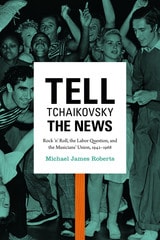
Tell Tchaikovsky the News
Rock 'n' Roll, the Labor Question, and the Musicians' Union, 1942-1968Michael James Roberts
Duke University Press, 2014
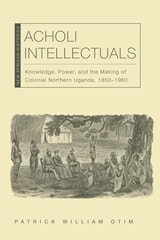
Teller Tales
HistoriesJo Carson
Ohio University Press, 2007
“All my work fits in my mouth,” Jo Carson says. “I write performance material no matter what else the pieces get called, and whether they are for my voice or other characters’ voices … they are first to be spoken aloud.” Following an oral tradition that has strong roots in her native Tennessee, the author of Teller Tales invites the reader to participate in events in a way that no conventional history book can.
Both stories in this book are set in East Tennessee in the mid-eighteenth century and share certain characters. The first narrative, “What Sweet Lips Can Do,” recounts the story of the Overmountain Men and the battle of King’s Mountain, a tide-turning battle in the American Revolution. “Men of Their Time” is an exploration of white-Cherokee relationships from early contact through the time of the Revolution.
Although not well known to the outside world, the stories recounted in Teller Tales are cornerstones in the heritage of the Appalachian region and of American history. In ways that will appeal to young and old alike, Jo Carson’s irreverent telling will broaden the audience and the understanding for the stories of native Americans, settlers, explorers, and revolutionaries of early America.
Telling It Slant
Avant Garde Poetics of the 1990SMark Wallace
University of Alabama Press, 2001
The finest essays from the newest generation of critics and poet-critics are gathered together in this volume documenting the growth in readership and awareness of avant-garde poetries.
This collection demonstrates the breadth and openness of the field of avant-garde poetry by introducing a wide range of work in poetics, theory, and criticism from emerging writers. Examining the directions innovative poetry has taken since the emergence and success of the Language movement, the essays discuss new forms and the reorientation of older forms of poetry in order to embody present and ongoing involvements. The essays center around four themes: the relation between poetics and contemporary cultural issues; new directions for avant-garde practices; in-depth explorations of current poets and their predecessors; and innovative approaches to the essay form or individual poetics.
Diverging from the traditional, linear argumentative style of academic criticism, many of the essays in this collection instead find critical forms more subtly related to poetry. Viewed as a whole, the essays return to a number of shared issues, namely poetic form and the production of present-day poetry. While focusing on North American poetry, the collection does reference the larger world of contemporary poetics, including potential biases and omissions based on race and ethnicity.
This is cutting-edge criticism at its finest, essential reading for students and scholars of avant-garde poetry, of interest to anyone interested in contemporary American literature and poetry.
Telling the Little Secrets
American Jewish Writing since the 1980sJanet Handler Burstein
University of Wisconsin Press, 2006
Janet Burstein argues that American Jewish writers since the 1980s have created a significant literature by wrestling with the troubled legacy of trauma, loss, and exile. Their ranks include Cynthia Ozick, Todd Gitlin, Art Spiegelman, Pearl Abraham, Aryeh Lev Stollman, Jonathan Rosen, and Gerda Lerner. Whether confronting the massive losses of the Holocaust, the sense of “home” in exile, or the continuing power of Jewish memory, these Jewish writers search for understanding within “the little secrets” of their dark, complicated, and richly furnished past.
Tempest In The Caribbean
Jonathan Goldberg
University of Minnesota Press, 2003
Templates for Authorship
American Women's Literary Autobiography of the 1930sWindy Counsell Petrie
University of Massachusetts Press, 2021
Windy Counsell Petrie considers twelve autobiographies from a diverse group of writers, ranging from highbrow modernists such as Gertrude Stein and Harriet Monroe to popular fiction writers like Edith Wharton and Edna Ferber, and lesser known figures such as Grace King and Carolyn Wells. Since there were few existing examples of women's literary autobiography, these writers found themselves marketed and interpreted within four cultural templates: the artist, the activist, the professional, and the celebrity. As they wrote their life stories, the women adapted these templates to counter unwanted interpretations and resist the sentimental feminine traditions of previous generations with innovative strategies of deferral, elision, comedy, and collaboration. This accessible study contends that writing autobiography offered each of these writers an opportunity to define and defend her own literary legacy.
Temple of Peace
International Cooperation and Stability since 1945Ingo Trauschweizer
Ohio University Press, 2021
This collection raises timely questions about peace and stability as it interrogates the past and present status of international relations.
The post–World War II liberal international order, upheld by organizations such as the United Nations, the North Atlantic Treaty Organization, and similar alliances, aspired to ensure decades of collective security, economic stability, and the rule of law. All of this was a negotiated process that required compromise—and yet it did not make for a peaceful world.
When Winston Churchill referred to the UN framework as “the temple of peace” in his famous 1946 Iron Curtain speech, he maintained that international alliances could help provide necessary stability so free people could prosper, both economically and politically. Though the pillars of international order remain in place today, in a world defined as much by populism as protest, leaders in the United States no longer seem inclined to serve as the indispensable power in an alliance framework that is built on shared values, human rights, and an admixture of hard and soft power.
In this book, nine scholars and practitioners of diplomacy explore both the successes and the flaws of international cooperation over the past seventy years. Collectively, the authors seek to address questions about how the liberal international order was built and what challenges it has faced, as well as to offer perspectives on what could be lost in a post-American world.
Tempting All the Gods
Joseph P. Kennedy, Ambassador to Great Britain, 1938–1940Jane Karoline Vieth
Michigan State University Press, 2021
Ten Thousand Nights
Highlights from 50 Years of Theatre-GoingMarvin Carlson
University of Michigan Press, 2017

Ten Women of Mystery
Edited by Earl F. Bargainnier
University of Wisconsin Press, 1981
This volume, which examines the special contributions of a number of women mystery writers, sheds light on this significant example of common interests in recreational reading among women and men and the reasons behind the early and continuing uncharacteristic near-equality of both sexes in this field of endeavor.

Tendentious
Humor as Critique in Postwar and Contemporary PoetryScott Inniss
University of Iowa Press, 2027
Tender Comrades
A Backstory of the Hollywood BlacklistPatrick McGilligan
University of Minnesota Press, 2012
More than sixty years ago, McCarthyism silenced Hollywood. In the pages of Tender Comrades, those who were suppressed, whose lives and careers were ruined, finally have their say. A unique collection of profiles in cinematic courage, this extraordinary oral history brings to light the voices of thirty-six blacklist survivors (including two members of the Hollywood Ten), seminal directors of film noir and other genres, starring actresses and memorable supporting players, top screenwriters, and many less known to the public, who are rescued from obscurity by the stories they offer here that, beyond politics, open a rich window into moviemaking during the Golden Age of Hollywood.
Tennis
A History from American Amateurs to Global ProfessionalsGreg Ruth
University of Illinois Press, 2021
The arrival of the Open era in 1968 was a watershed in the history of tennis--the year that marked its advent as a professionalized sport. Merging wide-angle history with individual stories of players and off-the-court figures, Greg Ruth charts tennis’s evolution into the game we watch today. His vivid account moves from the cloistered world of nineteenth-century lawn tennis through the longtime amateur-professional divide and the battles over commercialization that raged from the 1920s until 1968. From there, Ruth details the post-1968 expansion of the game as it was transformed by bankable superstars, a popular women’s tour, rival governing bodies, and sponsorship money. What emerges is a fascinating history of the economics and politics that made tennis a decisive, if unlikely, force in the creation of modern-day sports entertainment.
Comprehensive and engaging, Tennis tells the interlocking stories of the figures and factors that birthed the professional game.
Tentative Transgressions
Homosexuality, AIDS, and the Theater in BrazilSeverino J. Albuquerque
University of Wisconsin Press, 2004
Starting at the beginning of the twentieth century, Albuquerque examines the way the Modernist movement both fueled and inhibited the use of gay imagery in Brazilian drama. This elegant and fluid study ultimately becomes an examination of a whole Latin society, and the ways in which Latin theatre has absorbed and reflected the culture's own changing sensibilities, that will intrigue anyone interested in Latin American culture, literature, or theater.
Winner, 2008 Elizabeth A. Steinberg Prize
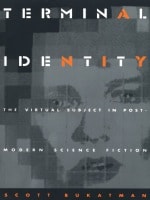
Terminal Identity
The Virtual Subject in Postmodern Science FictionScott Bukatman
Duke University Press, 1993
Drawing on a wide range of contemporary theories of the postmodern—including Fredric Jameson, Donna Haraway, and Jean Baudrillard—Bukatman begins with the proposition that Western culture is suffering a crisis brought on by advanced electronic technologies. Then in a series of chapters richly supported by analyses of literary texts, visual arts, film, video, television, comics, computer games, and graphics, Bukatman takes the reader on an odyssey that traces the postmodern subject from its current crisis, through its close encounters with technology, and finally to new self-recognition. This new "virtual subject," as Bukatman defines it, situates the human and the technological as coexistent, codependent, and mutally defining.
Synthesizing the most provocative theories of postmodern culture with a truly encyclopedic treatment of the relevant media, this volume sets a new standard in the study of science fiction—a category that itself may be redefined in light of this work. Bukatman not only offers the most detailed map to date of the intellectual terrain of postmodern technology studies—he arrives at new frontiers, providing a propitious launching point for further inquiries into the relationship of electronic technology and culture.
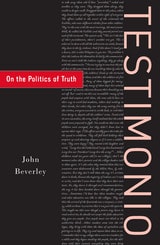
Testimonio
On The Politics Of TruthJohn Beverley
University of Minnesota Press, 2004
A revealing perspective on the controversial literature of witnessing
These four germinal essays by John Beverley sparked the widespread discussion and debate surrounding testimonio—the socially and politically charged Latin American narrative of witnessing—that culminated with David Stoll’s highly publicized attack on Rigoberta Menchú’s celebrated testimonial text. Challenging Hardt and Negri’s Empire, Beverley’s extensive new introduction examines the broader historical, political, and ethical issues that this literature raises, tracing the development of testimonio from its emergence in the Cold War era to the rise of a globalized economy and U.S. political hegemony.
Informed by postcolonial studies and the current debate over multiculturalism and identity politics, Testimonio reaches across disciplinary boundaries to show how this particular literature at once represents and enacts new forms of agency on the part of previously repressed social subjects, as well as its potential as a new form of “alliance politics” between those subjects and artists, scientists, teachers, and intellectuals in a variety of local, national, and international contexts.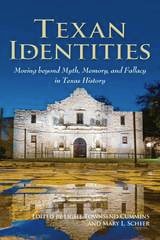
Texan Identities
Moving beyond Myth, Memory, and Fallacy in Texas HistoryLight Townsend Cummins
University of North Texas Press, 2016

Texas Sports
Unforgettable Stories for Every Day of the YearBy Chad S. Conine
University of Texas Press, 2017
When it comes to sports, Texas more than earns its bragging rights. The Lone Star State has produced championship teams and legendary athletes not only in football, baseball, and basketball, but in dozens of other sports as well. Texas Sports celebrates more than a century of achievements in a day-by-day record of the people and events—both unforgettable and little-known—that have made Texas a powerhouse in the world of sports.
Chad S. Conine packs a wealth of sports facts and stories into 366 days. He ranges from firsts such as UT’s first football game (an 1893 win against Dallas University Football Club) to peak moments such as Earl Campbell running through defenders, Nolan Ryan throwing heat past baffled batters, and Babe Didrickson Zaharias winning the Western Open golf championship for the fourth time. Conine covers more than twenty-five sports and all levels from high school to professional, reminding us that if Texas had never seen a pigskin or a backboard, its sports legacy would still be secure. With a winning combination of victories and heartbreaks, men’s and women’s sports, and all regions of the state, Texas Sports is a must-read for all sports fans and trivia buffs.
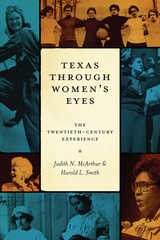
Texas Through Women's Eyes
The Twentieth-Century ExperienceBy Judith N. McArthur and Harold L. Smith
University of Texas Press, 2010
Winner, Liz Carpenter Award For Research in the History of Women, Texas State Historical Association, 2010
Texas women broke barriers throughout the twentieth century, winning the right to vote, expanding their access to higher education, entering new professions, participating fully in civic and political life, and planning their families. Yet these major achievements have hardly been recognized in histories of twentieth-century Texas. By contrast, Texas Through Women's Eyes offers a fascinating overview of women's experiences and achievements in the twentieth century, with an inclusive focus on rural women, working-class women, and women of color.
McArthur and Smith trace the history of Texas women through four eras. They discuss how women entered the public sphere to work for social reforms and the right to vote during the Progressive era (1900–1920); how they continued working for reform and social justice and for greater opportunities in education and the workforce during the Great Depression and World War II (1920–1945); how African American and Mexican American women fought for labor and civil rights while Anglo women laid the foundation for two-party politics during the postwar years (1945–1965); and how second-wave feminists (1965–2000) promoted diverse and sometimes competing goals, including passage of the Equal Rights Amendment, reproductive freedom, gender equity in sports, and the rise of the New Right and the Republican party.

Text/Politics in Island Southeast Asia
Essays in InterpretationD.M. Roskies
Ohio University Press, 1993

Text
The Genealogy of an Antidisciplinary ObjectJohn Mowitt
Duke University Press, 1992
Beginning with the Tel Quel group in France in the sixties and seventies, Mowitt's study details how a certain interdisciplinary crisis prompted academics to rethink the conditions of cultural interpretation. Concentrating on three disciplinary projects—literary analysis, film studies, and musicology—Mowitt shows how textuality's emergence called into question not merely the relations among these disciplines, but also the cultural logic of disciplinary reason as such.
At once an effort to define "the text" and to explore and extend the theory of textuality, this book illustrates why the notion of interdisciplinary research has recently acquired such urgency. At the same time, by emphasizing the genealogical dimension of the textual object, Mowitt raises the issues of its "antidisciplinary" character, and by extension its immediate pertinence for the current debates over multiculturalism and Eurocentrism.
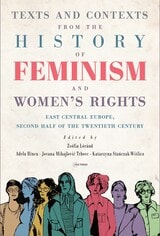
Texts and Contexts from the History of Feminism and Women’s Rights
East Central Europe, Second Half of the Twentieth CenturyZsofia Lorand
Central European University Press, 2024
A compendium of one hundred sources, preceded by a short author’s bio and an introduction, this volume offers an English language selection of the most representative texts on feminism and women’s rights from East Central Europe between the end of the Second World War and the early 1990s. While communist era is the primary focus, the interwar years and the post-1989 transition period also receive attention. All texts are new translations from the original.
The book is organised around themes instead of countries; the similarities and differences between nations are nevertheless pointed out. The editors consider women not only in their local context, but also in conjunction with other systems of thought—including shared agendas with socialism, liberalism, nationalism, and even eugenics.
The choice of texts seeks to demonstrate how feminism as political thought was shaped and organised in the region. They vary in type and format from political treatises, philosophy to literary works, even films and the visual arts, with the necessary inclusion of the personal and the private. Women’s political rights, right to education, their role in nation-building, women, and war (and especially women and peace) are part of the anthology, alongside the gendered division of labour, violence against women, the body, and reproduction.
Textual Awareness
A Genetic Study of Late Manuscripts by Joyce, Proust, and MannDirk Van Hulle
University of Michigan Press, 2004
A key issue in both textual criticism and the so-called crisis of the novel is the tension between the finished and the unfinished. After a theoretical examination of the relationship between genetic and textual criticism, Dirk Van Hulle uses the three case studies to show how?at each stage in the writing process?the text still had the potential of becoming something entirely different; how and why these geneses proceeded the way they did; how Joyce, Proust, and Mann allowed contingencies to shape their work; how these authors recycled the words of their critics in order to inoculate their works against them; how they shaped an intertextual dimension through the processing of source texts and reading notes; and how text continually generated more text.
Van Hulle's exploration of process sheds new light on the remarkable fact that so many modernist authors protected their manuscripts, implying both the authors' urge to grasp everything and their awareness of the dangers of their encyclopedic projects. Textual Awareness offers new insights into the artificiality of the artifact?the novel?that are relevant to the study of literary modernism in general and the study of James Joyce, Marcel Proust, and Thomas Mann in particular.
Dirk Van Hulle is Assistant Professor of English and German Literature, University of Antwerp.

Textual Contraception
Birth Control and Modern American FictionBeth Widmaier Capo
The Ohio State University Press, 2007
Merging cultural analysis and literary scholarship, this compelling work moves from a consideration of how cultural forces shaped literary production and political activism to a close examination of how fictional representations of contraception influenced the terms of public discourse on marriage, motherhood, economics, and eugenics.
By analyzing popular fiction such as Mother by Kathleen Norris, radical periodicals such as The Masses and Birth Control Review, and literature by authors from Theodore Dreiser to William Faulkner, and Nella Larsen to Mary McCarthy, Beth Widmaier Capo reveals the rich cross-influence of contraceptive and literary history.
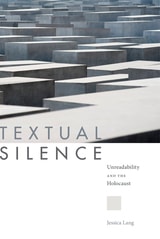
Textual Silence
Unreadability and the HolocaustLang, Jessica
Rutgers University Press, 2017
Holocaust texts, which encompass works as diverse as memoirs, novels, poems, and diaries, are traditionally characterized by silences the authors place throughout the text, both deliberately and unconsciously. While a reader may have the desire and will to comprehend the Holocaust, the presence of “textual silence” is a force that removes the experience of genocide from the reader’s analysis and imaginative recourse. Lang defines silences as omissions that take many forms, including the use of italics and quotation marks, ellipses and blank pages in poetry, and the presence of unreliable narrators in fiction. While this limits the reader’s ability to read in any conventional sense, these silences are not flaws. They are instead a critical presence that forces readers to acknowledge how words and meaning can diverge in the face of events as unimaginable as those of the Holocaust.
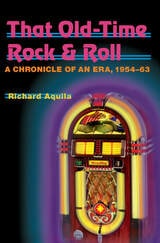
That Old-Time Rock & Roll
A Chronicle of an Era, 1954-63Richard Aquila
University of Illinois Press, 1989
Elvis Presley and Bill Haley. Sam Cooke and the Shirelles. The Crows and the Chords. American Bandstand and Motown. From its first rumblings in the outland alphabet soup of R&B and C&W, rock & roll music promised to change the world--and did it.
Combining social history with a treasure trove of trivia, Richard Aquila unleashes the excitement of rock's first decade and shows how the music reflected American life from the mid-1950s through the dawn of Beatlemania. His year-by-year timelines and a photo essay place the music in historical perspective by linking artists and their hits to the news stories, movies, TV shows, fads, and lifestyles. In addition, he provides a concise biographical dictionary of the performers who made the charts between 1954 and 1963, along with the label and chart position of each of their hit songs.
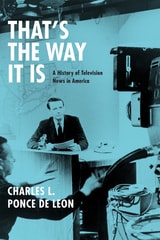
That's the Way It Is
A History of Television News in AmericaCharles L. Ponce de Leon
University of Chicago Press, 2015
The critics may be right. But, as Charles L. Ponce de Leon explains in That’s the Way It Is, TV news has always walked a fine line between hard news and fluff. The familiar story of decline fails to acknowledge real changes in the media and Americans’ news-consuming habits, while also harking back to a golden age that, on closer examination, is revealed to be not so golden after all. Ponce de Leon traces the entire history of televised news, from the household names of the late 1940s and early ’50s, like Eric Sevareid, Edward R. Murrow, and Walter Cronkite, through the rise of cable, the political power of Fox News, and the satirical punch of Colbert and Stewart. He shows us an industry forever in transition, where newsmagazines and celebrity profiles vie with political news and serious investigations. The need for ratings success—and the lighter, human interest stories that can help bring it—Ponce de Leon makes clear, has always sat uneasily alongside a real desire to report hard news.
Highlighting the contradictions and paradoxes at the heart of TV news, and telling a story rich in familiar figures and fascinating anecdotes, That’s the Way It Is will be the definitive account of how television has showed us our history as it happens.
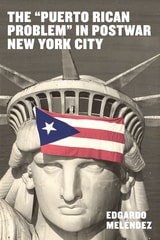
The "Puerto Rican Problem" in Postwar New York City
Edgardo Meléndez
Rutgers University Press, 2023

The 1922 General Election Reconsidered
High Politics and the Birth of the Modern British ElectionG.H. Bennett
University of London Press, 2025
The 1922 General Election was more than just another political contest; it was the turning point that shaped the modern British electoral landscape. In The 1922 General Election Reconsidered, G.H. Bennett revisits this pivotal moment with fresh insight, drawing on newly available archival materials and digitized resources to decipher the high-stakes maneuvering and backroom negotiations that defined the campaign. Covering the dramatic collapse of the Lloyd George coalition and the intricate web of party alliances and local political machinations, this book captures the election in unprecedented detail.
Bennett studies the key players and the seismic shifts that emerged in the wake of the vote. He also looks into how informal cooperation between parties blurred political lines and how media speculation shaped public perceptions. By placing the election in both its immediate and long-term context, The 1922 General Election Reconsidered is a compelling reconsideration of an often-overlooked moment in British political history that continues to influence elections a century later.
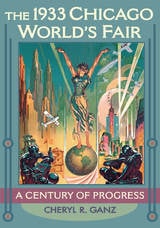
The 1933 Chicago World's Fair
A Century of ProgressCheryl R. Ganz
University of Illinois Press, 2012
Chicago's 1933 world's fair set a new direction for international expositions. Earlier fairs had exhibited technological advances, but Chicago's fair organizers used the very idea of progress to buoy national optimism during the Depression's darkest years. Orchestrated by business leaders and engineers, almost all former military men, the fair reflected a business-military-engineering model that envisioned a promising future through science and technology's application to everyday life. Fair organizers, together with corporate leaders, believed that progress rides on the tide of technological innovation and consumerism.
But not all those who struggled for a voice at Chicago's 1933 exposition had abandoned the traditional notions of progress that entailed social justice and equality, recognition of ethnic and gender-related accomplishments, and personal freedom and expression. The stark pronouncement of the fair's motto, "Science Finds, Industry Applies, Man Conforms," was challenged by iconoclasts such as Sally Rand, whose provocative fan dance became a persistent symbol of the fair, as well as a handful of others, including African Americans, ethnic populations and foreign nationals, groups of working women, and even well-heeled socialites. They all met obstacles but ultimately introduced personal, social definitions of "progress" and thereby influenced the ways the fair took shape.
In this engaging social and cultural history, Cheryl R. Ganz examines Chicago's second world's fair through the lenses of technology, ethnicity, and gender. The book also features eighty-six photographs--nearly half of which are full color--of key locations, exhibits, and people, as well as authentic ticket stubs, postcards, pamphlets, posters, and other items. From fan dancers to fan belts, The 1933 Chicago World's Fair: A Century of Progress offers the compelling, untold stories of fair planners and participants who showcased education, industry, and entertainment to sell optimism during the depths of the Great Depression.
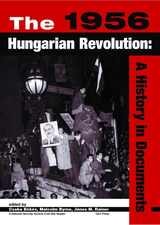
The 1956 Hungarian Revolution
A History in DocumentsThe National Security Archive Békés
Central European University Press, 2003
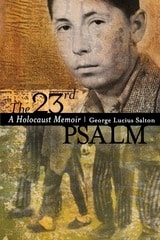
The 23rd Psalm
A Holocaust MemoirGeorge Lucius Salton, with Anna Salton Eisen
University of Wisconsin Press, 2004

The AEF in Print
An Anthology of American Journalism in World War IChris Dubbs
University of North Texas Press, 2018

The ALA Guide to Researching Modern China
Yunshan Ye
American Library Association, 2014

The ANC and the Liberation Struggle
A Critical Political BiographyDale T. McKinley
Pluto Press, 1997
eloquent testimony of the continuing vitality of the South African left' Modern African Studies
The African National Congress, the ANC, negotiated a transition of government and power in South Africa in the early 1990s and gained widespread respect and legitimacy when Nelson Mandela was voted in as President in 1994.
In this controversial and radical critique of the ANC and the struggle for liberation in South Africa, Dale T. McKinley challenges conventional public perceptions of the organisation and its celebrated rise to power. McKinley offers the first detailed analysis of the ANC's leadership, tactics and strategies from the 1920s, through the years of exile, to the 1990s, focusing on its close alliance with the South African Communist Party. he reveals that the organisation, despite historical claims to the contrary, failed to stay in touch with the south African masses. The ANC made fundamental compromises to gain political power, and in so doing has ensured that the economic power-base of the ruling elites in South Africa remains essentially unaltered.
The Absurd Hero in American Fiction
Updike, Styron, Bellow, SalingerBy David D. Galloway
University of Texas Press, 1981
When The Absurd Hero in American Fiction was first released in 1966, Granville Hicks praised it in a lead article for the Saturday Review as a sensitive and definitive study of a new trend in postwar American literature. In the years that followed, David Galloway’s analysis of the writings of John Updike, William Styron, Saul Bellow, and J. D. Salinger became a standard critical work, an indispensable tool for readers concerned with contemporary American literature. The New York Times described the book as “a seminal study of the modern literary imagination."
David Galloway, himself an established novelist, later extensively revised The Absurd Hero to include authoritative discussions of more than a dozen novels which had appeared since the first revised edition was released in 1970. Among them are John Updike’s Couples, Rabbit Redux, and The Coup; William Styron’s The Confessions of Nat Turner and Sophie’s Choice; and Saul Bellow’s Mr. Sammler’s Planet and Humboldt’s Gift. Through detailed analyses of these works, Galloway demonstrates the continuing relevance of his own provocative concept of the absurd hero and provides important insights into the literary achievements of four of America’s most influential postwar novelists.
The Abyss of Representation
Marxism and the Postmodern SublimeGeorge Hartley
Duke University Press, 2003
Hartley describes how modern theory from Kant through Lacan attempts to come to terms with the sublime limits of representation and how ideas developed with the Marxist tradition—such as Marx’s theory of value, Althusser’s theory of structural causality, or Zizek’s theory of ideological enjoyment—can be seen as variants of the sublime object. Representation, he argues, is ultimately a political problem. Whether that problem be a Marxist representation of global capitalism, a deconstructive representation of subaltern women, or a Chicano self-representation opposing Anglo-American images of Mexican Americans, it is only through this grappling with the negative, Hartley explains, that a Marxist theory of postmodernism can begin to address the challenges of global capitalism and resurgent imperialism.
The Adaptability Paradox
Political Inclusion and Constitutional ResilienceStephen Skowronek
University of Chicago Press, 2025
Has American democracy outstripped its constitutional accommodations?
Faith in the resilience and adaptability of the US Constitution rests on a long history of finding new ways to make the system work. In The Adaptability Paradox, political scientist Stephen Skowronek examines the rearrangements that regenerated the American government in the past and brings that experience to bear on our current predicament. He shows how a constitution framed in writing some 230 years ago can run into serious difficulties directly related to its long and impressive history of adaptation.
Skowronek connects questions about the Constitution’s adaptability to the challenges of democratization. For most of American history, serial rearrangements of constitutional relationships widened the government’s purview as a national democracy without giving either nationalism or democracy free rein. Skowronek argues that the politics of adaptation shifted fundamentally with the “Rights Revolution” of the 1960s and `70s when American national democracy approached the inclusion of all its citizens on equal footing. Since then, power and authority have been reconfigured in ways that have steadily magnified conflicts over the essentials of good order. Conservatives aim to dismantle a Constitution that progressives are intent on building upon, and the consensus necessary for a constitutional democracy to function effectively has all but evaporated. No longer a socially bound framework for national action, the Constitution has become an abstract matrix of possibilities, a disembodied opportunity structure open to starkly different, mutually unacceptable futures.
Rather than being liberated by this unbound Constitution, the American people now appear entrapped by it. Is it possible that the development of American democracy has exhausted the adaptive capacities of the Constitution? A timely reminder that constitutional democracies do not survive on faith alone, The Adaptability Paradox is a sober appraisal of the unfamiliar ground on which we now tread.

The Advocates of Poetry
A Reader of American Poet-Critics of the Modernist EraR S Gwynn
University of Arkansas Press, 1996
The Aesthetic Border
Colombian Literature in the Face of GlobalizationBrantley Nicholson
Bucknell University Press, 2022
The Aesthetic Character of Blackness
Sounds Like UsJemma DeCristo
Duke University Press, 2025
The Aesthetics of Mythmaking in German Postwar Culture
André Fischer
Northwestern University Press, 2024
Myths are a central part of our reality. But merely debunking them lets us forget why they are created in the first place and why we need them. André Fischer draws on key examples from German postwar culture, from novelists Hans Henny Jahnn and Hubert Fichte, to sculptor and performance artist Joseph Beuys, and filmmaker Werner Herzog, to show that mythmaking is an indispensable human practice in times of crisis.
Against the background of mythologies based in nineteenth-century romanticism and their ideological continuation in Nazism, fresh forms of mythmaking in the narrative, visual, and performative arts emerged as an aesthetic paradigm in postwar modernism. Boldly rewriting the cultural history of an era and setting in transition, The Aesthetics of Mythmaking in German Postwar Culture counters the predominant narrative of an exclusively rational Vergangenheitsbewältigung (“coming to terms with the past”). Far from being merely reactionary, the turn toward myth offered a dimension of existential orientation that had been neglected by other influential aesthetic paradigms of the postwar period. Fischer’s wide-ranging, transmedia account offers an inclusive perspective on myth beyond storytelling and instead develops mythopoesis as a formal strategy of modernism at large.
The Aesthetics of Resistance, Volume III
A Novel, Volume 3Peter Weiss
Duke University Press, 2025
Volume III, initially published in 1981, teems with characters, many of whom are based on historical figures. It commences in May of 1940, as the narrator’s parents flee Nazi forces in Eastern Europe and reunite with their son in Sweden. While in Stockholm, the narrator and other Communist activists living in exile struggle to build structures in the German underground. The story then follows Communist resistance fighter Charlotte Bischoff as she is smuggled to Bremen on a freighter. In Berlin, she contacts the narrator’s friends and joins the Red Orchestra resistance group. Soon, the Gestapo cracks the underground group’s code, arrests a number of its members, and takes them to Plötzensee Prison, where most of them are executed. Featuring the narrator’s meditations on paintings, sculpture, and literature throughout, The Aesthetics of Resistance demonstrates the affinity between political resistance and art. Ultimately, Weiss argues that we must look to art for new models of political action and social understanding.
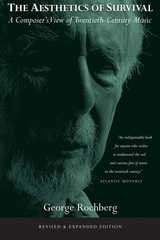
The Aesthetics of Survival
A Composer's View of Twentieth-Century MusicGeorge Rochberg
University of Michigan Press, 2005
"Rochberg presents the rare spectacle of a composer who has made his peace with tradition while maintaining a strikingly individual profile. . . . [H]e succeeds in transforming the sublime concepts of traditional music into contemporary language."
---Washington Post
"An indispensable book for anyone who wishes to understand the sad and curious fate of music in the twentieth century."
---Atlantic Monthly
"The writings of George Rochberg stand as a pinnacle from which our past and future can be viewed."
---Kansas City Star
As a composer, George Rochberg has played a leading role in bringing about a transformation of contemporary music through a reassessment of its relation to tonality, melody, and harmony. In The Aesthetics of Survival, the author addresses the legacy of modernism in music and its related effect on the cultural milieu, particularly its overemphasis on the abstract, rationalist thinking embraced by contemporary science, technology, and philosophy. Rochberg argues for the renewal of holistic values in order to ensure the survival of music as a humanly expressive art.
A renowned composer, thinker, and teacher, George Rochberg has been honored with innumerable awards, including, most recently, an Alfred I. du Pont Award for Outstanding Conductors and Composers, and an André and Clara Mertens Contemporary Composer Award. He lives in Pennsylvania.
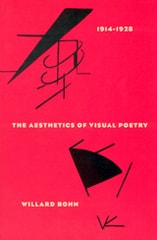
The Aesthetics of Visual Poetry, 1914-1928
Willard Bohn
University of Chicago Press, 1993
"An important contribution. Highly sophisticated, the study tends to raise its reader's impression of visual poetry in the twentieth century from trivial pastime to serious preoccupation."—Eric Sellin, Journal of Modern Literature
"With his definitive analyses full of quotable observations and sharp critical insights, Bohn has provided a model, pioneering study, one from which current and future studies of visual poetry will most certainly benefit."—Gerald J. Janacek, Romance Quarterly
"Bohn substantiates his thesis with thoughtful and often ingenious explications of texts both well known and hard to find. . . . Aesthetics of Visual Poetry is a thoroughly researched, beautifully written and fascinating introduction to an infinitely intriguing genre."—Mechthild Cranston, French Review
The Affinity of the Eye
Writing Nikkei in PeruIgnacio López-Calvo
University of Arizona Press, 2013
In The Affinity of the Eye: Writing Nikkei in Peru, Ignacio López-Calvo rises above the political emergence of the Fujimori phenomenon and uses politics and literature to provide one of the first comprehensive looks at how the Japanese assimilated and inserted themselves into Peruvian culture. Through contemporary writers’ testimonies, essays, fiction, and poetry, López-Calvo constructs an account of the cultural formation of Japanese migrant communities. With deftly sensitive interviews and comments, he portrays the difficulties of being a Japanese Peruvian. Despite a few notable examples, Asian Peruvians have been excluded from a sense of belonging or national identity in Peru, which provides López-Calvo with the opportunity to record what the community says about their own cultural production. In so doing, López-Calvo challenges fixed notions of Japanese Peruvian identity.
The Affinity of the Eye scrutinizes authors such as José Watanabe, Fernando Iwasaki, Augusto Higa, Doris Moromisato, and Carlos Yushimito, discussing their literature and their connections to the past, present, and future. Whether these authors push against or accept what it means to be Japanese Peruvians, they enrich the images and feelings of that experience. Through a close reading of literary and cultural productions, López-Calvo’s analysis challenges and reframes the parameters of being Nikkei in Peru.
Covering both Japanese issues in Peru and Peruvian issues in Japan, the book is more than a compendium of stories, characters, and titles. It proves the fluid, enriching, and ongoing relationship that exists between Peru and Japan.
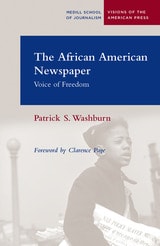
The African American Newspaper
Voice of FreedomPatrick S. Washburn
Northwestern University Press, 2006
In March of 1827 the nation's first black newspaper appeared in New York City—to counter attacks on blacks by the city's other papers. From this signal event, The African American Newspaper traces the evolution of the black newspaper—and its ultimate decline--for more than 160 years until the end of the twentieth century.
The book chronicles the growth of the black press into a powerful and effective national voice for African Americans during the period from 1910 to 1950--a period that proved critical to the formation and gathering strength of the civil rights movement that emerged so forcefully in the following decades. In particular, author Patrick S. Washburn explores how the Pittsburgh Courier and the Chicago Defender led the way as the two most influential black newspapers in U.S. history, effectively setting the stage for the civil rights movement's successes. Washburn also examines the numerous reasons for the enormous decline of black newspapers in influence and circulation in the decades immediately following World War II. His book documents as never before how the press's singular accomplishments provide a unique record of all areas of black history and a significant and shaping affect on the black experience in America.
The African Transformation of Western Medicine and the Dynamics of Global Cultural Exchange
David Baronov
Temple University Press, 2010
The book analyzes biomedicine as a complex and dynamic sociocultural form, the conceptual premises of which make it necessarily subject to ongoing change and development as it travels the globe. David Baronov captures the complexities of this cultural exchange by using world-systems analysis in a way that places global cultural processes on equal footing with political and economic processes. In doing so, he both allows the story of Africa’s transformation of “Western” biomedicine to be told and offers new insights into the capitalist world system.

The Afro-Asian Century, Volume 11
Andrew F. Jones and Nikhil Pal Singh, eds.
Duke University Press, 0
By bringing instances of Afro-Asian traffic in the realms of politics, economics, and culture to the foreground, this collection maps an alternative global circuit. The issue examines the non-Eurocentric form of cosmopolitanism that emerged from creative encounters of racialized people in Jazz Age Paris, the Harlem Renaissance, and colonial Shanghai. It reconceptualizes the Indian Ocean as a crucial site for Afro-Asian cross-pollination and investigates the cinematic culture of kung fu as a global discourse of Afro-Asian anti-imperialism.
Contributors. Brent Edwards, Andrew F. Jones, Yukiko Koshiro, Bill Mullen, Vijay Prashad, William Schaefer, Nikhil Pal Singh, Françoise Vergès, Daniel Widener
The Aftermath of War
Jean-Paul Sartre
Seagull Books, 2008