Results by title
1713 books match the query '21st century' and 315 start with t
The Catholic Church and American Culture
Why the Claims of Dan Brown Strike a ChordEric A. Plumer
University of Scranton Press, 2009
More than fifty books debunking the religious claims of The Da Vinci Code have been published. Thisis the first book devoted to the fundamentally more interesting question: if those claims are so unfounded and erroneous, why have they resonated so strongly with millions of intelligent readers and filmgoers?
From the sexual abuse scandal that shook the foundations of the Catholic Church to the 9/11 terrorist attacks that cast a cloud over a troubled nation, Eric Plumer’s The Catholic Church and American Culture: Why the Claims of the DaVinci Code Struck a Chord investigates the contemporary events, ideas, and movements that fostered Dan Brown’s unprecedented dominance of best-seller lists and dinner-table conversation. This ambitious book considers the feminist movement, radical individualism, twelve-step programs, the authority of science and psychology, and other cultural developments that paved the way for The Da Vinci Code craze. It also reflects on the recent publication of the Gnostic Gospels, including the Gospel of Mary Magdalene. Plumer’s engaging book is sure to stimulate further discussion about the role of religion in contemporary life.
The Chekhovian Intertext
Dialogue with a ClassicLyudmila Parts
The Ohio State University Press, 2008
In The Chekhovian Intertext Lyudmila Parts explores contemporary Russian writers’ intertextual engagement with Chekhov and his myth. She offers a new interpretative framework to explain the role Chekhov and other classics play in constructing and maintaining Russian national identity and the reasons for the surge in the number of intertextual engagements with the classical authors during the cultural crisis in post-perestroika Russia.
The book highlights the intersection of three distinct concepts: cultural memory, cultural myth, and intertextuality. It is precisely their interrelation that explains how intertextuality came to function as a defense mechanism of culture, a reaction of cultural memory to the threat of its disintegration.
In addition to offering close readings of some of the most significant short stories by contemporary Russian authors and by Chekhov, as a theoretical case study the book sheds light on important processes in contemporary literature: it explores the function of intertextuality in the development of Russian literature, especially post-Soviet literature; it singles out the main themes in contemporary literature, and explains their ties to national cultural myths and to cultural memory. The Chekhovian Intertext may serve as a theoretical model and impetus for examinations of other national literatures from the point of view of the relationship between intertextuality and cultural memory.
The City Creative
The Rise of Urban Placemaking in Contemporary AmericaMichael H. Carriere and David Schalliol
University of Chicago Press, 2021
Spanning the 1950s to the post-recession 2010s, The City Creative highlights the roles of such prominent individuals and organizations as Jane Jacobs, Christopher Alexander, Richard Sennett, Project for Public Spaces, and the National Endowment for the Arts in the development of urban placemaking, both in the abstract and on the ground. But that’s only half the story. Bringing the narrative to the present, Michael H. Carriere and David Schalliol also detail placemaking interventions at more than 200 sites in more than 40 cities, combining archival research, interviews, participant observation, and Schalliol’s powerful documentary photography. Carriere and Schalliol find that while these formal and informal placemaking interventions can bridge local community development and regional economic plans, more often than not, they push the boundaries of mainstream placemaking. Rather than simply stressing sociability or market-driven economic development, these initiatives offer an alternative model of community-led progress with the potential to redistribute valuable resources while producing tangible and intangible benefits for their communities. The City Creative provides a kaleidoscopic overview of how these initiatives grow, and sometimes collapse, illustrating the centrality of placemaking in the evolution of the American city and how it can be reoriented to meet demands for a more equitable future.
The City She Was
Carmen Giménez Smith
University Press of Colorado, 2011
Published by the Center for Literary Publishing at Colorado State University
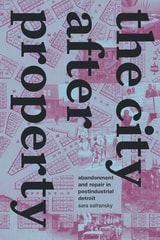
The City after Property
Abandonment and Repair in Postindustrial DetroitSara Safransky
Duke University Press, 2023
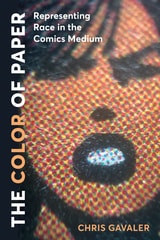
The Color of Paper
Representing Race in the Comics MediumChris Gavaler
The Ohio State University Press, 2026
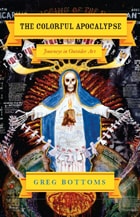
The Colorful Apocalypse
Journeys in Outsider ArtGreg Bottoms
University of Chicago Press, 2007
The Reverend Howard Finster was twenty feet tall, suspended in darkness. Or so he appeared in the documentary film that introduced a teenaged Greg Bottoms to the renowned outsider artist whose death would help inspire him, fourteen years later, to travel the country. Beginning in Georgia with a trip to Finster’s famous Paradise Gardens, his journey—of which The Colorful Apocalypse is a masterly chronicle—is an unparalleled look into the lives and visionary works of some of Finster’s contemporaries: the self-taught evangelical artists whose beliefs and oeuvres occupy the gray area between madness and Christian ecstasy.
With his prodigious gift for conversation and quietly observant storytelling, Bottoms draws us into the worlds of such figures as William Thomas Thompson, a handicapped ex-millionaire who painted a 300-foot version of the book of Revelation; Norbert Kox, an ex-member of the Outlaws biker gang who now lives as a recluse in rural Wisconsin and paints apocalyptic visual parables; and Myrtice West, who began painting to express the revelatory visions she had after her daughter was brutally murdered. These artists’ works are as wildly varied as their life stories, but without sensationalizing or patronizing them, Bottoms—one of today’s finest young writers—gets at the heart of what they have in common: the struggle to make sense, through art, of their difficult personal histories.
In doing so, he weaves a true narrative as powerful as the art of its subjects, a work that is at once an enthralling travelogue, a series of revealing biographical portraits, and a profound meditation on the chaos of despair and the ways in which creativity can help order our lives.
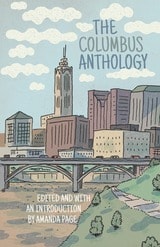
The Columbus Anthology
Amanda Page
The Ohio State University Press, 2020
Race, sports, the endless squeeze of gentrification, the city’s booming literary and comics scenes, its reputation as a haven for queer life, the sometimes devastating differences in perspective among black and white, native and transplant residents—and more than one tribute to Buckeye Donuts—make this anthology a challenging and an energizing read. From Hanif Abdurraqib’s sparkling and urgent portrait of Columbus’s vital immigrant culture as experienced through Crew games to Nick Dekker’s insights into breakfast as a vehicle for getting to know a city to the poetry of Maggie Smith and Ruth Awad, the pieces gathered here show us a Columbus far more textured than any test marketer could dream up.

The Coming Health Crisis
Who Will Pay for Care for the Aged in the 21st Century?John R. Wolfe
University of Chicago Press, 1993
In previous decades, when younger Americans far outnumbered older ones, retirees could depend on financial support through taxes from the population at large. But as "Boomers" retire and the work force begins to shrink, there will be a disproportionately large population of retirees to workers. With such a big jump in the percentage of older Americans in the population, fewer workers will be able to to transfer funds, through taxes, to retirees. Moreover, other traditionally reliable sources of financial assistance—Social Security, Medicare, and Medicaid—have faced serious financial difficulties in recent years. Who will the aged turn to for assistance?
The Coming Health Crisis suggests that as funds from all quarters dwindle, older Americans will have to look to alternative programs for financial assistance. Wolfe urges immediate action to develop new saving programs and increase existing transfer schemes to head off an imminent crisis. Although tax increases might provide some resources, he demonstrates that it is more important to accumulate capital to create solid reserves for the future. Wolfe also explores two roles for government: prefunding new or existing social insurance programs and promoting private insurance options. By exempting insurance fund income from corporate taxation and permitting people at all income levels to defer income tax on accounts earmarked for long-term care, he shows how government could greatly encourage and expand personal saving.
Finally, this work assesses the value of other recent health and long-term-care innovations: social/health maintenance organizations, long-term-care individual retirement accounts, and reverse annuity mortgages, in addition to vouchers, care rationing, mandatory public insurance, and expanded private coverage. Through this wide-ranging survey, Wolfe demonstrates that, through a combination of these programs, we can care for the aging "Baby Boom" generation by anticipating their needs and saving now.
The Conservative Resurgence and the Press
The Media's Role in the Rise of the RightJames Brian McPherson
Northwestern University Press, 2008
Consumers of American media find themselves in a news world that has shifted toward more conservative reporting. This book takes a measured, historical view of the shift, addressing factors that include the greater skill with which conservatives have used the media, the media’s gradual trend toward conservatism, the role of religion, and the effects of media conglomeration. The book makes the case that the media have managed to not only enable today’s conservative resurgence but also ignore, largely, the consequences of that change for the American people.
The Continuing Storm
Learning from KatrinaKai Erikson and Lori Peek
University of Texas Press, 2022
2023 Finalist, Colorado Book Awards, History/Biography Category
This final volume in the award-winning Katrina Bookshelf series reflects upon the lessons of Hurricane Katrina and what they reveal about our society and current cultural climate.
More than fifteen years later, Hurricane Katrina maintains a strong grip on the American imagination. The reason is not simply that Katrina was an event of enormous scale, although it certainly was by any measure one of the most damaging storms in American history. But, quite apart from its lethality and destructiveness, Katrina retains a place in living memory because it is one of the most telling disasters in our recent national experience, revealing important truths about our society and ourselves.
The final volume in the award-winning Katrina Bookshelf series The Continuing Storm reflects upon what we have learned about Katrina and about America. Kai Erikson and Lori Peek expand our view of the disaster by assessing its ongoing impact on individual lives and across the wide-ranging geographies where displaced New Orleanians landed after the storm. Such an expanded view, the authors argue, is critical for understanding the human costs of catastrophe across time and space. Concluding with a broader examination of disasters in the years since Katrina—including COVID-19—The Continuing Storm is a sobering meditation on the duration of a catastrophe that continues to exact steep costs in human suffering.
The Control of the Past
Herbert Butterfield and the Pitfalls of Official HistoryPatrick Salmon
University of London Press, 2021
In 1949, English historian Herbert Butterfield published “Official History: Its Pitfalls and Its Criteria,” a now-famous diatribe against the practice of publishing official history. Butterfield was one of the earliest and strongest critics of what he saw as the British government’s attempts to control the past through the writing of history. But why was Butterfield so hostile to state-sanctioned history, and why do his views still matter today?
This important new book details how successive governments have applied a selective approach to the past in order to tell or retell Britain’s national history. Providing a unique overview of the main trends of official history in Britain since World War II, the book details how Butterfield came to suspect that the British government was trying to suppress vital documents revealing the Duke of Windsor’s dealings with Nazi Germany. This seemed to confirm his long-held belief that all governments would seek to manipulate history if they could and conceal the truth if they could not.
At the beginning of the twenty-first century, official history is still being written. The Control of the Past concludes with an insider’s perspective on the many issues it faces today—on freedom of information, social media, and reengaging with our nation’s colonial legacy. Governments have recently been given many reminders that history matters, and Butterfield’s work reminds us that we must remain vigilant in monitoring how they respond to the challenge.
The Courteous Power
Japan and Southeast Asia in the Indo-Pacific EraJohn D. Ciorciari and Kiyoteru Tsutsui, editors
University of Michigan Press, 2021
The Courteous Power seeks to provide a nuanced view of the current relationship between Japan and Southeast Asia. Much of the current scholarship on East–Southeast Asian engagement has focused on the multidimensional chess game playing out between China and Japan, as the dominant post-imperialist powers. Alternatively, there has been renewed attention on ASEAN and other Southeast Asian–centered initiatives, explicitly minimizing the influence of East Asia in the region. Given the urgency of understanding the careful balance in the Indo-Pacific region, this volume brings together scholars to examine the history and current engagement from a variety of perspectives, ranging from economic and political, to the cultural and technological, while also focusing more clearly on the specific relationship between the region and Japan.
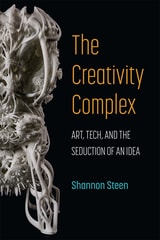
The Creativity Complex
Art, Tech, and the Seduction of an IdeaShannon Steen
University of Michigan Press, 2023
“Creativity” is a word that excites and dazzles us. It promises brilliance and achievement, a shield against conformity, a channel for innovation across the arts, sciences, technology, and education, and a mechanism for economic revival and personal success. But it has not always evoked these ideas. The Creativity Complex traces the history of how creativity has come to mean the things it now does, and explores the ethical implications of how we use this term today for both the arts and for the social world more broadly. Richly researched, the book explores how creativity has been invoked in arenas as varied as Enlightenment debates over the nature of cognition, Victorian-era intelligence research, the Cold War technology race, contemporary K-12 education, and even modern electoral politics. Ultimately, The Creativity Complex asks how our ideas about creativity are bound up with those of self-fulfillment, responsibility, and the individual, and how these might seduce us into joining a worldview and even a set of social imperatives that we might otherwise find troubling.

The Cuban Revolution in the 21st Century
George Lambie
Pluto Press, 2010
While most books and articles on Cuba seek to analyse the island’s socialist experiment from the perspective of internal dynamics or international relations, this book attempts to understand the revolutionary process as part of a counter-current against neoliberal globalisation.
Rather than presenting Cuba as a socialist survivor, whose performance must be measured against the standards set by the ‘international community’, George Lambie judges Cuban socialism on the goals which the revolution sets for itself. He shows that despite Cuba’s isolation in the ‘New World Order’, and the enormous pressures it has faced to ‘conform’, its faith in an alternative socialist project has continued and grown.
Now that neoliberalism is in crisis, Cuba’s promotion of socialist values is finding a renewed relevance. In this fascinating study Lambie argues that Cuba is again becoming a symbol, and practical example, of socialism in action. This book is essential reading for students of politics and Latin American studies.
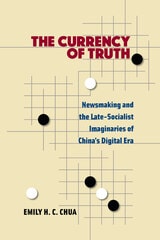
The Currency of Truth
Newsmaking and the Late-Socialist Imaginaries of China's Digital EraEmily H. C. Chua
University of Michigan Press, 2023
In The Currency of Truth, Emily H. C. Chua argues that news in China works less as a medium of mass communication than as a kind of currency as industry players make and use news articles to create agreements, build connections, and protect and advance their positions against one another. Looking at the ethical and professional principles that well-intentioned and civically minded journalists strive to uphold, and the challenges and doubts that they grapple with in the process, Chua brings her findings into conversation around “post-truth” news and the “crisis” of professional journalism in the West. The book encourages readers to rethink contemporary news, arguing that rather than setting out from the assumption that news works either to inform or deceive its publics, we should explore the “post-public” social and political imaginaries emerging among today’s newsmakers and remaking the terms of their practice.
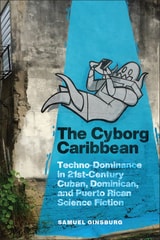
The Cyborg Caribbean
Techno-Dominance in Twenty-First-Century Cuban, Dominican, and Puerto Rican Science FictionSamuel Ginsburg
Rutgers University Press, 2023
The Cyborg Caribbean examines a wide range of twenty-first-century Cuban, Dominican, and Puerto Rican science fiction texts, arguing that authors from Pedro Cabiya, Alexandra Pagan-Velez, and Vagabond Beaumont to Yasmin Silvia Portales, Erick Mota, and Yoss, Haris Durrani, and Rita Indiana Hernandez, among others, negotiate rhetorical legacies of historical techno-colonialism and techno-authoritarianism. The authors span the Hispanic Caribbean and their respective diasporas, reflecting how science fiction as a genre has the ability to manipulate political borders. As both a literary and historical study, the book traces four different technologies—electroconvulsive therapy, nuclear weapons, space exploration, and digital avatars—that have transformed understandings of corporality and humanity in the Caribbean. By recognizing the ways that increased technology may amplify the marginalization of bodies based on race, gender, sexuality, and other factors, the science fiction texts studied in this book challenge oppressive narratives that link technological and sociopolitical progress.
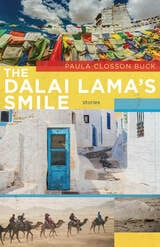
The Dalai Lama's Smile
StoriesPaula Closson Buck
Acre Books, 2025
A grieving American father visits Dharamsala to investigate the murder of the son he’s never understood and finds himself delving into the mystery of the young man’s life. A Turkish-Cypriot teacher is tasked with making an inventory of household goods in an occupied tourist resort the inhabitants have fled. A Greek sculptor whose marriage is failing covers for a student from the US who, instead of learning the art, engages in an affair. A Buddhist nun enlists the help of a Peace Corps worker to kill a suffering dog. A wannabe eco-activist in Kentucky writes confessional letters to Boyan Slat, the young CEO of The Ocean Cleanup. A woman in a Rajasthan tourist caravan bears helpless witness to a dire culture clash.
As Closson Buck’s characters encounter circumstances that challenge their understanding of themselves and the world around them, they are forced to negotiate fallout stemming from religious dogma, environmental crisis, and political violence. Ranging from fabulism to realism, the stories in The Dalai Lama’s Smile invite us to explore the perils and the possibilities that come from engaging the unknown.
The Death and Life of Chinese Civil Society
Mujun Zhou
University of Michigan Press, 2026
Mujun Zhou employs the concept of interstitial space, or the space where the exercise of power has not been fully institutionalized, to examine the history of the civil society project over the past three decades and its changing relationship with other social movements. Zhou suggests that by advocating for civil society the liberals gained allies and thematized many social problems rising during China’s economic reform; however, liberals’ activism also produced new forms of power inequalities.

The Deer in the Mirror
Cary Holladay
The Ohio State University Press, 2013
The Difference Aesthetics Makes
On the Humanities “After Man”Kandice Chuh
Duke University Press, 2019
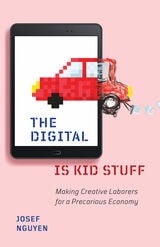
The Digital Is Kid Stuff
Making Creative Laborers for a Precarious EconomyJosef Nguyen
University of Minnesota Press, 2021
How popular debates about the so-called digital generation mediate anxieties about labor and life in twenty-first-century America
“The children are our future” goes the adage, a proclamation that simultaneously declares both anxiety as well as hope about youth as the next generation. In The Digital Is Kid Stuff, Josef Nguyen interrogates this ambivalence within discussions about today’s “digital generation” and the future of creativity, an ambivalence that toggles between the techno-pessimism that warns against the harm to children of too much screen time and a techno-utopianism that foresees these “digital natives” leading the way to innovation, economic growth, increased democratization, and national prosperity.
Nguyen engages cultural histories of childhood, youth, and creativity through chapters that are each anchored to a particular digital media object or practice. Nguyen narrates the developmental arc of a future creative laborer: from a young kid playing the island fictions of Minecraft, to an older child learning do-it-yourself skills while reading Make magazine, to a teenager posting selfies on Instagram, to a young adult creative laborer imagining technological innovations using design fiction.
Focusing on the constructions and valorizations of creativity, entrepreneurialism, and technological savvy, Nguyen argues that contemporary culture operates to assuage profound anxieties about—and to defuse valid critiques of—both emerging digital technologies and the precarity of employment for “creative laborers” in twenty-first-century neoliberal America.
The Dilemma of Compliance
Political Parties and Post-Election DisputesSvitlana Chernykh
University of Michigan Press, 2024
To answer these questions, this book draws on an original dataset of post-election responses encompassing over 300 political parties, which participated in 270 elections held in twenty-two countries of Eastern Europe and the former Soviet Union over a period of more than two decades. In doing so, it offers a new theoretical framework for studying electoral compliance in comparative perspective and advances research on democratic transition, democracy promotion, post-election protests, and party politics.
The Disabled Child
Memoirs of a Normal FutureAmanda Apgar
University of Michigan Press, 2023
The Divided States
Unraveling National Identities in the Twenty-First CenturyEdited by Laura J. Beard and Ricia Anne Chansky
University of Wisconsin Press, 2023
Working across auto/biography studies, American studies, and human geography—all of which deal with the current interest in competing narratives, “alternative facts,” and accountability—the essays engage in and contribute to critical conversations in classrooms, scholarship, and the public sphere. The authors draw from a variety of fields, including anthropology; class analysis; critical race theory; diasporic, refugee, and immigration studies; disability studies; gender studies; graphic and comix studies; Indigenous studies; linguistics; literary studies; sociology; and visual culture. And the genres under scrutiny include diary, epistolary communication, digital narratives, graphic narratives, literary narratives, medical narratives, memoir, oral history, and testimony.
This fresh and theoretically engaged volume will be relevant to anyone interested in the multiplicity of voices that make up the US national narrative.
The Documented Child
Migration, Personhood, and Citizenship in Twenty-First-Century U.S. Latinx Children's LiteratureMaya Socolovsky
University of Arizona Press, 2025
Immigration is at once a personal, immediate, and urgent issue that plays a central role in the United States’ perception of itself. In The Documented Child, scholar Maya Socolovsky demonstrates how the portrayal of Latinx children has shifted over the first two decades of the twenty-first century in literary texts aimed at children and young adults and looks at how these shifts map onto broader changes in immigration policy and discourse.
Through a critical inquiry into picture books and middle-grade and young adult literature, Socolovsky argues that the literary documentations of—and for—U.S. Latinx children have shifted over the decades, from an emphasis on hybrid transnationalism to that of a more American-oriented self. Socolovsky delves into texts written from 1997 to 2020, a period marked by tremendous changes in U.S. immigration policies, amplified discourses around nationhood, and an increasingly militarized border. The author shows how children’s and young adult books have shifted their depictions of the border, personal and national identity, and sovereignty.
For students, scholars, and educators of Latinx studies and children’s literature, this work shows how the creators of children’s literature reflect new strategies for representing the undocumented Latinx child protagonist. While earlier books document the child as a transnational (sometimes global) subject, later books document her as both a transnational and U.S. national subject. The Documented Child explores this change as a necessary survival strategy, reflecting current awareness that cultural hybridity and transnational identity are not sufficient stand-ins for the stability and security of legal personhood.
The Dreamer and the Dream
Afrofuturism and Black Religious ThoughtRoger A. Sneed
The Ohio State University Press, 2021
In The Dreamer and the Dream: Afrofuturism and Black Religious Thought, Roger A. Sneed illuminates the interplay of Black religious thought with science fiction narratives to present a bold case for Afrofuturism as an important channel for Black spirituality. In the process, he challenges the assumed primacy of the Black church as the arbiter of Black religious life. Incorporating analyses of Octavia Butler’s Parable books, Janelle Monáe’s Afrofuturistic saga, Star Trek’s Captain Benjamin Sisko, Marvel’s Black Panther, and Sun Ra and the Nation of Islam, Sneed demonstrates how Afrofuturism has contributed to Black visions of the future. He also investigates how Afrofuturism has influenced religious scholarship that looks to Black cultural production as a means of reimagining Blackness in the light of the sacred. The result is an expansive new look at the power of science fiction and Afrofuturism to center the diversity of Black spirituality.

The Dynamics of European Integration
Causes and Consequences of Institutional ChoicesThomas König
University of Michigan Press, 2024
The Economics of Killing
How the West Fuels War and Poverty in the Developing WorldVijay Mehta
Pluto Press, 2012
Globalisation has created an interconnected world, but has not diminished violence, militarism and inequality. The Economics of Killing describes how the power of global elites, entrenched under globalisation, has created a deadly cycle of violence.
In this groundbreaking work, Vijay Mehta shows how attempts at peaceful national development are routinely blocked by Western powers. He locates the 2008 financial crisis in US attempts to block China's model of development. He shows how Europe and the US conspire with regional dictators to prevent countries from developing advanced industries, and how this system has fed terrorism.
Mehta argues that a different world is possible, based on policies of disarmament, demilitarisation and sustainable development. This original and thought-provoking book will be of great interest to anyone concerned about the consequences of endless war fuelled by the West.
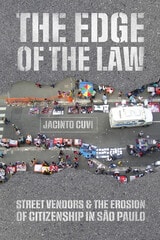
The Edge of the Law
Street Vendors and the Erosion of Citizenship in São PauloJacinto Cuvi
University of Chicago Press, 2025
With a little initiative and very little startup money, an outgoing individual might sell you a number of delights and conveniences familiar to city dwellers—from cold water bottles while you’re sitting in traffic to a popsicle from a cart on a summer afternoon in the park. Such vendors form a significant share of the workforce in São Paulo, Brazil, but their ubiquity belies perpetual struggle. Some have the right to practice their trade; others do not. All of them strive to make it—or stay afloat.
In The Edge of the Law, sociologist Jacinto Cuvi introduces us to the world of street vendors and teases out the relationship between the construction of legality and the experience of citizenship. As São Paulo’s city government undertakes a large-scale plan to cancel street vending licenses and evict street vendors, Cuvi reveals how the rights of informal workers can be revoked or withheld and how the lines can be redrawn between work that is “legal” and work that takes place under constant fear of law enforcement. Alongside the mechanics of disenfranchisement, Cuvi captures the lived experience of criminalization, dissecting the distribution of (shallow) rights among vendors who continually reinvent strategies to eke out a living while dealing with the constraints and pressures of informal citizenship at the edge of the law.
The Editor Function
Literary Publishing in Postwar AmericaAbram Foley
University of Minnesota Press, 2021
Offering the everyday tasks of literary editors as inspired sources of postwar literary history
Michel Foucault famously theorized “the author function” in his 1969 essay “What Is an Author?” proposing that the existence of the author limits textual meaning. Abram Foley shows a similar critique at work in the labor of several postwar editors who sought to question and undo the corporate “editorial/industrial complex.” Marking an end to the powerful trope of the editor as gatekeeper, The Editor Function demonstrates how practices of editing and publishing constitute their own kinds of thought, calling on us to rethink what we read and how.
The Editor Function follows avant-garde American literary editors and the publishing practices they developed to compete against the postwar corporate consolidation of the publishing industry. Foley studies editing and publishing through archival readings and small press and literary journal publishing lists as unique sites for literary inquiry. Pairing histories and analyses of well- and lesser-known figures and publishing formations, from Cid Corman’s Origin and Nathaniel Mackey’s Hambone to Dalkey Archive Press and Semiotext(e), Foley offers the first in-depth engagement with major publishing initiatives in the postwar United States.
The Editor Function proposes that from the seemingly mundane tasks of these editors—routine editorial correspondence, line editing, list formation—emerge visions of new, better worlds and new textual and conceptual spaces for collective action.
The Educational Leadership Challenge
Redefining Leadership for the 21st CenturyEdited by Joseph Murphy
University of Chicago Press, 2002
The End of Tolerance
Racism in 21st Century BritainArun Kundnani
Pluto Press, 2007
Exacerbated by the attacks of 9/11 and 7/7, Kundnani argues that a new form of racism is emerging that is based on a systematic failure to understand the causes of forced migration, global terrorism and social segregation. The result is a climate of hatred, especially against Muslims and asylum seekers, and the erosion of the human rights of those whose cultures and values are perceived as 'alien'.
Communities are more divided than ever. Yet the government presses ahead with flawed immigration and 'integration' policies and anti-terrorist legislation that creates further resentment, alienation and criminalisation. Behind it all lies a refusal to grasp the ways in which the world has been changed by neoliberal globalisation.
What can be done? This timely and precise analysis is a useful account of why racism is now thriving -- and what can be done to stop it. It will be of interest to anyone who is appalled by the current state of race relations in Britain and it should be required reading for all policy-makers.
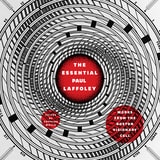
The Essential Paul Laffoley
Works from the Boston Visionary CellPaul Laffoley
University of Chicago Press, 2016
Living and working in a tiny space in Boston he called the “Boston Visionary Cell,” Laffoley became best known for his large mandala-like paintings filled with symbols and texts. Their titles range from the paranormal and arcane, such as The Ectoplasmic Man and The Sexuality of Robots, to the organic, as with Das Urpflanze Haus, to the erudite, including De Rerum Natura, a reference to the Roman poet Lucretius. Whether focused on working with plants to create living architecture or centered on the process of alchemy, these detailed, brilliantly colored works reflect Laffoley’s utopian hopes and transdisciplinary interests: throughout, he aimed to unite the boundless freedom of human imagination with the mathematical precision of the physical world.
Nearly one hundred of Laffoley’s works are showcased here along with his accompanying “thought-forms,” texts specific to each painting that comment on its particular content. Together with an introduction by editor and gallerist Douglas Walla, a biography by fellow artist Steven Moskowitz, and essays by scholars Linda Dalrymple Henderson and Arielle Saiber, this book is a long-awaited celebration of the theories, writings, and artworks of an extraordinary mind.
The European Radical Left
Movements and Parties since the 1960sGiorgos Charalambous
Pluto Press, 2021
Is today’s left really new? How has the European radical left evolved?
Giorgos Charalambous answers these questions by looking at three moments of rapid political change - the late 1960s to late 1970s; the turn of the millennium; and post-2008. He challenges the conventional understanding of a ‘new left’, drawing out continuities with earlier movements and parties.
Charalambous examines the ‘Long ‘68’, symbolised by the May uprisings in France, which saw the rise of new left forces and the widespread criticism by younger radical activists of traditional communist and socialist parties. He puts this side by side with the turn of the millennium when the Global Justice Movement rose to prominence and changed the face of the international left, and also the period after the financial crash of 2008 and the rise of anti-austerity politics which initiated the most recent wave of new left parties such as Podemos in Spain and Syriza in Greece.
With a unique ‘two-level’ perspective, Charalambous approaches the left through both social movements and party politics, looking at identities, rhetoric and organization, and bringing a fresh new approach to radical history, as well as assessing challenges for both activists and scholars.

The Expert Library
Staffing, Sustaining, and Advancing the Academic Library in the 21st CenturyScott Walter
Assoc of College & Research Libraries, 2011
The Extractive Zone
Social Ecologies and Decolonial PerspectivesMacarena Gómez-Barris
Duke University Press, 2017
The Face of Peace
Government Pedagogy amid Disinformation in ColombiaGwen Burnyeat
University of Chicago Press, 2022
Colombia’s 2016 peace agreement with the FARC guerrillas sought to end fifty years of war and won President Juan Manuel Santos the Nobel Peace Prize. Yet Colombian society rejected it in a polarizing referendum, amid an emotive disinformation campaign. Gwen Burnyeat joined the Office of the High Commissioner for Peace, the government institution responsible for peace negotiations, to observe and participate in an innovative “peace pedagogy” strategy to explain the agreement to Colombian society. Burnyeat’s multi-scale ethnography reveals the challenges government officials experienced communicating with skeptical audiences and translating the peace process for public opinion. She argues that the fatal flaw in the peace process lay in government-society relations, enmeshed in culturally liberal logics and shaped by the politics of international donors. The Face of Peace offers the Colombian case as a mirror to the global crisis of liberalism, shattering the fantasy of rationality that haunts liberal responses to “post-truth” politics.
The Fanfiction Reader
Folk Tales for the Digital AgeFrancesca Coppa
University of Michigan Press, 2017
The Fate of Difficulty in the Poetry of Our Time
Edited by Charles Altieri and Nicholas D. Nace
Northwestern University Press, 2017
The essays in this volume include poets writing on the works of a younger generation (Lyn Hejinian on Paolo Javier, Bob Perelman on Rachel Zolf, Roberto Tejada on Rosa Alcalá), influential writers addressing the work of peers (Ben Lerner on Maggie Nelson, Michael W. Clune on Aaron Kunin), critics making imaginative leaps to encompass challenging work (Brian M. Reed on Sherwin Bitsui, Siobhan Philips on Juliana Spahr), and younger scholars coming to terms with poets who continue to govern new poetic experimentation (Joseph Jeon on Myung Mi Kim, Lytle Shaw on Lisa Robertson).
In pairings that are both intuitive (Marjorie Perloff on Craig Dworkin) and unexpected (Langdon Hammer on Srikanth Reddy), The Fate of Difficulty in the Poetry of Our Time illuminates the myriad pathways and strategies for exploring difficult poetry of the present.
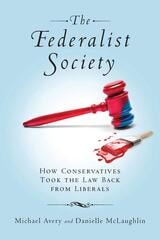
The Federalist Society
How Conservatives Took the Law Back from LiberalsMichael Avery
Vanderbilt University Press, 2013
Today the Society claims that 45,000 conservative lawyers and law students are involved in its activities. Four Supreme Court Justices--Antonin Scalia, Clarence Thomas, John Roberts, and Samuel Alito--are current or former members. Every single federal judge appointed in the two Bush presidencies was either a Society member or approved by members. During the Bush years, young Federalist Society lawyers dominated the legal staffs of the Justice Department and other important government agencies.
The Society has lawyer chapters in every major city in the United States and student chapters in every accredited law school. Its membership includes economic conservatives, social conservatives, Christian conservatives, and libertarians, who differ with each other on significant issues, but who cooperate in advancing a broad conservative agenda.
How did this happen? How did this group of conservatives succeed in moving their theories into the mainstream of legal thought?
What is the range of positions of those associated with the Federalist Society in areas of legal and political controversy? The authors survey these stances in separate chapters on
• regulation of business and private property
• race and gender discrimination and affirmative action
• personal sexual autonomy, including abortion and gay rights
• American exceptionalism and international law
The Financial Crisis and the Global South
A Development PerspectiveYilmaz Akyuz
Pluto Press, 2013
This book is a major contribution exploring the policy options available for developing and emerging economies in response to the global economic crises.
Written by a highly respected development economist, the book gives a clear-eyed account of the issues particular to these countries and critically evaluates different policy approaches, including reforms in financial, monetary and trade policies. Informed by deep scholarship as well as practical experience, Yilmaz Akyüz draws on empirical data, historical context and theoretical expertise, with special attention paid to issues such as the role of the International Monetary Fund and China.
The Financial Crisis and the Global South is a landmark book that will be of interest to practitioners, scholars, theorists and students of economics and development studies.
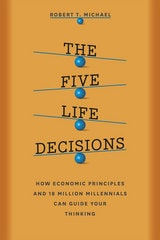
The Five Life Decisions
How Economic Principles and 18 Million Millennials Can Guide Your ThinkingRobert T. Michael
University of Chicago Press, 2016
Economist Robert T. Michael won’t tell you what to choose. Instead, he’ll show you how to make smarter choices. Michael focuses on five critical decisions we all face about college, career, partners, health, and parenting. He uses these to demonstrate how the science of scarcity and choice—concepts used to guide major business decisions and shape national legislation—can offer a solid foundation for our own lives. Employing comparative advantage can have a big payoff when picking a job. Knowing how to work the marketplace can minimize uncertainty when choosing a partner. And understanding externalities—the ripple of results from our actions—can clarify the if and when of having children.
Michael also brings in data from the National Longitudinal Survey of Youth, a scientific sample of 18 million millennials in the United States that tracks more than a decade of young adult choices and consequences. As the survey’s longtime principal investigator and project director, Michael shows that the aggregate decisions can help us understand what might lie ahead along many possible paths—offering readers insights about how their own choices may turn out.
There’s no singular formula for always making the right choice. But the adaptable framework and rich data at the heart of The Five Life Decisions will help you feel confident in whatever you decide.
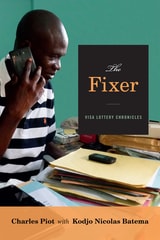
The Fixer
Visa Lottery ChroniclesCharles Piot with Kodjo Nicolas Batema
Duke University Press, 2019
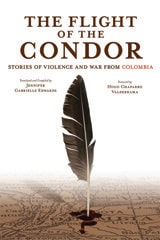
The Flight of the Condor
Stories of Violence and War from ColombiaTranslated and compiled by Jennifer Gabrielle Edwards; Foreword by Hugo Chaparro
University of Wisconsin Press, 2007
This anthology reflects some of Colombia’s finest literary talent, and most of these stories appear here for the first time in English translation. They reveal the contradictions and complexities of the human condition, yet they also offer hope for the future. In their bold revelations of the depths of despair, these writers provide gripping portrayals of humanity’s tenacious resistance to those very depths.
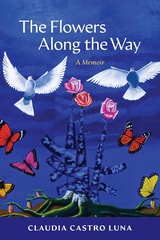
The Flowers Along the Way
A MemoirClaudia Castro Luna
Northwestern University Press, 2026
Passionately demonstrating the dormant trauma of political violence and the redemption waiting beyond it
From El Salvador’s lush countryside to the streets of Oakland, California, a young mother wrestles with the intersecting forces of memory, history, and language in order to chart a new path for herself and her growing family. Fleeing political unrest and civil war violence in El Salvador, fourteen-year-old Claudia Castro Luna arrived in the United States with her family in 1981. Two decades later, holding her two-year-old and pregnant with her second child, she survives a public shooting by hiding behind shrubs in front of her house in Oakland. This event unleashes disorienting and traumatic memories, plunging her into a journey of discovery as she grapples with PTSD, recovers family stories, and begins to make sense of all that was torn asunder within her by the experiences of war and emigration. Beauty, longing, fear, and joy entwine in this powerful story of love, self-determination, and the search for home.
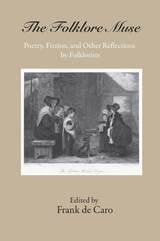
The Folklore Muse
Poetry, Fiction, and Other Reflections by FolkloristsFrank de Caro
Utah State University Press, 2008
Folklore—the inherently creative expression, transmission, and performance of cultural traditions—has always provided a deep well of material for writers, musicians, and artists of all sorts. Folklorists usually employ descriptive and analytical prose, but they, like scholars in other social sciences, have increasingly sought new, creative and reflexive modes of discourse. Many folklorists are also creative writers, some well known as such, and the folk traditions they research often provide shape and substance to their work. This collection of creative writing grounded in folklore and its study brings together some of the best examples of such writing.
Contributors to this collection include Teresa Bergen, John Burrison, Norma E. Cantu, Frank de Caro, Holly Everett, Danusha Goska, Neil R. Grobman, Carrie Hertz, Edward Hirsch, Laurel Horton, Rosan Augusta Jordan, Paul Jordan-Smith, Elaine J. Lawless, Cynthia Levee, Jens Lund, Mary Magoulick, Bernard McCarthy, Joanne B. Mulcahy, Kirin Narayan, Ted Olson, Daniel Peretti, Leslie Prosterman, Jo Radner, Susan Stewart, Jeannie Banks Thomas, Jeff Todd Titon, Libby Tucker, Margaret Yocom, and Steve Zeitlin.
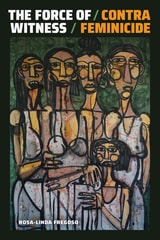
The Force of Witness
Contra FeminicideRosa-Linda Fregoso
Duke University Press, 2023
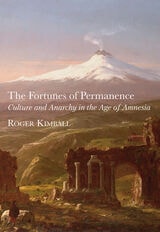
The Fortunes of Permanence
Culture and Anarchy in an Age of AmnesiaRoger Kimball
St. Augustine's Press, 2022
“Cultural instructions.” Everyone who has handled a package of seedlings has encountered that enigmatic advisory. This much water and that much sun, certain tips about fertilizer, soil, and drainage. Planting one sort of flower nearby keeps the bugs away but proximity to another sort makes bad things happen. Young shoots might need stakes, and watch out for beetles, weeds, and unseasonable frosts. It’s a complicated business.
But at least since Cicero introduced the term cultura animi (“cultivation of the mind or spirit”), such “cultural instructions” have applied as much to the realm of civilization as to horticulture. In this wide-ranging investigation into the vicissitudes of culture in the twenty-first century, the distinguished critic Roger Kimball traces the deep filiations between cultivation as a spiritual enterprise and the prerequisites of political freedom. Drawing on figures as various as James Burnham, Richard Weaver, G. K. Chesterton, Rudyard Kipling, John Buchan, Friedrich von Hayek, and Leszek Kolakowski, Kimball traces the interconnections between what he calls the fortunes of permanence and such ambassadors of anarchy as relativism, multiculturalism, and the socialist-utopian imperative.
With his signature blend of wit and erudition, Kimball deftly draws on the resources of art, literature, and political philosophy to illuminate some of the wrong turns and dead ends our culture has recently pursued, while also outlining some of the simple if overlooked alternatives to the various tyrannies masquerading as liberation we have again and again fallen prey to. This rich, rewarding, and intelligent volume bristles with insights into what the nineteenth-century novelist Anthony Trollope called “The Way We Live Now.”
Partly an exercise in cultural pathology, The Fortunes of Permanence is also a forward-looking effort of cultural recuperation. It promises to be essential reading for anyone concerned about the direction of Western culture in an age of anti-Western animus and destructive multicultural fantasy.