Results by title
490 books match the query 'Asian' and 105 start with t
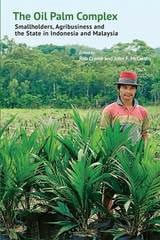
The Oil Palm Complex
Smallholders, Agribusiness and the State in Indonesia and MalaysiaEdited by Robert Cramb and John F. McCarthy
National University of Singapore Press, 2016
Based on detailed studies of specific communities and plantations and an analysis of the regional political economy of oil palm, this book unpicks the dominant policy narratives, business strategies, models of land acquisition, and labour-processes. It presents the oil palm industry in Malaysia and Indonesia as a complex system in which land, labour and capital are closely interconnected. Understanding this complex is a prerequisite to developing better strategies to harness the oil palm boom for a more equitable and sustainable pattern of rural development.
The Orange Tree
Dong Li
University of Chicago Press, 2023
Dong Li’s The Orange Tree is a collection of narrative poems that braids forgotten legends, personal sorrows, and political upheavals into a cinematic account of Chinese history as experienced by one family. Amid chaos and catastrophe, the child narrator examines a yellowed family photo to find resemblances and learns a new language, inventing compound words to conjure and connect family stories. These invented words and the calligraphy of untranslated Chinese characters appear in lists separating the book’s narrative sections.
Li’s lyrical and experimental collection transcends the individual, placing generations of family members and anonymous others together in a single moment that surpasses chronological time. Weaving through stories of people with little means, between wars and celebrations, over bridges and walls, and between trees and gardens, Li’s poems offer intimate perspectives on times that resonate with our own. The result is an unflinching meditation on family history, collective trauma, and imaginative recovery.
The Orange Tree is the recipient of the inaugural Phoenix Emerging Poet Book Prize for 2023.

The Otherness of the Everyday
Twelve Conversations from the Chinese Art World during the Covid-19 PandemicEdited by JIANG Jiehong
Intellect Books, 2021
In late 2019, as a deadly pandemic began to take hold, China’s Wuhan province was the first to feel the effects. As the virus spread, the streets and squares of the world emptied, and the structures of our social world were redefined.
In response to the pandemic, Jiang Jiehong convened in-conversation talks with twelve figures—such as Chen Danqing, Pi Li, Xiang Biao, and Zhang Peili, among others—from different disciplines in the Chinese-speaking world, including anthropology, architecture, art, curation, fashion, film, literature, media, museum, music, and photography. Presented here, the conversations foster new understandings of the ongoing crisis. The discussions explore the threat of the invisible; notions of distance and spatialization, separation and isolation, communication and mobility, discipline and surveillance, and community and collectiveness; and China’s changing relationship with the rest of the world. These illuminating reflections on the global crisis allow us to re-examine past norms and begin to form visions of a post-Covid world.
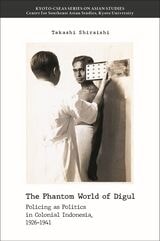
The Phantom World of Digul
Policing as Politics in Colonial Indonesia, 1926–1941Takashi Shiraishi
National University of Singapore Press, 2020
How did the government deploy political policing to achieve its policy objectives? What were the consequences and challenges for Indonesian activists? How was the government able to fashion its policing apparatus as the most potent instrument to achieve peace and order when the Great Depression hit the Indies, nationalist and communist forces were gaining strength in other places of the world, and war was coming both in Europe and Asia? This book answers those questions and more, breaking new ground for our understanding of the history of the Dutch Indies state in the early part of the twentieth century.
The Philosophy of Living
François Jullien
Seagull Books, 2015
Living holds us between two places. It expresses what is most elementary—to be alive—and the absoluteness of our aspiration—finally living! But could we desire anything other than to live? In The Philosophy of Living, François Jullien meditates on Far Eastern thought and philosophy to analyze concepts that can be folded into a complete philosophy of living, including the idea of the moment, the ambiguity of the in-between, and what he calls the “transparency of morning.” Jullien here develops a strategy of living that goes beyond morality and dwells in the space between health and spirituality.

The Pliant Public
Ideology and Public Opinion in ChinaJason Y. Wu
University of Michigan Press, 2027
The Chinese Communist Party has long depended on ideology to set the agenda, communicate its priorities, and legitimize its rule. The Pliant Public argues that for Chinese citizens, however, ideology is in short supply. Surveys show that public opinion is depolarized. Ordinary people have little sense of what ideological labels like “left” and “right” mean, and most of the people who put themselves on the right have the scale backwards. Since a depolarized public is ill-equipped to check the state, China’s leaders can make massive changes to government policy without triggering much backlash.
But depolarization does not always strengthen the state. When citizens lack clear ideological commitments, it is easier for them to set aside their differences. If China’s leaders lost their performance legitimacy, then depolarization could facilitate a broader challenge to party rule.
The Poetics of Repetition in English and Chinese Lyric Poetry
Cecile Chu-chin Sun
University of Chicago Press, 2010
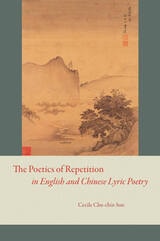
For more than half a century, Chinese-Western comparative literature has been recognized as a formal academic discipline, but critics and scholars in the field have done little to develop a viable, common basis for comparison between these disparate literatures. In this pioneering book, Cecile Chu-chin Sun establishes repetition as the ideal perspective from which to compare the poetry and poetics from these two traditions.
Sun contends that repetition is at the heart of all that defines the lyric as a unique art form and, by closely examining its use in Chinese and Western poetry, she demonstrates howone can identify important points of convergence and divergence. Through a representative sampling of poems from both traditions, she illustrates how the irreducible generic nature of the lyric transcends linguistic and cultural barriers but also reveals the fundamental distinctions between the traditions. Most crucially, she dissects the two radically different conceptualizations of reality—mimesis and xing—that serve as underlying principles for the poetic practices of each tradition.
Skillfully integrating theory and practice, The Poetics of Repetition in English and Chinese Lyric Poetryprovides a much-needed model for future study of Chinese and English poetry as well as lucid, succinct interpretations of individual poems.
The Politics of India under Modi
An Introduction to India’s Democracy, Economy, and Foreign PolicyVikash Yadav and Jason A. Kirk
Lever Press, 2023
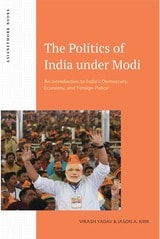
Since the right-wing, Hindu-nationalist government of Narendra Modi’s Bharatiya Janata Party (BJP) came to power at the national level in 2014, and with its consolidation of power in the 2019 general election, India has witnessed a significant realignment of its national politics and a shift toward the right of the political spectrum. The Politics of India under Modi provides a detailed overview of India’s political trends, economic prospects, and international relations in the twenty-first century.
This book is designed as a supplement and update for existing syllabi that trace India’s political economy from the birth of the republic to the quest for economic liberalization and great power status. Undergraduates and scholars interested in India’s foreign policy and political reform will find value in this timely book.
“The subject of this book is extremely compelling and important, as well as timely. BJP rule and the Modi regime, it is now clear, represent some critical turning points in Indian politics, which have yet to be analyzed in depth academically by experts. I see this book as a key first step in this process.”
-Rina Verma Williams, School of Public and International Affairs at the University of Cincinnati
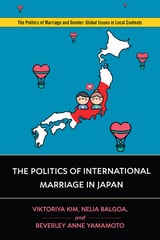
The Politics of International Marriage in Japan
Viktoriya Kim
Rutgers University Press, 2022
The Politics of the Welfare State in Turkey
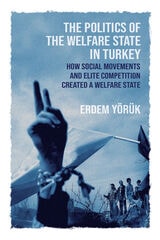
How Social Movements and Elite Competition Created a Welfare StateErdem Yörük
University of Michigan Press, 2022

The Potential of a Middle Power
Romania's Foreign Policy in Central Asia within the Context of EU MembershipAna-Maria Anghelescu
Central European University Press, 0
The large member states of the European Union have clear priorities when it comes to EU-level decisions, while the small member states hold veto power when decisions need to be taken unanimously. This book focuses on the potential of middle powers in EU decision-making using the example of Romania's relations with Central Asia. The author examines how Romania's diplomatic activities as a medium-sized member state - and as a newer member - can affect EU foreign policy. Ana-Maria-Andreea Anghelescu conducted a quantitative study of three hard power indices, as well as the soft presence dimension of the Elcano Index of Global Presence. The latter includes tourism, sport, culture, science, education, information, and migration. The statistical results were complemented by qualitative field research in Kyrgyzstan involving all five Central Asian countries.
The volume’s analysis concludes that Romania underperforms in using its robust hard faculties to benefit the country's soft capabilities. Central Asia is a region where the EU must work hard to maintain its influence. By strengthening their presence in the region beyond bilateral partnerships, the EU's middle powers can play a key role in asserting Europe's pragmatic and normative interests.T
The Price of Three Stories
Rare Folktales from JapanHiroko Fujita & Fran Stallings
Parkhurst Brothers, Inc., 2015
“This delightful compendium of short, savory, and highly tellable tales embodies the beliefs and folkways of rural Japan—specifically the area most impacted by the recent tsunami and nuclear disaster. It adds immeasurably to our insight into that endangered world.”
—Joseph Sobol, Ph.D., director, ETSU Storytelling Graduate Program
The Promise of the Foreign
Nationalism and the Technics of Translation in the Spanish PhilippinesVicente L. Rafael
Duke University Press, 2005
Through close readings of nationalist newspapers and novels, the vernacular theater, and accounts of the 1896 anticolonial revolution, Rafael traces the deep ambivalence with which elite nationalists and lower-class Filipinos alike regarded Castilian. The widespread belief in the potency of Castilian meant that colonial subjects came in contact with a recurring foreignness within their own language and society. Rafael shows how they sought to tap into this uncanny power, seeing in it both the promise of nationhood and a menace to its realization. Tracing the genesis of this promise and the ramifications of its betrayal, Rafael sheds light on the paradox of nationhood arising from the possibilities and risks of translation. By repeatedly opening borders to the arrival of something other and new, translation compels the nation to host foreign presences to which it invariably finds itself held hostage. While this condition is perhaps common to other nations, Rafael shows how its unfolding in the Philippine colony would come to be claimed by Filipinos, as would the names of the dead and their ghostly emanations.
The Question of Women in Chinese Feminism
Tani E. Barlow
Duke University Press, 2004
The Rebel's Silhouette
Selected PoemsFaiz Ahmed Faiz, translated and edited by Agha Shalid Ali
University of Massachusetts Press, 1995
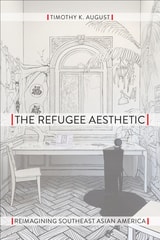
The Refugee Aesthetic
Reimagining Southeast Asian AmericaTimothy August
Temple University Press, 2021
The refugee is conventionally considered a powerless figure, eagerly cast aside by both migrant and host communities. In his book, The Refugee Aesthetic, Timothy August investigates how and why a number of Southeast Asian American artists and writers have recently embraced the figure of the refugee as a particularly transformative position. He explains how these artists, theorists, critics, and culture-makers reconstruct their place in the American imagination by identifying and critiquing the underlying structures of power that create refugees in the contemporary world.
August looks at the outside forces that shape refugee representation and how these expressions are received. He considers the visual legacy of the Southeast Asian refugee experience by analyzing music videos, graphic novels, and refugee artwork. August also examines the power of refugee literature, showing how and why Southeast Asian American writers look to the refugee position to disentangle their complicated aesthetic legacy.
Arguing that “aesthetics” should be central to the conceptualization of critical refugee studies, August shows how representational structures can galvanize or marginalize refugees, depending on how refugee aesthetics are used and circulated.
The Religion of Falun Gong
Benjamin Penny
University of Chicago Press, 2012
In July 1999, a mere seven years after the founding of the religious movement known as the Falun Gong, the Chinese government banned it. Falun Gong is still active in other countries, and its suppression has become a primary concern of human rights activists and is regularly discussed in dealings between the Chinese government and its Western counterparts. But while much has been written on Falun Gong’s relation to political issues, no one has analyzed in depth what its practitioners actually believe and do.
The Religion of Java
Clifford Geertz
University of Chicago Press, 1976
The Religion of Java will interest specialists in Southeast Asia, anthropologists and sociologists concerned with the social analysis of religious belief and ideology, students of comparative religion, and civil servants dealing with governmental policy toward Indonesia and Southeast Asia.
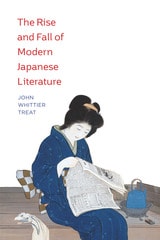
The Rise and Fall of Modern Japanese Literature
John Whittier Treat
University of Chicago Press, 2018
Beginning with journalistic accounts of female criminals in the aftermath of the Meiji civil war, Treat moves on to explore how woman novelist Higuchi Ichiyō’s stories engaged with modern liberal economics, sex work, and marriage; credits Natsume Sōseki’s satire I Am a Cat with the triumph of print over orality in the early twentieth century; and links narcissism in the visual arts with that of the Japanese I-novel on the eve of the country’s turn to militarism in the 1930s. From imperialism to Americanization and the new media of television and manga, from boogie-woogie music to Yoshimoto Banana and Murakami Haruki, Treat traces the stories Japanese audiences expected literature to tell and those they did not. The book concludes with a classic of Japanese science fiction a description of present-day crises writers face in a Japan hobbled by a changing economy and unprecedented natural and manmade catastrophes. The Rise and Fall of Japanese Literature reinterprets the “end of literature”—a phrase heard often in Japan—as a clarion call to understand how literary culture worldwide now teeters on a historic precipice, one at which Japan’s writers may have arrived just a moment before the rest of us.

The Rise of China and the Demise of the Capitalist World-Economy
Minqi Li
Pluto Press, 2008
Minqi Li examines the future global prospects from the perspectives of Marxism, world-system theories, and ecological limits to growth. He argues that China is likely to exacerbate many of the major contradictions of world capitalism, which could lead to the demise of the existing world-system.
This is an essential text for students of political economy, economics and global politics.
The Scent of the Gods
Fiona Cheong
University of Illinois Press, 2010
The Selfie Machine
Selfies, Platforms, and Digital Image Culture in IndiaAnirban K. Baishya
Rutgers University Press, 2027
The Selfie Machine offers novel insight into personalized communication practices in the digital age through the medium of the selfie. While the selfie has achieved notoriety due to pop-psychology accounts of Narcissism-related selfie "disorders," this book examines the selfie as a mode of meaning making and self-presentation that includes not just still images, but also short videos, hashtag practices and economies of liking and following. In taking India as the starting point of its investigation, The Selfie Machine inverts the "West-then-the-rest" model of understanding global digital media practices. The book considers selfie culture’s impact on personal and public digital practices and trends—ranging from cellphone markets, to influencer entrepreneurship and microcelebrity, to the conduct of politics and protest. In doing so, it not only offers an expanded definition of selfies in digital media culture, but also demonstrates how “global” digital media (including selfies) cannot be understood as a monolith.
The Sensuous Cinema of Wong Kar-wai
Film Poetics and the Aesthetic of Disturbance, Second EditionGary Bettinson
Hong Kong University Press, 2025
The widely acclaimed films of Wong Kar-wai are characterized by their sumptuous yet complex visual and sonic style. This study of Wong’s filmmaking techniques uses a poetics approach to examine how form, music, narration, characterization, genre, and other artistic elements work together to produce certain effects on audiences. Bettinson argues that Wong’s films are permeated by an aesthetic of sensuousness and “disturbance” achieved through techniques such as narrative interruptions, facial masking, opaque cuts, and other complex strategies. The effect is to jolt the viewer out of complete aesthetic absorption. Each of the chapters focuses on a single aspect of Wong’s filmmaking.
This tenth-anniversary edition of The Sensuous Cinema of Wong Kar-wai includes a substantial new afterword bringing the story of Wong’s career up to date (including reflections on the Mainland Chinese drama Blossoms Shanghai). Bettinson revisits and extends the arguments of the first edition, surveys the recent key debates on Wong’s filmmaking, and introduces fresh lines of critical investigation. The book will appeal to all who are interested in authorship and aesthetics in film studies, to scholars in Asian studies, media, and cultural studies, and to anyone with an interest in Hong Kong cinema in general, and Wong’s films in particular.

The Shiga Hero
William F. Sibley
University of Chicago Press, 1979
Sibley unifies Shiga's sparse, fragmented narratives by reconstructing the cyclical biography of this imaginary hero. Through an analysis of Shiga's psychoanalytic and mythopoetic approach to fiction, Sibley develops a useful model for the study of personal writers.
In recreating the life of Shiga's hero, Sibley uncovers a close link between the fictional hero and Shiga himself. Sibley finds an important part of Shiga's purpose as a writer was to "psychoanalyze" himself by projecting various personal problems onto this fictional alter ego.
Ten newly translated stories complement Sibley's analysis of Shiga's work. In this second part of the book, one encounters Shiga's hero at various stages of development: as a child facing the early loss of his mother and an uneasy relationship with his cold, distant father; as an adolescent encountering death and punishment; and as an adult searching for solace in solitary contemplation of life. Shiga renders these experiences through a highly textured prose and symbolic vocabulary. Sibley's integral text makes this major Japanese writer accessible to readers of English for the first time in a fascinating and original way.
The Stars, The Earth, The River
Short Stories by Le Minh KhueLe Minh Khue
Northwestern University Press, 1997
The Stars, the Earth, the River contains an excellent introduction by the translators, grounding the stories in Le Minh Khue's personal history. You simultaneously feel the rage of the author and the narrator when Khue disparagingly notes that the conversations around her center on luxuries, motor scooters, and business deals. Of what use, these stories ask, is such suffering? How can a culture honor the losses of war?
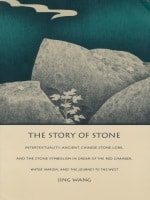
The Story of Stone
Intertextuality, Ancient Chinese Stone Lore, and the Stone Symbolism in <i>Dream of the Red Chamber</i>, <i>Water Margin</i>, and <i>The Journey to the West</i>Jing Wang
Duke University Press, 1992
Bringing together Chinese myth, religion, folklore, art, and literature, this book is the first in any language to amass the sources of stone myth and stone lore in Chinese culture. Uniting classical Chinese studies with contemporary Western theoretical concerns, Wang examines these stone narratives by analyzing intertextuality within Chinese traditions. She offers revelatory interpretations to long-standing critical issues, such as the paradoxical character of the monkey in The Journey to the West, the circularity of narrative logic in The Dream of the Red Chamber, and the structural necessity of the stone tablet in Water Margin.
By both challenging and incorporating traditional sinological scholarship, Wang’s The Story of Stone reveals the ideological ramifications of these three literary works on Chinese cultural history and makes the past relevant to contemporary intellectual discourse. Specialists in Chinese literature and culture, comparative literature, literary theory, and religious studies will find much of interest in this outstanding work, which is sure to become a standard reference on the subject.
The Taiwan Voter
Christopher H. Achen and T. Y. Wang, Editors
University of Michigan Press, 2017
Taiwan’s electoral politics draws international scholarly interest because of the prominent role of ethnic and national identification. While in most countries the many tangled strands of competing identities are daunting for scholarly analysis, in Taiwan the cleavages are powerful and limited in number, so the logic of interrelationships among issues, partisanship, and identity are particularly clear. The Taiwan Voter unites experts to investigate the ways in which social identities, policy views, and partisan preferences intersect and influence each other. These novel findings have wide applicability to other countries, and will be of interest to a broad range of social scientists interested in identity politics.

The Tales Of Prince Samuttakote
A Buddhist Epic from ThailandThomas John Hudak
Ohio University Press, 1993
Translated with enchanting poetic imagery, the poem relates the adventures of Prince Samuttakote and his princess as they tour the heavenly realms with a magic sword. The two are separated after the sword is stolen but are reunited after further adventures. Upon ascending the throne, they teach the moral code of precepts and how all life is affected by it. The poem is important for its depiction of the amusements and daily life of seventeenth-century Thailand and for its use of classic Thai poetic devices.
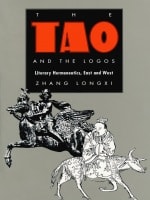
The Tao and the Logos
Literary Hermeneutics, East and WestLongxi Zhang
Duke University Press, 1992
Zhang's book brings together philosophy and literature, theory and practical criticism, the Western and the non-Western in defining common ground on which East and West may come to a mutual understanding. He provides commentary on the rich traditions of poetry and poetics in ancient China; equally illuminating are Zhang's astute analyses of Western poets such as Rilke, Shakespeare, and Mallarmé and his critical engagement with the work of Foucault, Derrida, and de Man, among others.
Wide-ranging and learned, this definitive work in East-West comparative poetics and the hermeneutic tradition will be of interest to specialists in comparative literature, philosophy, literary theory, poetry and poetics, and Chinese literature and history.
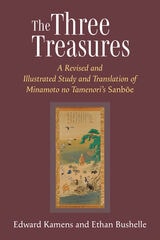
The Three Treasures
A Revised and Illustrated Study and Translation of Minamoto no Tamenori's SanboeEdward Kamens and Ethan Bushelle
University of Michigan Press, 2023
When the young Princess Sonshi became a Buddhist nun in the year 984, a scholar-official of the royal court was commissioned to create a guide to the Buddhist religion that would be accessible for her. He did so in the form of the illustrated works of fiction (monogatari) that appealed to women readers of her time and class. The text has survived in later manuscripts; the illustrations, if they ever existed, have not. This revised translation recreates Sonshi’s experience of receiving this multimedia presentation, with illustrations selected to help contemporary readers visualize its content and essays that provide context on the religious and cultural experience of the author. The Three Jewels is a unique document that opens a window onto the world of Buddhist religious experience—especially for women—in high classical Japan, the time of Sei Shōnagon’s Pillow Book and Murasaki Shikibu’s Tale of Genji.
The Tower of Myriad Mirrors
A Supplement to <em>Journey to the West</em>Tung Yüeh; Translated from the Chinese by Shuen-fu Lin and Larry J. Schulz
University of Michigan Press, 2000
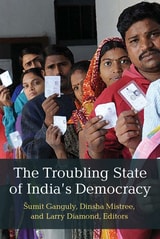
The Troubling State of India's Democracy
Šumit Ganguly, Dinsha Mistree, and Larry Diamond, Editors
University of Michigan Press, 2024
Despite this rich tradition, India’s democracy faces an unprecedented threat with the rise of Narendra Modi and his Hindu nationalist party, the Bharatiya Janata Party. After decisively winning general elections in 2014, Modi and the BJP have pursued a range of anti-democratic policies in which the state and society are used to undermine the opposition, to stifle free speech, and to harass religious minorities. The Troubling State of India’s Democracy brings together leading scholars from around the world to assess the conditions of India’s democracy across three important dimensions: politics, specifically the state of political parties and the party system; the state, including the condition of federalism and the health of various institutions; and society, including NGOs, ethnic and religious tensions, and control of the media. Even though elements of India’s democracy seem to function—like its commitment to elections—the contributors document a disturbing trajectory, one that not only threatens to undermine India’s own stability, but could also affect the global order.
The Unruly Dead
Spirits, Memory, and State Formation in Timor-LesteLia Kent
University of Wisconsin Press, 2024
With generous, careful ethnography and incisive analysis, Kent challenges comfortable, linear narratives of transitional justice and argues that this memory work is reshaping the East Timorese social and political order—a process in which the dead are active, and sometimes disruptive, participants. Community ties and even the landscape itself are imbued with their presence and demands, and the horrific scale of mass death in recent times—at least a third of the population perished during the Indonesian occupation—means Timor-Leste’s dead have real, significant power in the country’s efforts to remember, recover, and reestablish itself.
The Voice of the Night
Complete Poetry and Prose of Chairil AnwarChairil Anwar
Ohio University Press, 1993
Chairil Anway (1922–1949) was the primary architect of the Indonesian literary revolution in both poetry and prose. In a few intense years he forged almost ingle-handedly a vital, mature literary language in Bahasa Indonesia, a language which formally came to exist in 1928. Anway led the way for the many Indonesian writers who have emerged during the past fifty years.
This volume contains all that has survived of Anwar’s writing. It not longer need the sort of introduction it did soem thirty years ago when Burton Raffel first published English translations of Anwar’s work. Raffel now presents the complete poems and the small amount of surviving prose in new translations with new interpretations.
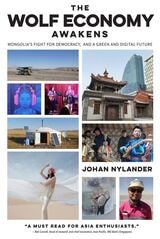
The Wolf Economy Awakens
Mongolia’s Fight for Democracy, and a Green and Digital FutureJohan Nylander
Hong Kong University Press, 2024
Mongolia, a vibrant democracy landlocked between Russia and China, stands on the edge of becoming Asia’s next boom nation—one of the richest countries per capita in the region. Referred to as the “wolf economy” for its vast natural resources (copper, gold, and rare earth metals), it is also home to a growing number of cutting-edge tech startups and international lifestyle brands. Its vast steppe landscape lends itself not only to herding and tourism but also to renewable energy production and filmmaking.
The Wolf Economy Awakens is about the individuals who are fighting to strengthen the country’s democracy and diversify its economy. It is about innovators aiming to realize Mongolia’s promise as a hub for green energy, tech and lifestyle entrepreneurs who are shaking up traditional industries, and go-getters who have left jobs on Wall Street to return to the country they love and help move it forward. Asia correspondent and award-winning author Johan Nylander travels across Mongolia to speak to the country’s leaders and innovators—not to mention a cast of digital nomads, jazz musicians, and ordinary families—and finds a nation ready to grasp a better future. Unlocking a country’s potential is never easy, but Mongolia stands every chance of becoming Asia’s next success story.

The Women Carry River Water
PoemsNguyen Quang Thieu
University of Massachusetts Press, 1997
This landmark collection represents the first English translation of poetry by Nguyen Quang Thieu, a significant Vietnamese writer of the post-1975 generation. Translated collaboratively by acclaimed poet Martha Collins and the author himself, this bilingual volume presents verses rooted deeply in Vietnamese cultural traditions that honor the dignity of daily labor, the resilience of ordinary people, and the spiritual dimensions of human experience in contemporary Vietnam.
Thieu's work draws upon a rich Vietnamese poetic tradition while addressing themes of displacement, reconstruction, memory, and the search for meaning in the aftermath of conflict. The poems capture the essence of Vietnamese life—its rhythms, relationships, and philosophical underpinnings—through images drawn from nature, labor, family, and community. The bilingual format stands as a bridge between Vietnamese and American literary traditions, and honors the linguistic and cultural dimensions of Thieu groundbreaking collection.
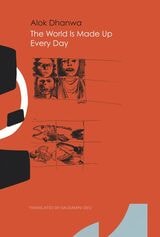
The World Is Made Up Every Day
Collected PoemsAlok Dhanwa
Seagull Books, 2025
A voice of the marginalized and a staunch critic of the establishment, Alok Dhanwa brilliantly captures the ethos of a turbulent era in India through his poetry. Born in 1948, in Munger, Bihar, he witnessed the rise and fall of political movements and wrote against the backdrop of the Maoist and Naxalite struggles. This collection, the first book-length translation of his work into English, brings a glimpse of a volatile nation coming to grips with its own existence to new readers.
His poetry highlights the ongoing fight for justice and identity in an ever-changing state that remains starkly relevant to the contemporary Indian polity. Dhanwa’s writing is a beacon for the working class, a testament to resistance, and a reminder that the struggle for a better world is both eternal and essential. In his universe, love, rebellion, armed resistance, and the everyday coexist. With World Is Made Up Every Day, he paints a vivid portrait of rural India’s landscapes and humanity’s capacity to defy power in all its forms. This book is not just a collection of poems; it is a call to keep the spirit of resistance alive and to live meaningfully in a world that constantly evolves but often remains unchanged.
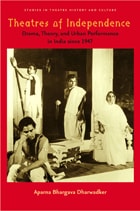
Theatres of Independence
Drama, Theory, and Urban Performance in India since 1947Aparna Bhargava Dharwadker
University of Iowa Press, 2005
The first part of Dharwadker’s study deals with the new dramatic canon that emerged after 1950 and the variety of ways in which plays are written, produced, translated, circulated, and received in a multilingual national culture. The second part traces the formation of significant postcolonial dramatic genres from their origins in myth, history, folk narrative, sociopolitical experience, and the intertextual connections between Indian, European, British, and American drama. The book’s ten appendixes collect extensive documentation of the work of leading playwrights and directors, as well as a record of the contemporary multilingual performance histories of major Indian, Western, and non-Western plays from all periods and genres. Treating drama and theatre as strategically interrelated activities, the study makes post-independence Indian theatre visible as a multifaceted critical subject to scholars of modern drama, comparative theatre, theatre history, and the new national and postcolonial literatures.

Themes and Issues in Asian Cartooning
John A. Lent
University of Wisconsin Press, 1999
Themes and Issues in Asian Cartooning uses overviews and case studies by scholars to discuss Asian animation, humor magazines, gag cartoons, comic strips, and comic books. The first half of the book looks at contents and audiences of Malay humor magazines, cultural labor in Korean animation, the reception of Aladdin in Islamic Southeast Asia, and a Singaporean comic book as a reflection of that society’s personality. Four other chapters treat gender and Asian comics, concentrating on Japanese anime and manga and Indian comic books.
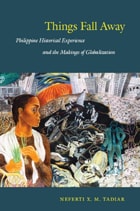
Things Fall Away
Philippine Historical Experience and the Makings of GlobalizationNeferti X. M. Tadiar
Duke University Press, 2009
Tadiar treats the historical experiences articulated in feminist, urban protest, and revolutionary literatures of the 1960s–90s as “cultural software” for the transformation of dominant social relations. She considers feminist literature in relation to the feminization of labor in the 1970s, when between 300,000 and 500,000 prostitutes were working in the areas around U.S. military bases, and in the 1980s and 1990s, when more than five million Filipinas left the country to toil as maids, nannies, nurses, and sex workers. She reads urban protest literature in relation to authoritarian modernization and crony capitalism, and she reevaluates revolutionary literature’s constructions of the heroic revolutionary subject and the messianic masses, probing these social movements’ unexhausted cultural resources for radical change.
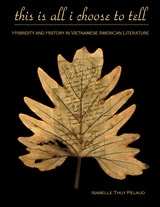
This Is All I Choose to Tell
History and Hybridity in Vietnamese American LiteratureAuthored by Isabelle T. Pelaud
Temple University Press, 2010
In the first book-length study of Vietnamese American literature, Isabelle Thuy Pelaud probes the complexities of Vietnamese American identity and politics. She provides an analytical introduction to the literature, showing how generational differences play out in genre and text. In addition, she asks, can the term Vietnamese American be disassociated from representations of the war without erasing its legacy?
Pelaud delineates the historical, social, and cultural terrains of the writing as well as the critical receptions and responses to them. She moves beyond the common focus on the Vietnam war to develop an interpretive framework that integrates post-colonialism with the multi-generational refugee, immigrant, and transnational experiences at the center of Vietnamese American narratives.
Her readings of key works, such as Andrew Pham's Catfish and Mandala and Lan Cao's Monkey Bridge show how trauma, racism, class and gender play a role in shaping the identities of Vietnamese American characters and narrators.
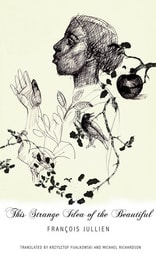
This Strange Idea of the Beautiful
François Jullien
Seagull Books, 2016
An exploration of what it means when we say something is beautiful.
Bringing together ideas of beauty from both Eastern and Western philosophy, François Jullien challenges the assumptions underlying our commonly agreed-upon definition of what is beautiful and offers a new way of beholding art. Jullien argues that the Western concept of beauty was established by Greek philosophy and became consequently embedded within the very structure of European languages. And due to its relationship to language, this concept has determined ways of thinking about beauty that often go unnoticed or unchecked in discussions of Western aesthetics. Moreover, through globalization, Western ideals of beauty have even spread to cultures whose ancient traditions are based upon radically different aesthetic foundations; yet, these cultures have adopted such views without question and without recognizing the cultural assumptions they contain.
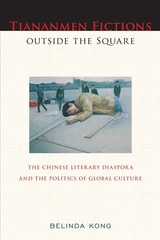
Tiananmen Fictions outside the Square
The Chinese Literary Diaspora and the Politics of Global CultureBelinda Kong
Temple University Press, 2012
An exciting analysis of the myriad literary effects of Tiananmen, Belinda Kong's Tiananmen Fictions Outside the Square is the first full-length study of fictions related to the 1989 movement and massacre. More than any other episode in recent world history, Tiananmen has brought a distinctly politicized Chinese literary diaspora into stark relief.
Kong redefines Tiananmen's meaning from an event that ended in local political failure to one that succeeded in producing a vital dimension of contemporary transnational writing today. She spotlights key writers-Gao Xingjian, Ha Jin, Annie Wang, and Ma Jian-who have written and published about the massacre from abroad. Their outsider/distanced perspectives inform their work, and reveal how diaspora writers continually reimagine Tiananmen's relevance to the post-1989 world at large.
Compelling us to think about how Chinese culture, identity, and politics are being defined in the diaspora, Tiananmen Fictions Outside the Square candidly addresses issues of political exile, historical trauma, global capital, and state biopower.
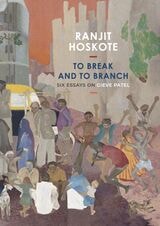
To Break and to Branch
Six Essays on Gieve PatelRanjit Hoskote
Seagull Books, 2024
To Break and to Branch is a collection of six essays on the artist Gieve Patel (1940–2023), written by poet, cultural theorist, and curator Ranjit Hoskote over nearly two decades, gathered together for the first time and accompanied by over fifty illustrations of Patel's paintings. In an introductory essay written especially for this edition, Hoskote looks back over the long friendship he shared with Patel, contextualizing it within the vibrant artistic milieu that was once special to Bombay, their home city: a milieu premised on a mutual curiosity that brought the arts together, hospitable to poetry, painting, theater, cinema, music, and architecture.
Embodying this spirit, Hoskote engages with Patel’s evolving oeuvre as a painter and his experiments with sculpture, while connecting them to his investments in poetry, theater, and his growing philosophical awareness of the more-than-human. Hoskote’s writings trace both the constant preoccupations and the changing interests that gave Patel’s art its distinctive character and reflect on the aesthetic, philosophical, and political dimensions of Patel’s gradual movement from a human-centric understanding of the world to a more holistic view as generated and sustained by interrelationships across orders of being.
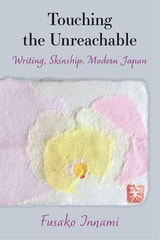
Touching the Unreachable
Writing, Skinship, Modern JapanFusako Innami
University of Michigan Press, 2021
Finalist: 2025 British Comparative Literature Association First Book Prize | July 22, 2025
Fusako Innami offers the first comprehensive study of touch and skinship—relationality with the other through the skin—in modern Japanese writing. The concept of the unreachable—that is, the lack of characters’ complete ability to touch what they try to reach for—provides a critical intervention on the issue of intimacy. Touch has been philosophically addressed in France, but literature is an effective—or possibly the most productive—venue for exploring touch in Japan, as literary texts depict what the characters may be concerned with but may not necessarily say out loud. Such a moment of capturing the gap between the felt and the said—the interaction between the body and language—can be effectively analyzed by paying attention to layers of verbalization, or indeed translation, by characters’ utterances, authors’ depictions, and readers’ interpretations. Each of the writers discussed in this book—starting with Nobel prize winner Kawabata Yasunari, Tanizaki Jun’ichirō, Yoshiyuki Junnosuke, and Matsuura Rieko—presents a particular obsession with objects or relationality to the other constructed via the desire for touch.
In Touching the Unreachable, phenomenological and psychoanalytical approaches are cross-culturally interrogated in engaging with literary touch to constantly challenge what may seem like the limit of transferability regarding concepts, words, and practices. The book thereby not only bridges cultural gaps beyond geographic and linguistic constraints, but also aims to decentralize a Eurocentric hegemony in its production and use of theories and brings Japanese cultural and literary analyses into further productive and stimulating intellectual dialogues. Through close readings of the authors’ treatment of touch, Innami develops a theoretical framework with which to examine intersensorial bodies interacting with objects and the environment through touch.
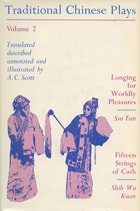
Traditional Chinese Plays, Volume II
A.C. Scott
University of Wisconsin Press, 1972
The world of traditional Chinese drama can be at once fascinating and bewildering to the uninitiated Western observer. Attuned to his own dramatic conventions, he is hard put to apprehend the delicate fusion of poetry, music, and subtle gesture which is the essence of Chinese theatre. Because of these difficulties, the task of translating traditional Chinese drama must go far beyond the conventional literary treatment and evoke the entire world of stagecraft and directing.
Longing for Worldly Pleasures (Ssu Fan) is a lyric monologue in which a young Buddhist laments the waning of her youth in the seclusion of the convent. The brief piece involves a complexity of mood which makes it an actor’s tour de force, undertaken only by the most highly skilled performers.
Fifteen Strings of Cash (Shih Wu Kuan), a much longer play, is a comic murder mystery satirizing bureaucratic ineptitude in the administration of justice. The comic lead role of Lou the Rat is a virtuoso part which illustrates the intricate mimetic art of the traditional comic actor and was the play’s main appeal to Chinese audiences.
Trance-Migrations
Stories of India, Tales of HypnosisLee Siegel
University of Chicago Press, 2014
Even if you can’t read this with a partner—and I stress that you certainly ought to—you will still be in rich company. There is Shambaraswami, an itinerant magician, hypnotist, and storyteller to whom villagers turn for spells that will bring them wealth or love; José-Custodio de Faria, a Goan priest hypnotizing young and beautiful women in nineteenth-century Parisian salons; James Esdaile, a Scottish physician for the East India Company in Calcutta, experimenting on abject Bengalis with mesmerism as a surgical anesthetic; and Lee Siegel, a writer traveling in India to learn all that he can about hypnosis, yoga, past life regressions, colonialism, orientalism, magic spells, and, above all, the power of story. And then there is you: descending through these histories—these tales within tales, trances within trances, dreams within dreams—toward a place where the distinctions between reverie and reality dissolve.
Here the world within the book and that in which the book is read come startlingly together. It’s one of the most creative works we have ever published, a dazzling combination of literary prowess, scholarly erudition, and psychological exploration—all tempered by warm humor and a sharp wit. It is informing, entertaining, and, above all, mesmerizing.
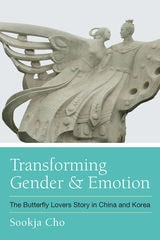
Transforming Gender and Emotion
The Butterfly Lovers Story in China and KoreaSookja Cho
University of Michigan Press, 2017
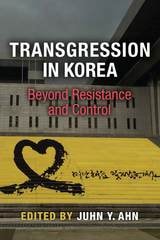
Transgression in Korea
Beyond Resistance and ControlEdited by Juhn Ahn
University of Michigan Press, 2018
Transgression in Korea challenges the popular conceptions of transgression as resistance to authority, the collapse of morality, and an attempt at self- empowerment. Examples of transgression from premodern, modern, and contemporary Korea are examined side by side to underscore the possibility of reading transgression in more ways than one. These examples are taken from a devotional screen from medieval Korea, trickster tales from the late Chosŏn period, reports about flesheating humans, newspaper articles about same- sex relationships from colonial Korea, and films about extramarital affairs, wayward youths, and a vengeful vigilante. Bringing together specialists from various disciplines such as history, art history, anthropology, premodern
literature, religion, and fi lm studies, the context- sensitive readings of transgression provided in this book suggest that transgression and authority can be seen as forming something other than an antagonistic relationship.
Transience
Chinese Experimental Art at the End of the Twentieth CenturyWu Hung
University of Chicago Press, 2006
These detailed essays on the artists and their works are now available in a revised edition of the exhibition catalog. Written by Wu Hung, a leading authority and the curator of the exhibit, Transience explores contemporary Chinese art through the themes of demystification, ruins, and transience, and represents an original perspective in the continuing discussion on Chinese experimental art.