Results by title
264 books match the query 'Asian Studies' and 71 start with t

The Sexual Life of English
Languages of Caste and Desire in Colonial IndiaShefali Chandra
Duke University Press, 2012

The State of Islam
Culture and Cold War Politics in PakistanSaadia Toor
Pluto Press, 2011
The State of Islam tells the story of Pakistan through the lens of the Cold War, and more recently the War on Terror, to shed light on the domestic and international processes behind the global rise of militant Islam.
Unlike existing scholarship on nationalism, Islam and the state in Pakistan, which tends to privilege events in a narrowly-defined ‘political’ realm, Saadia Toor highlights the significance of cultural politics in Pakistan from its origins to the contemporary period. This extra dimension allows Toor to explain how the struggle between Marxists and liberal nationalists was influenced and eventually engulfed by the agenda of the religious right.
Timely and unique, this book is a must for anyone who wants to understand the roots of modern Pakistan and the likely outcome of current power struggles in the country.

The Tartar Moment
Crisis and the Globalization of Chinese Knowledge in Early Modern EuropeGianamar Giovannetti-Singh
University of Chicago Press, 0
How seventeenth-century Europeans, following Jesuit missionary Martino Martini, saw their continent as historically, environmentally, and culturally intertwined with China.
The Tartar Moment focuses on understanding how the Manchu conquest of the Ming Empire in 1644 transformed European science, technology, and politics for over a century. Gianamar Giovannetti-Singh argues that seventeenth-century European natural philosophers found the nomadic takeover of a seemingly eternal empire deeply relevant for their own concerns. They began to reevaluate how they thought about the roles of astronomy, history-writing, agriculture, and military technologies in ensuring the long-term survival of a state.
The book’s narrative center is the Jesuit missionary Martino Martini, who first grasped the global significance of the Tartar War and its aftermath. Giovannetti-Singh situates Martini as a broker bridging multiple worlds, each grappling with new forms of turbulence. Martini’s writings reinterpreted Chinese knowledge and culture for diverse European audiences urgently seeking order in an age of uncertainty. China ceased to be imagined as a timeless Other and instead appeared as a civilization that, like Europe, confronted recurring disorder and crafted philosophical solutions to maintain stability. During this period, Europeans selectively appropriated Chinese methods of reading the heavens, cultivating the earth, and governing the state.
By tracing how Martini recognized, theorized, and recounted crises in Ming, Manchu, and European contexts, The Tartar Moment shows that the 1640s and 1650s were not simply years of collapse but of intense creativity in interpreting and responding to disorder.

The Time of Laughter
Comedy and the Media Cultures of JapanDavid Humphrey
University of Michigan Press, 2023
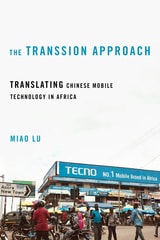
The Transsion Approach
Translating Chinese Mobile Technology in AfricaMiao Lu
University of Illinois Press, 2025
The Urban Grotesque
Life and Debt in JakartaDoreen Lee
Duke University Press, 2025

The Wongs of Beloit, Wisconsin
Beatrice McKenzie
University of Wisconsin Press, 2022
The Wongs thrived in Beloit despite facing racism and classism, embracing wartime opportunities, education, love, and careers within the U. S. McKenzie's collaboration with descendent Mary Wong Palmer reveals a poignant story of Chinese immigrant life in the Upper Midwest that adds a much-needed Wisconsin perspective to existing literature by and about Asian Americans.
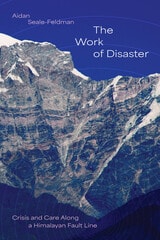
The Work of Disaster
Crisis and Care Along a Himalayan Fault LineAidan Seale-Feldman
University of Chicago Press, 2025
In a world marked by escalating disasters, the forms that care takes are increasingly fraught. In this powerful book, anthropologist Aidan Seale-Feldman focuses on Nepal, where in 2015 a 7.8-magnitude earthquake and equally powerful aftershock struck the country’s central region. The disaster claimed more than nine thousand lives and inspired a surge of humanitarian concern for the mental health of Nepali people. Based on extensive ethnographic fieldwork, The Work of Disaster examines the possibilities generated by disaster, as well as the vexed relationship between crisis and care.
Moving between NGO offices, mountain trails, therapeutic interventions, and affected villages, Seale-Feldman tells the story of an emergent “mental health crisis” and the forms of care that followed in the disaster’s wake. She also analyzes the changes emergency services bring about in the places they seek to assist, the challenges of psychiatric support provided by international organizations, and the place of mental health counseling in a modern biopolitical reality. The Work of Disaster reveals the simultaneous violence and gentleness of humanitarian encounters, engaging along the way with broader debates about world making and the ethics of care.

Theory from the Trenches
Decolonization and the Horizons of Subaltern MarxismShozab Raza
Duke University Press, 2027
Thinking in English, Speaking in Hindi
Translation, Creativity, and Value in Bollywood and BeyondTejaswini Ganti
Duke University Press, 2027
Thirty-two New Takes on Taiwan Cinema
Emilie Yueh-yu Yeh, Darrell William Davis, Wenchi Lin, Editors
University of Michigan Press, 2022
A film-by-film introduction to Taiwan cinema and cultures
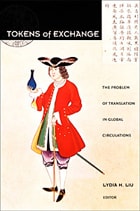
Tokens of Exchange
The Problem of Translation in Global CirculationsLydia H. Liu, ed.
Duke University Press, 1999
By studying the production and circulation of meaning as value in areas including history, religion, language, law, visual art, music, and pedagogy, essays consider exchanges between Jesuit and Protestant missionaries and the Chinese between the seventeenth and nineteenth centuries and focus on the interchanges occasioned by the spread of capitalism and imperialism. Concentrating on ideological reciprocity and nonreciprocity in science, medicine, and cultural pathologies, contributors also posit that such exchanges often lead to racialized and essentialized ideas about culture, sexuality, and nation. The collection turns to the role of language itself as a site of the universalization of knowledge in its contemplation of such processes as the invention of Basic English and the global teaching of the English language. By focusing on the moments wherein meaning-value is exchanged in the translation from one language to another, the essays highlight the circulation of the global in the local as they address the role played by historical translation in the universalizing processes of modernity and globalization.
The collection will engage students and scholars of global cultural processes, Chinese studies, world history, literary studies, history of science, and anthropology, as well as cultural and postcolonial studies.
Contributors. Jianhua Chen, Nancy Chen, Alexis Dudden Eastwood, Roger Hart, Larissa Heinrich, James Hevia, Andrew F. Jones, Wan Shun Eva Lam, Lydia H. Liu, Deborah T. L. Sang, Haun Saussy, Q. S. Tong, Qiong Zhang

Touching the Unreachable
Writing, Skinship, Modern JapanFusako Innami
University of Michigan Press, 2021
Finalist: 2025 British Comparative Literature Association First Book Prize | July 22, 2025
Fusako Innami offers the first comprehensive study of touch and skinship—relationality with the other through the skin—in modern Japanese writing. The concept of the unreachable—that is, the lack of characters’ complete ability to touch what they try to reach for—provides a critical intervention on the issue of intimacy. Touch has been philosophically addressed in France, but literature is an effective—or possibly the most productive—venue for exploring touch in Japan, as literary texts depict what the characters may be concerned with but may not necessarily say out loud. Such a moment of capturing the gap between the felt and the said—the interaction between the body and language—can be effectively analyzed by paying attention to layers of verbalization, or indeed translation, by characters’ utterances, authors’ depictions, and readers’ interpretations. Each of the writers discussed in this book—starting with Nobel prize winner Kawabata Yasunari, Tanizaki Jun’ichirō, Yoshiyuki Junnosuke, and Matsuura Rieko—presents a particular obsession with objects or relationality to the other constructed via the desire for touch.
In Touching the Unreachable, phenomenological and psychoanalytical approaches are cross-culturally interrogated in engaging with literary touch to constantly challenge what may seem like the limit of transferability regarding concepts, words, and practices. The book thereby not only bridges cultural gaps beyond geographic and linguistic constraints, but also aims to decentralize a Eurocentric hegemony in its production and use of theories and brings Japanese cultural and literary analyses into further productive and stimulating intellectual dialogues. Through close readings of the authors’ treatment of touch, Innami develops a theoretical framework with which to examine intersensorial bodies interacting with objects and the environment through touch.
Toward a Framework for Vietnamese American Studies
History, Community, and MemoryEdited by Linda Ho Peché, Alex-Thai Dinh Vo, and Tuong Vu
Temple University Press, 2023
The large number of Vietnamese refugees that resettled in the United States since the fall of Saigon have become America’s fastest growing immigrant group. Toward a Framework for Vietnamese American Studies traces the ideologies, networks, and cultural sensibilities that have long influenced and continue to transform social, political, and economic developments in Vietnam and the U.S.
Moving beyond existing approaches, the editors and contributors to this volume—the first to craft a working framework for researching, teaching, and learning about this dynamic community—present a new Vietnamese American historiography that began in South Vietnam. They provide deep-dive explorations into community development, political activism, civic participation and engagement, as well as entrepreneurial endeavors. Chapters offer new concepts and epistemological approaches to how legacy and memory is nurtured, produced and circulated in the Vietnamese diaspora.
Toward a Framework for Vietnamese American Studies seeks to better understand the rapidly changing landscape of Vietnamese American diaspora.
Contributors: Duyen Bui, Christian Collet, Wynn Gadkar-Wilcox, Elwing Suong Gonzalez, Tuan Hoang, Jennifer A. Huynh, Y Thien Nguyen, Nguyen Vu Hoang, Van Nguyen-Marshall, Thien-Huong Ninh, Hai-Dang Phan, Ivan V. Small, Quan Tue Tran, Thuy Vo Dang, and the editors
Toward a Gameic World
New Rules of Engagement from Japanese Video GamesBen Whaley
University of Michigan Press, 2023
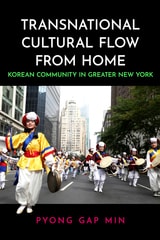
Transnational Cultural Flow from Home
Korean Community in Greater New YorkPyong Gap Min
Rutgers University Press, 2023
Transnational Cultural Flow from Home examines New York Korean immigrants’ collective efforts to preserve their cultural traditions and cultural practices and their efforts to transmit and promote them to New Yorkers by focusing on the Korean cultural elements such as language, foods, cultural festivals, and traditional and contemporary performing arts.
This publication was supported by the 2022 Korean Studies Grant Program of the Academy of Korean Studies (AKS-2022-P-009).
Transpacific Cartographies
Narrating the Contemporary Chinese Diaspora in the United StatesMelody Yunzi Li
Rutgers University Press, 2024
Transpacific Experiments
Intermedia Art and Music in 1960s JapanMiki Kaneda
University of Michigan Press, 2026
Intermedia art—an avant-garde multimedia practice that combines sound and moving images—took root in Japan alongside other places in the 1960s. In Transpacific Experiments, Miki Kaneda analyzes intermedia as a practice that gives form to errant possibilities, unfolding in spaces of the everyday, to offer nuanced insights into the global flow of ideas, influence, and discourses of appropriation. The stories of intermedia art throughout the study offer feminist and transnational perspectives on experimental music and art that disorient existing narratives about the experimental and political in unexpected ways.
Transpacific Experiments contends that social, cultural, and political arrangements local to Japan had a greater influence on the transnational experimental music scene than previously acknowledged. Kaneda’s perspective extends, exceeds, and at times unsettles frameworks for experimental practices, revealing the limitations of any single political or aesthetic lens.
Transpacific Nonencounters
Racial Disconnects Across Twentieth-Century Japan and MexicoAndrea Mendoza
Duke University Press, 2026
Trespasses
Selected WritingsMasao Miyoshi
Duke University Press, 2010
This volume brings together eleven selections of Miyoshi’s previously published writing, a major new essay, a critical introduction to his life and work, and an interview in which Miyoshi reflects on the trajectory of his thought and the institutional history of modern Japan studies. In the new essay, “Literary Elaborations,” he provides a masterful overview of the nature of the contemporary university, closing with a call for a global environmental protection studies that would radically reconfigure academic disciplines and merge the hard sciences with the humanities and the social sciences. In the other, chronologically arranged selections, Miyoshi addresses cross-culture relations between Japan and the United States, English literary studies in Japan, and Japan studies in the U.S., as well as the organization of urban space and the integrity of art and architecture in aggressively marketed-oriented environments. Trespasses is an invaluable introduction to the work of a fearless cultural critic.

Two Dreams in One Bed
Empire, Social Life, and the Origins of the North Korean Revolution in ManchuriaHyun Ok Park
Duke University Press, 2005
Drawing on a rich archive of Korean, Japanese, and Chinese sources, Park describes how Koreans negotiated the contradictory demands of national and colonial powers. She demonstrates that the dynamics of global capitalism led the Chinese and Japanese to pursue capitalist expansion while competing for sovereignty. Decentering the nation-state as the primary analytic rubric, her emphasis on the role of global capitalism is a major innovation for understanding nationalism, colonialism, and their immanent links in social space.
Through a regional and temporal comparison of Manchuria from the late nineteenth century until 1945, Park details how national and colonial powers enacted their claims to sovereignty through the regulation of access to land, work, and loans. She shows that among Korean migrants, the complex connections among Chinese laws, Japanese colonial policies, and Korean social practices gave rise to a form of nationalism in tension with global revolution—a nationalism that laid the foundation for what came to be regarded as North Korea’s isolationist politics.