384 books match the query 'Black Studies (Global)' and 68 start with t
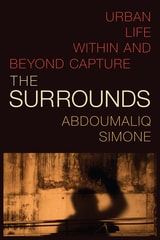
cover of The Surrounds: Urban Life within and beyond Capture

The Surrounds

Urban Life within and beyond Capture

AbdouMaliq Simone

Duke University Press, 2022
In The Surrounds renowned urbanist AbdouMaliq Simone offers a new theorization of the interface of the urban and the political. Working at the intersection of Black studies, urban theory, and decolonial and Islamic thought, Simone centers the surrounds—those urban spaces beyond control and capture that exist as a locus of rebellion and invention. He shows that even in clearly defined city environments, whether industrial, carceral, administrative, or domestic, residents use spaces for purposes they were not designed for: schools become housing, markets turn into classrooms, tax offices transform into repair shops. The surrounds, Simone contends, are where nothing fits according to design. They are where forgotten and marginalized populations invent new relations and ways of living and being, continuously reshaping what individuals and collectives can do. Focusing less on what new worlds may come to be and more on what people are creating now, Simone shows how the surrounds are an integral part of the expansiveness of urban imagination.
[more]
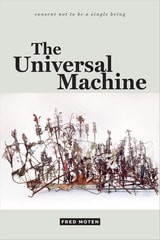
cover of The Universal Machine

The Universal Machine

Fred Moten

Duke University Press, 2018

"Taken as a trilogy, consent not to be a single being is a monumental accomplishment: a brilliant theoretical intervention that might be best described as a powerful case for blackness as a category of analysis."—Brent Hayes Edwards, author of Epistrophies: Jazz and the Literary Imagination

In The Universal Machine—the concluding volume to his landmark trilogy consent not to be a single being—Fred Moten presents a suite of three essays on Emmanuel Levinas, Hannah Arendt, and Frantz Fanon, in which he explores questions of freedom, capture, and selfhood. In trademark style, Moten considers these thinkers alongside artists and musicians such as William Kentridge and Curtis Mayfield while interrogating the relation between blackness and phenomenology. Whether using Levinas's idea of escape in unintended ways, examining Arendt's antiblackness through Mayfield's virtuosic falsetto and Anthony Braxton's musical language, or showing how Fanon's form of phenomenology enables black social life, Moten formulates blackness as a way of being in the world that evades regulation. Throughout The Universal Machine—and the trilogy as a whole—Moten's theorizations of blackness will have a lasting and profound impact.
[more]
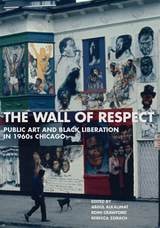
cover of The Wall of Respect: Public Art and Black Liberation in 1960s Chicago

The Wall of Respect

Public Art and Black Liberation in 1960s Chicago

Edited by Abdul Alkalimat, Romi Crawford, and Rebecca Zorach

Northwestern University Press, 2017

The Wall of Respect: Public Art and Black Liberation in 1960s Chicago is the first in-depth, illustrated history of a lost Chicago monument. The Wall of Respect was a revolutionary mural created by fourteen members of the Organization of Black American Culture (OBAC) on the South Side of Chicago in 1967. This book includes photographs by Darryl Cowherd, Bob Crawford, Roy Lewis, and Robert A. Sengstacke, and gathers historic essays, poetry, and previously unpublished primary documents from the movement’s founders that provide a guide to the work’s creation and evolution.

The Wall of Respect received national critical acclaim when it was unveiled on the side of a building at Forty-Third and Langley in Chicago’s Bronzeville neighborhood. Painters and photographers worked side by side on the mural's seven themed sections, which featured portraits of Black heroes and sheroes, among them John Coltrane, Nina Simone, Billie Holiday, Malcolm X, Muhammad Ali, and W. E. B. Du Bois. The Wall became a platform for music, poetry, and political rallies. Over time it changed, reflecting painful controversies among the artists as well as broader shifts in the Civil Rights and Black Liberation Movements.

At the intersection of African American culture, politics, and Chicago art history, The Wall of Respect offers, in one keepsake-quality work, an unsurpassed collection of images and essays that illuminate a powerful monument that continues to fascinate artists, scholars, and readers in Chicago and across the United States.
[more]
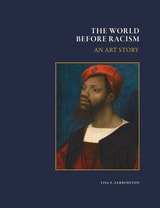
cover of The World Before Racism: An Art Story

The World Before Racism

An Art Story

Lisa E. Farrington

The Artist Book Foundation, 2025

Utilizing works of art as a primary source, Lisa Farrington's research in The World Before Racism conclusively answers the questions: Who invented racism? When? And why?

The term racism is understood to mean that race is the principal determinant of specific human traits and capacities and that due to racial differences, one race is inherently superior to all others. Over time, racism has commonly referenced the notion that the White race is superior to all others, fostering prejudice and discrimination. In The World Before Racism: An Art Story, author and art historian Lisa Farrington meticulously examines the intersection of art, history, and race, using original works of art as primary source materials to support her premise that racism is a construct, invented in the mid-1700s, to support the financial, political, and religious structures of European colonialism.

Using art from ancient Egypt, classical Greece, and the Roman Empire, through Medieval Europe and the colonization of the New World, to the art of the present day—sources that cannot be easily altered, edited, or selectively translated—Farrington expertly examines the intricate interplay between the Black and White races, how they saw and understood each other over the centuries. The artworks serve as powerful voices, precisely conveying the artist’s intended messages. The goal of The World Before Racism is to present irrefutable evidence that the ideology of racism is unfounded, unsupported, unjustified, and destined to fade away like so many other archaic and erroneous ideas.
[more]
cover of Theatre Symposium, Vol. 29: Theatre and Race

Theatre Symposium, Vol. 29

Theatre and Race

Edited by Andrew Gibb

University of Alabama Press, 2022

Essays whose composition and editing were undertaken almost entirely within the transformed cultural and professional landscape of 2020

A few weeks prior to the submission deadline for this volume of Theatre Symposium, the murder of George Floyd by officers of the Minneapolis Police Department sparked a movement for racial justice that reverberated at every level of US society. At predominantly and historically white academic institutions (including Theatre Symposium and its parent organization, the Southeastern Theatre Conference) leaders were compelled, as perhaps never before, to account for the role of systematic racism in the foundation and perpetuation of their organizations. While the present volume’s theme of “Theatre and Race” was announced in the waning days of 2019, the composition and editing of the issue’s essays were undertaken almost entirely within the transformed cultural and professional landscape of 2020. Throughout its twenty-nine years of publication, Theatre Symposium’s pages have included many excellent essays whose authors have deployed theories of race as an analytical framework, and (less often) treated BIPOC-centered art and artists as subject. The intent of the current editors in conceiving this issue was to center such subjects and theorizations, a goal that has since taken on a more widely recognized urgency.

Taken together, these twelve essays represent a wide range of scholarly responses to the theme of “theatre and race.” The fact that there is so much to say on the topic, from so many different perspectives, is a sign of how profoundly theatre practices have been—and continue to be—shaped by racial discourses and their material manifestations.


[more]
cover of There's a Disco Ball Between Us: A Theory of Black Gay Life

There's a Disco Ball Between Us

A Theory of Black Gay Life

Jafari S. Allen

Duke University Press, 2021
In There’s a Disco Ball Between Us, Jafari S. Allen offers a sweeping and lively ethnographic and intellectual history of what he calls “Black gay habits of mind.” In conversational and lyrical language, Allen locates this sensibility as it emerged from radical Black lesbian activism and writing during the long 1980s. He traverses multiple temporalities and locations, drawing on research and fieldwork conducted across the globe, from Nairobi, London, and Paris to Toronto, Miami, and Trinidad and Tobago. In these locations and archives, Allen traces the genealogies of Black gay politics and cultures in the visual art, poetry, film, Black feminist theory, historiography, and activism of thinkers and artists such as Audre Lorde, Marsha P. Johnson, Essex Hemphill, Colin Robinson, Marlon Riggs, Pat Parker, and Joseph Beam. Throughout, Allen renarrates Black queer history while cultivating a Black gay method of thinking and writing. In so doing, he speaks to the urgent contemporary struggles for social justice while calling on Black studies to pursue scholarship, art, and policy derived from the lived experience and fantasies of Black people throughout the world.
[more]
cover of Thinking While Black: Translating the Politics and Popular Culture of a Rebel Generation

Thinking While Black

Translating the Politics and Popular Culture of a Rebel Generation

Daniel McNeil

Rutgers University Press, 2023

Thinking While Black brings together the work and ideas of the most notorious film critic in America, one of the most influential intellectuals in the United Kingdom, and a political and cultural generation that consumed images of rebellion and revolution around the world as young Black teenagers in the late 1960s. Drawing on hidden and little known archives of resistance and resilience, it sheds new light on the politics and poetics of young people who came together, often outside of conventional politics, to rock against racism in the 1970s and early ‘80s. It re-examines debates in the 1980s and ‘90s about artists who “spread out” to mount aggressive challenges to a straight, white, middle-class world, and entertainers who “sold out” to build their global brands with performances that attacked the Black poor, rejected public displays of introspection, and expressed unambiguous misogyny and homophobia. Finally, it thinks with and through the work of writers who have been celebrated and condemned as eminent intellectuals and curmudgeonly contrarians in the twenty-first century. In doing so, it delivers the smartest and most nuanced investigation into thinkers such as Paul Gilroy and Armond White as they have evolved from “young soul rebels” to “middle-aged mavericks” and “grumpy old men,” lamented the debasement and deskilling of Black film and music in a digital age, railed against the discourteous discourse and groupthink of screenies and Internet Hordes, and sought to stimulate some deeper and fresher thinking about racism, nationalism, multiculturalism, political correctness and social media.

Listen along with this 
Spotify playlist inspired by the book!

For copyright reasons, this book is available in the U.S.A only.
 
[more]
cover of Third World Studies: Theorizing Liberation

Third World Studies

Theorizing Liberation

Gary Y. Okihiro

Duke University Press, 2024

In this revised and expanded second edition of Third World Studies, Gary Y. Okihiro considers the methods and theories that might constitute the formation of Third World studies. Proposed in 1968 at San Francisco State College by the Third World Liberation Front but replaced by faculty and administrators with ethnic studies, Third World studies was over before it began. As opposed to ethnic studies, which Okihiro critiques for its liberalism and US-centrism, Third World studies begins with the colonized world and the anti-imperial, anticolonial, and antiracist projects located therein as described by W. E. B. Du Bois in 1900. Third World studies analyzes the locations and articulations of power around the axes of race, gender, sexuality, (dis)ability, class, and nation. In this new edition, Okihiro emphasizes the work of Third World intellectuals such as M. N. Roy, José Carlos Mariátegui, and Oliver Cromwell Cox; foregrounds the importance of Bandung and the Tricontinental; and adds discussions of eugenics, feminist epistemologies, and religion. With this work, Okihiro establishes Third World studies as a theoretical formation and a liberatory practice.
[more]
cover of To Be A Slave in Brazil: 1550-1888

To Be A Slave in Brazil

1550-1888

Mattoso, Katia M de Queiros

Rutgers University Press, 1986
This book was published originally in French in 1979 and in Portuguese in 1982. Written without scholarly footnotes for a general readership, it is a deceptively simple book direct in its presentation, lacking a specialized jargon, and organized in an imaginative and interesting way. But it also is a volume that reflects some of the most recent and innovative research on the question of slavery. Putting aside the somewhat arid debate over the feudal or capitalist nature of the "slave mode of production" and the political aspects of the movement for abolition, To Be a Slave in Brazil presents an overview of Brazilian slavery which reflects the trend toward study of the slave community, religion, the family, and other features of the internal aspects of slavery.
[more]
cover of To Be Nsala's Daughter: Decomposing the Colonial Gaze

To Be Nsala's Daughter

Decomposing the Colonial Gaze

Chérie N. Rivers

Duke University Press, 2023
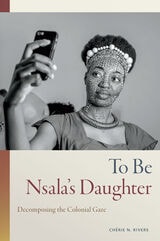
In To Be Nsala’s Daughter, Chérie N. Rivers shows how colonial systems of normalized violence condition the way we see and, through collaboration with contemporary Congolese artists, imagines ways we might learn to see differently. Rivers focuses on a photograph of a Congolese man, Nsala, looking at the disembodied hand and foot of his daughter, which were removed as punishment for his failure to deliver the requisite amount of rubber in King Léopold’s Congo. This photograph, taken by British missionary Alice Seeley Harris, featured prominently in abolitionist campaigns to end colonial atrocities in Central Africa in the early twentieth century. But in addition to exposing the visible violence of colonialism, Rivers argues, this photograph also exposes the invisible—and continued—violence of the colonial gaze. With a poetic, personal collage of stories and images, To Be Nsala’s Daughter traces the past and present of the colonial gaze both in Congo and in the author’s lived experience as a mixed-race Black woman in the United States.
[more]
cover of To Defend This Sunrise: Black Women’s Activism and the Authoritarian Turn in Nicaragua

To Defend This Sunrise

Black Women’s Activism and the Authoritarian Turn in Nicaragua

Courtney Desiree Morris

Rutgers University Press, 2023
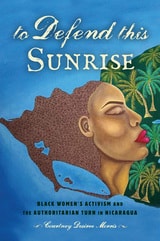
To Defend this Sunrise examines how black women on the Caribbean coast of Nicaragua engage in regional, national, and transnational modes of activism to remap the nation’s racial order under conditions of increasing economic precarity and autocracy. The book considers how, since the 19th century, black women activists have resisted historical and contemporary patterns of racialized state violence, economic exclusion, territorial dispossession, and political repression. Specifically, it explores how the new Sandinista state under Daniel Ortega and Rosario Murillo has utilized multicultural rhetoric as a mode of political, economic, and territorial dispossession. In the face of the Sandinista state’s co-optation of multicultural discourse and growing authoritarianism, black communities have had to recalibrate their activist strategies and modes of critique to resist these new forms of “multicultural dispossession.” This concept describes the ways that state actors and institutions drain multiculturalism of its radical, transformative potential by espousing the rhetoric of democratic recognition while simultaneously supporting illiberal practices and policies that undermine black political demands and weaken the legal frameworks that provide the basis for the claims of these activists against the state.
 
[more]
cover of To Exist is to Resist: Black Feminism in Europe

To Exist is to Resist

Black Feminism in Europe

Edited by Akwugo Emejulu and Francesca Sobande

Pluto Press, 2019

This book brings together activists, artists and scholars of colour to show how Black feminism and Afrofeminism are being practiced in Europe today, exploring their differing social positions in various countries, and how they organise and mobilise to imagine a Black feminist Europe.

Deeply aware that they are constructed as 'Others' living in a racialised and hierarchical continent, the contibutors explore gender, class, sexuality and legal status to show that they are both invisible - presumed to be absent from and irrelevant to European societies - and hyper-visible - assumed to be passive and sexualised, angry and irrational.

Through imagining a future outside the neocolonial frames and practices of contemporary Europe, this book explores a variety of critical spaces including motherhood and the home, friendships and intimate relationships, activism and community, and literature, dance and film.

[more]
cover of To Raise Up the Man Farthest Down: Tuskegee University’s Advancements in Human Health, 1881–1987

To Raise Up the Man Farthest Down

Tuskegee University’s Advancements in Human Health, 1881–1987

Dana R. Chandler and Edith Powell

University of Alabama Press, 2018

An important historical account of Tuskegee University’s significant advances in health care, which affected millions of lives worldwide.

Alabama’s celebrated, historically black Tuskegee University is most commonly associated with its founding president, Booker T. Washington, the scientific innovator George Washington Carver, or the renowned Tuskegee Airmen. Although the university’s accomplishments and devotion to social issues are well known, its work in medical research and health care has received little acknowledgment. Tuskegee has been fulfilling Washington’s vision of “healthy minds and bodies” since its inception in 1881. In To Raise Up the Man Farthest Down, Dana R. Chandler and Edith Powell document Tuskegee University’s medical and public health history with rich archival data and never-before-published photographs. Chandler and Powell especially highlight the important but largely unsung role that Tuskegee University researchers played in the eradication of polio, and they add new dimension and context to the fascinating story of the HeLa cell line that has been brought to the public’s attention by popular media.

Tuskegee University was on the forefront in providing local farmers the benefits of agrarian research. The university helped create the massive Agricultural Extension System managed today by land grant universities throughout the United States. Tuskegee established the first baccalaureate nursing program in the state and was also home to Alabama’s first hospital for African Americans. Washington hired Alabama’s first female licensed physician as a resident physician at Tuskegee. Most notably, Tuskegee was the site of a remarkable development in American biochemistry history: its microbiology laboratory was the only one relied upon by the National Foundation for Infantile Paralysis (the organization known today as the March of Dimes) to produce the HeLa cell cultures employed in the national field trials for the Salk and Sabin polio vaccines. Chandler and Powell are also interested in correcting a long-held but false historical perception that Tuskegee University was the location for the shameful and infamous US Public Health Service study of untreated syphilis.

Meticulously researched, this book is filled with previously undocumented information taken directly from the vast Tuskegee University archives. Readers will gain a new appreciation for how Tuskegee’s people and institutions have influenced community health, food science, and national medical life throughout the twentieth century.

[more]
cover of Trafficking in Antiblackness: Modern-Day Slavery, White Indemnity, and Racial Justice

Trafficking in Antiblackness

Modern-Day Slavery, White Indemnity, and Racial Justice

Lyndsey P. Beutin

Duke University Press, 2023
In Trafficking in Antiblackness Lyndsey P. Beutin analyzes how campaigns to end human trafficking—often described as “modern-day slavery”—invoke the memory of transatlantic slavery to support positions ultimately grounded in antiblackness. Drawing on contemporary antitrafficking visual culture and media discourse, she shows how a constellation of media, philanthropic, NGO, and government actors invested in ending human trafficking repurpose the history of transatlantic slavery and abolition in ways that undermine contemporary struggles for racial justice and slavery reparations. The recurring narratives, images, and figures such as “slavery in Africa,” “Arab slave traders,” and “Black incapacity for self-governance” discursively turn Black people across the diaspora into the enslavers of the past and present in place of white Americans and Europeans. Doing so, Beutin contends, creates a rhetorical defense against being held liable for slavery’s dispossessions and violence. Despite these implications, Beutin demonstrates that antitrafficking discourse remains popular and politically useful for former slaving nations and their racial beneficiaries because it refashions historic justifications for white supremacy into today’s abolition of slavery.
[more]
cover of Transit Lit: Fictions of Migration in Twenty-First-Century African Immigrant Literature

Transit Lit

Fictions of Migration in Twenty-First-Century African Immigrant Literature

Cameron Leader-Picone

Northwestern University Press, 2026

Explores new forms of cosmopolitan identity constructed in contemporary diasporic fictions
 
The expanding number of migrants to the United States from continental Africa since the 1960s has led to a flourishing twenty-first-century literary corpus by immigrants and the children of immigrants. Transit Lit: Fictions of Migration in Twenty-First-Century African Immigrant Literature analyzes key works by African immigrant authors such as Chimamanda Ngozi Adichie, Teju Cole, and Yaa Gyasi to argue that such texts reveal the tensions between the authors’ own cosmopolitan ideals and a necessary critique of how such ideals become co-opted and commodified within contemporary geopolitics. Cameron Leader-Picone offers a new conceptual framework for reading contemporary diasporic texts that do not fit easily into national or continental traditions or previous literary models. Instead, he argues for the need to embrace the overlapping instabilities—of meaning, identity, and citizenship—that characterize twenty-first-century diasporic movement in an interconnected world. These texts, and the constructions of identity that they trace, map the terrain of contemporary migration.
 
[more]
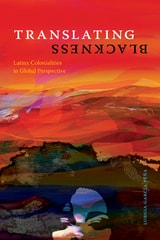
cover of Translating Blackness: Latinx Colonialities in Global Perspective

Translating Blackness

Latinx Colonialities in Global Perspective

Lorgia García Peña

Duke University Press, 2022

In Translating Blackness Lorgia García Peña considers Black Latinidad in a global perspective in order to chart colonialism as an ongoing sociopolitical force. Drawing from archives and cultural productions from the United States, the Caribbean, and Europe, García Peña argues that Black Latinidad is a social, cultural, and political formation—rather than solely a site of identity—through which we can understand both oppression and resistance. She takes up the intellectual and political genealogy of Black Latinidad in the works of Frederick Douglass, Gregorio Luperón, and Arthur Schomburg. She also considers the lives of Black Latina women living in the diaspora, such as Black Dominicana guerrillas who migrated throughout the diaspora after the 1965 civil war and Black immigrant and second-generation women like Mercedes Frías and Milagros Guzmán organizing in Italy with other oppressed communities. In demonstrating that analyses of Black Latinidad must include Latinx people and cultures throughout the diaspora, García Peña shows how the vaivén—or, coming and going—at the heart of migrant life reveals that the nation is not a sufficient rubric from which to understand human lived experiences.
[more]
cover of Transoceanic Blackface: Empire, Race, Performance

Transoceanic Blackface

Empire, Race, Performance

Kellen Hoxworth

Northwestern University Press, 2024

A sweeping history of racialized performance across the Anglophone imperial world from the eighteenth to the early twentieth century

A material history of racialized performance throughout the Anglophone imperial world, Transoceanic Blackface: Empire, Race, Performance revises prevailing understandings of blackface and minstrelsy as distinctively US American cultural practices. Tracing intertwined histories of racialized performance from the mid-eighteenth through the early twentieth century across the United States and the British Empire, this study maps the circulations of blackface repertoires in theatrical spectacles, popular songs, visual materials, comic operas, closet dramas, dance forms, and Shakespearean burlesques.

Kellen Hoxworth focuses on overlooked performance histories, such as the early blackface minstrelsy of T. D. Rice’s “Jump Jim Crow” and the widely staged blackface burlesque versions of Othello, as traces of the racial and sexual anxieties of empire. From the nascent theatrical cultures of Australia, Britain, Canada, India, Jamaica, South Africa, and the United States, Transoceanic Blackface offers critical insight into the ways racialized performance animated the imperial “common sense” of white supremacy on a global scale. 
 
[more]
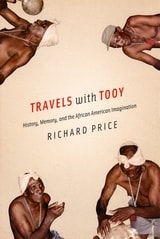
cover of Travels with Tooy: History, Memory, and the African American Imagination

Travels with Tooy

History, Memory, and the African American Imagination

Richard Price

University of Chicago Press, 2007

Thirty-five years into his research among the descendants of rebel slaves living in the South American rain forest, anthropologist Richard Price encountered Tooy, a priest, philosopher, and healer living in a rough shantytown on the outskirts of Cayenne, French Guiana. Tooy is a time traveler who crosses boundaries between centuries, continents, the worlds of the living and the dead, and the visible and invisible. With an innovative blend of storytelling and scholarship, Travels with Tooy recounts the mutually enlightening and mind-expanding journeys of these two intellectuals.

Included on the itinerary for this hallucinatory expedition: forays into the eighteenth century to talk with slaves newly arrived from Africa; leaps into the midst of battles against colonial armies; close encounters with double agents and femme fatale forest spirits; and trips underwater to speak to the comely sea gods who control the world’s money supply. This enchanting book draws on Price’s long-term ethnographic and archival research, but above all on Tooy’s teachings, songs, stories, and secret languages to explore how Africans in the Americas have created marvelous new worlds of the imagination.
[more]