Results by title
662 books match the query 'China' and 145 start with t
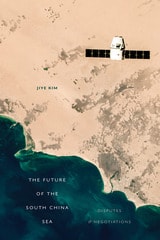
The Future of the South China Sea
Disputes and NegotiationsJiye Kim
University of Michigan Press, 2026
By incorporating negotiation records, such as the 1958 Declaration on China’s Territorial Sea, the 1992 ASEAN Declaration, and the 2005 Tripartite Agreement, Jiye Kim traces how China reshapes its interests into negotiation agendas, providing critical insights into the nation’s diplomacy and making a significant contribution to an existing literature on the South China Sea that has been largely dominated by analyses of great power rivalry. This book sheds light on China’s underlying interests as living and adaptable entities, providing scholars with a detailed, evidence-based understanding of the complexities that define one of the world’s most contested maritime regions.
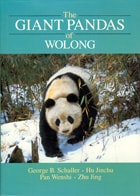
The Giant Pandas of Wolong
George B. Schaller, Hu Jinchu, Pan Wenshi, and Zhu Jing
University of Chicago Press, 1985
Although giant pandas have few natural enemies, the periodic die-off of bamboo, their main food, threatens their survival. In order to understand the panda's vital link to bamboo, the research team has explored many aspects of the animal's life, collecting information on both wild and captive pandas. Though a herbivore, the panda retains the simple digestive tract of a carnivore. Unable to digest cellulose in plants, it receives relatively little nutrition from the bamboo it eats. As a result, it must eat many kilograms of bamboo each day, foraging for fourteen hours or more throughout a day and night.
Known to the Chinese for several thousand years as daxiongmao, "large bear-cat," the giant panda has defied easy classification. The authors review anatomical, biochemical, behavioral, and paleontological evidence, concluding that the animal is neither bear nor raccoon but belongs in a separate family, perhaps with the small red panda.
The giant panda has captured the imagination of the public more than any other animal. By presenting their groundbreaking and crucial research to the public, the authors of The Giant Pandas of Wolong hope to spur further research and action that will help this precious animal survive.
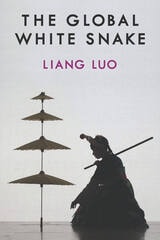
The Global White Snake
Liang Luo
University of Michigan Press, 2021
The Global White Snake uncovers how the White Snake legend often acts as an unsettling narrative of radical tolerance for hybrid sexualities, loving across traditional boundaries, subverting authority, and valuing the strange and the uncanny. A timely mediation and reflection on our contemporary moment of continued struggle for minority rights and social justice, The Global White Snake revives the radical anti-authoritarian spirit slithering under the tales of monsters and demons, love and lust, and reminds us of the power of the fantastic and the fabulous in inspiring and empowering personal and social transformations.
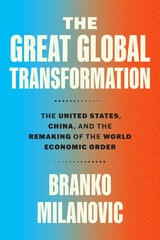
The Great Global Transformation
The United States, China, and the Remaking of the World Economic OrderBranko Milanovic
University of Chicago Press, 2026
The world’s two great economic powers are on opposite trajectories. In the United States, decades of neoliberal policies produced a small class of rich elites and gutted the middle class. In China, the same global forces have created a massive new upper class. The result is the greatest reshuffling of global incomes since the Industrial Revolution—a dramatic shakeup of each country’s political order. As the two powers retreat from one another, the implications for their futures, and for the world economy, are uncertain.
In The Great Global Transformation, acclaimed economist Branko Milanovic draws on original research to chart how these seismic shifts will shape the next century of the global economy. As both the US and China retreat into protectionism, Milanovic shows how a new and multipolar world order will follow—and how rising nationalism will have dramatically different effects on the two countries. And he shows us the fight ahead: as plutocracy returns, global war threatens, and a new system silently shapes our nations, driving populist discontent to the breaking point.
A worthy successor to Capitalism, Alone and his other landmark works, Milanovic’s new book announces the arrival of a new era he terms “national market liberalism,” in which liberalism survives in domestic economies, but not necessarily in the social arena. The Great Global Transformation is Milanovic’s indispensable account of the new twenty-first century now underway.
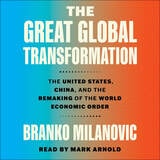
The Great Global Transformation
The United States, China, and the Remaking of the World Economic OrderBranko Milanovic
University of Chicago Press, 2026
From the essential chronicler of the world economy, a portrait of the Great Powers in transition.
The world’s two great economic powers are on opposite trajectories. In the United States, decades of neoliberal policies produced a small class of rich elites and gutted the middle class. In China, the same global forces have created a massive new upper class. The result is the greatest reshuffling of global incomes since the Industrial Revolution—a dramatic shakeup of each country’s political order. As the two powers retreat from one another, the implications for their futures, and for the world economy, are uncertain.
In The Great Global Transformation, acclaimed economist Branko Milanovic draws on original research to chart how these seismic shifts will shape the next century of the global economy. As both the US and China retreat into protectionism, Milanovic shows how a new and multipolar world order will follow—and how rising nationalism will have dramatically different effects on the two countries. And he shows us the fight ahead: as plutocracy returns, global war threatens, and a new system silently shapes our nations, driving populist discontent to the breaking point.
A worthy successor to Capitalism, Alone and his other landmark works, Milanovic’s new book announces the arrival of a new era he terms “national market liberalism,” in which liberalism survives in domestic economies, but not necessarily in the social arena. The Great Global Transformation is Milanovic’s indispensable account of the new twenty-first century now underway.
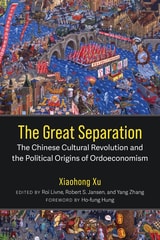
The Great Separation
The Chinese Cultural Revolution and the Political Origins of OrdoeconomismXiaohong Xu Edited by Roi Livne, Robert Jansen and Yang Zhang
University of Michigan Press, 2026
With a keen attention to how culture and elite conflict shape politics, The Great Separation upends deterministic understandings of the Chinese Cultural Revolution and the market reforms that followed. This ambitious posthumous volume by sociologist Xiaohong Xu turns the existing scholarship on China’s “neoliberalism” on its head by demonstrating that the effort to separate mass politics from economic policy had its origins well before the Reform and Opening-up era.
Over the course of the Cultural Revolution, unfolding factional dynamics and interpretive struggles enabled Chairman Mao and his radical colleagues to mobilize workers to advance their own political goals while neutralizing the masses’ economic demands, symbolically separating the political from the economic. This set the stage for a more thoroughgoing depoliticization of the economy after 1989, when China faced challenges from students and workers whose economic grievances had rapidly morphed into political demands for democracy. The result was what Xu calls ordoeconomism: an ideology that valorizes economic development, rejects mass politics, and views the state as the apolitical guardian of the economy. As Xu demonstrates, while ordoeconomism may share some affinities with neoliberalism, it is a distinctively Chinese approach that must be understood on its own terms.
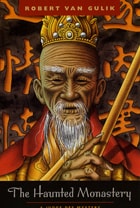
The Haunted Monastery
A Judge Dee MysteryRobert van Gulik
University of Chicago Press, 1961
A delightfully clever and cozy mystery starring the beloved detective Judge Dee, whom the Los Angeles Times ranked with Sherlock Holmes
Judge Dee and his entourage, seeking refuge from a mountain storm, become trapped in a Taoist monastery, where the Abbott Jade mysteriously dies after delivering an ecstatic sermon. The monks call it a supernatural experience, but the judge calls it murder. Recalling the allegedly accidental deaths of three young women in the same monastery, Judge Dee seeks clues in the eyes of a cat to solve cases of impersonation and murder. A painting by one of the victims reveals the truth about the killings, propelling the judge on a quest for justice and revenge.
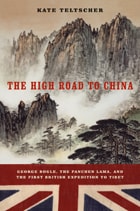
The High Road to China
George Bogle, the Panchen Lama, and the First British Expedition to TibetKate Teltscher
Northwestern University Press, 2008
Bogle was able to gain an audience with the Panchen Lama, and in him he found much more than a business partner; the Incarnate Lama was a friendly man who loved to discuss politics, science, art, and culture. Bogle gradually became less of a tourist and less of a colonist, growing comfortable and happy the longer he spent in Tibet even as his mission to open China failed. All the while, he kept a detailed journal—his prose by turn playful, self-deprecating, grandiose, and shrewd—and this revelatory document gives readers an exhilarating front seat to the beginnings of international relationships that exert their effects even now.
Teltscher’s portrayal of Bogle’s unique diplomatic relationship with the holy man is an admission that history is made by people—and people have emotions, flaws, and feelings that enrich and affect history.
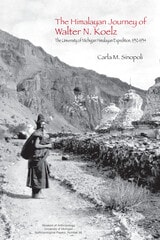
The Himalayan Journey of Walter N. Koelz
The University of Michigan Himalayan ExpeditionCarla M. Sinopoli
University of Michigan Press, 2013
In the fall of 1932, University of Michigan naturalist Walter N. Koelz traveled to northwest India to lead a scientific collecting expedition in the rugged Himalayan regions of Western Tibet. Some eighteen months later he returned to the United States with a remarkable collection of biological specimens and an array of objects—Buddhist paintings, ritual objects, textiles, and household goods—acquired from monasteries, households, and merchants. This book presents the diary entries Koelz wrote at the end of each day throughout his expedition, recounting in detail each day’s travels, bookended by a chapter contextualizing his acquisition of sacred Buddhist objects and an appendix that presents previously unpublished thangka paintings that he collected.
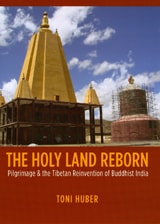
The Holy Land Reborn
Pilgrimage and the Tibetan Reinvention of Buddhist IndiaToni Huber
University of Chicago Press, 2008
Focusing on the Tibetan creation and recreation of India as a destination, a landscape, and a kind of other, in both real and idealized terms, Huber explores how Tibetans have used the idea of India as a religious territory and a sacred geography in the development of their own religion and society. In a timely closing chapter, Huber also takes up the meaning of India for the Tibetans who live in exile in their Buddhist holy land.
A major contribution to the study of Buddhism, The Holy Land Reborn describes changes in Tibetan constructs of India over the centuries, ultimately challenging largely static views of the sacred geography of Buddhism in India.
The Huawei Model
The Rise of China's Technology GiantYun Wen
University of Illinois Press, 2020
Yun Wen uses the Huawei story as a microcosm to understand China's evolving digital economy and the global rise of the nation's corporate power. Rejecting the idea of the transnational corporation as a static institution, she explains Huawei's formation and restructuring as a historical process replete with contradictions and complex consequences. She places Huawei within the international political economic framework to capture the dynamics of power structure and social relations underlying corporate China's globalization. As she explores the contradictions of Huawei's development, she also shows the ICT firm's complicated interactions with other political-economic forces.
Comprehensive and timely, The Huawei Model offers an essential analysis of China's dynamic development of digital economy and the global technology powerhouse at its core.
The Imperial Style of Inquiry in Twentieth-Century China
The Emergence of New ApproachesDonald J. Munro
University of Michigan Press, 1996
The Impotence Epidemic
Men's Medicine and Sexual Desire in Contemporary ChinaEverett Yuehong Zhang
Duke University Press, 2015
The Invention of Madness
State, Society, and the Insane in Modern ChinaEmily Baum
University of Chicago Press, 2018
Focusing on typically marginalized historical actors, including municipal functionaries and the urban poor, The Invention of Madness shifts our attention from the elite desire for modern medical care to the ways in which psychiatric discourses were implemented and redeployed in the midst of everyday life. New meanings and practices of madness, Baum argues, were not just imposed on the Beijing public but continuously invented by a range of people in ways that reflected their own needs and interests. Exhaustively researched and theoretically informed, The Invention of Madness is an innovative contribution to medical history, urban studies, and the social history of twentieth-century China.
The Journey to the West, Revised Edition, Volume 1
Translated and Edited by Anthony C. Yu
University of Chicago Press, 2012
Read the legendary Chinese classic that inspired the hit game Black Myth: Wukong!
With over a hundred chapters written in both prose and poetry, The Journey to the West has always been a complicated and difficult text to render in English while preserving the lyricism of its language and the content of its plot. But Yu has successfully taken on the task, and in this new edition he has made his translations even more accurate and accessible. The explanatory notes are updated and augmented, and Yu has added new material to his introduction, based on his original research as well as on the newest literary criticism and scholarship on Chinese religious traditions. He has also modernized the transliterations included in each volume, using the now-standard Hanyu Pinyin romanization system. Perhaps most important, Yu has made changes to the translation itself in order to make it as precise as possible.
One of the great works of Chinese literature, The Journey to the West is not only invaluable to scholars of Eastern religion and literature, but, in Yu’s elegant rendering, also a delight for any reader.
The Journey to the West, Revised Edition, Volume 2
Translated and Edited by Anthony C. Yu
University of Chicago Press, 2012
Read the legendary Chinese classic that inspired the hit game Black Myth: Wukong!
With over a hundred chapters written in both prose and poetry, The Journey to the West has always been a complicated and difficult text to render in English while preserving the lyricism of its language and the content of its plot. But Yu has successfully taken on the task, and in this new edition he has made his translations even more accurate and accessible. The explanatory notes are updated and augmented, and Yu has added new material to his introduction, based on his original research as well as on the newest literary criticism and scholarship on Chinese religious traditions. He has also modernized the transliterations included in each volume, using the now-standard Hanyu Pinyin romanization system. Perhaps most important, Yu has made changes to the translation itself in order to make it as precise as possible.
One of the great works of Chinese literature, The Journey to the West is not only invaluable to scholars of Eastern religion and literature, but, in Yu’s elegant rendering, also a delight for any reader.
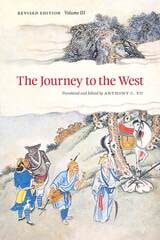
The Journey to the West, Revised Edition, Volume 3
Translated and Edited by Anthony C. Yu
University of Chicago Press, 2012
Read the legendary Chinese classic that inspired the hit game Black Myth: Wukong!
With over a hundred chapters written in both prose and poetry, The Journey to the West has always been a complicated and difficult text to render in English while preserving the lyricism of its language and the content of its plot. But Yu has successfully taken on the task, and in this new edition he has made his translations even more accurate and accessible. The explanatory notes are updated and augmented, and Yu has added new material to his introduction, based on his original research as well as on the newest literary criticism and scholarship on Chinese religious traditions. He has also modernized the transliterations included in each volume, using the now-standard Hanyu Pinyin romanization system. Perhaps most important, Yu has made changes to the translation itself in order to make it as precise as possible.
One of the great works of Chinese literature, The Journey to the West is not only invaluable to scholars of Eastern religion and literature, but, in Yu’s elegant rendering, also a delight for any reader.
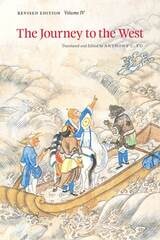
The Journey to the West, Revised Edition, Volume 4
Translated and Edited by Anthony C. Yu
University of Chicago Press, 2012
Read the legendary Chinese classic that inspired the hit game Black Myth: Wukong!
With over a hundred chapters written in both prose and poetry, The Journey to the West has always been a complicated and difficult text to render in English while preserving the lyricism of its language and the content of its plot. But Yu has successfully taken on the task, and in this new edition he has made his translations even more accurate and accessible. The explanatory notes are updated and augmented, and Yu has added new material to his introduction, based on his original research as well as on the newest literary criticism and scholarship on Chinese religious traditions. He has also modernized the transliterations included in each volume, using the now-standard Hanyu Pinyin romanization system. Perhaps most important, Yu has made changes to the translation itself in order to make it as precise as possible.
One of the great works of Chinese literature, The Journey to the West is not only invaluable to scholars of Eastern religion and literature, but, in Yu’s elegant rendering, also a delight for any reader.
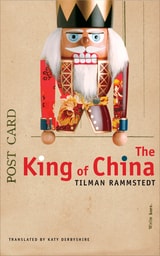
The King of China
Tilman Rammstedt
Seagull Books, 2019
And it is here that the novel opens, two men in hiding, mere miles apart. But when his grandfather dies unexpectedly, Keith is left to continue the farce alone. With the aid of a guidebook, Keith writes a series of letters home to his brothers and sisters, detailing their imaginary travels and the bizarre sights they see. These start off harmlessly, but before long he starts adding invented details: non-stop dental hygiene shows on television, dog vaccinations at the post office—and the letters get longer and longer. Engaging, strange, and ultimately moving, this hilarious novel from Tilman Rammstedt won him the prestigious Ingeborg Bachmann Prize in 2008 and confirmed him as one of Germany’s most compelling writers.
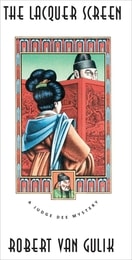
The Lacquer Screen
A Chinese Detective StoryRobert van Gulik
University of Chicago Press, 1962
Early in his career, Judge Dee visits a senior magistrate who shows him a beautiful lacquer screen on which a scene of lovers has been mysteriously altered to show the man stabbing his lover. The magistrate fears he is losing his mind and will murder his own wife. Meanwhile, a banker has inexplicably killed himself, and a lovely lady has allowed Dee's lieutenant, Chiao Tai, to believe she is a courtesan. Dee and Chiao Tai go incognito among a gang of robbers to solve this mystery, and find the leader of the robbers is more honorable than the magistrate.
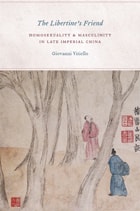
The Libertine's Friend
Homosexuality and Masculinity in Late Imperial ChinaGiovanni Vitiello
University of Chicago Press, 2011
Delving into three hundred years of Chinese literature, from the mid-sixteenth century to the mid-nineteenth, The Libertine’s Friend uncovers the complex and fascinating history of male homosexual and homosocial relations in the late imperial era. Drawing particularly on overlooked works of pornographic fiction, Giovanni Vitiello offers a frank exploration of the importance of same-sex love and eroticism to the evolution of masculinity in China.
Vitiello’s story unfolds chronologically, beginning with the earliest sources on homoeroticism in pre-imperial China and concluding with a look at developments in the twentieth century. Along the way, he identifies a number of recurring characters—for example, the libertine scholar, the chivalric hero, and the lustful monk—and sheds light on a set of key issues, including the social and legal boundaries that regulated sex between men, the rise of male prostitution, and the aesthetics of male beauty. Drawing on this trove of material, Vitiello presents a historical outline of changing notions of male homosexuality in China, revealing the integral part that same-sex desire has played in its culture.
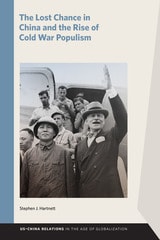
The Lost Chance in China and the Rise of Cold War Populism
Stephen J. Hartnett
Michigan State University Press, 2025
The Magic of Concepts
History and the Economic in Twentieth-Century ChinaRebecca E. Karl
Duke University Press, 2017
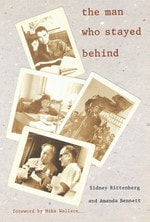
The Man Who Stayed Behind
Sidney Rittenberg and Amanda Bennett
Duke University Press, 2001
Both a memoir and a documentary history of the Chinese revolution from 1949 through the Cultural Revolution, The Man Who Stayed Behind provides a human perspective on China’s efforts to build a new society. Critical of both his own mistakes and those of the Communist leadership, Rittenberg nevertheless gives an even-handed account of a country that is now free of internal war for the first time in a hundred years.
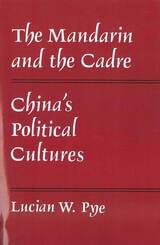
The Mandarin and the Cadre
China’s Political CulturesLucian W. Pye
University of Michigan Press, 2000
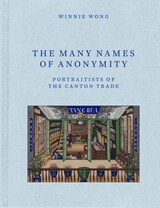
The Many Names of Anonymity
Portraitists of the Canton TradeWinnie Wong
University of Chicago Press, 2025
Challenging contemporary procedures for establishing attribution, chronology, and authenticity in Chinese art, Winnie Wong explores the means, methods, and stakes of recovering the names of an anonymous community of artists. To examine how Western art history has misconstrued and miscategorized names and identities in Chinese art, she looks to conflicting features of modernity: the European attachment of singular names to individuals and their works, and the Chinese use of socially contingent names that often are not attached to material labor and sometimes operate against it. Wong charts the genealogy of this naming problem by bringing to life the artists of the Qing Empire’s trade with Europeans at the port of Guangzhou, centering on a group of portraitists known by names that were recorded in a pidgin language: Chin Qua, Chit Qua, Spoilum, Lam Qua, and Ting Qua.
Many of these paintings survive today, yet scholars have identified only a handful of the painters’ identities. Pushing against Western norms that have shaped our understanding of authorship, Wong reveals that these artists shared names, created works in multiples, and signed their pieces with different names or none at all. This lavishly illustrated volume explores portraiture across media, including unfired clay, reverse painting on glass, watercolor on paper, oil on canvas, and the daguerreotype, to propose new ways of studying anonymity, copying, and the emergence of author names in the Sino-European visual culture of the long eighteenth century.
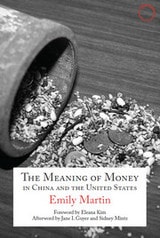
The Meaning of Money in China and the United States
The 1986 Lewis Henry Morgan LecturesEmily Martin
HAU, 2015
When Emily Martin delivered the annual Lewis Henry Morgan Lectures at the University of Rochester in 1986, she took as her subject the meaning of money in China and the United States. Though the topic is of perennial interest—and never more so than in our era, when economic forecasts of China’s growing economy generate shallow news stories and public fear—the lectures were never edited for publication, so their rich analysis has been unavailable to anthropologists ever since.
With this book—the first volume in a collaboration between Hau Books and the University of Rochester—Martin’s lectures are brought back, fully edited and richly illustrated. A new introduction by Martin herself brings her analysis wholly up to date, while an afterword by Jane I. Guyer and Sidney Mintz discusses Martin’s work, influence, and legacy. The Meaning of Money in China and the United States will instantly assume its rightful place as a classic in the field, with Martin’s insights as germane and productive as they were nearly thirty years ago.
The Ming Dynasty
Its Origins and Evolving InstitutionsCharles O. Hucker
University of Michigan Press, 1978
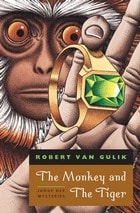
The Monkey and The Tiger
Judge Dee MysteriesRobert van Gulik
University of Chicago Press, 1965
The Monkey and The Tiger includes two detective stories, "The Morning of the Monkey" and "The Night of the Tiger." In the first, a gibbon drops an emerald in the open gallery of Dee's official residence, leading the judge to discover a strangely mutilated body in the woods—and how it got there. In the second, Dee is traveling to the imperial capital to assume a new position when he is separated from his escort by a flood. Marooned in a large country house surrounded by fierce bandits, Dee confronts an apparition that helps him solve a mystery.
The Neighborhood
Space, State, and Daily Life in a Manchurian CityNianshen Song
University of Chicago Press, 2025
What can one neighborhood reveal about the making of a modern nation? The Neighborhood deciphers the unexpected significance of Xita, a half-square-mile quarter in Shenyang, in Northeast China. As the historian Nianshen Song shows, over nearly four centuries, Xita has been shaped and reshaped by empire, war, migration, and urban transformation. Remarkably, the history of this small area mirrors large-scale changes, including and especially China’s metamorphosis from a multiethnic Eurasian empire to a postindustrial society.
Song begins with Xita’s origins as a Qing-era Tibetan Buddhist center, following the lives of Mongol lamas and their imperial patrons. He tracks the neighborhood through the tumultuous twentieth century, when competing Russian and Japanese railway empires fueled its industrial growth, and Japanese colonizers turned it into a showcase for their imperial ambitions. Later, Xita became a vital enclave for Korea’s diaspora before emerging in the post-Mao era as a neon-lit hub of commerce and entertainment.
A thoroughly researched microhistory, The Neighborhood reveals how global forces play out in everyday spaces. By studying the emperors, warlords, merchants, laborers, and migrants who shaped Xita, Song presents a captivating and original perspective for understanding China’s past—not from the top down, but through the streets and people who lived it.
The Otherness of Self
A Genealogy of Self in Contemporary ChinaXin Liu
University of Michigan Press, 2002

The Outsiders
The Western Experience in India and ChinaRhoads Murphey
University of Michigan Press, 1977
This book examines how Western traders, missionaries, officials, and imperial powers encountered, interpreted, and attempted to influence India and China, highlighting the cultural misunderstandings and unequal power dynamics that shaped East-West relations.
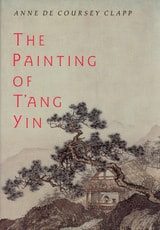
The Painting of T'ang Yin
Anne De Coursey Clapp
University of Chicago Press, 1991
Anne De Coursey Clapp's work also explores larger issues of Ming painting raised by the artist's turbulent career. She describes the social and intellectual values exalted in Ming Suchou, its system of patronage, the contrast between the professional and amateur artist, and the formative influence of twelfth-century Sung dynasty styles on Suchou painters. Clapp shows how T'ang Yin's artistic inventions were made in the course of leading the revival of Sung dynasty styles in Suchou: tracing T'ang Yin's early studies of ancient and contemporary masters, she describes how he reworked an antique style, converting it into a vehicle of expression that reached fruition in a long series of fresh and powerful paintings of landscapes and birds-and-flowers. In the process, she revises the distorted version of middle Ming painting written by later Chinese art theorists to justify their own social and artistic values, noting especially the role of art patrons and their effect on artistic production.
Clapp analyzes the increasing currency of painting as a means of social exchange in ancient China. In particular, she identifies commemorative painting as a major genre of the later dynasties and explores the role it played in the oeuvres of professional masters with its humanistic implications for the Chinese view of the ideal scholarly man. Her broad view of T'ang Yin's career shows him divided between the professional and amateur camps of his time: in landscape and figural subjects he was aligned with the professionals; in flower subjects with the amateurs. Clap argues that the uneven distribution of styles and genres between this master who was subject to the market, and those who were independent of it, suggests that T'ang deliberately tried to expand the range of his paintings in order to appeal to buyers in the lower educational and social strata. Illustrated by some of T'ang Yin's most celebrated paintings and by some which are published for the first time, her work is of tremendous importance to art, literary, and cultural historians of Ming China.
"In this important work, Anne de Coursey Clapp has drawn a clear picture of T'ang Yin's life, patronage relationships, and contribution to the history of Chinese painting. In the person of T'ang Yin, she has chosen an ideal focus around which to examine some of the misleading stereotypes
which have distorted our understanding of Chinese painting since the seventeenth century. Marked by analytical clarity and scrupulous scholarship, her work is a welcome addition to the few works in English on individual Chinese artists."—Louise Yuhas, Occidental College
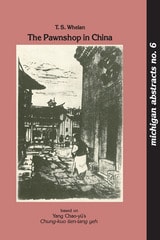
The Pawnshop in China
Yang Chao-yu; Translated by T. S. Whelan
University of Michigan Press, 1979
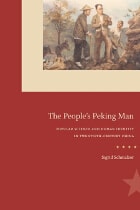
The People's Peking Man
Popular Science and Human Identity in Twentieth-Century ChinaSigrid Schmalzer
University of Chicago Press, 2008
The People’s Peking Man is a skilled social history of twentieth-century Chinese paleoanthropology and a compelling cultural—and at times comparative—history of assumptions and debates about what it means to be human. By focusing on issues that push against the boundaries of science and politics, The People’s Peking Man offers an innovative approach to modern Chinese history and the history of science.
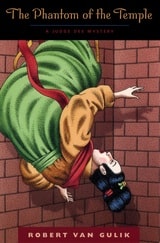
The Phantom of the Temple
A Judge Dee MysteryRobert van Gulik
University of Chicago Press, 1966
Judge Dee presided over his imperial Chinese court with a unique brand of Confucian justice. A near mythic figure in China, he distinguished himself as a tribunal magistrate, inquisitor, and public avenger. Long after his death, accounts of his exploits were celebrated in Chinese folklore, and later immortalized by Robert van Gulik in his electrifying mysteries.
In The Phantom of the Temple, three separate puzzles—the disappearance of a wealthy merchant's daughter, twenty missing bars of gold, and a decapitated corpse—are pieced together by the clever judge to solve three murders and one complex, gruesome plot.
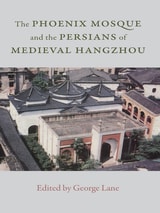
The Phoenix Mosque and the Persians of Medieval Hangzhou
Edited by George Lane
Gingko, 2018
The Pliant Public
Ideology and Public Opinion in ChinaJason Y. Wu
University of Michigan Press, 2027
The Chinese Communist Party has long depended on ideology to set the agenda, communicate its priorities, and legitimize its rule. The Pliant Public argues that for Chinese citizens, however, ideology is in short supply. Surveys show that public opinion is depolarized. Ordinary people have little sense of what ideological labels like “left” and “right” mean, and most of the people who put themselves on the right have the scale backwards. Since a depolarized public is ill-equipped to check the state, China’s leaders can make massive changes to government policy without triggering much backlash.
But depolarization does not always strengthen the state. When citizens lack clear ideological commitments, it is easier for them to set aside their differences. If China’s leaders lost their performance legitimacy, then depolarization could facilitate a broader challenge to party rule.
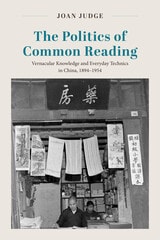
The Politics of Common Reading
Vernacular Knowledge and Everyday Technics in China, 1894–1954Joan Judge
University of Chicago Press, 2025
Examines the transformation of vernacular knowledge during a pivotal period of modern Chinese history, 1894 to 1954.
What did common readers read in the midst of the revolutions that punctuated China’s long Republic (1894–1954)? How did they manage the often-unprecedented challenges of the era? What did they know and how did they know it?
In The Politics of Common Reading, Joan Judge traces the unfolding of a consequential politics of accommodation that engaged commoners as knowers rather than as an unenlightened mass. A response to the institutional failures of the era, this politics was enacted through an informal knowledge infrastructure comprised of low-budget publishers, rustic bookstalls, and a piecemeal national network. As yet unstudied, this infrastructure produced and circulated up to ten times the number of books as official, mainstream channels.
A corpus of some five hundred of these cheap collections of recipes and techniques serves as the basis for this book. Judge focuses on four challenges common readers faced: how to cure an opium addiction, avoid an electric shock, prevent a cholera infection, and graft a plant. She further draws on government, archival, periodical, and fiction materials in devising composites of individual common readers so that we can better know them: details of the crises they faced, the remedies they tried, and the knowledge they relied on as they decocted cures and applied technologies. She argues that the acts of conciliation and assemblage these readers engaged in shaped the broader epistemic terrain from which historical change was actualized in China’s century of revolution.
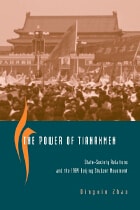
The Power of Tiananmen
State-Society Relations and the 1989 Beijing Student MovementDingxin Zhao
University of Chicago Press, 2001
Dingxin Zhao's award-winning The Power of Tiananmen is the definitive treatment of these historic events. Along with grassroots tales and interviews with the young men and women who launched the demonstrations, Zhao carries out a penetrating analysis of the many parallel changes in China's state-society relations during the 1980s. Such changes prepared an alienated academy, gave rise to ecology-based student mobilization, restricted government policy choices, and shaped student emotions and public opinion, all of which, Zhao argues, account for the tragic events in Tiananmen.
The Question of Women in Chinese Feminism
Tani E. Barlow
Duke University Press, 2004
The Red Pavilion
A Judge Dee MysteryRobert van Gulik
University of Chicago Press, 1961
A chance encounter with Autumn Moon, the most powerful courtesan on Paradise Island, leads Judge Dee to investigate three deaths. Although he finally teases the true story from a tangled history of passion and betrayal, Dee is saddened by the perversion, corruption, and waste of the world "of flowers and willows" that thrives on prostitution.
The Religion of Falun Gong
Benjamin Penny
University of Chicago Press, 2012
In July 1999, a mere seven years after the founding of the religious movement known as the Falun Gong, the Chinese government banned it. Falun Gong is still active in other countries, and its suppression has become a primary concern of human rights activists and is regularly discussed in dealings between the Chinese government and its Western counterparts. But while much has been written on Falun Gong’s relation to political issues, no one has analyzed in depth what its practitioners actually believe and do.
The Religious Question in Modern China
Vincent Goossaert and David A. Palmer
University of Chicago Press, 2011
Recent events—from strife in Tibet and the rapid growth of Christianity in China to the spectacular expansion of Chinese Buddhist organizations around the globe—vividly demonstrate that one cannot understand the modern Chinese world without attending closely to the question of religion. The Religious Question in Modern China highlights parallels and contrasts between historical events, political regimes, and cultural movements to explore how religion has challenged and responded to secular Chinese modernity, from 1898 to the present.
Vincent Goossaert and David A. Palmer piece together the puzzle of religion in China not by looking separately at different religions in different contexts, but by writing a unified story of how religion has shaped, and in turn been shaped by, modern Chinese society. From Chinese medicine and the martial arts to communal temple cults and revivalist redemptive societies, the authors demonstrate that from the nineteenth century onward, as the Chinese state shifted, the religious landscape consistently resurfaced in a bewildering variety of old and new forms. The Religious Question in Modern China integrates historical, anthropological, and sociological perspectives in a comprehensive overview of China’s religious history that is certain to become an indispensible reference for specialists and students alike.
The Return of Ideology
The Search for Regime Identities in Postcommunist Russia and ChinaCheng Chen
University of Michigan Press, 2016
As a nation makes the transition from communism to democracy or another form of authoritarianism, its regime must construct not only new political institutions, but also a new political ideology that can guide policy and provide a sense of mission. The new ideology is crucial for legitimacy at home and abroad, as well as the regime’s long-term viability. In The Return of Ideology, Cheng Chen compares post-communist regimes, with a focus on Russia under Putin and post-Deng China, investigating the factors that affect the success of an ideology-building project and identifies the implications for international affairs.
Successful ideology-building requires two necessary—but not sufficient—conditions. The regime must establish a coherent ideological repertoire that takes into account the nation’s ideological heritage and fresh surges of nationalism. Also, the regime must attract and maintain a strong commitment to the emerging ideology among the political elite.
Drawing on rich primary sources, including interviews, surveys, political speeches, writings of political leaders, and a variety of publications, Chen identifies the major obstacles to ideology-building in modern Russia and China and assesses their respective long-term prospects. Whereas creating a new regime ideology has been a protracted and difficult process in China, it has been even more so in Russia. The ability to forge an ideology is not merely a domestic concern for these two nations, but a matter of international import as these two great powers move to assert and extend their influence in the world.
The Rise of Cantonese Opera
Wing Chung Ng
University of Illinois Press, 2015
In the early 1900s, however, Cantonese opera began to capture mass audiences in the commercial theaters of Hong Kong and Guangzhou--a transformation that changed it forever. Wing Chung Ng charts Cantonese opera's confrontations with state power, nationalist discourses, and its challenge to the ascendancy of Peking opera as the country's preeminent "national theatre." Mining vivid oral histories and heretofore untapped archival sources, Ng relates how Cantonese opera evolved from a fundamentally rural tradition into urbanized entertainment distinguished by a reliance on capitalization and celebrity performers. He also expands his analysis to the transnational level, showing how waves of Chinese emigration to Southeast Asia and North America further re-shaped Cantonese opera into a vibrant part of the ethnic Chinese social life and cultural landscape in the many corners of a sprawling diaspora.

The Rise of China and the Demise of the Capitalist World-Economy
Minqi Li
Pluto Press, 2008
Minqi Li examines the future global prospects from the perspectives of Marxism, world-system theories, and ecological limits to growth. He argues that China is likely to exacerbate many of the major contradictions of world capitalism, which could lead to the demise of the existing world-system.
This is an essential text for students of political economy, economics and global politics.
The Rise of the Chinese Empire
Frontier, Immigration, and Empire in Han China, 130 B.C.-A.D.157Chun-shu Chang
University of Michigan Press, 2007
The second and first centuries B.C. were a critical period in Chinese history—they saw the birth and development of the new Chinese empire and its earliest expansion and acquisition of frontier territories.
But for almost two thousand years, because of gaps in the available records, this essential chapter in the history was missing. Fortunately, with the discovery during the last century of about sixty thousand Han-period documents in Central Asia and western China preserved on strips of wood and bamboo, scholars have been able, for the first time, to put together many of the missing pieces.
In this second volume of his monumental history, Chun-shu Chang provides the first systematic reconstruction of the history of the acquisitions and colonization undertaken by the Chinese empire. In never before seen detail, Chang discusses the actions taken by the Chinese empire to develop the Han frontier: the government promoted massive immigration to the newly conquered virgin land; an innovative and complex garrison system was created; and civil institutions and a land system, as well as a regular imperial administration, were established over the region. Chang investigates the long and massive campaigns of the Han territorial expansion movement, considers the impact of early nation-building, and explores the formation and growth of the Chinese empire and its changing national identity. Chang’s comprehensive reconstruction of ancient and early Imperial Chinese history, based on literary, archaeological, and recently discovered ancient texts and classics, reveals the process and mechanics of the Han frontier development through an innovative and complex system of colonization, the core mechanics of the Han empire-building enterprise.
Chun-shu Chang is Professor of History at the University of Michigan and is the author, with Shelley Hsueh-lun Chang, of Crisis and Transformation in Seventeenth-Century China and Redefining History: Ghosts, Spirits, and Human Society in P’u Sung-ling’s World, 1640 – 1715.
"An extraordinary survey of the political and administrative history of early imperial China, which makes available a body of evidence and scholarship otherwise inaccessible to English-readers. The underpinning of research is truly stupendous.”
—Ray Van Dam, Professor, Department of History, University of Michigan
“Powerfully argues from literary and archaeological records that empire, modeled on Han paradigms, has largely defined Chinese civilization ever since.”
—Joanna Waley-Cohen, Professor, Department of History, New York University
The Rise of the Chinese Empire
Nation, State, and Imperialism in Early China, ca. 1600 B.C.-A.D. 8Chun-shu Chang
University of Michigan Press, 2006
The second and first centuries B.C. were a critical period in Chinese history—they saw the birth and development of the new Chinese empire and its earliest expansion and acquisition of frontier territories. But for almost two thousand years, because of gaps in the available records, this essential chapter in the history was missing. Fortunately, with the discovery during the last century of about sixty thousand Han-period documents in Central Asia and western China preserved on strips of wood and bamboo, scholars have been able, for the first time, to put together many of the missing pieces.
In this first volume of his monumental history, Chun-shu Chang uses these newfound documents to analyze the ways in which political, institutional, social, economic, military, religious, and thought systems developed and changed in the critical period from early China to the Han empire (ca. 1600 B.C. – A.D. 220). In addition to exploring the formation and growth of the Chinese empire and its impact on early nation-building and later territorial expansion, Chang also provides insights into the life and character of critical historical figures such as the First Emperor (221– 210 B.C.) of the Ch’in and Wu-ti (141– 87 B.C.) of the Han, who were the principal agents in redefining China and its relationships with other parts of Asia. As never before, Chang’s study enables an understanding of the origins and development of the concepts of state, nation, nationalism, imperialism, ethnicity, and Chineseness in ancient and early Imperial China, offering the first systematic reconstruction of the history of Chinese acquisition and colonization.
Chun-shu Chang is Professor of History at the University of Michigan and is the author, with Shelley Hsueh-lun Chang, of Crisis and Transformation in Seventeenth-Century China and Redefining History: Ghosts, Spirits, and Human Society in P’u Sung-ling’s World, 1640 – 1715.
“An extraordinary survey of the political and administrative history of early imperial China, which makes available a body of evidence and scholarship otherwise inaccessible to English-readers. The underpinning of research is truly stupendous.”
—Ray Van Dam, Professor, Department of History, University of Michigan
“Powerfully argues from literary and archaeological records that empire, modeled on Han paradigms, has largely defined Chinese civilization ever since.”
—Joanna Waley-Cohen, Professor, Department of History, New York University
The Rural Modern
Reconstructing the Self and State in Republican ChinaKate Merkel-Hess
University of Chicago Press, 2016
In The Rural Modern, Merkel-Hess shows that Chinese reformers and intellectuals created an idea of modernity that was not simply about what was foreign and new, as in Shanghai and other cities, but instead captured the Chinese people’s desire for social and political change rooted in rural traditions and institutions. She traces efforts to remake village education, economics, and politics, analyzing how these efforts contributed to a new, inclusive vision of rural Chinese life. Merkel-Hess argues that as China sought to redefine itself, such rural reform efforts played a major role, and tensions that emerged between rural and urban ways deeply informed social relations, government policies, and subsequent efforts to create a modern nation during the communist period.