Results by title
365 books match the query 'Correspondence' and 88 start with t
The Letters of Arturo Toscanini
Arturo Toscanini
University of Chicago Press, 2006
“This is a major contribution to our understanding of Toscanini and of several entire eras of late nineteenth- and twentieth-century musical life, especially the almost improvisatory looseness of opera in Italy, the glamour of European festivals, and the concert life of the United States. It’s also a wonderful, sometimes downright salacious read.”—New York Times
“Toscanini’s large, cranky humanity comes alive throughout his letters, as it does in his best recordings.”—New York Review of Books
“Edited with scrupulous care and wide-ranging erudition.”—Wall Street Journal
“Sachs has served the conductor well . . . by editing this generously annotated and unprecedentedly revealing collection of letters that were written, usually in haste and often in fury, over the course of seventy years.”—Washington Post
The Letters of Machiavelli
Niccolò Machiavelli
University of Chicago Press, 1988
The Letters of Paul Cézanne
Alex Danchev
J. Paul Getty Trust, The, 2013
Revered and misunderstood by his peers and lauded by later generations as the father of modern art, Paul Cézanne (1839-1906) has long been a subject of fascination for artists and art lovers, writers, poets, and philosophers. His life was a ceaseless artistic quest, and he channeled much of his wide-ranging intellect and ferocious wit into his letters. Punctuated by exasperated theorizing and philosophical reflection, outbursts of creative ecstasy and melancholic confession, the artist’s correspondence reveals both the heroic and all-toohuman qualities of a man who is indisputably among the pantheon of all-time greats.
This new translation of Cézanne’s letters includes more than twenty that were previously unpublished and reproduces the sketches and caricatures with which Cézanne occasionally illustrated his words. The letters shed light on some of the key artistic relationships of the modern period—about one third of Cézanne’s more than 250 letters are to his boyhood companion Émile Zola, and he communicated extensively with Camille Pissarro and the dealer Ambroise Vollard. The translation is richly annotated with explanatory notes, and, for the first time, the letters are cross-referenced to the current catalogue raisonné. Numerous inaccuracies and archaisms in the previous English edition of the letters are corrected, and many intriguing passages that were unaccountably omitted have been restored. The result is a publishing landmark that ably conveys Cézanne’s intricacy of expression.
The Letters of the First Duchess of Ormonde
Elizabeth Butler
Iter Press, 2022
The volume comprises more than three hundred letters written by Ormonde to her husband and family, agents and servants, and friends and clients. Spanning six decades, these letters are meticulously transcribed, edited, and annotated, and the volume includes a substantial scholarly introduction, family trees, a glossary, and other resources.
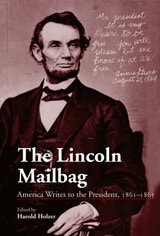
The Lincoln Mailbag
America Writes to the President, 1861-1865Edited by Harold Holzer
Southern Illinois University Press, 2006
As president, Abraham Lincoln received between two hundred and five hundred letters a day—correspondence from public officials, political allies, and military leaders, as well as letters from ordinary Americans of all races who wanted to share their views with him. Here, and in his critically acclaimed volume Dear Mr. Lincoln, editor Harold Holzer has rescued these voices—sometimes eloquent, occasionally angry, at times poetic—from the obscurity of the archives of the Civil War. The Lincoln Mailbag includes letters written by African Americans, which Lincoln never saw, revealing to readers a more accurate representation of the nation’s mood than even the president knew. This first paperback edition of The Lincoln Mailbag includes a new index and fourteen illustrations, and Holzer’s introduction and annotations provide historical context for the events described and the people who wrote so passionately to their president in Lincoln's America.
The Lisle Letters
Edited by Muriel St. Clare Byrne
University of Chicago Press, 1981
The Lisle Letters
An AbridgementEdited by Muriel St. Clare Byrne
University of Chicago Press, 1983
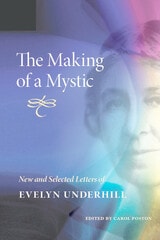
The Making of a Mystic
New and Selected Letters of Evelyn UnderhillEvelyn Underhill. Edited by Carol Poston.
University of Illinois Press, 2010
In time for the centennial celebration of her classic Mysticism, this volume of Underhill's letters will enable readers and researchers to follow her as she reconciled her beliefs with her daily life. The letters reveal her personal and theological development and clarify the relationships that influenced her life and work. Hardly aloof, she enjoyed the interests, mirth, and compassion of close friendships.
Drawing from collections previously unknown to scholars, The Making of a Mystic shows the range of Evelyn Underhill's mind and interests as well as the immense network of her correspondents, including Sir James Frazier and Nobel Prize laureate Rabindranath Tagore. This substantial selection of Underhill's correspondence demonstrates an exceptional scope, beginning with her earliest letters from boarding school to her mother and extending to a letter written to T. S. Eliot from what was to be her deathbed in London in 1941 as the London Blitz raged around her.
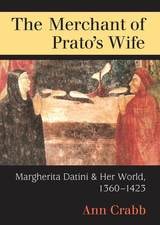
The Merchant of Prato's Wife
Margherita Datini and Her World, 1360-1423Ann Crabb
University of Michigan Press, 2015
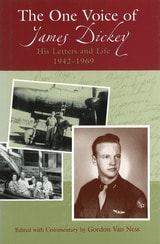
The One Voice of James Dickey
His Letters and Life, 1942-1969Edited & Commentary by Gordon Van Ness
University of Missouri Press, 2003
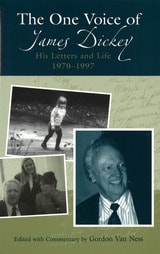
The One Voice of James Dickey
His Letters and Life, 1970-1997Edited & Commentary by Gordon Van Ness
University of Missouri Press, 2005
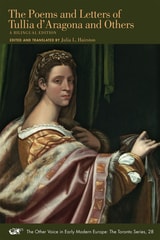
The Poems and Letters of Tullia d'Aragona and Others
A Bilingual EditionTullia d'Aragona and Others, Edited by Julia L. Hairston, Translated by Julia L. Hairston
Iter Press, 2014
Hairston has constructed a full personal, cultural and literary biography for d’Aragona, using newly discovered letters, archival material of other kinds, and contemporary theory about gender in women’s writing. Footnotes establish the intricacy of Tullia’s intellectual networks and her courting of intellectuals in rhyme. Hairston includes poems written to d’Aragona, including Girolamo Muzio’s long pastoral, Tirrhenia. She addresses with tact the question of how sexual Tullia’s relationships were with her various interlocutors. At times, as she says, one just can’t know, but that the issue is much less important than the poems themselves. I agree wholeheartedly. This is the editor Tullia has been waiting for: an indefatigable researcher, a creative biographer, and a precise and appreciative literary critic.
—Ann Rosalind Jones
Esther Cloudman Dunn Professor of Comparative Literature, Smith College
The figure of Tullia d’Aragona has long fascinated readers as the prototype of the “honest courtesan”, a woman who successfully exploited her physical and intellectual charms to win the adoration and respect of the Italian cultural elite. With Julia Hairston’s richly annotated edition of her collected verse, the product of more than a decade of scholarship, d’Aragona finally comes into focus also as poet. She emerges in this volume as one of the most distinctive protagonists in a key transitional moment in Italian literary history, when the aristocratic tradition of Petrarchist lyric began to be reshaped and democratized by its encounter with print.
—Virginia Cox
Professor of Italian, New York University
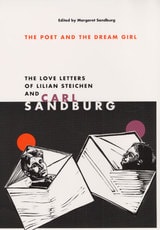
The Poet and Dream Girl
The Love Letters of Lilian Steichen and Carl SandburgEdited by Margaret Sandburg
University of Illinois Press, 1987
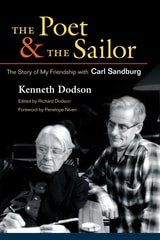
The Poet and the Sailor
The Story of My Friendship with Carl SandburgKenneth Dodson. Edited by Richard Dodson. Foreword by Penelope Niven
University of Illinois Press, 2006
Carl Sandburg first encountered Kenneth Dodson through a letter written at sea during World War II. Though Dodson wrote the letter to his wife, Letha, Sandburg read it in tears and told her, "I've got to meet this man." Composed primarily of their correspondence that continued until Sandburg's death in 1967, The Poet and the Sailor is a chronicle of the deep friendship that followed. Ranging over anything they found important, from writing to health and humor, the letters are arranged by Richard Dodson and are accompanied by a foreword from Sandburg's noted biographer, Penelope Niven.
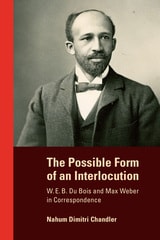
The Possible Form of an Interlocution
W. E. B. Du Bois and Max Weber in CorrespondenceNahum Dimitri Chandler
Duke University Press, 2025
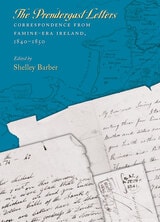
The Prendergast Letters
Correspondence from Famine-Era Ireland, 1840–1850Shelley Barber
University of Massachusetts Press, 2006
Most important, the letters offer a rare contemporary, firsthand account of Ireland's an Gorta Mor, the Great Famine that began with the failure of the potato crop in 1845. Letters written in the months and years following the announcement of the first crop failure provide insight into not only the sufferings of one family but also the response of the community and nation as this crisis transformed Ireland.
James and Elizabeth Prendergast were the parents of six children. Their letters from Milltown, County Kerry, dictated to a scrivener, were posted to sons Thomas and Jeffrey and daughter Julia Riordan and her husband Cornelius, all of whom had emigrated in search of employment to Boston, Massachusetts—a city that would itself be transformed by the famine-era influx of Irish immigrants.
In addition to transcriptions of the forty-eight letters in the collection, this volume includes contextual essays by historian Ruth-Ann Harris and genealogist Marie Daly. The evidence of the letters themselves, along with the contributions of Harris and Daly, demonstrate the ways in which the family of James Prendergast was at once exceptional and typical.
The Secret Life Of John C. Van Dyke
Selected LettersDavid W. Teague
University of Nevada Press, 1997
The author of The Desert, the book that made the American landscape accessible to the mainstream mind, was much less like his fellow environmental prophets John Muir and Henry David Thoreau than he would have had us believe. Van Dyke claimed to have wandered "alone on horseback for thousands of miles through the American Southwest and northern Mexico," as readers of The Desert—now in the millions since the book was published in 1901—were told. He did not. In The Secret Life of John C. Van Dyke, Teague and Wild unmask the desert saint with Van Dyke’s own recently discovered letters. These letters depict a privileged, patrician, and pampered member of the upper-class. His incriminating correspondence reveals that he saw most of the desert from plush railroad cars and grand hotel rooms. In the introduction, the editors clear up many misconceptions scholars currently hold about Van Dyke’s ecological principles, about his outdoorsmanship, and about his trip through the desert itself. As the centennial of the publication of The Desert approaches, this lively collection of letters helps set the record straight. The John C. Van Dyke unveiled in The Secret Life is a more varied character than we had supposed—still worthy of much admiration for his remarkable accomplishments, but still mysterious, and not the man we thought him to be.
The Selected Letters of Bernard DeVoto and Katharine Sterne
Mark DeVoto
University of Utah Press, 2012
A busy man with a busy life, DeVoto found time to write and answer letters in abundance. In 1933 he received a fan letter from Katharine Sterne, a young woman hospitalized with tuberculosis; his reply touched off an extraordinary eleven-year correspondence. Sterne had graduated with honors from Wellesley College in 1928 and had served as an assistant art critic at the New York Times before her illness. Despite her enforced invalidism she maintained an active intellectual life. Sterne and DeVoto wrote to each other until her death in 1944, sometimes in many pages and as often as twice a week, exchanging opinions about life, literature, art, current events, family news, gossip, and their innermost feelings. DeVoto’s biographer, Wallace Stegner, states that in these letters DeVoto “expressed himself more intimately than in any other writings.” Although their correspondence amounted to more than 868 letters (and is virtually complete on both sides), DeVoto and Sterne never met, both of them doubtless realizing that physical remoteness permitted a psychological proximity that was deeply nourishing.
This volume contains 140 of their letters. They have been selected by DeVoto’s son Mark, who has also provided detailed notes clarifying ambiguities and obscure references. Readers will enjoy these letters for their wit and literary flair, but they will also gain insight into the cultural and historical crosscurrents of the 1930s and ’40s while taking an intimate and engaging look at a friendship forged entirely through words.
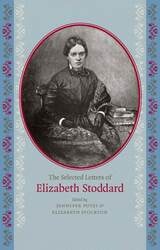
The Selected Letters of Elizabeth Stoddard
Jennifer Putzi
University of Iowa Press, 2012
As scholars of epistolarity have recently argued, letters provide more than just a biographical narrative; they also should be understood as aesthetic performances themselves. The correspondence provides a sense of Stoddard as someone who understood letter writing as a distinct and important literary genre, making this collection particularly well suited for new conceptualizations of the epistolary genre.
The Selected Letters of Ezra Pound to John Quinn
1915–1924Timothy Materer, ed.
Duke University Press, 1991
Pound wrote to John Quinn—a New York lawyer, an expert in business law, and a collector of unusual taste and discrimination—about these artists and many more, urging him to support their journals, collect their manuscripts, and buy and exhibit their paintings and sculptures. Quinn at one time owned manuscripts of Ulysses and The Waste Land, Brancusi’s sculpture Mlle. Pogany, and Picasso’s painting Three Musicians. Yet he was often skeptical about the value of new schools of art, such as Vorticism, and disturbed by the outspokenness of authors such as Joyce. Pound’s letters are unusually tactful when he counters Quinn’s doubts and explains the premises of experimental art. Pound’s letters to Quinn are touched with his characteristic humor and wordplay and are especially notable for their lucidity of expression, engendered by Pound’s deep respect for Quinn.

The Selected Letters of George Oppen
Rachel Blau DuPlessis, ed.
Duke University Press, 1990
These working papers include a rich correspondence, letters which provide access to the sustained, perceptive body of critical and aesthetic thinking of Oppen’s poetic career. Provocative and witty comments on poetry and poetics, especially interesting for the development of an Objectivist aesthetics, and shrewd, deeply felt assessments about the politics of the twentieth century and its moral dilemmas are some of the issues attended to. This edition offers primary documentation about an influential poetics, a little-known movement, and its active figures. Given the aggressive studies of the politics of canon-formation, the interest in describing a historical context for individual literary achievement, and current debates about mainstream poetry, the rethinking of the Objectivist movement, and the collection of documents contributing to its poetics, is an important achievement in literary scholarship.
The Selected Letters of Juanita Brooks
Edited by Craig S. Smith
University of Utah Press, 2019
The letters in this volume, written from 1941 to 1978, trace Brooks’s development from fledgling historian to recognized authority. Serving almost as an autobiography of her interactions with her contemporaries, this selection provides a new perspective on Brooks’s personality and growth as a scholar. Richly detailed, chatty, and covering a wide array of subjects, the letters afford an important glimpse into Brooks’s struggles, concerns, and interests.
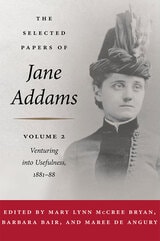
The Selected Papers of Jane Addams
Vol. 2: Venturing into UsefulnessEdited by Mary Lynn McCree Bryan, Barbara Bair, and Maree de Angury; with the assistance of Elizabeth Stevens, Stewart Burns, and Ellen Skerrett
University of Illinois Press, 2009
Artfully annotated, The Selected Papers of Jane Addams offers an evocative choice of correspondence, photographs, and other primary documents, presenting a multi-layered narrative of Addams's personal and emerging professional life. Themes inaugurated in the previous volume are expanded here, including dilemmas of family relations and gender roles; the history of education; the dynamics of female friendship; religious belief and ethical development; changes in opportunities for women; and the evolution of philanthropy, social welfare, and reform ideas.
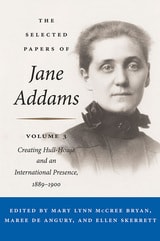
The Selected Papers of Jane Addams
Vol. 3: Creating Hull-House and an International Presence, 1889-1900Jane Addams Edited by Mary Lynn McCree Bryan, Maree de Angury, and Ellen Skerrett: with the assistance of Richard R. Seidel,
University of Illinois Press, 2019
The third volume in this acclaimed series documents Addams’s creation of Hull-House and her rise to worldwide fame as the acknowledged female leader of progressive reform. It also provides evidence of her growing commitment to pacifism. Here we see Addams, a force of thought, action, and commitment, forming lasting relationships with her Hull-House neighbors and the Chicago community of civic, political, and social leaders, even as she matured as an organizer, leader, and fund-raiser, and as a sought-after speaker, and writer. The papers reveal her positions on reform challenges while illuminating her strategies, successes, and responses to failures. At the same time, the collection brings to light Addams’s private life. Letters and other documents trace how many of her Hull-House and reform alliances evolved into deep, lasting friendships and also explore the challenges she faced as her role in her own family life became more complex.
Fully annotated and packed with illustrations, The Selected Papers of Jane Addams, Volume 3 is a portrait of a woman as she changed—and as she changed history.
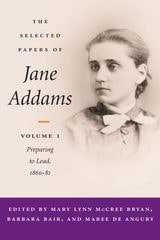
The Selected Papers of Jane Addams
vol. 1: Preparing to Lead, 1860-81Edited by Mary Lynn McCree Bryan, Barbara Bair, and Maree de Angury
University of Illinois Press, 2002
The Selected Papers of Margaret Sanger, Volume 1
The Woman Rebel, 1900-1928Margaret Sanger, Edited by Esther Katz
University of Illinois Press, 2002
The Selected Papers of Margaret Sanger, Volume 4
Round the World for Birth Control, 1920-1966Margaret Sanger: Edited by Esther Katz: Peter C. Engelman and Cathy Moran Hajo, Associate Editors
University of Illinois Press, 2016
This volume focuses on Sanger from her groundbreaking overseas advocacy during the interwar years through her postwar role in creating the International Planned Parenthood Federation. The documents reconstruct Sanger's dramatic birth control advocacy tours through early 1920s Germany, Japan, and China in the midst of significant government and religious opposition to her ideas. They also trace her tireless efforts to build a global movement through international conferences and tours. Letters, journal entries, writings, and other records reveal Sanger's contentious dealings with other activists, her correspondence with the likes of Albert Einstein and Eleanor Roosevelt, and Sanger's own dramatic evolution from gritty grassroots activist to postwar power broker and diplomat.
A powerful documentary history of a transformative twentieth-century figure, The Selected Papers of Margaret Sanger, Volume 4 is a primer for the debates on individual choice, sex education, and planned parenthood that remain all-too-pertinent in our own time.

The Serge Trotsky Papers
Correspondence and Other Writings Between Victor Serge and Leon TrotskyDavid Cotterill
Pluto Press, 1994
The The Selected Letters of John Gould Fletcher
John Fletcher
University of Arkansas Press, 1996
The Verdi-Boito Correspondence
Giuseppe Verdi and Arrigo Boito
University of Chicago Press, 1994
This new edition of the landmark Carteggio Verdi/Boito is at once a valuable resource for all students, teachers, and scholars of opera and a fascinating glimpse of the daily life of European art and artists during the fertile last decades of the 19th century.
Embarking on a 20-year collaboration, Verdi and Boito produced a successful revision of Simon Boccanegra, and two new operas, Otello and Falstaff. They created what many consider to be Verdi's greatest operas, thanks both to Boito's poetry and to his handling of the composer. Here are the day-to-day tasks of creation: poet and composer debating problems of dramatic structure, words, phrases, and meters; altering dialogue as, at the same time, they converse about the wider worlds of art and music. The give and take of artistic creation is rendered fascinatingly.
This edition features a new introduction by Marcello Conati, improvements and updatings to the original edition, and an appendix of undated correspondence. William Weaver's translation is characteristically pitch-perfect; he also provides a short closing sketch of Boito's life after the death of his beloved maestro. Explanatory "linking texts" between the letters create a narrative.
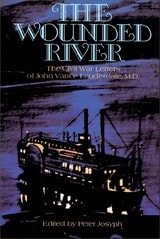
The Wounded River
The Civil War Letters of John Vance Lauderdale, M.D.Peter Josyph
Michigan State University Press, 1993
The Wounded River takes the reader back more than 130 years to reveal a marvelous, first-hand account of nineteenth-century warfare. In the process, the work cuts the legends and mythology that have come to frame and define accounts of America's bloodiest war. Of equal significance, Peter Josyph's editorial work on this superb collection of letters from the Western Americana Division of Yale University's Beinecke Rare Book and Manuscripts Library enhances and clarifies Lauderdale's experinces as a surgeon aboard the U.S. Army hospital ship D. A. January.
The reader looks on while Lauderdale, a New York civilian contract surgeon, operates on hundreds of Confederate and Union wounded. The young doctor's clear writing style and his great compassion for these unfortunate men whose bodies were ripped apart by bullets, shell fragments, and bayonets permits us to catch a disturbiing glimpse of what modern warfare does to humanity. Finally, we learn of Lauderdale's motives for volunteering, his impressions of the "hospital ship" D. A. January, Confederate morale, the Abolitionist cause, and black slavery. The Wounded River is a must read for anyone interested in the real American Civil War.
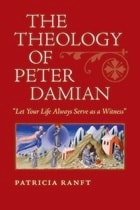
Theology of Peter Damian
Patricia Ranft
Catholic University of America Press, 2012
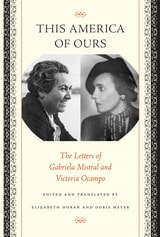
This America of Ours
The Letters of Gabriela Mistral and Victoria OcampoBy Gabriela Mistral and Victoria Ocampo
University of Texas Press, 2003
2005 — Best Book Translation Prize – New England Council of Latin American Studies
Gabriela Mistral and Victoria Ocampo were the two most influential and respected women writers of twentieth-century Latin America. Mistral, a plain, self-educated Chilean woman of the mountains who was a poet, journalist, and educator, became Latin America's first Nobel Laureate in 1945. Ocampo, a stunning Argentine woman of wealth, wrote hundreds of essays and founded the first-rate literary journal Sur. Though of very different backgrounds, their deep commitment to what they felt was "their" America forged a unique intellectual and emotional bond between them.
This collection of the previously unpublished correspondence between Mistral and Ocampo reveals the private side of two very public women. In these letters (as well as in essays that are included in an appendix), we see what Mistral and Ocampo thought about each other and about the intellectual and political atmosphere of their time (including the Spanish Civil War, World War II, and the dictatorships of Latin America) and particularly how they negotiated the complex issues of identity, nationality, and gender within their wide-ranging cultural connections to both the Americas and Europe.
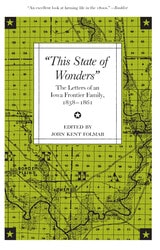
This State of Wonders
The Letters of an Iowa Frontier Family, 1858-1861John Kent Folmar
University of Iowa Press, 1991
When the John Hugh Williams family immigrated to Homer, Iowa, in the 1850s, they had six children, ranging in age from five to twenty. Suddenly land poor, in debt, and caught in the Panic of '57, they sent their eldest son, James, to Georgia to work and add to the family income.
The seventy-five letters collected here represent the family's correspondence to their absent son and brother. From 1858 to 1861, James' sisters, brothers, mother, and father wrote to him frequently, each with distinct views on their daily life and struggles. While Mr. Williams wrote most often about money, farming, and moral advice (he was minister in the Church of New Jerusalem, as well as a merchant and farmer), Mrs. Williams commented on her daily chores, the family's health, the ever-important weather, and her leisure activities, including the contemporary journals and books she read, such as David Copperfield and Jane Eyre. James' sisters and brothers wrote about many concerns, from schoolwork and housework to games and family celebrations in nearby Webster City.
As the letters continue, the affection for the absent James becomes more pronounced. And, as the years go by, the letters touch on more current national trends, including the Pikes Peak Gold Rush and the growing North/South crisis, on which James and his family strongly disagree. James was never to return to Iowa but married and remained in the South, becoming a lieutenant colonel in the Confederate army.
Complete with voices both young and old, male and female, This State of Wonders offers a wealth of information about the daily life of an ordinary family on the Iowa prairie. It is a book to be treasured by all Iowans interested in the early life of their state and by all historians looking for a complete portrait of family life on the midwestern frontier.
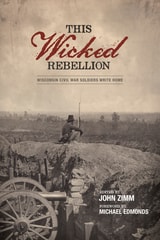
This Wicked Rebellion
Wisconsin Civil War Soldiers Write HomeJohn Zimm
Wisconsin Historical Society Press, 2012
Over one hundred and fifty years after it began, the Civil War still fascinates us—the vast armies marching to war, iconic leaders like Abraham Lincoln and Robert E. Lee, the drama of a nation divided. But the Civil War was also about individuals, the hundreds of thousands of ordinary men and boys who fought and died on either side and the families and friends left at home.
This Wicked Rebellion: Wisconsin Civil War Soldiers Write Home tells this other side of the story. Drawing from over 11,000 letters in the Wisconsin Historical Society’s Civil War collection, it gives a unique and intimate glimpse of the men and women who took part in the War for the Union. Follow Wisconsin soldiers as they sign up or get drafted, endure drill and picket duty, and get their first experiences of battle. Join them as they fight desperation and fear, encounter the brutality of slavery, and struggle with the reasons for war.
From impressions of army life and the South to the hardships of disease and battle, these letters tell the story of the war through the eyes and pens of those who fought in it. This Wicked Rebellion brings to life the heroism and heartache, mayhem and misery of the Civil War, and the powerful role Wisconsin played in it.
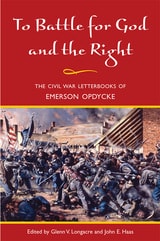
To Battle for God and the Right
The Civil War Letterbooks of Emerson OpdyckeEmerson Opdycke, Ed. by Glenn V. Longacre and John E. Haas.
University of Illinois Press, 2002
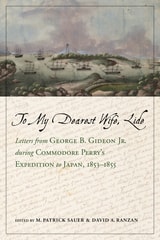
To My Dearest Wife, Lide
Letters from George B. Gideon Jr. during Commodore Perry’s Expedition to Japan, 1853–1855Edited by M. Patrick Sauer and David A. Ranzan
University of Alabama Press, 2019
George B. Gideon Jr. served as second assistant engineer aboard the USS Powhatan from 1852 to 1856. From his position on the steam frigate, Gideon traveled to Singapore, Labuan, Borneo, Hong Kong, and many other Asian lands. During his time at sea, Gideon penned dozens of letters to his wife, Lide, back home in Philadelphia. Recently discovered in the attic of his great-great-grandniece, were fifty-one letters penned by Gideon providing thorough and insightful commentary throughout the voyage.
Through these correspondences, Gideon laboriously documents the details of his daily life on board, from the food they ate to the technical aspects of his work, as well as observations concerning the historical events unfolding around him, such as Chinese piracy, the Taiping Rebellion, the Crimean War, and the devastation of Shimoda. To My Dearest Wife, Lide: Letters from George B. Gideon Jr. during Commodore Perry’s Expedition to Japan, 1853–1855 is a rare first-person account of the landmark American naval expedition to Japan to establish commercial relations between the two countries. Gideon’s letters have been meticulously transcribed and annotated by the editors and are an invaluable primary historical source.
Gideon’s letters are candid and revealing, delving into the rampant dysfunction in the navy of the 1850s—sickness and disease, alcohol abuse, and poor leadership, among other challenges. Gideon also unabashedly shares his own cynical views of the navy’s role in supporting American economic interests in Japan. This firsthand account of the political mission of the Perry expedition is a unique contribution to naval and military history and gives readers a better view of life aboard a navy ship.

Town
Prints & Drawings of Britain before 1800Bernard Nurse
Bodleian Library Publishing, 2020