Results by title
281 books match the query 'Criticism, interpretation, etc' and 73 start with t
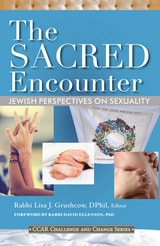
The Sacred Encounter
Jewish Perspectives on SexualityRabbi Lisa Grushcow, Dphil
Central Conference of American Rabbis, 2014
This wide-ranging anthology takes a close look at the breadth of human sexuality from a Jewish perspective. The essays begin with a look at biblical and rabbinic views on sexuality and then proceed to explorations of sexuality at different moments in the life cycle, sexuality and the marital model, diverse expressions of sexuality, examples of sexuality education, the nexus of sexuality and theology, and the challenges of contemporary sexual ethics. The Sacred Encounter is a thought-provoking and important Jewish resource. Perfect for personal study or for high school or adult classes.
The Scribes of the Torah
The Formation of the Pentateuch in Its Literary and Historical ContextsKonrad Schmid
SBL Press, 2023
A revised view of the Pentateuch with consequences for the broader literary history of the Bible
This collection of thirty-one studies on the Pentateuch represents more than twenty years of Konrad Schmid’s research and publications advocating for a new view of the Pentateuch’s formation. Schmid’s essays present the case for a Persian period Priestly document that provided a basic narrative thread to the Torah, which included separate, pre-Priestly components of narratives in Genesis and the Moses story. Schmid’s open discussion includes evidence from various fields, such as literary history, comparative cultural history, historical linguistics, epigraphy, and archaeology. The essays are divided into eight sections usefully structured around the themes of the Pentateuch in the Enneateuch, the history of scholarship, the formation of the Torah, Genesis, the Moses story, the Priestly document, legal texts, and the Pentateuch in the history of ancient Israel’s religion.
The Shape and Shaping of the Book of Psalms
The Current State of ScholarshipNancy L. deClaissé-Walford
SBL Press, 2014
A new and innovative way to approach the Psalter that moves beyond form and cult-functional criticism
Drawing inspiration from Gerald H. Wilson’s The Editing of the Hebrew Psalter, this volume explores questions of the formation of the Psalter from the perspective of canonical criticism. Though called “canonical criticism,” the study actually employs a number of historically traditional and nontraditional approaches to reading the text including form criticism, historical criticism of individual psalms as well as of the whole Psalter, and redaction criticism.
Features:
- Exploration of collections of psalms, theological viewpoints, sovereignty, and the shape and shaping of Psalms
- Examination of the impact of canonical criticism on the study of the Psalter
- Sixteen essays from the Book of Psalms Consultation group and invited scholars
The Social Groups behind the Pentateuch
Jaeyoung Jeon
SBL Press, 2021
A reexamination of the Pentateuch in light of the complex social, religious, and political conflicts of the Persian period
During the last several decades, scholars in pentateuchal studies have suggested new compositional models to replace the Documentary Hypothesis, yet no consensus has emerged. The ten essays in this collection advance the discussion by shifting the focus of pentateuchal studies from the literary stratification of different layers of the texts to the social, economic, religious, and political agendas behind them. Rather than limiting the focus of their studies to scribal and community groups within Persian Yehud, contributors look beyond Yehud to other Judahite communities in the diaspora, including Elephantine and the Samaritan community, establishing a proper academic context for setting the diverse voices of the Pentateuch as we now understand them. Contributors include Olivier Artus, Thomas B. Dozeman, Innocent Himbaza, Jürg Hutzli, Jaeyoung Jeon, Itamar Kislev, Ndikho Mtshiselwa, Dany Noquet, Katharina Pyschny, Thomas Römer, and Konrad Schmid.
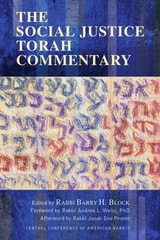
The Social Justice Torah Commentary
Rabbi Barry H. Block
Central Conference of American Rabbis, 2021
What does the Torah have to say about social justice? As the contributors to The Social Justice Torah Commentary demonstrate, a great deal. A diverse array of authors delve deeply into each week's parashah, drawing lessons to inspire tikkun olam. Chapters address key contemporary issues such as racism, climate change, mass incarceration, immigration, disability, women's rights, voting rights, and many more. The result is an indispensable resource for weekly Torah study and for anyone committed to repairing the world.
The Song of Songs and the Ancient Egyptian Love Songs
Michael V. Fox
University of Wisconsin Press, 1985
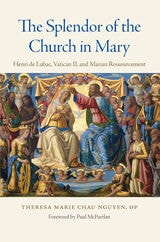
The Splendor of the Church in Mary
Henri de Lubac, Vatican II, and Marian RessourcementTheresa Marie Chau Nguyen
Catholic University of America Press, 2023
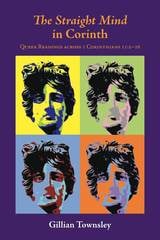
The Straight Mind in Corinth
Queer Readings across 1 Corinthians 11:2-16Gillian Townsley
SBL Press, 2017
A new reading that troubles and transgresses the normal with regard to biblical studies and our understandings of gender and sexuality
Despite its lack of both historical and exegetical clarity, 1 Corinthians 11:2-16 has often been fundamental to understandings of gender and sexuality in many Christian traditions. In particular, a hierarchical model of gender and a heterosexual model of sexuality tend to dominate and are presented as “natural” and “God-ordained.” With the materialist lesbian theory of Monique Wittig providing the theoretical basis for discussion, this book intersects various biblical, theological, and queer lines of inquiry across 1 Corinthians 11:2-16 in order to reveal and challenge these models of gender and sexuality that lie behind both the text itself and its various interpretations.
Features
- Reveals the complex relationship between effeminacy, masculinity and sexual relations in the first century Greco-Roman environment of the New Testament
- Explores the ideologies of sexuality that underlie much of the debate within evangelical circles
- Examines Karl Barth’s theology on the binary pairing of “man and woman” as asymmetrically related to each other and to God through the notion of the imago dei, revealing and challenging the ways in which this reflects androcentric and patriarchal ideologies
The Suffering Servant in Aquinas
Isaiah 53 and Thomas's Theology of Christ's PassionDaniel R. Waldow
Catholic University of America Press, 2024
The Testimony of Two Nations
How the Book of Mormon Reads, and Rereads, the BibleMichael Austin
University of Illinois Press, 2024
Like the Hebrew Bible and the Christian Bible, the Book of Mormon uses narratives to develop ideas and present instruction. Michael Austin reveals how the Book of Mormon connects itself to narratives in the Christian Bible with many of the same tools that the New Testament used to connect itself to the Hebrew Bible to create the Christian Bible. As Austin shows, the canonical context for interpreting the Book of Mormon includes the Christian Bible, the Book of Mormon itself, and other writings and revelations that hold scriptural status in most Restoration denominations. Austin pays particular attention to how the Book of Mormon connects itself to the Christian Bible both to form a new canon and to use the canonical relationship to reframe and reinterpret biblical narratives. This canonical context provides an important and fruitful method for interpreting the Book of Mormon.
The Time Has Grown Short
René Girard, or the Last LawBenoît Chantre
Michigan State University Press, 2022

The Transcendent Mystery of God's Word
A Critical Synthesis of Antioch and AlexandriaJohn W. Martens
Saint Paul Seminary Press, 2024
The Vision of the Priestly Narrative
Its Genre and Hermeneutics of TimeSuzanne Boorer
SBL Press, 2016
A fresh look at the Priestly narrative that places less weight on linguistic criteria alone in favor of narrative coherence
Boorer explores the theology of an originally independent Priestly narrative (Pg), extending through Genesis–Numbers, as a whole. In this book she describes the structure of the Priestly narrative, in particular its coherent sequential and parallel patterns. Boorer argues that at every point in the narrative’s sequential and parallel structure, it reshapes past traditions, synthesizing these with contemporary and unique elements into future visions, in a way that is akin to the timelessness of liturgical texts. The book sheds new light on what this material might have sought to accomplish as a whole, and how it might have functioned for, its original audience.
- Solid arguments based on genre and themes, with regard to a once separate Priestly narrative (Pg) that concludes in Numbers 27*
- Thorough discussion of the overall interpretation of the Priestly narrative (Pg), by bringing together consideration of its structure and genre
- Clear illustration of how understanding the genre of the material and its hermeneutics of time is vital for interpreting Pg as a whole
The Word of Truth, Sealed by the Spirit
Perspectives on the Inspiration and Truth of Sacred ScriptureMatthew C. Genung
Saint Paul Seminary Press, 2022
The Writings and Later Wisdom Books
Christl M. Maier
SBL Press, 2014
An international collection of ecumenical, gender-sensitive interpretations
The latest volume in the Bible and Women series seeks to provide an ecumenical, gender-sensitive interpretation and reception history of the Writings and later wisdom traditions including Ben Sira and the Wisdom of Solomon. Articles trace the living conditions of women, examine the presentation of female figures in the Israelite wisdom tradition, discuss women and gender relations in single books, and explore narratives about great female protagonists, such as Ruth, Esther, and Susanna, who prove their wit and strength in situations of conflict.
Features:
- Essays by scholars from five European countries, Israel, and the United States
- An introduction and fourteen essays focused on women and gender relations
- Coverage of power relations and ideologies within the texts and in current interpretations.
Theology and Anthropology in the Book of Sirach
Bonifatia Gesche
SBL Press, 2020
New research on Sirach for scholars and students
The present volume of English and German essays includes the proceedings of an international conference held in Eichstaett, Germany, in 2017. Themes of creation, emotions, life, death, wisdom, knowledge, the individual and society, family, gender, mercy, justice, and freedom are but a few of the topics that contributors explore in this new collection. Essays explore the rich intertextual connections between Sirach and other biblical texts.
Features:
- Attention to theological distinctions presented in the Hebrew, Greek, Syriac, and Latin versions of the book of Sirach
- Examination of the reception of Sirach in the New Testament and the early modern era
- English abstracts for German-language essays and German abstracts for English-language essays
Thinking Biblically
Exegetical and Hermeneutical StudiesAndré LaCocque and Paul Ricoeur
University of Chicago Press, 1998
LaCocque's commentaries employ a historical-critical method that takes into account archaeological, philological, and historical research. LaCocque includes in his essays historical information about the dynamic tradition of reading scripture, opening his exegesis to developments and enrichments subsequent to the production of the original literary text. Ricoeur also takes into account the relation between the texts and the historical communities that read and interpreted them, but he broadens his scope to include philosophical speculation. His commentaries highlight the metaphorical structure of the passages and how they have served as catalysts for philosophical thinking from the Greeks to the modern age.
This extraordinary literary and historical venture reads the Bible through two different but complementary lenses, revealing the familiar texts as vibrant, philosophically consequential, and unceasingly absorbing.
Torah
Functions, Meanings, and Diverse Manifestations in Early Judaism and ChristianityWilliam M. Schniedewind
SBL Press, 2022
The present volume explores the ever-evolving understandings and diverse manifestations of the Hebrew notion of torah in early Jewish and Christian literature and the different roles torah played within those communities, whether in Judea or in the Hellenistic and early Roman diaspora. This collection of essays is purposefully wide-ranging, with contributors exploring and rethinking some of the most basic scholarly assumptions and preconceptions about the nature of torah in light of new critical approaches and methodologies. Contributors include Gabriele Boccaccini, Francis Borchardt, Calum Carmichael, Federico Dal Bo, Lutz Doering, Oliver Dyma, Paula Fredriksen, Robert G. Hall, Magnar Kartveit, Anne Kreps, David Lambert, Michael Legaspi, Jason A. Myers, Juan Carlos Ossandón Widow, Anders Klostergaard Petersen, Patrick Pouchelle, Jeremy Punt, Michael L. Satlow, Joachim Schaper, William Schniedewind, Elisa Uusimäki, Jacqueline Vayntrub, Jonathan Vroom, James W. Watts, Benjamin G. Wright III, and Jason M. Zurawski.
Toward a Latino/a Biblical Interpretation
Francisco Lozada Jr.
SBL Press, 2017
Engage an interdisciplinary approach
In Toward a Latino/a Biblical Interpretation Francisco Lozada Jr. explores the complex and diverse issues related to Latino/a biblical interpretation. After laying the theoretical foundation, he offers three sample readings of biblical texts to lead readers through the intricacy of interpretation that has historically and culturally surrounded understanding what it means to do Latino/a biblical interpretation. Throughout, Lozada attempts to work out various strategies that Latinos/as have employed to read biblical texts. He argues that Latino/a biblical interpretation is concerned with identity and belongingness with a goal of transforming/liberating the Latino/a community.
Features
- An introduction to what it means to do Latino/a biblical interpretation
- A demonstration of three different reading strategies (correlation, dialogical, and ideological) that Latinos/as employ in reading biblical texts
- An exploration of whether one has to be Latino/a to do Latino/a biblical interpretation
Tradition and Innovation
English and German Studies on the SeptuagintMartin Rösel
SBL Press, 2018
Explore the opportunities and challenges of Septuagint studies
Recent research into the Septuagint has revealed numerous examples of modifications of the meaning of the Hebrew text in the course of its translation into Greek. This collection of essays by one of the leading scholars on the Septuagint shows how complex the translation of individual books was, provides reasons for differences between the Hebrew and Greek Bibles, and paves the way for a theology of the Septuagint. Articles introduce the field of Septuagint studies, the problem of the Letter of Aristeas, and the Hellenistic environment and the hermeneutics of Hellenistic Judaism.
Features:
- A methodological discussion of whether and how a theology of the Septuagint can be written
- Essays introducing the field of Septuagint studies and its Hellenistic environment and the hermeneutics of Hellenistic Judaism
- Fifteen English and German essays covering twenty-five years of Septuagint research
Transcendentalist Hermeneutics
Institutional Authority and the Higher Criticism of the BibleRichard A. Grusin
Duke University Press, 1991
In the ongoing revision of American literary history, this traditional reading of the supposed anti-institutionalism of the Transcendentalists has been duly detailed and continually supported. Richard A. Grusin challenges both traditional and revisionist interpretations with detailed contextual studies of the hermeneutics of Ralph Waldo Emerson, Henry David Thoreau, and Theodore Parker. Informed by the past two decades of critical theory, Grusin examines the influence of the higher criticism of the Bible—which focuses on authorship, date, place of origin, circumstances of composition, and the historical credibility of biblical writings—on these writers. The author argues that the Transcendentalist appeal to the authority of the “self” is not an appeal to a source of authority independent of institutions, but to an authority fundamentally innate.
Trauma and the Failure of History
Kings, Lamentations, and the Destruction of JerusalemDavid Janzen
SBL Press, 2019
A theoretical and exegetical exploration of trauma in the Hebrew Bible
David Janzen discusses the concepts of history and trauma and contrasts the ways historians and trauma survivors grapple with traumatic events, a contrast embodied in the very different ways the books of Kings and Lamentations react to the destruction of Jerusalem. Janzen’s study warns that explanations in histories will tend to silence the voices of trauma survivors, and it challenges traditional approaches that sometimes portray the explanations of traumatic events in biblical literature as therapeutic for victims.
Features:
- Exploration of history as a narrative explanation that creates a past readers can recognize to be true
- Examination of how trauma results in a failure of victims to fully experience or remember traumatic events.
- A case for why the past is a construction of cultures and historians
Two Shipwrecked Gospels
The Logoi of Jesus and Papias's Exposition of Logia about the LordDennis R. MacDonald
SBL Press, 2012