Results by title
300 books match the query 'Economic Development' and 70 start with t

The Revolutionary Imagination in the Americas and the Age of Development
María Josefina Saldaña-Portillo
Duke University Press, 2003
Reading governmental reports, memos, and policies, Saldaña-Portillo traces the arc of development narratives from its beginnings in the 1944 Bretton Woods conference through its apex during Robert S. McNamara's reign at the World Bank (1968–1981). She compares these narratives with models of subjectivity and agency embedded in the autobiographical texts of three revolutionary icons of the 1960s and 1970s—those of Che Guevara, Guatemalan insurgent Mario Payeras, and Malcolm X—and the agricultural policy of the Sandinista National Liberation Front (FSLN). Saldaña-Portillo highlights a shared paradigm of a masculinist transformation of the individual requiring the "transcendence" of ethnic particularity for the good of the nation. While she argues that this model of progress often alienated the very communities targeted by the revolutionaries, she shows how contemporary insurgents such as Rigoberta Menchú, the Zapatista movement, and queer Aztlán have taken up the radicalism of their predecessors to retheorize revolutionary subjectivity for the twenty-first century.
The Rise of the Public Authority
Statebuilding and Economic Development in Twentieth-Century AmericaGail Radford
University of Chicago Press, 2013
The Risk of Economic Crisis
Edited by Martin Feldstein
University of Chicago Press, 1991
In this accessible and thought-provoking volume, Benjamin M. Friedman investigates the origins of financial crisis in domestic capital markets, Paul Krugman examines the international origins and transmission of financial and economic crises, and Lawrence H. Summers explores the transition from financial crisis to economic collapse. In the introductory essay, Martin Feldstein reviews the major financial problems of the 1980s and discusses lessons to be learned from this experience. The book also contains provocative observations by senior academics and others who have played leading roles in business and government.

The Road to Serfdom
F. A. Hayek
University of Chicago Press, 1994
First published by the University of Chicago Press on September 18, 1944, The Road to Serfdom garnered immediate attention from the public, politicians, and scholars alike. The first printing of 2,000 copies was exhausted instantly, and within six months more than 30,000 were sold. In April of 1945, Reader's Digest published a condensed version of the book, and soon thereafter the Book-of-the-Month Club distributed this condensation to more than 600,000 readers. A perennial best-seller, the book has sold over a quarter of a million copies in the United States, not including the British edition or the nearly twenty translations into such languages as German, French, Dutch, Swedish, and Japanese, and not to mention the many underground editions produced in Eastern Europe before the fall of the iron curtain.
After thirty-two printings in the United States, The Road to Serfdom has established itself alongside the works of Alexis de Tocqueville, John Stuart Mill, and George Orwell for its timeless meditation on the relation between individual liberty and government authority. This fiftieth anniversary edition, with a new introduction by Milton Friedman, commemorates the enduring influence of The Road to Serfdom on the ever-changing political and social climates of the twentieth century, from the rise of socialism after World War II to the Reagan and Thatcher "revolutions" in the 1980s and the transitions in Eastern Europe from communism to capitalism in the 1990s.
F. A. Hayek (1899-1992), recipient of the Medal of Freedom in 1991 and co-winner of the Nobel Memorial Prize in Economics in 1974, was a pioneer in monetary theory and the principal proponent of libertarianism in the twentieth century.
On the first American edition of The Road to Serfdom:
"One of the most important books of our generation. . . . It restates for our time the issue between liberty and authority with the power and rigor of reasoning with which John Stuart Mill stated the issue for his own generation in his great essay On Liberty. . . . It is an arresting call to all well-intentioned planners and socialists, to all those who are sincere democrats and liberals at heart to stop, look and listen."—Henry Hazlitt, New York Times Book Review, September 1944
"In the negative part of Professor Hayek's thesis there is a great deal of truth. It cannot be said too often—at any rate, it is not being said nearly often enough—that collectivism is not inherently democratic, but, on the contrary, gives to a tyrannical minority such powers as the Spanish Inquisitors never dreamt of."—George Orwell, Collected Essays
The Role of Foreign Direct Investment in East Asian Economic Development
Edited by Takatoshi Ito and Anne O. Krueger
University of Chicago Press, 2000
The Role of Government in the History of Economic Thought
2005 Supplement, Volume 37Steven G. Medema and Peter Boettke
Duke University Press, 0
The Role of Innovation and Entrepreneurship in Economic Growth
Edited by Michael J. Andrews, Aaron Chatterji, Josh Lerner, and Scott Stern
University of Chicago Press, 2022
We live in an era in which innovation and entrepreneurship seem ubiquitous, particularly in regions like Silicon Valley, Boston, and the Research Triangle Park. But many metrics of economic growth, such as productivity growth and business dynamism, have been at best modest in recent years. The resolution of this apparent paradox is dramatic heterogeneity across sectors, with some industries seeing robust innovation and entrepreneurship and others seeing stagnation. By construction, the impact of innovation and entrepreneurship on overall economic performance is the cumulative impact of their effects on individual sectors. Understanding the potential for growth in the aggregate economy depends, therefore, on understanding the sector-by-sector potential for growth. This insight motivates the twelve studies of different sectors that are presented in this volume. Each study identifies specific productivity improvements enabled by innovation and entrepreneurship, for example as a result of new production technologies, increased competition, or new organizational forms. These twelve studies, along with three synthetic chapters, provide new insights on the sectoral patterns and concentration of the contributions of innovation and entrepreneurship to economic growth.
The Roles of Immigrants and Foreign Students in US Science, Innovation, and Entrepreneurship
Edited by Ina Ganguli, Shulamit Kahn, and Megan MacGarvie
University of Chicago Press, 2020
The Taxation of Income from Business and Capital in Colombia
Charles E. McLure, Jr., John Mutti, Victor Thuronyi, and George R. Zodrow
Duke University Press, 1990
“[The book’s] most important contribution, however, is undoubtedly with respect to consumption taxes. No one, anywhere, has thought through with such care just how the so-called ‘simplified alternative tax’ (essentially a direct personal consumption tax combined with a cash-flow corporate tax) might work in the real world. Since such taxes are increasingly being considered—if not adopted—all over the world, in developing and developed countries alike, for this reason alone this book should be high on the reading list of all those concerned with the design and implementation of efficient and equitable direct tax systems.”—From the Foreword by Richard M. Bird
The Technology of Transition
Science and Technology Policies for Transition CountriesDavid A. Dyker
Central European University Press, 1997
The Transition in Eastern Europe, Volume 1
Edited by Olivier Jean Blanchard, Kenneth A. Froot, and Jeffrey D. Sachs
University of Chicago Press, 1994
Volume 1, Country Studies, gives an in-depth, country-by-country analysis of various reform experiences, including historical backgrounds and discussions of policies and results to date. The countries analyzed are Poland, Czechoslovakia, Hungary, eastern Germany, Slovenia, and Russia. Written by leading economists, some of whom helped shape local and national reforms, this volume identifies common progress, common difficulties, and tentative solutions to the problems of economic transition.
Volume 2, Restructuring, focuses on specific issues of transition, including how to design labor market institutions, privatization, new fiscal structures, and bankruptcy laws; how to reorganize foreign trade; and how to promote foreign direct investment. The articles, written by experts in the field, will be of direct help to those involved in the transition process.
These volumes provide a standard reference on economic transition in the region for policymakers in Eastern Europe and in western countries, for international agencies concerned with the transition process, and for anyone interested in learning about the dramatic changes that have recently occurred in Eastern Europe.
The Transition in Eastern Europe, Volume 2
RestructuringEdited by Olivier Jean Blanchard, Kenneth A. Froot, and Jeffrey D. Sachs
University of Chicago Press, 1994
Volume 1, Country Studies, gives an in-depth, country-by-country analysis of various reform experiences, including historical backgrounds and discussions of policies and results to date. The countries analyzed are Poland, Czechoslovakia, Hungary, eastern Germany, Slovenia, and Russia. Written by leading economists, some of whom helped shape local and national reforms, this volume identifies common progress, common difficulties, and tentative solutions to the problems of economic transition.
Volume 2, Restructuring, focuses on specific issues of transition, including how to design labor market institutions, privatization, new fiscal structures, and bankruptcy laws; how to reorganize foreign trade; and how to promote foreign direct investment. The articles, written by experts in the field, will be of direct help to those involved in the transition process.
These volumes provide a standard reference on economic transition in the region for policymakers in Eastern Europe and in western countries, for international agencies concerned with the transition process, and for anyone interested in learning about the dramatic changes that have recently occurred in Eastern Europe.

The Uncaring, Intricate World
A Field Diary, Zambezi Valley, 1984-1985Pamela Reynolds
Duke University Press, 2019
The WTO as an International Organization
Edited by Anne O. Krueger
University of Chicago Press, 1997
"[T]his book is a tour de force, with consistently fine papers by leading experts, and it is worthy of any bookshelf." —Joel P. Trachtman, American Journal of International Law
"This latest conference volume from the National Bureau of Economic Research is likely to be the definitive reference work on the WTO for years to come. . . . Specialists and non-specialists alike will gain a great deal from a careful reading of this impressive volume." —John Ravenhill, Australian Journal of Political Science
"For anyone who is interested in the further development of the rule system for the world economy, this book is a must." —Horst Siebert, Review of World Economics
The Wealth and Poverty of Regions
Why Cities MatterMario Polèse
University of Chicago Press, 2009
As the world becomes more interconnected through travel and electronic communication, many believe that physical places will become less important. But as Mario Polèse argues in The Wealth and Poverty of Regions, geography will matter more than ever before in a world where distance is allegedly dead.
This provocative book surveys the globe, from London and Cape Town to New York and Beijing, contending that regions rise—or fall—due to their location, not only within nations but also on the world map. Polèse reveals how concentrations of industries and populations in specific locales often result in minor advantages that accumulate over time, resulting in reduced prices, improved transportation networks, increased diversity, and not least of all, “buzz”—the excitement and vitality that attracts ambitious people. The Wealth and Poverty of Regions maps out how a heady mix of size, infrastructure, proximity, and cost will determine which urban centers become the thriving metropolises of the future, and which become the deserted cities of the past. Engagingly written, the book provides insight to the past, present, and future of regions.
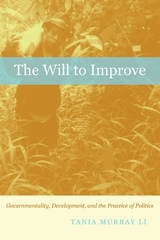
The Will to Improve
Governmentality, Development, and the Practice of PoliticsTania Murray Li
Duke University Press, 2007
Demonstrating that the “will to improve” has a long and troubled history, Li identifies enduring continuities from the colonial period to the present. She explores the tools experts have used to set the conditions for reform—tools that combine the reshaping of desires with applications of force. Attending in detail to the highlands of Sulawesi, she shows how a series of interventions entangled with one another and tracks their results, ranging from wealth to famine, from compliance to political mobilization, and from new solidarities to oppositional identities and violent attack. The Will to Improve is an engaging read—conceptually innovative, empirically rich, and alive with the actions and reflections of the targets of improvement, people with their own critical analyses of the problems that beset them.
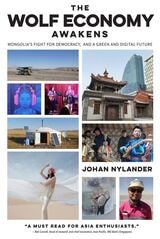
The Wolf Economy Awakens
Mongolia’s Fight for Democracy, and a Green and Digital FutureJohan Nylander
Hong Kong University Press, 2024
Mongolia, a vibrant democracy landlocked between Russia and China, stands on the edge of becoming Asia’s next boom nation—one of the richest countries per capita in the region. Referred to as the “wolf economy” for its vast natural resources (copper, gold, and rare earth metals), it is also home to a growing number of cutting-edge tech startups and international lifestyle brands. Its vast steppe landscape lends itself not only to herding and tourism but also to renewable energy production and filmmaking.
The Wolf Economy Awakens is about the individuals who are fighting to strengthen the country’s democracy and diversify its economy. It is about innovators aiming to realize Mongolia’s promise as a hub for green energy, tech and lifestyle entrepreneurs who are shaking up traditional industries, and go-getters who have left jobs on Wall Street to return to the country they love and help move it forward. Asia correspondent and award-winning author Johan Nylander travels across Mongolia to speak to the country’s leaders and innovators—not to mention a cast of digital nomads, jazz musicians, and ordinary families—and finds a nation ready to grasp a better future. Unlocking a country’s potential is never easy, but Mongolia stands every chance of becoming Asia’s next success story.
The World Bank Unveiled
Inside the revolutionary struggle for transparencyDavid Ian Shaman
Parkhurst Brothers, Inc., 2009
Nobel Prize winning economist and former World Bank Chief Economist, Joseph Stiglitz, has repeatedly discussed the importance of transparency in policymaking at the World Bank and International Monetary Fund. He believes a lack of transparency in the two institutions has lead to bad decisions. Bad decisions at IMF and the World Bank mean real pain for the world’s poor.
There is a perception that “the suits” close the World Bank’s doors to deliberate the fate of earth’s poorest populations and only when the doors are unlocked do people living in poverty learn what has been decided about their future. Meanwhile donations are down. The bank’s critical International Development Association’s funding has dropped dramatically. Managers are discouraged by studies examining the World Bank’s effectiveness. How, they wonder, could such large beneficences have so little impact on poor populations?
Events of the past two years have only increased the stakes. First, rising fuel prices caused a worldwide rise in the price of basic foods. Then the deepest economic downturn since the Great Depression sapped donor nation’s coffers. By the end of the Bush administration in 2009, giving by the USA lagged more than any other wealthy nation.
In 1999, two Bank researchers understood the situation was already on a precipice. World Bank loans had ceased to make significant impact on poverty in many client nations. Certain governments and multi-national corporations were destroying environments and desecrating indigenous cultures, all to achieve short-term gains for a fortunate few.
Demonstrable successes were few, and every World Bank conference became a melee of demonstrators and police. The two researchers asked themselves whether it was possible to open up the institution by increased transparency, improve its accountability, and mute criticism. They decided to launch an internet-based broadcast to disseminate unedited videos of internal discussions and debates. The bank’s culture and bureaucracy, hardened over a half-century, presented them with a formidable foe. Some powerful officials feared the transparency initiative; others withheld public support while standing on the sidelines. The World Bank Unveiled documents this epic struggle. It is the story of a revolution to transform the World Bank and a case study of the power of the Bank to transform people’s lives.

The World Bank
Lending on a Global ScaleJo Marie Griesgraber
Pluto Press, 1996
Trade and Employment in Developing Countries, Volume 2
Factor Supply and SubstitutionEdited by Anne O. Krueger
University of Chicago Press, 1982