Results by title
295 books match the query 'Ecosystems & Habitats' and 73 start with t
The Swimming Holes of Texas
By Julie Wernersbach and Carolyn Tracy; photography by Carolyn Tracy
University of Texas Press, 2017
The Tallgrass Prairie Center Guide to Prairie Restoration in the Upper Midwest
Daryl Smith
University of Iowa Press, 2010
Although less than 3 percent of the original vast landscape survives, the tallgrass prairie remains a national treasure, glowing with a vast array of colorful wildflowers in spring and summer, enriched by the warm reds and browns of grasses in fall and winter. This comprehensive manual, crafted by the staff of the Tallgrass Prairie Center at the University of Northern Iowa, will be an essential companion for everyone dedicated to planning, developing, and maintaining all types of prairie restorations and reconstructions in the tallgrass prairie region of Iowa, northern Illinois, northwestern Indiana, southwestern Wisconsin, southwestern Minnesota, eastern South Dakota, eastern Nebraska, northwestern Missouri, and northeastern Kansas.
Focusing on conservation plantings, prairie recovery, native landscaping in yards and at schools, roadside plantings, and pasture renovations, the authors—who collectively have more than a hundred years of experience with prairie restoration—have created a manual that will be particularly useful to landowners, conservation agency personnel, ecosystem managers, native-seeding contractors, prairie enthusiasts, teachers, and roadside managers. A wealth of color and black-and-white photographs taken in the field as well as checklists and tables support the detailed text, which also includes useful online and print sources and references, a glossary, and lists of common and scientific names of all plant species discussed.
The text is divided into five parts. Part I, Reconstruction Planning, provides an overall summary of the entire process, information about securing good-quality seed, and the design of seed mixes. In Part II, Implementing Reconstruction, the authors consider ways to prepare and seed the site, manage the site in its first growing season, identify seedlings, and evaluate success. Part III, Prairie Restoration and Management, deals with identifying and assessing prairie remnants, working toward a predetermined restoration goal, and managing restored prairie remnants and completed reconstructions, including prescribed burning. Chapters in Part IV, Special Cases, discuss the uses of prairie in public spaces, roadside vegetation management, and landscaping on a smaller scale in yards and outdoor classrooms. Part V, Native Seed Production, describes the processes of harvesting, drying, cleaning, and storing native seed as well as propagating and transplanting native seedlings.
Although we cannot recreate the original blacksoil prairie, tallgrass prairie restoration offers the opportunity to reverse environmental damage and provide for the recovery of vital aspects of this lost ecosystem. Anyone in the Upper Midwest who wishes to improve water quality, reduce flood damage, support species diversity, preserve animal habitats, and enjoy the changing panorama of grasses and wildflowers will benefit from the clear, careful text and copious illustrations in this authoritative guide.
The Tallgrass Prairie Center Guide to Seed and Seedling Identification in the Upper Midwest
Dave Williams
University of Iowa Press, 2010
Settlers crossing the tallgrass prairie in the early 1800s were greeted by a seemingly endless landscape of wildflowers and grasses, one of the most diverse ecosystems on our planet. Today, although the tallgrass prairie has been reduced to a tiny percentage of its former expanse, people are working to restore and reconstruct prairie communities. This lavishly illustrated guide to seeds and seedlings, crafted by Tallgrass Prairie Center botanist Dave Williams and illustrator Brent Butler, will insure that everyone from urban gardeners to grassland managers can properly identify and germinate seventy-two species of tallgrass wildflowers and grasses in eastern North Dakota, eastern South Dakota, southwestern Minnesota, southwestern Wisconsin, northern Illinois, northwestern Indiana, Iowa, eastern Nebraska, eastern Kansas, northwestern Missouri, and eastern Oklahoma.
Williams has created a brilliant, nearly foolproof system of identification and verification. Two primary keys lead to eleven secondary keys that link to characteristic groups of tallgrass plants: seven groups for wildflowers and four groups for grasses. To identify a seedling, use the primary key to discover its place in the secondary key, then turn to that characteristic group to find your seedling. Circles on each full seedling photograph correspond to close-up photographs; triangles on these close-ups illustrate information in the text to further pinpoint identification. Drawings of leaves illuminate exact identification, and enlarged photographs of each seed provide yet another way to confirm identification.
Thousands of seeds were sprouted in the Tallgrass Prairie Center’s greenhouse to provide seedlings close in size and development to those grown in the field near the end of their first season; research and photography took place over four years. Williams’s text for each species includes a thorough description, a comparison of similar species, and guidance for germination and growth. A complete glossary supports the text, which is concise but detailed enough to be accessible to beginning prairie enthusiasts.
Anyone in the Upper Midwest who wishes to preserve the native vegetation of prairie remnants or reconstruct a tallgrass prairie of whatever size—from home gardens to schoolyards to roadsides to large acreages—will benefit from the hundreds of photographs and drawings and the precise text in this meticulously prepared guide.
The Tallgrass Prairie
An IntroductionCindy Crosby
Northwestern University Press, 2017
Like a walking tour with a literate friend and expert, Cindy Crosby's Tallgrass Prairie prepares travelers and armchair travelers for an adventure in the tallgrass. Crosby's engaging gateway assumes no prior knowledge of tallgrass landscapes, and she acquaints readers with the native plants they’ll discover there. She demystifies botanic plant names and offers engaging mnemonic tips for mastering Latin names with verve and confidence. Visitors to the prairie will learn to identify native plants using the five senses to discover what makes each plant unique or memorable. In the summer, for example, the unusual square stem of cup plant, Silphium perfoliatum, sets it apart from its neighbors. And its distinctive leaf cups water after the rain.
A gifted raconteur, Crosby tells stories about how humankind has adopted the prairie as a grocery, an apothecary, and even as a shop for love charms. Rounding out this exceptional introduction are suggestions for experiencing the American prairie, including journaling techniques and sensory experiences, tips for preparing for a hike in tallgrass landscapes, ways to integrate native prairie plants into home landscapes (without upsetting the neighbors), and a wealth of resources for further exploration.
An instant classic in the tradition of American naturalist writing, The Tallgrass Prairie will delight not only scholars and policy makers, but guests to tallgrass prairie preserves, outdoors enthusiasts and gardeners, and readers interested in American ecosystems and native plants.
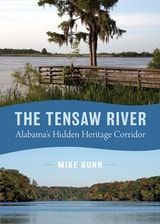
The Tensaw River
Alabama's Hidden Heritage CorridorMike Bunn
University of Alabama Press, 2025
Where nature meets history—explore Alabama’s hidden river legacy.
The Tensaw River introduces one of the American South’s richest and most fertile natural features. Author Mike Bunn is director of Historic Blakeley State Park, which is nestled in a prominent bend of the majestic Tensaw River. Reading Bunn is like sailing with a knowledgeable captain along the river’s natural and cultural byways as he offers a treasury of stories and facts that illuminate the river’s astonishing flora and fauna and the sweep of human history along the river’s ageless, meandering waterways.
Forming the eastern boundary of the expansive Mobile-Tensaw Delta, the Tensaw has had little industrial development. Left largely undisturbed, the river still flows free and bountiful into the grand estuary of Mobile Bay in ways and along vistas that would be recognizable to Native Americans centuries ago and to pioneers who arrived before Alabama became a state.
Bunn’s unforgettable stories in The Tensaw River trace the construction and occupation of the Bottle Creek site, an important mound complex built by Southeastern Native Americans a millennia ago. Nearby Blakeley is a spectral antebellum ghost town whose lost memories also tease the imagination. During the Civil War, the boom of artillery fire in the battle that sealed the fate of the city of Mobile echoed along the bends in the Tensaw.
Located near popular Gulf Coast travel destinations, the Tensaw’s forty-one-mile-long “Forgotten Cultural Heritage Corridor” is a gateway to the enchanting beauty of—and humankind’s enduring relationship to—the landscape of the American South.

The Tillamook
A Created Forest Comes of AgeGail Wells
Oregon State University Press, 1999
The Tragedy of the Commodity
Oceans, Fisheries, and AquacultureLongo, Stefano B
Rutgers University Press, 2015
Although humans have long depended on oceans and aquatic ecosystems for sustenance and trade, only recently has human influence on these resources dramatically increased, transforming and undermining oceanic environments throughout the world. Marine ecosystems are in a crisis that is global in scope, rapid in pace, and colossal in scale. In The Tragedy of the Commodity, sociologists Stefano B. Longo, Rebecca Clausen, and Brett Clark explore the role human influence plays in this crisis, highlighting the social and economic forces that are at the heart of this looming ecological problem.
The Underharbor
Submerged Histories of SydneyAnn Elias
University of Chicago Press, 2026
An underwater look at Sydney that surfaces new and unfamiliar histories of people, objects, spaces, and environmental and social change.
The Underharbor places the ocean at the center of a cultural history of Sydney, Australia, a place built on and around seawater, where the community is linked historically, emotionally, and psychologically to the water. Drawing on a series of vignettes that focus on Sydney’s underwater dimensions—including the harbor’s relationship to technological modernity, Indigenous ideas and practices, artistic experimentation, and scientific inquiry—Ann Elias creates a unique portrait of a city and its past. By shifting the terrestrial perspective to the subaquatic, Elias uncovers an area filled with political meaning, poetic significance, and ideological struggles.
Few harbors are as researched as Sydney’s, where fishing, exploration, colonialism, warfare, science, and industry all shaped cultural ideas about underwater space. Between 1850 to 1950, only a few groups of people had access to the remote underharbor: Indigenous divers and First Nations peoples, who were dispossessed by colonizers; divers working primarily to further the maritime industrialization of the growing city and to salvage objects from the harbor floor; researchers in the emerging field of marine science who dove for first-hand observation; and beachcombers, naturalists, and dredgers who got to know the underharbor by bringing it to the surface. Through press stories, models, illustrations, maps, and photographic and cinematic representations, The Underharbor reveals how these watery visions of Sydney shifted over the course of a century.
The Undersea Network
Nicole Starosielski
Duke University Press, 2015
The Unequal Ocean
Living with Environmental Change along the Peruvian CoastMaximilian Viatori
University of Arizona Press, 2023
Tackling important subjects of global concern, the author presents a complex image of Peru’s global seascapes as historical spaces comprising precarious worlds that expose people, nonhuman species, and places to unequal levels of harm. He traces how powerful actors in Peru represent the ocean in ways that erase the systemic inequalities, histories of uneven development, and extractive violence that have shaped ocean life. These erasures underscore the need for alternative representations of the ocean that highlight the engagements and commitments that make oceanic ecologies possible, as well as the material relationships and unequal positions of different people and species within them.
The author analyzes a multitude of timely topics, including waves and coastal development, the circulation of ocean waste, El Niño warming events, and the extraction of jumbo squid. This book also addresses expanding scholarly interest in the world’s oceans as sites for thinking about social inequities, environmental politics, and multispecies relationships.
The View From Cascade Head
Lessons for the Biosphere from the Oregon CoastBruce A. Byers
Oregon State University Press, 2020
Cascade Head is Oregon’s only biosphere reserve, part of the international network of biosphere reserves coordinated by UNESCO. Biosphere reserves around the world are laboratories for understanding how humans affect ecosystems and models for how we can heal the human-nature relationship.
The View from Cascade Head illustrates three main lessons: the actions and efforts of committed individuals can make a difference; ecological mysteries still abound despite decades of scientific research; and our worldviews—how we think about our place in nature—shape our individual and collective effect on the ecosystems we inhabit. Byers helps us understand how these lessons apply everywhere and can lead us toward a more sustainable relationship with our home planet.
The View from Morse Mountain
Climate Change and Resilience on the Maine CoastEdited by Donald C. Dearborn, Joseph Hall, and Laura Sewall
University of Massachusetts Press, 2027
Arguing that resilient coasts emerge from collaborative, cross-disciplinary understanding rather than single-issue solutions
At the Bates-Morse Mountain Conservation Area, climate change impacts are visible to the attentive observer. High tides increasingly flood the causeway across the Sprague River Salt Marsh, large winter storms are reshaping the sand dunes at Seawall Beach, and the offshore waters of the Gulf of Maine are among the fastest-warming on the planet. Environmental change is not new there, nor is the impact of human activity, but different parts of this coastal system are changing at different rates, in different ways. Some components are potentially self-renewing, such as the barrier dune beach, while others, such as Piping Plover populations or the salt marshes, might be restored only with assistance. Unfortunately, other components may already be beyond help: the forest of pitch pines between the dunes and the marsh faces the dual threat of saltwater intrusion below ground and potential burial by migrating sands above.
In The View from Morse Mountain, contributors invite readers into this system through an array of complementary inquiries into bedrock geology, carbon capture by salt marshes, dune movement, the physiology of trees, bird migration, perceptual psychology, and the overlays of Indigenous history and colonial settlement. Fostering adaptability, particularly in coastal systems, requires just such an integrated set of examinations and perspectives. This collection of expert analyses works to encourage place-based curiosity in anyone, both those familiar with this area of Maine and people beyond, helping them recognize both loss and resilience, and to deepen their love for the places they treasure.
Contributors include the volume editors as well as Emily Chandler, Caitlin Cleaver, Isobel Curtis, J. Dykstra Eusden Jr., Brett Huggett, Bev Johnson, Dana Oster, Mike Retelle, and Robert Strong.
The Western Flyer
Steinbeck's Boat, the Sea of Cortez, and the Saga of Pacific FisheriesKevin M. Bailey
University of Chicago Press, 2015
In this book, Kevin M. Bailey resurrects this forgotten witness to the changing tides of Pacific fisheries. He draws on the Steinbeck archives, interviews with family members of crew, and more than three decades of working in Pacific Northwest fisheries to trace the depletion of marine life through the voyages of a single ship. After Steinbeck and his friend Ed Ricketts—a pioneer in the study of the West Coast’s diverse sea life and the inspiration behind “Doc” in Cannery Row—chartered the boat for their now-famous 1940 expedition, the Western Flyer returned to its life as a sardine seiner in California. But when the sardine fishery in Monterey collapsed, the boat moved on: fishing for Pacific ocean perch off Washington, king crab in the Bering Sea off Alaska, and finally wild Pacific salmon—all industries that would also face collapse.
As the Western Flyer herself faces an uncertain future—a businessman has bought her, intending to bring the boat to Salinas, California, and turn it into a restaurant feature just blocks from Steinbeck’s grave—debates about the status of the California sardine, and of West Coast fisheries generally, have resurfaced. A compelling and timely tale of a boat and the people it carried, of fisheries exploited, and of fortunes won and lost, The Western Flyer is environmental history at its best: a journey through time and across the sea, charting the ebb and flow of the cobalt waters of the Pacific coast.
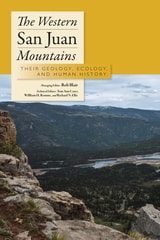
The Western San Juan Mountains
Their Geology, Ecology, and Human HistoryRob Blair
University Press of Colorado, 1996
The most complete work published on the natural history of southwest Colorado's majestic mountain system, The Western San Juan Mountains: Their Geology, Ecology, and Human History is designed to be used while exploring the scenic 235-mile paved San Juan Skyway, which passes through Durango, Silverton, Ouray, Telluride, Dolores, and Cortez.
The Western San Juan Mountains covers the physical environment, the biological communities, the human history, and points of interest represented on milepost signs along the highway. Some of the many topics covered include: how the San Juan Mountains were formed; why the landscape is so rugged and picturesque; why the vegetation changes from the lowlands to the alpine heights; energy and mineral resources of the area; why these mountains intrigued early explorers; factors that influence the unpredictable weather; and the first-known inhabitants.
The contributions to this guide include Fort Lewis College geologists, biologists, archaeologists, historians, and other specialists. Together they have amassed more than one hundred years of study based not only on previous work but on their own research.
This generously illustrated guidebook is aimed at all those who wish to understand this intricate mountain system in much greater detail than provided by most picture books.

The X Catalogue
Notes on Madrid's LatinX Flora and FaunaClaudia Milian
University of Minnesota Press, 2026
A transatlantic, more-than-human exploration of LatinX presence, memory, and empire in the heart of Madrid
How does LatinXness begin in the Kingdom of Spain? In The X Catalogue, Claudia Milian offers a vade mecum of Madrid, exploring it as an ecological archive and former imperial metropolis. Approaching the “X” as metaphor, method, and philosophical practice, she extends inquiry beyond the human. Milian traces the “X” through transplanted life from the Americas: the roots of the ahuehuete tree (the Montezuma cypress), the engineering and renaming of the acocoxochitl (the dahlia), the “invasion” of the cotorras argentinas (Monk parakeets), and the exhibition of the caimán (the alligator) as a conquered object.
Critical theory and historical cultural studies meet to remap the Atlantic world through the “Xs” of arrival, circulation, and transformation. By examining how LatinXness inhabits the Spanish capital, Milian breaks open LatinX Spain and global LatinX studies. The X Catalogue resists containment, mirroring its objects of study and challenging categories such as native, foreign, or authentic. It advances a more-than-human, transatlantic understanding of LatinXness within empire studies, environmental humanities, and the critical study of tourism.
Retail e-book files for this title are screen-reader friendly with images accompanied by short alt text and/or extended descriptions.
Threads from the Web of Life & The Shark and the Jellyfish
Stories in Natural HistoryStephen Daubert
Vanderbilt University Press, 2019
One niche moves across a world of flowers that reaches its earliest peak bloom in the low valleys and then peaks later among the slopes of the foothills—a rolling habitat. Another hop-scotches across the ocean floor, compelling its occupants to migrate from the fallen body of one dead whale to the next. Yet another appears in the aftermath of typhoons, requiring its inhabitants to search the tropical coastline for the latest storm landfall.
These tales are filled with no less intrigue than other literary works, but they transpire out of the sight of most readers. Once known only to ecologists, in Threads from the Web of Life and The Shark and the Jellyfish, available for the first time in a single deluxe paperback, these stories become accessible to everyone with an interest in natural history.
Through a Naturalist's Eyes
Exploring the Nature of New EnglandMichael J. Caduto
University Press of New England, 2016
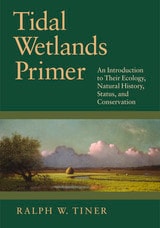
Tidal Wetlands Primer
An Introduction to Their Ecology, Natural History, Status, and ConservationRalph W. Tiner
University of Massachusetts Press, 2013
Illustrated with maps, photographs, and diagrams, this volume provides a clear account of the factors that make these habitats unique and vulnerable. It discusses their formation, the conditions affecting their plant and animal life, and the diversity of types across North America, as well as their history, use by wildlife and humans, current status, conservation, restoration, and likely future. The emphasis is on vegetated wetlands—marshes and swamps—with additional discussion of eelgrass meadows, rocky shores, beaches, and tidal flats.
Ralph Tiner's previous field guides to coastal wetland plants in the Northeast and Southeast have been widely praised. Tidal Wetlands Primer joins Tiner's earlier publications as an authoritative and user-friendly guide that should appeal to anyone with a serious interest in coastal habitats.
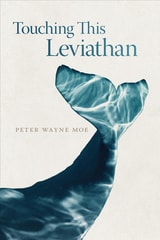
Touching This Leviathan
Peter Wayne Moe
Oregon State University Press, 2021
Touching This Leviathan asks how we might come to know the unknowable—in this case, whales, animals so large yet so elusive, revealing just a sliver of back, a glimpse of a fluke, or a split-second breach before diving away.
Whale books often sit within disciplinary silos. Touching This Leviathan starts a conversation among them. Drawing on biology, theology, natural history, literature, and writing studies, Peter Wayne Moe offers a deep dive into the alluring and impalpable mysteries of Earth’s largest mammal.
Entertaining, thought-provoking, and swimming with intelligence and wit, Touching is Leviathan is creative nonfiction that gestures toward science and literary criticism as it invites readers into the belly of the whale.
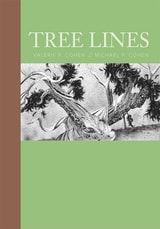
Tree Lines
Valerie P Cohen
University of Nevada Press, 2017
The drawings are black-and-white, pen-and-ink representations of high alpine ecosystems. The prose is stripped bare, abbreviated in an epigrammatic style that is poetic and spontaneous. Trees represented here are the Western Juniper or Sierra Juniper, the Limber, and the Bristlecone Pine—three species of long-lived, slow-growing conifers that grow across the Great Basin. While they represent only a small portion of the vegetative culture high in the western mountains, the Cohens use representation as abstraction as is utilized by writers and artists to convey a unique kind of microcosm of our natural environment. This book compares to such classics as Leopold’s A Sand County Almanac, and Berger’s Ways of Seeing, which open up lines of observation, analysis, and art for a new generation of readers.
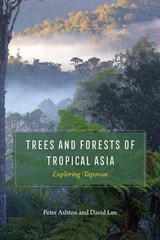
Trees and Forests of Tropical Asia
Exploring TapovanPeter Ashton and David Lee
University of Chicago Press, 2022
Trees and Forests of Tropical Asia invites readers on an expedition into the leafy, humid, forested landscapes of tropical Asia—the so-called tapovan, a Sanskrit word for the forest where knowledge is attained through tapasya, or inner struggle. Peter Ashton and David Lee, two of the world’s leading scholars on Asian tropical rain forests, reveal the geology and climate that have produced these unique forests, the diversity of species that inhabit them, the means by which rain forest tree species evolve to achieve unique ecological space, and the role of humans in modifying the landscapes over centuries. Following Peter Ashton’s extensive On the Forests of Tropical Asia, the first book to describe the forests of the entire tropical Asian region from India east to New Guinea, this new book provides a more condensed and updated overview of tropical Asian forests written accessibly for students as well as tropical forest biologists, ecologists, and conservation biologists.
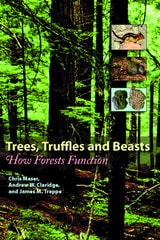
Trees, Truffles, and Beasts
How Forests FunctionMaser, Chris
Rutgers University Press, 2008
Because today's decisions are tomorrow's consequences, every small effort makes a difference, but a broader understanding of our environmental problems is necessary to the development of sustainable ecosystem policies. In Trees, Truffles, and Beasts, Chris Maser, Andrew W. Claridge, and James M. Trappe make a compelling case that we must first understand the complexity and interdependency of species and habitats from the microscopic level to the gigantic. Comparing forests in the Pacific Northwestern United States and Southeastern mainland of Australia, the authors show how easily observable speciesùtrees and mammalsùare part of a complicated infrastructure that includes fungi, lichens, and organisms invisible to the naked eye, such as microbes.
Eminently readable, this important book shows that forests are far more complicated than most of us might think, which means simplistic policies will not save them. Understanding the biophysical intricacies of our life-support systems just might.
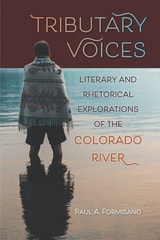
Tributary Voices
Literary and Rhetorical Exploration of the Colorado RiverPaul A. Formisano
University of Nevada Press, 2022
Through literary, rhetorical, and historical analysis of some of the Colorado River’s lesser-known stakeholders, Tributary Voices considers a more comprehensive approach to river management on the eve of the one-hundredth anniversary of the signing of the Colorado River Compact, which governs the allocation of water rights to the seven states in the region. Ranging from the early twentieth century to the present, Tributary Voices examines nature writing, women’s narratives, critiques of dam development, the Latina/o communities’ appeals for river restoration, American Indian authors’ and tribal nations’ claims of water sovereignty, and teachings about environmental stewardship and provident living. This innovative study models an interdisciplinary approach to water governance and reinvigorates our imagination in achieving a more sustainable water ethic.