Results by title
187 books match the query 'Essays & Travelogues' and 56 start with t
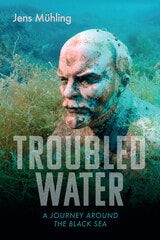
Troubled Water
A Journey Around the Black SeaJens Mühling
Haus Publishing, 2022
Fringing the Black Sea is a diverse array of countries, some centuries old and others emerging only after the collapse of the Soviet Union. Jens Mühling travels through this region, telling the stories of the people he meets along the way in order to paint a picture of the mix of cultures found here and to understand the present against a history stretching back to the arrival of Ancient Greek settlers and beyond.
A fluent Russian speaker with a knack for gaining the trust of those he meets, Mühling brings together a cast of characters as diverse as the stories he hears, all of whom are willing to tell him their complex, contradictory, and often fantastical tales full of grief and legend. He meets descendants of the so-called Pontic Greeks, whom Stalin deported to Central Asia and who have now returned; Circassians who fled to Syria a century ago and whose great-great-grandchildren have returned to Abkhazia; and members of ethnic minorities like the Georgian Mingrelians or Bulgarian Muslims, expelled to Turkey in the summer of 1989. Mühling captures the region’s uneasy alliance of tradition and modernity and the diverse humanity of those who live there.
Troutsmith
An Angler's Tales and TravelsKevin Searock
University of Wisconsin Press, 2013
Trust
Alphonso Lingis
University of Minnesota Press, 2004
A traveler to the world’s remote corners muses on human relationships and the nature of travel
Trust is inherent in travel. We ask strangers for directions or for a ride. We live among people whose language, culture, and motivations we don’t understand. Trust binds us to one another with an intoxicating energy; it is brave, giddy, joyous, and lustful. A sudden attraction careens into sexual surrender, and trust becomes unconditional. Trust laughs at danger and leaps into the unknown.
The author of Abuses and Foreign Bodies, Alphonso Lingis has traveled the globe for many years, and in Trust he reflects on journeys from Latin America to Asia to Antarctica. Whether feeding chocolate sauce and tuna to the baboons who visit his campsite in Ethiopia, celebrating the millennial New Year in Mongolia, or indulging in a passionate love affair in Vietnam, Lingis evaluates what happens around him and how it affects him and others. From these experiences he gains new understandings about spirituality, masculinity, love, death, ecstasy, and change. In the tradition of such international travelers as Paul Theroux, Pico Iyer, and Ryszard Kapuscinski, and with insight reminiscent of John Berger and Joan Didion, Lingis shares both the private revelations and the universal connections he acquires on his exotic journeys. “Travel far enough,” he concludes, “and we find ourselves happily back in the infantile world”—where trust is ultimate.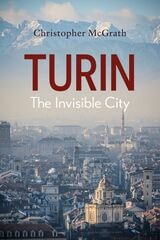
Turin
The Invisible CityChristopher McGrath
Haus Publishing, 2026
A history of Turin, home to Fiat, the Einaudi publishing house, and writers including Italo Calvino, Primo Levi, Cesare Pavese, and Natalia Ginzburg.
Unknown to most foreigners, as they follow each other around Florence and Siena, Rome and Venice, the Italy they see today is the result of a second renaissance. And its seat was a city they needed to discover, in all its enigmatic allure, if they were truly to understand the nation it brought into being. As Umberto Eco says, “Without Italy, Turin would have been more or less the same. But without Turin, Italy would have been very different.” This baroque jewel at the foot of the Alps provides a unique prism on the story of modern Italy: not just as a founding capital, but also in kindling a political, cultural, and economic regeneration after the tragedies of dictatorship and civil war.
Their emergence as a dynamo of national industrialization, symbolized by Fiat, had made the factories of Turin the original seat of both Italian capitalism and socialism, and, accordingly, the heart of resistance to Mussolini. After the Second World War, the city experienced parallel revivals. On the one hand, Fiat proved a foundation stone for Italy’s famous “economic miracle"; on the other, the Einaudi publishing house became a platform for the greatest local flowering of Italian culture since the days of the Medicis, not least through several of its own employees, including Natalia Ginzburg, Cesare Pavese, and Italo Calvino. These competing energies were personified by the respective enigmas who presided over these agencies of renewal, Gianni Agnelli and Giulio Einaudi.
But their rivalry also only demonstrated the polarities that have long defined this royal city of arcaded streets and squares, with its wild mountain backdrop. That contrast is expressed even by the city’s rival football teams: the seigneurial Juventus, long bankrolled by the Agnelli family, its perennial success toasted throughout the peninsula; and Torino, the fallen giants whose tragic legacy commands the underdog fidelity of local nostalgics, workers, and rebels.
Exploring the contribution of Turin to modern Italy, Chris McGrath entwines some of the nation’s most celebrated names with less familiar citizens who illuminate the gaps: from the forgotten poet who bears exquisite witness to the city’s crepuscular atmosphere at the turn of the last century, to the Torino footballer who fought with the partisans before becoming a star of neorealist cinema.
Risorgimento, resistance, reconstruction: none of these decisive phases in Italy’s modern evolution would have been the same without this unsung city.
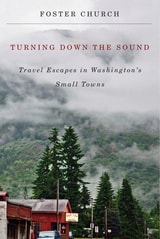
Turning Down the Sound
Travel Escapes in Washington's Small TownsFoster Church
Oregon State University Press, 2014
As in his previous book, Discovering Main Street: Travel Adventures in Small Towns of the Northwest, Church employs the finesse of his Pulitzer-Prize-winning journalism. He also shares his passion for encouraging tourists down less traveled paths—paths that curve beside valleys and wheat fields, travel along orchards and straits, and abut mountains and rivers.
Once inside these small towns, local flavors abound. Church reveals how each community’s unique character informs its hospitality and culture: In Morton, the abandoned Roxy movie theater was re-opened to host lectures and live performances. In the town of Palouse, a once-lonesome farming community in the Washington wheat country is now home to antiques shops and art galleries, and in Pomeroy, a pioneering legacy is celebrated in a lively annual festival.
With maps, photographs, and recommendations for more than thirty-five towns in all corners of the state, Turning Down the Sound vastly expands the resources available for readers and travelers keen on encountering what Church calls American tourism’s last frontier: its small towns.
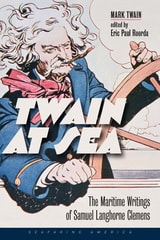
Twain at Sea
The Maritime Writings of Samuel Langhorne ClemensMark Twain
University Press of New England, 2018