Results by title
332 books match the query 'Health & Fitness' and 66 start with t
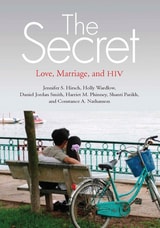
The Secret
Love, Marriage, and HIVJennifer S. Hirsch
Vanderbilt University Press, 2009
For many women around the world, their greatest risk of HIV infection comes from having sex with the very person with whom they are supposed to have sex: their spouse. The Secret situates marital HIV risk within a broader exploration of marital and extramarital sexuality in five diverse settings: Mexico, Nigeria, Uganda, Vietnam, and Papua New Guinea. In these settings, the authors write, men's extramarital sex is an officially secret but actually widespread (and widely acknowledged) social practice, rather than something men do because their bodies demand it and women can't stop them.
Drawing on research conducted as part of an innovative comparative ethnographic study, and modeling a novel approach to collaborative anthropological scholarship, the authors show men's extramarital sex to be a fundamental aspect of gendered social organization. Through theoretically sophisticated yet lucid writing and vivid ethnographic description, drawing on rich data from the marital case studies conducted by research teams in each country, they trace how extramarital opportunity structures, sexual geographies, and concerns about social risk facilitate men's participation in extramarital sex. Also documented throughout is the collision between traditional ways and the new practices of romantic companionate marriage.
The Shapes of Memory Loss
Stories, Poems and Essays from the University of Michigan Medical School and Health SystemMichigan Publishing Services, 2013
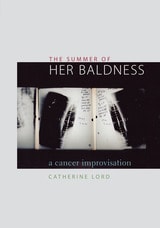
The Summer of Her Baldness
A Cancer ImprovisationBy Catherine Lord
University of Texas Press, 2004
"No eyebrows. No eyelashes. When it rains the water will run straight down into my eyes," Catherine Lord wrote before her hair fell out during chemotherapy. Propelled into an involuntary performance piece occasioned by the diagnosis of breast cancer, Lord adopted the online persona of Her Baldness—an irascible, witty, polemical presence who speaks candidly about shame and fear to her listserv audience. While Lord suffers from unwanted isolation and loss of control as her treatment progresses, Her Baldness talks back to the society that stigmatizes bald women, not to mention middle-aged lesbians with a life-threatening disease.
In this irreverent and moving memoir, Lord draws on the e-mail correspondence of Her Baldness to offer an unconventional look at life with breast cancer and the societal space occupied by the seriously ill. She photographs herself and the rooms in which she negotiates her disease. She details the clash of personalities in support groups, her ambivalence about Western medicine, her struggles to maintain her relationship with her partner, and her bemusement when she is mistaken for a "sir." She uses these experiences—common to the one-in-eight women who will be diagnosed at some point with breast cancer—to illuminate larger issues of gender signifiers, sexuality, and the construction of community.
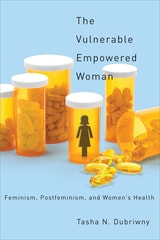
The Vulnerable Empowered Woman
Feminism, Postfeminism, and Women's HealthDubriwny, Tasha N
Rutgers University Press, 2012
Winner of the Organization for the Study of Communication, Language, and Gender 2013 Outstanding Book Award
Winner of the 2013 Bonnie Ritter Book Award from the Feminist and Women's Division of the National Communication Association
The feminist women’s health movement of the 1960s and 1970s is credited with creating significant changes in the healthcare industry and bringing women’s health issues to public attention. Decades later, women’s health issues are more visible than ever before, but that visibility is made possible by a process of depoliticization
The Vulnerable Empowered Woman assesses the state of women’s healthcare today by analyzing popular media representations—television, print newspapers, websites, advertisements, blogs, and memoirs—in order to understand the ways in which breast cancer, postpartum depression, and cervical cancer are discussed in American public life. From narratives about prophylactic mastectomies to young girls receiving a vaccine for sexually transmitted disease, the representations of women’s health today form a single restrictive identity: the vulnerable empowered woman. This identity defuses feminist notions of collective empowerment and social change by drawing from both postfeminist and neoliberal ideologies. The woman is vulnerable because of her very femininity and is empowered not to change the world, but to choose from among a limited set of medical treatments.
The media’s depiction of the vulnerable empowered woman’s relationship with biomedicine promotes traditional gender roles and affirms women’s unquestioning reliance on medical science for empowerment. The book concludes with a call to repoliticize women’s health through narratives that can help us imagine women—and their relationship to medicine—differently.
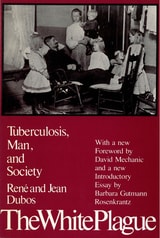
The White Plague
Tuberculosis, Man and SocietyDubos, Jean
Rutgers University Press, 1987
In The White Plague, René and Jean Dubos argue that the great increase of tuberculosis was intimately connected with the rise of an industrial, urbanized society and—a much more controversial idea when this book first appeared forty years ago—that the progress of medical science had very little to do with the marked decline in tuberculosis in the twentieth century.
The White Plague has long been regarded as a classic in the social and environmental history of disease. This reprint of the 1952 edition features new introductory writings by two distinguished practitioners of the sociology and history of medicine. David Mechanic's foreword describes the personal and intellectual experience that shaped René Dubos's view of tuberculosis. Barbara Gutmann Rosenkrantz's historical introduction reexamines The White Plague in light of recent work on the social history of tuberculosis. Her thought-provoking essay pays particular attention to the broader cultural and medical assumptions about sickness and sick people that inform a society’s approach to the conquest of disease.
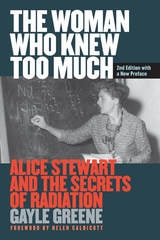
The Woman Who Knew Too Much, Revised Ed.
Alice Stewart and the Secrets of RadiationGayle Greene
University of Michigan Press, 2017
Author Gayle Greene traces Stewart's life and career as she came up against ever more powerful authorities, first the British medical profession, then the U.S. nuclear industry, and finally the regulatory agencies that set radiation safety standards throughout the world. Stewart endured the fate of other women scientists in having her findings dismissed and funding cut, but today is recognized as a pioneering figure in epidemiological research on the dangers of nuclear radiation. In her preface to the second edition, Greene looks at new information that’s come out about the forces and individuals responsible for marginalizing her as a scientist and downplaying the disturbing implications of her research.
The World of Soy
Edited by Christine M. Du Bois, Sidney Mintz, and Chee-Beng Tan
University of Illinois Press, 2007
As the most ecologically efficient and economical source of complete protein in human food, soy is gradually attracting more use in the American diet for its nutritional and financial value. Derived from soybean plants--the leading export crop of the United States and the world's most traded crop--soy produced for human consumption is part of a global enterprise affecting the likes of farmers, economists, dieticians, and grocery shoppers. An international group of expert food specialists--including an agricultural economist, an agricultural sociologist, a former Peace Corps development expert, and numerous food anthropologists and agricultural historians--discusses important issues central to soy production and consumption: genetically engineered soybeans, increasing soybean cultivation, soyfood marketing techniques, the use of soybeans as an important soil restorative, and the rendering of soybeans for human consumption.
Contributors are Katarzyna Cwiertka, Christine M. Du Bois, H. T. Huang, Lawrence Kaplan, Jian-Hua Mao, Sidney W. Mintz, Akiko Moriya, Can Van Nguyen, Donald Z. Osborn, Erino Ozeki, Myra Sidharta, Ivan Sergio Freire de Sousa, Chee-Beng Tan, and Rita de Cássia Milagres Teixeira Vieira.
The Wounded Storyteller
Body, Illness, and EthicsArthur W. Frank
University of Chicago Press, 1995
Ill people are more than victims of disease or patients of medicine; they are wounded storytellers. People tell stories to make sense of their suffering; when they turn their diseases into stories, they find healing.
Drawing on the work of authors such as Oliver Sacks, Anatole Broyard, Norman Cousins, and Audre Lorde, as well as from people he met during the years he spent among different illness groups, Frank recounts a stirring collection of illness stories, ranging from the well-known—Gilda Radner's battle with ovarian cancer—to the private testimonials of people with cancer, chronic fatigue syndrome, and disabilties. Their stories are more than accounts of personal suffering: they abound with moral choices and point to a social ethic.
Frank identifies three basic narratives of illness in restitution, chaos, and quest. Restitution narratives anticipate getting well again and give prominence to the technology of cure. In chaos narratives, illness seems to stretch on forever, with no respite or redeeming insights. Quest narratives are about finding that insight as illness is transformed into a means for the ill person to become someone new.
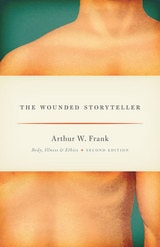
The Wounded Storyteller
Body, Illness, and Ethics, Second EditionArthur W. Frank
University of Chicago Press, 1997
Drawing on the work of authors such as Oliver Sacks, Anatole Broyard, Norman Cousins, and Audre Lorde, as well as from people he met during the years he spent among different illness groups, Frank recounts a stirring collection of illness stories, ranging from the well-known—Gilda Radner's battle with ovarian cancer—to the private testimonials of people with cancer, chronic fatigue syndrome, and disabilities. Their stories are more than accounts of personal suffering: they abound with moral choices and point to a social ethic.
In this new edition Frank adds a preface describing the personal and cultural times when the first edition was written. His new afterword extends the book’s argument significantly, writing about storytelling and experience, other modes of illness narration, and a version of hope that is both realistic and aspirational. Reflecting on both his own life during the creation of the first edition and the conclusions of the book itself, Frank reminds us of the power of storytelling as way to understanding our own suffering.
Things No Longer There
A Memoir of Losing Sight and Finding VisionSusan Krieger
University of Wisconsin Press, 2005
Krieger's touching memoir explores the ways that outer landscapes may change and sight may be lost, but inner visions persist, giving meaning, jarring the senses with a very different picture than what appears before the eyes. This book will reward both the general reader and those interested in disability studies, feminist ethnography, and lesbian studies.
Three Faces of Beauty
Casablanca, Paris, CairoSusan Ossman
Duke University Press, 2002
By examining how images from fashion magazines, film, and advertising are enacted in beauty salons, Ossman demonstrates how embodiment is able to display and rework certain hierarchies. While offering the possibility of freedom from the tethers of status, nation, religion, and nature, beauty is created by these very categories and values, Ossman shows. Drawing on hundreds of interviews, she documents the various rituals of welcome, choice-making, pricing practices, and spatial arrangements in multiple salons . She also reveals ways in which patrons in all three cities imagine and co-opt looks they believe are fashionable in the other cities. By observing salons as scenes of instruction, Ossman reveals that beautiful bodies evolve within the intertwining contexts of media, modernity, location, time, postcolonialism, and male expectation.
To Test or Not To Test
A Guide to Genetic Screening and RiskZallen, Dorris Teichler
Rutgers University Press, 2008
To Test or Not to Test arms readers with questions that should be considered before they pursue genetic screening.
- Am I at higher risk for a disorder?
- Can genetic testing give me useful information?
- Is the timing right for testing?
- Do the benefits of having the genetic information outweigh the problems that testing can bring?
Determining the answers to these questions is no easy task. In this highly readable book, Doris Teichler Zallen provides a template that can guide individuals and families through the decision-making process and offers additional resources where they can gain more information. She shares interviews with genetic specialists, doctors, and researchers, as well as the personal stories of nearly 100 people who have faced genetic-testing decisions. Her examples focus on genetic testing for four types of illnesses: breast/ovarian cancer (different disorders but closely connected), colon cancer, late-onset Alzheimer's disease, and hereditary hemochromatosis. From the more common diseases to the rare hereditary conditions, we learn what genetic screening is all about and what it can tell us about our risks.
Given that we are now bombarded with ads in magazines and on television hawking the importance of pursuing genetic-testing, it is critical that we approach this tough issue with an arsenal of good information. To Test or Not to Test is an essential consumer tool-kit for the genetic decision-making process.

Trail Running Southern Vermont
Ben Kimball
University of Massachusetts Press, 2024
The wild and rural landscape of southern Vermont offers a true bounty of great trail-running opportunities, from out-and-back (or pointtopoint) runs on popular long-distance routes, such as segments of the Long Trail or Appalachian Trail, to quiet, little-known loops hidden away in the woods. This helpful guide is just the resource needed for trip planning or for a spontaneous run in a beautiful place.
Local expert trail runner Ben Kimball offers a range of suggested route options, sometimes even several at the same site, for runners of all skill levels. He also provides important practical information, such as the full distance of the suggested route; a difficulty rating; the trail style and type; the total ascent; and directions, along with a detailed description of the trail itself. There are also scannable codes for downloading trail maps to your smartphone. The trails included vary in difficulty and terrain type, and range from low elevations in the Connecticut River Valley to as high as 4,000 feet at Killington Peak in the Green Mountains. This indispensable book is the perfect companion for adventurous runners and hikers interested in exploring southern Vermont.

Trails of Central Arkansas
A Guide to Central Arkansas' Land and Water TrailsJohnnie Chamberlin
Parkhurst Brothers, Inc., 2012
Trails of Central Arkansas delivers:
* Sixty trails in 36 parks or locations from Benton and Bryant to Cabot, from Wrightsville to Conway
* Color maps of every trail
* GPS coordinates for every trailhead
* Color-coded distinctions between paved and unpaved trails
* Level of difficulty ratings
* Scenery Scores
* Top-ten lists: Most Scenic, Trails for Kids, and Trails for Solitude

Trails of Little Rock
Hiking, Biking, and Kayaking Trails in Little RockJohnnie Chamberlin
Parkhurst Brothers, Inc., 2009
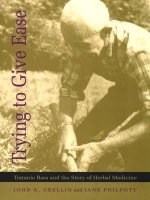
Trying to Give Ease
Tommie Bass and the Story of Herbal MedicineJohn K. Crellin and Jane Philpott
Duke University Press, 1997