Results by title
748 books match the query 'Influence' and 172 start with t
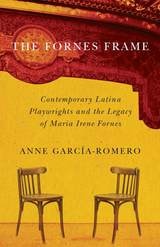
The Fornes Frame
Contemporary Latina Playwrights and the Legacy of Maria Irene FornesAnne García-Romero
University of Arizona Press, 2016
In The Fornes Frame: Contemporary Latina Playwrights and the Legacy of Maria Irene Fornes, Anne García-Romero considers the work of five award-winning Latina playwrights in the early twenty-first century, offering her unique perspective as a theatre studies scholar who is also a professional playwright.
The playwrights in this book include Pulitzer Prize–winner Quiara Alegría Hudes; Obie Award–winner Caridad Svich; Karen Zacarías, resident playwright at Arena Stage in Washington, DC; Elaine Romero, member of the Goodman Theatre Playwrights Unit in Chicago, Illinois; and Cusi Cram, company member of the LAByrinth Theater Company in New York City.
Using four key concepts—cultural multiplicity, supernatural intervention, Latina identity, and theatrical experimentation—García-Romero shows how these playwrights expand past a consideration of a single culture toward broader, simultaneous connections to diverse cultures. The playwrights also experiment with the theatrical form as they redefine what a Latina play can be. Following Fornes’s legacy, these playwrights continue to contest and complicate Latina theatre.
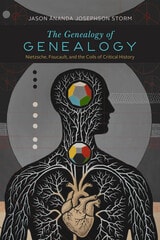
The Genealogy of Genealogy
Nietzsche, Foucault, and the Coils of Critical HistoryJason Ananda Josephson Storm
University of Chicago Press, 2026
The genealogical method—a mode of historical analysis that shows that what looks timeless is in fact contingent, bound to shifting relations of meaning, knowledge, and power—has become the dominant paradigm of humanistic inquiry. In The Genealogy of Genealogy, Jason Ānanda Josephson Storm turns this influential practice back on itself, tracing its unlikely rise through Nietzsche and Foucault and uncovering its suppressed ties to eugenics and racism. He rethinks the very stakes of critical history and proposes new tools for thinking about historical continuity, change, and difference.
Provocative and timely, The Genealogy of Genealogy offers both a diagnosis and a vision, challenging scholars across the humanities and social sciences to rethink how we write history and whether our most trusted methods are fit for the futures we seek to build.
The Gift Paradigm
A Short Introduction to the Anti-Utilitarian Movement in the Social SciencesAlain Caillé
Prickly Paradigm Press, 2020
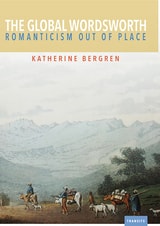
The Global Wordsworth
Romanticism Out of PlaceBergren, Katherine
Bucknell University Press, 2019
Published by Bucknell University Press. Distributed worldwide by Rutgers University Press.
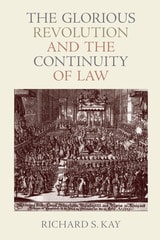
The Glorious Revolution and the Continuity of Law
Richard S. Kay
Catholic University of America Press, 2014
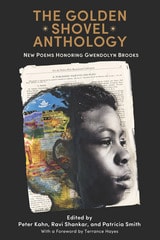
The Golden Shovel Anthology
New Poems Honoring Gwendolyn BrooksPeter Kahn
University of Arkansas Press, 2017
“Throughout this anthology, more than 60 other well-known Brooks poems can be read the same way, with lines from ‘The Mother’ and ‘The Bean Eaters’ tripping down the right-hand side of the page. The anthology ends with ‘Non-Brooks Golden Shovels’ and ‘Variations and Expansions on the Form.’ The cross-section of poets with varying poetics and styles gathered here is only one of the many admirable achievements of this volume.”
—Claudia Rankine, The New York Times, August 2017
“The editors, including tireless poetry advocate Kahn, of this unique, new addition to the Gwendolyn Brooks legacy put together a richly diverse set of poets working with the most unusual and fertile new poetic form created in recent years. National Book Award winner Terrance Hayes invented the Golden Shovel, which he illuminates in his stirring foreword, writing, “Because where do poems come from if not other poems?” In a Golden Shovel poem, the last words in each line are taken from a Brooks poem. A veritable who’s who of contemporary poets tried their hands at this encoded homage, including Billy Collins, Mark Doty, Rita Dove, Nikki Giovanni, Joy Harjo, Billy Lombardo, Sharon Olds, Alberto Ríos, Tracy K. Smith, and Timothy Yu. Beautifully introduced by Patricia Smith, this is a beguiling and mind-expanding anthology shaped by formal expertise and deep appreciation for the complexity and resonance of Brooks’ work and profoundly nurturing influence. In all, a substantial and dynamic contribution to American literature.”
—Booklist, May 2017
"Gwendolyn Brooks was the first black writer to receive the Pulitzer Prize for poetry back in 1950. A new book honors her work in using a form called the golden shovel, developed by poet Terrance Hayes. In The Golden Shovel Anthology, poets select a line from a poem of Brooks’s and use it as the closing line or lines in a poem of their own. The result is an expansive and extraordinary assemblage edited by poets Peter Kahn, Ravi Shankar, and Patricia Smith.”
—Nina MacLaughlin, Boston Globe, March 2017
The Golden Shovel Anthology celebrates the life and work of poet and civil rights icon Gwendolyn Brooks through a dynamic new poetic form, the Golden Shovel, created by National Book Award–winner Terrance Hayes.
The last words of each line in a Golden Shovel poem are, in order, words from a line or lines taken from a Brooks poem. The poems are, in a way, secretly encoded to enable both a horizontal reading of the new poem and vertical reading down the right-hand margin of Brooks’s original. An array of writers—including Pulitzer Prize winners, T. S. Eliot Prize winners, National Book Award winners, and National Poet Laureates—have written poems for this exciting new anthology: Rita Dove, Billy Collins, Nikki Giovani, Sharon Olds, Tracy K. Smith, Mark Doty, Sharon Draper, and Julia Glass are just a few of the contributing poets.
The poems found here will inspire a diversity of readers, teachers, and writers of poetry while at the same time providing remarkable access for newcomers, making it ideal for classrooms. The Golden Shovel Anthology will also honor Brooks with publication in 2017, the centenary of her birth.
The Golden Shovel Anthology
New Poems Honoring Gwendolyn BrooksPeter Kahn
University of Arkansas Press, 2019
—Claudia Rankine in the New York Times
The Golden Shovel Anthology celebrates the life and work of poet and civil rights icon Gwendolyn Brooks through a dynamic new poetic form, the Golden Shovel, created by National Book Award–winner Terrance Hayes.
An array of writers—including winners of the Pulitzer Prize, the T. S. Eliot Prize, and the National Book Award, as well as a couple of National Poets Laureate—have written poems for this exciting new anthology: Rita Dove, Billy Collins, Danez Smith, Nikki Giovanni, Sharon Olds, Tracy K. Smith, Mark Doty, Sharon Draper, Richard Powers, and Julia Glass are just a few of the contributing poets.
This second edition includes Golden Shovel poems by two winners and six runners-up from an international student poetry competition judged by Nora Brooks Blakely, Gwendolyn Brooks’s daughter. The poems by these eight talented high school students add to Ms. Brooks’s legacy and contribute to the depth and breadth of this anthology.
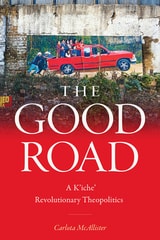
The Good Road
A K’iche’ Revolutionary TheopoliticsCarlota McAllister
Duke University Press, 2026
The Great William
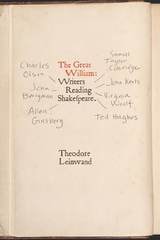
Writers Reading ShakespeareTheodore Leinwand
University of Chicago Press, 2016
Theodore Leinwand builds impressively detailed accounts of these writers’ experiences through their marginalia, lectures, letters, journals, and reading notes. We learn why Woolf associated reading Shakespeare with her brother Thoby, and what Ginsberg meant when referring to the mouth feel of Shakespeare’s verse. From Hughes’s attempts to find a “skeleton key” to all of Shakespeare’s plays to Berryman’s tormented efforts to edit King Lear, Leinwand reveals the palpable energy and conviction with which these seven writers engaged with Shakespeare, their moments of utter self-confidence and profound vexation. In uncovering these intense public and private reactions, The Great William connects major writers’ hitherto unremarked scenes of reading Shakespeare with our own.
The Holocaust & the Exile of Yiddish
A History of the Algemeyne EntsiklopedyeBarry Trachtenberg
Rutgers University Press, 2022
The Holocaust & the Exile of Yiddish untangles the complicated saga of the Algemeyne entsiklopedye and its editors. The editors continued to publish volumes and revise the encyclopedia’s mission while their primary audience, Eastern European Jews, faced persecution and genocide under Nazi rule, and the challenge of reestablishing themselves in the first decades after World War II. Historian Barry Trachtenberg reveals how, over the course of the middle decades of the twentieth century, the project sparked tremendous controversy in Jewish cultural and political circles, which debated what the purpose of a Yiddish encyclopedia should be, as well as what knowledge and perspectives it should contain. Nevertheless, this is not only a story about destruction and trauma, but also one of tenacity and continuity, as the encyclopedia’s compilers strove to preserve the heritage of Yiddish culture, to document its near-total extermination in the Holocaust, and to chart its path into the future.
The Holocaust Averted
An Alternate History of American Jewry, 1938-1967Gurock, Jeffrey S
Rutgers University Press, 2015
This alternate history—where, among many scenarios, Hitler is assassinated, Japan does not bomb Pearl Harbor, and Franklin Delano Roosevelt is succeeded after two terms by Robert A. Taft—does cause us to review and better appreciate history. As Gurock tells his tale, he concludes every chapter with a short section that describes what actually happened and, thus, further educates the reader.

The Holocaust and Other Genocides
History, Representation, EthicsHelmut Walser Smith
Vanderbilt University Press, 2002
The book consists of five parts: introduction; history of the Holocaust; representations of the Holocaust in literature, film, and the arts; other genocides; and ethics. The curriculum, shaped with feedback from those who teach Holocaust studies, consists mainly of primary documents and their analysis. Each section includes a general introduction to a body of knowledge that reflects current research and detailed introductions to particular documents. Throughout the book, there are provocative discussion questions and suggestions for further reading and other resources. Each section features "links" to other parts to encourage interdisciplinary reflection. The final section on ethics addresses the difficult questions raised by genocide.
The Holocaust and Other Genocides is designed as a model for flexible, innovative teaching about this complex subject. It is also a sophisticated, interdisciplinary effort to create the conditions for discussing and understanding the genocides of the twentieth century.
The Holocaust as Culture
Imre Kertész
Seagull Books, 2011
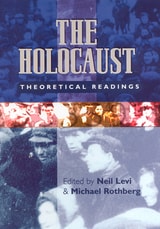
The Holocaust
Theoretical ReadingsLevi, Neil
Rutgers University Press, 2003
This agenda-setting reader brings together both classic and new writings to demonstrate how concerns arising from the Nazi genocide shaped contemporary literary and cultural theory. Wide in its thematic scope, it covers such vital questions as:
- Authenticity and experience
- Memory and trauma
- Historiography and the philosophy of history
- Fascism and Nazi anti-Semitism
- Representation and identity formation
- Race, gender, and genocide
- Implications of the Holocaust for theories of the unconscious, ethics, politics, and aesthetics
The readings, which are fully contextualized by a general introduction, section introductions, and bibliographical notes, represent the work of many influential writers and theorists, including Theodor Adorno, Giorgio Agamben, Hannah Arendt, Jean Baudrillard, Zygmunt Bauman, Walter Benjamin, Cathy Caruth, Jacques Derrida, Shoshana Felman, Saul Friedlander, Paul Gilroy, Lawrence Langer, Emmanuel Levinas, Primo Levi, Jean-François Lyotard, Hayden White, and James E. Young. This multidisciplinary anthology will be welcomed by students and scholars of the Holocaust.
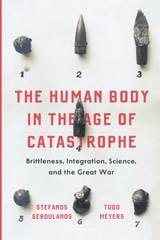
The Human Body in the Age of Catastrophe
Brittleness, Integration, Science, and the Great WarStefanos Geroulanos and Todd Meyers
University of Chicago Press, 2018
In The Human Body in the Age of Catastrophe, Stefanos Geroulanos and Todd Meyers uncover a fascinating story of how medical scientists came to conceptualize the body as an integrated yet brittle whole. Responding to the harrowing experience of the Great War, the medical community sought conceptual frameworks to understand bodily shock, brain injury, and the vast differences in patient responses they occasioned. Geroulanos and Meyers carefully trace how this emerging constellation of ideas became essential for thinking about integration, individuality, fragility, and collapse far beyond medicine: in fields as diverse as anthropology, political economy, psychoanalysis, and cybernetics.
Moving effortlessly between the history of medicine and intellectual history, The Human Body in the Age of Catastrophe is an intriguing look into the conceptual underpinnings of the world the Great War ushered in.
The Humble Story of Don Quixote
Reflections on the Birth of the Modern NovelCesáreo Bandera
Catholic University of America Press, 2006
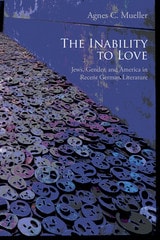
The Inability to Love
Jews, Gender, and America in Recent German LiteratureAgnes C. Mueller
Northwestern University Press, 2014
The Inability to Love borrows its title from Alexander and Margarete Mitscherlich’s 1967 landmark book The Inability to Mourn, which discussed German society’s lack of psychological reckoning with the Holocaust. Challenging that notion, Agnes Mueller turns to recently published works by prominent contemporary German, non-Jewish writers to examine whether there has been a thorough engagement with German history and memory. She focuses on literature that invokes Jews, Israel, and the Holocaust. Mueller’s aim is to shed light on pressing questions concerning German memories of the past, and on German images of Jews in Germany at a moment that s ideologically and historically fraught.
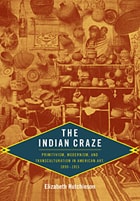
The Indian Craze
Primitivism, Modernism, and Transculturation in American Art, 1890–1915Elizabeth Hutchinson
Duke University Press, 2009
Illustrating her argument with images culled from late-nineteenth- and early-twentieth-century publications, Hutchinson revises the standard history of the mainstream interest in Native American material culture as “art.” While many locate the development of this cross-cultural interest in the Southwest after the First World War, Hutchinson reveals that it began earlier and spread across the nation from west to east and from reservation to metropolis. She demonstrates that artists, teachers, and critics associated with the development of American modernism, including Arthur Wesley Dow and Gertrude Käsebier, were inspired by Native art. Native artists were also able to achieve some recognition as modern artists, as Hutchinson shows through her discussion of the Winnebago painter and educator Angel DeCora. By taking a transcultural approach, Hutchinson transforms our understanding of the role of Native Americans in modernist culture.
The Influence of Campaign Contributions in State Legislatures
The Effects of Institutions and PoliticsLynda W. Powell
University of Michigan Press, 2012
Campaign contributions are widely viewed as a corrupting influence but most scholarly research concludes that they have marginal impact on legislative behavior. Lynda W. Powell shows that contributions have considerable influence in some state legislatures but very little in others. Using a national survey of legislators, she develops an innovative measure of influence and delineates the factors that explain this great variation across the 99 U.S. state legislative chambers.
Powell identifies the personal, institutional, and political factors that determine how much time a legislator devotes to personal fundraising and fundraising for the caucus. She shows that the extent of donors' legislative influence varies in ways corresponding to the same variations in the factors that determine fundraising time. She also confirms a link between fundraising and lobbying with evidence supporting the theory that contributors gain access to legislators based on donations, Powell's findings have important implications for the debate over the role of money in the legislative process.
The Influence of Darwin on Philosophy and Other Essays in Contemporary Thought
John Dewey. Edited by Larry A. Hickman. Introduction by Douglas Browning
Southern Illinois University Press, 2007
Presenting Dewey’s new view of philosophical inquiry
This critical edition of The Influence of Darwin on Philosophy and Other Essays in Contemporary Thought presents the results of John Dewey’s patient construction, throughout the previous sixteen years, of the radically new view of the methods and concerns of philosophical inquiry. It was a view that he continued to defend for the rest of his life.
In the 1910 The Influence of Darwin on Philosophy and Other Essays in Contemporary Thought—the first collection of Dewey’s previously published, edited essays—John Dewey provided readers with an overview of the scope and direction of his philosophical vision in one volume. The order in which the eleven essays were presented was a reverse chronology, with more recently published essays appearing first. The collection of eleven essays offered a detailed portrait of Dewey’s proposed reconstruction of the traditional concepts of knowledge and truth. It furthermore elaborated on how his new logic and his proposal regarding knowledge and truth fit comfortably together, not only with each other but also with a pragmatically proper understanding of belief, reality, and experience.
Because material in the Collected Works of John Dewey, 1882–1953 was published chronologically, however, the essays published together in the 1910 Darwin book have appeared in seven different volumes in the Collected Works. This new, critical edition restores a classic collection of essays authored and edited by John Dewey as they originally appeared in the volume. The edition is presented with ancillary materials, including responses by Dewey’s critics and an introduction by Douglas Browning.
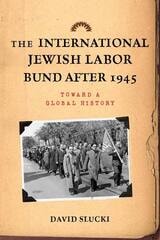
The International Jewish Labor Bund after 1945
Toward a Global HistorySlucki, David
Rutgers University Press, 2012
The Jewish Labor Bund was one of the major political forces in early twentieth-century Eastern Europe. But the decades after the Second World War were years of enormous difficulty for Bundists. Like millions of other European Jews, they faced the challenge of resurrecting their lives, so gravely disrupted by the Holocaust. Not only had the organization lost many members, but its adherents were also scattered across many continents. In this book, David Slucki charts the efforts of the surviving remnants of the movement to salvage something from the wreckage.
Covering both the Bundists who remained in communist Eastern Europe and those who emigrated to the United States, France, Australia, and Israel, the book explores the common challenges they faced—building transnational networks of friends, family, and fellow Holocaust survivors, while rebuilding a once-local movement under a global umbrella. This is a story of resilience and passion—passion for an idea that only barely survived Auschwitz.
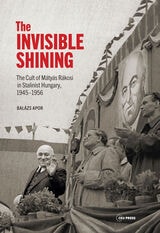
The Invisible Shining
The Cult of Mátyás Rákosi in Stalinist Hungary, 19451956Balazs Apor
Central European University Press, 2018
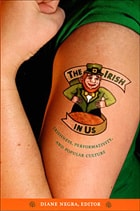
The Irish in Us
Irishness, Performativity, and Popular CultureDiane Negra, ed.
Duke University Press, 2006
Examining how Irishness is performed and commodified in the contemporary transnational environment, the contributors explore topics including Van Morrison’s music, Frank McCourt’s writing, the explosion of Irish-themed merchandising, the practices of heritage seekers, the movie The Crying Game, and the significance of red hair. Whether considering the implications of Garth Brooks’s claim of Irishness and his enormous popularity in Ireland, representations of Irish masculinity in the TV series Buffy the Vampire Slayer and Angel, or Americans’ recourse to a consoling Irishness amid the racial and nationalist tensions triggered by the events of September 11, the contributors delve into complex questions of ethnicity, consumerism, and globalization. Ultimately, they call for an increased awareness of the exclusionary effects of claims of Irishness and for the cultivation of flexible, inclusive ways of affiliating with Ireland and the Irish.
Contributors. Natasha Casey, Maeve Connolly, Catherine M. Eagan, Sean Griffin, Michael Malouf, Mary McGlynn, Gerardine Meaney, Diane Negra, Lauren Onkey, Maria Pramaggiore, Stephanie Rains, Amanda Third
The Jewish Middle Ages
Carol Bakhos
SBL Press, 2023
For many, the Middle Ages in general evokes a sense of the sinister and brings to mind a world of fear, superstition, and religious fanaticism. For Jews it was a period marked by persecutions, pogroms, and expulsions. Yet at the same time, the Middle Ages was also a time of lively cultural exchange and heightened creativity for Jews. In The Jewish Middle Ages, contributors explore the ways in which the stories of biblical women, including, Eve, Sarah, Hagar, Rebekah, Zipporah, Ruth, Esther, and Judith, make their way into the rich tapestry of medieval Jewish literature, mystical texts, and art, particularly in works emanating from Ashkenazic circles. Contributors include Carol Bakhos, Judith R. Baskin, Elisheva Baumgarten, Dagmar Börner-Klein, Constanza Cordoni, Rachel Elior, Meret Gutmann-Grün, Robert A. Harris, Yuval Katz-Wilfing, Sheila Tuller Keiter, Katrin Kogman-Appel, Gerhard Langer, Aurora Salvatierra Ossorio, and Felicia Waldman. These essays give us a glimpse into the role women played and the authority they assumed in medieval Jewish culture beyond the rabbinic centers of Palestine and Babylonia.
The Judgment of the Nations
Christopher Dawson
Catholic University of America Press, 2011
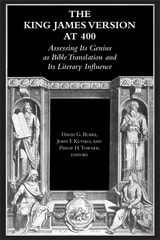
The King James Version at 400
Assessing Its Genius as Bible Translation and Its Literary InfluenceDavid G. Burke
SBL Press, 2013
The Latin American Literary Boom and U.S. Nationalism during the Cold War
Deborah Cohn
Vanderbilt University Press, 2012
The high level of interest in Latin America paradoxically led the U.S. government to restrict these authors' physical presence in the United States through the McCarranWalter Act's immigration blacklist, even as cultural organizations cultivated the exchange of ideas with writers and sought to market translations of their work for the U.S. market.
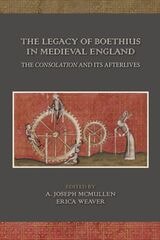
The Legacy of Boethius in Medieval England
The Consolation and its AfterlivesA. Joseph McMullen
Arizona Center for Medieval and Renaissance Studies, 2018
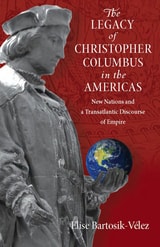
The Legacy of Christopher Columbus in the Americas
New Nations and a Transatlantic Discourse of EmpireElise Bartosik-Velez
Vanderbilt University Press, 2014
Bartosik-Velez seeks to explain the meaning of Christopher Columbus throughout the so-called New World, first in the British American colonies and the United States, as well as in Spanish America, during the eighteenth and nineteenth centuries. She argues that, during the pre- and post-revolutionary periods, New World societies commonly imagined themselves as legitimate and powerful independent political entities by comparing themselves to the classical empires of Greece and Rome. Columbus, who had been construed as a figure of empire for centuries, fit perfectly into that framework. By adopting him as a national symbol, New World nationalists appeal to Old World notions of empire.
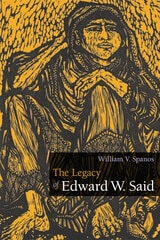
The Legacy of Edward W. Said
William V. Spanos
University of Illinois Press, 2008
With the untimely death of Edward W. Said in 2003, various academic and public intellectuals worldwide have begun to reassess the writings of this powerful oppositional intellectual. Figures on the neoconservative right have already begun to discredit Said’s work as that of a subversive intent on slandering America’s benign global image and undermining its global authority. On the left, a significant number of oppositional intellectuals are eager to counter this neoconservative vilification, proffering a Said who, in marked opposition to the “anti-humanism” of the great poststructuralist thinkers who were his contemporaries--Jacques Derrida, Jean-Francois Lyotard, Jacques Lacan, Louis Althusser, and Michel Foucault--reaffirms humanism and thus rejects poststructuralist theory.
In this provocative assessment of Edward Said’s lifework, William V. Spanos argues that Said’s lifelong anti-imperialist project is actually a fulfillment of the revolutionary possibilities of poststructuralist theory. Spanos examines Said, his legacy, and the various texts he wrote--including Orientalism,Culture and Imperialism, and Humanism and Democratic Criticism--that are now being considered for their lasting political impact.
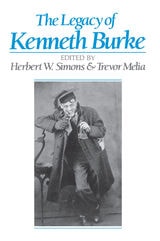
The Legacy of Kenneth Burke
Herbert W. Simons
University of Wisconsin Press, 1989
Capturing the lively modernist milieu of Kenneth Burke’s early career in Greenwich Village, where Burke arrived in 1915 fresh from high school in Pittsburgh, this book discovers him as an intellectual apprentice conversing with “the moderns.” Burke found himself in the midst of an avant-garde peopled by Malcolm Cowley, Marianne Moore, Jean Toomer, Katherine Anne Porter, William Carlos Williams, Allen Tate, Hart Crane, Alfred Stieglitz, and a host of other fascinating figures.
Burke himself, who died in 1993 at the age of 96, has been hailed as America’s most brilliant and suggestive critic and the most significant theorist of rhetoric since Cicero. Many schools of thought have claimed him as their own, but Burke has defied classification and indeed has often been considered a solitary, eccentric genius immune to intellectual fashions. But Burke’s formative work of the 1920s, when he first defined himself and his work in the context of the modernist conversation, has gone relatively unexamined.
Here we see Burke living and working with the crowd of poets, painters, and dramatists affiliated with Others magazine, Stieglitz’s “291” gallery, and Eugene O’Neill’s Provincetown Players; the leftists associated with the magazines The Masses and Seven Arts; the Dadaists; and the modernist writers working on literary journals like The Dial, where Burke in his capacity as an associate editor saw T. S. Eliot’s “The Wasteland” into print for the first time and provided other editorial services for Thomas Mann, e.e. cummings, Ezra Pound, and many other writers of note. Burke also met the iconoclasts of the older generation represented by Theodore Dreiser and H. L. Mencken, the New Humanists, and the literary nationalists who founded Contact and The New Republic. Jack Selzer shows how Burke’s own early poems, fiction, and essays emerged from and contributed to the modernist conversation in Greenwich Village. He draws on a wonderfully rich array of letters between Burke and his modernist friends and on the memoirs of his associates to create a vibrant portrait of the young Burke’s transformation from aesthete to social critic.
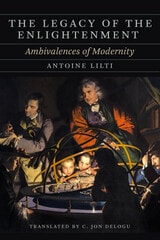
The Legacy of the Enlightenment
Ambivalences of ModernityAntoine Lilti
University of Chicago Press, 2025
The Enlightenment has come under substantial attack over the past several years, with some going so far as to recommend leaving behind its thinkers and their Eurocentric prejudices. In response, the most orthodox defenders of the Enlightenment have insisted that its values are not just foundational but indispensable and that abandoning them would mean opening the door to nihilism and relativism. For Antoine Lilti, one of the leading scholars of the French Enlightenment, both sides are wrong.
In this tactfully argued series of essays, Lilti emphasizes a non-dogmatic, non-ideological view of the Enlightenment—one that sees its legacy as a critical, attentive approach that can and should serve as its own best critic. Along the way, he engages with everyone from Rousseau and Kant to Foucault and Habermas, as well as prominent contemporary voices, such as Jonathan Israel. The result is a remarkable new reading of the Enlightenment that redraws the stakes of old debates and offers an alternative way to engage with both canonical thinkers and later scholarship that is both honest about the past and useful for the future.
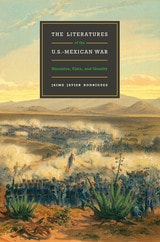
The Literatures of the U.S.-Mexican War
Narrative, Time, and IdentityBy Jaime Javier Rodríguez
University of Texas Press, 2010
The literary archive of the U.S.-Mexican War (1846–1848) opens to view the conflicts and relationships across one of the most contested borders in the Americas. Most studies of this literature focus on the war's nineteenth-century moment of national expansion. In The Literatures of the U.S.-Mexican War, Jaime Javier Rodríguez brings the discussion forward to our own moment by charting a new path into the legacies of a military conflict embedded in the cultural cores of both nations.
Rodríguez's groundbreaking study moves beyond the terms of Manifest Destiny to ask a fundamental question: How do the war's literary expressions shape contemporary tensions and exchanges among Anglo Americans, Mexicans, and Mexican Americans. By probing the war's traumas, anxieties, and consequences with a fresh attention to narrative, Rodríguez shows us the relevance of the U.S.-Mexican War to our own era of demographic and cultural change. Reading across dime novels, frontline battle accounts, Mexican American writings and a wide range of other popular discourse about the war, Rodríguez reveals how historical awareness itself lies at the center of contemporary cultural fears of a Mexican "invasion," and how the displacements caused by the war set key terms for the ways Mexican Americans in subsequent generations would come to understand their own identities. Further, this is also the first major comparative study that analyzes key Mexican war texts and their impact on Mexico's national identity.
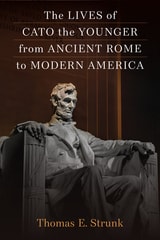
The Lives of Cato the Younger from Ancient Rome to Modern America
Thomas E. Strunk
University of Michigan Press, 2026
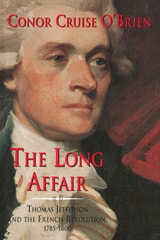
The Long Affair
Thomas Jefferson and the French Revolution, 1785-1800Conor Cruise O'Brien
University of Chicago Press, 1996
"The book is an attack on America's long affair with Jeffersonian ideology of radical individualism: an ideology that, by confusing Jefferson with a secular prophet, will destroy the United States from within."—David C. Ward, Boston Book Review
"With his background as a politician and a diplomat, O'Brien brings a broad perspective to his effort to define Jefferson's beliefs through the prism of his attitudes toward France. . . . This is an important work that makes an essential contribution to the overall picture of Jefferson."—Booklist
"O'Brien traces the roots of Jefferson's admiration for the revolution in France but notes that Jefferson's enthusiasm for France cooled in the 1790s, when French egalitarian ideals came to threaten the slave-based Southern economy that Jefferson supported."—Library Journal
"In O'Brien's opinion, it's time that Americans face the fact that Jefferson, long seen as a champion of the 'wronged masses,' was a racist who should not be placed on a pedestal in an increasingly multicultural United States."—Boston Phoenix
"O'Brien makes a well-argued revisionist contribution to the literature on Jefferson."—Kirkus Reviews
"O'Brien is right on target . . . determined not to let the evasions and cover-ups continue."—Forrest McDonald, National Review
"The Long Affair should be read by anyone interested in Jefferson—or in a good fight."—Richard Brookhiser, New York Times Book Review
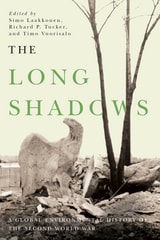
The Long Shadows
A Global Environmental History of the Second World WarSimo Laakkonen
Oregon State University Press, 2017
The Long Shadows is the first book-length work to offer global perspectives on the environmental history of World War II. Based on long-term research, the selected articles represent the best available studies in different fields and countries. With contributions touching on Europe, America, Asia, and Africa, the book has a truly global approach.
While other edited volumes on the environmental history of warfare discuss multiple wars and various time periods, The Long Shadows is devoted exclusively to World War II and its profound and lasting impact on global environments, encompassing polar, temperate and tropical ecological zones. Divided into three main sections, the first offers an introduction to and holistic overview of the War. The second section of the book examines the social and environmental impacts of the conflict, while the third focuses on the history and legacy of resource extraction. A fourth and final section offers conclusions and hypotheses. Numerous themes and topics are explored in these previously unpublished essays, including the new and innovative field of acoustic ecology, the environmental policies of the Third Reich, Japanese imperialism and marine resources, and the control of Typhus fever.
Aimed at researchers and students in the fields of environmental history, military history, and global history, The Long Shadows will also appeal to a general audience interested in the environmental impact of the greatest military conflict in the history of the world.
CONTRIBUTORS
Outi Ampuja
Alla Bolotova
Chris Boyer
Matthew Evenden
Paul Josephson
Simo Laakkonen
Helene Laurent
Carol MacLennan
Gregory Maddox
Ilmo Massa
Evan Mawdsley
Micah Muscolino
William Tsutsui
Richard Tucker
Timo Vuorisalo
Anna-Katharina Wöbse
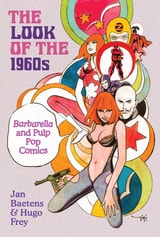
The Look of the 1960s
Barbarella and Pulp Pop ComicsJan Baetens and Hugo Frey
University of Texas Press, 2026
How the classic aesthetic of 1960s pulp comics influenced art, culture, and politics.
As a form of visual art, comic books rely on a distinct and eye-catching aesthetic. This is especially true of the iconic comics, graphic novels, and illustrations of the 1960s and 1970s. The Look of the 1960s explores the sources of inspiration that influenced the world of comics, beginning with the well-known French comics series Barbarella.
Noted comics scholars Jan Baetens and Hugo Frey analyze the impacts of the often-provocative images featured in the comics of the 1960s, which pushed back against French censorship in a politically tense time, and detail how women resisted their objectification in the comic book industry. Barbarella left its mark on the world and gained international attention, inspiring a movie adaptation and changing the look and content of other popular comics. The “Pulp Pop” movement remains relevant today, continuing to influence the art and political world. With new information about artists and an astute analysis of sociopolitical influence, The Look of the 1960s offers deep insights, making it a must read for comics fans all over the world.
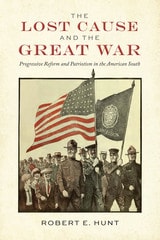
The Lost Cause and the Great War
Progressive Reform and Patriotism in the American SouthRobert E. Hunt
University of Alabama Press, 2025
How Tennessee reformers reconciled Southern heritage with rising nationalism, weaving the Lost Cause into the fabric of American progress and identity.
The Lost Cause and the Great War tells the stories of central Tennessee Progressive-era reformers to illustrate the fascinating broader issue of how Southerners steeped in Lost Cause Civil War mythologies simultaneously developed patriotic American fervor. Focusing on Luke Lea, a prominent politician and American army officer who attempted to capture Kaiser Wilhelm II during World War I, the book reveals the intricate interplay between three competing ideas: attachment to the memory of the Confederacy, intense American nationalism, and advocacy for progressive reforms.
Hunt shows that Lea and his contemporaries sought either to harmonize these competing loyalties or to compartmentalize them to use when needed. Through insightful accounts of Tennessee’s 1928 presidential campaign, the American Legion’s response to cuts to veteran benefits in 1933, and the redefinition of America’s global role post–World War II, Hunt shows how these reformers achieved a balance that held until the Civil Rights movement disrupted this delicate consensus.
Hunt’s rich account reveals how Lea and others like him wove national patriotism and Southern collective memory into a cohesive narrative that supported their broader Progressive goals. The book offers much to readers interested in Southern history, the Gilded Age, Prohibition, World War I, World War II, and the beginnings of the Civil Rights movement. It provides vivid examples of how collective memory and narratives shape social and political movements. General readers will discover how white Southerners who remained devoted to vindicating the Confederacy nonetheless became fervent supporters of America's growing nationalism in the early twentieth century.
The Lucretian Renaissance
Philology and the Afterlife of TraditionGerard Passannante
University of Chicago Press, 2011
The Matrixial Borderspace
Bracha Ettinger
University of Minnesota Press, 2006
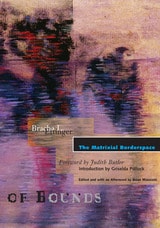
Concerned with collective trauma and memory, Ettinger’s own experience as an Israeli living with the memory of the Holocaust is a deep source of inspiration for her paintings, several of which are reproduced in the book. The paintings, like the essays, replay the relation between the visible and invisible, the sayable and ineffable; the gaze, the subject, and the other.
Bracha Ettinger is a painter and a senior clinical psychologist. She is professor of psychoanalysis and aesthetics at the University of Leeds, England, and Bezalel Academy, Jerusalem.
Judith Butler is professor of rhetoric and comparative literature at the University of California, Berkeley. Griselda Pollock is professor of fine arts at the University of Leeds. Brian Massumi is professor of communication at the University of Montreal.
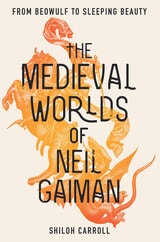
The Medieval Worlds of Neil Gaiman
From Beowulf to Sleeping BeautyShiloh Carroll
University of Iowa Press, 2023
Readers love to sink into Gaiman’s medieval worlds—but what makes them “medieval”? Shiloh Carroll offers an introduction to the idea of medievalism, how the literature and culture of the Middle Ages have been reinterpreted and repurposed over the centuries, and how the layers of interpretation have impacted Gaiman’s own use of medieval material. She examines influences from Norse mythology and Beowulf to medieval romances and fairy tales in order to expand readers’ understanding and appreciation of Gaiman’s work, as well as the rest of the medievalist films, TV shows, and books that are so popular today.
The Mourner's Song
War and Remembrance from the Iliad to VietnamJames Tatum
University of Chicago Press, 2002
Tatum's touchstone throughout is the Iliad, not just one of the earliest war poems, but also one of the most powerful examples of the way poetry can be a tribute to and consolation for what is lost in war. Reading the Iliad alongside later works inspired by war, Tatum reveals how the forms and processes of art convert mourning to memorial. He examines the role of remembrance and the distance from war it requires; the significance of landscape in memorialization; the artifacts of war that fire the imagination; the intimate relationship between war and love and its effects on the ferocity with which soldiers wage battle; and finally, the idea of memorialization itself. Because all survivors suffer the losses of war, Tatum's is a story of both victims and victors, commanders and soldiers, women and men. Photographs of war memorials in Vietnam, France, and the United States beautifully augment his testimonials.
Eloquent and deeply moving, The Mourner's Song will speak to anyone interested in the literature of war and the relevance of the classics to our most pressing contemporary needs.
The Necromantic State
Spectral Remains in the Afterglow of Venezuela's Bolivarian RevolutionIrina R. Troconis
Duke University Press, 2025
The New Berlin
Memory, Politics, PlaceKaren E. Till
University of Minnesota Press, 2005
“The New Berlin is a notable contribution to human geography and to the interdisciplinary literature on social memory and place making. Till’s methods and scholarship have provided the conceptual groundwork for the exploration and development of place making, social memory, and spatial haunting through the particular practices and politics of the new Berlin. Her readable style is marked by a narrative economy in which every word and sentence serves the larger purposes of the book. I recommend this book to anyone—student, scholar, or practitioner—who is interested in the social dynamics of memory formation and place making.” —The Professional Geographer
“This book is a well-written ‘first-hand’ account, though it also thoroughly covers academic literature, contemporary news accounts, and archival records.” —German Studies Review
“Karen E. Till's The New Berlin describes the modern metropolis and the ghosts of the past that it has to deal with.” —German World
“Well illustrated and copiously footnoted, this is a cutting-edge study of the power of identity-construction/analysis. Highly recommended.” —CHOICE
The Newton Wars and the Beginning of the French Enlightenment
J. B. Shank
University of Chicago Press, 2008
A comprehensive study of public culture, The Newton Wars and the Beginning of the French Enlightenment digsbelow the surface of the commonplace narratives that link Newton with Enlightenment thought to examine the actual historical changes that brought them together in eighteenth-century time and space. Drawing on the full range of early modern scientific sources, from studied scientific treatises and academic papers to book reviews, commentaries, and private correspondence, J. B. Shank challenges the widely accepted claim that Isaac Newton’s solitary genius is the reason for his iconic status as the father of modern physics and the philosophemovement.
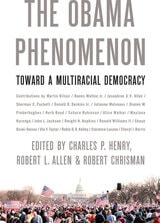
The Obama Phenomenon
Toward a Multiracial DemocracyEdited by Charles P. Henry, Robert L. Allen, and Robert Chrisman
University of Illinois Press, 2011
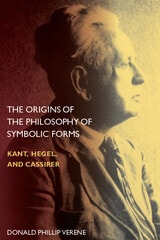
The Origins of the Philosophy of Symbolic Forms
Kant, Hegel, and CassirerDonald Phillip Verene
Northwestern University Press, 2012
Verene takes as his departure point that Cassirer never wishes to argue Kant over Hegel. Instead he takes from each what he needs, realizing that philosophical idealism itself did not stop with Kant but developed to Hegel, and that much of what remains problematic in Kantian philosophy finds particular solutions in Hegel’s philosophy. Cassirer never replaces transcendental reflection with dialectical speculation, but he does transfer dialectic from a logic of illusion, that is, the form of thinking beyond experience as Kant conceives it in the Critique of Pure Reason, to a logic of consciousness as Hegel employs it in the Phenomenology of Spirit. Cassirer rejects Kant’s thing-in-itself but he also rejects Hegel’s Absolute as well as Hegel’s conception of Aufhebung. Kant and Hegel remain the two main characters on his stage, but they are accompanied by a large secondary cast, with Goethe in the foreground. Cassirer not only contributes to Goethe scholarship, but in Goethe he finds crucial language to communicate his assertions. Verene introduces us to the originality of Cassirer’s philosophy so that we may find access to the riches it contains.
The Other Air Force
U.S. Efforts to Reshape Middle Eastern Media Since 9/11Sienkiewicz, Matt
Rutgers University Press, 2016
As it seeks to win the hearts and minds of citizens in the Muslim world, the United States has poured millions of dollars into local television and radio programming, hoping to generate pro-American currents on Middle Eastern airwaves. However, as this fascinating new book shows, the Middle Eastern media producers who rely on these funds are hardly puppets on an American string, but instead contribute their own political and creative agendas while working within U.S. restrictions.
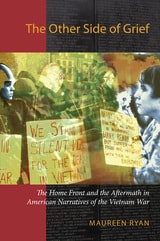
The Other Side of Grief
The Home Front and the Aftermath in American Narratives of the Vietnam WarMaureen Ryan
University of Massachusetts Press, 2008
The lingering aftereffects of the Vietnam War resonate to this day throughout American society: in foreign policy, in attitudes about the military and war generally, and in the contemporary lives of members of the so-called baby boom generation who came of age during the 1960s and early 1970s. While the best-known personal accounts of the war tend to center on the experience of combat, Maureen Ryan's The Other Side of Grief examines the often overlooked narratives—novels, short stories, memoirs, and films—that document the war's impact on the home front.
In analyzing the accounts of Vietnam veterans, women as well as men, Ryan focuses on the process of readjustment, on how the war continued to insinuate itself into their lives, their families, and their communities long after they returned home. She looks at the writings of women whose husbands, lovers, brothers, and sons served in Vietnam and whose own lives were transformed as a result. She also appraises the experiences of the POWs who came to be embraced as the war's only heroes; the ordeal of Vietnamese refugees who fled their “American War” to new lives in the United States; and the influential movement created by those who committed themselves to protesting the war.
The end result of Ryan's investigations is a cogent synthesis of the vast narrative literature generated by the Vietnam War and its aftermath. Together those stories powerfully demonstrate how deeply the legacies of the war penetrated American culture and continue to reverberate still.
The Pandemic Workplace
How We Learned to Be Citizens in the OfficeIlana Gershon
University of Chicago Press, 2024
In The Pandemic Workplace, anthropologist Ilana Gershon turns her attention to the US workplace and how it changed—and changed us—during the pandemic. She argues that the unprecedented organizational challenges of the pandemic forced us to radically reexamine our attitudes about work and to think more deeply about how values clash in the workplace. These changes also led us as workers to engage more with the contracts that bind us as we rethought when and how we allow others to tell us what to do.
Based on over two hundred interviews, Gershon’s book reveals how negotiating these tensions during the pandemic made the workplace into a laboratory for democratic living—the key place where Americans are learning how to develop effective political strategies and think about the common good. Exploring the explicit and unspoken ways we are governed (and govern others) at work, this accessible book shows how the workplace teaches us to be democratic citizens.