Results by title
486 books match the query 'LGBTQ+' and 88 start with t
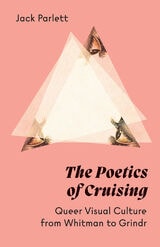
The Poetics of Cruising
Queer Visual Culture from Whitman to GrindrJack Parlett
University of Minnesota Press, 2022
The Poetics of Cruising explores the relationship between cruising, photography, and the visual in the work of leading poets, from Walt Whitman in the nineteenth century to Eileen Myles in the twenty-first. What is it that happens, asks Jack Parlett, and what is it that is sought, in this often transient moment of perception we call cruising, this perceptual arena where acts of looking between strangers are intensified and eroticized? Parlett believes that this moment is not only optical in nature but visual: a mode of looking that warrants comparison with the ways in which we behold still and moving images.
Whether it’s Whitman’s fixation with daguerreotypes, Langston Hughes’s hybrid photographic works, or Frank O’Hara’s love of Hollywood movie stars, argues Parlett, the history of poets cruising abounds with this intermingling between the verbal and the visual, the passing and the fixed. To look at someone in the act of cruising, this history suggests, is to capture, consider, and aestheticize, amid the flux and instantaneity of urban time. But it is also to reveal the ambivalence at the heart of this erotic search, where power may be unevenly distributed across glances, and gendered and racialized bodies are marked. Thus, in identifying for the first time this confluence of cruising, poetry, and visual culture, Parlett concludes that the visual erotic economy associated with gay cruising today, exemplified by the photographic grid of an app like Grindr, is not a uniquely contemporary phenomenon.
Innovative, astute, and highly readable, and drawing on compelling archival material, The Poetics of Cruising is a must for scholars of queer and LGBTQ literature and culture, modern and contemporary poetry, visual studies, and the history of sexuality.
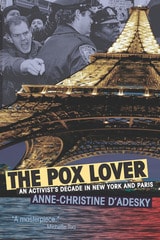
The Pox Lover
An Activist's Decade in New York and ParisAnne-christine d'Adesky
University of Wisconsin Press, 2017
D'Adesky takes us through a fast-changing East Village: squatter protests and civil disobedience lead to all-night drag and art-dance parties, the fun-loving Lesbian Avengers organize dyke marches, and the protest group ACT UP stages public funerals. Traveling as a journalist to Paris, an insomniac d'Adesky trolls the Seine, encountering waves of exiles fleeing violence in the Balkans, Haiti, and Rwanda. As the last of the French Nazis stand trial and the new National Front rises in the polls, d'Adesky digs into her aristocratic family's roots in Vichy France and colonial Haiti. This is a testament with a message for every generation: grab at life and love, connect with others, fight for justice, keep despair at bay, and remember.
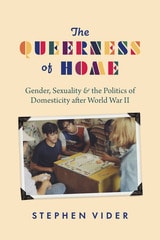
The Queerness of Home
Gender, Sexuality, and the Politics of Domesticity after World War IIStephen Vider
University of Chicago Press, 2021
From the Stonewall riots to the protests of ACT UP, histories of queer and trans politics have almost exclusively centered on public activism. In The Queerness of Home, Stephen Vider turns the focus inward, showing that the intimacy of domestic space has been equally crucial to the history of postwar LGBTQ life.
Beginning in the 1940s, LGBTQ activists looked increasingly to the home as a site of connection, care, and cultural inclusion. They struggled against the conventions of marriage, challenged the gendered codes of everyday labor, reimagined domestic architecture, and contested the racial and class boundaries of kinship and belonging. Retelling LGBTQ history from the inside out, Vider reveals the surprising ways that the home became, and remains, a charged space in battles for social and economic justice, making it clear that LGBTQ people not only realized new forms of community and culture for themselves—they remade the possibilities of home life for everyone.
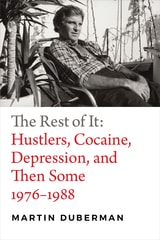
The Rest of It
Hustlers, Cocaine, Depression, and Then Some, 1976–1988Martin Duberman
Duke University Press, 2018
Despite the hardships, Duberman managed to be incredibly productive: he wrote his biography of Paul Robeson, rededicated himself to teaching, wrote plays, and coedited the prize-winning Hidden from History. His exploration of new paths of scholarship culminated in his founding of the Center for Lesbian and Gay Studies, thereby inaugurating a new academic discipline. At the outset of the HIV/AIDS epidemic Duberman increased his political activism, and in these pages he also describes the tensions between the New Left and gay organizers, as well as the profound homophobia that created the conditions for queer radical activism. Filled with gossip, featuring cameo appearances by luminaries such as Gore Vidal, Norman Mailer, Vivian Gornick, Susan Brownmiller, Kate Millett, and Néstor Almendros, among many others, and most importantly, written with an unflinching and fearless honesty, The Rest of It provides scathing insights into a troubling decade of both personal and political history. It is a stimulating look into a key period of Duberman's life, which until now had been too painful to share.
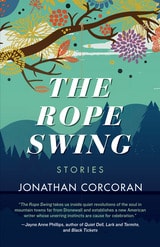
The Rope Swing
StoriesJonathan Corcoran
West Virginia University Press, 2016
A once-booming West Virginia rail town no longer has a working train. The residents left behind in this tiny hamlet look to the mountains that surround them on all sides: The outside world encroaches, and the buildings of the gilded past seem to crumble more every day.
These are the stories of outsiders—the down and out. What happens to the young boy whose burgeoning sexuality pushes him to the edge of the forest to explore what might be love with another boy? What happens when one lost soul finally makes it to New York City, yet the reminders of his past life are omnipresent? What happens when an old woman struggles to find a purpose and reinvent herself after decades of living in the shadow of her platonic life partner? What happens to those who dare to live their lives outside of the strict confines of the town’s traditional and regimented ways?
The characters in The Rope Swing—gay and straight alike—yearn for that which seems so close but impossibly far, the world over the jagged peaks of the mountains.
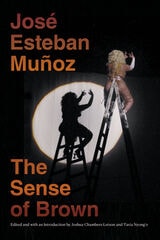
The Sense of Brown
José Esteban Muñoz. Edited and with an Introduction by Joshua Chambers-Letson and Tavia Nyong'o
Duke University Press, 2020
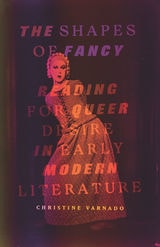
The Shapes of Fancy
Reading for Queer Desire in Early Modern LiteratureChristine Varnado
University of Minnesota Press, 2020
Exploring forms of desire unaccounted for in previous histories of sexuality
What can the Renaissance tell us at our present moment about who and what is “queer,” as well as the political consequences of asking? In posing this question, The Shapes of Fancy offers a powerful new method of accounting for ineffable and diffuse forms of desire, mining early modern drama and prose literature to describe new patterns of affective resonance.
Starting with the question of how and why readers seek traces of desire in texts from bygone times and places, The Shapes of Fancy demonstrates a practice of critical attunement to the psychic and historical circulations of affect across time within texts, from texts to readers, and among readers. Closely reading for uncharted desires as they recur in early modern drama, witchcraft pamphlets, and early Atlantic voyage narratives and demonstrating how each is structured by qualities of secrecy, impossibility, and excess, Christine Varnado follows four “shapes of fancy”: the desire to be used to others’ ends; indiscriminate, bottomless appetite; paranoid self-fulfilling suspicion; and melancholic longings for impossible transformations and affinities. These affective dynamics go awry in atypical and perverse ways. In other words, argues Varnado, these modes of feeling are recognizable on the page or stage as “queer” because of how, and not by whom, they are expressed.
This new theorization of desire expands the notion of queerness in literature, decoupling the literary trace of queerness from the binary logics of same-sex versus opposite-sex and normative versus deviant that have governed early modern sexuality studies. Providing a set of methods for analyzing affect and desire in texts from any period, The Shapes of Fancy stages an impassioned defense of the inherently desirous nature of reading, making a case for readerly investment and identification as vital engines of meaning making and political insight.
The Skin of Meaning
Collected Literary Essays and TalksAaron Shurin
University of Michigan Press, 2016
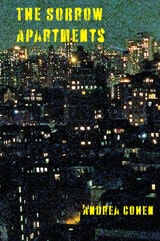
The Sorrow Apartments
Andrea Cohen
Four Way Books, 2024
What would I
think, coming
up after
my world
had evaporated?
I'd wish
I were water.
The Sorrow Apartments is home to spare and uncanny lyricism––as well as leaping narratives of mystery and loss and wonder. These poems race at once into the past and the possible. And yet, instead of holding things up to the light for a better view, Cohen lifts them to the dark and light, as in "Acapulco," where an unlikely companion points out, “as men tend to, / the stars comprising Orion’s belt — / as if it were the lustrous sparks and not / the leveling dark that connects us.” For a poet who has been called unfashionable from the get-go, unfashionable never looked so good.

The Tilt Torn Away from the Seasons
PoemsElizabeth Lindsey Rogers
Acre Books, 2020
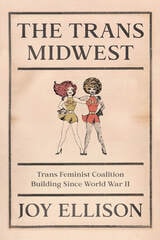
The Trans Midwest
Trans Feminist Coalition Building Since World War IIJoy Ellison
University of Chicago Press, 2027
A revelatory regional history of trans feminist coalition-building between feminist, queer, and Black communities.
In the face of heightened transphobia and rising fascism in the United States, Joy Ellison’s TheTrans Midwest recounts the history of Midwestern trans women and femmes as a force in the larger feminist movement in the United States. Facing repression and geographic isolation, trans feminine Midwesterners built, and continue to build, vibrant coalitions with feminist, queer, and Black organizations.
Drawing on a vast range of archives and oral histories, Ellison shares a detailed and intersectional description of trans life and politics. These historical figures range from the Black trans women who worked in drag shows to the student coalitions that led to the passage of the country’s first trans-inclusive anti-discrimination ordinance and transsexual lesbian feminist activism in the 1990s. Ellison examines community networks and support groups, newsletters and advertisements, and Midwestern cities from Detroit to Kansas City to elucidate how trans regional groups found common interests across different races, classes, abilities, and sexualities, a marked difference from existing historical accounts of similar movements elsewhere.
Contributing to our understanding of trans history and the impact of intersectional organizing, The Trans Midwest presents new possibilities and critical lessons for trans feminist movements today.
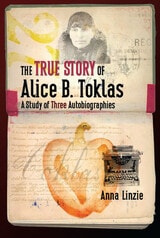
The True Story of Alice B. Toklas
A Study of Three AutobiographiesAnna Linzie
University of Iowa Press, 2006
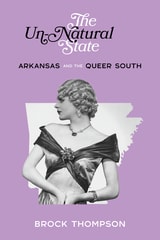
The Un-Natural State
Arkansas and the Queer SouthBrock Thompson
University of Arkansas Press, 2010
The Weather in Proust
Eve Kosofsky Sedgwick
Duke University Press, 2012
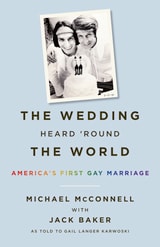
The Wedding Heard 'Round the World
America's First Gay MarriageMichael McConnell
University of Minnesota Press, 2016
At the dawn of the modern gay movement (while New York’s Stonewall riots and San Francisco’s emerging political activism bloomed), these two young men insisted on making their commitment a legal reality. They were already crusaders for gay rights: Jack had twice been elected the University of Minnesota’s student president—the first openly gay university student president in the country, an election reported by Walter Cronkite on network TV news. They were featured in Look magazine’s special issue about the American family and received letters of support from around the world.
The couple navigated complex procedures to obtain a state-issued marriage license. Their ceremony was conducted by a Methodist minister in a friend’s tiny Minneapolis apartment. Wearing matching white pantsuits, exchanging custom-designed rings, and sharing a tiered wedding cake, Michael and Jack celebrated their historic marriage. After reciting their vows, they sealed their promise to love and honor each other with a kiss and a signed marriage certificate.
Repercussions were immediate: Michael’s job offer at the University of Minnesota was rescinded, leading him to wage a battle against job discrimination with the help of the Minnesota Civil Liberties Union. The couple eventually reached the U.S. Supreme Court with two precedent-setting cases.
Michael and Jack have retired from the public spotlight, but after four decades their marriage is still their joy and comfort. Living quietly in a Minneapolis bungalow, they exemplify a contemporary version of the American dream. Only now, with marriage equality in the headlines and the Supreme Court decision to make love the law of the land, are they willing to tell the entire story of their groundbreaking experiences. TIME magazine listed the twenty-five most influential marriages of all time and included Michael and Jack, and they were recently profiled in a cover story in the Sunday New York Times. Their long campaign for marriage equality and insistence on equal rights for all citizens is a model for advocates of social justice and an inspiration for everyone who struggles for acceptance in a less-than-equal world.
The Worst Thing of All Is the Light
José Luis Serrano
Seagull Books, 2023
The Worst Thing of All Is the Light tells two stories. First, that of the friendship of two heterosexual men, Koldo and Edorta, through the decades of the late twentieth century in Spain’s Basque Country. In the book Edorta writes in order to try and save from oblivion his relationship with Koldo—a bond for which the word “friendship” falls short yet for which he is too afraid to use the word “love.” It is the story of two men who are in love and don’t know it, or don’t want to know it. The second story is that of its author, José Luis Serrano, in the present day as he enjoys his summer holiday in the same Basque Country and talks with his husband at length about many different things, but mostly about how to narrate the relationship of Koldo and Edorta, two men who did not allow themselves to construct the domestic life that their counterparts enjoy today. Together these stories show a love that the lovers hope will outlive them, a love that is the same even if we give it different labels.
The Wounded Heart
Writing on Cherríe MoragaBy Yvonne Yarbro-Bejarano
University of Texas Press, 2001
In her work as poet, essayist, editor, dramatist, and public intellectual, Chicana lesbian writer Cherríe Moraga has been extremely influential in current debates on culture and identity as an ongoing, open-ended process. Analyzing the "in-between" spaces in Moraga's writing where race, gender, class, and sexuality intermingle, this first book-length study of Moraga's work focuses on her writing of the body and related material practices of sex, desire, and pleasure.
Yvonne Yarbro-Bejarano divides the book into three sections, which analyze Moraga's writing of the body, her dramaturgy in the context of both dominant and alternative Western theatrical traditions, and her writing of identities and racialized desire. Through close textual readings of Loving in the War Years, Giving Up the Ghost, Shadow of a Man, Heroes and Saints, The Last Generation, and Waiting in the Wings, Yarbro-Bejarano contributes to the development of a language to talk about sexuality as potentially empowering, the place of desire within politics, and the intricate workings of racialized desire.
The Year of the Femme
Cassie Donish
University of Iowa Press, 2019

Theatre History Studies 2026, Vol 44
Edited by Jocelyn L. Buckner
University of Alabama Press, 2026
The official journal of the Mid-America Theatre Conference
Theatre History Studies (THS) is a peer-reviewed journal of theatre history and scholarship published annually since 1981 by the Mid-America Theatre Conference (MATC), a regional body devoted to theatre scholarship and practice. The conference is dedicated to the growth and improvement of all forms of theatre throughout a twelve-state region encompassing Illinois, Indiana, Iowa, Kansas, Michigan, Minnesota, Missouri, Nebraska, North Dakota, Ohio, South Dakota, and Wisconsin. The purposes of the conference are to unite people and organizations within the region and elsewhere who have an interest in theatre and to promote the growth and development of all forms of theatre. THS is a member of the Council of Editors of Learned Journals and is included in the MLA Directory of Periodicals. THS is cataloged in numerous periodical indexes and databases.
Along with sixteen book reviews on the latest publications from established and emerging voices in the field, this issue of Theatre History Studies contains four sections with two introductions and nine essays total. In the general section, three essays consider performance histories and reevaluations of historiographical approaches. The special section on queer historiographies responds to calls for a more expansive and inclusive understanding of trans histories and for centralizing contemporary queer performers. In part III, the Robert A. Schanke Research Award-winning paper from the 2024 MATC conference by Ali-Reza Mirsajadi addresses erasures in the theatrical archive and highlights the long legacy of queer, Southwest Asian, and North African representation in dramatic texts. Taken together, volume 44 captures how this journal serves theatre historians as scholars and laborers as they work to attend and tend to their field.
There Is Only One Ghost in the World
Sophie Klahr and Corey Zeller
University of Alabama Press, 2023
One ghost, infinite echoes—where memory, myth, and identity collide.
There Is Only One Ghost in the World follows the fragmented meditations of a multilayered voice, an intimate witness to our times that delicately and bluntly reveals the best and the worst in all of us. It is a kaleidoscopic investigation into the loneliness of modern American life as well as family relationships, exploring the truths and lies that families tell one another, and why, with empathy, sorrow, and humility. We travel from the oil-slicked beaches of California and the alleys of New Orleans to the steps of the Capitol. Here: the raw nerves of gender and identity. Here: the lessons of heartbreak. Here: true myths, fake news, and old rumors. Here: the legacies of art and incisors of seasons. Incompletable Venn diagrams, sibling porn stars, addiction and climate change, shootings and stolen x-rays, the lyrics of disco and the taxonomy of slot machines, steel monoliths and 99-cent stores, last meals and unearthed mummies. There Is Only One Ghost in the World is a book about what happened just before you woke up, and what happened just after. And what happened next.
They Change the Subject
Douglas A. Martin
University of Wisconsin Press, 2005
Treacherously comic and poignant, the autobiographical stories in They Change the Subject follow a young man’s quest for identity through love and desire. Sustained by a single voice, the stories simultaneously offer a fractured novel and stand, powerfully, on their own. At the center of each tale is the heightened, visceral possibility of unexpected emotional encounters—from an escort’s dates in Manhattan hotels to a photo shoot that doubles as seduction. Always pushing toward a bigger shiver of passion, Martin’s young-man-on-the-make learns how to adapt his persona to suit his lovers’ needs and tries to embrace his own experience—and his self—by becoming the purest object of desire.
Thiefing Sugar
Eroticism between Women in Caribbean LiteratureOmise eke Natasha Tinsley
Duke University Press, 2010
This Is My Body
PoemsJonathan Fletcher
Northwestern University Press, 2025
Winner of the 2023 Drinking Gourd Chapbook Poetry Prize
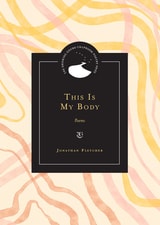
This Is My Body readily and unapologetically examines issues of race and ethnicity, ancestry and community, mental illness and recovery, queer sexuality and identity, and the body and disability. Traditionally religious language and hopeful imagery abound; so, too, do their spiritual antagonists: doubt, loss, isolation, and despair. But even in the darkest moments of a troubled inner life, insight and triumph intervene and sometimes even linger. An intimate exploration of the human experience, this debut collection proves itself more than the sum of its interior encounters—however revelatory or transformative any one given experience might be. It is a timely and necessary exercise in faith.
This Music
Record of a Poet BecomingJanice Gould; Edited by Jennifer Elise Foerster, Deborah A. Miranda, Kim Shuck, Lisa Tatonetti, and Marie-Elise Wheatwind; Foreword by Joy Harjo
University of Arizona Press, 2026
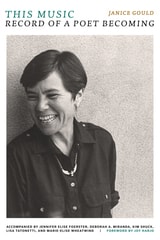
This Music is the final, intimate work of celebrated Koyoonk’auwi (Concow) poet and essayist Janice Gould, completed posthumously by a collective of close friends and literary scholars.
Told through lyrical prose poems and personal photographs, this memoir traces Gould’s life as a queer/Two-Spirit California Native coming of age in the late 1960s, navigating family, identity, activism, and art. With reflections on her mixed-blood heritage, her experiences in lesbian feminist circles, and her journey as a poet and musician, Gould’s voice resonates with clarity, tenderness, and fierce honesty.
The book opens with a foreword by Joy Harjo and an introduction from the editorial collective, including an essay by Gould’s spouse, Marie-Elise Wheatwind, framing the memoir as both a literary achievement and a loving tribute.
This Music is a vital contribution to Indigenous and LGBTQ+ literatures, offering readers a rare and powerful account of gender, sexuality, and Native identity in mid-century and contemporary America. As the one hundredth volume in the Sun Tracks series, this work honors Gould’s legacy while expanding the canon of poetic memoir. Ideal for readers of poetry, memoir, and Indigenous literature, this book will resonate deeply with scholars, students, and anyone drawn to stories of resilience, creativity, and the enduring power of memory.
This Way Back
Joanna Eleftheriou
West Virginia University Press, 2020
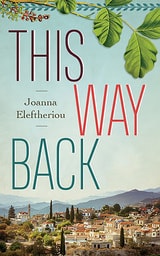
Going back to her ancestral homeland, a Greek American girl discovers she is a lesbian in love with God, so her questions about home and belonging will not be easily answered.
This Way Back dramatizes a childhood split between Queens, New York, and Cyprus, an island nation with a long colonial history and a culture to which Joanna Eleftheriou could never quite adjust. The book avows a Greek-Cypriot-American lesbian’s existence by documenting its scenes: reenacting an 1829 mass suicide by jumping off a school stage onto gym mats at St. Nicholas, harvesting carobs on ancestral land, purchasing UNESCO-protected lace, marching in the island’s first gay pride parade, visiting Cyprus’s occupied north against a dying father’s wish, and pruning geraniums, cypress trees, and jasmine after her father grew too weak to lift the shears. While the author’s life binds the essays in This Way Back into what reads like a memoir, the book questions memoir’s conventional boundaries between the individual and her community, and between political and personal loss, the human and the environment, and the living and the dead.
Threshold
Joseph O. Legaspi
CavanKerry Press, 2017
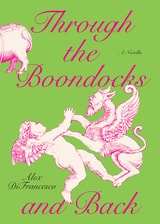
Through the Boondocks and Back
A NovellaAlex DiFrancesco
Northwestern University Press, 2027
A queer, rollicking retelling of The Odyssey
Zane Viaggio’s life has been fraught since leaving New York City for Cleveland. Uprooted and missing his life in the city, he escapes into parties and pills. When he wakes up vomiting several days in a row, he’s convinced by his three drag queen roommates and his best trans-femme friend to get a pregnancy test, learning that not only is he pregnant, but pregnant in an Ohio that has just outlawed abortion. Zane must then embark on an epic journey around Lake Erie and its surrounding towns on a stolen jet ski to find the man who impregnated him, get the money to go back to New York City for an abortion, and get his life back to normal. In this queer and trans retelling of The Odyssey, Zane encounters all sorts of strange and challenging characters—including one-eyed cats, force-femmed prophets, and his own chosen family—who help him discover that, perhaps, finding home is the greatest journey of all.
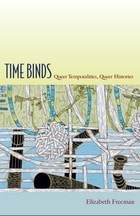
Time Binds
Queer Temporalities, Queer HistoriesElizabeth Freeman
Duke University Press, 2010

To Think of a Match
PoemsHalee Kirkwood
Northwestern University Press, 2027
A gripping oscillation between the manufactured and the natural, between capitalism and truth
To Think of a Match is a collection of daydreams from behind the eyes of retail clerks, corporate mascots, ghosts of 49ers, and sundry others. Situated in Minnesota’s Twin Cities, home of the Mall of America and the glistening Bde Maka Ska, these poems explore the intimate collisions of class and labor, spiraling out from the recent history of the Gold Rush and into the near future of asteroid mineral mining and beyond. Halee Kirkwood searches for possibilities of a postcapitalist future in our most squirmy, slimy, and wriggly forms of earthly life. What can invertebrates teach us about the ways humanity organizes labor, creativity, and community? What does it mean to have a body caught between economies and ecologies? Contending with subjects ranging from Sappho to Petco and envisioning a new pastoral that is honest about the human and nonhuman domains we are building today, To Think of a Match yearns for a poetics that thrives between shifts.
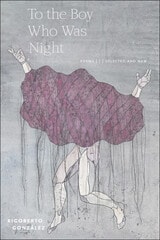
To the Boy Who Was Night
Poems: Selected and NewRigoberto González
Four Way Books, 2023
The capstone of a quarter-century career in poetry, To the Boy Who Was Night collects the poetry published by Rigoberto González since 1999, including selections from five previous books as well as new work. Mirroring González’s personal trajectory, the arc of this work articulates the course of a life: these poems recall leaving a beloved homeland, confront masculinity and sexuality in new adulthood, imagine the earth devoid of human inhabitants, descend into the realm of ghosts, and return to arrive at Dispatches from the Broken World. This latest section ventures into foreign terrain — an autobiographical confrontation with isolation and the aging body. His lyrical exploration, like the weather reports scrawled on ancient temple walls, will preserve this age-old message: “likely a poem, surely an epitaph.” To the Boy Who Was Night bears the fruit of 25 years of poetry, González’s boldest and most comprehensive volume yet.
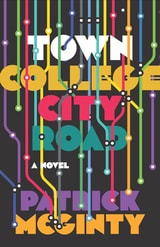
Town College City Road
Patrick McGinty
University of Wisconsin Press, 2025
Through his struggles to pass multiple masculine initiations, both real and metaphorical, Kurt ultimately discovers that the only thing tougher than running away from rural mythology is constructing a new one.
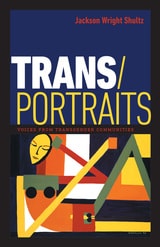
Trans/Portraits
Voices from Transgender CommunitiesJackson Wright Shultz
Dartmouth College Press, 2015
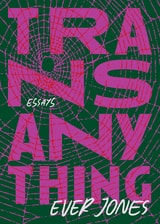
Transanything
EssaysEver Jones
Northwestern University Press, 2025
Transanything reveals a world in metamorphosis. A hermit crab retires its shell, lovers drift apart, and seasons churn, all amid Ever Jones’s own narrative of midlife gender transition.
Jones takes up a tradition of writing—about the American landscape, solitude, wilderness, and the West—long intertwined with colonialism and heteropatriarchy, and makes it wholly their own. A self-proclaimed “nature essay” misbehaves, wandering away from the hummingbird outside Jones’s window. In their chronicle of a week in Yellowstone, Jones navigates trails frequented by grizzlies and a campground where their identity is regarded as equally dangerous. Elk, bison, and bark spiders roam this book’s pages, but it is the gray wolf—the embattled apex predator of the American West, narrow survivor of settler colonial violence, and vessel for American myths of independence—who emerges as Jones’s shapeshifting coprotagonist.
Taking on a global web of colonial systems that seek to divide us, Jones disrupts loneliness and forges space for queerness and transness to be aliveness—to be transanything.
Transversal
PoemsUrayoán Noel
University of Arizona Press, 2021
Featuring Noel’s bilingual playfulness, intellect, and irreverent political imagination, Transversal contains personal reflections on love, desire, and loss filtered through a queer approach to form, expanding upon Noel’s experiments with self-translation in his celebrated collection Buzzing Hemisphere/Rumor Hemisférico. This collection explores walking poems improvised on a smartphone, as well as remixed classical and experimental forms. Poems are presented in interlocking bilingual versions that complicate the relationship between translation and original, and between English and Spanish as languages of empire and popular struggle. The book creatively examines translation and its simultaneous urgency and impossibility in a time of global crisis.
Transversal seeks to disrupt standard English and Spanish, and it celebrates the nonequivalence between languages. Inspired by Caribbean poet and philosopher Édouard Glissant, the collection celebrates Caribbean practices of creolization as maximalist, people-centered, affect-loaded responses to the top-down violence of austerity politics. This groundbreaking, modular approach to poetic translation opens up alternative ways of reading in any language.

Travelers, Immigrants, Inmates
Essays in EstrangementFrances Bartkowski
University of Minnesota Press, 1995
Travelers, Immigrants, Inmates was first published in 1995. Minnesota Archive Editions uses digital technology to make long-unavailable books once again accessible, and are published unaltered from the original University of Minnesota Press editions.
Identities are always mistaken; yet they are as necessary as air to sustain life in and among communities. Frances Bartkowski uses travel writings, U.S. immigrant autobiographies, and concentration camp memoirs to illustrate how tales of dislocation present readers with a picture of the complex issues surrounding mistaken identities. In turn, we learn much about the intimate relation between language and power.
Combining psychoanalytic and political modes of analysis, Bartkowski explores the intertwining of place and the construction of identities. The numerous writings she considers include André Gide's Voyage to the Congo, Eva Hoffman's Lost in Translation, Sandra Cisneros's House on Mango Street, Zora Neale Hurston's Dust Tracks on a Road and Tell My Horse, and Primo Levi's Survival in Auschwitz.
Elegantly written and incisive, Travelers, Immigrants, Inmates stands at the crossroads of contemporary discussions about ethnicity, race, gender, nationalism, and the politics and poetics of identity. It has much to offer readers interested in questions of identity and cultural differences.
Frances Bartkowski is associate professor of English and director of women's studies at Rutgers University in Newark. She is the author of Feminist Utopias (1989).
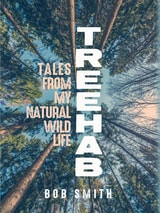
Treehab
Tales from My Natural, Wild LifeBob Smith
University of Wisconsin Press, 2016
In Treehab—named after a retreat cabin in rural Ontario—Smith muses how he has “always sought the path less traveled.” He rebuffs his diagnosis of ALS as only an unflappable stand-up comic could (“Lou Gehrig’s Disease? But I don’t even like baseball!”) and explores his complex, fulfilling experience of fatherhood, both before and after the onset of the disease.
Stories of his writing and performing life—punctuated by hilariously cutting jokes that comedians tell only to each other—are interspersed with tales of Smith’s enduring relationship with nature: boyhood sojourns in the woods of upstate New York and adult explorations of the remote Alaskan wilderness; snakes and turtles, rocks and minerals; open sky and forest canopy; God and friendship—all recurring touchstones that inspire him to fight for his survival and for the future of his two children.
Aiming his potent, unflinching wit at global warming, equal rights, sex, dogs, Thoreau, and more, Smith demonstrates here the inimitable insight that has made him a beloved voice of a generation. He reminds us that life is perplexing, beautiful, strange, and entirely worth celebrating.
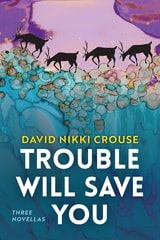
Trouble Will Save You
Three NovellasDavid Nikki Crouse
University of Alaska Press, 2023
While Crouse’s prize-winning collection of short fiction The Man Back There offered up insights into a kind of self-destructive masculinity, these novellas now sensitively and persuasively capture the inner landscapes of women struggling with grief and isolation. Trouble Will Save You is a unique and fully realized work from a keenly empathetic writer.
Praise for The Man Back There:
“In this virtuoso collection of stories, David Crouse guides us directly to where the shadow lies—the disorienting loss, the surprising heartache, the forgotten wound—those inevitable areas of the psyche we all share and through which only truth, illuminated with a such a light touch here, can deliver us; The Man Back There is the work of the real thing.”
—Andre Dubus III, author of House of Sand and Fog
“I chose these stories because they made me feel. I felt the characters like I would feel a stranger in a room or on a bus with me, with an irrational sympathy more animal than moral in its nature.”
—Mary Gaitskill, 2007 Mary McCarthy Prize judge
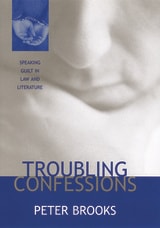
Troubling Confessions
Speaking Guilt in Law and LiteraturePeter Brooks
University of Chicago Press, 2000
In Troubling Confessions, Peter Brooks juxtaposes cases from law and literature to explore the kinds of truth we associate with confessions, and why we both rely on them and regard them with suspicion. For centuries the law has considered confession to be "the queen of proofs," yet it has also seen a need to regulate confessions and the circumstances under which they are made, as evidenced in the continuing debate over the Miranda decision. Western culture has made confessional speech a prime measure of authenticity, seeing it as an expression of selfhood that bears witness to personal truth. Yet the urge to confess may be motivated by inextricable layers of shame, guilt, self-loathing, the desire to propitiate figures of authority. Literature has often understood the problematic nature of confession better than the law, as Brooks demonstrates in perceptive readings of legal cases set against works by Rousseau, Dostoevsky, Joyce, and Camus, among others.
Mitya in The Brothers Karamazov captures the trouble with confessional speech eloquently when he offers his confession with the anguished plea: this is a confession; handle with care. By questioning the truths of confession, Peter Brooks challenges us to reconsider how we demand confessions and what we do with them.