Results by title
275 books match the query 'Letters' and 55 start with t
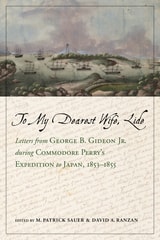
To My Dearest Wife, Lide
Letters from George B. Gideon Jr. during Commodore Perry’s Expedition to Japan, 1853–1855Edited by M. Patrick Sauer and David A. Ranzan
University of Alabama Press, 2019
George B. Gideon Jr. served as second assistant engineer aboard the USS Powhatan from 1852 to 1856. From his position on the steam frigate, Gideon traveled to Singapore, Labuan, Borneo, Hong Kong, and many other Asian lands. During his time at sea, Gideon penned dozens of letters to his wife, Lide, back home in Philadelphia. Recently discovered in the attic of his great-great-grandniece, were fifty-one letters penned by Gideon providing thorough and insightful commentary throughout the voyage.
Through these correspondences, Gideon laboriously documents the details of his daily life on board, from the food they ate to the technical aspects of his work, as well as observations concerning the historical events unfolding around him, such as Chinese piracy, the Taiping Rebellion, the Crimean War, and the devastation of Shimoda. To My Dearest Wife, Lide: Letters from George B. Gideon Jr. during Commodore Perry’s Expedition to Japan, 1853–1855 is a rare first-person account of the landmark American naval expedition to Japan to establish commercial relations between the two countries. Gideon’s letters have been meticulously transcribed and annotated by the editors and are an invaluable primary historical source.
Gideon’s letters are candid and revealing, delving into the rampant dysfunction in the navy of the 1850s—sickness and disease, alcohol abuse, and poor leadership, among other challenges. Gideon also unabashedly shares his own cynical views of the navy’s role in supporting American economic interests in Japan. This firsthand account of the political mission of the Perry expedition is a unique contribution to naval and military history and gives readers a better view of life aboard a navy ship.
Told in Letters
Epistolary Fiction Before RichardsonRobert Adams Day
University of Michigan Press, 1966
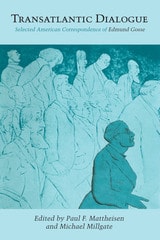
Transatlantic Dialogue
Selected American Correspondence of Edmund GosseEdited by Paul F. Mattheisen and Michael Millgate
University of Texas Press, 1965
The mauve life and times of Edmund Gosse glow warmly in these letters, delightful to even the most casual reader, engrossing to one with an interest in the distinguished correspondents or in the late-Victorian and Edwardian eras.
An obscure figure today to all but literary connoisseurs, Gosse was, in his day, a near giant in both England and the United States. Max Beerbohm, that discriminating man, in a mural of prominent figures who were also his friends, sketched Edmund Gosse large among George Bernard Shaw, John Masefield, G. K. Chesterton, John Galsworthy, and Lytton Strachey.
This volume consists primarily of a selection of the letters exchanged between Gosse and a number of American writers, notably William Dean Howells, Edmund Clarence Stedman, Oliver Wendell Holmes, Richard Watson Gilder, Edith Wharton, and Henry James. The letters, most of them previously unpublished, contain much of biographical and general historical interest, but the main theme of the book is the exploration of Anglo-American literary relations during the last quarter of the nineteenth century and the early years of the twentieth.
The letters that passed between Gosse and Stedman provide valuable evidence for the study of literary taste on the two sides of the Atlantic and also show how each man sought to enhance the other's transatlantic reputation; the correspondence between Gosse and Gilder, particularly during the period when Gosse was London editor of Gilder's Century magazine, is especially revealing of cultural attitudes and antagonisms. A central thread is provided by the warm and long-sustained friendship between Gosse and Howells, the leading American man of letters of his day.
The long introduction to the book deals with such topics as Gosse's American reputation, his immensely successful visit to the United States in the winter of 1884–1885 (based on the manuscript diary that Gosse kept during the visit), and his American friendships, with particular attention to the relationship with Howells. The thoroughness and vitality of the annotation are extremely effective in familiarizing the reader with the people and events in the book.
Translation, Resistance, Activism
Maria Tymoczko
University of Massachusetts Press, 2010
From silence to radical manipulation of texts, translation strategies are instrumental in significant historical interventions and cultural change. Translation plays a pivotal role in ideological dialogue and struggle, including resistance to oppression and cultural straitjackets of all types, from sexual puritanism to military dictatorships. Situated in their own space, time, history, and political contexts, translators promote ideological agendas by creating new cultural narratives, pragmatically adjusting tactics so as to maximize the social and political impact.
The essays in this volume explore ways to read translations as records of cultural contestation and ideological struggle; as means of fighting censorship, physical coercion, cultural repression, and political dominance; and as texts that foster a wide variety of goals from cultural nationalism to armed confrontation. Translations are set in relief as central cultural documents rather than derivative, peripheral, or marginalized productions. They are seen as forms of ethical, political, and ideological activity rather than as mere communicative transactions or creative literary exercises.
The contributors demonstrate that engaged and activist translations are performative acts within broader political and ideological contexts. The essays detail the initiative, resourcefulness, and courage of individual translators, whose willingness to put themselves on the line for social change can sometimes move the world.
In addition to Maria Tymoczko, contributors include Pua'ala'okalani D. Aiu, Brian James Baer, Mona Baker, Paul F. Bandia, Georges L. Bastin, Nitsa Ben-Ari, Ãngela Campo, Antonia Carcelen-Estrada, Ãlvaro Echeverri, Denise Merkle, John Milton, and Else R.P. Vieira.
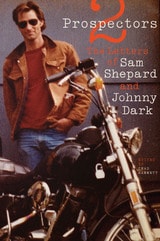
Two Prospectors
The Letters of Sam Shepard and Johnny DarkBy Sam Shepard and Johnny Dark
University of Texas Press, 2013
Sam Shepard was arguably America’s finest working dramatist, as well as an accomplished screenwriter, actor, and director. Winner of a Pulitzer Prize, he wrote more than forty-five plays, including True West, Fool for Love, and Buried Child. Shepard also appeared in more than fifty films, beginning with Terrence Malick’s Days of Heaven, and was nominated for an Academy Award for his performance in The Right Stuff. Despite the publicity his work and life attracted, however, Shepard remained a strongly private man who said many times that he would never write a memoir. But he did write intensively about his inner life and creative work to his former father-in-law and housemate, Johnny Dark, who was Shepard’s closest friend, surrogate brother (they were nearly the same age), and even artistic muse.
Two Prospectors gathers nearly forty years of correspondence and transcribed conversations between Shepard and Dark. In these gripping, sometimes gut-wrenching letters, the men open themselves to each other with amazing honesty. Shepard’s letters give us the deepest look we will ever get into his personal philosophy and creative process, while in Dark’s letters we discover insights into Shepard’s character that only an intimate friend could provide. The writers also reflect on the books and authors that stimulate their thinking, their relationships with women (including Shepard’s anguished decision to leave his wife and son—Dark’s stepdaughter and grandson—for actress Jessica Lange), personal struggles, and accumulating years. Illustrated with Dark’s candid, revealing photographs of Shepard and their mutual family across many years, as well as facsimiles of numerous letters, Two Prospectors is a compelling portrait of a complex friendship that anchored both lives for decades, a friendship also poignantly captured in Treva Wurmfeld’s film, Shepard & Dark.