Results by title
355 books match the query 'Middle Atlantic (DC, DE, MD, NJ, NY, PA)' and 81 start with t
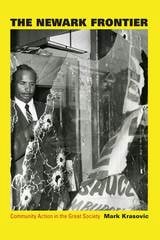
The Newark Frontier
Community Action in the Great SocietyMark Krasovic
University of Chicago Press, 2016
The Newark Frontier shows how, during the Great Society, urban liberalism adapted and grew, defining itself less by centralized programs and ideals than by administrative innovation and the small-scale, personal interactions generated by community action programs, investigative commissions, and police-community relations projects. Paying particular attention to the fine-grained experiences of Newark residents, Krasovic reveals that this liberalism was rooted in an ethic of experimentation and local knowledge. He illustrates this with stories of innovation within government offices, the dynamic encounters between local activists and state agencies, and the unlikely alliances among nominal enemies. Krasovic makes clear that postwar liberalism’s eventual fate had as much to do with the experiments waged in Newark as it did with the violence that rocked the city in the summer of 1967.
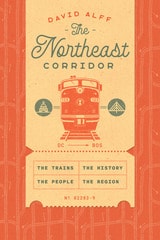
The Northeast Corridor
The Trains, the People, the History, the RegionDavid Alff
University of Chicago Press, 2024
Traversed by thousands of trains and millions of riders, the Northeast Corridor might be America’s most famous railway, but its influence goes far beyond the right-of-way. David Alff welcomes readers aboard to see how nineteenth-century train tracks did more than connect Boston to Washington, DC. They transformed hundreds of miles of Atlantic shoreline into a political capital, a global financial hub, and home to fifty million people. The Northeast Corridor reveals how freight trains, commuter rail, and Amtrak influenced—and in turn were shaped by—centuries of American industrial expansion, metropolitan growth, downtown decline, and revitalization.
Paying as much attention to Canton, Trenton, New Rochelle, and Providence as to New York City, Philadelphia, and Baltimore, Alff provides narrative thrills for history buffs, train enthusiasts, and adventurers alike. What’s more, he offers a glimpse into the future of the corridor. New infrastructural plans—supported by President Joe Biden, famously Amtrak’s biggest fan—envision ever-faster trains zipping along technologically advanced rails. Yet those tracks will literally sit atop a history that links the life of Frederick Douglass, who fled to freedom by boarding a train in Baltimore, to the Frederick Douglass Tunnel, which is expected to be the newest link in the corridor by 2032.
Trains have long made the places that make America, and they still do.
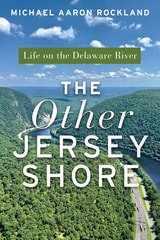
The Other Jersey Shore
Life on the Delaware RiverMichael Aaron Rockland
Rutgers University Press, 2024
The Other Jersey Shore takes readers on a personal tour of the New Jersey portion of the Delaware River and its surroundings. You will learn about the role that the river played in human history, including Washington’s four crossings of the Delaware during the Revolutionary War. And you will also learn about the ecological history of the river itself, once one of the most polluted waterways in the country and now one of the cleanest, providing drinking water for 17 million people. Michael Aaron Rockland, a long-time New Jersey resident, shows readers his very favorite spots along the Delaware, including the pristine waterfalls and wilderness in the Delaware Water Gap recreation area. Along the way, he shares engrossing stories and surprising facts about the river that literally defines western New Jersey.
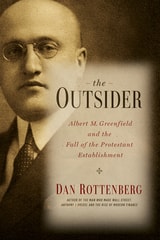
The Outsider
Albert M. Greenfield and the Fall of the Protestant EstablishmentDan Rottenberg
Temple University Press, 2018
In The Outsider, veteran journalist and best-selling author Dan Rottenberg deftly chronicles the astonishing rises, falls, and countless reinventions of this savvy businessman. Greenfield's power allowed him to cross social, religious, and ethnic boundaries with impunity. He alarmed Philadelphia's conservative business and social leaders-Christians and Jews alike-some of whom plotted his downfall.
In this engaging account of Greenfield's fascinating life, Rottenberg demonstrates the extent to which one uniquely brilliant and energetic man pushed the boundaries of society's limitations on individual potential. The Outsider provides a microcosmic look at three twentieth-century upheavals: the rise of Jews as a crucial American business force, the decline of America's Protestant establishment, and the transformation of American cities.
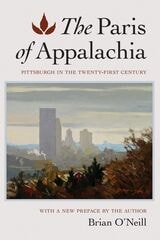
The Paris of Appalachia
Pittsburgh in the Twenty-First CenturyBrian O'Neill
Carnegie Mellon University Press, 2026
Maybe you never wondered if any metro area nearly straddles the borders of three major regions of the country, but The Paris of Appalachia: Pittsburgh in the Twenty-First Century tells us why this city is a place apart. It’s not East Coast, Midwest, or Southern, but the rest of America can fret about how to label Pittsburgh. It’s just fine being a walkable town that plays a big city on TV. Brian O'Neill, who walked its streets for more than three decades as a newspaper columnist, fell in love with the place from the moment he arrived. And when you read what he found, odds are better than even that you will, too. This reissue of the book includes a new introduction.
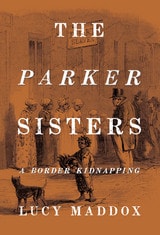
The Parker Sisters
A Border KidnappingLucy Maddox
Temple University Press, 2016
In The Parker Sisters, Lucy Maddox gives an eloquent, urgent account of the tragic kidnapping of these young women. Using archival news and courtroom reports, Maddox tells the larger story of the disastrous effect of the Fugitive Slave Act on the small farming communities of Chester County and the significant, widening consequences for the state and the nation.
The Parker Sisters is also a story about families whose lives and fates were deeply embedded in both the daily rounds of their community and the madness and violence consuming all of antebellum America. Maddox’s account of this horrific and startling crime reveals the strength and vulnerability of the Parker sisters and the African American population.
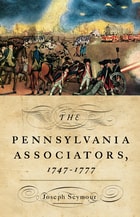
The Pennsylvania Associators, 1747–1777
Joseph Seymour
Westholme Publishing, 2024
The First Complete History of the Military Force of Colonial Pennsylvania, a Volunteer Body Created as a Practical Response to the Ideal of Pacifism
Known at various times as the Military Association of Pennsylvania, the Pennsylvania Association, or simply Associators, this long-neglected organization represented a new constituency in Pennsylvania politics and by extension, a new American response to arbitrary rule. Organized on December 7, 1747, at Philadelphia, the Military Association, an all-volunteer military establishment pledged to the defense of Pennsylvania, served as the de facto armed force for Pennsylvania, a colony whose leadership, a loose coalition of Quaker and German pacifists, land barons, and merchants, foreswore military preparedness on religious and ideological grounds. For the Associators, including their most noted supporter, Benjamin Franklin, a defenseless colony was no longer practical. During the War of Austrian Succession and again in the Seven Years’ War, Associators organized defense efforts in defiance of the Pennsylvania colonial leadership. Associators also helped defend American Indian refugees against the infamous Paxton Boys in 1764. By 1775, Associators found themselves as the colony’s only legitimate military leadership and, by capitalizing on electoral gains in the lead up to the American Revolution, Associators assumed offices vacated by former officials. During the critical battles of 1776, the Associators in their distinctive round hats and brown coats proved a decisive asset to the Continental Army.
In The Pennsylvania Associators, 1747–1777, historian Joseph Seymour has painstakingly researched primary source materials in order to write the first comprehensive history of this influential organization. Seymour demonstrates that while the Pennsylvania Associators contributed to success in the campaigns in which they fought, particularly the battles of Trenton and Princeton, a more fascinating and important investigation are the concerns that motivated these men. Associators considered military service in defense of their religious and civil liberties as a natural right. For three decades, Associators demonstrated that belief in and out of uniform. In a colony founded on religious exceptionalism, Associators saw themselves as faithful soldiers and active agents against leadership by entitlement, a principle guiding our government today.

The Perfect Square
A History of Rittenhouse SquareNancy M. Heinzen
Temple University Press, 2009
One of the five squares William Penn established when he founded the city, the southwest-situated Rittenhouse Square has transformed from a marshy plot surrounded by brickyards and workers’ shanties into the epicenter of Philadelphia high society. A keystone of center city Philadelphia, it was once home to great dynasties, elegant mansions, and grand dames of the Victorian era. Today it is lined with million-dollar high-rise condominiums, where nouveau-riche entrepreneurs and descendants of ethnic immigrants live side-by-side.
Heinzen lovingly chronicles this urban space’s development and growth, illustrating that not only is Rittenhouse Square unique, but so is the combination of human events and relationships that have created and sustained it.
Painstakingly researched and generously illustrated with black-and-white photos from public archives, The Perfect Square will appeal to lay readers interested in history, to professional historians and urban planners, and to the thousands of new residents who have settled on or near Rittenhouse Square since the dawn of the 21st century.
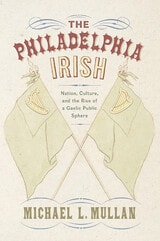
The Philadelphia Irish
Nation, Culture, and the Rise of a Gaelic Public SphereMichael L. Mullan
Rutgers University Press, 2021
Using Jurgen Habermas’s concept of a public sphere, the author reveals how the Irish constructed a plebian “counter” public of Gaelic meaning through various mechanisms of communication, the ethnic press, the meeting rooms of Irish societies, the consumption of circulating pamphlets, oratory, songs, ballads, poems, and conversation.
Settled in working class neighborhoods of vast spatial separation in an industrial city, the Irish resisted a parochialism identified with neighborhood and instead extended themselves to construct a vibrant, culturally engaged network of Irish rebirth in Philadelphia, a public of Gaelic meaning.
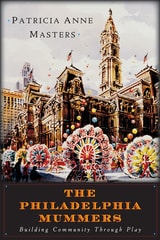
The Philadelphia Mummers
Building Community Through PlayPatricia Anne Masters
Temple University Press, 2007
Every New Year's Day since 1901, the Philadelphia Mummers have presented a spectacular show of shows that raucously snakes and shimmies its way through city streets. The Mummers Parade features music, dance, comedy, and mime, along with dazzling costumes and floats. Although the lavish event is now televised to a wide audience, it is still rooted in the same neighborhoods where it began.
This book explores the community created and annually reaffirmed by the Philadelphia Mummers. The author spent more than five years with the Mummers, observing their lives and rituals as she took part in their preparations and parades. Writing with the fascination of a sociologist and the excitement of a participant, Masters examines the Mummers from their beginnings. Through the prism of their century-long history, we can see how communities retain their identities and how they are affected by larger cultural trends.
The Philadelphia Reader
Robert Huber
Temple University Press, 2006
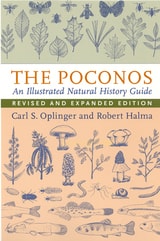
The Poconos
An Illustrated Natural History GuideCarl S. Oplinger and Robert Halma
Rutgers University Press, 2006
The Poconos, a rich plateau nestled in northeastern Pennsylvania between the Delaware River and the Moosic Mountains, encompass a variety of alluring features. The perfect reference for amateur naturalists, outdoor enthusiasts, tourists, and others who wish to explore the area, this classic guide clearly explains the unique geographic characteristics, animal habits and habitats, climate, geology, and vegetation of the area.
The authors trace the region from its beginnings millions of years ago as part of a shallow sea, through the reshaping forces of great glaciers, to today’s roadways and turnpikes. This revised and expanded edition also includes brief profiles of individuals who played significant roles in the preservation or understanding of the area’s ecology. Chapters provide a general survey of the area, including its history and places to be explored and observed, information on forest types, wildlife, and aquatic habitats, updated facts and figures on animal populations, as well as new details on invasive species.
Throughout the book, numerous boxes direct readers to observatory points for specific birds, ecosystems, vegetation types, and geological features, while maps, tables, original pen-and-ink illustrations, and a select list of field guides and other references enhance the book’s appeal. An indispensable companion for visitors as well as residents, The Poconos is a must-read for everyone who wants to discover or better understand the beauty and natural history of this unique region.
The Politics of Staying Put
Condo Conversion and Tenant Right-to-Buy in Washington, DCCarolyn Gallaher
Temple University Press, 2016
When cities gentrify, it can be hard for working-class and low-income residents to stay put. Rising rents and property taxes make buildings unaffordable, or landlords may sell buildings to investors interested in redeveloping them into luxury condos.
In her engaging study The Politics of Staying Put, Carolyn Gallaher focuses on a formal, city-sponsored initiative—The Tenant Opportunity to Purchase Act (TOPA)—that helps people keep their homes. This law, unique to the District of Columbia, allows tenants in apartment buildings contracted for sale the right to refuse the sale and purchase the building instead. In the hands of tenants, a process that would usually hurt them—conversion to a condominium or cooperative—can instead help them.
Taking a broad, city-wide assessment of TOPA, Gallaher follows seven buildings through the program’s process. She measures the law’s level of success and its constraints. Her findingshave relevance for debates in urban affairs about condo conversion, urban local autonomy, and displacement.
The Ramapo Mountain People
Cohen, David Steven
Rutgers University Press, 1986
In a study combining tee disciplines of anthropology, sociology, folklore, and history, David Cohen found that the old stories about these people were legends, not history.
He found no reliable evidence that their ancestors were Tuscarora Indians, Hessian deserters from the British army, escaped slaves, and British and West Indian prostitutes imported by a sea captain named Jackson for the pleasure of British soldiers occupying Manhattan during the War for Independence.
David Cohen lived among the Ramapo Mountain People for a year, conducting genealogical research into church records, deeds, wills, and inventories in county courthouses and libraries. He established that their ancestors included free black landowners in New York City and mulattoes with some Dutch ancestry who were among the first pioneers to settle in the Hackensack River Valley of New Jersey.
In describing his findings and his experiences, Professor Cohen shows how their racially mixed ancestry, their special family and kinship system, and their intergroup attitudes and folkways distinguish and socially isolate these people as a separate racial group today, despite modern communications and transportation and their proximity to New York City.
The Real Philadelphia Book
Jazz Bridge
Temple University Press, 2022
The Real Philadelphia Book, compiled by Jazz Bridge and editors David Dzubinski and Suzanne Cloud, is a collection of more than 200 original jazz and blues compositions. Arranged alphabetically by song title, the sheet music showcases work by generations of Philadelphia musicians. This volume, which is “what every aspiring jazz musician needs to know,” features tunes from Grammy Award-winners Jimmy Heath, Grover Washington, Jr., and Christian McBride, as well as legends such as Joey DeFrancesco, Ray Bryant, and Robin and Duane Eubanks. Also included are rare compositions by jazz greats Bobby Timmons, Hank Mobley, and Lee Morgan, in addition to music by local luminaries, Rhenda Fearrington, Monnette Sudler, and Kaylé Brecher.
The aim of The Real Philadelphia Book is to help the jazz community make deeper, stronger connections while also formally documenting much of the important music created in the Philadelphia metro area by both well- and lesser-known musicians.
Including an index of composers, The Real Philadelphia Bookwill enhance and add to the rich Philadelphia jazz and blues tradition and make the Philly jazz catalogue more easily available to musicians, jazz students and educators around the world.
The Red Thread
The Passaic Textile StrikeJacob A. Zumoff
Rutgers University Press, 2021
The Road to Ticonderoga
The Campaign of 1758 in the Champlain ValleyMichael G. Laramie
Westholme Publishing, 2027
Based on journals, letters, and accounts of the participants on both sides, The Road to Ticonderoga: The Campaign of 1758 in the Champlain Valley by Michael G. Laramie recounts this unexpected tale of victory and defeat on the North American frontier. Here we learn how the unexpected death of a dynamic leader, George Howe, elder brother of Richard and William, nearly crushed “the soul of General Abercrombie’s army,” leading to misinterpreted orders and hesitation on the part of the British. At the same time, the French commander perilously underestimated the ability of his own forces while overestimating his enemy’s before his fateful and unexpected decision to make his stand at Ticonderoga. With lessons and repercussions for future warfare in North America, The Road to Ticonderoga shows how a series of small mistakes can cascade into a catastrophe under weak leadership—or be exploited by a strong one.
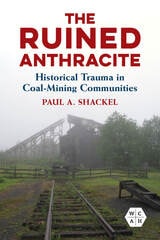
The Ruined Anthracite
Historical Trauma in Coal-Mining CommunitiesPaul A. Shackel
University of Illinois Press, 2023
Insightful and dramatic, The Ruined Anthracite combines archaeology, documentary research, and oral history to render the ongoing human cost of environmental devastation and unchecked capitalism.
The Scandal of Reform
The Grand Failures of New York's Political Crusaders and the Death of NonpartisanshipBarry, Francis S
Rutgers University Press, 2009
The Scandal of Reform pulls the curtain back on New York's reformers past and present, revealing the bonds they have always shared with the bosses they disdain, the policy failures they still refuse to recognize, and the transition they have made from nonpartisan outsiders to ideological insiders.
Francis S. Barry examines the evolution of political reform from the frontlines of New York City's recent reform wars. He offers an insider's account and analysis of the controversial 2003 referendum debate on nonpartisan elections, and he challenges reformersùand members of both partiesùto reconsider their faith in reforms that are no longer serving the public interest.
The Scots Irish of Early Pennsylvania
A Varied PeopleJudith A. Ridner
Temple University Press, 2018
The Scots Irish were one of early Pennsylvania’s largest non-English immigrant groups. They were stereotyped as frontier ruffians and Indian haters. In The Scots Irish of Early Pennsylvania, historian Judith Ridner insists that this immigrant group was socio-economically diverse. Servants and free people, individuals and families, and political exiles and refugees from Ulster, they not only pioneered new frontier settlements, but also populated the state’s cities—Philadelphia and Pittsburgh—and its towns, such as Lancaster, Easton, and Carlisle.
Ridner provides a much-overdue synthesis and reassessment of this immigrant group, tracing a century of Scotch-Irish migration from 1720 to 1820. These men and women brought their version of Ulster to the colonies in their fierce commitments to family, community, entrepreneurship, Presbyterianism, republican politics, and higher education. The settlements they founded across the state, including many farms, businesses, meetinghouses, and colleges, ensured that Pennsylvania would be their cradle in America, and these settlements stand as powerful testaments to their legacy to the state’s history and development.
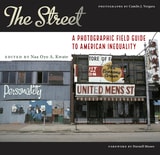
The Street
A Photographic Field Guide to American InequalityNaa Oyo A. Kwate
Rutgers University Press, 2021
Using MacArthur fellow Camilo José Vergara’s intimate street photographs of Camden, New Jersey as reference points, the essays in this collection analyze these images within the context of troubled histories and misguided policies that have exacerbated racial and economic inequalities. Rather than blaming Camden’s residents for the blighted urban landscape, the multidisciplinary array of scholars contributing to this guide reveal the oppressive structures and institutional failures that have led the city to this condition. Tackling topics such as race and law enforcement, gentrification, food deserts, urban aesthetics, credit markets, health care, childcare, and schooling, the contributors challenge conventional thinking about what we should observe when looking at neighborhoods.
The Transformation of the Avant-Garde
The New York Art World, 1940-1985Diana Crane
University of Chicago Press, 1989
Crane's account is built around discussions of seven styles: Abstract Expressionism in the forties; Pop art and Minimalism in the sixties; Figurative painting, Photorealism, and Pattern painting in the early seventies; and Neo-Expressionism in the early eighties. Demonstrating that the New York art world moved toward increasing acceptance of dominant American cultural trends, Crane offers a fascinating look not only at the intricacies of New York's artistic inner circle but also at the sociology of work and professions, the economics of culture markets such as "dealing art," and the sociology of culture.
The Whiskey Rebellion
A Distilled History of an American CrisisBrady J. Crytzer
Westholme Publishing, 2024
As the months passed however the people of Western Pennsylvania grew restless with the inadequacy of the government’s response and they soon turned to more violent means of political expression. Treasury officers across the west were targeted for their involvement in the tax collection, and they were brutally attacked by armed bands of disgruntled locals. They were tarred and feathered, burned with hot irons, and whipped; their homes were ransacked and burned. Extralegal courts were established in a direct challenge to federal authority, and the frontier slowly drifted toward a state of rebellion.
In response President George Washington raised an army of 13,000 men, one of the largest forces he ever commanded, to suppress the rebellion. No major battle ever occurred, but weeks of arrests, illegal detentions, and civil rights violations rocked the west. The event polarized the nation, and highlighted the dramatic differences between Washington’s Federalist perspective and Jefferson’s emerging Democratic-Republican Party. Two centuries later the Whiskey Rebellion stands as the second largest domestic rebellion in American History, only outdone by the Confederate States of America in 1861.
In The Whiskey Rebellion: A Distilled History of an American Crisis, historian Brady J. Crytzer takes the reader on a journey through Western Pennsylvania following the routes of both the rebels and the United States Army to place this important event into context for the reader. Complete with images and maps, the author illuminates what visitors can still see from the period while providing a cogent and engrossing account of this crisis unfolded and how it was resolved.
The Williamsburg Avant-Garde
Experimental Music and Sound on the Brooklyn WaterfrontCisco Bradley
Duke University Press, 2023
The Worlds of William Penn
Murphy, Andrew R
Rutgers University Press, 2019
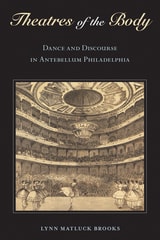
Theatres of the Body
Dance and Discourse in Antebellum PhiladelphiaLynn Matluck Brooks
Temple University Press, 2025
Reviewing print culture in the 1840s, Brooks shows how newspapers, magazines, and popular fiction provided documentation of dancing in Philadelphia as well as the responses of dance commentators, practitioners, and moralists. Theatres of the Body also considers the interplay of science with dance in the 1850s, which impacted both dance practices and reception.
Providing an expansive historiography of these significant contributions to dance in the United States, Brooks deepens our understanding of antebellum culture and history.
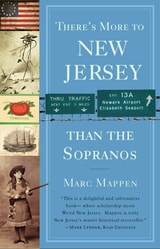
There's More to New Jersey than the Sopranos
Mappen, Marc
Rutgers University Press, 2009
Even fans of that popular show, one that held viewers captive, may be a bit disheartened to discover that the first thing that pops into minds around the world about New Jersey is a dysfunctional crime family, just an exit or two off the infamous N.J. Turnpike. But there's no need to live in fear that the only culture and history that the state is known for is, well, let's say, a bit of bada bing. Actually, the echo of the Big Bangùthe cosmic event that marked the birth of our universe some 13.7 billion years agoùwas first identified by scientists from Bell Labs in Murray Hill, New Jersey.
In this lively romp through history from the primitive past to the present day, Marc Mappen's message resonatesùThere's More to New Jersey than the Sopranos. Real tales, wise tales, tall tales abound throughout the pages of Mappen's collection, filled with zest, humor, scandal, and occasionally tragedy. Annie Oakley. Ulysses S. Grant. Benedict Arnold. Ezra Pound. Shoeless Joe Jackson. These luminaries and many others share a common bond with the state that witnessed prehistoric elephants roaming its pastures, the explosion on the USS Princeton, a Martian invasion, famous firsts like the phonograph, electric light, and movies, and, well, step aside Tony Soprano: mobster Al Capone strolling along the Atlantic City boardwalk.
Providing a lens into American history through lively prose and more than twenty-five illustrations, There's More to New Jersey than the Sopranos is as much fun as a trip to the Jersey Shore and definitely more rewarding than a night home watching televisionù simply stated, this book is one you can't refuse to read.

This Is New Jersey
Cunningham, John T
Rutgers University Press, 1995
Toward a Healthier Garden State
Beyond Cancer Clusters and COVIDMichael R. Greenberg
Rutgers University Press, 2023
This book uses the past fifty years of New Jersey history as a case study to illustrate just how much public policy decisions and other upstream factors can affect the health of a state’s citizens. It reveals how economic and racial disparities in health care were exacerbated by bad policies regarding everything from zoning to education to environmental regulation. The study further chronicles how New Jersey struggled to deal with public health crises like the AIDS epidemic and the crack epidemic. Yet it also explores how the state has developed some of the nation’s most innovative responses to public health challenges, and then provides policy suggestions for how we might build an even healthier New Jersey.
Tripping on the Color Line
Black-White Multiracial Families in a Racially Divided WorldDalmage, Heather M
Rutgers University Press, 2000
At the turn of the twentieth century W.E.B. DuBois predicted that the central problem facing the United States in the new century would be that of the “color line.” Now, at the beginning of a new century, we find many people straddling the color line. These people come from the growing number of multiracial families in America, families who search for places of comfort and familiarity in a racially polarized society whose educational system, places of worship, and neighborhoods continue to suffer a de facto segregation. This group has provoked an ever-widening debate and an upheaval in traditional racial thinking in the United States.
Through in-depth interviews with individuals from black–white multiracial families, and insightful sociological analysis, Heather M. Dalmage examines the challenges faced by people living in such families and explores how their experiences demonstrate the need for rethinking race in America. She examines the lived reality of race in the ways multiracial family members construct and describe their own identities and sense of community and politics. She shows how people whose own very lives complicate the idea of the color line must continually negotiate and contest it in order not to reproduce it. Their lack of language to describe their multiracial existence, along with their experience of coping with racial ambiguity and with institutional demands to conform to a racially divided, racist system is the central theme of Tripping on the Color Line. By connecting the stories to specific issues, such as census categories, transracial adoption, intermarriage, as well as the many social responses to violations of the color line, Dalmage raises the debate to a broad discussion on racial essentialism and social justice.
Exploring the dynamic of race as it pervades the lives of those close to the color line, Dalmage argues that the struggle for racial justice must include an understanding that race is a complex construct that is constantly shifting, and is something we do rather than something we simply are.
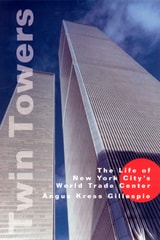
Twin Towers
Gillespie, Angus K
Rutgers University Press, 1999
A readable account of both the history of the construction of the Twin Towers and the life of the people who work there.
The Twin Towers of the World Trade Center are more than office buildings. They are symbols of America, just as the Eiffel Tower and Big Ben represent their countries. Commissioned in 1962 and completed in 1976, these edifices are still the tallest man-made structures in New York City. Indeed, the builders intended the towers to make a statement about the importance of the Port of New York and New Jersey. The complex rises like Emerald City, with fountains and sculpture from what was once a dilapidated area of half-abandoned stores.
Folklorist Angus Gillespie takes us on a tour that goes back in time and continues to the present day. He recounts the political maneuvering necessary to get the State of New Jersey to agree to situate the project at its present location. Deftly presenting portraits of the men responsible for mooring the World Trade Center at its present location, Gillespie provides ample evidence that the World Trade Center backers were “second to none in self promotion.”
Twin Towers also demonstrates how engineers prepared the site and solved complex problems (wind patterns, elevator placement, ground-water complications) in order to erect the towers, each with 110 stories. And he discusses the contrast between the architectural community’s almost universal disdain for the towers’ design and the public’s enthusiastic acceptance of the buildings as a symbol of New York.
There is more to the Twin Towers than its architecture, however. People give this complex life, purpose, vibrancy, Gillespie points out. The World Trade Center houses more than 400 businesses and organizations from some 60 different countries engaged in a broad range of international business activities. Through his numerous first-hand interviews conducted with the people who daily work there, Gillespie vividly portrays the world of bankers, shippers, freight forwarders, and traders. With skill and insight, he captures what happens during a normal 24-hour day in the Twin Towers, starting with early morning food deliveries and ending with the patrols of nighttime security guards.
Twin Towers is both a fitting tribute and careful analysis of one of the most resonating symbols in American culture.