Results by title
337 books match the query 'North America' and 56 start with t
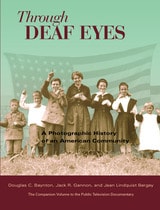
Through Deaf Eyes
A Photographic History of an American CommunityDouglas Baynton
Gallaudet University Press, 2007
In 2001, the Smithsonian Institution presented the landmark photographic exhibition History Through Deaf Eyes, representing nearly 200 years of United States deaf history. Drawing heavily on the extensive archives at Gallaudet University, the curators created an exhibition that drew more than 400,000 people viewed at the Smithsonian and in 12 cities during a five-year national tour. Its popularity prompted the production of a documentary film for national broadcast on the Public Broadcasting System. Now, the photographs, quotes, and stories from this remarkable exhibit and documentary have been assembled in a book of stunning beauty and poignant images, Through Deaf Eyes: A Photographic History of an American Community.
Featuring more than 200 full-color photographs, Through Deaf Eyes depicts the story of Deaf America and also affords readers the opportunity to learn about the nation’s broader history. The values and judgments of society have had an impact on the education, employment, and family life of deaf people, while historical eras often can be illuminated by examination through a Deaf lens. Photographs reveal the character of Deaf people in school settings, the workplace, during wartime, and using their cultural signature, American Sign Language. For both deaf and hearing readers, the Deaf community portrayed in Through Deaf Eyes offers a unique and fascinating perspective on the value of human difference.

Tidal Wetlands Primer
An Introduction to Their Ecology, Natural History, Status, and ConservationRalph W. Tiner
University of Massachusetts Press, 2013
Illustrated with maps, photographs, and diagrams, this volume provides a clear account of the factors that make these habitats unique and vulnerable. It discusses their formation, the conditions affecting their plant and animal life, and the diversity of types across North America, as well as their history, use by wildlife and humans, current status, conservation, restoration, and likely future. The emphasis is on vegetated wetlands—marshes and swamps—with additional discussion of eelgrass meadows, rocky shores, beaches, and tidal flats.
Ralph Tiner's previous field guides to coastal wetland plants in the Northeast and Southeast have been widely praised. Tidal Wetlands Primer joins Tiner's earlier publications as an authoritative and user-friendly guide that should appeal to anyone with a serious interest in coastal habitats.
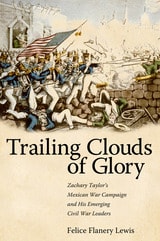
Trailing Clouds of Glory
Zachary Taylor's Mexican War Campaign and His Emerging Civil War LeadersFelice Flanery Lewis
University of Alabama Press, 2010
Trailing Clouds of Glory is the first examination of the roles played in the Mexican War by the large number of men who served with Taylor and who would be prominent in the next war, both as volunteer and regular army officers, and it provides fresh information, even on such subjects as Robert E. Lee and Ulysses S. Grant. Particularly interesting for the student of the Civil War are largely unknown aspects of the Mexican War service of Daniel Harvey Hill, Braxton Bragg, and Thomas W. Sherman.

Transatlantic Scots
Edited by Celeste Ray, foreword by James Hunter
University of Alabama Press, 2005
Transatlantic Scots is a multidisciplinary collection that studies the regional organization and varied expressions of the Scottish Heritage movement in the Canadian Maritimes, the Great Lakes, New England, and the American South. From diverse perspectives, authorities in their fields consider the modeling of a Scottish identity that distances heritage celebrants from prevalent visions of whiteness. Considering both hyphenated Scots who celebrate centuries-old transmission of Scottish traditions and those for whom claiming or re-claiming a Scottish identity is recent and voluntary, this book also examines how diaspora themes and Highland imagery repeatedly surface in regional public celebrations and how traditions are continually reinvented through the accumulation of myths. The underlying theoretical message is that ethnicity and heritage survive because of the flexibility of history and tradition.
This work is a lasting contribution to the study of ethnicity and identity, the renegotiation of history and cultural memory into heritage, and the public performance and creation of tradition.
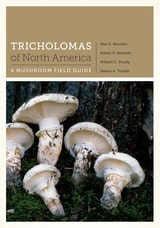
Tricholomas of North America
A Mushroom Field GuideBy Alan E. Bessette, Arleen R. Bessette, William C. Roody, Steven A. Trudell
University of Texas Press, 2013
More than 100 mushrooms in the genus Tricholoma have been reported in North America. Most are relatively large, showy mushrooms that grow on the ground near many species of temperate forest trees, both hardwoods and conifers. They typically fruit from late summer through early winter or even into spring in warmer areas. Some are fine edibles, including the matsutake. Others are inedible or even poisonous.
Filling the gap between technical publications and the limited representation of Tricholomas in general mushroom field guides, this book is the first comprehensive guide to North American Tricholomas. It contains more than 170 of the best documentary photographs available, often with more than one image of a species to illustrate the dramatic variation exhibited by many Tricholomas. The species descriptions provide extensive identification information including scientific and common names, macroscopic and microscopic features, occurrence/habit, edibility, and a comment section that addresses such things as synonomy, comparisons with similar species, varietial differences, explanations of species’ epithets, and other useful or interesting information. In addition, the authors provide a general introduction to Tricholomas that discusses identification features, ecology, simple chemical tests (for identification), and how to use the keys provided in this book.

Two-Spirit People
Native American Gender Identity, Sexuality, and SpiritualityEdited by Sue-Ellen Jacobs; Wesley Thomas; and Sabine Lang
University of Illinois Press, 1997
1997 Winner of the Ruth Benedict Prize for an edited book given by the Society of Lesbian and Gay Anthropologists.