Results by title
310 books match the query 'Performance' and 55 start with t
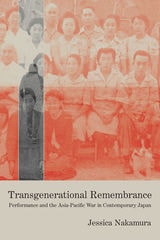
Transgenerational Remembrance
Performance and the Asia-Pacific War in Contemporary JapanJessica Nakamura
Northwestern University Press, 2020
In Transgenerational Remembrance, Jessica Nakamura investigates the role of artistic production in the commemoration and memorialization of the Asia-Pacific War (1931–1945) in Japan since 1989. During this time, survivors of Japanese aggression and imperialism, previously silent about their experiences, have sparked contentious public debates about the form and content of war memories.
The book opens with an analysis of the performance of space at Yasukuni Shinto Shrine, which continues to promote an anachronistic veneration of the war. After identifying the centrality of performance in long-standing dominant narratives, Transgenerational Remembrance offers close readings of artistic performances that tackle subject matter largely obscured before 1989: the kamikaze pilot, Japanese imperialism, comfort women, the Battle of Okinawa, and Japanese American internment. These case studies range from Hirata Oriza’s play series about Japanese colonial settlers in Korea and Shimada Yoshiko’s durational performance about comfort women to Kondo Aisuke’s videos and gallery installations about Japanese American internment.
Working from theoretical frameworks of haunting and ethics, Nakamura develops an analytical lens based on the Noh theater ghost. Noh emphasizes the agency of the ghost and the dialogue between the dead and the living. Integrating her Noh-inflected analysis into ethical and transnational feminist queries, Nakamura shows that performances move remembrance beyond current evidentiary and historiographical debates.
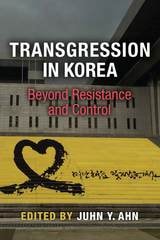
Transgression in Korea
Beyond Resistance and ControlEdited by Juhn Ahn
University of Michigan Press, 2018
Transgression in Korea challenges the popular conceptions of transgression as resistance to authority, the collapse of morality, and an attempt at self- empowerment. Examples of transgression from premodern, modern, and contemporary Korea are examined side by side to underscore the possibility of reading transgression in more ways than one. These examples are taken from a devotional screen from medieval Korea, trickster tales from the late Chosŏn period, reports about flesheating humans, newspaper articles about same- sex relationships from colonial Korea, and films about extramarital affairs, wayward youths, and a vengeful vigilante. Bringing together specialists from various disciplines such as history, art history, anthropology, premodern
literature, religion, and fi lm studies, the context- sensitive readings of transgression provided in this book suggest that transgression and authority can be seen as forming something other than an antagonistic relationship.
Troping the Body
Gender, Etiquette, and PerformanceGwendolyn Audrey Foster
Southern Illinois University Press, 2000
Troping the Body: Gender, Etiquette, and Performance is an interdisciplinary study of etiquette texts, conduct literature, and advice books and films. GwendolynAudrey Foster analyzes the work of such women authors as Emily Post, Christine de Pizan, Hannah Webster Foster, Emily Brontë, Frances E. W. Harper, and Martha Stewart as well as such women filmmakers as Lois Weber and Kasi Lemmons.
“Specifically,” Foster notes, “I was interested in the possibility of locating power and agency in the voices of popular etiquette writers.” Her investigation led her to analyze etiquette and conduct literature from the Middle Ages to the present. Within this wide scope, she redefines the boundaries of conduct literature through a theoretical examination of the gendered body as it is positioned in conduct books, etiquette texts, poetry, fiction, and film.
Drawing on Bakhtin, Gates, Foucault, and the new school of performative feminism to develop an interdisciplinary approach to conduct literature—and literature as conduct—Foster brings a unique perspective to the analysis of ways in which the body has been gendered, raced, and constructed in terms of class and sexuality.
Even though women writers have been actively writing conduct and etiquette texts since the medieval period, few critical examinations of such literature exist in the fields of cultural studies and literary criticism. Thus, Foster’s study fills a gap and does so uniquely in the existing literature. In examining these voices of authority over the body, Foster identifies the dialogic in the texts of this discipline that both supports and disrupts the hegemonic discourse of a gendered social order.
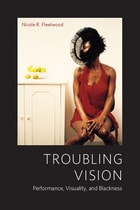
Troubling Vision
Performance, Visuality, and BlacknessNicole R. Fleetwood
University of Chicago Press, 2010
Troubling Vision addresses American culture’s fixation on black visibility, exploring how blackness is persistently seen as a problem in public culture and even in black scholarship that challenges racist discourse. Through trenchant analysis, Nicole R. Fleetwood reorients the problem of black visibility by turning attention to what it means to see blackness and to the performative codes that reinforce, resignify, and disrupt its meaning. Working across visual theory and performance studies, Fleetwood asks, How is the black body visualized as both familiar and disruptive? How might we investigate the black body as a troubling presence to the scopic regimes that define it as such? How is value assessed based on visible blackness?
Fleetwood documents multiple forms of engagement with the visual, even as she meticulously underscores how the terms of engagement change in various performative contexts. Examining a range of practices from the documentary photography of Charles “Teenie” Harris to the “excess flesh” performances of black female artists and pop stars to the media art of Fatimah Tuggar to the iconicity of Michael Jackson, Fleetwood reveals and reconfigures the mechanics, codes, and metaphors of blackness in visual culture.
“Troubling Vision is a path-breaking book that examines the problem of seeing blackness—the simultaneous hyper-visibility and invisibility of African Americans—in US visual culture in the last half century. Weaving together critical modes and methodologies from performance studies, art history, critical race studies, visual culture analysis, and gender theory, Fleetwood expands Du Bois’s idea of double vision into a broad questioning of whether ‘representation itself will resolve the problem of the black body in the field of vision.’ With skilled attention to historical contexts, documentary practices, and media forms, she takes up the works of a broad variety of cultural producers, from photographers and playwrights to musicians and visual artists and examines black spectatorship as well as black spectacle. In chapters on the trope of ‘non-iconicity’ in the photographs of Charles (Teenie) Harris, the ‘visible seams’ in the digital images of the artist Fatimah Tuggar, and a coda on the un-dead Michael Jackson, Fleetwood's close analyses soar. Troubling Vision is a beautifully written, original, and important addition to the field of American Studies.”—Announcement of the American Studies Association for the 2012 Lora Romero First Book Publication Prize

Two Evenings in Saramaka
Richard Price and Sally Price
University of Chicago Press, 1991
In this innovative work, Richard and Sally Price explore the fully adult world of Saramaka "folktale-land," where animals speak, the social order is inverted, customs have been only partially worked out, and the weak and clever triumph over the strong and arrogant. Joining the Saramaka of the Suriname rain forest for two tale-telling wakes, we witness mischievous Anasi the spider matching wits with lecherous devils, the scrawny little kid rescuing his nubile sisters in distress, and the bitchy white princess being tamed by the one-sided boy. As seas dry up, books speak out loud, and elephants assume human form, we are present at a whole sequence of world-shaping happenings such as the invention of sex, the discovery of drums, and the arrival of death among humans.
Set in the more general context of tale telling by the descendants of Africans throughout the Americas and of recent scholarship in performance studies, these Saramaka tales are presented as a dramatic script. With the help of nearly forty photographs, readers become familiar not only with the characters in folktale-land, but also with the men and women who so imaginatively bring them to life. And because music complements narration in Saramaka just as it does elsewhere in Afro-America, more than fifty songs are presented here in musical notation.
Narrative, song, dance, and social interaction merge in these two evenings of multimedia entertainment, bearing witness to an Afro-American cultural tradition that remains alive and vibrant, constantly renewed but always reflecting its links with the past.