Results by title
584 books match the query 'Short Stories (single author)' and 172 start with t
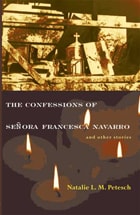
The Confessions of Señora Francesca Navarro and Other Stories
Natalie L. M. Petesch
Ohio University Press, 2005
“Memory, of course, is sometimes like a bucking horse, sometimes a runaway one, and one must control the reins until finally it stops, snorting with exhausted relief,” writes Natalie L. M. Petesch in her haunting new collection, The Confessions of Señora Francesca Navarro and Other Stories.
Petesch immerses readers in the lives of people caught up in the 1936–39 Spanish Civil War, which left more than five hundred thousand dead. She captures the hand-to-mouth existence on the streets of Madrid of two war orphans; an old soldier’s memories of a fallen militiawoman; the dilemma of Franco’s laundress as she seeks to duplicate a stolen religious icon she finds in his home; and a man’s struggle to find his bride among thousands of Republican refugees waiting for ships to evacuate them before Franco’s Fascists arrive to kill them.
In the title novella, an elderly woman describes to her granddaughter how the families of Franco’s officers fighting against Republican militiamen endured hunger, filth, and danger in an underground fortress. Petesch conveys the humiliating details of war through the sensibility of a cultured woman who recalls only too vividly latrines made of laundry tubs, the smell of unwashed humans, and the stench of death.
Brilliant in its imaginative power and heartbreaking in its access to the bottomless well of human tears, The Confessions of Señora Francesca Navarro and Other Stories is the work of a mature artist able to convey a particular world so vividly that we know these people as our own.
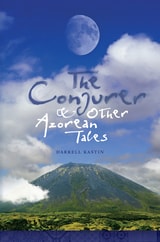
The Conjurer and Other Azorean Tales
Darrell Kastin
Tagus Press, 2012
Born from the fertile volcanic soil and the sea and mists surrounding the Azorean islands, the characters who inhabit these stories blend realism with magic. Like the nine Muses, each island has its own special attributes. Whether searching for love, power, or meaning, these characters are subject to the whims of Fate and Fortune. Here the commonplace present confronts forces both natural and supernatural. In the Azorean microcosm, they come to represent a far larger sphere, embodying the foibles and idiosyncrasies of humanity the world over.

The Country of the Pointed Firs and Other Stories
Sarah Orne Jewett
University of New Hampshire Press, 1997
The Country of the Pointed Firs (1896) is Sarah Orne Jewett's most popular book. In its elegantly constructed sketches, a worldly, anonymous writer spends the summer in a tiny Maine fishing village where she hopes to find peace and solitude. As she gains the acceptance and trust of her hosts, the community's power and complexity are slowly revealed. While its episodes portray the difficulty and loneliness of rural life, they also display its dignity and strength, particularly as expressed in the bonds between women: mothers, daughters, and friends.
This centennial edition contains a facsimile of the original text, thereby restoring the novel to Jewett's own version, which had been considerably altered in other published versions, plus four related stories. Further enhancing the importance of this volume is editor Sarah Way Sherman's introduction, which includes a sketch of Jewett's life and professional development, a commentary on textual accuracy, and a discussion of the book's themes and techniques as well as its historical context.
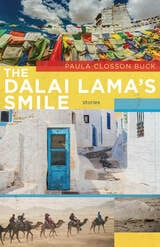
The Dalai Lama's Smile
StoriesPaula Closson Buck
Acre Books, 2025
A grieving American father visits Dharamsala to investigate the murder of the son he’s never understood and finds himself delving into the mystery of the young man’s life. A Turkish-Cypriot teacher is tasked with making an inventory of household goods in an occupied tourist resort the inhabitants have fled. A Greek sculptor whose marriage is failing covers for a student from the US who, instead of learning the art, engages in an affair. A Buddhist nun enlists the help of a Peace Corps worker to kill a suffering dog. A wannabe eco-activist in Kentucky writes confessional letters to Boyan Slat, the young CEO of The Ocean Cleanup. A woman in a Rajasthan tourist caravan bears helpless witness to a dire culture clash.
As Closson Buck’s characters encounter circumstances that challenge their understanding of themselves and the world around them, they are forced to negotiate fallout stemming from religious dogma, environmental crisis, and political violence. Ranging from fabulism to realism, the stories in The Dalai Lama’s Smile invite us to explore the perils and the possibilities that come from engaging the unknown.
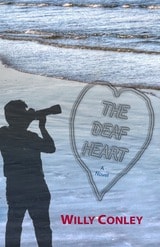
The Deaf Heart
A NovelWilly Conley
Gallaudet University Press, 2015
At the hospital, Max has to contend with hearing doctors, nurses, scientists, and teachers. While struggling through the rigors of his residency and running into bad luck in meeting women, Max discovers an ally in his hearing housemate Zag, a fellow resident who is also vying for certification. Toward the end of his residency, Max meets Maddy, a Deaf woman who helps bring balance to his life.
Author Willy Conley’s stories, some humorous, some poignant, reveal Max’s struggles and triumphs as he attempts to succeed in the hearing world while at the same time navigating the multicultural and linguistic diversity within the Deaf world.
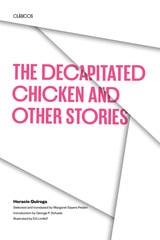
The Decapitated Chicken and Other Stories
By Horacio Quiroga
University of Texas Press, 1976
Tales of horror, madness, and death, tales of fantasy and morality: these are the works of South American master storyteller Horacio Quiroga. Author of some 200 pieces of fiction that have been compared to the works of Poe, Kipling, and Jack London, Quiroga experienced a life that surpassed in morbidity and horror many of the inventions of his fevered mind. As a young man, he suffered his father's accidental death and the suicide of his beloved stepfather. As a teenager, he shot and accidentally killed one of his closest friends. Seemingly cursed in love, he lost his first wife to suicide by poison. In the end, Quiroga himself downed cyanide to end his own life when he learned he was suffering from an incurable cancer.
In life Quiroga was obsessed with death, a legacy of the violence he had experienced. His stories are infused with death, too, but they span a wide range of short fiction genres: jungle tale, Gothic horror story, morality tale, psychological study. Many of his stories are set in the steaming jungle of the Misiones district of northern Argentina, where he spent much of his life, but his tales possess a universality that elevates them far above the work of a regional writer.
The first representative collection of his work in English, The Decapitated Chicken and Other Stories provides a valuable overview of the scope of Quiroga's fiction and the versatility and skill that have made him a classic Latin American writer.
The Deer in the Mirror
Cary Holladay
The Ohio State University Press, 2013
The Deposition
Pete Duval
University of Massachusetts Press, 2021
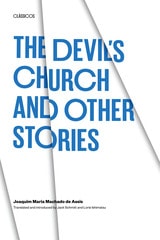
The Devil's Church and Other Stories
By Joaquim Maria Machado de Assis
University of Texas Press, 1977
The modem Brazilian short story begins with the mature work of Joaquim Maria Machado de Assis (1839-1908), acclaimed almost unanimously as Brazil's greatest writer. Collectively, these nineteen stories are representative of Machado's unique style and world view, and this translation doubles the number of his stories previously available in English.
The stories in this volume reflect Machado's post-1880 emphasis on social satire and experimentation in psychological realism. If he had continued to produce the moralistic love stories and parlor intrigues of his earlier fiction, Machado's legacy would have been an entertaining but inconsequent body of work. However, by 1880 he had begun a devastating satirical assault on society through his fiction. In spite of his ruthlessness, Machado does at times reveal an ironic sympathy for his characters. He is not indifferent to human conflict but uses humor and irony to stress the absurdity of these conflicts, acted out against the backdrop of an indifferent universe. Such a spectacle creates a sense of helplessness that can only inspire wistful amusement.
In his technical mastery of the short story. Machado was decades ahead of his contemporaries and can still be considered more modern than most of the modernists themselves. That his stories elicit such strong and diverse reactions today is a tribute to their richness, complexity, and significance.

The Director and Other Stories from Morocco
By Leila Abouzeid
University of Texas Press, 2006
New stories by Leila Abouzeid, the noted Moroccan writer, constitute an event for both East and West, for, as in her critically acclaimed novel, Year of the Elephant, the author cuts across cultural and national boundaries to offer fiction that has meaning for both Western and Middle Eastern readers. The stories in this volume deal with issues both traditional and modern-relations between parents and children, between husbands and wives, and between citizens of newly independent Morocco and its new nationalist representative government.
Independence from French colonial rule has brought many changes to Morocco—some more beneficial than others. Women have entered the work force in great numbers, a development which has brought them new freedoms, but which has also caused problems within the traditional family. Abouzeid shows us how these changes have affected ordinary men and women, how small everyday events loom large in individual lives. To her crisp style, reminiscent of some Western realist novelists, she adds elements of Arabic fiction—the oral story-telling technique, for example.
Abouzeid writes first in Arabic, which she has stated is a political choice. This makes her a literary pioneer in North Africa, where, until recently, most authors wrote in French. Elizabeth Warnock Fernea has written an introduction for this book, setting the stories in historical context.
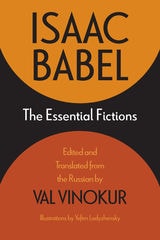
The Essential Fictions
Isaac Babel; Edited and translated from the Russian by Val Vinokur; Illustrations by Yefim Ladyzhensky
Northwestern University Press, 2018
Babel was born in 1894 into multicultural Odessa’s thriving Jewish community. Working as a journalist, he witnessed the Bolshevik Revolution and Civil War, and accompanied the Cossack horsemen of the Red Cavalry during the 1920 Polish-Soviet War, distilling these experiences into his fiction. Vinokur highlights Babel’s “horrified hopefulness” and “doleful and bespectacled Jewish comedy” in the face of the bloody conflicts that plagued his generation.
On the centenary of the revolution that toppled the Romanov tsars, Babel’s fictions continue to absorb and fascinate contemporary readers interested in eastern European and Jewish literature as well as the history and politics of the twentieth century.
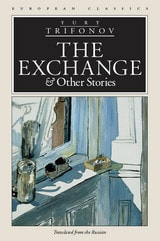
The Exchange and Other Stories
Yuri Trifonov
Northwestern University Press, 2002
Yury Trifonov took a turn toward the controversial, and a leap toward greatness, with the publication of the two novellas included in this collection. "The Exchange" and "The Long Goodbye" depict the complex dilemmas and compromises of Russian life after World War II. These works, along with the short stories "Games at Dusk" and "A Short Stay in the Torture Chamber," detail the moral and spiritual decline in Russia that resulted from the growing distance between the theoretical idealism of the Soviet state and the actual materialism and careerism that increasingly marked society.
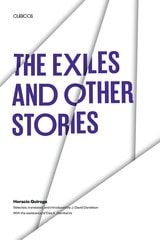
The Exiles and Other Stories
By Horacio Quiroga
University of Texas Press, 1987
Tales of risk and danger, suffering, disease, horror, and death. Tales, also, of courage and dignity, hard work, and human endurance in the face of hostile nature and the frequent brutality of men. And tales flavored with piquant touches of humor and bemused irony.
These are the stories of the Uruguayan writer Horacio Quiroga, here presented in an important compilation of thirteen of his most compelling tales, sensitively selected and translated by J. David Danielson. Author of some two hundred pieces of fiction, often compared to the works of Kipling, Jack London, and Edgar Allan Poe, Quiroga set many of his stories in the territory of Misiones in northeastern Argentina, the subtropical jungle region where he spent much of his life.
Included here are stories from Los desterrados (1926) often said to be his best book, as well as others from Cuentos de amor de locura y de muerte (1917), Anaconda (1921), and El Desierto (1924). The publication of this selection marks the first appearance in English of all but two of the thirteen stories.
Quiroga here presents a wide range of characters: parents and children, servant girls and prostitutes, landowners and lumber barons, foremen and laborers, natives and immigrants, in stories pervaded by a vision of life that is elemental, incisive, and essentially tragic. The Exiles and Other Stories shows the versatility and skill that have made him a classic Spanish American writer. It complements and illumines The Decapitated Chicken and Other Stories, selected and translated by Margaret Sayers Peden, also published by the University of Texas Press.
The Exit Coach
Megan Staffel
Four Way Books, 2016

The Faith Healer of Olive Avenue
StoriesManuel Muñoz and Cherríe Moraga
Northwestern University Press, 2025
From the divergent paths of triplet brothers to a grieving father confronting his mistreatment of his son, these stories interweave a recurring cast of neighborhood characters, many of them in search of escape or release. Lauded for its empathetic portrayals of communities often ignored, The Faith Healer of Olive Avenue won a Whiting Award and an O. Henry Award; it was shortlisted for the Frank O’Connor International Short Story Award as one of the best collections published in English worldwide. A new foreword by author and activist Cherríe Moraga gives testament to Muñoz’s status as “the cartographer of a people.”
The Falling Snow and Other Stories
José Maria Eça de Queirós
Catholic University of America Press, 2022
The Garden in Which I Walk
Karen Brennan
University of Alabama Press, 2004
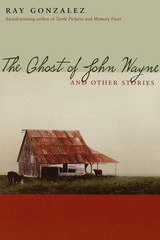
The Ghost of John Wayne
and Other StoriesRay Gonzalez
University of Arizona Press, 2001
The vast Texas borderland is a place divided, a land of legends and lies, sanctification and sinfulness, history and amnesia, haunted by the ghosts of the oppressed and the forgotten, who still stir beneath the parched fields and shimmering blacktops. It is a realm filled with scorpion eaters and mescal drinkers, cowboys and Indians, Anglos and Chicanos, spirit horses and beat-up pickups, brujos and putas, aching passion and seething rage, apparitions of the Virgin and bodies in the Rio Grande.
In his first collection of short fiction, award-winning poet, editor, and anthologist Ray Gonzalez powerfully evokes both the mystery and the reality of the El Paso border country where he came to manhood.
Here, in a riverbed filled with junked cars and old bones, a young boy is given a dark vision of a fiery future. Under the stones of the Alamo, amid the gift shops and tour buses, the wraiths of fallen soldiers cry out to be remembered. By an ancient burial site at the bottom of a hidden canyon, two lovers come face to face with their own dreams and fears.
In these stories, Ray Gonzalez is a literary alchemist, blending contemporary culture with ancient tradition to give a new voice to the peoples of the border.
The Gods in Small Doses
StoriesJosh Bell
University of Massachusetts Press, 2026
The magical and mundane twist together in this collection of surreal stories
In this collection of stories set in an uncanny American suburbia and haunted by a lurking unease, the peculiar feeling of ephemeral youth finds its voice. The stories in The Gods in Small Doses depict childhood through a funhouse mirror, as a time of myth and damage, of tenderness and terror. Anything—except what should happen—can happen next.
A retired witch traps a goat-killing feral child, a girl becomes obsessed with the regenerative properties of her younger brother’s body, Armageddon is fought between the forces of good (those who like to go to bed early) and evil (those who prefer to stay up late), a supernatural orphan insinuates his way into an all-American family, the god Poseidon wrecks a high-school house party, and the women of a fabulated island city all mysteriously disappear overnight. In these fast, comic, and troubling tales, sweetness and violence vie to become synonymous.
This is a universe of both realism and surrealism, of magic and the mundane, where strong but deeply flawed characters fight to exert control over things—time, death, themselves—that can’t be controlled. Dreamlike moments of body horror, catastrophe, and absurdity challenge the reader to embrace the taboo and to expect—always—the unexpected. Bell’s stories offer a twisted, unique, and utterly fascinating take on what it means to “grow up,” and all of the questions that the notion inspires.
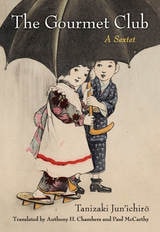
The Gourmet Club
A SextetTanizaki Jun'ichiro; Translated by Anthony H. Chambers and Paul McCarthy
University of Michigan Press, 2017
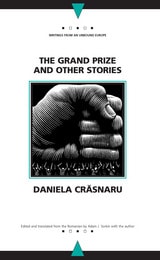
The Grand Prize and Other Stories
Daniela Crasnaru
Northwestern University Press, 2005
Crasnaru portrays the lives of people so used to hardship that it never occurs to them to surrender. An unhappily married woman waits in vain for a call from a potential lover. A foul-mouthed mother of seven accuses a war hero of conning her out of her life savings. A lawyer is lured to a forest by a dead coworker's stories of a beautiful woman. Those with drab lives use fantasy to endure and those who believe themselves happy are forced to face grim realities. Crasnaru mixes elements of the ridiculous, the fanciful, and the grotesque with vivid realism and her remarkable stories, while taking place in a dark era in her nation's history, are about the human as well as the Romanian condition.

The Guy We Didn't Invite to the Orgy
and other storiesDavid Ebenbach
University of Massachusetts Press, 2017
There was one guy we didn't invite to the orgy. We invited everyone else: Solaire because she's crazy and John and Walt because they're both so good-looking and they're dating anyway, and we invited Amy because everybody just loves Amy. We even invited Miranda just because she's the jealous type, and since her sister was in town we threw the door open to her sister, too. But there was this one guy we didn't invite.
The stories in The Guy We Didn't Invite to the Orgy—funny, surprising, compassionate, true to life—are about people navigating the trickiest of landscapes: a world full of other people. Each of these characters wants to know, in her or his own way, given the crazy ups and downs and ins and outs of relationships, is it better to go it alone, or is it better to try to carve out a place for yourself, whatever it takes?
The Handywoman Stories
Lenore McComas Coberly
Ohio University Press, 2002
Sometimes it's possible to pick up a book and hear the words being spoken by the characters as if you were sitting across the table from them. This is the sensation you'll have as you read through The Handywoman Stories by Lenore McComas Coberly.
Whether the story describes the civil defense preparations of a small West Virginia town in World War II, the same town years later dealing with an influx of hippies, or the return of a woman to her roots after decades up north, the voices are convincing and true. “I nearly got kicked in the head by a cow before I learned that if you use your full strength pulling milk, you won’t get much milk,” says one. “To see Zevelda the way she was that Sunday is, well, not something you're very likely to see,” says another.
The Handywoman Stories themselves are driven by characters shaped by the place they have lived most all of their lives. They deal with economic depression, mine and war deaths, the arrogance of community leaders, and what might have been, but was not, a stultifying environment. Their tools are astonishing resourcefulness, steadfast friendship, and always humor.
Lenore McComas Coberly has woven together a bittersweet community of strong Appalachian women and men in this remarkable collection. Moving and joyful, these stories are made from the stuff of life.
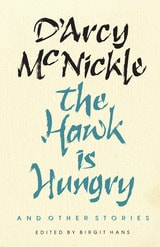
The Hawk Is Hungry and Other Stories
D'Arcy McNickle; Edited by Birgit Hans
University of Arizona Press, 1992
CONTENTS
The Reservation
Hard Riding
En roulant ma boule, roulant...
Meat for God
Snowfall
Train Time
Montana
The Hawk Is Hungry
Debt of Gratitude
Newcomers
Man's Work
Going to School
The City
Manhattan Wedlock
Let the War Be Fought
In the Alien Corn
Six Beautiful in Paris
The Silver Locket

The Healer
Marek Vadas
Seagull Books, 2023
The stories comprising The Healer, Marek Vadas’s first collection, which was originally published in 2006, are steeped in the culture, rituals, and traditions of Africa, blurring the boundaries between dream and reality and peopled with characters whose gender, shape, skin color or even memories may change at a stroke. Nevertheless, Vadas refuses to exoticize this world, and many of the stories, told in pared-down language, blend mythical elements with realistic depictions of harsh living conditions, economic deprivation, and colonial oppression. The narratives unfold from the perspective of their protagonists—children (often orphaned), and men struggling to make ends meet and trying in vain to resist the allure of strong women endowed with magic powers. As a Slovak writer focusing on the African continent, Vadas is a rare voice that helps to build bridges between very different cultures, and now his writing is introduced to the global anglophone readership.
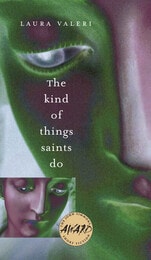
The Kind of Things Saints Do
Laura Valeri
University of Iowa Press, 2002
These stories grow through subtle shifts—the bad becomes not so bad, the worst livable. It is the saintly moments of unexpected understanding that shape the collection: one gigolo's lover picks up another at a bus stop and they agree on his worthlessness, the love-worn man reminds the newly divorced woman of her physical power, the estranged son shelters his father from an unexpected storm.
Valeri navigates the reader through the bones and scars of those who ache with wanting something else and become a little older and a little wiser for it. The Kind of Things Saints Do is a collection of human imperfections and missed connections that grows into a kaleidoscope of aspiration and hope.
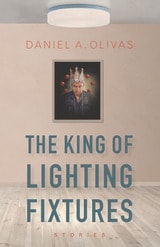
The King of Lighting Fixtures
StoriesDaniel A. Olivas
University of Arizona Press, 2017
The characters here represent all walks of L.A. life—from Satan’s reluctant Craigslist roommate to a young girl coping with trauma at her brother’s wake—and their tales ebb and flow among various styles, including magical realism, social realism, and speculative fiction. Like a jazz album, they glide and bop, tease and illuminate, sadden and hearten as they navigate effortlessly from meta to fabulist, from flash fiction to longer, more complex narratives.
These are literary sketches of a Los Angeles that will surprise, connect, and disrupt readers wherever they may live.
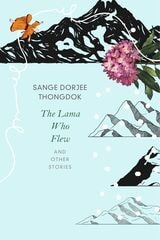
The Lama Who Flew
and Other Tales from My VillageSange Dorjee Thongdok
Seagull Books, 2025
The Flying Lama: Tales Around the Hearth invites readers into the enchanting world of a small Himalayan village in Arunachal Pradesh, where the past lingers in every rustling leaf and the supernatural feels as close as the wind against one’s skin. Drawing from his Shertukpen heritage, Sange Dorjee Thongdok crafts a collection of stories brimming with mysticism and an unshakable connection to the rhythms of nature. A lama who seems to defy gravity, a village where tradition and modernity stand in quiet conversation—each tale is steeped in folklore and rendered with cinematic detail, divulging a world that is both remote and deeply familiar. Blending wry humor with profound emotion, Thongdok’s storytelling captures the essence of a place often overlooked, yet teeming with life.
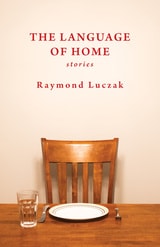
The Language of Home
StoriesRaymond Luczak
Gallaudet University Press, 2025
This short story collection offers readers many possible answers that reveal the Deaf experience in all its complexities. Written over nearly forty years by celebrated Deaf author Raymond Luczak, this collection of thirty stories paints a vivid panorama of Deaf lives. From a young DeafBlind boy feeling lost within his hearing family to a hearing son of Deaf parents caught between their infighting and a hearing mother realizing in the split second of her own death the full impact of the missteps she has taken while raising her Deaf son, Luczak crafts narratives that resonate with authenticity. Other stories feature an ASL interpreter feeling conflicted about a Deaf neighbor and a Deaf woman who becomes blacklisted as a backstabber. These characters often navigate the murky waters of the hearing world, sometimes with a touch of ASL gloss. The Language of Home is an exciting literary contribution that offers rare, nuanced representations of Deaf characters.
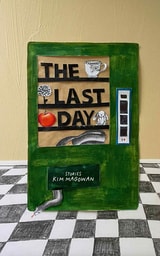
The Last Day
Flash FictionKim Magowan
Moon City Press, 2026
The Last Day explores endings: endings of love affairs, friendships, childhood, and rivalries, endings being occasions for mourning, celebration, and recovery all at the same time. Kim Magowan’s newest collection pinpoints the moments when everything changes, when endings become beginnings and the future starts anew.
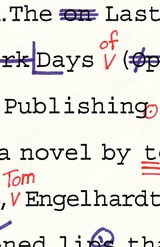
The Last Days of Publishing
A NovelThomas M. Engelhardt
University of Massachusetts Press, 2005
Koppes, who came of age in the sixties, is an editor slowly running off the rails. In the six episodes of The Last Days of Publishing, he refights the Vietnam War in a Chinese restaurant, discovers that the paleontological is political in a natural history museum, mixes it up with a flamboyant literary agent who went underground decades earlier, and encounters a hippie cultural oligarch on the forty-fifth floor of Multimedia's transnational entertainment headquarters.
Tom Engelhardt, himself a publishing veteran, has produced a tumultuous vision of the new world in which the word finds itself hustling for a living. By turns hilarious, sardonic, and poignant, his novel deftly captures the ways in which publishing, which has long put our world between covers but has seldom been memorialized in fiction, is being transformed.
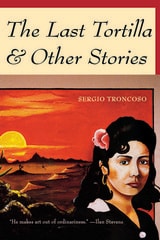
The Last Tortilla
and Other StoriesSergio Troncoso
University of Arizona Press, 1999
Writing in a straightforward, light-handed style reminiscent of Grace Paley and Raymond Carver, he spins charming tales that reflect his experiences in two worlds. Troncoso's El Paso is a normal town where common people who happen to be Mexican eat, sleep, fall in love, and undergo epiphanies just like everyone else. His tales are coming-of-age stories from the Mexican-American border, stories of the working class, stories of those coping with the trials of growing old in a rapidly changing society. He also explores New York with vignettes of life in the big city, capturing its loneliness and danger.
Beginning with Troncoso's widely acclaimed story "Angie Luna," the tale of a feverish love affair in which a young man rediscovers his Mexican heritage and learns how much love can hurt, these stories delve into the many dimensions of the human condition. We watch boys playing a game that begins innocently but takes a dangerous turn. We see an old Anglo woman befriending her Mexican gardener because both are lonely. We witness a man terrorized in his New York apartment, taking solace in memories of lost love. Two new stories will be welcomed by Troncoso's readers. "My Life in the City" relates a transplanted Texan's yearning for companionship in New York, while "The Last Tortilla" returns to the Southwest to explore family strains after a mother's death—and the secret behind that death. Each reflects an insight about the human heart that has already established the author's work in literary circles.
Troncoso sets aside the polemics about social discomfort sometimes found in contemporary Chicano writing and focuses instead on the moral and intellectual lives of his characters. The twelve stories gathered here form a richly textured tapestry that adds to our understanding of what it is to be human.
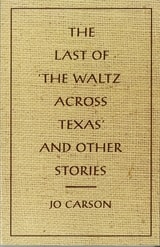
The Last of 'The Waltz Across Texas' and Other Stories
Jo Carson
Ohio University Press, 1993
Published in 1993 by Gnomon Press
The Last of 'The Waltz Across Texas' and Other Stories marks Jo Carson’s debut fiction collection. Across its pages, her keen imagination and sharp humor bring to life well-drawn characters navigating family, friends, and community.
The Law of Miracles
And Other StoriesGregory Blake Smith
University of Massachusetts Press, 2011
The Lightning Jar
Christian Felt
University of Iowa Press, 2018
The Lightning Jar is about lonely children. It may be more about lonely children than any other book. These children are good at making imaginary friends but have trouble keeping them. For instance, there’s the Morra, who plunges the world into eternal winter. But she also teaches Mons the meaning of love and helps him burn down his house after some Gypsies turn it into a middle school.
Then there’s the Gorbel. Amanda invented it to scare the Guest, but it ended up liking him best. A bit like a cat but more like a spider, it turned out a lot cuter than she’d intended.
And the Wisps—they’re pretty unhappy about being dead. Karl accidentally turned his smallest cousin into a Wisp. They were trying to catch some lightning in a jar, but they caught the smallest cousin’s ghost instead. Karl had to drown it for its own good. Something similar happened with his grandma Astrid and a rock named Melisande.
But the loneliest character is probably Christian. He insists on being from Jämtland, where Karl and Amanda live. When his cousin Eskild got married, Christian rewrote their past so it’s like The Little Mermaid, except Eskild drowns and Christian doesn’t earn a soul.
In the spirit of Tove Jansson, William Blake, and Calvin & Hobbes, The Lightning Jar contains a volatile mix of innocence and experience, faith and doubt, nostalgia and a sense of all there is to gain by accepting reality on fresh terms.
The Little Lights of Town
StoriesJonathan Johnson
Carnegie Mellon University Press, 2025
In The Little Lights of Town, acclaimed poet and memoirist Jonathan Johnson turns to fiction, bringing to life the rugged landscapes and tightly knit communities of Michigan’s Upper Peninsula. Against the backdrop of Lake Superior’s cold, untamed shores, his characters navigate love, loss, and the relentless pull of home.
From those who choose to stay despite the ever-present shadow of isolation to those searching for connection in a land where nature looms larger than life, these stories illuminate the quiet urgencies of human existence. With prose as lyrical as it is unflinching, Johnson visualizes a place where the past lingers in the streets, and where even in the darkest winters, little lights continue to shine.

The Long March of Basic Trust
Chronicle of Emotions; Notebook 2Alexander Kluge
Seagull Books, 2025
A kaleidoscopic journey through history and the vast landscape of human emotion, The Long March of Basic Trust presents Alexander Kluge at his most expansive and incisive. Moving seamlessly across time and space, Kluge weaves a tapestry of lived and imagined experience, interrogating the forces that shape our resilience in the face of catastrophe. From the wreckage of World War II to the deep time of geology, his singular prose dissolves boundaries between the real and the speculative.
Blurring the lines between fiction and philosophy, Kluge builds an intricate world enriched by hybrid images and his latest experiment: the “virtual camera,” a cinematic eye that captures the interplay of memory and invention. Now in his tenth decade, Kluge continues his lifelong pursuit of uncovering the patterns that connect us and the basic trust that allows us to go on. Both intellectually provocative and deeply humane, this latest installment in his Chronicle of Emotions is a testament to his unmatched ability to fuse thought and feeling into an electrifying literary form.
The Long Swim
StoriesTerese Svoboda
University of Massachusetts Press, 2024
A runaway circus lion haunts a small town where two lovers risk more than their respective marriages. A junket to Cuba and an ambassador’s dalliance with a niece hide dark secrets and political revolution. “I’ve always had a knife,” says the unstable stepson to his parents. Inventive, dark, and absurd, the stories in The Long Swim capture Terese Svoboda’s clear-eyed, wry angle on the world: a place of violence and uncertainty but also wild beauty, adventure, and love both lasting and ephemeral. Her characters strive for escape—through romance, travel, or more self-destructive pursuits—and collide with the constraints of family and home, their longing for freedom and autonomy often at odds with the desire for safety and harmony.
Cynical, irreverent, and formally daring, Svoboda’s stories in The Long Swim are a deft exploration of womanhood and humanity. Waves of provocation and wonder toss the reader and leave them wanting more.
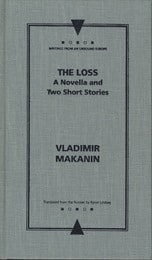
The Loss
A Novella and Two Short StoriesVladimir Makanin
Northwestern University Press, 1998
In his celebrated short story "The Prisoner of the Caucasus," two Russian soldiers take a Chechen prisoner during the war, and as events unfold, Makanin reveals the casual brutality of the war but also the secret truths of the character's lives. In the novella The Loss, Pekalov, a drunkard and dreamer obsessed with the idea of building a tunnel under the Ural River, disappears in a ditch while working and is made a saint by the people of his village. "Klyucharyov and Alimushkin" tells the story of what happens when one man becomes remarkably lucky while the other loses all his luck.
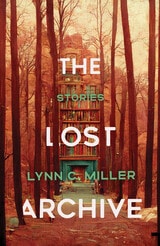
The Lost Archive
Lynn C. Miller
University of Wisconsin Press, 2023
Stretching the definition of “archive,” Miller builds interconnected webs that surprise, much like the seemingly random papers collected in a box of materials. Fraught relationships, mistaken identities, mysterious disappearances, and the search for love play out in these stories. Friendships are celebrated, ex-husbands cross the line, and Gertrude Stein attempts to write her memoir.
An unusual collection that proves greater than the sum of its parts, The Lost Archive will haunt readers with the intensity of its vision.

The Lovers Set Down Their Spoons
Heather A. Slomski
University of Iowa Press, 2014
In the fifteen stories that comprise this collection—some short as breaths, two of them novelettes—Slomski writes with a keen eye about relationships. About the desires that pull us together and the betrayals that push us apart. About jealousy, obsession, loneliness and regret—the byproducts of loving someone that keep us awake at night.
The characters in these stories share meals, drink wine, buy furniture and art. They live domestic lives, so often wanting to love someone yet ending up alone. In one story, a woman’s fiancé leaves her when she goes to post some mail. In another story, a man can’t move past an affair his wife almost had. Another story describes a series of drawings to detail a couple’s end. But while loss and heartache pervade these stories, there is also occasional hope. For, as the title story shows us, sometimes a breakup isn’t an end at all, but the beginning of your life.
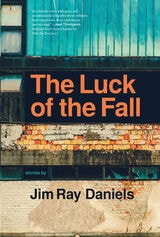
The Luck of the Fall
Jim Ray Daniels
Michigan State University Press, 2023
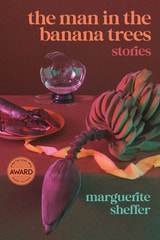
The Man in the Banana Trees
Marguerite Sheffer
University of Iowa Press, 2024
A Debutiful “Most Anticipated Debut Book of 2024”
One of Electric Literature’s Most Exciting Debut Short Story Collection of 2024
Named a Best Book of 2024 by Debutiful and Electric Literature
The stories in The Man in the Banana Trees take place in the past, present, and future—from the American Gulf South to the orbit around Jupiter. We meet teachers and students, ghosts and aliens. An ice cream consultant in the year 2036 predicts a devastating flavor trend and a disgruntled New England waiter investigates a mysterious tanker crash. Although wildly varied in setting, length, and genre, a thread of the fantastic unites these stories, as characters struggle to understand that thing lurking at the edge of their perception: something sinister, or maybe—miraculous.
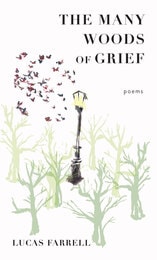
The Many Woods of Grief
PoemsLucas Farrell
University of Massachusetts Press, 2011
In this striking debut volume, Lucas Farrell offers a lyrical and illuminating field guide to the flora and fauna of “worlds just out of reach.” With the precision and detail of an Audubon sketch, he turns his naturalist's eye to the vast landscape of human emotion—all the while affirming “how real this world we live in / must be to live in.”
Journeying ever outward, from the achingly ordinary to the mysterious “land where there is no land,” the narrator of this collection, equal parts pastoralist and surrealist, explores the vivid in-betweens—between love and loss, hilarity and despair, wild and domestic, real and imagined. Hungry, expressive, and original, these poems glean light from even the darkest of fields.
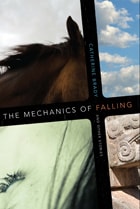
The Mechanics of Falling and Other Stories
Catherine Brady
University of Nevada Press, 2012
The stories in this collection explore those moments when the seemingly fixed coordinates of our lives abruptly give way—when mother love fractures, a faithful husband abandons his family, a conscientious middle-class life implodes, or loyalty demands an excruciating sacrifice. The characters share a fundamental predicament, the struggle to name and embrace some faith that can break their fall. In equal measure, they hunger for and resist this elusive possibility and what it demands of them.The Mechanics of Falling and Other Stories deals with a range of circumstances and relationships, and with characters who must decide what they are willing to risk for the sake of transformation, or for the right to refuse it. The stories trace the effort to traverse the boundaries between one state and another—between conviction and self-doubt, recklessness and despair, resignation and rebellion. And each story propels the reader to imagine what will happen next, to register the unfinished and always precarious quality of every life.
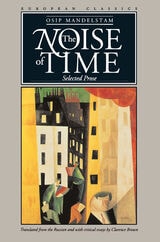
The Noise of Time
Selected ProseOsip Mandelstam
Northwestern University Press, 2002
This volume includes Mandelstam's "The Noise of Time," a series of autobiographical sketches; "The Egyptian Stamp," a novella; "Fourth Prose;" and the famous travel memoirs "Theodosia" and "Journey to Armenia."

The Northern Stories of Charles W. Chesnutt
Charles W. Chesnutt
Ohio University Press, 2004
The first African American fiction writer to earn a national reputation, Charles W. Chesnutt remains best known for his depictions of Southern life before and after the Civil War. But he also produced a large body of what might best be called his “Northern” writings, and those works, taken together, describe the intriguing ways in which America was reshaping itself at the turn of the last century.
The Northern Stories of Charles W. Chesnutt collects for the first time eighteen Chesnutt stories—several of them first appearing in Northern magazines or newspapers—that portray life in the North in the period between the Civil War and World War I. Living in Ohio from 1883 until his death in 1932, Chesnutt witnessed and wrote about the social, cultural, and racial upheavals taking place in the North during a crucial period of American history. His Northern stories thus reflect his vision of a newly reconstituted America, one recommitted to the ideals of freedom and economic opportunity inherent in our national heritage.
The stories, compiled and edited with critical introductions to each by Professor Charles Duncan, offer a new Chesnutt, one fascinated by the evolution of America into an urban, multiracial, economically driven democracy.
The Northern Stories of Charles W. Chesnutt presents richly imagined characters, both black and white, working to make better lives for themselves in the turbulent and stimulating universe of the turn-of-the-century North. Indeed, Chesnutt stands virtually alone as the first African American chronicler of Northern culture, anticipating such figures as James Weldon Johnson, Langston Hughes, Ralph Ellison, James Baldwin, and Toni Morrison. This critical edition of The Northern Stories of Charles W. Chesnutt is a significant addition to the body of African American literature.
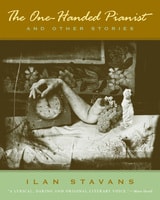
The One-Handed Pianist and Other Stories
Ilan Stavans
Northwestern University Press, 2007
The One-Handed Pianist was published to acclaim in the early 1990’s, with the two-part Spanish edition winning the Latino Literature Prize in 1989 and the Gamma Literature Prize in 1992. Its tales look at what it means to be Jewish in the Hispanic world—a world in which spirituality is often exercised outside the realm of orthodoxy.
Stavans constructs fables that raise questions about ethnicity and community; even Stavans’ person raises questions about ethnicity and community: what does it mean that a Jew of Eastern European lineage can call himself Latino and speak for that group?
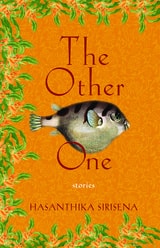
The Other One
StoriesHasanthika Sirisena
University of Massachusetts Press, 2016
Set in Sri Lanka and America, the ten short stories in this debut collection feature characters struggling to contend with the brutality of a decades-long civil war while also seeking security, love, and hope. The characters are students, accountants, soldiers, servants. They are immigrants and strivers. They are each forced to make sometimes comic, sometimes tragic, choices. What they share, despite what they've endured, is the sustaining power of human connection.
An excerpt from the book:
“All I want to know is when you are coming? When are you bringing my sons, my family?”
She watched as a gecko, tinier than normal, skittered across the far wall. It disappeared into a small crack. The room was very hot, and she hadn't turned on the ceiling fan so that the family could save a little money. She took a handkerchief from her nightstand and wiped the beads of sweat from her forehead and the back of her neck.
“I can't leave malli alone here. He's making progress but—”
“It will be for two years only. Then you can sponsor him.”
“The lawyer says it's not so easy.”
“He's a grown man. Let the government take him. The government did this to malli. Let the government pay the price for his care.”
Even though there was no chance that her brother Ranjith could hear her, Anoja dropped her voice. “Malli is all alone here. He has nobody but aiya and me.”
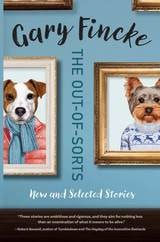
The Out-of-Sorts
New and Selected StoriesGary Fincke
West Virginia University Press, 2017
These stories are often set against large, significant events like the Cold War, Vietnam, and the Kent State shootings, but are always uniquely local. A mother fends off the police by brandishing copperhead snakes. A woman cares for the dog of an alleged double murderer. A husband who has lost his job works at trying to save his wife from a debilitating phobia.
This extensive collection by Gary Fincke, an accomplished poet and writer of fiction, gives rise to ordinary people living lives made fascinating by attention to the particulars of voice, place, and character. With precise language, surprising imagery, and sharp, evocative dialogue, these stories deepen beyond the oddities of their characters, who are scarred and defeated by circumstance and choice, but also attain moments of grace, compassion, and generosity of the spirit.