Results by title
3027 books match the query 'Sociology' and 538 start with t
The Art of Moral Protest
Culture, Biography, and Creativity in Social MovementsJames M. Jasper
University of Chicago Press, 1997
"A provocative perspective on the cultural implications of political and social protest."—Library Journal
The Art of the Network
Strategic Interaction and Patronage in Renaissance FlorencePaul D. McLean
Duke University Press, 2007
McLean scrutinized thousands of letters to and from Renaissance Florentines. He describes the social protocols the letters reveal, paying particular attention to the means by which Florentines crafted credible presentations of themselves. The letters, McLean contends, testify to the development not only of new forms of self-presentation but also of a new kind of self to be presented: an emergent, “modern” conception of self as an autonomous agent. They also bring to the fore the importance that their writers attached to concepts of honor, and the ways that they perceived themselves in relation to the Florentine state.

The Asian American Achievement Paradox
JENIFFER LEE is professor of sociology at the University of California, Irvine. MIN ZHOU is professor of sociology at Nanyang Technological University, Singapore, and the University of California, Los Angeles.
Russell Sage Foundation, 2015

The Babushka Phenomenon
Older Women and the Political Sociology of Ageing in RussiaAnna Shadrina
University College London, 2025
The word “babushka” literally means “grandmother,” but it has come to represent much more since the Soviet era, not least the family caregiver. In her new study, Anna Shadrina explores the marginalization of older women in post-Soviet Russia, shedding light on the complex image of the babushka as both the cornerstone of the family unit and a passive recipient of social benefits. The author argues that this image has been shaped in no small part by welfare cutbacks that shifted the responsibility of family care from the state to individual women, as well as the increasing frustration of working-age people with the post-socialist economic system. Ultimately, she shows that despite being ostracized from society for defying age- and gender-specific social expectations, older women occupy a crucial position as active contributors to the economy.

The Bachelors' Ball
The Crisis of Peasant Society in BéarnPierre Bourdieu
University of Chicago Press, 2008
The Battle over Marriage
Gay Rights Activism through the MediaLeigh Moscowitz
University of Illinois Press, 2013
The Battles of Germantown
Effective Public History in AmericaDavid W. Young
Temple University Press, 2019
2020 Philip S. Klein Book Prize Winner, Pennsylvania Historical Association
Known as America’s most historic neighborhood, the Germantown section of Philadelphia (established in 1683) has distinguished itself by using public history initiatives to forge community. Progressive programs about ethnic history, postwar urban planning, and civil rights have helped make historic preservation and public history meaningful. The Battles of Germantown considers what these efforts can tell us about public history’s practice and purpose in the United States.
Author David Young, a neighborhood resident who worked at Germantown historic sites for decades, uses his practitioner’s perspective to give examples of what he calls “effective public history.” The Battles of Germantown shows how the region celebrated “Negro Achievement Week” in 1928 and, for example, how social history research proved that the neighborhood’s Johnson House was a station on the Underground Railroad. These encounters have useful implications for addressing questions of race, history, and memory, as well as issues of urban planning and economic revitalization.
Germantown’s historic sites use public history and provide leadership to motivate residents in an area challenged by job loss, population change, and institutional inertia. The Battles of Germantown illustrates how understanding and engaging with the past can benefit communities today.

The Best-Kept Secret
Women Corporate Lobbyists, Policy, and Power in the United StatesBenoit, Denise
Rutgers University Press, 2007
From lobbyists such as Jack Abramoff, to corporate executives, like Enron's Kenneth Lay and Jeffrey Skilling, recent scandals dealing with politics and government have focused only on men at the top. But do these high-profile men accurately represent the gendered make up of corporate-government in the United States?
In this first in-depth look at the changing face of corporate lobbying, Denise Benoit shows how women who have historically worked mostly in policy areas relating to "women's issues" such as welfare, family, and health have become increasingly influential as corporate lobbyists, specializing in what used to be considered "masculine" policy, such as taxes and defense. Benoit finds that this new crop of female lobbyists mobilize both masculinity and femininity in ways that create and maintain trusting, open, and strong relations with those in government, and at the same time help corporations to save and earn billions of dollars.
While the media focuses on the dubious behaviors of men at the top of business and government, this book shows that female corporate lobbyists are indeed one of the best kept secrets in Washington.

The Biological Foundations of Organizational Behavior
Edited by Stephen M. Colarelli and Richard D. Arvey
University of Chicago Press, 2014
The Biological Foundations of Organizational Behavior brings together contributors who shed light on the potential that behavioral genetics and evolutionary psychology offer for studies of organizational behavior. In addition to examining the extant literature integrating these disciplines and organizational behavior, the book reconsiders a wide range of topics through the lens of biology within organizational behavior, including decision making, leadership and hierarchy, goals and collective action, and individual difference. Contributions also explore new areas of potential application and provide a critical assessment of the challenges that lie ahead. With accessible insights for scholars and practitioners, The Biological Foundations of Organizational Behavior marks a promising step forward in what is increasingly perceived to be an underdeveloped area of organizational behavior.
The Black Ceiling
How Race Still Matters in the Elite WorkplaceKevin Woodson
University of Chicago Press, 2023
America’s elite law firms, investment banks, and management consulting firms are known for grueling hours, low odds of promotion, and personnel practices that push out any employees who don’t advance. While most people who begin their careers in these institutions leave within several years, work there is especially difficult for Black professionals, who exit more quickly and receive far fewer promotions than their White counterparts, hitting a “Black ceiling.”
Sociologist and law professor Kevin Woodson knows firsthand what life at a top law firm feels like as a Black man. Examining the experiences of more than one hundred Black professionals at prestigious firms, Woodson discovers that their biggest obstacle in the workplace isn’t explicit bias but racial discomfort, or the unease Black employees feel in workplaces that are steeped in Whiteness. He identifies two types of racial discomfort: social alienation, the isolation stemming from the cultural exclusion Black professionals experience in White spaces, and stigma anxiety, the trepidation they feel over the risk of discriminatory treatment. While racial discomfort is caused by America’s segregated social structures, it can exist even in the absence of racial discrimination, which highlights the inadequacy of the unconscious bias training now prevalent in corporate workplaces. Firms must do more than prevent discrimination, Woodson explains, outlining the steps that firms and Black professionals can take to ease racial discomfort.
Offering a new perspective on a pressing social issue, The Black Ceiling is a vital resource for leaders at preeminent firms, Black professionals and students, managers within mostly White organizations, and anyone committed to cultivating diverse workplaces.
The Black Ceiling
How Race Still Matters in the Elite WorkplaceKevin Woodson
University of Chicago Press, 2023
America’s elite law firms, investment banks, and management consulting firms are known for grueling hours, low odds of promotion, and personnel practices that push out any employees who don’t advance. While most people who begin their careers in these institutions leave within several years, work there is especially difficult for Black professionals, who exit more quickly and receive far fewer promotions than their White counterparts, hitting a “Black ceiling.”
Sociologist and law professor Kevin Woodson knows firsthand what life at a top law firm feels like as a Black man. Examining the experiences of more than one hundred Black professionals at prestigious firms, Woodson discovers that their biggest obstacle in the workplace isn’t explicit bias but racial discomfort, or the unease Black employees feel in workplaces that are steeped in Whiteness. He identifies two types of racial discomfort: social alienation, the isolation stemming from the cultural exclusion Black professionals experience in White spaces, and stigma anxiety, the trepidation they feel over the risk of discriminatory treatment. While racial discomfort is caused by America’s segregated social structures, it can exist even in the absence of racial discrimination, which highlights the inadequacy of the unconscious bias training now prevalent in corporate workplaces. Firms must do more than prevent discrimination, Woodson explains, outlining the steps that firms and Black professionals can take to ease racial discomfort.
Offering a new perspective on a pressing social issue, The Black Ceiling is a vital resource for leaders at preeminent firms, Black professionals and students, managers within mostly White organizations, and anyone committed to cultivating diverse workplaces.
The Black Extended Family
Elmer P. Martin and Joanne Mitchell Martin
University of Chicago Press, 1980
Through their eight-year study of some thirty extended families, the Martins find that economic pressures, including federal tax and welfare laws, have begun to make the extended family's flexibility into a liability that threatens its future.

The Black Mecca Blueprint
Race, Class, and Place in Atlanta, GeorgiaJonathan P. Grant
Temple University Press, 2027
Black people have been on a continual search for freedom. Since their arrival in the West as exploited sources of labor, through the great migrations out of and back to the U.S. South, to repatriation efforts to Africa and throughout the Diaspora, they have been longing for place and to find or create a Mecca.
The Black Mecca Blueprint examines the current Black Mecca, Atlanta, Georgia. Jonathan Grant explores the dynamism of Black life in a “Black city,” homing in on race, class, and place and all their inherent complexities. He analyzes the ways place and city spaces are negotiated through power and class struggles and how various spaces, such as the Atlanta University Center and its reputation as a beacon, are recreated.
Drawing on in-depth interviews, hip hop music, cultural podcasts, stand-up comedy, archival research, media, autoethnographic data, and historiography, The Black Mecca Blueprint captures the beauty and burden of Atlanta while creating a blueprint that can be used to help devise more democratic cities across the U.S. and around the world.
The Body in Late-Capitalist USA
Donald M. Lowe
Duke University Press, 1995
Moving beyond studies of representations and images of the body, Lowe focuses on the intersection of body practices, language, and the Social to describe concretely the reality of a lived body. His strongly synthetic work brings together Marxist critique, semiotics, Foucaultian discourse analysis, and systems and communications theory to examine those practices that construct the body under late capitalism: habits of work and consumption, the ways we give birth and raise children, socialization, mental and physical healing, reconstructions and contestations of sexuality and gender. Lowe draws upon a wide range of sources, including government and labor studies and statistics, diagnostic and statistical manuals on mental illness, computer manuals, self-help books, and guides to work-related stress disorders, to illustrate the transformation of the body into a nexus of exchange value in postmodern society.
The Borders of America
Migration, Control, and Resistance Across Latin America and the CaribbeanSoledad Álvarez Velasco, Nicholas De Genova, Gustavo Dias, and Eduardo Domenech, editors
Duke University Press, 2026
Contributors. Soledad Álvarez Velasco, Tanya Basok, Janneth Clavijo, Nicholas De Genova, Gustavo Dias, Eduardo Domenech, Roberto Dufraix-Tapia, Jonathan Echeverri Zuluaga, Valentina Glockner Fagetti, Luin Goldring, Patricia Landolt, Carolina Moulin, Margarita Luz Núñez Chaim, Juan Ordóñez, Daniel Quinteros, Romina Ramos, Martha Rojas-Wiesner, Fabio Santos, Amarela Varela-Huerta, and Laura Velasco Ortiz
The Borders of Justice
Etienne Balibar
Temple University Press, 2013
International in scope and featuring a diverse group of contributors, The Borders of Justice investigates the complexities of transitional justice that emerge from its “social embeddedness.” This original and provocative collection of essays, which stem from a collective research program on social justice undertaken by the Calcutta Research Group, confronts the concept and practices of justice. The editors and contributors question the relationship between geography, methodology, and justice—how and why justice is meted out differently in different places.
Expanding on Michael Walzer's idea of the “spheres of justice,” the contributors argue that justice is burdened with our notions of social realities and expectations, in addition to the influence of money, law, and government. Chapters provide close readings of Pascal, Plato and Marx, theories on global justice, the relationship between liberalism and multiculturalism, struggles of social injustice, and how and where we draw the borders of justice.
The Boston Renaissance
Race, Space, and Economic Change in an American MetropolisBarry Bluestone
Russell Sage Foundation, 2000
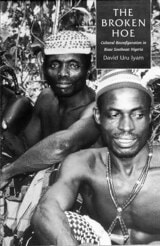
The Broken Hoe
Cultural Reconfiguration in Biase Southeast NigeriaDavid Uru Iyam
University of Chicago Press, 1995
The Biase today face social and economic pressures that seriously strain their ability to cope with the realities of modern Nigeria. Iyam, an anthropologist and a Biase, examines the relationship between culture and development as played out in projects in local communities.
Western technologies and beliefs alone cannot ensure economic growth and modernization, Iyam shows, and should not necessarily be imposed on poor rural groups who may not be prepared to incorporate them; neither, however, is it possible to recover indigenous coping strategies given the complexities of the postcolonial world. A successful development strategy, Iyam argues, needs to strengthen local managerial capacity, and he offers suggestions as to how this can be done in a range of cultural and social settings.
The Browning of the New South
Jennifer A. Jones
University of Chicago Press, 2019
The Business of Racism
Labor and Environment in Brazil's Racial CapitalismIan Carrillo
Duke University Press, 2026

The Cape Herders
A History of the Khoikhoi of Southern AfricaEmile Boonzaier
Ohio University Press, 1996
The Cape Herders provides the first comprehensive picture of the Khoikhoi people. In doing so, it fills a long-standing gap in the resources of Southern African studies, and at a time when interest in the indigenous populations of South Africa is growing daily.
Combining the insights of archaeology, history, and anthropology, this account ranges from the origins of the Khoikhoi in Southern Africa to the contemporary politics of the Namaqualand “reserves.” Its authors have produced a scholarly, yet accessible, book, lavishly illustrated and supplemented with short biographies and fascinating detail.
The Cape Herders explodes a variety of South African myths—not least those surrounding the negative stereotype of the “Hottentot” and those which contribute to the idea that the Khoikhoi are by now “a vanished people.” The story it tells instead is one of enduring interest—the history of a herding people in Southern Africa, its society, economy, and culture, its relationship to the indigenous hunters of the Cape, its encounters with European expeditions, and its subsequent exposure to the first effects of colonization. It is a story of change and adaptation, and it confirms the Khoikhoi’s central role in the making of today’s South Africa.
The Capitals of Capital
The Rise and Fall of Trading Floors, 1960–2001Aaron Shkuda
University of Chicago Press, 0
How the transition from physical trading floors to automated ones changed central business districts and urban policy.
Wall Street is defined by the New York Stock Exchange’s headquarters, while the Chicago Board of Trade’s iconic building anchors LaSalle Street in the city’s Loop. These buildings have not moved in a century, but their trading floors have experienced dramatic changes over the past sixty years. While thousands of commuters still work in and around Wall Street, most stocks are traded via computer. Not even the NYSE’s servers are onsite.
The Capitals of Capital charts the rise and dematerialization of stock-exchange trading floors in New York and Chicago, demonstrating how the finance industry has long been entwined with urban planning and development. Aaron Shkuda shows in detail how the industry came to dominate cities both economically and spatially, tracing the demands of firms like Chase Manhattan Bank and the Chicago Mercantile Exchange for larger central facilities, better tax breaks, and other accommodations—until technological developments shifted their priorities from spaces for people to capacity for machines. Shkuda’s history of trading floors reveals financial institutions as change agents in urbanism; through their evolving construction proposals, they forced elected officials, urban planners, architects, and voters to consider the value of trading floors, their significance to a city and its people, and what kind of resources they deserved. Today, as Wall Street towers are converted to apartments and server farms, The Capitals of Capital sheds light on the ever-shifting relationship between the finance industry and urban spaces.
The Causes of Human Behavior
Implications for Theory and Method in the Social SciencesLawrence B. Mohr
University of Michigan Press, 1996

The Challenger Launch Decision
Risky Technology, Culture, and Deviance at NASADiane Vaughan
University of Chicago Press, 1995
Journalists and investigators have historically cited production problems and managerial wrong-doing as the reasons behind the disaster. The Presidential Commission uncovered a flawed decision-making process at the space agency as well, citing a well-documented history of problems with the O-ring and a dramatic last-minute protest by engineers over the Solid Rocket Boosters as evidence of managerial neglect.
Why did NASA managers, who not only had all the information prior to the launch but also were warned against it, decide to proceed? In retelling how the decision unfolded through the eyes of the managers and the engineers, Vaughan uncovers an incremental descent into poor judgment, supported by a culture of high-risk technology. She reveals how and why NASA insiders, when repeatedly faced with evidence that something was wrong, normalized the deviance so that it became acceptable to them.
No safety rules were broken. No single individual was at fault. Instead, the cause of the disaster is a story not of evil but of the banality of organizational life. This powerful work explains why the Challenger tragedy must be reexamined and offers an unexpected warning about the hidden hazards of living in this technological age.
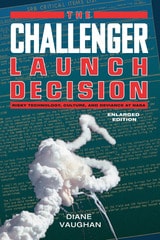
The Challenger Launch Decision
Risky Technology, Culture, and Deviance at NASA, Enlarged EditionDiane Vaughan
University of Chicago Press, 2015
When the Space Shuttle Challenger exploded on January 28, 1986, millions of Americans became bound together in a single, historic moment. Many still vividly remember exactly where they were and what they were doing when they heard about the tragedy. Diane Vaughan recreates the steps leading up to that fateful decision, contradicting conventional interpretations to prove that what occurred at NASA was not skullduggery or misconduct but a disastrous mistake.
Why did NASA managers, who not only had all the information prior to the launch but also were warned against it, decide to proceed? In retelling how the decision unfolded through the eyes of the managers and the engineers, Vaughan uncovers an incremental descent into poor judgment, supported by a culture of high-risk technology. She reveals how and why NASA insiders, when repeatedly faced with evidence that something was wrong, normalized the deviance so that it became acceptable to them. In a new preface, Vaughan reveals the ramifications for this book and for her when a similar decision-making process brought down NASA's Space Shuttle Columbia in 2003.

The Challenges of Sustained Development
The Role of Socio-cultural Factors in East-central EuropeBorut Roncevic
Central European University Press, 2004

The Changing Face of Home
The Transnational Lives of the Second GenerationPeggy Levitt
Russell Sage Foundation, 2002
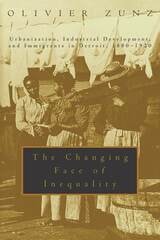
The Changing Face of Inequality
Urbanization, Industrial Development, and Immigrants in Detroit, 1880-1920Olivier Zunz
University of Chicago Press, 1983
The Changing Face of World Cities
Young Adult Children of Immigrants in Europe and the United StatesMaurice Crul
Russell Sage Foundation, 2013

The Changing Pattern of Black Politics in Britain
Kalbir Shukra
Pluto Press, 1998

The Changing Rhythms of American Family Life
Suzanne M. Bianchi
Russell Sage Foundation, 2006
The Changing Terrain of Race and Ethnicity
Maria Krysan
Russell Sage Foundation, 2004
The Channels of Student Activism
How the Left and Right Are Winning (and Losing) in Campus Politics TodayAmy J. Binder and Jeffrey L. Kidder
University of Chicago Press, 2022
The past six years have been marked by a contentious political atmosphere that has touched every arena of public life, including higher education. Though most college campuses are considered ideologically progressive, how can it be that the right has been so successful in mobilizing young people even in these environments?
As Amy J. Binder and Jeffrey L. Kidder show in this surprising analysis of the relationship between political activism on college campuses and the broader US political landscape, while liberal students often outnumber conservatives on college campuses, liberal campus organizing remains removed from national institutions that effectively engage students after graduation. And though they are usually in the minority, conservative student groups have strong ties to national right-leaning organizations, which provide funds and expertise, as well as job opportunities and avenues for involvement after graduation. Though the left is more prominent on campus, the right has built a much more effective system for mobilizing ongoing engagement. What’s more, the conservative college ecosystem has worked to increase the number of political provocations on campus and lower the public’s trust in higher education.
In analyzing collegiate activism from the left, right, and center, The Channels of Student Activism shows exactly how politically engaged college students are channeled into two distinct forms of mobilization and why that has profound consequences for the future of American politics.

The Channels of Student Activism
How the Left and Right Are Winning (and Losing) in Campus Politics TodayAmy J. Binder and Jeffrey L. Kidder
University of Chicago Press, 2022
This is an auto-narrated audiobook edition of this book.
An eye-opening analysis of collegiate activism and its effects on the divisions in contemporary American politics.
The past six years have been marked by a contentious political atmosphere that has touched every arena of public life, including higher education. Though most college campuses are considered ideologically progressive, how can it be that the right has been so successful in mobilizing young people even in these environments?
As Amy J. Binder and Jeffrey L. Kidder show in this surprising analysis of the relationship between political activism on college campuses and the broader US political landscape, while liberal students often outnumber conservatives on college campuses, liberal campus organizing remains removed from national institutions that effectively engage students after graduation. And though they are usually in the minority, conservative student groups have strong ties to national right-leaning organizations, which provide funds and expertise, as well as job opportunities and avenues for involvement after graduation. Though the left is more prominent on campus, the right has built a much more effective system for mobilizing ongoing engagement. What’s more, the conservative college ecosystem has worked to increase the number of political provocations on campus and lower the public’s trust in higher education.
In analyzing collegiate activism from the left, right, and center, The Channels of Student Activism shows exactly how politically engaged college students are channeled into two distinct forms of mobilization and why that has profound consequences for the future of American politics.
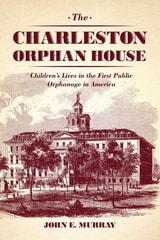
The Charleston Orphan House
Children's Lives in the First Public Orphanage in AmericaJohn E. Murray
University of Chicago Press, 2012

The Chattering Mind
A Conceptual History of Everyday TalkSamuel McCormick
University of Chicago Press, 2020
From Plato’s contempt for “the madness of the multitude” to Kant’s lament for “the great unthinking mass,” the history of Western thought is riddled with disdain for ordinary collective life. But it was not until Kierkegaard developed the term chatter that this disdain began to focus on the ordinary communicative practices that sustain this form of human togetherness.
The Chattering Mind explores the intellectual tradition inaugurated by Kierkegaard’s work, tracing the conceptual history of everyday talk from his formative account of chatter to Heidegger’s recuperative discussion of “idle talk” to Lacan’s culminating treatment of “empty speech”—and ultimately into our digital present, where small talk on various social media platforms now yields big data for tech-savvy entrepreneurs.
In this sense, The Chattering Mind is less a history of ideas than a book in search of a usable past. It is a study of how the modern world became anxious about everyday talk, figured in terms of the intellectual elites who piqued this anxiety, and written with an eye toward recent dilemmas of digital communication and culture. By explaining how a quintessentially unproblematic form of human communication became a communication problem in itself, McCormick shows how its conceptual history is essential to our understanding of media and communication today.
The Chicago School of Sociology
Institutionalization, Diversity, and the Rise of Sociological ResearchMartin Bulmer
University of Chicago Press, 1984
"This is an important piece of work on the history of sociology, but it is more than merely historical: Martin Bulmer's undertaking is also to explain why historical events occurred as they did, using potentially general theoretical ideas. He has studied what he sees as the period, from 1915 to 1935, when the 'Chicago School' most flourished, and defines the nature of its achievements and what made them possible . . . It is likely to become the indispensible historical source for its topic."—Jennifer Platt, Sociology
The Chicana Motherwork Anthology
Edited by Cecilia Caballero, Yvette Martínez-Vu, Judith Pérez-Torres, Michelle Téllez, Christine Vega; Foreword by Ana Castillo
University of Arizona Press, 2019
The volume is organized in four parts: (1) separation, migration, state violence, and detention; (2) Chicana/Latina/WOC mother-activists; (3) intergenerational mothering; and (4) loss, reproductive justice, and holistic pregnancy. Contributors offer a just framework for Chicana and Women of Color mother-scholars, activists, and allies to thrive within and outside of the academy. They describe a new interpretation of motherwork that addresses the layers of care work needed for collective resistance to structural oppression and inequality.
This anthology is a call to action for justice. Contributions are both theoretical and epistemological, and they offer an understanding of motherwork through Chicana and Women of Color experiences.
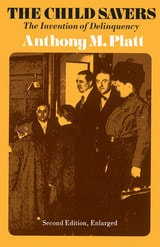
The Child Savers
The Invention of DelinquencyAnthony M. Platt
University of Chicago Press, 1977
In this second, enlarged edition of The Child Savers, the author has added a new introduction and postscript in which he critically reflects upon his original analysis, suggests new ways of thinking about the child-saving movement, and summarizes recent developments in the juvenile justice system.

The Circulation of Children
Kinship, Adoption, and Morality in Andean PeruJessaca B. Leinaweaver
Duke University Press, 2008
Leinaweaver provides insight into the emotional and material factors that bring together and separate indigenous Andean families in the highland city of Ayacucho. She describes how child circulation is intimately linked to survival in the city, which has had to withstand colonialism, economic isolation, and the devastating civil war unleashed by the Shining Path. Leinaweaver examines the practice from the perspective of parents who send their children to live in other households, the adults who receive them, and the children themselves. She relates child circulation to international laws and norms regarding children’s rights, adoptions, and orphans, and to Peru’s history of racial conflict and violence. Given that history, Leinaweaver maintains that it is not surprising that child circulation, a practice associated with Peru’s impoverished indigenous community, is alternately ignored, tolerated, or condemned by the state.
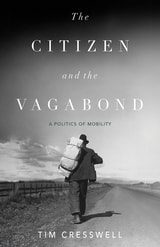
The Citizen and the Vagabond
A Politics of MobilityTim Cresswell
University of Minnesota Press, 2026
An expansive treatise on the power relations that govern our movement
The Citizen and the Vagabond develops a theoretical approach to the study of mobility and its relationship to the production, maintenance, and transformation of social and cultural hierarchies. Expanding upon his foundational work on the subject, Tim Cresswell examines human movement from around the globe to better understand the various forms of inequality and injustice that shape our lives.
Establishing a framework for movement in terms of rhythm, speed, routes, and friction, Cresswell extends these themes to address the Covid-19 pandemic and subsequent lockdowns, exploring what this turbulent period reveals to us about the politics of mobility. He demonstrates that while flexibility and ease of movement are typically considered markers of personal freedom, increased mobility brings with it new modes of control and surveillance. As he investigates the hierarchies and embodied experiences that emerge amid these tensions, Cresswell employs two figures: the citizen, whose mobility within and across borders is expected and accepted, and the vagabond, whose perpetual mobility is deemed suspect and in need of ordering.
In conversation with the work of theorists such as Mimi Sheller, Zygmunt Bauman, Paul Virilio, Henri Lefebvre, Ivan Illich, and Anna Tsing, Cresswell reaches beyond geography to incorporate insights from the humanities and social sciences. An interdisciplinary intervention into the study of mobility and citizenship, The Citizen and the Vagabond provides a new set of coordinates from which to grasp the shifting dynamics of movement and power.
Retail e-book files for this title are screen-reader friendly with images accompanied by short alt text and/or extended descriptions.
The City
Robert E. Park and Ernest W. Burgess
University of Chicago Press, 1984
"It is a classic which remains relevant largely because it poses questions still unresolved."—Choice
The City
Robert E. Park and Ernest W. Burgess
University of Chicago Press, 2019
The City
Robert E. Park and Ernest W. Burgess
University of Chicago Press, 2019
First published in 1925, The City is a trailblazing text in urban history, urban sociology, and urban studies. Its innovative combination of ethnographic observation and social science theory epitomized the Chicago school of sociology. Robert E. Park, Ernest W. Burgess, and their collaborators were among the first to document the interplay between urban individuals and larger social structures and institutions, seeking patterns within the city’s riot of people, events, and influences. As sociologist Robert J. Sampson notes in his new foreword, though much has changed since The City was first published, we can still benefit from its charge to explain where and why individuals and social groups live as they do.
The City Aroused
Queer Places and Urban Redevelopment in Postwar San FranciscoDamon Scott
University of Texas Press, 2023
A history of San Francisco that studies change in the postwar urban landscape in relation to the city's queer culture.
The City Aroused is a lively history of urban development and its influence on queer political identity in postwar San Francisco. By reconstructing the planning and queer history of waterfront drinking establishments, Damon Scott shows that urban renewal was a catalyst for community organizing among racially diverse operators and patrons with far-reaching implications for the national gay rights movement.
Following the exclusion of suspected homosexuals from the maritime trades in West Coast ports in the early 1950s, seamen’s hangouts in the city came to resemble gay bars. Local officials responded by containing the influx of gay men to a strip of bars on the central waterfront while also making plans to raze and rebuild the area. This practice ended when city redevelopment officials began acquiring land in the early 1960s. Aided by law enforcement, they put these queer social clubs out of business, replacing them with heteronormative, desexualized land uses that served larger postwar urban development goals. Scott argues that this shift from queer containment to displacement aroused a collective response among gay and transgender drinking publics who united in solidarity to secure a place in the rapidly changing urban landscape.
The City Creative
The Rise of Urban Placemaking in Contemporary AmericaMichael H. Carriere and David Schalliol
University of Chicago Press, 2021
Spanning the 1950s to the post-recession 2010s, The City Creative highlights the roles of such prominent individuals and organizations as Jane Jacobs, Christopher Alexander, Richard Sennett, Project for Public Spaces, and the National Endowment for the Arts in the development of urban placemaking, both in the abstract and on the ground. But that’s only half the story. Bringing the narrative to the present, Michael H. Carriere and David Schalliol also detail placemaking interventions at more than 200 sites in more than 40 cities, combining archival research, interviews, participant observation, and Schalliol’s powerful documentary photography. Carriere and Schalliol find that while these formal and informal placemaking interventions can bridge local community development and regional economic plans, more often than not, they push the boundaries of mainstream placemaking. Rather than simply stressing sociability or market-driven economic development, these initiatives offer an alternative model of community-led progress with the potential to redistribute valuable resources while producing tangible and intangible benefits for their communities. The City Creative provides a kaleidoscopic overview of how these initiatives grow, and sometimes collapse, illustrating the centrality of placemaking in the evolution of the American city and how it can be reoriented to meet demands for a more equitable future.
The City Electric
Infrastructure and Ingenuity in Postsocialist TanzaniaMichael Degani
Duke University Press, 2022
The City Moves West
Economic and Industrial Growth in Central West TexasBy Robert L. Martin
University of Texas Press, 1969
Where water supply, railway transportation, and oil reserves have been abundant, towns in central West Texas have prospered; where these resources are few, settlements have maintained only slight growth or disappeared entirely. Supporting his conclusions with profuse statistical evidence, Robert L. Martin traces the economic development of six major towns in the area, all with over 10,000 residents in 1960: Lamesa, Snyder, Sweetwater, Big Spring, Midland, and Odessa.
Ranching brought the first settlers to West Texas in the 1870s and dominated the economy until 1900. In the 1880s farmers began to arrive, and between 1900 and 1930 agricultural production replaced ranching as the most important industry.
With the influx of population came the railroad, and small settlements were established along its route. Those with sufficient water supply prospered and, as counties were organized, became county seats and supply centers for the surrounding agricultural regions.
The land could not support a large agricultural population, and agriculture-related manufactures soon drew population to the towns. However, it was not until the oil discoveries of the 1920's that the modern city emerged. After World War II, oil production and oil-related industries generated great wealth and caused a boom in population growth and urban development. Despite the growth in prosperity, the economy is precariously balanced. Urban centers dependent on oil—an industry of limited life—have matured in an area without sufficient water or agricultural resources to support them. Martin concludes that, without careful planning and a solution to the water problem, these cities could some day become ghost towns on the plains.
The City after Property
Abandonment and Repair in Postindustrial DetroitSara Safransky
Duke University Press, 2023
The City and the Hospital
The Paradox of Medically Overserved CommunitiesDaniel Skinner, Jonathan R. Wynn, and Berkeley Franz
University of Chicago Press, 2023
An enduring paradox of urban public health is that many communities around hospitals are economically distressed and, counterintuitively, medically underserved. In The City and the Hospital two sociologists, Jonathan R. Wynn and Berkeley Franz, and a political scientist, Daniel Skinner, track the multiple causes of this problem and offer policy solutions.
Focusing on three urban hospitals—Connecticut’s Hartford Hospital, the flagship of the Hartford Healthcare system; the Cleveland Clinic, which coordinates with other providers for routine care while its main campus provides specialty care; and the University of Colorado Hospital, a rare example of an urban institution that relocated to a new community—the authors analyze the complicated relationship between a hospital and its neighborhoods. On the one hand, hospitals anchor the communities that surround them, often staying in a neighborhood for decades. Hospitals also craft strategies to engage with the surrounding community, many of those focused on buying locally and hiring staff from their surrounding area. On the other hand, hospitals will often only provide care to the neighboring community through emergency departments, reserving advanced medical care and long-term treatment for those who can pay a premium for it. In addition, the authors show, hospitals frequently buy neighborhood real estate and advocate for development programs that drive gentrification and displacement.
To understand how urban healthcare institutions work with their communities, the authors address power, history, race, and urbanity as much as the workings of the medical industry. These varied initiatives and effects mean that understanding urban hospitals requires seeing them in a new light—not only as medical centers but as complicated urban forces.