Results by title
248 books match the query 'Theology' and 71 start with t
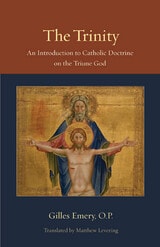
The Trinity
An Introduction to Catholic Doctrine on the Triune GodGilles Emery
Catholic University of America Press, 2011
The Works of Saint Cyril of Jerusalem, Volume 1
Saint Cyril of Jerusalem
Catholic University of America Press, 1969
The Works of Saint Cyril of Jerusalem, Volume 2
Saint Cyril of Jerusalem
Catholic University of America Press, 1970
Theological Treatises on the Trinity
Marius Victorinus
Catholic University of America Press, 1981
Theology and Anthropology in the Book of Sirach
Bonifatia Gesche
SBL Press, 2020
New research on Sirach for scholars and students
The present volume of English and German essays includes the proceedings of an international conference held in Eichstaett, Germany, in 2017. Themes of creation, emotions, life, death, wisdom, knowledge, the individual and society, family, gender, mercy, justice, and freedom are but a few of the topics that contributors explore in this new collection. Essays explore the rich intertextual connections between Sirach and other biblical texts.
Features:
- Attention to theological distinctions presented in the Hebrew, Greek, Syriac, and Latin versions of the book of Sirach
- Examination of the reception of Sirach in the New Testament and the early modern era
- English abstracts for German-language essays and German abstracts for English-language essays
Theology and Literature in the Age of Johnson
Resisting SecularismMelvyn New
University of Delaware Press, 2012
Published by University of Delaware Press. Distributed worldwide by Rutgers University Press.
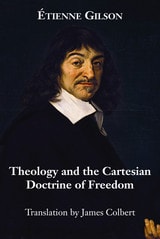
Theology and the Cartesian Doctrine of Freedom
Etienne Gilson
St. Augustine's Press, 2015
Theology and the Political
The New Debate, sic vCreston Davis, John Milbank and Slavoj Žižek, eds.
Duke University Press, 2005
Contributors. Anthony Baker, Daniel M. Bell Jr., Phillip Blond, Simon Critchley, Conor Cunningham, Creston Davis, William Desmond, Hent de Vries, Terry Eagleton, Rocco Gangle, Philip Goodchild, Karl Hefty, Eleanor Kaufman, Tom McCarthy, John Milbank, Antonio Negri, Catherine Pickstock, Patrick Aaron Riches, Mary-Jane Rubenstein, Regina Mara Schwartz, Kenneth Surin, Graham Ward, Rowan Williams, Slavoj Žižek
Theology as an Ecclesial Discipline
Ressourcement and DialogueJ. Augustine Di Noia
Catholic University of America Press, 2024
Theology of Money
Philip Goodchild
Duke University Press, 2009
Engaging with Christian theology and the thought of Carl Schmitt, Georg Simmel, Karl Marx, Adam Smith, and many others, Goodchild develops a theology of money based on four contentions, which he elaborates in depth. First, money has no intrinsic value; it is a promise of value, a crystallization of future hopes. Second, money is the supreme value in contemporary society. Third, the value of assets measured by money is always future-oriented, dependent on expectations about how much might be obtained for those assets at a later date. Since this value, when realized, will again depend on future expectations, the future is forever deferred. Financial value is essentially a degree of hope, expectation, trust, or credit. Fourth, money is created as debt, which involves a social obligation to work or make profits to repay the loan. As a system of debts, money imposes an immense and irresistible system of social control on individuals, corporations, and governments, each of whom are threatened by economic failure if they refuse their obligations to the money system. This system of debt has progressively tightened its hold on all sectors and regions of global society. With Theology of Money, Goodchild aims to make conscious our collective faith and its dire implications.
Theology of Peter Damian
Patricia Ranft
Catholic University of America Press, 2012
Theology of the Hebrew Bible, Volume 1
Methodological StudiesMarvin A. Sweeney
SBL Press, 2019
Diverse approaches to biblical theology
This volume presents a collection of studies on the methodology for conceiving the theological interpretation of the Hebrew Bible among Jews and Christians as well as the treatment of key issues such as creation, the land of Israel, and divine absence. Contributors include Georg Fischer, SJ, David Frankel, Benjamin J. M. Johnson, Soo J. Kim, Wonil Kim, Jacqueline E. Lapsley, Julia M. O’Brien, Dalit Rom-Shiloni, Marvin A. Sweeney, and Andrea L. Weiss.
Features:
- Examination of metaphor, repentance, and shame in the presence of God
- Ten essays addressing the nature of biblical theology from a Jewish, Christian, or critical perspective
- Discussion of the changes that have taken place in the field of biblical theology since World War II
Theology of the Hebrew Bible, Volume 2
Texts, Readers, and Their WorldsSoo Kim Sweeney
SBL Press, 2024
This follow-up to Theology of the Hebrew Bible, Volume 1: Methodological Studies, focuses on readers’ engagement with the text and their communities. Part 1 offers fresh interpretations of divine images and theological concepts drawn from various theophanies in the text. Part 2 focuses on how these insights can form new overarching structures, serving as reading strategies or foundations for alternative theologies. Part 3 emphasizes the bond between readers and their communities, highlighting the active participation of both ancient and modern readers through an analysis of past literature. Contributors, each an expert in their field, include Rachel Adelman, Samuel E. Balentine, Shelly L. Birdsong, Ginny Brewer-Boydston, Johanna Etzberger, Frances Flannery, David Frankel, Barry R. Huff, Hyun Chul Paul Kim, Barbara Leung Lai, J. Richard Middleton, Hye Kyung Park, Kris Sonek, Brent A. Strawn, David E. S. Stein, Marvin A. Sweeney, Soo Kim Sweeney, Joseph Sykora, Daniel C. Timmer, and Beat Weber. This collection of essays guides readers, including those well-versed in theology, to explore innovative and unexpected depictions of divine beings and how human characters respond to them.
Thomas Aquinas' Trinitarian Theology
A Study in Theological MethodTimothy L Smith
Catholic University of America Press, 2003
Thoreau's God
Richard Higgins
University of Chicago Press, 2024
Henry David Thoreau’s spiritual life is a riddle. Thoreau’s passionate critique of formal religion is matched only by his rapturous descriptions of encounters with the divine in nature. He fled the church only to pursue a deeper communion with a presence he felt at the heart of the universe. He called this illimitable presence many names, but he often called it God.
In Thoreau’s God, Richard Higgins invites seekers—religious or otherwise—to walk with the great Transcendentalist through a series of meditations on his spiritual life. Thoreau offers us no creed, but his writings encourage reflection on how to live, what to notice, and what to love. Though his quest was deeply personal, Thoreau devoted his life to communicating his experience of an infinite, wild, life-giving God. By recovering this vital thread in Thoreau’s life and work, Thoreau’s God opens the door to a new understanding of an original voice in American religion that speaks to spiritual seekers today.
Time & Eternity
The Question of Time in Church, Science and TheologyAntje Jackelen
Templeton Press, 2005
What is time? Is there a link between objective knowledge about time and subjective experience of time? And what is eternity? Does religion have the answer? Does science?
•Theological approaches to time and eternity, as well as a look at Trinitarian theology and its relation to time
•The discussion of scientific theories of time, including Newtonian, relativistic, quantum, and chaos theories
•The formulation of a "theology of time," a theological-mathematical model incorporating relational thinking oriented toward the future, the doctrine of trinity, and the notion of eschatology
Toward a Theology of the Septuagint
Stellenbosch Congress on the Septuagint, 2018Johann Cook
SBL Press, 2020
Innovative Septuagint research from an international group of scholars
Toward a Theology of the Septuagint: Stellenbosch Congress on the Septuagint, 2018 focuses on the question of whether it is appropriate and possible to formulate a theology of the Septuagint. Nineteen English and German essays examine Old Testament, New Testament, and extrabiblical texts from a variety of methodological perspectives to demonstrate that such a theology is indeed necessary and possible.
Features
Toward an Islamic Theology of Nonviolence
In Dialogue with René GirardAdnane Mokrani
Michigan State University Press, 2022
Treatises on Marriage and Other Subjects
Saint Augustine
Catholic University of America Press, 1999
Treatises on Noah and David
Brian P. St. Ambrose
Catholic University of America Press, 2020
The first treatise presents Noah as a model just man, as Ambrose pairs the literal and the higher or spiritual meaning of the Genesis flood narrative to address topics ranging from the Genesis narrative to Stoic ethics to the Incarnation. In his defense of David to the emperor Theodosius, Ambrose ties David’s sin and repentance to his own close reading of Psalm 51(50), David’s plea for himself in his famous “Miserere.” While the authenticity of the third treatise included in the volume, the Second Apology of David, has long been challenged, recent scholarship suggests that it transmits Ambrose’s own preaching, which applies the lessons of David’s life to the situation of gentile unbelievers, Jews, and the church; even if it is the work of a later imitator, the Second Apology is a compelling and systematic treatment of the David’s sin and repentance as relevant to Christian morality and doctrine.
The three treatises, previously unavailable in English translation, broaden our understanding of exegesis in the Latin West and our interpretation of Ambrose as preacher and exegete.
Treatises on Various Subjects
Saint Augustine
Catholic University of America Press, 1952