Results by title
295 books match the query 'Zoology' and 64 start with t
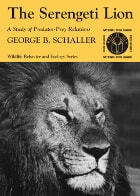
The Serengeti Lion
A Study of Predator-Prey RelationsGeorge B. Schaller
University of Chicago Press, 1976
Based on three years of study in the Serengeti National Park, George B. Schaller’s The Serengeti Lion describes the vast impact of the lion and other predators on the vast herds of wildebeest, zebra, and gazelle for which the area is famous. The most comprehensive book available on the lion, this classic work includes the author’s findings on all aspects of lion behavior, including its social system, population dynamics, hunting behavior, and predation patterns.
“If you have only enough time to read one book about field biology, this is the one I recommend.”—Edward O. Wilson, Science
“This book conveys not only the fascination of its particular study of lion behavior but the drama and wonder and beauty of the intimate interdependence of all living things.”—Saturday Review
“This is an important book, not just for its valuable information on lions, but for its broad, open, and intelligent approach to problems that cut across the fields of behavior, populations, ecology, wildlife management, evolution, anthropology, and comparative biology.”—Richard G. Van Gelder, Bioscience
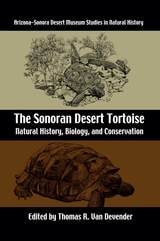
The Sonoran Desert Tortoise
Natural History, Biology, and ConservationThomas R. Van Devender
University of Arizona Press, 2002
This book presents the first comprehensive summary of the natural history, biology, and conservation of the Sonoran and Sinaloan desert tortoises, reviewing the current state of knowledge of these creatures with appropriate comparisons to Mohave tortoises. It condenses a vast amount of information on population ecology, activity, and behavior based on decades of studying tortoise populations in Arizona and Sonora, Mexico, and also includes important material on the care and protection of tortoises. Thirty-two contributors address such topics as tortoise fossil records, DNA analysis, and the mystery of secretive hatchlings and juveniles. Tortoise health is discussed in chapters on the care of captives, and original data are presented on the diets of wild and captive tortoises, the nutrient content of plant foods, and blood parameters of healthy tortoises. Coverage of conservation issues includes husbandry methods for captive tortoises, an overview of protective measures, and an evaluation of threats to tortoises from introduced grass and wildfires. A final chapter on cultural knowledge presents stories and songs from indigenous peoples and explores their understanding of tortoises.
As the only comprehensive book on the desert tortoise, this volume gathers a vast amount of information for scientists, veterinarians, and resource managers while also remaining useful to general readers who keep desert tortoises as backyard pets. It will stand as an enduring reference on this endearing creature for years to come.
The Three Ethologies
A Positive Vision for Rebuilding Human-Animal RelationshipsMatthew Calarco
University of Chicago Press, 2024
The Three Ethologies offers a fresh, affirmative vision for rebuilding human-animal relations. Venturing beyond the usual scholarly and activist emphasis on restricting harm, Matthew Calarco develops a new philosophy for understanding animal behavior—a practice known as ethology—through three distinct but interrelated lenses: mental ethology, which rebuilds individual subjectivity; social ethology, which rethinks our communal relations; and environmental ethology, which reconfigures our relationship to the land we co-inhabit with our animal kin. Drawing on developments in philosophy, (eco)feminist theory, critical geography, Indigenous studies, and the environmental humanities, Calarco casts an inspiring vision of how ethological living can help us to reimagine our ideas about goodness, truth, and beauty.
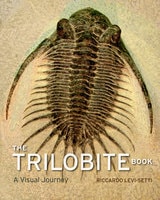
The Trilobite Book
A Visual JourneyRiccardo Levi-Setti
University of Chicago Press, 2014
Featuring specimens from Bohemia to Newfoundland, California to the Tucson Gem and Mineral Show, and Wales to the Anti-Atlas Mountains of Morocco, Levi-Setti’s magnificent book reanimates these “butterflies of the seas” in 235 astonishing full-color photographs. All original, Levi-Setti’s images serve as the jumping-off point for tales of his global quests in search of these highly sought-after fossils; for discussions of their mineralogical origins, as revealed by their color; and for unraveling the role of the now-extinct trilobites in our planetary history.
Sure to enthrall paleontologists with its scientific insights and amateur enthusiasts with its beautiful and informative images, The Trilobite Book combines the best of science, technology, aesthetics, and personal adventure. It will inspire new collectors for eras to come.
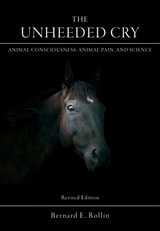
The Unheeded Cry
Animal Consciousness, Animal Pain, and ScienceBernard Rollin
University of Missouri Press, 2017
Bernard Rollin offers welcome insight into questions like this in his ground-breaking account of the difficult and controversial issues surrounding the use of animals. He demonstrates that the denial of animal consciousness and animal suffering is not an essential feature of a scientific approach, but rather a contingent, historical aberration that can and must be changed if science is to be both coherent and morally responsible. Widely hailed by advocates of animal welfare and scientists alike on its first appearance, the book now includes an epilogue by the author describing what has changed, and what hasn’t, in this use of animals in scientific research and food production.

The Vertebrates of Arizona
With Major Section on Arizona HabitatsEdited by Charles H. Lowe
University of Arizona Press, 1964
“An impressive volume . . . a valuable reference for professional biologists, students, and others interested in the native fauna of Arizona and its distribution there.”—Science
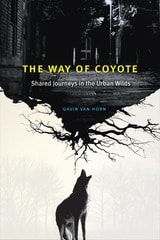
The Way of Coyote
Shared Journeys in the Urban WildsGavin Van Horn
University of Chicago Press, 2018
A hiking trail through majestic mountains. A raw, unpeopled wilderness stretching as far as the eye can see. These are the settings we associate with our most famous books about nature. But Gavin Van Horn isn’t most nature writers. He lives and works not in some perfectly remote cabin in the woods but in a city—a big city. And that city has offered him something even more valuable than solitude: a window onto the surprising attractiveness of cities to animals. What was once in his mind essentially a nature-free blank slate turns out to actually be a bustling place where millions of wild things roam. He came to realize that our own paths are crisscrossed by the tracks and flyways of endangered black-crowned night herons, Cooper’s hawks, brown bats, coyotes, opossums, white-tailed deer, and many others who thread their lives ably through our own.
With The Way of Coyote, Gavin Van Horn reveals the stupendous diversity of species that can flourish in urban landscapes like Chicago. That isn’t to say city living is without its challenges. Chicago has been altered dramatically over a relatively short timespan—its soils covered by concrete, its wetlands drained and refilled, its river diverted and made to flow in the opposite direction. The stories in The Way of Coyote occasionally lament lost abundance, but they also point toward incredible adaptability and resilience, such as that displayed by beavers plying the waters of human-constructed canals or peregrine falcons raising their young atop towering skyscrapers. Van Horn populates his stories with a remarkable range of urban wildlife and probes the philosophical and religious dimensions of what it means to coexist, drawing frequently from the wisdom of three unconventional guides—wildlife ecologist Aldo Leopold, Taoist philosopher Lao Tzu, and the North American trickster figure Coyote. Ultimately, Van Horn sees vast potential for a more vibrant collective of ecological citizens as we take our cues from landscapes past and present.
Part urban nature travelogue, part philosophical reflection on the role wildlife can play in waking us to a shared sense of place and fate, The Way of Coyote is a deeply personal journey that questions how we might best reconcile our own needs with the needs of other creatures in our shared urban habitats.
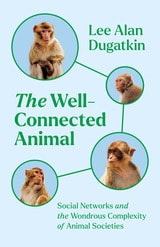
The Well-Connected Animal
Social Networks and the Wondrous Complexity of Animal SocietiesLee Alan Dugatkin
University of Chicago Press, 2024
An engaging exploration of the wondrous social webs that permeate life in animal societies around the world.
It’s all about who you know. Whether vampire bats sharing blood meals for survival, field crickets remembering champion fighters, macaque monkeys forming grooming pacts after a deadly hurricane, or great tit birds learning the best way to steal milk—it pays to be well connected.
In this tour of the animal kingdom, evolutionary biologist Lee Alan Dugatkin reveals a new field of study, uncovering social networks that existed long before the dawn of human social media. He accessibly describes the latest findings from animal behavior, evolution, computer science, psychology, anthropology, genetics, and neurobiology, and incorporates interviews and insights from researchers he finds swimming with manta rays, avoiding pigeon poop, and stopping monkeys from stealing iPads. With Dugatkin as our guide, we investigate social networks in giraffes, elephants, kangaroos, Tasmanian devils, whales, bats, and more. From animal networks in Australia and Asia to Africa, Europe, and the Americas, The Well-Connected Animal is an eye-opening exposé of wild friends, enemies, and everything in between.
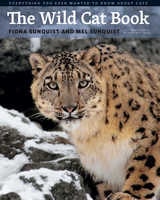
The Wild Cat Book
Everything You Ever Wanted to Know about CatsFiona Sunquist and Mel Sunquist
University of Chicago Press, 2014
Illustrated throughout with Terry Whittaker’s spectacular color photographs as well as unique photos from biologists in the field—some the highest quality images ever captured of exceptionally rare species—The Wild Cat Book not only tantalizes with the beauty of cats, but also serves as a valuable and accessible reference on cat behavior and conservation. Comprehensive entries for each of the thirty-seven cat species include color distribution maps and up-to-date information related to the species’ IUCN conservation and management statuses, while informative sidebars reveal why male lions have manes (and why dark manes are sexiest), how cats see with their whiskers, the truth behind our obsession with white lions and tigers, and why cats can’t be vegetarians. The Wild Cat Book also highlights the grave threats faced by the world’s wild cats—from habitat destruction to human persecution.
From the extraordinary acrobatics of the arboreal margay—able to cling to a tree branch by a single paw thanks to its unusually flexible ankles—to modern declines in African lion populations, The Wild Cat Book is an instructive and revealing ode to felines of every size and color. Combining science, behavioral observations, and stunning photography, this book will captivate cat fanciers the world over.
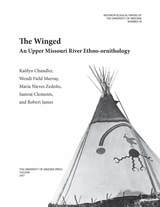
The Winged
An Upper Missouri River Ethno-ornithologyKaitlyn Chandler, Wendi Field Murray, María Nieves Zedeño, Samrat Clements, and Robert James
University of Arizona Press, 2017
The Missouri River Basin is home to thousands of bird species that migrate across the Great Plains of North America each year, marking the seasonal cycle and filling the air with their song. In time immemorial, Native inhabitants of this vast region established alliances with birds that helped them to connect with the gods, to learn the workings of nature, and to live well.
This book integrates published and archival sources covering archaeology, ethnohistory, historical ethnography, folklore, and interviews with elders from the Blackfoot, Assiniboine, Mandan, Hidatsa, Arikara, and Crow communities to explore how relationships between people and birds are situated in contemporary practice, and what has fostered its cultural persistence. Native principles of ecological and cosmological knowledge are brought into focus to highlight specific beliefs, practices, and concerns associated with individual bird species, bird parts, bird objects, the natural and cultural landscapes that birds and people cohabit, and the future of this ancient alliance.
Detailed descriptions critical to ethnohistorians and ethnobiologists are accompanied by thirty-four color images. A unique contribution, The Winged expands our understanding of sets of interrelated dependencies or entanglements between bird and human agents, and it steps beyond traditional scientific and anthropological distinctions between humans and animals to reveal the intricate and eminently social character of these interactions.

The Zoology of Tapeworms
Robert A. Wardle and James A. McLeod
University of Minnesota Press, 1952
The Zoology of Tapeworms was first published in 1952. Minnesota Archive Editions uses digital technology to make long-unavailable books once again accessible, and are published unaltered from the original University of Minnesota Press editions.
Leaders in helminthology have long recognized the need for such a work as this—a comprehensive study of tapeworms. This definitive treatise describes the tapeworms of the world—their gross and microscopic anatomy, their physiology, life cycles, and relationships to hosts, the theories of origin and evolution, and the various systems of classification that have been applied to tapeworms.
Detailed, systematic descriptions and keys for the identification of all known genera of the world and species of North America are provided. Emphasis on the theoretical significance of various aspects of tapeworm zoology is balanced by a wealth of detailed description. A bibliography up to 1950 is appended.
A review of the literature on each topic is incorporated in the discussions. Starting with a few fragments of information a century or more ago, the literature on the subject of tapeworms has appeared in a wide range of journals and books published in at least five languages. Many of the older publications are, for practical purposes, unavailable, and a number of the more recent journals are difficult to obtain. Therefore, the consolidation of this large body of scattered literature in a single volume will be of value to scientists in many fields.
In addition to filling a basic need for helminthologists, this book should serve as a reference work for parasitologists, zoologists, ecologists, clinicians, medical research workers, and students and workers in various fields of biology.
There are 419 text illustrations from drawings of species by the authors.
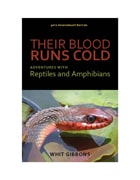
Their Blood Runs Cold
Adventures with Reptiles and AmphibiansWhit Gibbons
University of Alabama Press, 2013
Enter the fascinating world of reptiles and amphibians through the eyes of a pioneering field scientist.
Their Blood Runs Cold is entertaining, informative reading that not only enhances our understanding of a unique group of animals, but also provides genuine insight into the mind and character of a research scientist.
Whit Gibbons possesses the rare talent of conveying the challenge and excitement of scientific inquiry. A research ecologist who specializes in the study of reptiles and amphibians, he gives accounts of work in the field that are as readable as good short stories.
From the dangers of being chased by an angry rattlesnake to the exhilaration of discovering a previously undescribed species, Gibbons brings to life the everyday experiences of the herpetologist as he chases down lizards, turtles, snakes, alligators, salamanders, and frogs in their natural habitats. With essays like “Turtles May Be Slow but They’re 200 Million Years Ahead of Us” and “How to Catch an Alligator in One Uneasy Lesson,” Their Blood Runs Cold both entertains and informs.
The thirtieth anniversary edition of Their Blood Runs Cold features a new prologue and epilogue, additions that address changes in the taxonomy and study of reptiles and amphibians that have occurred since the publication of the original edition and offer suggestions for further reading that highlight the explosion of interest in the topic.
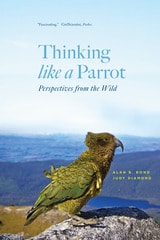
Thinking like a Parrot
Perspectives from the WildAlan B. Bond and Judy Diamond
University of Chicago Press, 2019
People form enduring emotional bonds with other animal species, such as dogs, cats, and horses. For the most part, these are domesticated animals, with one notable exception: many people form close and supportive relationships with parrots, even though these amusing and curious birds remain thoroughly wild creatures. What enables this unique group of animals to form social bonds with people, and what does this mean for their survival?
In Thinking like a Parrot, Alan B. Bond and Judy Diamond look beyond much of the standard work on captive parrots to the mischievous, inquisitive, and astonishingly vocal parrots of the wild. Focusing on the psychology and ecology of wild parrots, Bond and Diamond document their distinctive social behavior, sophisticated cognition, and extraordinary vocal abilities. Also included are short vignettes—field notes on the natural history and behavior of both rare and widely distributed species, from the neotropical crimson-fronted parakeet to New Zealand’s flightless, ground-dwelling kākāpō. This composite approach makes clear that the behavior of captive parrots is grounded in the birds’ wild ecology and evolution, revealing that parrots’ ability to bond with people is an evolutionary accident, a by-product of the intense sociality and flexible behavior that characterize their lives.
Despite their adaptability and intelligence, however, nearly all large parrot species are rare, threatened, or endangered. To successfully manage and restore these wild populations, Bond and Diamond argue, we must develop a fuller understanding of their biology and the complex set of ecological and behavioral traits that has led to their vulnerability. Spanning the global distribution of parrot species, Thinking like a Parrot is rich with surprising insights into parrot intelligence, flexibility, and—even in the face of threats—resilience.
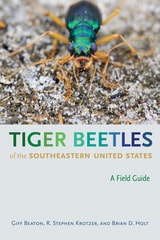
Tiger Beetles of the Southeastern United States
A Field GuideGiff Beaton, R. Stephen Krotzer, and Brian D. Holt
University of Alabama Press, 2021
Combines current data and taxonomic classifications for tiger beetles in the Southeast with stunning close-up photographs, flight season charts, and distribution maps
Tiger beetles are brightly colored and metallic beetles, often with ivory or cream-colored markings. They are most abundant and diverse in habitats near bodies of water with sandy or clay soils and can be found along rivers, on sea and lake shores, on sand dunes, around dry lakebeds, on clay banks, or on woodland paths. Conservatively estimated, the group comprises more than 2,600 species worldwide.
Tiger Beetles of the Southeastern United States identifies and describes 52 taxa (42 species and 10 additional subspecies) of tiger beetles that occur in Alabama, Florida, Georgia, Mississippi, North Carolina, South Carolina, and Tennessee. Stunning close-up photographs accompany current taxonomic and biological information in a volume designed for a growing audience of enthusiastic amateurs and professionals alike.
The authors provide an in-depth description of the anatomy, life cycle, and behavior of tiger beetles; an overview of the various southeastern habitats in which they occur; instructions for finding, identifying, and photographing them in the wild; and the conservation status of various species. The individual species accounts include stunning, detailed images, flight season charts, county-level regional distribution maps, and discussion of identifying features, habitat, similar species, and subspecies when applicable. The appendix includes two species previously found in Florida but no longer known to exist there.
The result is the most complete field guide to date on tiger beetles in the region. With more than 230 images of beetles and their habitats, as well as life history and distribution data, this book is essential for tiger beetle enthusiasts, naturalists of all kinds, photographers, biologists, and teachers throughout the region.