Results by title
8642 books match the query '20th century' and 1764 start with t

The Thousand-Year Flood
The Ohio-Mississippi Disaster of 1937David Welky
University of Chicago Press, 2011
In the early days of 1937, the Ohio River, swollen by heavy winter rains, began rising. And rising. And rising. By the time the waters crested, the Ohio and Mississippi had climbed to record heights. Nearly four hundred people had died, while a million more had run from their homes. The deluge caused more than half a billion dollars of damage at a time when the Great Depression still battered the nation.
Timed to coincide with the flood's seventy-fifth anniversary, The Thousand-Year Flood is the first comprehensive history of one of the most destructive disasters in American history. David Welky first shows how decades of settlement put Ohio valley farms and towns at risk and how politicians and planners repeatedly ignored the dangers. Then he tells the gripping story of the river's inexorable rise: residents fled to refugee camps and higher ground, towns imposed martial law, prisoners rioted, Red Cross nurses endured terrifying conditions, and FDR dispatched thousands of relief workers. In a landscape fraught with dangers—from unmoored gas tanks that became floating bombs to powerful currents of filthy floodwaters that swept away whole towns—people hastily raised sandbag barricades, piled into overloaded rowboats, and marveled at water that stretched as far as the eye could see. In the flood's aftermath, Welky explains, New Deal reformers, utopian dreamers, and hard-pressed locals restructured not only the flood-stricken valleys, but also the nation's relationship with its waterways, changes that continue to affect life along the rivers to this day.
A striking narrative of danger and adventure—and the mix of heroism and generosity, greed and pettiness that always accompany disaster—The Thousand-Year Flood breathes new life into a fascinating yet little-remembered American story.

The Tiger in the Attic
Memories of the Kindertransport and Growing Up EnglishEdith Milton
University of Chicago Press, 2006
In this illuminating chronicle, Edith describes how she struggled to fit in and to conquer self-doubts about her German identity. Her realistic portrayal of the seemingly mundane yet historically momentous details of daily life during World War II slowly reveals istelf as a hopeful story about the kindness and generosity of strangers. She paints an account rich with colorful characters and intense relationships, uncanny close calls and unnerving bouts of luck that led to survival. Edith's journey between cultures continues with her final passage to America—yet another chapter in her life that required adjustment to a new world—allowing her, as she narrates it here, to visit her past as an exile all over again.
The Tiger in the Attic is a literary gem from a skilled fiction writer, the story of a thoughtful and observant child growing up against the backdrop of the most dangerous and decisive moment in modern European history. Offering a unique perspective on Holocaust studies, this book is both an exceptional and universal story of a young German-Jewish girl caught between worlds.
“Milton is brilliant at the small stroke . . . as well as broader ones.”—Alana Newhouse, New York Times Book Review
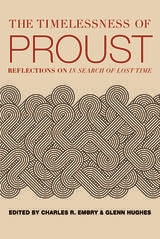
The Timelessness of Proust
Charles R. Embry
St. Augustine's Press, 2016
Marcel Proust’s À la recherche du temps perdu—In Search of Lost Time—is one of the most important and influential novels of the modern era. In recent decades, Proust has enjoyed a new surge of critical attention, as well as a sustained growth in readership—well beyond that of other prose masters of twentieth century modernism such as Joyce, Woolf, Kafka, and Beckett. The MLA Bibliography presently lists over 3,000 citations to scholarly works devoted to Proust’s novel, and if one Googles “Proust,” the number of hits exceeds 2,000,000.
The temporal nature of human existence and consciousness is one of the many themes explored in In Search of Lost Time, and it is this dimension of Proust’s work that unifies this collection of essays that grew from a roundtable discussion entitled “The Timelessness of Proust” conducted at the 31st annual meeting of the Eric Voegelin Society. The collection includes the following essays:
“In Search of Lost Time: Biographies of Consciousness,” Charles R. Embry
“Proust, Transcendence, and Metaxic Existence,” Glenn Hughes
“The Normative Flow of Consciousness and the Self: A Philosophical Meditation on
Proust’s In Search of Lost Time,” Thomas J. McPartland;
“Imprisonment and Freedom: Resisting and Embracing the Tension of Existence in
Marcel Proust’s In Search of Lost Time,” Paulette Kidder;
“Proust’s Luminous Memory and L’Homme Éternel: The Quest for Limitless Meaning,”
Michael Henry
“Unsought Revelations of Eternal Reality in Eliot’s Four Quartets and Proust’s In Search
of Lost Time,” Glenn Hughes
Persons who are interested not only in the philosophical importance of literary masterworks and in how the philosophical thought of Eric Voegelin may illuminate them, but also in letting Proust serve as a guide in the exploration and understanding of their own lives, will find these essays to be of lasting interest and value.
The Totalitarian Experience
Tzvetan Todorov
Seagull Books, 2011
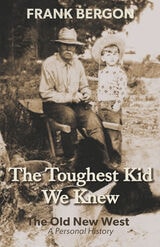
The Toughest Kid We Knew
The Old New West: A Personal HistoryFrank Bergon
University of Nevada Press, 2020
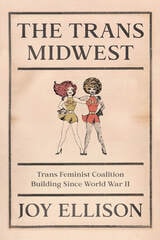
The Trans Midwest
Trans Feminist Coalition Building Since World War IIJoy Ellison
University of Chicago Press, 2027
A revelatory regional history of trans feminist coalition-building between feminist, queer, and Black communities.
In the face of heightened transphobia and rising fascism in the United States, Joy Ellison’s TheTrans Midwest recounts the history of Midwestern trans women and femmes as a force in the larger feminist movement in the United States. Facing repression and geographic isolation, trans feminine Midwesterners built, and continue to build, vibrant coalitions with feminist, queer, and Black organizations.
Drawing on a vast range of archives and oral histories, Ellison shares a detailed and intersectional description of trans life and politics. These historical figures range from the Black trans women who worked in drag shows to the student coalitions that led to the passage of the country’s first trans-inclusive anti-discrimination ordinance and transsexual lesbian feminist activism in the 1990s. Ellison examines community networks and support groups, newsletters and advertisements, and Midwestern cities from Detroit to Kansas City to elucidate how trans regional groups found common interests across different races, classes, abilities, and sexualities, a marked difference from existing historical accounts of similar movements elsewhere.
Contributing to our understanding of trans history and the impact of intersectional organizing, The Trans Midwest presents new possibilities and critical lessons for trans feminist movements today.
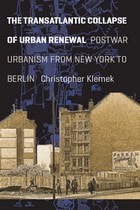
The Transatlantic Collapse of Urban Renewal
Postwar Urbanism from New York to BerlinChristopher Klemek
University of Chicago Press, 2011
The Transatlantic Collapse of Urban Renewal examines how postwar thinkers from both sides of the Atlantic considered urban landscapes radically changed by the political and physical realities of sprawl, urban decay, and urban renewal. With a sweep that encompasses New York, London, Berlin, Philadelphia, and Toronto, among others, Christopher Klemek traces changing responses to the challenging issues that most affected the lives of the world’s cities.
In the postwar decades, the principles of modernist planning came to be challenged—in the grassroots revolts against the building of freeways through urban neighborhoods, for instance, or by academic critiques of slum clearance policy agendas—and then began to collapse entirely. Over the 1960s, several alternative views of city life emerged among neighborhood activists, New Left social scientists, and neoconservative critics. Ultimately, while a pessimistic view of urban crisis may have won out in the United States and Great Britain, Klemek demonstrates that other countries more successfully harmonized urban renewal and its alternatives. Thismuch anticipated book provides one of the first truly international perspectives on issues central to historians and planners alike, making it essential reading for anyone engaged with either field.
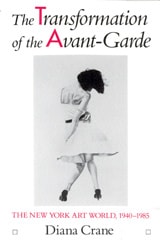
The Transformation of the Avant-Garde
The New York Art World, 1940-1985Diana Crane
University of Chicago Press, 1989
Crane's account is built around discussions of seven styles: Abstract Expressionism in the forties; Pop art and Minimalism in the sixties; Figurative painting, Photorealism, and Pattern painting in the early seventies; and Neo-Expressionism in the early eighties. Demonstrating that the New York art world moved toward increasing acceptance of dominant American cultural trends, Crane offers a fascinating look not only at the intricacies of New York's artistic inner circle but also at the sociology of work and professions, the economics of culture markets such as "dealing art," and the sociology of culture.
The Transformation of the Christian Right in the 1980s
Matthew C. Moen
University of Alabama Press, 2008
The Transformation of the Christian Right chronicles and analyzes the remarkable changes that have occurred in the Christian Right from its emergence in the late 1970s to the present. It documents the rapid turnover of Christian-Right organizations and explains the forces driving that kaleidoscopic change. Moen also traces the strategic shift of the movement’s leaders, away from lobbying the Congress and toward mobilizing conservative activists in the grass roots; he demonstrates the substitution of liberal language (with its emphasis on “equality, rights, and freedom”) for moralistic language (with its focus on “right and wrong”). Much has been written about the Christian Right’s impact on politics but little about how years of political activism have shaped and influenced the Christian Right. Moen addresses that neglected side of the issue.
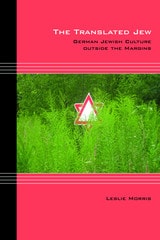
The Translated Jew
German Jewish Culture outside the MarginsLeslie Morris
Northwestern University Press, 2018
The Translated Jew brings together an eclectic set of literary and visual texts to reimagine the transnational potential for German Jewish culture in the twenty-first century. Departing from scholarship that has located the German Jewish text as an object that can be defined geographically and historically, Leslie Morris challenges national literary historiography and redraws the maps by which transnational Jewish culture and identity must be read.
Morris explores the myriad acts of translation, actual and metaphorical, through which Jewishness leaves its traces, taking as a given the always provisional nature of Jewish text and Jewish language. Although the focus is on contemporary German Jewish literary cultures, The Translated Jew also turns its attention to a number of key visual and architectural projects by American, British, and French artists and writers, including W. G. Sebald, Anne Blonstein, Hélène Cixous, Ulrike Mohr, Daniel Blaufuks, Paul Celan, Raymond Federman, and Rose Ausländer.
In thus realigning German Jewish culture with European and American Jewish culture and post-Holocaust aesthetics, this book explores the circulation of Jewishness between the United States and Europe. The insistence on the polylingualism of any single language and the multidirectionality of Jewishness are at the very center of The Translated Jew.

The Transmutation of Love and Avant-Garde Poetics
Jeanne Heuving
University of Alabama Press, 2016
Reimagining love as a force of poetic innovation in modern and avant-garde literature.
The Transmutation of Love and Avant-Garde Poetics is a probing examination of how the writing of sexual love undergoes a radical revision by avant-garde poets in the twentieth and twenty-first centuries. Today, the exploration of love by poets—long a fixture of Western poetic tradition—is thought to be in decline, with love itself understood to be a mere ideological overlay for the more “real” entities of physical sex and desire.
In The Transmutation of Love and Avant-Garde Poetics, Jeanne Heuving claims that a key achievement of poetry by Ezra Pound, H.D., Robert Duncan, Kathleen Fraser, Nathaniel Mackey, and others lies significantly in their engagement with the synergistic relations between being in love and writing love. These poets, she argues, have traded the clichéd lover of yore for impersonal or posthuman poetic speakers that sustain the gloire and mystery of love poetry of prior centuries. As Robert Duncan writes, “There is a love in which we are outcast and vagabond from what we are that we call ‘falling in love.’”
Heuving claims that this writing of love is defining for avant-garde poetics, identifying how such important discoveries as Pound’s and H.D.’s Imagism, Pound’s Cantos, and Duncan’s “open field poetics” are derived through their changed writing of love. She draws attention to how the prevailing concept of language as material is inadequate to the ways these poets also engage language as a medium—as a conduit—enabling them to address love afresh in a time defined through preoccupations with sexuality. They engage love as immanent and change it through a writing that acts on itself.
The Transmutation of Love and Avant-Garde Poetics ascribes the waning of love poetry to its problematic form: a genre in which empowered poetic speakers constitute their speech through the objectification of comparatively disempowered subjects, or beloveds. Refusing this pervasive practice, the poets she highlights reject the delimiting, one-sided tradition of masculine lovers and passive feminine beloveds; instead, they create a more nuanced, dynamic poetics of ecstatic exploration, what Heuving calls “projective love” and “libidinized field poetics,” a formally innovative poetry, in which one perception leads directly to the next and all aspects of a poem are generative of meaning.
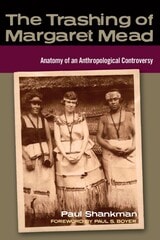
The Trashing of Margaret Mead
Anatomy of an Anthropological ControversyPaul Shankman; Foreword by Paul S. Boyer
University of Wisconsin Press, 2009
In The Trashing of Margaret Mead, Paul Shankman explores the many dimensions of the Mead-Freeman controversy as it developed publicly and as it played out privately, including the personal relationships, professional rivalries, and larger-than-life personalities that drove it. Providing a critical perspective on Freeman’s arguments, Shankman reviews key questions about Samoan sexuality, the alleged hoaxing of Mead, and the meaning of the controversy. Why were Freeman’s arguments so readily accepted by pundits outside the field of anthropology? What did Samoans themselves think? Can Mead’s reputation be salvaged from the quicksand of controversy? Written in an engaging, clear style and based on a careful review of the evidence, The Trashing of Margaret Mead illuminates questions of enduring significance to the academy and beyond.
The Tree of Life, Book One
On the Brink of the Precipice, 1939Chava Rosenfarb
University of Wisconsin Press, 2004
Winner of the 1972 J. J. Segal Prize and the 1979 Manger Prize for Yiddish Literature
The Tree of Life, Book Three
The Cattle Cars Are Waiting, 1942–1944Chava Rosenfarb
University of Wisconsin Press, 2006
The third volume in this powerful trilogy, The Cattle Cars Are Waiting follows the tragic fate of the inhabitants of the ghetto. Chava Rosenfarb, herself a survivor of the Lodz Ghetto, Auschwitz, and Bergen-Belsen, draws on her own history to create characters who struggle daily to retain a sense of humanity and dignity despite the physical and psychological effects of ghetto life. Although the novel depicts horrendous experiences, the light of faith in the human spirit shines through every page.
Winner, Georges Bugnet Award for Best Novel, Writers Guild of Alberta
The Tree of Life, Book Two
From the Depths I Call You, 1940–1942Chava Rosenfarb
University of Wisconsin Press, 2005
This volume describes the lives of the novel’s protagonists in the Lodz Ghetto at the beginning of World War II. Chava Rosenfarb, herself a survivor of the Lodz Ghetto, Auschwitz, and Bergen-Belsen, draws on her own history to create realistic characters who struggle daily to retain a sense of humanity and dignity despite the physical and psychological effects of ghetto life. Although horrendous experiences are depicted, the light of faith in the human spirit shines through this novel’s every page.
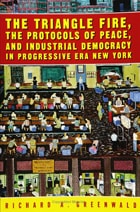
The Triangle Fire, Protocols Of Peace
And Industrial Democracy In ProgressiveRichard A. Greenwald
Temple University Press, 2005
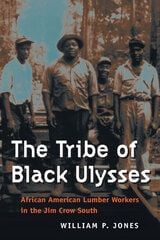
The Tribe of Black Ulysses
African American Lumber Workers in the Jim Crow SouthWilliam P. Jones
University of Illinois Press, 2005
The lumber industry employed more African American men than any southern economic sector outside agriculture. Yet little scholarship exists on these workers and their times.
William P. Jones merges interviews with archival sources to explore black men and women's changing relationship to industrial work in the southern sawmill communities of Elizabethtown, North Carolina; Chapman, Alabama; and Bogalusa, Louisiana. By placing black lumber workers within the history of southern industrialization, Jones reveals that industrial employment was another facet of the racial segregation and political disfranchisement that defined black life in the Jim Crow South. He also examines an older tradition of southern sociology that viewed industrialization as socially disruptive and morally corrupting to African American social and cultural traditions rooted in agriculture.
The Tribe of John
Ashbery and Contemporary PoetrySusan M. Schultz
University of Alabama Press, 1995
This concentration on Ashbery's influence on contemporary American poetry provides new methods for interpreting and understanding his poetic achievement.
The Trouble with Sauling Around
Conversion in Ethnic American Autobiography, 1965-2002Madeline R. Walker
University of Iowa Press, 2011
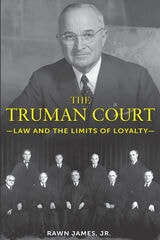
The Truman Court
Law and the Limits of LoyaltyRawn James
University of Missouri Press, 2021
The Truman Court: Law and the Limits of Loyalty argues that the years between FDR’s death in 1945 and Chief Justice Earl Warren’s confirmation in 1953—the dawn of the Cold War—were, contrary to widespread belief, important years in Supreme Court history. Never before or since has a president so quickly and completely changed the ideological and temperamental composition of the Court. With remarkable swiftness and certainty, Truman constructed a Court on which he relied to lend constitutional credence to his political agenda.
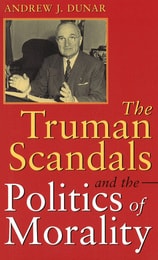
The Truman Scandals and the Politics of Morality
Andrew J. Dunar
University of Missouri Press, 1997
The Truman Scandals and the Politics of Morality is a thoroughly researched effort offering an excellent historical narrative of the scandals and accusations of scandal that bedeviled Harry Truman throughout his political career. The book is particularly significant in light of the connections the author establishes between Truman's early political experiences and his subsequent difficulties as president.

The Truth About Stories
A Native NarrativeThomas King
University of Minnesota Press, 2005
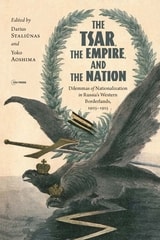
The Tsar, The Empire, and The Nation
Dilemmas of Nationalization in Russia's Western Borderlands, 1905-1915Darius Staliunas
Central European University Press, 2021
This collection of essays addresses the challenge of modern nationalism to the tsarist Russian Empire. First appearing on the empire’s western periphery this challenge, was most prevalent in twelve provinces extending from Ukrainian lands in the south to the Baltic provinces in the north, as well as to the Kingdom of Poland.
At issue is whether the late Russian Empire entered World War I as a multiethnic state with many of its age-old mechanisms run by a multiethnic elite, or as a Russian state predominantly managed by ethnic Russians. The tsarist vision of prioritizing loyalty among all subjects over privileging ethnic Russians and discriminating against non-Russians faced a fundamental problem: as soon as the opportunity presented itself, non-Russians would increase their demands and become increasingly separatist.
The authors found that although the imperial government did not really identify with popular Russian nationalism, it sometimes ended up implementing policies promoted by Russian nationalist proponents. Matters addressed include native language education, interconfessional rivalry, the “Jewish question,” the origins of mass tourism in the western provinces, as well as the emergence of Russian nationalist attitudes in the aftermath of the first Russian revolution.

The Twelve Best Books by African Women
Critical ReadingsChikwenye Okonjo Ogunyemi
Ohio University Press, 2009
The Twelve Best Books by African Women is a collection of critical essays on eleven works of fiction and one play. The titles by African women that were included in the list of “Africa’s 100 Best Books of the Twentieth Century” are: Anowa, Ama Ata Aidoo (1970); A Question of Power, Bessie Head (1974); Woman at Point Zero, Nawal El Saadawi (1975); The Beggars’ Strike, Aminata Sow Fall (1979); Burger’s Daughter, Nadine Gordimer (1979); The Joys of Motherhood, Buchi Emesheta (1979); So Long a Letter, Mariama Bâ (1980); Fantasia: An Algerian Cavalcade, Assia Djebar (1983); Nervous Conditions, Tsitsi Dangarembga (1988); Living, Loving and Lying Awake at Night, Sindiwe Magona (1991); Butterfly Burning, Yvonne Vera (1998); Riwan ou le chemin de sable, Ken Bugul (1999).
This collection of original essays recognizes the gesture of inclusion as an important shift in consciousness and creates a fresh awareness of the literary works by African women writers. Each essay offers a penetrating analysis of individual texts and opens up a fresh perspective that allows scholars and students alike to explore new dimensions of these writers’ work.
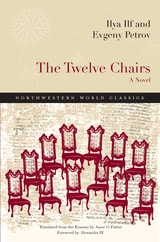
The Twelve Chairs
A NovelIlya Ilf and Evgeny Petrov, Translated from the Russian by Anne O. Fisher with a Foreword by Alexander Ilf
Northwestern University Press, 2011
Winner, 2012 Northern California Book Award for Fiction in Translation
More faithful to the original text and its deeply resonant humor, this new translation of The Twelve Chairs brings Ilf and Petrov’s Russian classic fully to life. The novel’s iconic hero, Ostap Bender, an unemployed con artist living by his wits, joins forces with Ippolit Matveyevich Vorobyaninov, a former nobleman who has returned to his hometown to look for a cache of missing jewels hidden in chairs that have been appropriated by the Soviet authorities. The search for the chairs takes them from the provinces of Moscow to the wilds of the Transcaucasus mountains. On their quest they encounter a variety of characters, from opportunistic Soviet bureaucrats to aging survivors of the old propertied classes, each one more selfish, venal, and bungling than the last. A brilliant satire of the early years of the Soviet Union, as well as the inspiration for a Mel Brooks film, The Twelve Chairs retains its universal appeal.
The Twentieth-Century Spanish American Novel
By Raymond Leslie Williams
University of Texas Press, 2003
A Choice Magazine Outstanding Academic Book
Spanish American novels of the Boom period (1962-1967) attracted a world readership to Latin American literature, but Latin American writers had already been engaging in the modernist experiments of their North American and European counterparts since the turn of the twentieth century. Indeed, the desire to be "modern" is a constant preoccupation in twentieth-century Spanish American literature and thus a very useful lens through which to view the century's novels.
In this pathfinding study, Raymond L. Williams offers the first complete analytical and critical overview of the Spanish American novel throughout the entire twentieth century. Using the desire to be modern as his organizing principle, he divides the century's novels into five periods and discusses the differing forms that "the modern" took in each era. For each period, Williams begins with a broad overview of many novels, literary contexts, and some cultural debates, followed by new readings of both canonical and significant non-canonical novels. A special feature of this book is its emphasis on women writers and other previously ignored and/or marginalized authors, including experimental and gay writers. Williams also clarifies the legacy of the Boom, the Postboom, and the Postmodern as he introduces new writers and new novelistic trends of the 1990s.
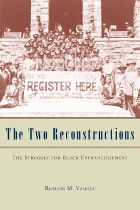
The Two Reconstructions
The Struggle for Black EnfranchisementRichard M. Valelly
University of Chicago Press, 2004
The Reconstruction era marked a huge political leap for African Americans, who rapidly went from the status of slaves to voters and officeholders. Yet this hard-won progress lasted only a few decades. Ultimately a "second reconstruction"—associated with the civil rights movement and the Voting Rights Act—became necessary.
How did the first reconstruction fail so utterly, setting the stage for the complete disenfranchisement of Southern black voters, and why did the second succeed? These are among the questions Richard M. Valelly answers in this fascinating history. The fate of black enfranchisement, he argues, has been closely intertwined with the strengths and constraints of our political institutions. Valelly shows how effective biracial coalitions have been the key to success and incisively traces how and why political parties and the national courts either rewarded or discouraged the formation of coalitions.
Revamping our understanding of American race relations, The Two Reconstructions brilliantly explains a puzzle that lies at the heart of America’s development as a political democracy.
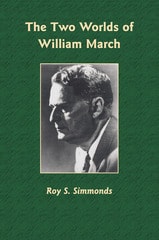
The Two Worlds of William March
Roy S. Simmonds
University of Alabama Press, 1984
In the work of literary resurrection there is always a small act of defiance. The Two Worlds of William March by Roy S. Simmonds restores to view one of the most remarkable and least celebrated American writers of the twentieth century. With intelligence, restraint, and a keen eye for contradiction, Simmonds traces March’s path from Alabama beginnings through war, business success, and literary achievement. The result is more than a biography. It is an inquiry into the making of a writer whose novels continue to unsettle, disturb, and illuminate long after the fashions of his age have passed.
What lingers is the paradox of William March himself. He was a man of outward accomplishment who remained drawn to the hidden regions of experience. He wrote memorably of war without glamorizing it, and of evil without simplifying it. Unlike so many public literary figures, he seemed to cultivate disappearance rather than celebrity. The silence around him became part of the story. Simmonds treats that silence not as a void but as evidence, revealing a complex and deeply observant mind at work beneath an unusually quiet life.
The questions that occupied March remain with us. How well do we know ourselves? What lies beneath ordinary behavior? How does experience become art? For readers of Southern literature, literary biography, American history, war literature, psychology, Alabama culture, and twentieth-century fiction, this book offers both discovery and reconsideration. It will especially appeal to those who suspect that the most revealing stories are often hidden in plain sight.

The US Eighth Air Force in World War II
Ira Eaker, Hap Arnold, and Building American Air Power, 1942–1943William J. Daugherty
University of North Texas Press, 2024

The USS Wisconsin
A History of Two BattleshipsRichard H. Zeitlin
Wisconsin Historical Society Press, 1988
Battleships were instrumental in America’s rise to world dominance at the end of the 19th century. Two battleships in particular, the U.S.S. Wisconsin BB-9 and BB-64, participated in wars and conflicts around the globe, demonstrating America’s strength and technological power. The keel of the BB-9 was laid down on the eve of the Spanish-American War, and she sailed with the Great White Fleet on its famous world voyage of 1907-1909. Representing a major advance in American naval technology, the Wisconsin both demonstrated American strength in the Pacific and served as the setting for peace talks between Panama and Colombia when the former gained independence in 1903. Recommissioned during World War I as a training ship, the BB-9 was then decommissioned in 1920. More than twenty years later, on December 7, 1943, the fast battleship Wisconsin (BB-64) was launched in response to Japan’s attack on Pearl Harbor. The BB-64 served in the Pacific to the end of World War II and again in the Korean War. One of the Iowa- class battleships, the BB-64 was one of the fastest and sleekest on the ocean. In 1988, she was refitted and recommissioned for yet another tour of duty. This is the story of two proud vessels and their role in American naval and diplomatic history.
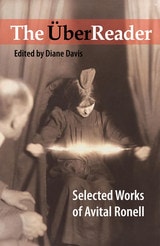
The UberReader
SELECTED WORKS OF AVITAL RONELLEdited by Diane Davis
University of Illinois Press, 2007
For twenty years Avital Ronell has stood at the forefront of the confrontation between literary study and European philosophy. She has tirelessly investigated the impact of technology on thinking and writing, with groundbreaking work on Heidegger, dependency and drug rhetoric, intelligence and artificial intelligence, and the obsession with testing. Admired for her insights and breadth of field, she has attracted a wide readership by writing with guts, candor, and wit.
Coyly alluding to Nietzsche’s “gay science,” The ÜberReader presents a solid introduction to Avital Ronell’s later oeuvre. It includes at least one selection from each of her books, two classic selections from a collection of her early essays (Finitude’s Score), previously uncollected interviews and essays, and some of her most powerful published and unpublished talks. An introduction by Diane Davis surveys Ronell’s career and the critical response to it thus far.
With its combination of brevity and power, this Ronell “primer” will be immensely useful to scholars, students, and teachers throughout the humanities, but particularly to graduate and undergraduate courses in contemporary theory.
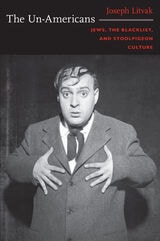
The Un-Americans
Jews, the Blacklist, and Stoolpigeon CultureJoseph Litvak
Duke University Press, 2009
Litvak traces the outlines of comic cosmopolitanism in a series of performances in film and theater and before HUAC, performances by Jewish artists and intellectuals such as Zero Mostel, Judy Holliday, and Abraham Polonsky. At the same time, through an uncompromising analysis of work by informers including Jerome Robbins, Elia Kazan, and Budd Schulberg, he explains the triumph of a stoolpigeon culture that still thrives in the America of the early twenty-first century.
The Unbeliever
THE POETRY OF ELIZABETH BISHOPRobert Dale Parker
University of Illinois Press, 1988
literary history and theory to give the poems of Elizabeth Bishop (1911-79)
the serious critical attention they deserve. The Unbeliever shows that
Bishop's poems, already famous for their clear and quiet tone, also struggle
with confusion and wonder about things she can never make quiet or clear.
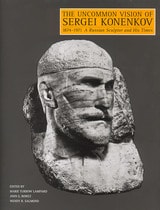
The Uncommon Vision of Sergei Konenkov, 1874-1971
A Russian Sculptor and His TimesLampard, Marie Turbow
Rutgers University Press, 2001
Sergei Konenkov was one of this century's most distinguished Russian artists. A celebrated sculptor, he was a leading figure of the young Soviet art establishment in the early 1920s. After spending over twenty years in the United States, he returned to the Soviet Union in 1945 to become a respected member of the Soviet art world. The mentor to an entire generation of Soviet sculptors, he was renowned for his personal charisma and artistic versatility. This collection of essays, interviews, and personal reminiscences is the first appraisal of his work and life published outside of Russia.
The contributors view Konenkov’s work within a variety of cultural, artistic, and philosophical contexts. With particular attention to his awareness of both indigenous Russian traditions and European innovations, they trace the many stages of his artistic development as he explored and experimented with techniques borrowed from Realism, Symbolism, salon portraiture, African wood carving, Socialist Realism, and Surrealism. The many different historical sources that inspired Konenkov’s artistic expression, from Orthodox Christianity and the folklore of the Russian peasantry to the Egyptian pyramids and pre-classical antiquity are also discussed. The contributors also explore the relationship of Konenkov's life and ideology to art, and the effects of expatriation on creativity.
Illustrated with dozens of photographs of Konenkov’s art, this study of one of the most enigmatic and fascinating artists of the modern period will accompany an exhibition at The Jane Voorhees Zimmerli Art Museum.
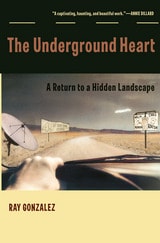
The Underground Heart
A Return to a Hidden LandscapeRay Gonzalez
University of Arizona Press, 2002
As Gonzalez drives the highways of New Mexico and west Texas, he shows us a border culture rejuvenated by tourist and trade dollars, one that will surprise readers for whom the border means only illegal immigration, NAFTA, and the drug trade. Played out against a soundtrack of the Allman Brothers and The Doors, The Underground Heart takes readers on a trip through a seemingly barren landscape that teems with life and stories. Gonzalez witnesses Minnesotans experiencing culture shock while attending a college football game in El Paso; he finds a proliferation of Pancho Villa death masks housed at different museums; he revisits Carlsbad Caverns, discovering unsuspected beauty beneath the desert's desolation; and he takes us shopping at El Mercado—where tourists can buy everything from black velvet paintings of Elvis (or Jesus, or JFK) to Mexican flag underwear.
From "nuclear tourism" in New Mexico to "heritage tourism" in the restored missions of San Antonio, Gonzalez goes behind the slogans of The Land of Enchantment and The Lone Star State to uncover a totally different Southwest. Here are tourist centers that give a distorted view of southwestern life to outsiders, who leave their dollars in museum gift shops and go home weighed down with pounds of Indian jewelry around their necks. Here border history is the story of one culture overlaid on another, re-forming itself into a whole new civilization on the banks of the Rio Grande.
The Underground Heart is a book brimming with subtle ironies and insights both quiet and complex—one which recognizes that sometimes one must go away and grow older to finally recognize home as a life-giving, spiritually sustaining place. As Gonzalez rediscovers the land of his past, he comes to understand the hyper, bilingual atmosphere of its future. And in the Southwest he describes, readers may catch a glimpse of their own hidden landscapes of home.

The Undiscovered Island
Darrell Kastin, Introduction by Katherine Vaz
Tagus Press, 2023
Winner of the Independent Publishers Book Awards’ Silver Prize for Multicultural Fiction
Alarmed by her father’s unexplained disappearance, Julia Castro travels from California to her family’s ancestral home in the Azores to find the islands abuzz with tales of ghost ships, seductive sirens, and witchcraft. The mystery deepens when a drowned man’s body is discovered on a mountainside and an unknown island emerges from the sea. While she is on the hunt for her father, Julia succumbs to the bewitching allure of the islands—and to Nicolau, a fellow musician. History, legend, poetry, and myth are seamlessly interwoven as the novel explores relationships between personal and cultural identity, fate and self-determination, reality and illusion. This revised edition of The Undiscovered Island features a new introduction from Katherine Vaz.

The Uneasy State
The United States from 1915 to 1945Barry D. Karl
University of Chicago Press, 1983
Karl shows how Americans approached the central dilemmas of modern life, such as the clash between planned efficiency and autonomous individualism, which they managed to patch over but never fully resolve. Above all, he finds that America's commitment to the autonomous individual is both an aspiration and a curse.

The Unfinished Quest of Richard Wright
Michel Fabre
University of Illinois Press, 1993

The Unforgiving Coast
Maritime Disasters of the Pacific NorthwestDavid Grover
Oregon State University Press, 2002
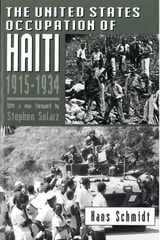
The United States Occupation of Haiti, 1915-1934
Schmidt, Hans
Rutgers University Press, 1995
"A valuable addition to Latin American and U.S. historiography." —Library Journal
"Schmidt sees American racism, bondholders cultures, the technocratic side of Progressivism, and the National City Bank looting of Haiti as the factors motivating Wilson's 1915 invasion....As a detailed case study in an exceptional manifestation of U. S. imperial control the book will attract a readership beyond students of Caribbean history." —Kirkus
"An important and well-documented account....an interesting case study in twentieth-century imperialism. Schmidt sees the occupation of Haiti as part of a general tendency in American foreign policy...Schmidt analyses in detail the mechanics of the invasion, and discusses the actions, attitudes, and policies of the U.S. administration....A model of academic elegance." —Caribbean Studies
"All the more convincing because the author has used previously inaccessible archive materials." —Journal of American History
The United States and Inter-American Security, 1889–1960
By J. Lloyd Mecham
University of Texas Press, 1961
Of the several regional arrangements that function within the United Nations, the most elaborate in organization and function is the Organization of American States. Although the United Nations holds the primary responsibility for preserving international peace, its charter concedes virtual autonomy to regional arrangements in dealing with matters considered appropriate for regional action. This latitude stimulated a trend toward regionalism which eventually posed the important question of how to preserve legitimate regionalism like Pan-Americanism without impairing the essential overall authority of the United Nations.
Following an introductory description of all existing regional arrangements, this comprehensive case study examines every aspect of security cooperation in the Western Hemisphere in the mid-twentieth century: the historical origins and development of the inter-American system; the perfecting of the security structure; and, most important, the functioning of the system under test by controversies among the member nations, and by two world wars, the Korean emergency, and the aggressive threats of international Communism. Particular attention is given to the Cuban situation.
This volume was the first to recognize, boldly and imaginatively, the overwhelming influence wielded in the OAS by the powerful and wealthy United States. This elastic association of one Great Power and twenty small states, based on a mutuality of interests and a common devotion to the principles of civilized international behavior, can be said to have reached full maturity in 1948 with the adoption of the OAS charter, which articulated the goals toward which it had been striving for fifty-eight years: sovereign equality, nonintervention, and consultation for the peaceful solution of disputes and for hemisphere defense. Ironically, just when the Good Neighbor Policy and the rise of Hitler seemed to have cemented inter-American relations, breaks in the solidarity began to appear. World War II produced new forces destined to profoundly alter the bases and objectives of inter-American cooperation. The “be good” policy began to change to a “do good” policy, and in diplomatic discussions, economic measures began to eclipse those concerned with peril to the peace and security of the hemisphere.

The United States and the Global Struggle for Minerals
By Alfred E. Eckes, Jr.
University of Texas Press, 1979
In 1973–1974 soaring commodity prices and an oil embargo alerted Americans to the twin dangers of resource exhaustion and dependence on unreliable foreign materials suppliers. This period seemed to mark a watershed in history as the United States shifted from the era of relative resource abundance to relative materials scarcity.
Alfred E. Eckes’s comprehensive study shows that resource depletion and supply dislocations are not concerns unique to the 1970s. Since 1914, the quest for secure and stable supplies of industrial materials has been an important underlying theme of international relations and American diplomacy.
Although the United States has been blessed with a diversified materials base, it has pursued a minerals strategy designed to exploit low-cost, high-quality ores abroad. Eckes demonstrates how this policy has led to official protection for overseas private investments, involving a role for the Central Intelligence Agency.
Some modern historians have neglected the importance of resources in shaping diplomacy and history. This book, based on a vast variety of unutilized archival collections and recently declassified government documents, helps to correct that imbalance. In the process it illuminates an important and still timely aspect of America’s global interests.

The United States and the Second Hague Peace Conference
American Diplomacy and International Organization, 1899–1914Calvin DeArmond Davis
Duke University Press, 1975
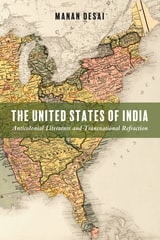
The United States of India
Anticolonial Literature and Transnational RefractionManan Desai
Temple University Press, 2020
The United States of India shows how Indian and American writers in the United States played a key role in the development of anticolonial thought in the years during and immediately following the First World War. For Indians Lajpat Rai and Dhan Gopal Mukerji, and Americans Agnes Smedley, W.E.B. Du Bois, and Katherine Mayo, the social and historical landscape of America and India acted as a reflective surface. Manan Desai considers how their interactions provided a “transnational refraction”—a political optic and discursive strategy that offered ways to imagine how American history could shed light on an anticolonial Indian future.
Desai traces how various expatriate and immigrant Indians formed political movements that rallied for American support for the cause of Indian independence. These intellectuals also developed new forms of writing about subjugation in the U.S. and India. Providing an examination of race, caste, nationhood, and empire, Desai astutely examines this network of Indian and American writers and the genres and social questions that fomented solidarity across borders.
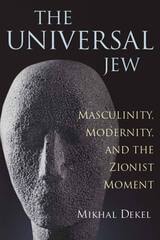
The Universal Jew
Masculinity, Modernity, and the Zionist MomentMikhal Dekel
Northwestern University Press, 2010
Such prototypical characters transform the symbol of the Jew from a racially or religiously defined minority subject to a "post-Jewish," particularuniversal, and fundamentally liberal majority subject. The Universal Jew situates the "Zionist moment" horizontally, within the various intellectual currents that make up the turn of the twentieth century: the discourse on modernity, the crisis in liberalism, Nietzsche’s critique of the Enlightenment, psychoanalysis, early feminism, and fin de siècle interrogation of sexual identities. The book examines the symbolic roles that Jews are assigned within these discourses and traces the ways in which Jewish literary citizens are shaped, both out of and in response to them. Beginning with an analysis of George Eliot’s construction of the character Deronda and its reception in Zionist circles, the Universal Jew ends with the self-fashioning of male citizens in fin de siècle and post-statehood Hebrew works, through the aesthetics oftragedy. Throughout her readings, Dekel analyzes the political meaning of these nascent images of citizens, uncovering in particular the gendered arrangements out of which they are born.
The University and the People
Envisioning American Higher Education in an Era of Populist ProtestScott M. Gelber
University of Wisconsin Press, 2011
The University and the People chronicles the influence of Populism—a powerful agrarian movement—on public higher education in the late nineteenth century. Revisiting this pivotal era in the history of the American state university, Scott Gelber demonstrates that Populists expressed a surprising degree of enthusiasm for institutions of higher learning. More fundamentally, he argues that the mission of the state university, as we understand it today, evolved from a fractious but productive relationship between public demands and academic authority.
Populists attacked a variety of elites—professionals, executives, scholars—and seemed to confirm academia’s fear of anti-intellectual public oversight. The movement’s vision of the state university highlighted deep tensions in American attitudes toward meritocracy and expertise. Yet Populists also promoted state-supported higher education, with the aims of educating the sons (and sometimes daughters) of ordinary citizens, blurring status distinctions, and promoting civic engagement. Accessibility, utilitarianism, and public service were the bywords of Populist journalists, legislators, trustees, and sympathetic professors. These “academic populists” encouraged state universities to reckon with egalitarian perspectives on admissions, financial aid, curricula, and research. And despite their critiques of college “ivory towers,” Populists supported the humanities and social sciences, tolerated a degree of ideological dissent, and lobbied for record-breaking appropriations for state institutions.
The Unlikely Futurist
Pushkin and the Invention of Originality in Russian ModernismJames Rann
University of Wisconsin Press, 2020
Through systematic and detailed readings of Futurist texts, James Rann offers the first book-length study of the tensions between the outspoken literary group and the great national poet. He observes how those in the movement engaged with and invented a new Pushkin, who by turns became a founding father to rebel against, a source of inspiration to draw from, a prophet foreseeing the future, and a monument to revive.
Rann's analysis contributes to the understanding of both the Futurists and Pushkin's complex legacy. The Unlikely Futurist will appeal broadly to scholars of Slavic studies, especially those interested in literature and modernism.
The Unpast
Elite Violence and Social Control in Brazil, 1954–2000R. S. Rose
Ohio University Press, 2005
Portuguese and Brazilian slave-traders shipped at least four million slaves to Brazil—in contrast to the five hundred thousand slaves that English vessels brought to the Americas. Controlling the vast number of slaves in Brazil became of primary importance. The Unpast: Elite Violence and Social Control in Brazil, 1954–2000 documents the ways in which the brutal methods used on plantations led directly to the phenomenon of Brazilian death squads.
The Unpast examines how and why, after the abolition of slavery, elites in Brazil imported new methods of killing, torturing, or disfiguring dissidents and the poor to maintain dominance. Bringing a critical-historical analysis to events following the 1954 suicide of President Getúlio Vargas, R. S. Rose takes the reader along a fifty-year path that helped to shape a nation’s morals. He covers the misunderstood presidency of João Goulart; the overthrow of his government by a U.S.-assisted military; the appalling dictatorship that followed; the efforts to rid the countryside of troublemakers; and the ongoing attempt to cleanse the urban environment of the needy, an endeavor that produced 32,675 victims in just two Brazilian states between 1954 and 2000.
The largest and most comprehensive documentation of suspected death-squad victims ever undertaken, The Unpast is an exposé of practices and attitudes toward the poor in Latin America’s largest country.
The Unruly Facts of Race
The Politics of Knowledge Production in the Early Twentieth-Century Immigration DebateSunmin Kim
University of Chicago Press, 2026
Unfortunately, we’re all too familiar with the US’s legacy of maligning immigrants. Some Americans see immigrants as inherently threatening, a blank screen onto which the nation’s worst fears are projected. But this phenomenon is neither timeless nor static. Instead, it arose and transformed alongside the unprecedented arrival of immigrants in the early twentieth century—and the federal government’s response. In The Unruly Facts of Race, sociologist Sunmin Kim explains how American ideas about race and ethnicity were transformed in the early twentieth century as an unintended consequence of anti-immigrant mobilization.
Kim presents a wealth of archival evidence, including the proceedings of the 1907 Dillingham Commission, to reconstruct how competing racialized visions of nationhood evolved in the early twentieth-century immigration debate. Immigration restrictionist politicians believed that the United States should be a White, Anglo-Saxon, and Protestant nation. However, when they mobilized researchers—some of whom were women and/or immigrants—to gather data at a massive scale to rationalize their aims, they were met with unruly facts that did not support their racial project. Newer European immigrants, as the data showed, were not much different from descendants of earlier immigrants from northern Europe. When facts failed to support the vilification of immigrants, exclusionist politicians instead turned to race as a marker of ineluctable difference to justify their aims. This led to a new principle of national belonging: the United States transitioned to a country that encompassed various European groups, including Catholics and Jews, but excluded non-White immigrants, as they were deemed too different to become a part of the nation.
Kim’s analysis shows that throughout US history, the opportunity for belonging for some immigrants was predicated on the exclusion of others. His focus on the role of facts in the early twentieth century provides a refreshing take on why the so-called “nation of immigrants” has always demonized some immigrants while cherishing others, highlighting the selection and control of immigrants as the core principles of the American nation-building project. Amid a vitriolic explosion of American immigration discourse, Kim offers a needed corrective to and context for debates around who belongs in the United States.
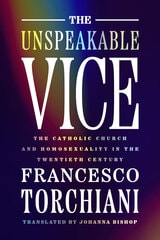
The Unspeakable Vice
The Catholic Church and Homosexuality in the Twentieth CenturyFrancesco Torchiani, Translated by Johanna Bishop
University of Wisconsin Press, 2026
As gay men and lesbian women increasingly gained recognition and acceptance in twentieth-century literature and film, and subsequently in social and political movements, the Catholic Church reacted by subtly moving away from its overt condemnation of homosexuality as an urgent moral problem and toward tacitly shunning homosexuality as an “unspeakable vice.” In this revealing history, Francesco Torchiani reconstructs the Catholic Church’s shifting attitudes toward homosexuality during this period by drawing on a vast array of internal documents and external accounts. This monograph expands the scholarship on the relationship between Catholicism and homosexuality in terms of both method and content, ultimately concluding that the Catholic Church continues to wholeheartedly condemn homosexuality despite making genuine efforts to reflect on and understand its social and cultural impact. The Unspeakable Vice therefore sheds new light on and places into historical perspective the questions the Catholic Church continues to reckon with regarding its role in contemporary society.