Results by title
8642 books match the query '20th century' and 1764 start with t
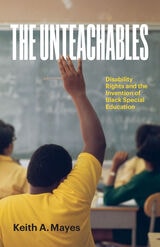
The Unteachables
Disability Rights and the Invention of Black Special EducationKeith A. Mayes
University of Minnesota Press, 2023
How special education used disability labels to marginalize Black students in public schools
The Unteachables examines the overrepresentation of Black students in special education over the course of the twentieth century. As African American children integrated predominantly white schools, many were disproportionately labeled educable mentally retarded (EMR), learning disabled (LD), and emotionally behavioral disordered (EBD). Keith A. Mayes charts the evolution of disability categories and how these labels kept Black learners segregated in American classrooms.
The civil rights and the educational disability rights movements, Mayes shows, have both collaborated and worked at cross-purposes since the beginning of school desegregation. Disability rights advocates built upon the opportunity provided by the civil rights movement to make claims about student invisibility at the level of intellectual and cognitive disabilities. Although special education ostensibly included children from all racial groups, educational disability rights advocates focused on the needs of white disabled students, while school systems used disability discourses to malign and marginalize Black students.
From the 1940s to the present, social science researchers, policymakers, school administrators, and teachers have each contributed to the overrepresentation of Black students in special education. Excavating the deep-seated racism embedded in both the public school system and public policy, The Unteachables explores the discriminatory labeling of Black students, and how it indelibly contributed to special education disproportionality, to student discipline and push-out practices, and to the school-to-prison pipeline effect.

The Untimely Present
Postdictatorial Latin American Fiction and the Task of MourningIdelber Avelar
Duke University Press, 1999
Avelar starts by offering new readings of works produced before the dictatorship era, in what is often considered the boom of Latin American fiction. Distancing himself from previous celebratory interpretations, he understands the boom as a manifestation of mourning for literature’s declining aura. Against this background, Avelar offers a reassessment of testimonial forms, social scientific theories of authoritarianism, current transformations undergone by the university, and an analysis of a number of novels by some of today’s foremost Latin American writers—such as Ricardo Piglia, Silviano Santiago, Diamela Eltit, João Gilberto Noll, and Tununa Mercado. Avelar shows how the ‘untimely’ quality of these narratives is related to the position of literature itself, a mode of expression threatened with obsolescence.
This book will appeal to scholars and students of Latin American literature and politics, cultural studies, and comparative literature, as well as to all those interested in the role of literature in postmodernity.
The Unwanted
European Refugees From 1St World WarMichael Marrus
Temple University Press, 2001
The Unwritten War
American Writers and the Civil WarDaniel Aaron
University of Alabama Press, 2003
In The Unwritten War, Daniel Aaron examines the literary output of American writers—major and minor—who treated the Civil War in their works. He seeks to understand why this devastating and defining military conflict has failed to produce more literature of a notably high and lasting order, why there is still no "masterpiece" of Civil War fiction.
In his portraits and analyses of 19th- and some 20th-century writers, Aaron distinguishes between those who dealt with the war only marginally—Henry Adams, Henry James, William Dean Howells, Mark Twain-and those few who sounded the war's tragic import—Herman Melville, Walt Whitman, and William Faulkner. He explores the extent to which the war changed the direction of American literature and how deeply it entered the consciousness of American writers. Aaron also considers how writers, especially those from the South, discerned the war's moral and historical implications.
The Unwritten War was originally published by Alfred A. Knopf in 1973. The New Republic declared, [This book's] major contribution will no doubt be to American literary history. In this respect it resembles Edmund Wilson's Patriotic Gore and is certain to become an indispensable guide for anyone who wants to explore the letters, diaries, journals, essays, novels, short stories, poems-but apparently no plays-which constitute Civil War literature. The mass of material is presented in a systematic, luminous, and useful way.

The Urbanization of Japanese Labor, 1868-1955
Wilkinson, O. T.
University of Massachusetts Press, 1965
This book examines the transition from peasant agriculturalism to urban industrialism in Japan was in the hands of a merchant class wholly oriented toward an internal economic system when she entered the modern international world. Consequently, Japanese political administration assumed a large portion of foreign commercial and industrial activity, in its initial stages. Thus, her modern economic and industrial development served political purposes of those concerned with Japan’s international political standing. In this sense, Japan’s early modernization was a “planned” transition. The industries sponsored by subsidy and outright government ownership therefore experienced rapid technological change and expansion, while those industries devoted to consumer goods were left to traditional means of production. The demographic characteristics of Japan’s urban population clearly reflect this background. The organization of a manufacturing group along the lines of family structure was modified, but not destroyed, by the transition to urban industrialism. Thus, in marked contrast to Europe, where the family is primarily a consumer unit, in Japan is a productive unit as well. While the experience of Japan does not provide a blueprint for nations that are now undertaking industrialization, the unique evolution of her urban-industrial complexes has great abstract value, in corroborating the theoretical contention that there is a wide range of alternatives to the pattern of industrialization that prevails in the West. All those concerned with preserving the best of their existing culture, while moving into the inevitable world-wide urban-industrial future, will benefit and be encouraged by the example of Japan.
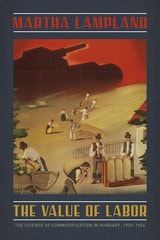
The Value of Labor
The Science of Commodification in Hungary, 1920-1956Martha Lampland
University of Chicago Press, 2016
Lampland trains her eye on the scientific claims of modern economic modeling, using Hungary’s unique vantage point to show how theories, policies, and techniques for commodifying agrarian labor that were born in the capitalist era were adopted by the socialist regime as a scientifically designed wage system on cooperative farms. Paying attention to the specific historical circumstances of Hungary, she explores the ways economists and the abstract notions they traffic in can both shape and be shaped by local conditions, and she compellingly shows how labor can be commodified in the absence of a labor market. The result is a unique account of economic thought that unveils hidden but necessary continuities running through the turbulent twentieth century.
The Vanishing Frame
Latin American Culture and Theory in the Postdictatorial EraBy Eugenio Claudio Di Stefano
University of Texas Press, 2018
In the postdictatorial era, Latin American cultural production and criticism have been defined by a series of assumptions about politics and art—especially the claim that political freedom can be achieved by promoting a more direct experience between the textual subject (often a victim) and the reader by eliminating the division between art and life. The Vanishing Frame argues against this conception of freedom, demonstrating how it is based on a politics of human rights complicit with economic injustices. Presenting a provocative counternarrative, Eugenio Claudio Di Stefano examines literary, visual, and interdisciplinary artists who insist on the autonomy of the work of art in order to think beyond the politics of human rights and neoliberalism in Latin American theory and culture.
Di Stefano demonstrates that while artists such as Diamela Eltit, Ariel Dorfman, and Albertina Carri develop a concept of justice premised on recognizing victims’ experiences of torture or disappearance, they also ignore the injustice of economic inequality and exploitation. By examining how artists such as Roberto Bolaño, Alejandro Zambra, and Fernando Botero not only reject an aesthetics of experience (and the politics it entails) but also insist on the work of art as a point of departure for an anticapitalist politics, this new reading of Latin American cultural production offers an alternative understanding of recent developments in Latin American aesthetics and politics that puts art at its center and the postdictatorship at its end.
The Vanishing Newspaper [2nd Ed]
Saving Journalism in the Information AgePhilip Meyer
University of Missouri Press, 2009

The Vatican and the Emergence of the Modern Middle East
Agnes de Dreuzy
Catholic University of America Press, 2016
The Victorian Eye
A Political History of Light and Vision in Britain, 1800-1910Chris Otter
University of Chicago Press, 2008
The Victorian Eye’s innovative interdisciplinary approach—and generous illustrations—will captivate a range of readers interested in the history of modern Britain, visual culture, technology, and urbanization.
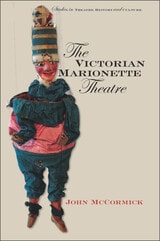
The Victorian Marionette Theatre
John Mccormick
University of Iowa Press, 2004
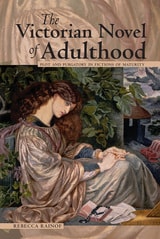
The Victorian Novel of Adulthood
Plot and Purgatory in Fictions of MaturityRebecca Rainof
Ohio University Press, 2015
In The Victorian Novel of Adulthood, Rebecca Rainof confronts the conventional deference accorded the bildungsroman as the ultimate plot model and quintessential expression of Victorian nation building. The novel of maturity, she contends, is no less important to our understanding of narrative, Victorian culture, and the possibilities of fiction.
Reading works by Charles Dickens, George Eliot, Henry James, John Henry Newman, and Virginia Woolf, Rainof exposes the little-discussed theological underpinnings of plot and situates the novel of maturity in intellectual and religious history, notably the Oxford Movement. Purgatory, a subject hotly debated in the period, becomes a guiding metaphor for midlife adventure in secular fiction. Rainof discusses theological models of gradual maturation, thus directing readers’ attention away from evolutionary theory and geology, and offers a new historical framework for understanding Victorian interest in slow and deliberate change.
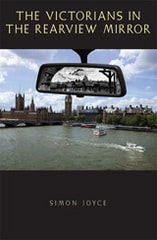
The Victorians in the Rearview Mirror
Simon Joyce
Ohio University Press, 2007
When Margaret Thatcher called in 1979 for a return to Victorian values such as hard work, self-reliance, thrift, and national pride, Labour Party leader Neil Kinnock responded that “Victorian values” also included “cruelty, misery, drudgery, squalor, and ignorance.”
The Victorians in the Rearview Mirror is an in-depth look at the ways that the twentieth century reacted to and reimagined its predecessor. It considers how the Victorian inheritance has been represented in literature, politics, film, and visual culture; the ways in which modernists and progressives have sought to differentiate themselves from an image of the Victorian; and how conservatives (and some liberals) have sought to revive elements of nineteenth-century life. Nostalgic and critical impulses combine to fix an understanding of the Victorians in the popular imagination.
Simon Joyce examines heritage culture, contemporary politics, and the “neo-Dickensian” novel to offer a more affirmative assessment of the Victorian legacy, one that lets us imagine a model of social interconnection and interdependence that has come under threat in today’s politics and culture.
Although more than one hundred years have passed since the death of Queen Victoria, the impact of her time is still fresh. The Victorians in the Rearview Mirror speaks to diverse audiences in literary and cultural studies, in addition to those interested in visual culture and contemporary politics, and situates detailed close readings of literary and cinematic texts in the context of a larger argument about the legacies of an era not as distant as we might like to think.
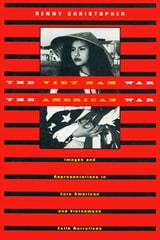
The Viet Nam War/The American War
Images and Representations in Euro-American and Vietnamese Exile NarrativesRenny Christopher
University of Massachusetts Press, 1995
This book seeks to reformulate the canon of writings on what is called “the Viet Nam War” in America and “the American War” in Viet Nam. Until recently, the accepted canon has consisted almost exclusively of American white male combat narratives, which often reflect and perpetuate Asian stereotypes. Renny Christopher introduces material that displays a bicultural perspective, including works by Vietnamese exile writers and by lesser-known Euro-Americans who attempt to bridge the cultural gap.
Christopher traces the history of American stereotyping of Asians and shows how Euro-American ethnocentricity has limited most American authors' ability to represent fairly the Vietnamese in their stories. By giving us access to Vietnamese representations of the war, she creates a context for understanding the way the war was experienced from the “other” side, and she offers perceptive, well-documented analyses of how and why Americans have so emphatically excised the Vietnamese from narratives about a war fought in their own country.
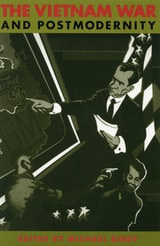
The Vietnam War and Postmodernity
Michael Bibby
University of Massachusetts Press, 1999
The longest war in the nation's history, the American military intervention in Vietnam dominated United States culture and politics from 1965 to 1975. In addition to causing immense devastation in Southeast Asia, the war transformed American society, with effects that continue to be felt today. Yet aside from a few cultural studies of the war's representations, scholars have tended to ignore the relationship between the American war in Vietnam and broader cultural developments in the West. Frederic Jameson once characterized the Vietnam War as “the first terrible postmodernist war,” suggesting that it embodied or reflected the sensibility of an emerging historical epoch. But does it make sense to place a military conflict within a category of cultural and aesthetic periodization? Is it possible to see the Vietnam War as an expression and reflection of postmodernity—what Jameson calls “the cultural logic of late capitalism?” These are some of the questions addressed in this volume. Ranging across a variety of disciplines, including philosophy, cultural studies, literary criticism, and film studies, the essays explore the war's discourses and technologies in relation to the post-modern condition. At the same time, they reinterpret key cultural representations of the war from a postmodern perspective. The result is a book that poses important challenges to both Vietnam War studies and postmodern studies, at once reshaping the ways postmodernity is conceived and reminding us of the war's enduring significance in contemporary cultural history. In addition to Michael Bibby, contributors are Philip D. Beidler, Michael Clark, Cynthia J. Fuchs, Brady Harrison, Tony Williams, Eric Gadzinski, Chris Hables Gray, and Douglas Kellner.
The Vietnamese American 1.5 Generation
Stories of War, Revolution, Flight and New Beginningsedited by Sucheng Chan
Temple University Press, 2006
The View From On the Road
The Rhetorical Vision of Jack KerouacOmar Swartz
Southern Illinois University Press, 2000
Through careful analysis of Jack Kerouac’s On the Road, Omar Swartz argues that Kerouac’s influence on American society is largely rhetorical. Kerouac’s significance as a cultural icon can be best understood, Swartz asserts, in terms of traditional rhetorical practices and principles.
To Swartz, Kerouac is a rhetor who symbolically reconstructs his world and offers arguments and encouragements for others to follow. Swartz proposes that On the Road constitutes a “rhetorical vision,” a reality-defining discourse suggesting alternative possibilities for growth and change. Swartz asserts that the reader of Kerouac’s On theRoadbecomes capable of responding to the larger, confusing culture in a strategic manner. Kerouac's rhetorical vision of an alternative social and cultural reality contributes to the identity of localized cultures within the United States.
The Village and the Class War
Anti-Kulak Campaign in Estonia 1944-49Anu Mai Kõll
Central European University Press, 2013

The Virgin and the Dynamo
Public Murals in American Architecture, 1893–1917Bailey Van Hook
Ohio University Press, 2003
The beaux-arts mural movement in America was fueled by energetic young artists and architects returning from training abroad. They were determined to transform American art and architecture to make them more thematically cosmopolitan and technically fluid and accomplished. The movement slowly coalesced around the decoration of mansions of the Gilded Age elite, mostly in New York, and of public buildings and institutions across the breadth of the country.
The Virgin and the Dynamo: Public Murals in American Architecture, 1893-1917 is the first book in almost a century to concentrate exclusively on the beaux-arts mural movement in the United States. Beginning with a short history of the movement from its inception in Boston during the American Renaissance, Bailey Van Hook focuses on the movement’s public manifestations in the period between the World’s Columbian Exposition in Chicago in 1893 and the First World War.
Professor Van Hook explores different aspects of the mural movement, the concept and meaning of “decoration,” the claim that murals are inherently democratic, the shift in preference from allegory to history, the gendered concept of modernity, the ideologies behind the iconography, and, finally, the decline of the movement when it began to be seen as old fashioned and anachronistic.
The Virgin and the Dynamo raises our understanding of the beaux-arts movement to a new level. For the general reader, this illustrated history will explain many familiar representations of local and national values.
The Virginal Mother in German Culture
From Sophie von La Roche and Goethe to MetropolisLauren Nossett
Northwestern University Press, 2019
Examining the virginal mother in the first novel by a German woman (Sophie von La Roche), canonical texts by Goethe, nineteenth-century popular fiction, autobiographical works, and Thea von Harbou’s novel Metropolis and Fritz Lang’s film by the same name, this book highlights the virginal mother at pivotal moments in German history and cultural development: the entrance of women into the literary market, the Goethezeit, the foundation of the German Empire, and the volatile Weimar Republic. The Virginal Mother in German Culture will be of interest to students and scholars of German literature, history, cultural and social studies, and women’s studies.
The Visceral Logics of Decolonization
Neetu Khanna
Duke University Press, 2020
The Visible Word
Experimental Typography and Modern Art, 1909-1923Johanna Drucker
University of Chicago Press, 1994
Drucker suggests a methodology closer to the actual practices of the early avant-garde artists, based on a rereading of their critical and theoretical writings. After reviewing theories of signification, the production of meaning, and materiality, she analyzes the work of four poets active in the typographic experimentation of the 1910s and 1920s: Ilia Zdanevich, Filippo Marinetti, Guillaume Apollinaire, and Tristan Tzara.
Few studies of avant-garde art and literature in the early twentieth century have acknowledged the degree to which typographic activity furthered debates about the very nature and function of the avant-garde. The Visible Word enriches our understanding of the processes of change in artistic production and reception in the twentieth century.

The Visual Afterlife of Abdelkader Bennahar
Robert Desjarlais
Duke University Press, 2025
The Visual Is Political
Feminist Photography and Countercultural Activity in 1970s BritainNa'ama Klorman-Eraqi
Rutgers University Press, 2019
The Vital Lie
Reality and Illusion in Modern DramaAnthony S. Abbott
University of Alabama Press, 1988
The Vital Lie: Reality and Illusion in Modern Drama is a sweeping inquiry into the stories people tell themselves in order to endure, survive, and belong. Moving from Ibsen and Strindberg to Beckett, Pinter, and beyond, Anthony S. Abbott traces the uneasy traffic between actuality and self-invention that animates modern theater. Rather than offering a simple survey, he uncovers a recurring dramatic predicament: the cognitive dissonance that afflict people when the beliefs they hold about themselves collide with reality.
Anthony S. Abbott writes with the erudite observation of a critic and the curiosity of a participant. His book explores illusion, meaning, and human resilience, a perspective that lends unusual urgency to its readings of canonical playwrights. Abbott's scholarship is expansive without becoming academic in the pejorative sense; his arguments remain animated by large questions about purpose, dignity, and the imaginative structures that sustain ordinary lives.
Ideal for theater devotees, literary historians, students of modernism, philosophy-minded readers, directors, dramaturgs, and anyone fascinated by self-deception, mythmaking, and identity. Admirers of intellectual biography, cultural criticism, existential inquiry, and ambitious cross-author interpretation will find this volume especially rewarding. Those who relish fresh angles on familiar classics will discover a study that is probing, elegant, and unexpectedly memorable.
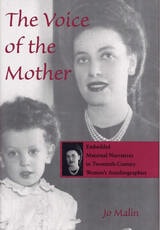
The Voice of the Mother
Embedded Maternal Narratives in Twentieth-Century Women's AutobiographiesJo Malin
Southern Illinois University Press, 2000
Every woman autobiographer is a daughter who writes and establishes her identity through her autobiographical narrative. In The Voice of the Mother, Jo Malin argues that many twentieth-century autobiographies by women contain an intertext, an embedded narrative, which is a biography of the writer/daughter’s mother.
Analyzing this narrative practice, Malin examines ten texts by women who seem particularly compelled to tell their mothers’ stories: Virginia Woolf, Sara Suleri, Kim Chernin, Drusilla Modjeska, Joan Nestle, Carolyn Steedman, Dorothy Allison, Adrienne Rich, Cherríe Moraga, and Audre Lorde. Each author is, in fact, able to write her own autobiography only by using a narrative form that contains her mother’s story at its core. These texts raise interesting questions about autobiography as a genre and about a feminist writing practice that resists and subverts the dominant literary tradition.
Malin theorizes a hybrid form of autobiographical narrative containing an embedded narrative of the mother. The textual relationship between the two narratives is unique among texts in the auto/biographical canon. This alternative narrative practice—in which the daughter attempts to talk both to her mother and about her—is equally an autobiography and a biography rather than one or the other. The technique is marked by a breakdown of subject/object categories as well as auto/biographical dichotomies of genre. Each text contains a “self” that is more plural than singular, yet neither.
In addition to being a theoretical and textual analysis, Malin’s book is also a mother-daughter autobiography and biography itself. She shares her own story and her mother’s story as a way to connect directly with readers and as a way to bridge the gap between theory and practice.
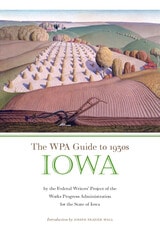
The WPA Guide to 1930s Iowa
Joseph Frazier Federal Writers Project
University of Iowa Press, 1938
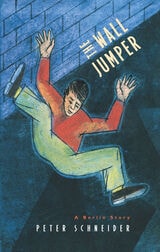
The Wall Jumper
A Berlin StoryPeter Schneider
University of Chicago Press, 1998
When the Berlin Wall was still the most tangible representation of the Cold War, Peter Schneider made this political and ideological symbol into something personal, that could be perceived on a human level, from more than one side. In Schneider's Berlin, real people cross the Wall not to defect but to quarrel with their lovers, see Hollywood movies, and sometimes just because they can't help themselves—the Wall has divided their emotions as much as it has their country. This unforgettable novel, originally published in 1982, takes us back to a time when the Cold War seemed to have no end in sight and the Wall loomed over everyday life on both sides of Berlin.
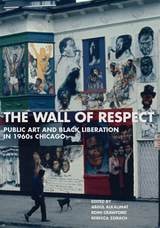
The Wall of Respect
Public Art and Black Liberation in 1960s ChicagoEdited by Abdul Alkalimat, Romi Crawford, and Rebecca Zorach
Northwestern University Press, 2017
The Wall of Respect received national critical acclaim when it was unveiled on the side of a building at Forty-Third and Langley in Chicago’s Bronzeville neighborhood. Painters and photographers worked side by side on the mural's seven themed sections, which featured portraits of Black heroes and sheroes, among them John Coltrane, Nina Simone, Billie Holiday, Malcolm X, Muhammad Ali, and W. E. B. Du Bois. The Wall became a platform for music, poetry, and political rallies. Over time it changed, reflecting painful controversies among the artists as well as broader shifts in the Civil Rights and Black Liberation Movements.
At the intersection of African American culture, politics, and Chicago art history, The Wall of Respect offers, in one keepsake-quality work, an unsurpassed collection of images and essays that illuminate a powerful monument that continues to fascinate artists, scholars, and readers in Chicago and across the United States.
The Wandering Signifier
Rhetoric of Jewishness in the Latin American ImaginaryErin Graff Zivin
Duke University Press, 2008
In her readings of Spanish American and Brazilian fiction, Graff Zivin highlights inventions of Jewishness in which the concept is constructed as a rhetorical device. She argues that Jewishness functions as a wandering signifier that while not wholly empty, can be infused with meaning based on the demands of the textual project in question. Just as Jews in Latin America possess distinct histories relative to their European and North American counterparts, they also occupy different symbolic spaces in the cultural landscape. Graff Zivin suggests that in Latin American fiction, anxiety, desire, paranoia, attraction, and repulsion toward Jewishness are always either in tension with or representative of larger attitudes toward otherness, whether racial, sexual, religious, national, economic, or metaphysical. She concludes The Wandering Signifier with an inquiry into whether it is possible to ethically represent the other within the literary text, or whether the act of representation necessarily involves the objectification of the other.

The War Against The Intellect
Episodes Decline Of DiscoursePeter Shaw
University of Iowa Press, 1989
The War at Home
Perspectives on the Arkansas Experience during World War IMark K. Christ
University of Arkansas Press, 2020
The War in American Culture
Society and Consciousness during World War IIEdited by Lewis A. Erenberg and Susan E. Hirsch
University of Chicago Press, 1996
World War II posed a crisis for American culture: to defeat the enemy, Americans had to unite across the class, racial and ethnic boundaries that had long divided them. Exploring government censorship of war photography, the revision of immigration laws, Hollywood moviemaking, swing music, and popular magazines, these essays reveal the creation of a new national identity that was pluralistic, but also controlled and sanitized. Concentrating on the home front and the impact of the war on the lives of ordinary Americans, the contributors give us a rich portrayal of family life, sexuality, cultural images, and working-class life in addition to detailed consideration of African Americans, Latinos, and women who lived through the unsettling and rapidly altered circumstances of wartime America.
The War in Their Minds
German Soldiers and Their Violent Pasts in West GermanySvenja Goltermann
University of Michigan Press, 2017
Originally published in German as Die Gesellschaft der Uberlebenden, The War in Their Minds examines hitherto unused source material—psychiatric medical files of soldiers—to make clear how difficult it was for the soldiers and their families to readjust to normal, everyday life. Goltermann allows these testimonies of violence, guilt, justification, and helplessness speak for themselves and sensitively explores how the pension claims of returning soldiers were to compete with the claims of the Holocaust victims to compensation.
The War on Words
Slavery, Race, and Free Speech in American LiteratureMichael T. Gilmore
University of Chicago Press, 2010
How did slavery and race impact American literature in the nineteenth century? In this ambitious book, Michael T. Gilmore argues that they were the carriers of linguistic restriction, and writers from Frederick Douglass to Stephen Crane wrestled with the demands for silence and circumspection that accompanied the antebellum fear of disunion and the postwar reconciliation between the North and South.
Proposing a radical new interpretation of nineteenth-century American literature, The War on Words examines struggles over permissible and impermissible utterance in works ranging from Thoreau’s “Civil Disobedience” to Henry James’s The Bostonians. Combining historical knowledge with groundbreaking readings of some of the classic texts of the American past, The War on Words places Lincoln’s Cooper Union address in the same constellation as Margaret Fuller’s feminism and Thomas Dixon’s defense of lynching. Arguing that slavery and race exerted coercive pressure on freedom of expression, Gilmore offers here a transformative study that alters our understanding of nineteenth-century literary culture and its fraught engagement with the right to speak.

The Wars inside Chile's Barracks
Remembering Military Service under PinochetLeith Passmore
University of Wisconsin Press, 2020
Relying on unpublished material, testimony, interviews, and field notes, Passmore locates these individuals' narratives of victimhood at the intersection of long-term histories of patriotism, masculinity, and cyclical poverty. These accounts reveal in detail how Pinochet's war against his own citizens—as well as the "almost-wars" with neighboring Peru, Bolivia, and Argentina—were also waged inside Chile's army barracks.
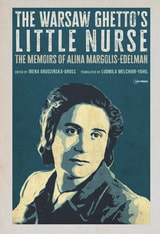
The Warsaw Ghetto's Little Nurse
The Memoirs of Alina Margolis-EdelmanAlina Margolis-Edelman
Central European University Press, 2026
The stories told in her book illuminate issues of anti-Semitism, Holocaust, and Jewish resistance to oppression. She writes about solidarity in times of great danger, resilience in dire situations, dignity of love and care.
The Wartime President
Executive Influence and the Nationalizing Politics of ThreatWilliam G. Howell, Saul P. Jackman, and Jon C. Rogowski
University of Chicago Press, 2013
For the first time, William G. Howell, Saul P. Jackman, and Jon C. Rogowski systematically analyze the question. Congress, they show, is more likely to defer to the president’s policy preferences when political debates center on national rather than local considerations. Thus, World War II and the post-9/11 wars in Afghanistan and Iraq significantly augmented presidential power, allowing the president to enact foreign and domestic policies that would have been unattainable in times of peace. But, contrary to popular belief, there are also times when war has little effect on a president’s influence in Congress. The Vietnam and Gulf Wars, for instance, did not nationalize our politics nearly so much, and presidential influence expanded only moderately.
Built on groundbreaking research, The Wartime President offers one of the most significant works ever written on the wartime powers presidents wield at home.
The Way It Was
Duane C. Spriestersbach
University of Iowa Press, 1999
The fall of 1964 was an exciting time at the University of Iowa. Its fourteenth president, Howard Bowen, had just arrived, and on a sunny October afternoon he made his first speech to the faculty. This occasion was note worthy enough—former president Virgil Hancher had held the job for twenty-four years—to attract the attention of a professor of speech pathology who had previously confined his considerable energies to teaching and research. Bowen's vision of what the university could become was so intriguing, so compelling, that this professor wrote and offered to help him achieve his objectives in any way possible. This quixotic offer changed Duane Spriestersbach's life and becomes the starting point for his story of his years as a University of Iowa administrator.
Drawing upon his personal files, the university archives, and interviews with many faculty members and administrators, Spriestersbach has created both an institutional and a personal history of the university. Judged by any standard, these years were tumultuous ones for higher education. Economic pressures from the state legislature, issues surrounding grants from such agencies as the National Institutes of Health and the National Science Foundation, the civil rights movement, student and faculty protests during the Vietnam era, massive changes in the physical and administrative shape of the campus, and the computerization of all parts of campus life had far-reaching consequences. Spriestersbach was at the center of these events at the University of Iowa; his perspective is unique, refreshing, and educational.
Spriestersbach's account of the Vietnam years and of the evolution of computers at Iowa will be particularly interesting to readers. He reported to four presidents, served as acting president, managed hundreds of meetings both dramatic and mundane, and reacted to many administrative restructurings. In this story of his life at the University of Iowa, he reveals the truth behind these words from his 1964 letter to President Bowen: “I think I am an idealist, a person with imagination, and a guy in a hurry. I believe investigation will show that I am a person with competitive administrative and executive abilities.”
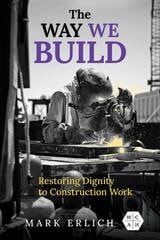
The Way We Build
Restoring Dignity to Construction WorkMark Erlich
University of Illinois Press, 2023
Mark Erlich blends long-view history with his personal experience inside the building trades to explain one of our economy’s least understood sectors. Erlich’s multifaceted account includes the dynamics of the industry, the backdrop of union policies, and powerful stories of everyday life inside the trades. He offers a much-needed overview of construction’s past and present while exploring roads to the future.

The Way We Really Were
THE GOLDEN STATE IN THE SECOND GREAT WAREdited by Roger W. Lotchin
University of Illinois Press, 2000
The Way We Really Were substantially enlivens this view, addressing topics that have been neglected or incompletely treated in the past to create a more rounded picture of the wartime situation at home. Exploring the developments brought to fruition by the war and linking them to their roots in earlier decades, contributors address the diversity of the musical scene, which arose from a cross-pollination of styles brought by Okies, blacks, and Mexican migrants. They examine increased political involvement by women, Hollywood's response to the war, and the merging of business and labor interests in the Bay Area Council. They also reveal how wartime dynamics led to substantial environmental damage and lasting economic gains by industry.
The Way We Really Were examines significant wartime changes in the circumstances of immigrant groups that have been largely overlooked by historians. Among these are Italian Americans, heavily insular and pro-Fascist before the war and very pro-American and assimilationist after, and Chinese American men, who achieved new legitimacy and entitlement through military service. Also included is a look at cultural negotiation among multiple ethnic groups in the Golden State. A valuable addition to the literature on California history, The War We Really Were provides an entree into new areas of scholarship and a fresh look at familiar ones.
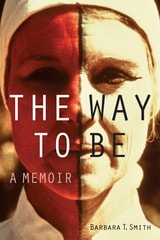
The Way to Be
A MemoirBarbara T. Smith
J. Paul Getty Trust, The, 0
For over fifty years, Barbara T. Smith has been at the forefront of artistic movements in California. Her work across many mediums explores concepts that strike at the core of human nature, including sexuality, physical and spiritual sustenance, technology, and death. In this memoir, Smith weaves together descriptive accounts of her pioneering performances with an intimate narrative of her life.
The Way to Be covers the years 1931 to 1981, up to the artist’s fiftieth birthday, resulting in an exhaustive catalogue of her early work. It reveals the personal stories and events behind her pieces and the challenges she faced in an art world dominated by sexism and machismo. Drawing on Smith’s archive at the Getty Research Institute, this enthralling book presents previously unpublished notes, documents, photographs, and firsthand accounts of her life and practice, as well as her more recent reflections on the past. The Way to Be demonstrates Smith’s lasting contributions to the field of contemporary art and provides an engaging commentary on a recent period of great cultural and political change.
This volume is published to accompany an exhibition on view at the Getty Research Institute at the Getty Center from February 28 to July 16, 2023.
The Weather for Poetry
Essays, Reviews, and Notes on Poetry, 1977-81Donald Hall
University of Michigan Press, 1982
The Weavers of Trautenau
Jewish Female Forced Labor in the HolocaustJanine P. Holc
Brandeis University Press, 2023
Beginning in late 1940, over three thousand Jewish girls and young women were forced from their family homes in Sosnowiec, Poland, and its surrounding towns to worksites in Germany. Believing that they were helping their families to survive, these young people were thrust into a world where they labored at textile work for twelve hours a day, lived in barracks with little food, and received only periodic news of events back home. By late 1943, their barracks had been transformed into concentration camps, where they were held until liberation in 1945.
Using a fresh approach to testimony collections, Janine P. Holc reconstructs the forced labor experiences of young Jewish females, as told by the women who survived and shared their testimony. Incorporating new source material, the book carefully constructs survivors’ stories while also taking a theoretical approach, one alert to socially constructed, intersectional systems of exploitation and harm. The Weavers of Trautenau elucidates the limits and possibilities of social relations inside camps and the challenges of moral and emotional repair in the face of indescribable loss during the Holocaust.
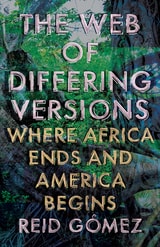
The Web of Differing Versions
Where Africa Ends and America BeginsReid Gómez
University of Minnesota Press, 2026
A visionary reckoning with prophecy, possession, and the grammar of liberation
A bold, experimental intervention in literary and theoretical discourse of colonialism and diaspora, The Web of Differing Versions engages with Leslie Marmon Silko’s 1991 Almanac of the Dead as literature, prophecy, and philosophy. Reid Gómez makes “The Indian Connection” that Silko prophesizes—Land Back!—and offers a prescient response to Silko’s enduring question: who has spiritual possession of the Américas?
Realizing the great capacity of Black and Native studies, Gómez crafts a visionary mode of scholarship that resists acknowledging conceptual, political, spiritual, formal, or linguistic borders. Rather than comparing or separating, she demonstrates how to stop telling things apart: Black|Indian, slavery|colonization, and writing|translation. Gómez shifts focus from racialized identities to the prophesied world itself, working with music, literature, and language to elaborate the connections that exist between racialized bodies, land, and sea as she emphasizes the ubiquity of escape, revolt, and beauty/hózhǫ́.
A theoretical composition, this book enacts a practice of re-visioning that uses Silko’s Almanac to challenge the limits of thought, language, and the very idea of scholarship. Attending the multiplicity of time into times, past into pasts, future into futures, The Web of Differing Versions offers a new grammar for a shared and violent world.
Retail e-book files for this title are screen-reader friendly.
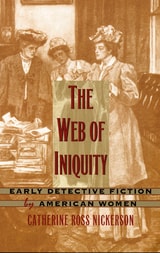
The Web of Iniquity
Early Detective Fiction by American WomenCatherine Ross Nickerson
Duke University Press, 1998
This subgenre allowed women writers to participate in postbellum culture and to critique other aspects of a rapidly changing society. Domestic detective fiction combined elements of sensationalist papers, popular nonfiction crime stories, and the domestic novel. Nickerson shows how it also incorporated the gothic tropes found in the work of Harriet Beecher Stowe, Louisa May Alcott, and Charlotte Brontë and influenced the work of Pauline Hopkins. Mid-nineteenth-century writer Metta Fuller Victor, who represented such important areas of cultural conflict as the role of professions in the formation of class identity and the possibility of women's independence and self-determination, paved the way for the appearance of women detectives in the late-nineteenth-century fiction of Anna Katharine Green. Nickerson credits Mary Roberts Rinehart, in particular, for bringing sophistication to the subgenre by amplifying the humorous, terrifying, and feminist elements inherent in earlier detective novels by women. Throughout the volume, Nickerson focuses on the narrative qualities of the domestic novel tradition and the ways in which it reflected ideologies of domesticity and gender. Also included are a discussion of various rewritings of the Lizzie Borden scandal in this tradition and an afterword on the relation of domestic detective fiction to the hard-boiled style.
The Web of Iniquity places the detective fiction written by women between 1850 and 1940 into ongoing discussions regarding women, culture, and literature and will appeal to scholars and students of women's studies, American studies, and literary history.
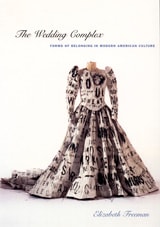
The Wedding Complex
Forms of Belonging in Modern American CultureElizabeth Freeman
Duke University Press, 2002
Freeman draws on queer theory and social history to focus on a range of texts where weddings do not necessarily lead to legal marriage but instead reflect yearnings for intimate arrangements other than long-term, state-sanctioned, domestic couplehood. Beginning with a look at the debates over gay marriage, she proceeds to consider literary works by Nathaniel Hawthorne, William Faulkner, Carson McCullers, Vladimir Nabokov, and Edgar Allan Poe, along with such Hollywood films as Father of the Bride, The Graduate, and The Godfather. She also discusses less well-known texts such as Su Friedrich’s experimental film First Comes Love and the off-Broadway, interactive dinner play Tony ‘n’ Tina’s Wedding.
Offering bold new ways to imagine attachment and belonging, and the public performance and recognition of social intimacy, The Wedding Complex is a major contribution to American studies, queer theory, and cultural studies.
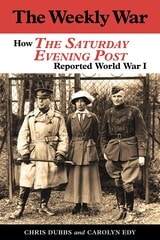
The Weekly War
How the Saturday Evening Post Reported World War IChris Dubbs
University of North Texas Press, 2023
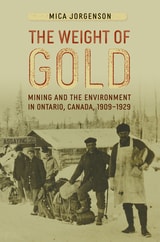
The Weight of Gold
Mining and the Environment in Ontario, Canada, 1909-1929Mica Jorgenson
University of Nevada Press, 2023
Mining in North America has long been criticized for its impact on the natural environment. Mica Jorgenson’s The Weight of Gold explores the history of Ontario, Canada’s rise to prominence in the gold mining industry, while detailing a series of environmental crises related to extraction activities. In Ontario in 1909, the discovery of exceptionally rich hard rock gold deposits in the Abitibi region in the north precipitated industrial development modeled on precedents in Australia, South Africa, and the United States. By the late 1920s, Ontario’s mines had reached their maturity, and in 1928, Minister of Mines Charles McRae called Canada “the mineral treasure house to [the] world.”
Mining companies increasingly depended upon their ability to redistribute the burdens of mining onto surrounding communities—a strategy they continue to use today—both at home and abroad. Jorgenson connects Canadian gold mining to its international context, revealing that Ontario’s gold mines informed extractive knowledge which would go on to shape Canada’s mining industry over the next century.
The Weimar Origins of Rhetorical Inquiry
David L. Marshall
University of Chicago Press, 2020