3703 books match the query '19th century' and 853 start with t

cover of The Bohemian Body: Gender and Sexuality in Modern Czech Culture

The Bohemian Body

Gender and Sexuality in Modern Czech Culture

Alfred Thomas

University of Wisconsin Press, 2007

     The Bohemian Body examines the modernist forces within nineteenth- and twentieth-century Europe that helped shape both Czech nationalism and artistic interaction among ethnic and social groups—Czechs and Germans, men and women, gays and straights. 
     By re-examining the work of key Czech male and female writers and poets from the National Revival to the Velvet Revolution, Alfred Thomas exposes the tendency of Czech literary criticism to separate the political and the personal in modern Czech culture. He points instead to the complex interplay of the political and the personal across ethnic, cultural, and intellectual lines and within the works of such individual writers as Karel Hynek Mácha, Bozena Nemcová, and Rainer Maria Rilke, resulting in the emergence and evolution of a protean modern identity. The product is a seemingly paradoxical yet nuanced understanding of Czech culture (including literature, opera, and film), long overlooked or misunderstood by Western scholars.
[more]
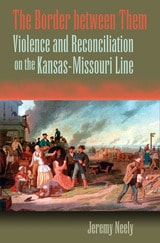
cover of The Border between Them: Violence and Reconciliation on the Kansas-Missouri Line

The Border between Them

Violence and Reconciliation on the Kansas-Missouri Line

Jeremy Neely

University of Missouri Press, 2007

The most bitter guerrilla conflict in American history raged along the Kansas-Missouri border from 1856 to 1865, making that frontier the first battleground in the struggle over slavery. That fiercely contested boundary represented the most explosive political fault line in the United States, and its bitter divisions foreshadowed an entire nation torn asunder. Jeremy Neely now examines the significance of the border war on both sides of the Kansas-Missouri line and offers a comparative, cross-border analysis of its origins, meanings, and consequences.

A narrative history of the border war and its impact on citizens of both states, The Border between Them recounts the exploits of John Brown, William Quantrill, and other notorious guerrillas, but it also uncovers the stories of everyday people who lived through that conflict. Examining the frontier period to the close of the nineteenth century, Neely frames the guerrilla conflict within the larger story of the developing West and squares that violent period with the more peaceful—though never tranquil—periods that preceded and followed it.

Focusing on the countryside south of the big bend in the Missouri River, an area where there was no natural boundary separating the states, Neely examines three border counties in each state that together illustrate both sectional division and national reunion. He draws on the letters and diaries of ordinary citizens—as well as newspaper accounts, election results, and census data—to illuminate the complex strands that helped bind Kansas and Missouri together in post–Civil War America. He shows how people on both sides of the line were already linked by common racial attitudes, farming practices, and ambivalence toward railroad expansion; he then tells how emancipation, industrialization, and immigration eventually eroded wartime divisions and facilitated the reconciliation of old foes from each state.

Today the “border war” survives in the form of interstate rivalries between collegiate Tigers and Jayhawks, allowing Neely to consider the limits of that reconciliation and the enduring power of identities forged in wartime. The Border between Them is a compelling account of the terrible first act of the American Civil War and its enduring legacy for the conflict’s veterans, victims, and survivors, as well as subsequent generations.
[more]
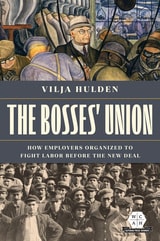
cover of The Bosses' Union: How Employers Organized to Fight Labor before the New Deal

The Bosses' Union

How Employers Organized to Fight Labor before the New Deal

Vilja Hulden

University of Illinois Press, 2023

At the opening of the twentieth century, labor strife repeatedly racked the nation. Union organization and collective bargaining briefly looked like a promising avenue to stability. But both employers and many middle-class observers remained wary of unions exercising independent power.

Vilja Hulden reveals how this tension provided the opening for pro-business organizations to shift public attention from concerns about inequality and dangerous working conditions to a belief that unions trampled on an individual's right to work. Inventing the term closed shop, employers mounted what they called an open-shop campaign to undermine union demands that workers at unionized workplaces join the union. Employer organizations lobbied Congress to resist labor's proposals as tyrannical, brought court cases to taint labor's tactics as illegal, and influenced newspaper coverage of unions. While employers were not a monolith nor all-powerful, they generally agreed that unions were a nuisance. Employers successfully leveraged money and connections to create perceptions of organized labor that still echo in our discussions of worker rights.

[more]
cover of The Boy Governor: Stevens T. Mason and the Birth of Michigan Politics

The Boy Governor

Stevens T. Mason and the Birth of Michigan Politics

Don Faber

University of Michigan Press, 2012

In 1831, Stevens T. Mason was named Secretary of the Michigan Territory at the tender age of 19, two years before he could even vote. The youngest presidential appointee in American history, Mason quickly stamped his persona on Michigan life in large letters. After championing the territory's successful push for statehood without congressional authorization, he would defend his new state's border in open defiance of the country's political elite and then orchestrate its expansion through the annexation of the Upper Peninsula---all before his official election as Michigan's first governor at age 24, the youngest chief executive in any state's history.

The Boy Governor tells the complete story of this dominant political figure in Michigan's early development. Capturing Mason's youthful idealism and visionary accomplishments, including his advocacy for a strong state university and legislating for the creation of the Soo Locks, this biography renders a vivid portrait of Michigan's first governor---his conflicts, his desires, and his sense of patriotism. This book will appeal to anyone with a love of American history and interest in the many, larger-than-life personalities that battled on the political stage during the Jacksonian era.

[more]
cover of The Brink of Freedom: Improvising Life in the Nineteenth-Century Atlantic World

The Brink of Freedom

Improvising Life in the Nineteenth-Century Atlantic World

David Kazanjian

Duke University Press, 2016
In The Brink of Freedom David Kazanjian revises nineteenth-century conceptions of freedom by examining the ways black settler colonists in Liberia and Mayan rebels in Yucatán imagined how to live freely. Focusing on colonial and early national Liberia and the Caste War of Yucatán, Kazanjian interprets letters from black settlers in apposition to letters and literature from Mayan rebels and their Creole antagonists. He reads these overlooked, multilingual archives not for their descriptive content, but for how they unsettle and recast liberal forms of freedom within global systems of racial capitalism. By juxtaposing two unheralded and seemingly unrelated Atlantic histories, Kazanjian finds remarkably fresh, nuanced, and worldly conceptions of freedom thriving amidst the archived everyday. The Brink of Freedom’s speculative, quotidian globalities ultimately ask us to improvise radical ways of living in the world.
[more]
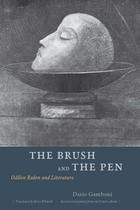
cover of The Brush and the Pen: Odilon Redon and Literature

The Brush and the Pen

Odilon Redon and Literature

Dario Gamboni

University of Chicago Press, 2011

French symbolist artist Odilon Redon (1840–1916) seemed to thrive at the intersection of literature and art. Known as “the painter-writer,” he drew on the works of Poe, Baudelaire, Flaubert, and Mallarmé for his subject matter. And yet he concluded that visual art has nothing to do with literature. Examining this apparent contradiction, The Brush and the Pen transforms the way we understand Redon’s career and brings to life the interaction between writers and artists in fin-de-siècle Paris.
Dario Gamboni tracks Redon’s evolution from collaboration with the writers of symbolism and decadence to a defense of the autonomy of the visual arts. He argues that Redon’s conversion was the symptom of a mounting crisis in the relationship between artists and writers, provoked at the turn of the century by the growing power of art criticism that foreshadowed the modernist separation of the arts into intractable fields. In addition to being a distinguished study of this provocative artist, The Brush and the Pen offers a critical reappraisal of the interaction of art, writing, criticism, and government institutions in late nineteenth-century France.
[more]
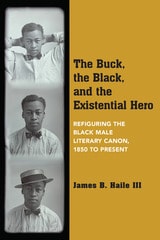
cover of The Buck, the Black, and the Existential Hero: Refiguring the Black Male Literary Canon, 1850 to Present

The Buck, the Black, and the Existential Hero

Refiguring the Black Male Literary Canon, 1850 to Present

James B. Haile III

Northwestern University Press, 2020

Outstanding Academic Title, CHOICE

The Buck, the Black, and the Existential Hero: Refiguring the Black Male Literary Canon, 1850 to Present
combines philosophy, literary theory, and jazz studies with Africana studies to develop a theory of the black male literary imagination. In doing so, it seeks to answer fundamental aesthetic and existential questions: How does the experience of being black and male in the modern West affect the telling of a narrative, the shape or structure of a novel, the development of characters and plot lines, and the nature of criticism itself?
 
James B. Haile argues that, since black male identity is largely fluid and open to interpretation, reinterpretation, and misinterpretation, the literature of black men has developed flexibility and improvisation, termed the “jazz of life.” Our reading of this literature requires the same kind of flexibility and improvisation to understand what is being said and why, as well as what is not being said and why. Finally, the book attempts to offer this new reading experience by placing texts by well-known authors, such as Frederick Douglass, Ralph Ellison, and Colson Whitehead, in conversation with texts by those who are less well known and those who have, for the most part, been forgotten, in particular, Cecil Brown. Doing so challenges the reader to visit and revisit these novels with a new perspective about the social, political, historical, and psychic realities of black men.
 
[more]
cover of The Burden of Rhyme: Victorian Poetry, Formalism, and the Feeling of Literary History

The Burden of Rhyme

Victorian Poetry, Formalism, and the Feeling of Literary History

Naomi Levine

University of Chicago Press, 2024

A major new account of Victorian poetry and its place in the field of literary studies.

The Burden of Rhyme shows how the nineteenth-century search for the origin of rhyme shaped the theory and practice of poetry. For Victorians, rhyme was not (as it was for the New Critics, and as it still is for us) a mere technique or ahistorical form. Instead, it carried vivid historical fantasies derived from early studies of world literature. Naomi Levine argues that rhyme’s association with the advent of literary modernity and with a repertoire of medievalist, Italophilic, and orientalist myths about love, loss, and poetic longing made it a sensitive historiographic instrument. Victorian poets used rhyme to theorize both literary history and the most elusive effects of aesthetic form. This Victorian formalism, which insisted on the significance of origins, was a precursor to and a challenge for twentieth-century methods. In uncovering the rich relationship between Victorian poetic forms and a forgotten style of literary-historical thought, The Burden of Rhyme reveals the unacknowledged influence of Victorian poetics—and its repudiation—on the development of modern literary criticism.
[more]
cover of The Burdens of Intimacy: Psychoanalysis and Victorian Masculinity

The Burdens of Intimacy

Psychoanalysis and Victorian Masculinity

Christopher Lane

University of Chicago Press, 1998

Why does passion bewilder and torment so many Victorian protagonists? And why do so many literary characters experience moments of ecstasy before their deaths? In this original study, Christopher Lane shows why Victorian fiction conveys both the pleasure and anguish of intimacy. Examining works by Bulwer-Lytton, Swinburne, Schreiner, Hardy, James, Santayana, and Forster, he argues that these writers struggled with aspects of psychology that were undermining the utilitarian ethos of the Victorian age.

Lane discredits the conservative notion that Victorian literature expresses only a demand for repression and moral restraint. But he also refutes historicist and Foucauldian approaches, arguing that they dismiss the very idea of repression and end up denouncing psychoanalysis as complicit in various kinds of oppression. These approaches, Lane argues, reduce Victorian literature to a drama about politics, power, and the ego. Striving instead to reinvigorate discussions of fantasy and the unconscious, Lane offers a clear, often startling account of writers who grapple with the genuine complexities of love, desire, and friendship.
[more]
cover of The Bureaucrats

The Bureaucrats

Honore De Balzac

Northwestern University Press, 1993

The Bureaucrats (Les Employes) stands out in Balzac's immense Human Comedy by concentrating precisely and penetratingly on a distinctive "modern" institution: France's state bureaucracy. Rabourdin, aided by his unscrupulous wife, attempts to reorganize and streamline the entire system. Rabourdin's plan will halve the government's size while doubling its revenue. When the plan is leaked, Rabourdin's rival—an utter incompetent—gains the overwhelming support of the frightened and desperate body of low-ranking functionaries.

The novel contains the recognizable themes of Balzac's work: obsessive ambition, conspiracy and human pettiness, and a melodramatic struggle between the social good and the evils of folly and stupidity. It is also an unusual, dramatized analysis of a developing political institution and its role in shaping social class and mentality.
[more]
cover of The Business of Charity: The Woman's Exchange Movement, 1832-1900

The Business of Charity

The Woman's Exchange Movement, 1832-1900

Kathleen Waters Sander

University of Illinois Press, 1998

In the nineteenth century, Woman's Exchanges formed a vast national network that created economic alternatives for financially vulnerable women in a world that permitted few respectable employment options. Many remain in business. 

Kathleen Waters Sander delves into the history of Woman's Exchanges and looks at the women who led the organizations—and those who used them to stave off poverty. One of the nation's oldest continuously operating voluntary movements, Exchanges like the Philadelphia Ladies' Depository and the Dorcas Society were fashionable, popular shops where women who had fallen on hard times could sustain themselves. By selling their handiwork on consignment, they not only earned money but avoided the stigma of seeking public employment. As Sander shows, Exchanges evolved into an important forum for entrepreneurial growth. They also provide an example of how women used the voluntary sector, which had so successfully served as a conduit for their political and social reforms, to advance opportunities for economic independence.

[more]
cover of The Business of Newspapers

The Business of Newspapers

University of Nevada Press, 1992
[more]
cover of The Cadottes: A Fur Trade Family on Lake Superior

The Cadottes

A Fur Trade Family on Lake Superior

Robert Silbernagel

Wisconsin Historical Society Press, 2023
The Great Lakes fur trade spanned two centuries and thousands of miles, but the story of one particular family, the Cadottes, illuminates the history of trade and trapping while exploring under-researched stories of French-Ojibwe political, social, and economic relations. Multiple generations of Cadottes were involved in the trade, usually working as interpreters and peacemakers, as the region passed from French to British to American control. Focusing on the years 1760 to 1840—the heyday of the Great Lakes fur trade—Robert Silbernagel delves into the lives of the Cadottes, with particular emphasis on the Ojibwe–French Canadian Michel Cadotte and his Ojibwe wife, Equaysayway, who were traders and regional leaders on Madeline Island for nearly forty years. In The Cadottes: A Fur Trade Family on Lake Superior, Silbernagel deepens our understanding of this era with stories of resilient, remarkable people.
[more]
cover of The Cadottes: A Fur Trade Family on Lake Superior

The Cadottes

A Fur Trade Family on Lake Superior

Robert Silbernagel

Wisconsin Historical Society Press, 2026

The Great Lakes fur trade spanned two centuries and thousands of miles, but the story of one particular family, the Cadottes, illuminates the history of trade and trapping while exploring under-researched stories of French-Ojibwe political, social, and economic relations. Multiple generations of Cadottes were involved in the trade, usually working as interpreters and peacemakers, as the region passed from French to British to American control. Focusing on the years 1760 to 1840—the heyday of the Great Lakes fur trade—Robert Silbernagel delves into the lives of the Cadottes, with particular emphasis on the Ojibwe–French Canadian Michel Cadotte and his Ojibwe wife, Equaysayway, who were traders and regional leaders on Madeline Island for nearly forty years. In The Cadottes: A Fur Trade Family on Lake Superior, Silbernagel deepens our understanding of this era with stories of resilient, remarkable people.
[more]
cover of The California Days of Ralph Waldo Emerson

The California Days of Ralph Waldo Emerson

Brian C. Wilson

University of Massachusetts Press, 2022

In the spring of 1871, Ralph Waldo Emerson boarded a train in Concord, Massachusetts, bound for a month-and-a-half-long tour of California—an interlude that became one of the highlights of his life. On their journey across the American West, he and his companions would take in breathtaking vistas in the Rockies and along the Pacific Coast, speak with a young John Muir in the Yosemite Valley, stop off in Salt Lake City for a meeting with Brigham Young, and encounter a diversity of communities and cultures that would challenge their Yankee prejudices.

Based on original research employing newly discovered documents, The California Days of Ralph Waldo Emerson maps the public story of this group’s travels onto the private story of Emerson’s final years, as aphasia set in and increasingly robbed him of his words. Engaging and compelling, this travelogue makes it clear that Emerson was still capable of wonder, surprise, and friendship, debunking the presumed darkness of his last decade.
[more]
cover of The Cana Sanctuary: History, Diplomacy, and Black Catholic Marriage in Antebellum St. Augustine, Florida

The Cana Sanctuary

History, Diplomacy, and Black Catholic Marriage in Antebellum St. Augustine, Florida

Frank Marotti, Jr.

University of Alabama Press, 2012

Uses the collective testimony from more than two hundred Patriot War claims, previously believed to have been destroyed, to offer insight into the lesser-known Patriot War of 1812 and to constitute an intellectual history of everyday people caught in the path of an expanding American empire

In the late seventeenth century a group of about a dozen escaped African slaves from the English colony of Carolina reached the Spanish settlement of St. Augustine. In a diplomatic bid for sanctuary, to avoid extradition and punishment, they requested the sacrament of Catholic baptism from the Spanish Catholic Church. Their negotiations brought about their baptism and with it their liberation. The Cana Sanctuary focuses on what author Frank Marotti terms “folk diplomacy”—political actions conducted by marginalized, non-state sectors of society—in this instance by formerly enslaved African Americans in antebellum East Florida. The book explores the unexpected transformations that occurred in seventeenth- and eighteenth-century St. Augustine as more and more ex-slaves arrived to find their previously disregarded civil rights upheld under sacred codes by an international, nongovernmental, authoritative organization.

With the Catholic Church acting as an equalizing, empowering force for escaped African slaves, the Spanish religious sanctuary policy became part of popular historical consciousness in East Florida. As such, it allowed for continual confrontations between the law of the Church and the law of the South. Tensions like these survived, ultimately lending themselves to an “Afro-Catholicism” sentiment that offered support for antislavery arguments.
[more]
cover of The Caning: The Assault That Drove America to Civil War

The Caning

The Assault That Drove America to Civil War

Stephen Puleo

Westholme Publishing, 2012

A Turning Point in American History, the Beating of U.S. Senator Charles Sumner and the Beginning of the War Over Slavery
Early in the afternoon of May 22, 1856, ardent pro-slavery Congressman Preston S. Brooks of South Carolina strode into the United States Senate Chamber in Washington, D.C., and began beating renowned anti-slavery Senator Charles Sumner with a gold-topped walking cane. Brooks struck again and again—more than thirty times across Sumner’s head, face, and shoulders—until his cane splintered into pieces and the helpless Massachusetts senator, having nearly wrenched his desk from its fixed base, lay unconscious and covered in blood. It was a retaliatory attack. Forty-eight hours earlier, Sumner had concluded a speech on the Senate floor that had spanned two days, during which he vilified Southern slaveowners for violence occurring in Kansas, called Stephen A. Douglas of Illinois a “noise-some, squat, and nameless animal,” and famously charged Brooks’s second cousin, South Carolina Senator Andrew Butler, as having “a mistress. . . who ugly to others, is always lovely to him. . . . I mean, the harlot, Slavery.” Brooks not only shattered his cane during the beating, but also destroyed any pretense of civility between North and South.
One of the most shocking and provocative events in American history, the caning convinced each side that the gulf between them was unbridgeable and that they could no longer discuss their vast differences of opinion regarding slavery on any reasonable level.The Caning: The Assault That Drove America to Civil War tells the incredible story of this transformative event. While Sumner eventually recovered after a lengthy convalescence, compromise had suffered a mortal blow. Moderate voices were drowned out completely; extremist views accelerated, became intractable, and locked both sides on a tragic collision course.
The caning had an enormous impact on the events that followed over the next four years: the meteoric rise of the Republican Party and Abraham Lincoln; the Dred Scott decision; the increasing militancy of abolitionists, notably John Brown’s actions; and the secession of the Southern states and the founding of the Confederacy. As a result of the caning, the country was pushed, inexorably and unstoppably, to war. Many factors conspired to cause the Civil War, but it was the caning that made conflict and disunion unavoidable five years later.
[more]
cover of The Captain Departs: Ulysses S. Grant's Last Campaign

The Captain Departs

Ulysses S. Grant's Last Campaign

Thomas M. Pitkin. Foreword by John Y. Simon

Southern Illinois University Press, 1973

Early in 1885 Americans learned that General Grant was writing his Memoirs in a desperate race for time against an incurable cancer. Not generally known was the General’s precarious personal fi­nances, made so by imprudent invest­ments, and his gallant effort to provide for his family by his writing. For six months newspaper readers followed the dramatic contest, and the hearts of Americans were touched by the General’s last battle.

Grant’s last year was one of both per­sonal and literary triumph in the midst of tragedy, as Thomas M. Pitkin shows in this memorable and inspiring book. The Memoirs was completed; its remarkable literary quality made ita triumph. Ultimately more than 300,000sets of the two-volume work were sold. And Grant accepted the inevitable with quiet courage, and faded away in a manner sadly familiar to many American families.

Though told without maudlin touches, the story of Grant’s last year will leave few readers emotionally uninvolved, for itis an account of pain and suffering as well as mighty deeds, and truly deserves to be considered the General’s final victory.
[more]
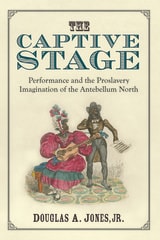
cover of The Captive Stage: Performance and the Proslavery Imagination of the Antebellum North

The Captive Stage

Performance and the Proslavery Imagination of the Antebellum North

Douglas A. Jones, Jr.

University of Michigan Press, 2014

In The Captive Stage, Douglas A. Jones, Jr. argues that proslavery ideology remained the dominant mode of racial thought in the antebellum north, even though chattel slavery had virtually disappeared from the region by the turn of the nineteenth century—and that northerners cultivated their proslavery imagination most forcefully in their performance practices. Jones explores how multiple constituencies, ranging from early national artisans and Jacksonian wage laborers to patrician elites and bourgeois social reformers, used the stage to appropriate and refashion defenses of black bondage as means to affirm their varying and often conflicting economic, political, and social objectives. Joining performance studies with literary criticism and cultural theory, he uncovers the proslavery conceptions animating a wide array of performance texts and practices, such as the “Bobalition” series of broadsides, blackface minstrelsy, stagings of the American Revolution, reform melodrama, and abolitionist discourse. Taken together, he suggests, these works did not amount to a call for the re-enslavement of African Americans but, rather, justifications for everyday and state-sanctioned racial inequities in their post-slavery society. Throughout, The Captive Stage elucidates how the proslavery imagination of the free north emerged in direct opposition to the inclusionary claims black publics enacted in their own performance cultures. In doing so, the book offers fresh contexts and readings of several forms of black cultural production, including early black nationalist parades, slave dance, the historiography of the revolutionary era, the oratory of radical abolitionists and the black convention movement, and the autobiographical and dramatic work of ex-slave William Wells Brown.
[more]
cover of The Carter Journals: Time Travels in Early U.S. History

The Carter Journals

Time Travels in Early U.S. History

Shane Phipps

Indiana Historical Society Press, 2014
When fourteen-year-old Cody Carter’s grandfather gives him a box of dusty leather journals written by their Carter ancestors, even the history-loving Cody could not have predicted the adventure he was about to take. Journal by journal, Cody is physically transported back in time to experience the lives of Carters on the frontier in North Carolina, Tennessee, and Indiana as the family moved ever westward in the eighteenth and nineteenth centuries. He hunts with Daniel Boone, huddles in a frontier fort under siege, makes friends with Native Americans in the Indiana Territory, operates a lock on the Whitewater Canal, hides slaves on the Underground Railroad, and experiences defeat at the Battle of Corydon. Ultimately, Cody confronts the difficult questions of war, westward expansion, and slavery while living the history of everyday people. Written by an eighth-grade history teacher determined to bring the past to life for his students, The Carter Journals reminds us that history is all around us---and that we daily make history of our own.
[more]
cover of The Centenary Edition of the Works of Nathaniel Hawthorne: VOL. II, THE HOUSE OF THE SEVEN GABLES

The Centenary Edition of the Works of Nathaniel Hawthorne

VOL. II, THE HOUSE OF THE SEVEN GABLES

Nathaniel Hawthorne

The Ohio State University Press, 1965

"Because it represents the first scholarly effort to establish texts as close as possible to the intentions of the author, this Centenary Edition makes obsolete all previous editions, notorious for their textual corruption. An eminent staff . . . has analyzed and synthesized the evidence of all MSS and worthwhile printed editions. Each volume includes a well documented introduction concerning such matters as circumstances leading to composition and history of publication as well as textual notes on alterations in the MSS, editorial emendations, etc." --Choice "The Centenary Edition, which has been producing weighty volumes of definitively edited texts of Hawthorne for a full generation, is now the sine qua non of Hawthorne scholarship. As an example of editorial care and research thoroughness it has been a model for the profession and as a physical object a model for publishers. In addition to the immensely important achievement of producing fully accurate texts of the romances, tales, and sketches, the Centenary editors have made available, for the very first time, all of the various Notebooks and letters. For the letters, especially, the wait has been long but the result is gratifying. Reading straight through the Centenary's six volumes of letters is a self-indulgent pleasure that brings us markedly closer to the man than we can get in any other way." --American Literature Representing decades of work, this is the definitive edition of Hawthorne's works. Each volume includes comprehensive notes and explanatory material. I: The Scarlet Letter $62.95 cloth 0-8142-0059-1 II: The House of the Seven Gables $69.95 cloth 0-8142-0060-5 III: The Blithedale Romance and Fanshawe $72.95 cloth 0-8142-0061-3 IV: The Marble Faun $83.95 cloth 0-8142-0062-1 V: Our Old Home $72.95 cloth 0-8142-0002-8 VI: True Stories from History and Biography $72.95 cloth 0-8142-0157-1 VII: A Wonder Book and Tanglewood Tales $72.95 cloth 0-8142-0158-X VIII: The American Notebooks $98.95 cloth 0-8142-0159-8 IX: Twice-told Tales $83.95 cloth 0-8142-0202-0 X: Mosses from an Old Manse $83.95 cloth 0-8142-0203-9 XI: The Snow Image and Uncollected Tales $72.95 cloth 0-8142-0204-7 XII: The American Claimant Manuscripts $83.95 cloth 0-8142-0251-9 XIII: The Elixir of Life Manuscripts $98.95 cloth 0-8142-0252-7 XIV: The French and Italian Notebooks $98.95 cloth 0-8142-0256-X XV: The Letters, 1813-1843 $98.95 cloth 0-8142-0363-9 XVI: The Letters, 1843-1853 $98.95 cloth 0-8142-0364-7 XVII: The Letters, 1853-1856 $83.95 cloth 0-8142-0365-5 XVIII: The Letters, 1857-1864 $98.95 cloth 0-8142-0383-3 XIX: The Consular Letters, 1853-1855 $83.95 cloth 0-8142-0384-1 XX: The Consular Letters, 1856-1857 $83.95 cloth 0-8142-0462-7 XXI: The English Notebooks, 1853-1856 $98.95 cloth 0-8142-0670-0 XXII: The English Notebooks, 1856-1860 $98.95 cloth 0-8142-0671-9 XXIII: Miscellaneous Prose and Verse $98.95 cloth 0-8142-0644-1
[more]
cover of The Centenary Edition of the Works of Nathaniel Hawthorne: VOL. IV, THE MARBLE FAUN

The Centenary Edition of the Works of Nathaniel Hawthorne

VOL. IV, THE MARBLE FAUN

Nathaniel Hawthorne

The Ohio State University Press, 1969

The fragility-and the durability-of human life and art dominate this story of American expatriates in Italy in the mid-nineteenth century. Befriended by Donatello, a young Italian with the classical grace of the "Marble Faun," Miriam, Hilda, and Kenyon find their pursuit of art taking a sinister turn as Miriam's unhappy past precipitates the present into tragedy.

Hawthorne's 'International Novel' dramatizes the confrontation of the Old World and the New and the uncertain relationship between the 'authentic' and the 'fake' in life as in art. The author's evocative descriptions of classic sites made The Marble Faun a favorite guidebook to Rome for Victorian tourists, but this richly ambiguous symbolic romance is also the story of a murder, and a parable of the Fall of Man. As the characters find their civilized existence disrupted by the awful consequences of impulse, Hawthorne leads his readers to question the value of Art and Culture and addresses the great evolutionary debate which was beginning to shake Victorian society.
[more]
cover of The Centenary Edition of the Works of Nathaniel Hawthorne: VOL. V, OUR OLD HOME

The Centenary Edition of the Works of Nathaniel Hawthorne

VOL. V, OUR OLD HOME

Nathaniel Hawthorne

The Ohio State University Press, 1970
"Because it represents the first scholarly effort to establish texts as close as possible to the intentions of the author, this Centenary Edition makes obsolete all previous editions, notorious for their textual corruption. An eminent staff . . . has analyzed and synthesized the evidence of all MSS and worthwhile printed editions. Each volume includes a well documented introduction concerning such matters as circumstances leading to composition and history of publication as well as textual notes on alterations in the MSS, editorial emendations, etc." --Choice "The Centenary Edition, which has been producing weighty volumes of definitively edited texts of Hawthorne for a full generation, is now the sine qua non of Hawthorne scholarship. As an example of editorial care and research thoroughness it has been a model for the profession and as a physical object a model for publishers. In addition to the immensely important achievement of producing fully accurate texts of the romances, tales, and sketches, the Centenary editors have made available, for the very first time, all of the various Notebooks and letters. For the letters, especially, the wait has been long but the result is gratifying. Reading straight through the Centenary's six volumes of letters is a self-indulgent pleasure that brings us markedly closer to the man than we can get in any other way." --American Literature Representing decades of work, this is the definitive edition of Hawthorne's works. Each volume includes comprehensive notes and explanatory material. I: The Scarlet Letter $62.95 cloth 0-8142-0059-1 II: The House of the Seven Gables $69.95 cloth 0-8142-0060-5 III: The Blithedale Romance and Fanshawe $72.95 cloth 0-8142-0061-3 IV: The Marble Faun $83.95 cloth 0-8142-0062-1 V: Our Old Home $72.95 cloth 0-8142-0002-8 VI: True Stories from History and Biography $72.95 cloth 0-8142-0157-1 VII: A Wonder Book and Tanglewood Tales $72.95 cloth 0-8142-0158-X VIII: The American Notebooks $98.95 cloth 0-8142-0159-8 IX: Twice-told Tales $83.95 cloth 0-8142-0202-0 X: Mosses from an Old Manse $83.95 cloth 0-8142-0203-9 XI: The Snow Image and Uncollected Tales $72.95 cloth 0-8142-0204-7 XII: The American Claimant Manuscripts $83.95 cloth 0-8142-0251-9 XIII: The Elixir of Life Manuscripts $98.95 cloth 0-8142-0252-7 XIV: The French and Italian Notebooks $98.95 cloth 0-8142-0256-X XV: The Letters, 1813-1843 $98.95 cloth 0-8142-0363-9 XVI: The Letters, 1843-1853 $98.95 cloth 0-8142-0364-7 XVII: The Letters, 1853-1856 $83.95 cloth 0-8142-0365-5 XVIII: The Letters, 1857-1864 $98.95 cloth 0-8142-0383-3 XIX: The Consular Letters, 1853-1855 $83.95 cloth 0-8142-0384-1 XX: The Consular Letters, 1856-1857 $83.95 cloth 0-8142-0462-7 XXI: The English Notebooks, 1853-1856 $98.95 cloth 0-8142-0670-0 XXII: The English Notebooks, 1856-1860 $98.95 cloth 0-8142-0671-9 XXIII: Miscellaneous Prose and Verse $98.95 cloth 0-8142-0644-1
[more]
cover of The Centenary Edition of the Works of Nathaniel Hawthorne: VOL. VIII, THE AMERICAN NOTEBOOKS

The Centenary Edition of the Works of Nathaniel Hawthorne

VOL. VIII, THE AMERICAN NOTEBOOKS

Nathaniel Hawthorne

The Ohio State University Press, 1972

"Because it represents the first scholarly effort to establish texts as close as possible to the intentions of the author, this Centenary Edition makes obsolete all previous editions, notorious for their textual corruption. An eminent staff . . . has analyzed and synthesized the evidence of all MSS and worthwhile printed editions. Each volume includes a well documented introduction concerning such matters as circumstances leading to composition and history of publication as well as textual notes on alterations in the MSS, editorial emendations, etc." --Choice "The Centenary Edition, which has been producing weighty volumes of definitively edited texts of Hawthorne for a full generation, is now the sine qua non of Hawthorne scholarship. As an example of editorial care and research thoroughness it has been a model for the profession and as a physical object a model for publishers. In addition to the immensely important achievement of producing fully accurate texts of the romances, tales, and sketches, the Centenary editors have made available, for the very first time, all of the various Notebooks and letters. For the letters, especially, the wait has been long but the result is gratifying. Reading straight through the Centenary's six volumes of letters is a self-indulgent pleasure that brings us markedly closer to the man than we can get in any other way." --American Literature Representing decades of work, this is the definitive edition of Hawthorne's works. Each volume includes comprehensive notes and explanatory material. I: The Scarlet Letter $62.95 cloth 0-8142-0059-1 II: The House of the Seven Gables $69.95 cloth 0-8142-0060-5 III: The Blithedale Romance and Fanshawe $72.95 cloth 0-8142-0061-3 IV: The Marble Faun $83.95 cloth 0-8142-0062-1 V: Our Old Home $72.95 cloth 0-8142-0002-8 VI: True Stories from History and Biography $72.95 cloth 0-8142-0157-1 VII: A Wonder Book and Tanglewood Tales $72.95 cloth 0-8142-0158-X VIII: The American Notebooks $98.95 cloth 0-8142-0159-8 IX: Twice-told Tales $83.95 cloth 0-8142-0202-0 X: Mosses from an Old Manse $83.95 cloth 0-8142-0203-9 XI: The Snow Image and Uncollected Tales $72.95 cloth 0-8142-0204-7 XII: The American Claimant Manuscripts $83.95 cloth 0-8142-0251-9 XIII: The Elixir of Life Manuscripts $98.95 cloth 0-8142-0252-7 XIV: The French and Italian Notebooks $98.95 cloth 0-8142-0256-X XV: The Letters, 1813-1843 $98.95 cloth 0-8142-0363-9 XVI: The Letters, 1843-1853 $98.95 cloth 0-8142-0364-7 XVII: The Letters, 1853-1856 $83.95 cloth 0-8142-0365-5 XVIII: The Letters, 1857-1864 $98.95 cloth 0-8142-0383-3 XIX: The Consular Letters, 1853-1855 $83.95 cloth 0-8142-0384-1 XX: The Consular Letters, 1856-1857 $83.95 cloth 0-8142-0462-7 XXI: The English Notebooks, 1853-1856 $98.95 cloth 0-8142-0670-0 XXII: The English Notebooks, 1856-1860 $98.95 cloth 0-8142-0671-9 XXIII: Miscellaneous Prose and Verse $98.95 cloth 0-8142-0644-1
[more]
cover of The Centenary Edition of the Works of Nathaniel Hawthorne: VOL. X, MOSSES FROM AN OLD MANSE

The Centenary Edition of the Works of Nathaniel Hawthorne

VOL. X, MOSSES FROM AN OLD MANSE

Nathaniel Hawthorne

The Ohio State University Press, 1974

"Because it represents the first scholarly effort to establish texts as close as possible to the intentions of the author, this Centenary Edition makes obsolete all previous editions, notorious for their textual corruption. An eminent staff . . . has analyzed and synthesized the evidence of all MSS and worthwhile printed editions. Each volume includes a well documented introduction concerning such matters as circumstances leading to composition and history of publication as well as textual notes on alterations in the MSS, editorial emendations, etc." --Choice "The Centenary Edition, which has been producing weighty volumes of definitively edited texts of Hawthorne for a full generation, is now the sine qua non of Hawthorne scholarship. As an example of editorial care and research thoroughness it has been a model for the profession and as a physical object a model for publishers. In addition to the immensely important achievement of producing fully accurate texts of the romances, tales, and sketches, the Centenary editors have made available, for the very first time, all of the various Notebooks and letters. For the letters, especially, the wait has been long but the result is gratifying. Reading straight through the Centenary's six volumes of letters is a self-indulgent pleasure that brings us markedly closer to the man than we can get in any other way." --American Literature Representing decades of work, this is the definitive edition of Hawthorne's works. Each volume includes comprehensive notes and explanatory material. I: The Scarlet Letter $62.95 cloth 0-8142-0059-1 II: The House of the Seven Gables $69.95 cloth 0-8142-0060-5 III: The Blithedale Romance and Fanshawe $72.95 cloth 0-8142-0061-3 IV: The Marble Faun $83.95 cloth 0-8142-0062-1 V: Our Old Home $72.95 cloth 0-8142-0002-8 VI: True Stories from History and Biography $72.95 cloth 0-8142-0157-1 VII: A Wonder Book and Tanglewood Tales $72.95 cloth 0-8142-0158-X VIII: The American Notebooks $98.95 cloth 0-8142-0159-8 IX: Twice-told Tales $83.95 cloth 0-8142-0202-0 X: Mosses from an Old Manse $83.95 cloth 0-8142-0203-9 XI: The Snow Image and Uncollected Tales $72.95 cloth 0-8142-0204-7 XII: The American Claimant Manuscripts $83.95 cloth 0-8142-0251-9 XIII: The Elixir of Life Manuscripts $98.95 cloth 0-8142-0252-7 XIV: The French and Italian Notebooks $98.95 cloth 0-8142-0256-X XV: The Letters, 1813-1843 $98.95 cloth 0-8142-0363-9 XVI: The Letters, 1843-1853 $98.95 cloth 0-8142-0364-7 XVII: The Letters, 1853-1856 $83.95 cloth 0-8142-0365-5 XVIII: The Letters, 1857-1864 $98.95 cloth 0-8142-0383-3 XIX: The Consular Letters, 1853-1855 $83.95 cloth 0-8142-0384-1 XX: The Consular Letters, 1856-1857 $83.95 cloth 0-8142-0462-7 XXI: The English Notebooks, 1853-1856 $98.95 cloth 0-8142-0670-0 XXII: The English Notebooks, 1856-1860 $98.95 cloth 0-8142-0671-9 XXIII: Miscellaneous Prose and Verse $98.95 cloth 0-8142-0644-1
[more]
cover of The Centenary Edition of the Works of Nathaniel Hawthorne: Vol. XIV, The French and Italian Notebooks

The Centenary Edition of the Works of Nathaniel Hawthorne

Vol. XIV, The French and Italian Notebooks

Nathaniel Hawthorne

The Ohio State University Press, 1980

"Because it represents the first scholarly effort to establish texts as close as possible to the intentions of the author, this Centenary Edition makes obsolete all previous editions, notorious for their textual corruption. An eminent staff . . . has analyzed and synthesized the evidence of all MSS and worthwhile printed editions. Each volume includes a well documented introduction concerning such matters as circumstances leading to composition and history of publication as well as textual notes on alterations in the MSS, editorial emendations, etc." --Choice "The Centenary Edition, which has been producing weighty volumes of definitively edited texts of Hawthorne for a full generation, is now the sine qua non of Hawthorne scholarship. As an example of editorial care and research thoroughness it has been a model for the profession and as a physical object a model for publishers. In addition to the immensely important achievement of producing fully accurate texts of the romances, tales, and sketches, the Centenary editors have made available, for the very first time, all of the various Notebooks and letters. For the letters, especially, the wait has been long but the result is gratifying. Reading straight through the Centenary's six volumes of letters is a self-indulgent pleasure that brings us markedly closer to the man than we can get in any other way." --American Literature Representing decades of work, this is the definitive edition of Hawthorne's works. Each volume includes comprehensive notes and explanatory material. I: The Scarlet Letter $62.95 cloth 0-8142-0059-1 II: The House of the Seven Gables $69.95 cloth 0-8142-0060-5 III: The Blithedale Romance and Fanshawe $72.95 cloth 0-8142-0061-3 IV: The Marble Faun $83.95 cloth 0-8142-0062-1 V: Our Old Home $72.95 cloth 0-8142-0002-8 VI: True Stories from History and Biography $72.95 cloth 0-8142-0157-1 VII: A Wonder Book and Tanglewood Tales $72.95 cloth 0-8142-0158-X VIII: The American Notebooks $98.95 cloth 0-8142-0159-8 IX: Twice-told Tales $83.95 cloth 0-8142-0202-0 X: Mosses from an Old Manse $83.95 cloth 0-8142-0203-9 XI: The Snow Image and Uncollected Tales $72.95 cloth 0-8142-0204-7 XII: The American Claimant Manuscripts $83.95 cloth 0-8142-0251-9 XIII: The Elixir of Life Manuscripts $98.95 cloth 0-8142-0252-7 XIV: The French and Italian Notebooks $98.95 cloth 0-8142-0256-X XV: The Letters, 1813-1843 $98.95 cloth 0-8142-0363-9 XVI: The Letters, 1843-1853 $98.95 cloth 0-8142-0364-7 XVII: The Letters, 1853-1856 $83.95 cloth 0-8142-0365-5 XVIII: The Letters, 1857-1864 $98.95 cloth 0-8142-0383-3 XIX: The Consular Letters, 1853-1855 $83.95 cloth 0-8142-0384-1 XX: The Consular Letters, 1856-1857 $83.95 cloth 0-8142-0462-7 XXI: The English Notebooks, 1853-1856 $98.95 cloth 0-8142-0670-0 XXII: The English Notebooks, 1856-1860 $98.95 cloth 0-8142-0671-9 XXIII: Miscellaneous Prose and Verse $98.95 cloth 0-8142-0644-1
[more]
cover of The Centenary Edition of the Works of Nathaniel Hawthorne: Vol. XIX, The Consular Letters, 1853–1855

The Centenary Edition of the Works of Nathaniel Hawthorne

Vol. XIX, The Consular Letters, 1853–1855

Nathaniel Hawthorne

The Ohio State University Press, 1988

"Because it represents the first scholarly effort to establish texts as close as possible to the intentions of the author, this Centenary Edition makes obsolete all previous editions, notorious for their textual corruption. An eminent staff . . . has analyzed and synthesized the evidence of all MSS and worthwhile printed editions. Each volume includes a well documented introduction concerning such matters as circumstances leading to composition and history of publication as well as textual notes on alterations in the MSS, editorial emendations, etc." --Choice "The Centenary Edition, which has been producing weighty volumes of definitively edited texts of Hawthorne for a full generation, is now the sine qua non of Hawthorne scholarship. As an example of editorial care and research thoroughness it has been a model for the profession and as a physical object a model for publishers. In addition to the immensely important achievement of producing fully accurate texts of the romances, tales, and sketches, the Centenary editors have made available, for the very first time, all of the various Notebooks and letters. For the letters, especially, the wait has been long but the result is gratifying. Reading straight through the Centenary's six volumes of letters is a self-indulgent pleasure that brings us markedly closer to the man than we can get in any other way." --American Literature Representing decades of work, this is the definitive edition of Hawthorne's works. Each volume includes comprehensive notes and explanatory material. I: The Scarlet Letter $62.95 cloth 0-8142-0059-1 II: The House of the Seven Gables $69.95 cloth 0-8142-0060-5 III: The Blithedale Romance and Fanshawe $72.95 cloth 0-8142-0061-3 IV: The Marble Faun $83.95 cloth 0-8142-0062-1 V: Our Old Home $72.95 cloth 0-8142-0002-8 VI: True Stories from History and Biography $72.95 cloth 0-8142-0157-1 VII: A Wonder Book and Tanglewood Tales $72.95 cloth 0-8142-0158-X VIII: The American Notebooks $98.95 cloth 0-8142-0159-8 IX: Twice-told Tales $83.95 cloth 0-8142-0202-0 X: Mosses from an Old Manse $83.95 cloth 0-8142-0203-9 XI: The Snow Image and Uncollected Tales $72.95 cloth 0-8142-0204-7 XII: The American Claimant Manuscripts $83.95 cloth 0-8142-0251-9 XIII: The Elixir of Life Manuscripts $98.95 cloth 0-8142-0252-7 XIV: The French and Italian Notebooks $98.95 cloth 0-8142-0256-X XV: The Letters, 1813-1843 $98.95 cloth 0-8142-0363-9 XVI: The Letters, 1843-1853 $98.95 cloth 0-8142-0364-7 XVII: The Letters, 1853-1856 $83.95 cloth 0-8142-0365-5 XVIII: The Letters, 1857-1864 $98.95 cloth 0-8142-0383-3 XIX: The Consular Letters, 1853-1855 $83.95 cloth 0-8142-0384-1 XX: The Consular Letters, 1856-1857 $83.95 cloth 0-8142-0462-7 XXI: The English Notebooks, 1853-1856 $98.95 cloth 0-8142-0670-0 XXII: The English Notebooks, 1856-1860 $98.95 cloth 0-8142-0671-9 XXIII: Miscellaneous Prose and Verse $98.95 cloth 0-8142-0644-1
[more]
cover of The Centenary Edition of the Works of Nathaniel Hawthorne: Vol. XV, The Letters, 1813-1843

The Centenary Edition of the Works of Nathaniel Hawthorne

Vol. XV, The Letters, 1813-1843

Nathaniel Hawthorne

The Ohio State University Press, 1985
"Because it represents the first scholarly effort to establish texts as close as possible to the intentions of the author, this Centenary Edition makes obsolete all previous editions, notorious for their textual corruption. An eminent staff . . . has analyzed and synthesized the evidence of all MSS and worthwhile printed editions. Each volume includes a well documented introduction concerning such matters as circumstances leading to composition and history of publication as well as textual notes on alterations in the MSS, editorial emendations, etc." --Choice "The Centenary Edition, which has been producing weighty volumes of definitively edited texts of Hawthorne for a full generation, is now the sine qua non of Hawthorne scholarship. As an example of editorial care and research thoroughness it has been a model for the profession and as a physical object a model for publishers. In addition to the immensely important achievement of producing fully accurate texts of the romances, tales, and sketches, the Centenary editors have made available, for the very first time, all of the various Notebooks and letters. For the letters, especially, the wait has been long but the result is gratifying. Reading straight through the Centenary's six volumes of letters is a self-indulgent pleasure that brings us markedly closer to the man than we can get in any other way." --American Literature Representing decades of work, this is the definitive edition of Hawthorne's works. Each volume includes comprehensive notes and explanatory material. I: The Scarlet Letter $62.95 cloth 0-8142-0059-1 II: The House of the Seven Gables $69.95 cloth 0-8142-0060-5 III: The Blithedale Romance and Fanshawe $72.95 cloth 0-8142-0061-3 IV: The Marble Faun $83.95 cloth 0-8142-0062-1 V: Our Old Home $72.95 cloth 0-8142-0002-8 VI: True Stories from History and Biography $72.95 cloth 0-8142-0157-1 VII: A Wonder Book and Tanglewood Tales $72.95 cloth 0-8142-0158-X VIII: The American Notebooks $98.95 cloth 0-8142-0159-8 IX: Twice-told Tales $83.95 cloth 0-8142-0202-0 X: Mosses from an Old Manse $83.95 cloth 0-8142-0203-9 XI: The Snow Image and Uncollected Tales $72.95 cloth 0-8142-0204-7 XII: The American Claimant Manuscripts $83.95 cloth 0-8142-0251-9 XIII: The Elixir of Life Manuscripts $98.95 cloth 0-8142-0252-7 XIV: The French and Italian Notebooks $98.95 cloth 0-8142-0256-X XV: The Letters, 1813-1843 $98.95 cloth 0-8142-0363-9 XVI: The Letters, 1843-1853 $98.95 cloth 0-8142-0364-7 XVII: The Letters, 1853-1856 $83.95 cloth 0-8142-0365-5 XVIII: The Letters, 1857-1864 $98.95 cloth 0-8142-0383-3 XIX: The Consular Letters, 1853-1855 $83.95 cloth 0-8142-0384-1 XX: The Consular Letters, 1856-1857 $83.95 cloth 0-8142-0462-7 XXI: The English Notebooks, 1853-1856 $98.95 cloth 0-8142-0670-0 XXII: The English Notebooks, 1856-1860 $98.95 cloth 0-8142-0671-9 XXIII: Miscellaneous Prose and Verse $98.95 cloth 0-8142-0644-1
[more]
cover of The Centenary Edition of the Works of Nathaniel Hawthorne: Vol. XX, The Consular Letters, 1856–1857

The Centenary Edition of the Works of Nathaniel Hawthorne

Vol. XX, The Consular Letters, 1856–1857

Nathaniel Hawthorne

The Ohio State University Press, 1988

"Because it represents the first scholarly effort to establish texts as close as possible to the intentions of the author, this Centenary Edition makes obsolete all previous editions, notorious for their textual corruption. An eminent staff . . . has analyzed and synthesized the evidence of all MSS and worthwhile printed editions. Each volume includes a well documented introduction concerning such matters as circumstances leading to composition and history of publication as well as textual notes on alterations in the MSS, editorial emendations, etc." --Choice "The Centenary Edition, which has been producing weighty volumes of definitively edited texts of Hawthorne for a full generation, is now the sine qua non of Hawthorne scholarship. As an example of editorial care and research thoroughness it has been a model for the profession and as a physical object a model for publishers. In addition to the immensely important achievement of producing fully accurate texts of the romances, tales, and sketches, the Centenary editors have made available, for the very first time, all of the various Notebooks and letters. For the letters, especially, the wait has been long but the result is gratifying. Reading straight through the Centenary's six volumes of letters is a self-indulgent pleasure that brings us markedly closer to the man than we can get in any other way." --American Literature Representing decades of work, this is the definitive edition of Hawthorne's works. Each volume includes comprehensive notes and explanatory material. I: The Scarlet Letter $62.95 cloth 0-8142-0059-1 II: The House of the Seven Gables $69.95 cloth 0-8142-0060-5 III: The Blithedale Romance and Fanshawe $72.95 cloth 0-8142-0061-3 IV: The Marble Faun $83.95 cloth 0-8142-0062-1 V: Our Old Home $72.95 cloth 0-8142-0002-8 VI: True Stories from History and Biography $72.95 cloth 0-8142-0157-1 VII: A Wonder Book and Tanglewood Tales $72.95 cloth 0-8142-0158-X VIII: The American Notebooks $98.95 cloth 0-8142-0159-8 IX: Twice-told Tales $83.95 cloth 0-8142-0202-0 X: Mosses from an Old Manse $83.95 cloth 0-8142-0203-9 XI: The Snow Image and Uncollected Tales $72.95 cloth 0-8142-0204-7 XII: The American Claimant Manuscripts $83.95 cloth 0-8142-0251-9 XIII: The Elixir of Life Manuscripts $98.95 cloth 0-8142-0252-7 XIV: The French and Italian Notebooks $98.95 cloth 0-8142-0256-X XV: The Letters, 1813-1843 $98.95 cloth 0-8142-0363-9 XVI: The Letters, 1843-1853 $98.95 cloth 0-8142-0364-7 XVII: The Letters, 1853-1856 $83.95 cloth 0-8142-0365-5 XVIII: The Letters, 1857-1864 $98.95 cloth 0-8142-0383-3 XIX: The Consular Letters, 1853-1855 $83.95 cloth 0-8142-0384-1 XX: The Consular Letters, 1856-1857 $83.95 cloth 0-8142-0462-7 XXI: The English Notebooks, 1853-1856 $98.95 cloth 0-8142-0670-0 XXII: The English Notebooks, 1856-1860 $98.95 cloth 0-8142-0671-9 XXIII: Miscellaneous Prose and Verse $98.95 cloth 0-8142-0644-1
[more]
cover of The Centenary Edition of the Works of Nathaniel Hawthorne: Vol. XXI, the English Notebooks, 1853–1856

The Centenary Edition of the Works of Nathaniel Hawthorne

Vol. XXI, the English Notebooks, 1853–1856

Nathaniel Hawthorne

The Ohio State University Press, 1997
"Because it represents the first scholarly effort to establish texts as close as possible to the intentions of the author, this Centenary Edition makes obsolete all previous editions, notorious for their textual corruption. An eminent staff . . . has analyzed and synthesized the evidence of all MSS and worthwhile printed editions. Each volume includes a well documented introduction concerning such matters as circumstances leading to composition and history of publication as well as textual notes on alterations in the MSS, editorial emendations, etc." --Choice "The Centenary Edition, which has been producing weighty volumes of definitively edited texts of Hawthorne for a full generation, is now the sine qua non of Hawthorne scholarship. As an example of editorial care and research thoroughness it has been a model for the profession and as a physical object a model for publishers. In addition to the immensely important achievement of producing fully accurate texts of the romances, tales, and sketches, the Centenary editors have made available, for the very first time, all of the various Notebooks and letters. For the letters, especially, the wait has been long but the result is gratifying. Reading straight through the Centenary's six volumes of letters is a self-indulgent pleasure that brings us markedly closer to the man than we can get in any other way." --American Literature Representing decades of work, this is the definitive edition of Hawthorne's works. Each volume includes comprehensive notes and explanatory material. I: The Scarlet Letter $62.95 cloth 0-8142-0059-1 II: The House of the Seven Gables $69.95 cloth 0-8142-0060-5 III: The Blithedale Romance and Fanshawe $72.95 cloth 0-8142-0061-3 IV: The Marble Faun $83.95 cloth 0-8142-0062-1 V: Our Old Home $72.95 cloth 0-8142-0002-8 VI: True Stories from History and Biography $72.95 cloth 0-8142-0157-1 VII: A Wonder Book and Tanglewood Tales $72.95 cloth 0-8142-0158-X VIII: The American Notebooks $98.95 cloth 0-8142-0159-8 IX: Twice-told Tales $83.95 cloth 0-8142-0202-0 X: Mosses from an Old Manse $83.95 cloth 0-8142-0203-9 XI: The Snow Image and Uncollected Tales $72.95 cloth 0-8142-0204-7 XII: The American Claimant Manuscripts $83.95 cloth 0-8142-0251-9 XIII: The Elixir of Life Manuscripts $98.95 cloth 0-8142-0252-7 XIV: The French and Italian Notebooks $98.95 cloth 0-8142-0256-X XV: The Letters, 1813-1843 $98.95 cloth 0-8142-0363-9 XVI: The Letters, 1843-1853 $98.95 cloth 0-8142-0364-7 XVII: The Letters, 1853-1856 $83.95 cloth 0-8142-0365-5 XVIII: The Letters, 1857-1864 $98.95 cloth 0-8142-0383-3 XIX: The Consular Letters, 1853-1855 $83.95 cloth 0-8142-0384-1 XX: The Consular Letters, 1856-1857 $83.95 cloth 0-8142-0462-7 XXI: The English Notebooks, 1853-1856 $98.95 cloth 0-8142-0670-0 XXII: The English Notebooks, 1856-1860 $98.95 cloth 0-8142-0671-9 XXIII: Miscellaneous Prose and Verse $98.95 cloth 0-8142-0644-1
[more]
cover of The Centenary Edition of the Works of Nathaniel Hawthorne: Vol. XXII, The English Notebooks, 1856–1860

The Centenary Edition of the Works of Nathaniel Hawthorne

Vol. XXII, The English Notebooks, 1856–1860

Nathaniel Hawthorne

The Ohio State University Press, 1997

"Because it represents the first scholarly effort to establish texts as close as possible to the intentions of the author, this Centenary Edition makes obsolete all previous editions, notorious for their textual corruption. An eminent staff . . . has analyzed and synthesized the evidence of all MSS and worthwhile printed editions. Each volume includes a well documented introduction concerning such matters as circumstances leading to composition and history of publication as well as textual notes on alterations in the MSS, editorial emendations, etc." --Choice "The Centenary Edition, which has been producing weighty volumes of definitively edited texts of Hawthorne for a full generation, is now the sine qua non of Hawthorne scholarship. As an example of editorial care and research thoroughness it has been a model for the profession and as a physical object a model for publishers. In addition to the immensely important achievement of producing fully accurate texts of the romances, tales, and sketches, the Centenary editors have made available, for the very first time, all of the various Notebooks and letters. For the letters, especially, the wait has been long but the result is gratifying. Reading straight through the Centenary's six volumes of letters is a self-indulgent pleasure that brings us markedly closer to the man than we can get in any other way." --American Literature Representing decades of work, this is the definitive edition of Hawthorne's works. Each volume includes comprehensive notes and explanatory material. I: The Scarlet Letter $62.95 cloth 0-8142-0059-1 II: The House of the Seven Gables $69.95 cloth 0-8142-0060-5 III: The Blithedale Romance and Fanshawe $72.95 cloth 0-8142-0061-3 IV: The Marble Faun $83.95 cloth 0-8142-0062-1 V: Our Old Home $72.95 cloth 0-8142-0002-8 VI: True Stories from History and Biography $72.95 cloth 0-8142-0157-1 VII: A Wonder Book and Tanglewood Tales $72.95 cloth 0-8142-0158-X VIII: The American Notebooks $98.95 cloth 0-8142-0159-8 IX: Twice-told Tales $83.95 cloth 0-8142-0202-0 X: Mosses from an Old Manse $83.95 cloth 0-8142-0203-9 XI: The Snow Image and Uncollected Tales $72.95 cloth 0-8142-0204-7 XII: The American Claimant Manuscripts $83.95 cloth 0-8142-0251-9 XIII: The Elixir of Life Manuscripts $98.95 cloth 0-8142-0252-7 XIV: The French and Italian Notebooks $98.95 cloth 0-8142-0256-X XV: The Letters, 1813-1843 $98.95 cloth 0-8142-0363-9 XVI: The Letters, 1843-1853 $98.95 cloth 0-8142-0364-7 XVII: The Letters, 1853-1856 $83.95 cloth 0-8142-0365-5 XVIII: The Letters, 1857-1864 $98.95 cloth 0-8142-0383-3 XIX: The Consular Letters, 1853-1855 $83.95 cloth 0-8142-0384-1 XX: The Consular Letters, 1856-1857 $83.95 cloth 0-8142-0462-7 XXI: The English Notebooks, 1853-1856 $98.95 cloth 0-8142-0670-0 XXII: The English Notebooks, 1856-1860 $98.95 cloth 0-8142-0671-9 XXIII: Miscellaneous Prose and Verse $98.95 cloth 0-8142-0644-1
[more]
cover of The Center of a Great Empire: The Ohio Country in the Early Republic

The Center of a Great Empire

The Ohio Country in the Early Republic

Andrew R. L. Cayton

Ohio University Press, 2005

“The people who lived in what became the seventeenth state in the American Union in 1803 were not only at the center of a great empire, they were at the center of the most important historical developments in the revolutionary Atlantic World.”
—From the introduction

Nowhere did the revolutions in politics, commerce, and society in the late eighteenth and early nineteenth centuries occur more quickly or more thoroughly than in the Ohio country. A forested borderland dominated by American Indians in 1780, Ohio was a landscape of farms and towns inhabited by people from all over the world by 1830. The Center of a Great Empire: The Ohio Country in the Early Republic chronicles this dramatic and all-encompassing change.

Andrew R. L. Cayton and Stuart D. Hobbs have assembled an impressive collection of articles by established and rising scholars. They address the conquest of Native Americans, the emergence of a democratic political culture, the origins of capitalism, the formation of public culture, the growth of evangelical Protestantism, the ambiguous status of African Americans, and social life in a place that most regarded as the cutting edge of human history.

For The Center of a Great Empire, distinguished historians of the American nation in its first decades question conventional wisdom. They emphasize contingency rather than inevitability and contention rather than progress. Downplaying the frontier character of Ohio, they offer new interpretations and open new paths of inquiry through investigations of race, education, politics, religion, family, commerce, colonialism, and conquest. As it underscores key themes in the history of the United States, The Center of a Great Empire pursues issues that have fascinated people for two centuries.
[more]
cover of The Challenge of Nietzsche: How to Approach His Thought

The Challenge of Nietzsche

How to Approach His Thought

Jeremy Fortier

University of Chicago Press, 2020

Friedrich Nietzsche is one of the most widely read authors in the world, from the time of his death to the present—as well as one of the most controversial. He has been celebrated as a theorist of individual creativity and self-care but also condemned as an advocate of antimodern politics and hierarchical communalism. Rather than treating these approaches as mutually exclusive, Jeremy Fortier contends that we ought instead to understand Nietzsche’s complex legacy as the consequence of a self-conscious and artful tension woven into the fabric of his books.

The Challenge of Nietzsche uses Nietzsche as a guide to Nietzsche, highlighting the fact that Nietzsche equipped his writings with retrospective self-commentaries and an autobiographical apparatus that clarify how he understood his development as an author, thinker, and human being. Fortier shows that Nietzsche used his writings to establish two major character types, the Free Spirit and Zarathustra, who represent two different approaches to the conduct and understanding of life: one that strives to be as independent and critical of the world as possible, and one that engages with, cares for, and aims to change the world. Nietzsche developed these characters at different moments of his life, in order to confront from contrasting perspectives such elemental experiences as the drive to independence, the feeling of love, and the assessment of one’s overall health or well-being. Understanding the tension between the Free Spirit and Zarathustra takes readers to the heart of what Nietzsche identified as the tensions central to his life, and to all human life.
 
[more]
cover of The Charleston Orphan House: Children's Lives in the First Public Orphanage in America

The Charleston Orphan House

Children's Lives in the First Public Orphanage in America

John E. Murray

University of Chicago Press, 2012
The first public orphanage in America, the Charleston Orphan House saw to the welfare and education of thousands of children from poor white families in the urban South. From wealthy benefactors to the families who sought its assistance to the artisans and merchants who relied on its charges as apprentices, the Orphan House was a critical component of the city’s social fabric. By bringing together white citizens from all levels of society, it also played a powerful political role in maintaining the prevailing social order.
 
John E. Murray tells the story of the Charleston Orphan House for the first time through the words of those who lived there or had family members who did. Through their letters and petitions, the book follows the families from the events and decisions that led them to the Charleston Orphan House through the children’s time spent there to, in a few cases, their later adult lives. What these accounts reveal are families struggling to maintain ties after catastrophic loss and to preserve bonds with children who no longer lived under their roofs.
 
An intimate glimpse into the lives of the white poor in early American history, The Charleston Orphan House is moreover an illuminating look at social welfare provision in the antebellum South.
[more]
cover of The Charnley House: Louis Sullivan, Frank Lloyd Wright, and the Making of Chicago's Gold Coast

The Charnley House

Louis Sullivan, Frank Lloyd Wright, and the Making of Chicago's Gold Coast

Edited by Richard Longstreth

University of Chicago Press, 2004

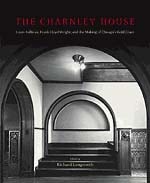
Situated in Chicago's famed Gold Coast, just north of the Magnificent Mile, the Charnley house is one of the finest dwellings in the city and considered worldwide to be a stunning example of avant-garde architecture. Now the headquarters of the Society of Architectural Historians and designated a National Historic Landmark in 1998, the house was built in 1892 at a critical moment in urban and architectural history. The Charnley House is the first authoritative publication on the building, which has long been discussed in surveys but never before examined in detail.

In this collection of original essays, six well-known architectural historians illuminate various aspects of the house, both inside and out, as they consider its remarkable formal and spatial qualities, its historical significance in the development of Chicago's elite residential neighborhood, and its place in the context of American domestic architecture. Equally important, the contributors tackle the knotty, decades-old issue concerning the building's designer. While many have ascribed the scheme to Frank Lloyd Wright, Louis Sullivan's chief assistant at the time, this book sheds new light on how the house relates significantly to the work of both master and apprentice.

The continuing debate over the house's "authorship" highlights the importance of the Charnley house in the history of modern architecture as the seminal work of residential design in the United States. These thoroughly researched interpretations, supplemented by an abundance of never before published illustrations, analyze this house of distinction with the care and detail it deserves. Beautifully restored in late 1980s, the Charnley house now has a book worthy of it.
[more]
cover of The Chartist Imaginary: Literary Form in Working-Class Political Theory and Practice

The Chartist Imaginary

Literary Form in Working-Class Political Theory and Practice

Margaret A. Loose

The Ohio State University Press, 2014

Can imaginative literature change the political and social history of a class or nation? In The Chartist Imaginary: Literary Form in Working-Class Political Theory and Practice, Margaret Loose turns to the Chartist Movement—Britain’s first mass working-class movement, dating from the 1830s to the 1840s—and argues that, based on literature by members of the movement, the answer to that question is a resounding “yes.” Chartist writing awakened workers’ awareness of discord between professed ideals and reality; exercised their conceptual powers (literary and social); and sharpened their appetite for more knowledge, intellectual power, dignity, and agency in the present to fashion a utopian future. Igniting such self-respecting, politically transfigurative energy was a unique kind of agency Loose calls “the Chartist imaginary.” In examining the Chartist movement, Loose balances the nervous projections of canonical Victorian writers against a consideration of the ways that laborers represented Chartism’s aims and tactics.
 
The Chartist Imaginary offers close readings of poems and fiction by Chartist figures from Ernest Jones and Thomas Cooper to W. J. Linton, Thomas Martin Wheeler, and Gerald Massey. It also draws on extensive archival research to examine, for the first time, working-class female Chartist poets Mary Hutton, E. L. E., and Elizabeth La Mont. Focusing on the literary form of these works, Loose strongly argues for the political power of the aesthetic in working-class literature.
 
[more]
cover of The Chattanooga Campaign

The Chattanooga Campaign

Steven E. Woodworth and Charles D. Grear

Southern Illinois University Press, 2012

When the Confederates emerged as victors in the Chickamauga Campaign, the Union Army of the Cumberland lay under siege in Chattanooga, with Braxton Bragg’s Army of Tennessee on nearby high ground at Missionary Ridge and Lookout Mountain. A win at Chattanooga was essential for the Confederates, both to capitalize on the victory at Chickamauga and to keep control of the gateway to the lower South. Should the Federal troops wrest control of that linchpin, they would cement their control of eastern Tennessee and gain access to the Deep South. In the fall 1863 Chattanooga Campaign, the new head of the western Union armies, Ulysses S. Grant, sought to break the Confederate siege. His success created the opportunity for the Union to start a campaign to capture Atlanta the following spring.

Woodworth’s introduction sets the stage for ten insightful essays that provide new analysis of this crucial campaign. From the Battle of Wauhatchie to the Battle of Chattanooga, the contributors’  well-researched and vividly written assessments of both Union and Confederate actions offer a balanced discussion of the complex nature of the campaign and its aftermath. Other essays give fascinating  examinations of the reactions to the campaign in northern newspapers and by Confederate soldiers from west of the Mississippi River.

Complete with maps and photos, The Chattanooga Campaign contains a wealth of detailed information about the military, social, and political aspects of the campaign and contributes significantly to our  understanding of the Civil War’s western theater.

Univeristy Press Books for Public and Secondary Schools 2013 edition
[more]
cover of The Chicago Companion to Tocqueville's Democracy in America

The Chicago Companion to Tocqueville's Democracy in America

James T. Schleifer

University of Chicago Press, 2012

An compact, accessible, authoritative companion to Tocqueville's classic work

One of the greatest books ever to be written on the United States, Democracy in America continues to find new readers who marvel at the lasting insights Alexis de Tocqueville had into our nation and its political culture. The work is, however, as challenging as it is important; its arguments can be complex and subtle, and its sheer length can make it difficult for any reader, especially one coming to it for the first time, to grasp Tocqueville’s meaning. The Chicago Companion to Tocqueville’s “Democracy in America” is the first book written expressly to help general readers and students alike get the most out of this seminal work.

Now James T. Schleifer, an expert on Tocqueville, has provided the background and information readers need in order to understand Tocqueville’s masterwork. In clear and engaging prose, Schleifer explains why Democracy in America is so important, how it came to be written, and how different generations of Americans have interpreted it since its publication. He also presents indispensable insight on who Tocqueville was, his trip to America, and what he meant by equality, democracy, and liberty.

Drawing upon his intimate knowledge of Tocqueville’s papers and manuscripts, Schleifer reveals how Tocqueville’s ideas took shape and changed even in the course of writing the book. At the same time, Schleifer provides a detailed glossary of key terms and key passages, all accompanied by generous citations to the relevant pages in the University of Chicago Press Mansfield/Winthrop translation. The Chicago Companion will serve generations of readers as an essential guide to both the man and his work.
 

[more]
cover of The Chicago Diaries of John M. Wing 1865-1866

The Chicago Diaries of John M. Wing 1865-1866

Transcribed and Edited by Robert Williams. Foreword by Paul F. Gehl. With an Essay by Richard A. Schwarzlose

Southern Illinois University Press, 2002

The personal—and often intimate—diaries of fledgling journalist and entrepreneur John Mansir Wing create a unique portrait of a rough-and-tumble Chicago in the first few years following the Civil War. Wing writes of a city filled with new immigrants, ex-soldiers, and the thriving merchant class making its fortunes from both before the great fire of 1871 left much of the city in ashes.

Transcribed and edited by noted Chicago bibliophile and historian Robert Williams, and published in cooperation with the Caxton Club, this volume also details the early adventures of a rural Eastern who came to the “Metropolis of the West” in his early twenties and worked for some of the most influential journalists of his day. Wing shared cigars and conversation with notable politicians, businessmen, and war heroes including Sherman and Grant, all the while conducting an active romantic life with members of his own sex in boarding houses and barrooms.

Wing’s greatest passion was for book collecting. Following a successful later career in trade journal publishing and investing, he provided an endowment to create the John M. Wing Foundation at Chicago’s famed Newberry Library. The Wing Foundation became the first American public collection devoted to the history of printing; it remains today among the nation’s best resources for the study of the bibliographic arts.

Despite his lasting importance in publishing and philanthropy, and the fact that no serious history of Chicago can be written without reference to many of his publications, John M. Wing has been largely absent from most histories of the city’s movers and shakers. Complete with historical annotations and a bibliography of Wing’s writings for the press, this fascinating personal account reclaims his deserved place in Chicago life and lore.

[more]
cover of The Chickamauga Campaign

The Chickamauga Campaign

Edited by Steven E. Woodworth

Southern Illinois University Press, 2010

From mid-August to mid-September 1863, Union major general William S. Rosecrans’s Army of the Cumberland maneuvered from Tennessee to north Georgia in a bid to rout Confederate general Braxton Bragg’s Army of Tennessee and blaze the way for further Union advances. Meanwhile, Confederate reinforcements bolstered the numbers of the Army of Tennessee, and by the time the two armies met at the Battle of Chickamauga, in northern Georgia, the Confederates had gained numerical superiority.

Although the Confederacy won its only major victory west of the Appalachians, it failed to achieve the truly decisive results many high-ranking Confederates expected. In The Chickamauga Campaign,Steven E. Woodworth assembles eight thought-provoking new essays from an impressive group of authors to offer new insight into the complex reasons for this substantial, yet ultimately barren, Confederate victory.

This broad collection covers every angle of the campaign, from its prelude to its denouement, from the points of view of key players of all ranks on both sides. In addition to analyzing the actions taken by Union leaders Thomas L. Crittenden, Alexander McCook, and James S. Negley, and Confederate commanders Braxton Bragg, Patrick Cleburne, Daniel Harvey Hill, Thomas C. Hindman, James Longstreet, and Alexander P. Stewart, the book probes the campaign’s impact on morale in the North and South, and concludes with an essay on the campaign’s place in Civil War memory. The final essay pays particular attention to Union veteran Henry Van Ness Boynton, the founder and developer of Chickamauga and Chattanooga State Military Park, whose achievements helped shape how the campaign would be remembered.

This second volume in the Civil War Campaigns in the Heartland seriesprovides a profound understanding of the campaign’s details as well as its significance to Civil War history.

Contributors: 

John R. Lundberg

Alexander Mendoza

David Powell

Ethan S. Rafuse

William G. Robertson

Timothy B. Smith

Lee White

Steven E. Woodworth

[more]
cover of The Child Savers: The Invention of Delinquency

The Child Savers

The Invention of Delinquency

Platt, Anthony M

Rutgers University Press, 2009

Hailed as a definitive analytical and historical study of the juvenile justice system, this 40th anniversary edition of The Child Savers features a new essay by Anthony M. Platt that highlights recent directions in the field, as well as a critique of his original text.

Focusing on social reformers of the late nineteenth and early twentieth centuries, Platt's principal argument is that the "child savers" movement was not an effort to liberate and dignify youth but, instead, a punitive and intrusive attempt to control the lives of working-class urban adolescents. This expanded edition provides a renewed and distinguished contribution by placing it in historical context through insightful commentaries from cross-disciplinary academics, along with an essay by Miroslava Chávez-García examining how Platt's influential study has impacted many of the central arguments social scientists and historians face today.

[more]
cover of The Cholera Years: The United States in 1832, 1849, and 1866

The Cholera Years

The United States in 1832, 1849, and 1866

Charles E. Rosenberg

University of Chicago Press, 1987

Cholera was the classic epidemic disease of the nineteenth century, as the plague had been for the fourteenth. Its defeat was a reflection not only of progress in medical knowledge but of enduring changes in American social thought. Rosenberg has focused his study on New York City, the most highly developed center of this new society. Carefully documented, full of descriptive detail, yet written with an urgent sense of the drama of the epidemic years, this narrative is as absorbing for general audiences as it is for the medical historian. In a new Afterword, Rosenberg discusses changes in historical method and concerns since the original publication of The Cholera Years.

"A major work of interpretation of medical and social thought . . . this volume is also to be commended for its skillful, absorbing presentation of the background and the effects of this dread disease."—I.B. Cohen, New York Times

"The Cholera Years is a masterful analysis of the moral and social interest attached to epidemic disease, providing generally applicable insights into how the connections between social change, changes in knowledge and changes in technical practice may be conceived."—Steven Shapin, Times Literary Supplement

"In a way that is all too rarely done, Rosenberg has skillfully interwoven medical, social, and intellectual history to show how medicine and society interacted and changed during the 19th century. The history of medicine here takes its rightful place in the tapestry of human history."—John B. Blake, Science

[more]
cover of The Christian Tradition: A History of the Development of Doctrine, Volume 5: Christian Doctrine and Modern Culture (since 1700)

The Christian Tradition

A History of the Development of Doctrine, Volume 5: Christian Doctrine and Modern Culture (since 1700)

Jaroslav Pelikan

University of Chicago Press, 1989

Jaroslav Pelikan begins this volume with the crisis of orthodoxy that confronted all Christian denominations by the beginning of the eighteenth century and continues through the twentieth century in its particular concerns with ecumenism. The modern period in the history of Christian doctrine, Pelikan demonstrates, may be defined as the time when doctrines that had been assumed more than debated for most of Christian history were themselves called into question: the idea of revelation, the uniqueness of Christ, the authority of Scripture, the expectation of life after death, even the very transcendence of God.

"Knowledge of the immense intellectual effort invested in the construction of the edifice of Christian doctrine by the best minds of each successive generation is worth having. And there can hardly be a more lucid, readable and genial guide to it than this marvellous work."—Economist

"This volume, like the series which it brings to a triumphant conclusion, may be unreservedly recommended as the best one-stop introduction currently available to its subject."—Alister E. McGrath, Times Higher Education Supplement

"Professor Pelikan's series marks a significant departure, and in him we have at last a master teacher."—Marjorie O'Rourke Boyle, Commonweal

"Pelikan's book marks not only the end of a dazzling scholarly effort but the end of an era as well. There is reason to suppose that nothing quite like it will be tried again."—Harvey Cox, Washington Post Book World
[more]
cover of The Chronicler of Barsetshire: A Life of Anthony Trollope

The Chronicler of Barsetshire

A Life of Anthony Trollope

R. H. Super

University of Michigan Press, 1990
The Chronicle of Barsetshire presents the life of Anthony Trollope, who, although perhaps best known for his popular novels of Victorian English life, was also a prolific writer of nonfiction and a distinguished civil servant. R. H. Super, professor emeritus of English at the University of Michigan, has drawn upon a wide range of primary sources, archival as well as published, to give a complete sense of the man, his variety of talents, his place in the intellectual world of nineteenth-century England, and the interplay between his fiction and the events of his life. It is a biography of the highest merit, a work that, unlike the previous studies of Trollope's life, is not overshadowed by Trollope's own colorful (but frequently inaccurate) Autobiography. Exhaustive in its portrayal of Trollope's long, productive life, and impeccable in its scholarship, The Chronicler of Barsetshire sets a new standard of execellence in Trollopian studies.
[more]
cover of The Citizen Poets of Boston: A Collection of Forgotten Poems, 1789–1820

The Citizen Poets of Boston

A Collection of Forgotten Poems, 1789–1820

Edited by Paul Lewis

University Press of New England, 2016
Welcome to Boston in the early years of the republic. Prepare to journey by stagecoach with a young man moving to the “bustling city”; stop by a tavern for food, drink, and conversation; eavesdrop on clerks and customers in a dry-goods shop; get stuck in what might have been Boston’s first traffic jam; and enjoy arch comments about spouses, doctors, lawyers, politicians, and poets. As Paul Lewis and his students at Boston College reveal, regional vernacular poetry—largely overlooked or deemed of little or no artistic value—provides access to the culture and daily life of the city. Selected from over 4,500 poems published during the early national period, the works presented here, mostly anonymous, will carry you back to Old Boston to hear the voices of its long-forgotten citizen poets. A rich collection of lost poetry that will beguile locals and visitors alike.
[more]
cover of The City of Mexico in the Age of Díaz

The City of Mexico in the Age of Díaz

By Michael Johns

University of Texas Press, 1997

Mexico City assumed its current character around the turn of the twentieth century, during the dictatorship of Porfirio Díaz (1876-1911). In those years, wealthy Mexicans moved away from the Zócalo, the city's traditional center, to western suburbs where they sought to imitate European and American ways of life. At the same time, poorer Mexicans, many of whom were peasants, crowded into eastern suburbs that lacked such basic amenities as schools, potable water, and adequate sewerage. These slums looked and felt more like rural villages than city neighborhoods. A century—and some twenty million more inhabitants—later, Mexico City retains its divided, robust, and almost labyrinthine character.

In this provocative and beautifully written book, Michael Johns proposes to fathom the character of Mexico City and, through it, the Mexican national character that shaped and was shaped by the capital city. Drawing on sources from government documents to newspapers to literary works, he looks at such things as work, taste, violence, architecture, and political power during the formative Díaz era. From this portrait of daily life in Mexico City, he shows us the qualities that "make a Mexican a Mexican" and have created a culture in which, as the Mexican saying goes, "everything changes so that everything remains the same."
[more]
cover of The Clerk's Tale: Young Men and Moral Life in Nineteenth-Century America

The Clerk's Tale

Young Men and Moral Life in Nineteenth-Century America

Thomas Augst

University of Chicago Press, 2003

Thousands of men left their families for the bustling cities of nineteenth-century America, where many of them found work as clerks. The Clerk's Tale recounts their remarkable story, describing the struggle of aspiring businessmen to come of age at the dawn of the modern era. How did these young men understand the volatile world of American capitalism and make sense of their place within it?

Thomas Augst follows clerks as they made their way through the boarding houses, parlors, and offices of the big city. Tracing the course of their everyday lives, Augst shows how these young men used acts of reading and writing to navigate the anonymous world of market culture and claim identities for themselves within it. Clerks, he reveals, calculated their prospects in diaries, composed detailed letters to friends and family, attended lectures by key thinkers of the day, joined libraries where they consumed fiction, all while wrestling with the boredom of their work. What results, then, is a poignant look at the literary practices of ordinary people and an affecting meditation on the moral lives of men in antebellum America.
[more]
cover of The Coldest Crucible: Arctic Exploration and American Culture

The Coldest Crucible

Arctic Exploration and American Culture

Michael F. Robinson

University of Chicago Press, 2006

In the late 1800s, “Arctic Fever” swept across the nation as dozens of American expeditions sailed north to the Arctic to find a sea route to Asia and, ultimately, to stand at the North Pole. Few of these missions were successful, and many men lost their lives en route. Yet failure did little to dampen the enthusiasm of new explorers or the crowds at home that cheered them on. Arctic exploration, Michael F. Robinson argues, was an activity that unfolded in America as much as it did in the wintry hinterland. Paying particular attention to the perils facing explorers at home, The Coldest Crucible examines their struggles to build support for the expeditions before departure, defend their claims upon their return, and cast themselves as men worthy of the nation’s full attention. In so doing, this book paints a new portrait of polar voyagers, one that removes them from the icy backdrop of the Arctic and sets them within the tempests of American cultural life. 

With chronological chapters featuring emblematic Arctic explorers—including Elisha Kent Kane, Charles Hall, and Robert Peary—The Coldest Crucible reveals why the North Pole, a region so geographically removed from Americans, became an iconic destination for discovery.

[more]
cover of The Colfax County War: Violence and Corruption in Territorial New Mexico

The Colfax County War

Violence and Corruption in Territorial New Mexico

Corey Recko

University of North Texas Press, 2024

[more]
cover of The Collected Letters of George Gissing Volume 5: 1892-1895

The Collected Letters of George Gissing Volume 5

1892-1895

George Gissing

Ohio University Press, 1994

Gissing’s career, which spanned the period of about 1877 to his death in 1903, was characterized by prodigious output (almost a novel a year in the early days), modest recognition, and modest income. He wrote of poverty, socialism, class differences, social reform, and later on, about the problems of women and industrialization. His best known works are New Grub Street (1891) and Private Papers of Henry Ryecroft (1903), rich sources of social commentary that reflect a literary transition from the Victorian to the modern period.

For many years, the only Gissing letters available to the public were those in the modest selection of letters to his family published in 1927. Now the editors have culled widely scattered sources—private and public collections, journals, newspapers, memoirs, biographies, and sales catalogs—to gather and organize Gissing’s correspondence, including letters to him, and to provide an editorial context.

The years 1892-1895 saw an increase in the bulk and scope of Gissing’s literary production, coinciding with his new and cordial association with publishers Bullen and Lawrence. During this period, the partners published Denzil Quarrier, The Odd Women, In the Year of Jubilee, ad Eve’s Ransom, while A. and C. Black brought out Born in Exile. Gissing’s correspondence with his publishers, some of which is printed here for the first time, is matched in significance by his letters to his literary agent William Morris Colles and to editors such as Clement Shorter, who were instrumental in turning Gissing to the short story. His domestic life remained grim: his unfortunate marriage ruled out the possibility of satisfactory social relationships, and his anxiety over the care of his son Walter was eased only by sending the infant away to stay with strangers. New friends, especially Clara Collet and Edward Clodd, were a precious asset—in their presence he could be his better self, a highly cultured, joy-loving individual whose work was finding greater favor with the public.

[more]